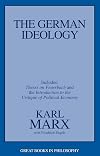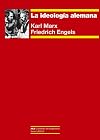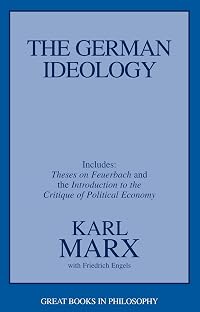
The German Ideology, including Theses on Feuerbach
by Karl Marx (Author), Friedrich Engels (Author)
On This Page
Description
Nearly two years before his powerful Communist Manifesto, Marx (1818-1883) co-wrote The German Ideology in 1845 with friend and collaborator Friedrich Engels expounding a new political worldview, including positions on materialism, labor, production, alienation, the expansion of capitalism, class conflict, revolution, and eventually communism. They chart the course of "true" socialism based on Hegel's dialectic, while criticizing the ideas of Bruno Bauer, Max Stirner, and Ludwig Feuerbach. show more Marx expanded his criticism of the latter in his now famous Theses on Feuerbach, found after Marx's death and published by Engels in 1888. Introduction to the Critique of Political Economy, also found among the posthumous papers of Marx, is a fragment of an introduction to his main works. Combining these three works, this volume is essential for an understanding of Marxism. show lessTags
Recommendations




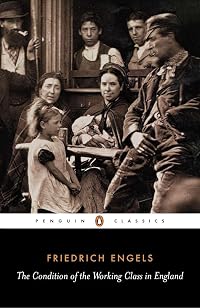




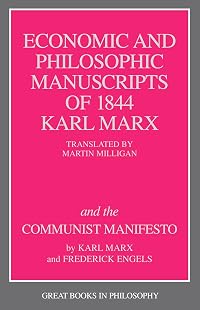
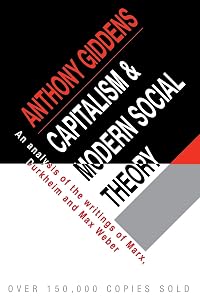
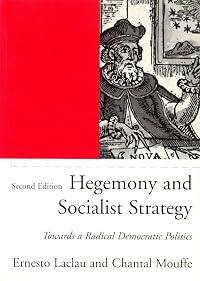
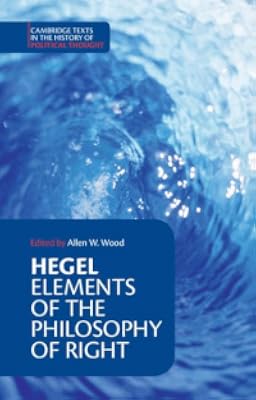




Member Recommendations
Member Reviews
Loses half a point for not being the world's most consistently readable text, and more repetition than one would hope for. But really, an undeniably foundational text for anyone in the world of critical theory. Even after all these years, it still has the power to make one question everything.
Sometimes difficult and boring, but the scattered diamonds make it required reading.
Taking the Economic-Philosophical MSS (1844), the Holy Family (1845), the Theses on Feuerbach (1845) and the German Ideology (1845-6) as a whole, one can say that they combine a fully developed philosophy of history with a rudimentary sociology -- the latter for the most part derived from the French Encyclopaedists and their nineteenth-century successors: the Saint-Simonians and the other schools of French socialism. What is misleadingly called the materialist conception of history represents a fusion of these elements: the social system viewed as a whole turns upon the historical process, and conversely the latter discloses its human, social essence as soon as man’s “nature” is seen to consist in his ability to produce the means show more of his existence, thereby transforming nature into “human” nature. Anthropology is the key to history, as with Feuerbach; but whereas the latter had postulated an unchanging human essence, Marx emphasizes that man should be viewed historically: what he makes of himself depends on the interaction of his forces with the environment -- including the man-made institutions of society.
The gusto with which Marx in the German Ideology dwells upon the frenzied intellectual history activity displayed by Bauer, Hess, Stirner et al., their reluctance to abandon their metaphysical cloud-cuckoo land for solid ground etc., tends to obscure the fact that he was at that time still in the process of disengaging himself from his erstwhile associates. [1961] show less
The gusto with which Marx in the German Ideology dwells upon the frenzied intellectual history activity displayed by Bauer, Hess, Stirner et al., their reluctance to abandon their metaphysical cloud-cuckoo land for solid ground etc., tends to obscure the fact that he was at that time still in the process of disengaging himself from his erstwhile associates. [1961] show less
MBB-4
May 4, 2021Catalan
Prólogo y Capítulo 2
Apr 5, 2014Spanish
Ratings
Members
- Recently Added By
Lists

Atheism, humanism, freethought, &c. — Best nonfiction books in favour of
167 works; 14 members

Blue Pyramid 1,276 Best Books of All Time
1,248 works; 32 members

Books Referenced by Izetbegovic's Islam Between East and West
233 works; 2 members
Author Information

Karl Heinrich Marx, one of the fathers of communism, was born on May 5, 1818 in Trier, Germany. He was educated at a variety of German colleges, including the University of Jena. He was an editor of socialist periodicals and a key figure in the Working Man's Association. Marx co-wrote his best-known work, "The Communist Manifesto" (1848), with his show more friend, Friedrich Engels. Marx's most important work, however, may be "Das Kapital" (1867), an analysis of the economics of capitalism. He died on March 14, 1883 in London, England. (Bowker Author Biography) show less

Friedrich Engels is perhaps best remembered as the confidant, colleague, and benefactor of Karl Marx. Engels was born into a Calvinist family on November 28, 1820. The family owned fabric mills in the Rhineland and had business interests in Manchester, England, Engels joined the family business at age 16; he never had a formal university show more education. Despite his family's industrial background, Engels was sympathetic to the poverty of the working masses. At age 18 he published an attack on industrial poverty, and later joined the Hegelian movement that so influenced Marx and bothered conservative Prussian authorities. Engels first met Marx in 1842, while Marx was editor of a radical newspaper in Cologne. However, they did not establish their lifelong friendship until they met again in Paris two years later. Engels published several works related to economics, the first of which, Outlines of a Critique of Political Economy (1844), attempted to reconcile Hegelian philosophy with the principles of political economy. His second book, The Condition of the Working Class in England (1845), was a damning description and condemnation of the poverty generated by the Industrial Revolution. Engels also co-authored three major works with Marx, the most important being the Communist Manifesto (1948). Engels also wrote several historical works, which are more important to historians than to economists. These include The Peasant War in Germany (1850), Germany: Revolution and Counter-Revolution (1851), and The Origin of the Family, Private Property and the State (1884). In general, these works are more descriptive than theoretical, and they closely parallel Marx's views on industrialization and class struggle. In addition to being a friend of Marx, Engels was his prime benefactor for a number of years. During their early years in London, beginning in 1849, the Marx family was nearly destitute, and it was only through the generosity of Engels that they prevailed. Engels was also responsible for the publication of Marx's Das Kapital. Before his death, Marx was only able to complete the first volume of this work, and so Engels edited and arranged for the publication of the last two volumes after Marx's death. Engels was an engaging and thoughtful writer. It was perhaps his great fortune and misfortune that he was connected so closely to Marx. On the one hand, he was responsible for bringing much of Marx's work to fruition in his role as benefactor and editor. On the other hand, the shadow of Marx eclipsed some of the exposure that Engels's own ideas and contributions might have had. Engels died of throat cancer in London, 1895. Following cremation at Woking Crematorium, his ashes were scattered off Beachy Head, near Eastbourne as he had requested. (Bowker Author Biography) Friedrich Engels, German political economist, was born in what is now known as Wuppertal, in 1820. From 1842 to 1844 Engels worked in a textile mill in Manchester, England. During this time Engels theorized that all of the social unrest and worker discontent he encountered were the direct result of private ownership of property. He concluded that social ills could be eliminated only through a class struggle culminating in the end of private ownership and the establishment of a communistic form of government. The publication of his Condition of the Working Class (1844) reiterated his philosophy and his conclusions about an inevitable class struggle. Friedrich Engels first met Karl Marx in 1842. When they met again in Paris in 1844, the two men discovered they had a great similarity of views and decided to work together. They delineated the principles of communism, later known as Marxism, and their work resulted in the founding of an international communistic movement. The Communist Manifesto, penned by Marx, was based in part on a draft Engels prepared. It became renowned as the classic exposition of modern communism, and it had a profound influence upon all subsequent literature dealing with communism. Marx and Engels' partnership lasted until Marx's death in 1883. Engels carried on his work by editing the second and third volumes of Marx's Das Kapital. Friedrich Engels died in 1895. (Bowker Author Biography) show less
Some Editions
Series
Belongs to Publisher Series
Work Relationships
Is contained in
Contains
Common Knowledge
- Canonical title
- The German Ideology, including Theses on Feuerbach
- Alternate titles
- The German Ideology
- Original publication date
- 1932
- People/Characters
- Ludwig Feuerbach; Bruno Bauer; Max Stirner
- Important places
- Leipzig, Saxony, Germany
Classifications
- Genres
- Philosophy, Nonfiction, Economics, Politics and Government, General Nonfiction, History
- DDC/MDS
- 335.411 — Society, government, & culture Economics Socialism and related systems Marxian systems Philosophic foundations, economic concepts, aims Philosophic foundations
- LCC
- HX276 .M2782 — Social sciences Socialism. Communism. Anarchism Socialism. Communism. Anarchism
- BISAC
Statistics
- Members
- 928
- Popularity
- 28,902
- Reviews
- 5
- Rating
- (3.92)
- Languages
- 10 — Catalan, English, French, German, Hungarian, Italian, Japanese, Portuguese (Portugal), Spanish, Turkish
- Media
- Paper, Audiobook, Ebook
- ISBNs
- 56
- ASINs
- 24