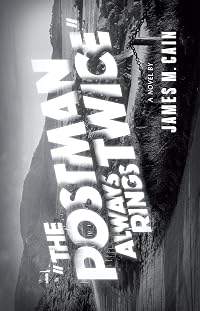
The Postman Always Rings Twice
by James M. Cain
On This Page
Description
An amoral young tramp. A beautiful, sullen woman with an inconvenient husband. A problem that has only one, grisly solution -- a solution that only creates other problems that no one can ever solve. First published in 1934 and banned in Boston for its explosive mixture of violence and eroticism, The Postman Always Rings Twice is a classic of the roman noir. It established James M. Cain as a major novelist with an unsparing vision of America's bleak underside, and was acknowledged by Albert show more Camus as the model for The Stranger. Performed by Stanley Tucci. show lessTags
Recommendations
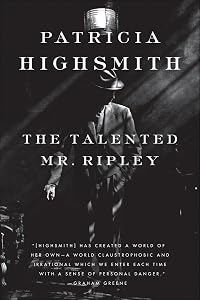
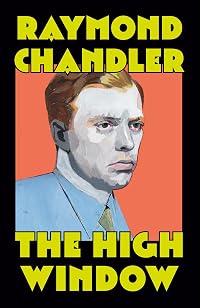
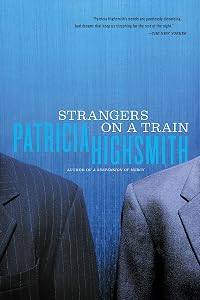
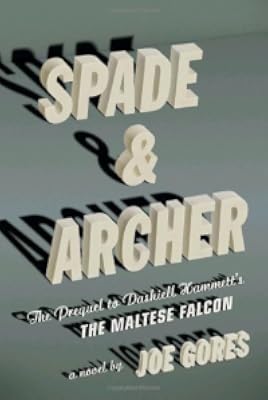







Member Recommendations
Member Reviews
What a fantastic book. At just over 100 pages it feels as full as a book three times its size, with enough turns to keep things unpredictable the entire time. The noir sex & violence doesn't feel forced like in many later adaptations, the spiralling romance and tension is the backbone of the story, not thrown in titillation. It feels like it could have had a dozen different endings along the way, and you're almost torn between wanting to see someone make it out or to have them all punished for their sins. As the foreword notes, despite noir being adopted and immortalized by Hollywood, they couldn't actually put to screen what Cain wrote even decades after morality rules and an attempt to ban the work.
Notes on the edition: One of the show more slimmest FS volumes, yet richly and fittingly illustrated (but don't look up the illustrations as they spoil the main story beats). Fully bound in cloth with a blocked design, Abby Wove paper. show less
Notes on the edition: One of the show more slimmest FS volumes, yet richly and fittingly illustrated (but don't look up the illustrations as they spoil the main story beats). Fully bound in cloth with a blocked design, Abby Wove paper. show less
Considered one of the most important crime novels of the 20th century, The Postman Always Rings Twice by James M. Cain is a masterpiece of noir. This story had such shock value that it was banned upon publication in some areas of the United States and Canada. And although the title is very well known it has a mystique of it’s own as there are no postmen or doorbells in the book. Apparently Cain heard a screenwriter talk about how gut-wrenchingly anxious he was while waiting for the mail to bring him news on whether or not a script had been accepted. Cain thought this phrase captured the feeling of desperation that he wanted the book to portray.
Although slightly over 100 pages in length, this is a story that is intense and gripping. show more The inescapable fate of three people caught up in lust, greed and violence is told with such veracity that the author doesn’t need to embellish or extend his story. The reader is drawn into many emotions, including feeling somewhat sympathetic toward Frank and Cora, but underneath it all you know they have been corrupted by their desire and their willingness to take short-cuts to get what they want.
This classic piece of noir more than stands the test of time. Both Cain’s superb writing and the originality of the story ensures this tale of twisted love will continue to enthrall it’s readers. Definitely a 5 star read for me. show less
Although slightly over 100 pages in length, this is a story that is intense and gripping. show more The inescapable fate of three people caught up in lust, greed and violence is told with such veracity that the author doesn’t need to embellish or extend his story. The reader is drawn into many emotions, including feeling somewhat sympathetic toward Frank and Cora, but underneath it all you know they have been corrupted by their desire and their willingness to take short-cuts to get what they want.
This classic piece of noir more than stands the test of time. Both Cain’s superb writing and the originality of the story ensures this tale of twisted love will continue to enthrall it’s readers. Definitely a 5 star read for me. show less
Lana Turner and John Garfield hunger for something more in Tay Garnett’s glossy soap opera noir, The Postman Always Rings Twice. Based on James M. Cain’s lusty potboiler, Turner is fantastic as the manipulative yet vulnerable Cora Smith, with Garfield matching her as the drifter who can't get Cora or her dreams out of his blood. Turner is like a white creme, icy cold on the surface but burning hot and deep with desire underneath.
Cora is a girl aware of her looks and the effect she has on men. Since she was 14 she’s had to argue with men about it. But she didn't have to argue with Nick Smith (Cecil Kellaway), a much older man Cora marries for security, not love. When drifter Frank Chambers (Grafield) shows up to fill the Help show more Wanted sign at the Twin Oaks Diner the mismatched couple run together, Cora discovers she can’t live without love or passion.
Cora is a smouldering vision in white when Frank first sees her, a room full of gas that only needs a single spark to ignite it. Frank knows he can sell anything to anybody and begins to fan the flames when he talks Nick into getting a neon sign for the diner Cora wants the place to be. She tries in her own way to resist what is going to happen between she and Frank, but deep down knows that all the things she married Nick for and clings to are the things she really wants with Frank.
Cora lets him kiss her once then keeps Frank at a distance, working him into a frenzy of desire. A midnight swim seals their fate, the gas now ignited and burning out of control. By the time love is involved, Frank knows nothing can stand in the way of Cora’s dreams.
Garfield is excellent here as a guy who knows he’s signed on for a one way ride to nowhere but can’t help himself. There is a tricky D.A. (Leon Ames) onto them after a botched attempt to live out Cora’s dreams fails. Hume Cronyn is terrific as a crafty defense attorney who throws a monkey wrench into things, but an insurance policy, jealousy, and blackmail gone awry bring them back to the beach, and memories of that swim. Maybe they can even atone for their scenes, unless Fate has other plans…
Turner gives an icy hot performance here, with many long takes between she and Garfield as they are drawn to each other like moths to a flame. Much is made of director Tay Garnett framing Turner in sexy white outfits throughout the film. In her best scene, however, and the one in which she is the most strikingly beautiful, she is dressed in a black bathrobe. She is in the kitchen at the time, caressing a knife and agonizing over her dreams and what needs to be done to make them come true. When Frank walks in on her, her voice catches, her reluctance to follow through real. She tells Garfield in a quivering voice: "If you really loved me…”
Whereas Wilder’s Double Indemnity was a dark noir of twisted passion and greed set in Claifornia, Garnett’s The Postman Always Rings Twice uses the bright sunshine and beaches of Los Angeles County in the 1940s to create a soap opera noir, with the shining blonde Turner and a reluctant drifter Garfield at its center. A good glossy noir. show less
Cora is a girl aware of her looks and the effect she has on men. Since she was 14 she’s had to argue with men about it. But she didn't have to argue with Nick Smith (Cecil Kellaway), a much older man Cora marries for security, not love. When drifter Frank Chambers (Grafield) shows up to fill the Help show more Wanted sign at the Twin Oaks Diner the mismatched couple run together, Cora discovers she can’t live without love or passion.
Cora is a smouldering vision in white when Frank first sees her, a room full of gas that only needs a single spark to ignite it. Frank knows he can sell anything to anybody and begins to fan the flames when he talks Nick into getting a neon sign for the diner Cora wants the place to be. She tries in her own way to resist what is going to happen between she and Frank, but deep down knows that all the things she married Nick for and clings to are the things she really wants with Frank.
Cora lets him kiss her once then keeps Frank at a distance, working him into a frenzy of desire. A midnight swim seals their fate, the gas now ignited and burning out of control. By the time love is involved, Frank knows nothing can stand in the way of Cora’s dreams.
Garfield is excellent here as a guy who knows he’s signed on for a one way ride to nowhere but can’t help himself. There is a tricky D.A. (Leon Ames) onto them after a botched attempt to live out Cora’s dreams fails. Hume Cronyn is terrific as a crafty defense attorney who throws a monkey wrench into things, but an insurance policy, jealousy, and blackmail gone awry bring them back to the beach, and memories of that swim. Maybe they can even atone for their scenes, unless Fate has other plans…
Turner gives an icy hot performance here, with many long takes between she and Garfield as they are drawn to each other like moths to a flame. Much is made of director Tay Garnett framing Turner in sexy white outfits throughout the film. In her best scene, however, and the one in which she is the most strikingly beautiful, she is dressed in a black bathrobe. She is in the kitchen at the time, caressing a knife and agonizing over her dreams and what needs to be done to make them come true. When Frank walks in on her, her voice catches, her reluctance to follow through real. She tells Garfield in a quivering voice: "If you really loved me…”
Whereas Wilder’s Double Indemnity was a dark noir of twisted passion and greed set in Claifornia, Garnett’s The Postman Always Rings Twice uses the bright sunshine and beaches of Los Angeles County in the 1940s to create a soap opera noir, with the shining blonde Turner and a reluctant drifter Garfield at its center. A good glossy noir. show less
I'll admit it: a collector and a completist by nature, I read this one because it made the Modern Library's list of the one hundred best English-language novels of the twentieth century. I'm not much for crime stories or noirs, but I was pleasantly surprised by this one. One hundred years after it was written, it's short, tightly written, and, in its way, sort of shocking.
Most of the shock here comes from the sex. Sex scenes are notoriously difficult to write: they trip up some of the best authors. But the encounters between Frank and Cora -- especially the ones that happen early on -- are unbelievably intense, almost jarring. Cain is also subtle enough to depict Cora as an undeniably attractive woman without forgetting to give her a show more personality and a past. His frankness -- a willingness to show his characters' ugly sides -- extends to other aspects of his characters, too. Cora, a transplant product of the American Midwest -- is an unapologetic racist. Frank, on the other hand, often reads as charming, but has more than his share of personality flaws. A sometime hobo, he's a hedonist and the less respectable kind of free spirit. It's not just that he's a lecher, we also see him consistently resist opportunities to build something permanent, to, in other words, make something of himself. But this is California in the thirties: I'd hazard that Frank's character is meant to stand in the wild parts of the state still untouched by Anglo influence, most of which were about to be buried by an avalanche of development and internal migration. This book's about a lot more than three people in a love triangle who make a lot of disastrous choices.
I found that the problem with "The Postman Always Rings Twice" oddly enough, is that it's almost too good a noir. Or maybe that it has spawned too many imitators. Reading this one is like reading Poe: the prose still shines, but the plots have been redone so many times in so many mediums that it's difficult to be surprised by anything in the plot. I can't be sure, but it feels like this one served as a foundation for much of both film noir and the thriller genre in general. Which doesn't mean that it's prose is any less direct or efficient -- it is certainly both -- but it does mean that many readers are likely to sense the story's pulses well before they've finished reading, and perhaps even predict it's twists. There aren't many noirs or thrillers out there as good as "The Postman Always Rings Twice", but there are a lot of noirs and thrillers out there, and so whatever the novelty the book might have once held for its reader is mostly gone. Even so, even as we come up on its centennial, it's still easy to admire this book's uncompromising honesty and its almost punishing directness. Recommended, even if you're not much of a fan of the genres it helped spawn. show less
Most of the shock here comes from the sex. Sex scenes are notoriously difficult to write: they trip up some of the best authors. But the encounters between Frank and Cora -- especially the ones that happen early on -- are unbelievably intense, almost jarring. Cain is also subtle enough to depict Cora as an undeniably attractive woman without forgetting to give her a show more personality and a past. His frankness -- a willingness to show his characters' ugly sides -- extends to other aspects of his characters, too. Cora, a transplant product of the American Midwest -- is an unapologetic racist. Frank, on the other hand, often reads as charming, but has more than his share of personality flaws. A sometime hobo, he's a hedonist and the less respectable kind of free spirit. It's not just that he's a lecher, we also see him consistently resist opportunities to build something permanent, to, in other words, make something of himself. But this is California in the thirties: I'd hazard that Frank's character is meant to stand in the wild parts of the state still untouched by Anglo influence, most of which were about to be buried by an avalanche of development and internal migration. This book's about a lot more than three people in a love triangle who make a lot of disastrous choices.
I found that the problem with "The Postman Always Rings Twice" oddly enough, is that it's almost too good a noir. Or maybe that it has spawned too many imitators. Reading this one is like reading Poe: the prose still shines, but the plots have been redone so many times in so many mediums that it's difficult to be surprised by anything in the plot. I can't be sure, but it feels like this one served as a foundation for much of both film noir and the thriller genre in general. Which doesn't mean that it's prose is any less direct or efficient -- it is certainly both -- but it does mean that many readers are likely to sense the story's pulses well before they've finished reading, and perhaps even predict it's twists. There aren't many noirs or thrillers out there as good as "The Postman Always Rings Twice", but there are a lot of noirs and thrillers out there, and so whatever the novelty the book might have once held for its reader is mostly gone. Even so, even as we come up on its centennial, it's still easy to admire this book's uncompromising honesty and its almost punishing directness. Recommended, even if you're not much of a fan of the genres it helped spawn. show less
I began slipping off her blouse. "Rip me, Frank. Rip me like you did that night."
I ripped all her clothes off. She twisted and turned, slow, so they would slip out from under her. Then she closed her eyes and lay back on the pillow. Her hair was falling over her shoulders in snaky curls. Her eye was all black, and her breasts weren't drawn up and pointing at me, but soft, and spread out in two big pink splotches. She looked like the great grandmother of every whore in the world. The devil got his money's worth that night.
The great grandmother of every whore in the world...
I'm not even sure what that means, but I do understand why this novella, written in 1934, was the subject of an obscenity trial, primarily for the scene above. Tame by show more 21st century standards, the sex and violence were shocking at the time. The writing is dated -- terrible dialogue, perfectly suited for films of the era; very little character development; blatant sexism and xenophobia -- and yet, as a noir novel, it still works. show less
I ripped all her clothes off. She twisted and turned, slow, so they would slip out from under her. Then she closed her eyes and lay back on the pillow. Her hair was falling over her shoulders in snaky curls. Her eye was all black, and her breasts weren't drawn up and pointing at me, but soft, and spread out in two big pink splotches. She looked like the great grandmother of every whore in the world. The devil got his money's worth that night.
The great grandmother of every whore in the world...
I'm not even sure what that means, but I do understand why this novella, written in 1934, was the subject of an obscenity trial, primarily for the scene above. Tame by show more 21st century standards, the sex and violence were shocking at the time. The writing is dated -- terrible dialogue, perfectly suited for films of the era; very little character development; blatant sexism and xenophobia -- and yet, as a noir novel, it still works. show less
Classic noir novel about a drifter who falls in love with the wife of a restaurant owner, and they plot to murder him. Fast-paced, choppy sentences, quick read. There is definitely some sexism & racism mixed in here that speaks to its 1930s publication. Glad to read the well-known story though, and it definitely kept me turning the pages. I wish I could have seen a bit of depth in the character of Cora. We see her only through the drifter’s eyes.
When Cain published this work in 1934 he opened up a new field for writers, and defined a new subgenre .. the hard-boiled noir crime novel.
Frank Chambers is a drifter, who gets tossed off a truck on which he had stowed away, and winds up at the Twin Oaks Tavern. It’s a dusty little “roadside sandwich joint, like a million others in California” including a lunch counter, filling station, and a half-dozen “shacks that they called an auto court.” The owner, a Greek named Nick Papadakis, offers him a job, but Frank isn’t interested … at least not until he gets a look at Nick’s wife, Cora.
The passion between Cora and Frank is palpable. And I don’t just mean lust. They fight, slinging horrible words at one another, and are show more even physically brutal. Everything happens at breakneck speed. They coldly plan to murder The Greek, and are “saved” only by a dead cat. The reader gets the sense that despite their professed love, these two are each other’s worst enemy, and one can only keep reading to find out what the final body count will be.
It’s a fascinating story, and rapid-paced. The writing is spare and bold. There isn’t a lot of extraneous description or exposition on motives. Emotions are raw and characters act on them without much thought to consequences. Fans of today’s forensic pathology TV series and books may find this simple. BUT, put yourself back in 1934, and just go along for the ride.
You can read this slim volume in a day or two … but you’ll be thinking about it much longer. show less
Frank Chambers is a drifter, who gets tossed off a truck on which he had stowed away, and winds up at the Twin Oaks Tavern. It’s a dusty little “roadside sandwich joint, like a million others in California” including a lunch counter, filling station, and a half-dozen “shacks that they called an auto court.” The owner, a Greek named Nick Papadakis, offers him a job, but Frank isn’t interested … at least not until he gets a look at Nick’s wife, Cora.
The passion between Cora and Frank is palpable. And I don’t just mean lust. They fight, slinging horrible words at one another, and are show more even physically brutal. Everything happens at breakneck speed. They coldly plan to murder The Greek, and are “saved” only by a dead cat. The reader gets the sense that despite their professed love, these two are each other’s worst enemy, and one can only keep reading to find out what the final body count will be.
It’s a fascinating story, and rapid-paced. The writing is spare and bold. There isn’t a lot of extraneous description or exposition on motives. Emotions are raw and characters act on them without much thought to consequences. Fans of today’s forensic pathology TV series and books may find this simple. BUT, put yourself back in 1934, and just go along for the ride.
You can read this slim volume in a day or two … but you’ll be thinking about it much longer. show less
Members
- Recently Added By
Lists

1001 Books You Must Read Before You Die
1,448 works; 1,134 members

The Guardian's 1000 Novels Everyone Must Read
1,005 works; 550 members

Classics you know you should have read but probably haven't
421 works; 406 members

Noirvember: The Best Noir
113 works; 56 members

The Top 100 Crime Novels of All Time
100 works; 15 members

Read the book and saw the movie
1,170 works; 195 members
Best Noir Fiction
160 works; 14 members

100 Mysteries and Thrillers to Read in a Lifetime
99 works; 22 members
20th Century Literature
1,161 works; 54 members

Top 100 Mystery Novels of All Time
98 works; 9 members
Books Set in California
112 works; 15 members
Folio Society
831 works; 51 members
Lithub: 50 Great Classic Novels Under 200 pages
50 works; 10 members

Survey of Classic Crime
39 works; 7 members

Survey of Mysteries and Crime Fiction
96 works; 17 members

Short and Sweet
246 works; 24 members

1,001 BYMRBYD Concensus
723 works; 27 members

In or About the 1930s
198 works; 27 members

A Novel Cure
742 works; 23 members

Love Triangles in Literature
108 works; 15 members

Blue Pyramid 1,276 Best Books of All Time
1,248 works; 32 members

Favorite Short Fiction
228 works; 99 members
The Modern Library's 100 Best Novels: The Board's List
85 works; 6 members
Page Turners
185 works; 11 members

H.R.F. Keating's 100 Best Crime & Mystery Books
100 works; 8 members

Haycraft Queen Cornerstones
181 works; 3 members

1930s
262 works; 5 members

Books About Murder
313 works; 7 members

Best Crime Fiction
48 works; 3 members

Books Read in 2022
5,166 works; 112 members
Detective Stories
343 works; 5 members

Books mentioned in Julian Symons’ Bloody Murder
438 works; 6 members

Books With Numbers in the Title
308 works; 13 members
First Novels
373 works; 17 members

Books Read in 2015
3,299 works; 126 members

Books Read in 2017
4,249 works; 129 members
Books Read in 2016
4,666 works; 197 members
Literature About Adultery
69 works; 10 members
American Lit for Eng 11 Research Project
368 works; 6 members
Read These Too
458 works; 9 members
Art Bourgeau's Favorites [Mystery Lovers Companion, 1986]
124 works; 2 members
Tozai Mystery Best 100 | The Top 100 Mystery Novels
111 works; 3 members

Recommended Reading : 600 Classics Reviewed, Editors of Salem Press, 2015
634 works; 6 members
Great Short Books: A Year of Reading-Briefly
59 works; 4 members

Books With Our Favorite First Lines
168 works; 104 members

Books Read in 2012
816 works; 34 members
Books Set in Los Angeles
40 works; 8 members

Read
293 works; 4 members

My TBR
371 works; 3 members

Books Read in 2011
684 works; 20 members

Thrillers to read
21 works; 2 members

Best Psychological Suspense
33 works; 6 members

Books With Complete Sentence Titles
374 works; 15 members
Modern Library's 100 Best Novels
100 works; 2 members

Novels that you shouldn't waste your time on
94 works; 50 members
Author Information

86+ Works 11,225 Members
Mystery writer James Mallahan Cain was born in Annapolis, Maryland, in 1892. He received his B.A. and M.A. from Washington College, and served in the military as editor-in-chief of the official newspaper of the 79th Division, American Expeditionary Forces. Cain worked as a staff reporter for the Baltimore Sun; he became a professor of journalism show more in the 1920s; he worked as a Hollywood screenwriter in the 1930s and 40s. Many of his stories, including Double Indemnity (1943), have been made into successful films. Joan Crawford won an Academy Award in 1945 for her portrayal of Cain's Mildred Pierce (1941). Cain's first novel, The Postman Always Rings Twice (1934), was said to have inspired Albert Camus' The Stranger, but offended sensibilities in the U.S. and was even tried for obscenity in Boston. The novel was eventually made into a movie in 1946, starring Lana Turner and again in 1981, with Jack Nicholson and Jessica Lange. In all, Cain authored eighteen books. (Bowker Author Biography) show less
Some Editions
Awards and Honors
Notable Lists
Series
Belongs to Publisher Series
La Cua de Palla (12)
El Séptimo Círculo (11)
El País. Serie negra (13)
Crime de la Crime (Arbeiderspers)
Le livre de poche (0137)
Panther Books (1004)
Work Relationships
Is contained in
The Postman Always Rings Twice, Double Indemnity, Mildred Pierce, and Selected Stories by James M. Cain
The Five Great Novels of James M. Cain [The Postman Always Rings Twice / The Butterfly / Serenade / Mildred Pierce / Double Indemnity] by James M. Cain
Three Novels By James m Cain: The Postman Always Rings Twice, Serenade, and Mildred Pierce by James M. Cain
American Noir: 11 Classic Crime Novels of the 1930s, 40s, & 50s: A Library of America Boxed Set by Robert Polito (indirect)
Murder & Mayhem: The Postman Always Rings Twice, Double Indemnity, Mildred Pierce, and Selected Stories; The Big Sleep; Farewell, My Lovely; The High Window; The Human Factor; (Everyman's Library) by James M. Cain
Best-in-Books: Grand Hotel / Voice of Bugle Ann / Life with Father / Mutiny on the Bounty / Postman Always Rings Twice by Vicki Baum
Club del misterio. Volumen I: Prólogo de J. J. BORGES. "El cuento policial, IX" . Dashiell HAMMETT: "Cosecha roja". Arthur CONAN DOYLE: "Las aventuras de Shrlock Holmes". Hellery QUEEN: "Cara a cara". Raymond CHANDLER: "El sueño eterno". Patricia IHGSMITH: Erle STANLEY GARDNER: "El cuchillo". "El caso del juguete mortífero". James HADLEY CHASE: "Impulso creador". "El secuestro de Miss Blandish". Nicholas BLAKE: "La bestia debe morir". Volumen 2: Prólogo de R. CHANDLER: " El simpl by AA VV (indirect)
Has the adaptation
Is abridged in
Common Knowledge
- Canonical title
- The Postman Always Rings Twice
- Original title
- The Postman Always Rings Twice
- Alternate titles*
- Niemand ontkomt zijn noodlot
- Original publication date
- 1934
- People/Characters
- Frank Chambers (narrator); Cora Papadakis; Nick Papadakis; Mr. Sackett (District Attorney); Mr. Katz; Madge Allen (show all 7); Pat Kennedy
- Important places
- California, USA; Glendale, California, USA; Los Angeles, California, USA; Los Angeles County, California, USA
- Related movies
- The Postman Always Rings Twice (1946 | IMDb); The Postman Always Rings Twice (1981 | IMDb); Buai laju-laju (2004 | IMDb); Szenvedély (1998 | IMDb); Le dernier tournant (1939 | IMDb); Ossessione (1943 | IMDb)
- Dedication
- To Vincent Lawrence
- First words
- They threw me off the hay truck about noon.
- Last words
- (Click to show. Warning: May contain spoilers.)If you've got this far, send one up for me, and Cora, and make it that we're together, wherever it is.
- Blurbers
- Hammett, Dashiell
- Original language
- English
- Disambiguation notice
- This is the main work for the original book. It should not be combined with any adaptation (e.g., film adaptation), abridgement, etc.
*Some information comes from Common Knowledge in other languages. Click "Edit" for more information.
Classifications
Statistics
- Members
- 3,907
- Popularity
- 4,035
- Reviews
- 144
- Rating
- (3.71)
- Languages
- 19 — Catalan, Chinese, Czech, Danish, Dutch, English, Finnish, French, German, Greek, Hungarian, Italian, Lithuanian, Norwegian (Bokmål), Norwegian, Portuguese, Romanian, Spanish, Turkish
- Media
- Paper, Audiobook, Ebook
- ISBNs
- 94
- UPCs
- 1
- ASINs
- 64