On This Page
Description
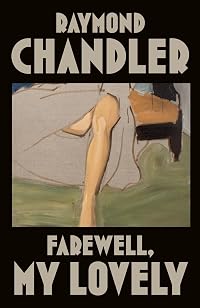
Philip Marlowe navigates the underworld of the Los Angeles gambling circuit while investigating the disappearance of a beautiful nightclub girl. Written at the height of the author's creative career, this novel, with its crooked cops, ex-cons and deadly, seductive women, is a masterpiece of the genre Chandler is credited with creating. "Farewell, my lovely" is Raymond Chandler's second novel featuring his archetypal private eye.Tags
Recommendations



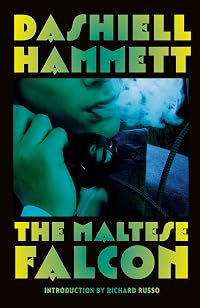

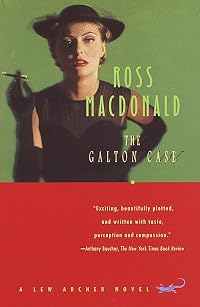
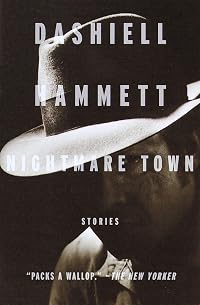


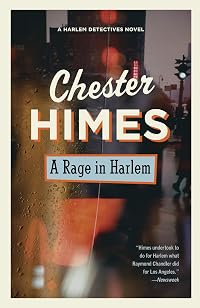
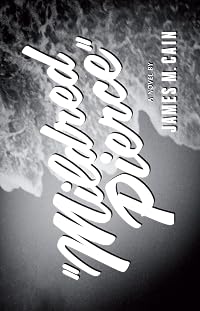

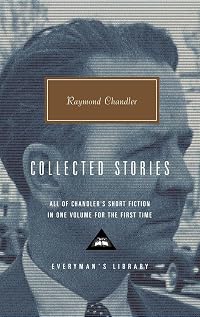
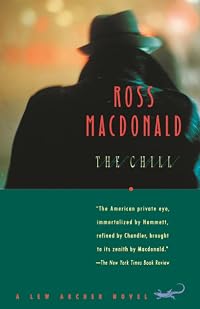



Member Recommendations

Member Reviews
This is probably the oddest and most hallucinogenic of Marlowe's mysteries. At times it felt like I was reading a Tintin adventure. Although it had the usual magnificent Chandler prose and wonderful deadpan dialogue, the racism that kept cropping up left a nasty taste.
It also contains this, which I think synthesises the entire noir genre with astonishing elegance:
This was probably my favourite line, though: ‘The eighty-five cent dinner tasted like a discarded mailbag.’
I greatly appreciated the show more contrasts drawn between luxurious Beverly Hills palaces and scummy tenements, as well as between Basin City’s shiny exterior and all the crime lurking below. In this episode, Marlowe seems to be more laconic than ever and everyone seems to be flirting with him. A smart young lady follows him about, tries to do his job for him, and gets annoyed when he doesn’t take the hint. A Basin City cop keeps calling him ‘baby’. A dangerous blonde dame plies him with booze then sits in his lap. And a guy named Red listens to his woes and holds his hand. But as ever, he ends the novel on his own, out of pocket and likely in search of a drink. Good old Marlowe. show less
It also contains this, which I think synthesises the entire noir genre with astonishing elegance:
After a while I felt a little better, but very little. I needed a drink, I needed a lot of life insurance, I needed a vacation, I needed a home in the country. What I had was a coat, a hat and a gun. I put them on and went out of the room.
This was probably my favourite line, though: ‘The eighty-five cent dinner tasted like a discarded mailbag.’
I greatly appreciated the show more contrasts drawn between luxurious Beverly Hills palaces and scummy tenements, as well as between Basin City’s shiny exterior and all the crime lurking below. In this episode, Marlowe seems to be more laconic than ever and everyone seems to be flirting with him. A smart young lady follows him about, tries to do his job for him, and gets annoyed when he doesn’t take the hint. A Basin City cop keeps calling him ‘baby’. A dangerous blonde dame plies him with booze then sits in his lap. And a guy named Red listens to his woes and holds his hand. But as ever, he ends the novel on his own, out of pocket and likely in search of a drink. Good old Marlowe. show less
This book made me simultaneously obsessively curious about the 1940s, Los Angeles, noir, 1940s Los Angeles, Los Angeles noir...So much so I will probably move from this literary masterpiece to the video game L.A. Noire to stay immersed in the world. Read this book out loud for the sheer joy of it. It almost reads like a noir parody until you realize it's the original, the real deal. And for those of us who come to it after movies of the same ilk, it will be nearly impossible not to see or hear Humphrey Bogart as the protagonist.
Farewell, My Lovely is the second novel to feature Chandler's now-famous private detective, Philip Marlowe. In this book, Marlowe happens to be in the wrong place at the wrong time and is witness to a murder at the hands of a recently released convict. On the heels of this event, he is hired as a bodyguard and ends up with a murdered client. Marlowe continues digging to find answers to these crimes and stumbles into a world of hijackings, jewel thievery, police corruption, and more.
I greatly enjoyed The Big Sleep and was eager to move on to the next book in the series. In some ways, Farewell, My Lovely doesn't disappoint - Marlowe is still the epitome of the noir detective, the mystery is tightly wound and unpredictable with many layers show more to unwrap, and Chandler's writing is tight, compact, and understatedly humorous. On the down side, this book shows its age in its very casual racism; the first 20 pages alone are littered with countless epithets for African-Americans, including a litany of slang ones I had never heard before and would have been OK without having learned. In some ways, this book is a sad reminder of how far we haven't come, for the murder of a black man warrants very little interest from the police, while the murder of white man becomes something more of a hubbub. I do think (perhaps too optimistically) that Chandler was trying to make that point exactly, but all the slurs and crude comments dropped just aren't pretty. And that's even before we get to the American Indian character who speaks in grunts of broken English in a classic bad Western movie style.
While this sort of blatant racism wouldn't fly in a modern book, I was able to partially overlook it because of the time when the book was published (1940). And when Chandler wasn't - inadvertently or purposely - insulting large swaths of people, the mystery he wrote was intriguing and kept you guessing to the end. So, all in all, I did enjoy this book and I'm curious to see what Marlowe will be up to next in the following book. show less
I greatly enjoyed The Big Sleep and was eager to move on to the next book in the series. In some ways, Farewell, My Lovely doesn't disappoint - Marlowe is still the epitome of the noir detective, the mystery is tightly wound and unpredictable with many layers show more to unwrap, and Chandler's writing is tight, compact, and understatedly humorous. On the down side, this book shows its age in its very casual racism; the first 20 pages alone are littered with countless epithets for African-Americans, including a litany of slang ones I had never heard before and would have been OK without having learned. In some ways, this book is a sad reminder of how far we haven't come, for the murder of a black man warrants very little interest from the police, while the murder of white man becomes something more of a hubbub. I do think (perhaps too optimistically) that Chandler was trying to make that point exactly, but all the slurs and crude comments dropped just aren't pretty. And that's even before we get to the American Indian character who speaks in grunts of broken English in a classic bad Western movie style.
While this sort of blatant racism wouldn't fly in a modern book, I was able to partially overlook it because of the time when the book was published (1940). And when Chandler wasn't - inadvertently or purposely - insulting large swaths of people, the mystery he wrote was intriguing and kept you guessing to the end. So, all in all, I did enjoy this book and I'm curious to see what Marlowe will be up to next in the following book. show less
Farewell My Lovely by Raymond Chandler once again features his hard boiled detective, Philip Marlowe and in this outing he gets knocked out a couple of times, beaten up, almost choked to death, and pumped full of morphine but he still doggedly follows his hunches and solves the case. It starts when he is dragged into a situation by an ex-con called Moose Malloy who, just out of prison, is searching for his girl, Velma.
Marlowe is an original character that has become one of the most copied characters in literature. His world weary attitude, staccato delivery of one-liners, and effortless aura of self-contained toughness all combine to become the gold standard of private detectives. The author excels in writing razor sharp dialogue, along show more with atmospheric settings, and plenty of twists in his plots.
Speaking of plots, although I enjoyed Farewell My Lovely immensely, I really don’t read Chandler for the story. It’s all about the styling, pacing, atmosphere and witty quips with a main character that has a drink in one hand and a ‘gat’ in the other. show less
Marlowe is an original character that has become one of the most copied characters in literature. His world weary attitude, staccato delivery of one-liners, and effortless aura of self-contained toughness all combine to become the gold standard of private detectives. The author excels in writing razor sharp dialogue, along show more with atmospheric settings, and plenty of twists in his plots.
Speaking of plots, although I enjoyed Farewell My Lovely immensely, I really don’t read Chandler for the story. It’s all about the styling, pacing, atmosphere and witty quips with a main character that has a drink in one hand and a ‘gat’ in the other. show less
"There was something wrong with the job from the start. I could feel it. But I needed the money." (pg. 77)
Farewell, My Lovely is an excellent read and a profound improvement on the first Philip Marlowe book, The Big Sleep. That previous book compensated for its style-over-substance approach by ramping the style up to eleven; for Farewell, My Lovely that dial is still on eleven, but author Raymond Chandler has turned the substance up to match.
The prose and the dialogue are as gorgeous as ever. Some of the conversations bristle with energy, and there's scarcely a collection of words that can set a scene so succinctly as the following: "There was just enough fog to make everything seem unreal. The wet air was as cold as the ashes of love." show more (pg. 268). That's just one of many, many examples I could give, and I find it telling that many reviews of Chandler's books – particularly this one – seem to consist of a list of the reviewer's favourite passages. Chandler is the master of evocative and original similes – it's intoxicating to read.
Furthermore, in Farewell, My Lovely, Chandler has not just provided flair but, in contrast to The Big Sleep, the plot has considerable steel to it. The various threads all link together nicely, and the deaths at the end carry emotional impact. It's sometimes hard to follow why Marlowe is investigating a certain person or place but there is an underlying coherence about it (even if it sometimes eludes you), and the rhythm of the prose is smooth enough to keep things moving.
The characters are larger-than-life, but have an underlying tragedy about them so that they never seem cartoonish. Moose Malloy is an imposing figure and Randall has a good few meeting-of-minds with Marlowe. The main women – Mrs Grayle and Anne Riordan – are engaging, and Red is a good one-scene wonder. But above all, this is Marlowe's stage. The character really comes into his own in this book; he was carried along by the tide of events a bit in The Big Sleep, but here he's the one making waves. And usually getting cracked on the back of the head with a blackjack for his trouble. He's a refreshingly reckless character: his detective skills need a bit of work, but in fairness he does spend the best part of the novel either concussed or drunk. It's hard not to feel fondness for the underdog with a bit of swagger; the scrappy with a core of nobility. As characters repeatedly tell Marlowe when he's doing something reckless, "you take some awful chances, mister." But I'm glad I took a chance on Chandler.
"I got up on my feet and went over to the bowl in the corner and threw cold water on my face. After a little while I felt a little better, but very little. I needed a drink, I needed a lot of life insurance, I needed a vacation, I needed a home in the country. What I had was a coat, a hat and a gun. I put them on and went out of the room." (pg. 248) show less
Farewell, My Lovely is an excellent read and a profound improvement on the first Philip Marlowe book, The Big Sleep. That previous book compensated for its style-over-substance approach by ramping the style up to eleven; for Farewell, My Lovely that dial is still on eleven, but author Raymond Chandler has turned the substance up to match.
The prose and the dialogue are as gorgeous as ever. Some of the conversations bristle with energy, and there's scarcely a collection of words that can set a scene so succinctly as the following: "There was just enough fog to make everything seem unreal. The wet air was as cold as the ashes of love." show more (pg. 268). That's just one of many, many examples I could give, and I find it telling that many reviews of Chandler's books – particularly this one – seem to consist of a list of the reviewer's favourite passages. Chandler is the master of evocative and original similes – it's intoxicating to read.
Furthermore, in Farewell, My Lovely, Chandler has not just provided flair but, in contrast to The Big Sleep, the plot has considerable steel to it. The various threads all link together nicely, and the deaths at the end carry emotional impact. It's sometimes hard to follow why Marlowe is investigating a certain person or place but there is an underlying coherence about it (even if it sometimes eludes you), and the rhythm of the prose is smooth enough to keep things moving.
The characters are larger-than-life, but have an underlying tragedy about them so that they never seem cartoonish. Moose Malloy is an imposing figure and Randall has a good few meeting-of-minds with Marlowe. The main women – Mrs Grayle and Anne Riordan – are engaging, and Red is a good one-scene wonder. But above all, this is Marlowe's stage. The character really comes into his own in this book; he was carried along by the tide of events a bit in The Big Sleep, but here he's the one making waves. And usually getting cracked on the back of the head with a blackjack for his trouble. He's a refreshingly reckless character: his detective skills need a bit of work, but in fairness he does spend the best part of the novel either concussed or drunk. It's hard not to feel fondness for the underdog with a bit of swagger; the scrappy with a core of nobility. As characters repeatedly tell Marlowe when he's doing something reckless, "you take some awful chances, mister." But I'm glad I took a chance on Chandler.
"I got up on my feet and went over to the bowl in the corner and threw cold water on my face. After a little while I felt a little better, but very little. I needed a drink, I needed a lot of life insurance, I needed a vacation, I needed a home in the country. What I had was a coat, a hat and a gun. I put them on and went out of the room." (pg. 248) show less
Nearly gave this 5 stars. About half way through the book I thought 'After this book was written why did anyone bother to write any more crime books at all?'. It's got plot and clues and characters and places. It's got sight, smell, sound and touch, even some change of pace. And most of all it has the most brilliant stream of consciousness. It is written in the first person and in the past tense, but not as if telling what happened from the future - more as a running commentary - the still, small voice in the head slightly detached and describing or explaining the action to himself as it plays out. Terrific. Now got to find a whiskey sour and decide which film of the book to watch while it is fresh in my mind.
Like the other Marlowe books, Farewell, My Lovely helped to shape a genre that still pervades American culture. This one has the template for the PI-female-journalist-type teamup, the lazy cop who gets said PI to do all the dirty work, and the insouciant, backtalking, oft-punched, hardboiled PI. It also has that indescribable sense of isolation and loneliness, that of a solitary man walking upright down the dark streets, that I have never really encountered outside of Chandler's works.
However, this has got to be one of the most racist, sexist, and homophobic books out there. We start with Phillip Marlowe entering a segregated bar reserved for African-Americans. The first African-American we meet is described as "it"--apparently he show more doesn't even get to have a male pronoun. We also have a totally racist description of a smelly, pigion-English speaking Native American and a set of incredibly homophobic descriptions of a "handsome" man--although since there are theories that Chandler himself leaned a bit that way, it may be a bit of a reaction.
What I hate most is that the first murder--that of an African American--apparently doesn't count at all. This is stated explicitly throughout the book, and it's not just a comment on society; Marlowe himself appears equally dismissive. It is horrifying to read of such dehumanizing racism being treated as commonplace.
It also has some of the most egregious bits of Marlowe's femme-fatale magnetism in the series:
etc.
Interestingly, despite the (as always) female villains, femme fatales, and damsels in distress, this may have the closest the series has to an intelligent, almost equal female character. Ann Riordan plays girl friday to Marlowe--an assisting role--but she is obviously both intelligent and coolheaded.
One of the reasons I like this one is that Marlowe is WAY more fallible than he was in Big Sleep. Oddly, he's apparently gotten handsomer--more people describe him as good-looking -- but he makes a bunch of idiotic mistakes, gets beaten up quite a bit, and gets hypnotized and given opium(?) and scopolamine, with amusing results.
Chandler's descriptions of both men and women are physical and sensual: he takes note of smoothness of skin, tapered and beautiful fingers, color of eyes, rounded lips, etc of both men and women, and the physical closeness even during a struggle. Although Chandler is virulently homophobic, there is some school of thought (including some of his contemporaries and friends) who considered him to be a repressed homosexual.
Some quotes that really make you wonder:
Marlowe is really not at all like Humphrey Bogart. Marlowe's appearance is hypermasculine--6ft, dark, large-framed, and either quite muscular or kind of chunky--he's 190 lb. He is also quite taciturn; most of the sarcastic comments happen inside his head...until, of course, he's given scopolamine, when he starts talking quite a bit. Does this hypermasculinity, the tough guy attitude that pervades Marlowe's every action, stem from a desire to create a character who is indubitably heterosexual?
Perhaps this is the depth that Chandler brings to the novel: the unique loneliness he creates, that every other noir story has tried and failed to capture, is not just the loneliness of a bruised, broken, tarnished, but still chivalric knight walking the mean streets. It is also the unvoiced isolation of a man who cannot fit into his culture, who must keep himself under tight control and never allow his passions and his desire for intimacy to surface.
Perhaps it also explains the virulent sexism of the novels. All of the books have a female villain, a character that Marlowe sees initially as a damsel in distress and tries to protect, but who ends up revealing herself as an amoral femme fatale who breaks and discards the men around her like used paper cups. There is always a sense of deep betrayal, a sense that Marlowe has been personally let down by the women around him. This very sharp sense of aggrievedness might stem from Chandler's own sense of betrayal by the women of his world: they have failed to be as desirable as his illicit desire for men.
The book also has some examples of Chandler's genius with language:
But the most intriguing question, to me at least: does the quintessentially "Hetero-He-Man" genre of detective noir owe its beginnings to the writings of a man struggling with his own homosexuality? show less
However, this has got to be one of the most racist, sexist, and homophobic books out there. We start with Phillip Marlowe entering a segregated bar reserved for African-Americans. The first African-American we meet is described as "it"--apparently he show more doesn't even get to have a male pronoun. We also have a totally racist description of a smelly, pigion-English speaking Native American and a set of incredibly homophobic descriptions of a "handsome" man--although since there are theories that Chandler himself leaned a bit that way, it may be a bit of a reaction.
What I hate most is that the first murder--that of an African American--apparently doesn't count at all. This is stated explicitly throughout the book, and it's not just a comment on society; Marlowe himself appears equally dismissive. It is horrifying to read of such dehumanizing racism being treated as commonplace.
It also has some of the most egregious bits of Marlowe's femme-fatale magnetism in the series:
"What's your name?"
"Phil."
"Kiss me."
etc.
Interestingly, despite the (as always) female villains, femme fatales, and damsels in distress, this may have the closest the series has to an intelligent, almost equal female character. Ann Riordan plays girl friday to Marlowe--an assisting role--but she is obviously both intelligent and coolheaded.
One of the reasons I like this one is that Marlowe is WAY more fallible than he was in Big Sleep. Oddly, he's apparently gotten handsomer--more people describe him as good-looking -- but he makes a bunch of idiotic mistakes, gets beaten up quite a bit, and gets hypnotized and given opium(?) and scopolamine, with amusing results.
Chandler's descriptions of both men and women are physical and sensual: he takes note of smoothness of skin, tapered and beautiful fingers, color of eyes, rounded lips, etc of both men and women, and the physical closeness even during a struggle. Although Chandler is virulently homophobic, there is some school of thought (including some of his contemporaries and friends) who considered him to be a repressed homosexual.
Some quotes that really make you wonder:
He held my gun in his delicate, lovely hand...He smiled, so beautifully....a
thin beautiful devil with my gun in his hand watching me and smiling.
His voice was soft, dreamy, so delicate for a big man that it was startling. It made me think of another soft-voiced big man I had strangely liked.
He had the eyes you never see, that you only read about. Violet eyes. Almost purple. Eyes like a girl, a lovely girl. His skin was soft as silk. Lightly reddened, but it would never tan. It was too delicate...I told him a great deal more than I intended to. It must have been his eyes.
Red leaned close to me and his breath tickled my ear...put his lips against my ear...took hold of my hand. His was strong, hard, warm and slightly sticky.
He was a dark, good-looking lad, with plenty of shoulders and shiny smooth hair and the peak on his rakish cap made a soft shadow over his eyes...His eyes gleamed like water...That put me about a foot from him. He had a nice breath.
He had a cat's smile, but I like cats...his eyes held a delicate menace...he had nice hands, not baby to the point of insipidity, but well-kept.
Marlowe is really not at all like Humphrey Bogart. Marlowe's appearance is hypermasculine--6ft, dark, large-framed, and either quite muscular or kind of chunky--he's 190 lb. He is also quite taciturn; most of the sarcastic comments happen inside his head...until, of course, he's given scopolamine, when he starts talking quite a bit. Does this hypermasculinity, the tough guy attitude that pervades Marlowe's every action, stem from a desire to create a character who is indubitably heterosexual?
Perhaps this is the depth that Chandler brings to the novel: the unique loneliness he creates, that every other noir story has tried and failed to capture, is not just the loneliness of a bruised, broken, tarnished, but still chivalric knight walking the mean streets. It is also the unvoiced isolation of a man who cannot fit into his culture, who must keep himself under tight control and never allow his passions and his desire for intimacy to surface.
Perhaps it also explains the virulent sexism of the novels. All of the books have a female villain, a character that Marlowe sees initially as a damsel in distress and tries to protect, but who ends up revealing herself as an amoral femme fatale who breaks and discards the men around her like used paper cups. There is always a sense of deep betrayal, a sense that Marlowe has been personally let down by the women around him. This very sharp sense of aggrievedness might stem from Chandler's own sense of betrayal by the women of his world: they have failed to be as desirable as his illicit desire for men.
The book also has some examples of Chandler's genius with language:
Dead men are heavier than broken hearts.
The room was as black as Carrie Nation's bonnet.
Darkness prowled slowly on the hills.
I used my knee on his face. It hurt my knee. He didn't tell me whether it hurt his face.
But the most intriguing question, to me at least: does the quintessentially "Hetero-He-Man" genre of detective noir owe its beginnings to the writings of a man struggling with his own homosexuality? show less
Members
- Recently Added By
Lists

1001 Books You Must Read Before You Die
1,448 works; 1,134 members

Noirvember: The Best Noir
113 works; 56 members

Best Crime Fiction
262 works; 39 members

Best Noir Fiction
160 works; 14 members
The Top 100 Crime Novels of All Time
100 works; 15 members

Golden Age of Detection
35 works; 10 members
501 Must-Read Books
529 works; 72 members

Crime and Mysteries to Read
746 works; 31 members
Best Private Eye stories
28 works; 8 members

Top 100 Mystery Novels of All Time
98 works; 9 members

Survey of Classic Crime
39 works; 7 members

Books About Murder
313 works; 7 members

Haycraft Queen Cornerstones
181 works; 3 members

Novels from The Guardian's Great American Novelist Tournament
148 works; 24 members

Detective Stories
343 works; 5 members

Favorite Books from the 1940s
38 works; 3 members
Best Books of the 20th Century
193 works; 5 members

Books Read in 2024
4,727 works; 128 members

Books Read in 2022
5,226 works; 115 members

TBR - Older Books
92 works; 1 member

Tozai Mystery Best 100 | The Top 100 Mystery Novels
111 works; 3 members

Books Read in 2012
816 works; 34 members

One Book, Many Authors
441 works; 40 members

Books Read in 2016
4,666 works; 197 members

Books Read in 2018
4,360 works; 110 members

Thrillers to read
21 works; 2 members
Favourite Books
1,819 works; 316 members
Books Set in Los Angeles
40 works; 8 members
American Lit for Eng 11 Research Project
368 works; 6 members

1940s
221 works; 25 members

Books Read in 2014
2,343 works; 89 members
My list of 100 books to read next
100 works; 4 members

A Novel Cure
742 works; 23 members
20th Century Literature
1,161 works; 55 members
Reading LIst
648 works; 1 member
Author Information

278+ Works 47,969 Members
Raymond Chandler was born in Chicago, Illinois on July 23, 1888. Before becoming a professional writer in 1933, he worked as a reporter, an accountant, bookkeeper, and auditor. He wrote several novels featuring private detective Philip Marlowe including The Big Sleep, The High Window, The Lady in the Lake, The Little Sister, and The Long Goodbye. show more In addition to novels and short stories, he wrote screenplays. He won two academy awards, for Double Indemnity (1944) and The Blue Dahlia (1946). He died on March 26, 1959. (Bowker Author Biography) show less
Some Editions
Awards and Honors
Notable Lists
Series

Belongs to Publisher Series
L&PM Pocket (28)
detebe (70/7 ; 20312)
SaPo (32)
Den svarte serie (128)
Penguin Books (701)
Libro amigo [Bruguera] (917)
Work Relationships
Is contained in
Raymond Chandler: Stories and Early Novels: Pulp Stories / The Big Sleep / Farewell, My Lovely / The High Window (Library of America) by Raymond Chandler
The big sleep/Farewell my lovely/The high window/The lady in the lake/The long goodbye/Playback by Raymond Chandler
The Big Sleep / Farewell, My Lovely / The High Window / The Lady in the Lake / The Little Sister / The Long Goodbye / Playback by Raymond Chandler
The Raymond Chandler Omnibus: The Big Sleep / Farewell, My Lovely / The High Window / The Lady in the Lake by Raymond Chandler
Five Novels: Finger Man; The big sleep; Farewell my loveley; High window; The lady in the lake by Raymond Chandler
Murder & Mayhem: The Postman Always Rings Twice, Double Indemnity, Mildred Pierce, and Selected Stories; The Big Sleep; Farewell, My Lovely; The High Window; The Human Factor; (Everyman's Library) by James M. Cain
Is retold in
Has the adaptation
Is abridged in
Common Knowledge
- Canonical title
- Farewell, My Lovely
- Original title
- Farewell, My Lovely
- Original publication date
- 1940
- People/Characters
- Philip Marlowe; Moose Malloy; Jules Amthor; Lindsay Marriott; Mrs. Grayle; Lewin Lockridge Grayle (show all 20); Detective-Lieutenant Nulty; Jessie Pierce Florian; Anne Riordan; Detective-Lieutenant Randall; Mrs. Morrison; Newton (Butler); Second Planting; Captain Blane; Dr. Sonderborg; Chief John Wax (Chief of Police, Bay City); Sergeant Galbraith (Hemingway); Red Norgaard; Laird Brunette; Olson
- Important places
- Hollywood, Los Angeles, California, USA; Bay City, California, USA
- Related movies
- Murder, My Sweet (1944 | IMDb); Farewell, My Lovely (1975 | IMDb)
- First words
- It was one of the mixed blocks over on Central Avenue, the blocks that are not yet all Negro.
- Last words
- (Click to show. Warning: May contain spoilers.)You could see a long way—but not as far as Velma had gone.
- Original language
- English
Classifications
Statistics
- Members
- 5,072
- Popularity
- 2,739
- Reviews
- 113
- Rating
- (4.05)
- Languages
- 22 — Bulgarian, Catalan, Chinese, Czech, Danish, Dutch, English, Estonian, Finnish, French, German, Greek, Hungarian, Italian, Japanese, Norwegian (Bokmål), Norwegian, Polish, Russian, Spanish, Swedish, Portuguese (Portugal)
- Media
- Paper, Audiobook, Ebook
- ISBNs
- 126
- UPCs
- 1
- ASINs
- 90