On This Page
Description
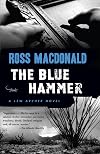
The desert air is hot with sex and betrayal, death and madness and only Archer can make sense of a killer who makes murder a work of art. Finding a purloined portrait of a leggy blonde was supposed to be an easy paycheck for Detective Lew Archer, but that was before the bodies began piling up. Suddenly, Archer find himself smack in the middle of a decades-long mystery of a brilliant artist who walked into the desert and simply disappeared. He left behind a bevy of muses, molls, dolls, and show more dames -- each one scrambling for what they thought was rightfully theirs. show lessTags
Recommendations

























Member Recommendations
Member Reviews
The last Lew Archer detective novel by Ross Macdonald is a splendid one. Macdonald's humanistic sleuth is his tough self, but the tender side shows through even more clearly here. The story, like most of Macdonald's work, is about family secrets. This one is innovative and complex, starting with a missing painting and ending up with melancholy and deep regrets. The most melancholy thing for me was the fact that there are no more Archer novels. The entire series is among the best American crime writing, and The Blue Hammer is a fine and fitting conclusion to it.
Though published in 1976, this doesn't feel like the type of crime/PI novel of the seventies. It's not remotely hard-boiled, for a start, though it's certainly noirish. If anything, MacDonald's Lew Archer novels are downright soft-boiled, there's always a terrible sadness at their core, and Archer is not immune to that sadness, in fact he seems drawn to it and braced for the inevitable pain he's determined to uncover.
In The Blue Hammer, Archer is asked to recover a stolen painting. Almost at once it becomes apparent that this isn't about an art heist but about deep dark family secrets, and Archer follows the clues and the threads, with a murder or two along the way, until the whole thing finally unravels.
This isn't exactly show more action-packed. Archer moves like a secular priests from person to person, extracting their confessions and putting the outlines of the larger story together from the details. There's lots of driving from one place to another, walks on beaches, long conversations and short ones. The urgency mounts when someone goes missing, though, and outcome depends on Archer working out who the hell is who. show less
In The Blue Hammer, Archer is asked to recover a stolen painting. Almost at once it becomes apparent that this isn't about an art heist but about deep dark family secrets, and Archer follows the clues and the threads, with a murder or two along the way, until the whole thing finally unravels.
This isn't exactly show more action-packed. Archer moves like a secular priests from person to person, extracting their confessions and putting the outlines of the larger story together from the details. There's lots of driving from one place to another, walks on beaches, long conversations and short ones. The urgency mounts when someone goes missing, though, and outcome depends on Archer working out who the hell is who. show less
25 years before the story takes place, renowned painter Richard Chantry disappears without a trace suddenly. Now Lew Archer is called into look into the disappearance of a painting that may have been painted by Chantry. Archer is drawn into the mystery which goes back to that disappearance and earlier. Macdonald is very adept at stringing together all the threads of the story and brining them together at the end, even with the very last sentence of the story. I enjoyed this quite a bit; even though maybe if I'd read a bit more closely I could have seen things coming.
A few weeks ago I watched a Paul Newman movie from a MacDonald novel, probably from around the same time. In both there was a cult involved, which dates things quite a bit show more now; you don't find mystery stories these days with many cults in them (or do you?). (In that movie, Strutter Martin played the cult leader, and he's always fun.) Also I noticed in this book that nearly without exception when Archer first meets a woman he describes her breasts; I don't notice that much these days, or maybe he was just clumsier about it than writers are now. show less
A few weeks ago I watched a Paul Newman movie from a MacDonald novel, probably from around the same time. In both there was a cult involved, which dates things quite a bit show more now; you don't find mystery stories these days with many cults in them (or do you?). (In that movie, Strutter Martin played the cult leader, and he's always fun.) Also I noticed in this book that nearly without exception when Archer first meets a woman he describes her breasts; I don't notice that much these days, or maybe he was just clumsier about it than writers are now. show less
To have been written when Macdonald was in the early stages of Alzheimer's, The Blue Hammer is a damned impressive book. Occasionally there's a faint but chilling indication that he knew something was wrong ("Mackendrick got the message by degrees, like a man becoming aware that he has an illness"), and it must have required tremendous bravery and dedication for him to complete the novel. I've read nearly all of Macdonald, and anyone who has enjoyed his other work will like this one, too; it's a dark, convoluted mystery with enough murder, alcoholism and sordid family secrets to fill three books by any other writer. It also happens to be the last of its kind: not just Ross Macdonald's last novel, but the final dispatch from the golden show more age of hard-boiled crime fiction, which had begun inauspiciously in the pages of pulp magazines and was honed into literary art by Dashiell Hammett, Raymond Chandler and Macdonald in the ensuing five decades. show less
Blue Hammer is part of the Lew Archer series. Like any good character series, the reader gets to know Lew in increments. We know he is a loner and was previously married. In The Blue Hammer is era is also another character. The 1970s were a time when strangers could enter apartment buildings and ride the elevator freely; hotel keys were returned to the front desk every time guests left their rooms; librarians had no qualms about giving out personal information like where someone lived or their phone number. Lew Archer has been hired to retrieve a stolen painting by Richard Chantry, a man who has been missing for twenty-five years. Doris Biemeyer seems to be at the center of the mystery of the missing painting. She readily admits she let show more her boyfriend Fred steal it from her parents. The same painting was later stolen from Fred's bedroom (He lives with his patents.). But, the painting is only the beginning of the mystery. When the bodies start piling up Lew knows this case is bigger than just art theft. Paul Grimes is beaten to death, but before his murder he mistakes Lew Archer for Richard Chantry. Why? Then Jacob Whitmore is drowned seemingly in a bathtub before thrown into the ocean. Are these murders connected? What about missing man Richard Chantry? Is he dead, too? Then Lew's love interest, a nosy reporter, goes missing.
Blue Hammer is the kind of mystery that prompted me to keep notes on every character and event. The twists and turns come at you fast and furious. I sensed the connection between people and their actions were too important to be overlooked. Everyone has a story to tell and everyone seems to be connected one way or another... show less
Blue Hammer is the kind of mystery that prompted me to keep notes on every character and event. The twists and turns come at you fast and furious. I sensed the connection between people and their actions were too important to be overlooked. Everyone has a story to tell and everyone seems to be connected one way or another... show less
review of
Ross MacDonald's The Blue Hammer
by tENTATIVELY, a cONVENIENCE - November 7, 2021
I've read & reviewed 16 other MacDonald bks now. I saved this one for last b/c it's the newest one I have & the only one that's a hardback. Maybe it'll be the last Ross MacDonald bk I ever read. Let us have a moment of silence. It's set in 1976. It's another art world crime, there's increased sexuality, MacDonald's going w/ the times.
""Who is Richard Chantry?"
"The woman looked at me in surprise. "You mean you've never heard of him?"
""Most of the world's population have never heard of him," Biemeyer said.
""That simply isn't true. He was already famous before he disappeared, and he wasn't even out of his twenties."
"Her tone was nostalgic and show more affectionate. I looked at her husband's face. It was red with anger, and his eyes were confused. I edged between them facing his wife."
""Where did Richard Chantry disappear from?"
""From here," she said. "From Santa Teresa."
""Recently?"
""No. It was over twenty-five years ago. He simply decided to walk away from it all. He was in search of new horizons, as he said in his farewell statement."" - p 5
The setting displays its up-to-date-ness:
"There was a natureburger place in a geodesic dome up the block, and now and then the uncertain wind brought me the smell of food. Eventually I went and had a natureburger. The atmosphere in the place was dim and inert. The bearded young customers made me think of early cave men waiting for the ice age to end." - p 29
The missing artist's portrait comes into play:
""I suppose so," he said wearily. Though I'd much rather look at this." He indicated the picture of the man on the wall.
""Who is it?"
""You mean you don't know? It's Richard Chandry—his only major self-portrait."
"I gave the picture a closer look. The head was a little like a lion's head, with rumpled tawny hair, a full beard partly masking an almost feminine mouth, deep eyes the color of emeralds. It seemed to radiate force." - pp 52-53
I found this to be a nice twist in description:
"Her voice was dark with sorrow and resentment. The darkness appeared to have seeped up from her mind into the roots of her hair." - p 54
This is something that I think about:
"The whole painting held a sense of distance that centered in her ice-blue eyes and seemed to suggest that she was watching me, or I was watching her, from a long way off. Perhaps the suggestion came from what Paola had relayed from her father, that the woman who sat for the picture would be old or dead, her beauty only remembered." - p 74
MacDonald's description of the painting seems more sensitive than most such descriptions in his bks where he has Archer, the detective, generally dismissive & contemptuous toward Modern Art.
I can relate:
"I retreated to the City Editor's desk and put my head down on my arms again. It was some time since I had gone to sleep in the same room with a girl. Of course the room was large and reasonably well lighted, and the girl had other things than me on her mind." - p 75
Was that innuendo?
"She knocked on a door marked "Managing Editor," and got no answer. We went inside and I kissed her. Not only my temperature rose.
""Hey," she said. "He still likes me."" - p 94
Porn is never like that.
There's nothing like a cult to spice things up.
I don't know what those Mutual Love people believe in, but the belief they have is certainly powerful. One of the converts told me he turned over everything he had to the organization, and they work him hard besides. Looks to me like they're coining money. I know they paid Mildred over a hundred thousand for the place. Of course that includes the acreage. So hold on to your wallet with both hands."" - p 102
You know how those artists are:
""Murdered?"
""It could be. It happens to homosexuals—bisexuals—whatever he is or was. I see a lot of them in this business. Some of them go in for the rough trade almost as if they wanted to be killed. Or they wander away by themselves and commit suicide. That may be what Richard Chandry did. On the other hand, he may have found a soul mate and is living happily ever after in Algiers or Tahiti."" - p 130
I shd probably pat myself on the back at this point & say that I figured this one out llllooooonnnnnggggg before it actually ended. But I'm not tellin'.
Our hero, Archer, is actually becoming more sensitive to art & art history. He even works DaVinci into it:
""Are you sure that Mr. Chantry was a homo? I never knew one of them who liked hard work."
"I didn't mention Leonardo for fear of confusing the issue. "I'm fairly certain. You could ask around."" - p 147
& De Chirico!:
"Well, Doris was there, standing like a Chirico figure in the receding distances of the house." - p 163
& let's not forget potomania, an essential tool in the artist's kit:
"["] And if he doesn't get out of here while I count to ten, I'll throw him out bodily."
"I almost laughed in his face. He was a stout unsteady man whose speech was fed by synthetic energy." - p 186
Well, there you (don't) have it. I didn't spoil the plot. I enjoyed this, just like I enjoyed all the other Ross MacDonald novels I've read, but he has gotten somewhat predictable & formulaic. That's ok, I still enjoy it every time. It's like sex: do you complain if it's not that much different from te last time? Well, some of you probably do but as long as certain things are recurring features I'm satisfied. show less
Ross MacDonald's The Blue Hammer
by tENTATIVELY, a cONVENIENCE - November 7, 2021
I've read & reviewed 16 other MacDonald bks now. I saved this one for last b/c it's the newest one I have & the only one that's a hardback. Maybe it'll be the last Ross MacDonald bk I ever read. Let us have a moment of silence. It's set in 1976. It's another art world crime, there's increased sexuality, MacDonald's going w/ the times.
""Who is Richard Chantry?"
"The woman looked at me in surprise. "You mean you've never heard of him?"
""Most of the world's population have never heard of him," Biemeyer said.
""That simply isn't true. He was already famous before he disappeared, and he wasn't even out of his twenties."
"Her tone was nostalgic and show more affectionate. I looked at her husband's face. It was red with anger, and his eyes were confused. I edged between them facing his wife."
""Where did Richard Chantry disappear from?"
""From here," she said. "From Santa Teresa."
""Recently?"
""No. It was over twenty-five years ago. He simply decided to walk away from it all. He was in search of new horizons, as he said in his farewell statement."" - p 5
The setting displays its up-to-date-ness:
"There was a natureburger place in a geodesic dome up the block, and now and then the uncertain wind brought me the smell of food. Eventually I went and had a natureburger. The atmosphere in the place was dim and inert. The bearded young customers made me think of early cave men waiting for the ice age to end." - p 29
The missing artist's portrait comes into play:
""I suppose so," he said wearily. Though I'd much rather look at this." He indicated the picture of the man on the wall.
""Who is it?"
""You mean you don't know? It's Richard Chandry—his only major self-portrait."
"I gave the picture a closer look. The head was a little like a lion's head, with rumpled tawny hair, a full beard partly masking an almost feminine mouth, deep eyes the color of emeralds. It seemed to radiate force." - pp 52-53
I found this to be a nice twist in description:
"Her voice was dark with sorrow and resentment. The darkness appeared to have seeped up from her mind into the roots of her hair." - p 54
This is something that I think about:
"The whole painting held a sense of distance that centered in her ice-blue eyes and seemed to suggest that she was watching me, or I was watching her, from a long way off. Perhaps the suggestion came from what Paola had relayed from her father, that the woman who sat for the picture would be old or dead, her beauty only remembered." - p 74
MacDonald's description of the painting seems more sensitive than most such descriptions in his bks where he has Archer, the detective, generally dismissive & contemptuous toward Modern Art.
I can relate:
"I retreated to the City Editor's desk and put my head down on my arms again. It was some time since I had gone to sleep in the same room with a girl. Of course the room was large and reasonably well lighted, and the girl had other things than me on her mind." - p 75
Was that innuendo?
"She knocked on a door marked "Managing Editor," and got no answer. We went inside and I kissed her. Not only my temperature rose.
""Hey," she said. "He still likes me."" - p 94
Porn is never like that.
There's nothing like a cult to spice things up.
I don't know what those Mutual Love people believe in, but the belief they have is certainly powerful. One of the converts told me he turned over everything he had to the organization, and they work him hard besides. Looks to me like they're coining money. I know they paid Mildred over a hundred thousand for the place. Of course that includes the acreage. So hold on to your wallet with both hands."" - p 102
You know how those artists are:
""Murdered?"
""It could be. It happens to homosexuals—bisexuals—whatever he is or was. I see a lot of them in this business. Some of them go in for the rough trade almost as if they wanted to be killed. Or they wander away by themselves and commit suicide. That may be what Richard Chandry did. On the other hand, he may have found a soul mate and is living happily ever after in Algiers or Tahiti."" - p 130
I shd probably pat myself on the back at this point & say that I figured this one out llllooooonnnnnggggg before it actually ended. But I'm not tellin'.
Our hero, Archer, is actually becoming more sensitive to art & art history. He even works DaVinci into it:
""Are you sure that Mr. Chantry was a homo? I never knew one of them who liked hard work."
"I didn't mention Leonardo for fear of confusing the issue. "I'm fairly certain. You could ask around."" - p 147
& De Chirico!:
"Well, Doris was there, standing like a Chirico figure in the receding distances of the house." - p 163
& let's not forget potomania, an essential tool in the artist's kit:
"["] And if he doesn't get out of here while I count to ten, I'll throw him out bodily."
"I almost laughed in his face. He was a stout unsteady man whose speech was fed by synthetic energy." - p 186
Well, there you (don't) have it. I didn't spoil the plot. I enjoyed this, just like I enjoyed all the other Ross MacDonald novels I've read, but he has gotten somewhat predictable & formulaic. That's ok, I still enjoy it every time. It's like sex: do you complain if it's not that much different from te last time? Well, some of you probably do but as long as certain things are recurring features I'm satisfied. show less
Lew Archer is on the hunt for a stolen portrait that is supposed to have been painted by an artist who disappeared a couple of decades ago and was presumed dead. The big question is if it was painted by him, when? Along the way, Archer encounters a bunch of characters who have been let down by life and are attempting to scrape by as best they can. For this reason, this is definitely a morose book, and I wouldn’t pick it as a starting point for reading about Archer. He continues to be his contemplative self, and he finds moments of joy, but the overall mood is gloomy.
Members
- Recently Added By
Lists

Best Noir Fiction
160 works; 14 members

H.R.F. Keating's 100 Best Crime & Mystery Books
100 works; 8 members

Books Read in 2022
5,168 works; 114 members
Author Information

103+ Works 14,274 Members
Awards and Honors
Notable Lists
Series

Belongs to Publisher Series
Common Knowledge
- Canonical title
- The Blue Hammer
- Original title
- The Blue Hammer
- Original publication date
- 1976
- People/Characters
- Lew Archer; Jack Biemeyer; Ruth Biemeyer; Betty Jo Siddon; Richard Chantry; Francine Chantry (show all 12); Paul Grimes; Fred Johnson; William Mead; Mildred Mead; Simon Lashman; Paola Grimes
- Important places
- Santa Teresa, California, USA; Copper City, Arizona, USA
- Dedication
- To William Campbell Gault
- First words
- I drove up to the house on a private road that widened at the summit into a parking apron.
- Quotations*
- Betty yawned and went to sleep again. I lay awake and watched her face emerging in the slow dawn. After a while I could see the steady blue pulse in her temple, the beating of the silent hammer which meant that she was alive.... (show all) I hoped that the blue hammer would never stop.
- Last words
- (Click to show. Warning: May contain spoilers.)Jack Biemeyer stepped forward and touched his son's wet face.
- Original language*
- English
*Some information comes from Common Knowledge in other languages. Click "Edit" for more information.
Classifications
Statistics
- Members
- 779
- Popularity
- 35,879
- Reviews
- 22
- Rating
- (3.69)
- Languages
- 14 — Danish, Dutch, English, Finnish, French, German, Hungarian, Japanese, Latin, Norwegian (Bokmål), Norwegian, Polish, Spanish, Swedish
- Media
- Paper, Audiobook, Ebook
- ISBNs
- 50
- ASINs
- 28