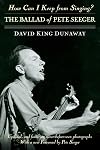
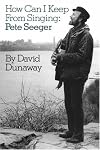
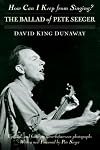
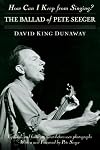
How Can I Keep from Singing?: The Ballad of Pete Seeger
by David King Dunaway
On This Page
Description
Updated edition of the 1981 biography, which includes a foreword by Pete Seeger.Tags
Recommendations
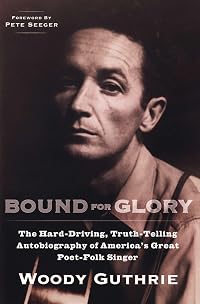

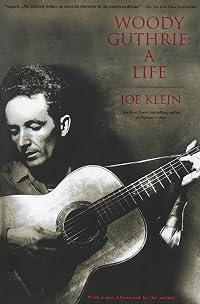

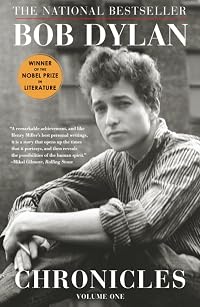

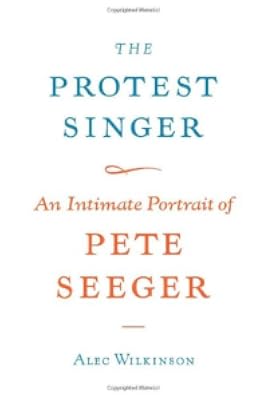






















Member Recommendations
Member Reviews
I am an admitted *folkie* so I was eager to read this bio of Pete Seeger, one of the original folkies of the last century. But beyond his longevity (he died in 2014 at the age of 94), and some of his songs that formed the soundtrack of my teenage years (Where Have All the Flowers Gone, If I Had a Hammer, his adaptation of the biblical verse to Turn, Turn, Turn, and We Shall Overcome, to name just a few) - beyond this, I knew relatively little about his actual life.
I knew he was an activist for many social issues (anti-war, civil rights, environment, etc,), but I learned so much more from this book. I learned probably more than I wanted to know about the McCarthy era and the HUAC (House Un-American Activities Committee). He was show more subpoenaed to testify before them in 1955 and when he refused to answer their questions about his beliefs and affiliations (which violated his First Amendment rights) , he was sentenced to 10 consecutive one-year terms in jail for contempt, which were later overturned. It seems to me, reading this book, that it was insane that such a thing could happen. Seriously, were they really so afraid of Seeger? I knew that anything associated with *Communists* during those post-war years was considered anti-American, but to be able to prosecute and blacklist so many people without any proof seems paranoid to the extreme. He was harassed by the FBI and CIA, who kept files on him for years. Yet, all he wanted to do was sing. The freedom to sing and freedom of speech was his ultimate goal. It seems ludicrous that this was so threatening.
Seeger also seemed to be a man of contradictions, in some ways. He wanted to live his life as a simple man, supporting the underdog. He built his own home, a log cabin, with his own hands, grew his own food. Yet, despite the detractors and the (political) problems that followed him wherever he went, he actually did make money, and he travelled extensively, both alone and with his family. He was not comfortable with the contradiction of having money and often did not want to even know how much he was being paid for his concerts. His wife,Toshi, was his lifelong manager and organizer, so that actually worked to his advantage. He was a man who always marched to his own drummer, followed his own ideals and values, yet he sometimes seemed idealistic to the point of naivete in his belief that a song could change the world.
Seeger most certainly did leave his mark on the music world and the tradition of folk music. This biography was extremely well-researched and well-written. It was first published in 1981, and I believe there has been a more updated version published since.
The end of the book explains the title, taken from an old ballad (I passed the book back to its original owner yesterday so no longer have it in front of me to check the details). But the only version of that song I have ever heard is from the Wonderful World album by the amazing late Eva Cassidy and it's her voice I hear when I read that title. show less
I knew he was an activist for many social issues (anti-war, civil rights, environment, etc,), but I learned so much more from this book. I learned probably more than I wanted to know about the McCarthy era and the HUAC (House Un-American Activities Committee). He was show more subpoenaed to testify before them in 1955 and when he refused to answer their questions about his beliefs and affiliations (which violated his First Amendment rights) , he was sentenced to 10 consecutive one-year terms in jail for contempt, which were later overturned. It seems to me, reading this book, that it was insane that such a thing could happen. Seriously, were they really so afraid of Seeger? I knew that anything associated with *Communists* during those post-war years was considered anti-American, but to be able to prosecute and blacklist so many people without any proof seems paranoid to the extreme. He was harassed by the FBI and CIA, who kept files on him for years. Yet, all he wanted to do was sing. The freedom to sing and freedom of speech was his ultimate goal. It seems ludicrous that this was so threatening.
Seeger also seemed to be a man of contradictions, in some ways. He wanted to live his life as a simple man, supporting the underdog. He built his own home, a log cabin, with his own hands, grew his own food. Yet, despite the detractors and the (political) problems that followed him wherever he went, he actually did make money, and he travelled extensively, both alone and with his family. He was not comfortable with the contradiction of having money and often did not want to even know how much he was being paid for his concerts. His wife,Toshi, was his lifelong manager and organizer, so that actually worked to his advantage. He was a man who always marched to his own drummer, followed his own ideals and values, yet he sometimes seemed idealistic to the point of naivete in his belief that a song could change the world.
Seeger most certainly did leave his mark on the music world and the tradition of folk music. This biography was extremely well-researched and well-written. It was first published in 1981, and I believe there has been a more updated version published since.
The end of the book explains the title, taken from an old ballad (I passed the book back to its original owner yesterday so no longer have it in front of me to check the details). But the only version of that song I have ever heard is from the Wonderful World album by the amazing late Eva Cassidy and it's her voice I hear when I read that title. show less
Ratings
Members
- Recently Added By
Lists

Author Information

12 Works 383 Members
David King Dunaway has Written about American Culture for Publications Ranging From the New York Times To The Virginia Quarterly. He Is The Author Of Nine Volumes Of History And Biography, Including How Can I Keep From Singing?, A Biography Of American Folk Singer Pete Seeger, Which Won The American Society Of Composers, Authors, And Publishers' show more Deems Taylor Award For Excellence In Writing About American Music. Dunaway Is Currently A Professor At The University Or New Mexico, Distinguished Professor Of Broadcasting At San Francisco State University, And A Dj For Kunm-Fm Radio In Albuquerque. show less
Awards and Honors
Common Knowledge
- Original publication date
- 1981; 1990 (new preface) (new preface)
- People/Characters
- Pete Seeger; Jimmy Collier; Woody Guthrie; Lee Hays; Harold Leventhal; Alan Lomax (show all 15); Bess Lomax Hawes; Bernice Johnson Reagon; Paul Robeson; Earl Robinson; Charles Seeger; Constance Seeger; Peggy Seeger; Toshi Seeger; Irwin Silber
- First words
- Preface to the Da Capo Edition
As Pete Seeger once commented about his songs, books are like children: tenderly nurtured, yet ultimately sent out into the world to stand or fall on their own account.
Introduction
"THOSE who know the words, sing out, so your neighbors will take courage," says Pete Seeger, unshouldering his banjo. - Blurbers
- Terkel, Studs
Classifications
- Genres
- Music, Nonfiction, Biography & Memoir
- DDC/MDS
- 782.42162 — Arts & recreation Music Vocal music Secular forms of vocal music Songs General principles and musical forms Traditions of secular songs {genres} Folk songs
- LCC
- ML420 .S445 .D8 — Music Literature on music Literature on music History and criticism Biography
- BISAC
Statistics
- Members
- 121
- Popularity
- 268,341
- Reviews
- 1
- Rating
- (4.13)
- Languages
- English
- Media
- Paper, Ebook
- ISBNs
- 6
- ASINs
- 1