
Ed Cray (1933–2019)
Author of General of the Army: George C. Marshall, Soldier and Statesman
About the Author
Ed Cray is a profesor of journalism at the Annenberg School for Communication, University of Southern California.
Works by Ed Cray
American Datelines/One Hundred and Forty Major News Stories from Colonial Times to the Present (1990) 15 copies
THE SECRET LIBERTINES 1 copy
Bawdy Ballards 1 copy
Tagged
Common Knowledge
- Legal name
- Cray, Edward Beryl
- Other names
- CRAY, Edward Beryl
CRAY, Ed - Birthdate
- 1933-07-03
- Date of death
- 2019-10-08
- Gender
- male
- Education
- University of California, Los Angeles (BA|1957)
- Occupations
- journalist
professor (Journalism)
folklorist
biographer - Organizations
- University of Southern California
United States Army (Korean War)
The Los Angeles Mirror
The Los Angeles Daily News
American Civil Liberties Union
Los Angeles Philharmonic (show all 7)
The Los Angeles Times - Short biography
- BA (1957), graduate study (1958-59), University of California, Los Angeles; instructor in folklore and folksong, University of California, Los Angeles, 1958-60; associate editor and business manager, Frontier, 1961-64; director of publications, American Civil Liberties Union (ACLU) of Southern California, 1965-70; associate professor (1976-90), then in 1991 professor of journalism, University of Southern California.
Ed Cray was a writer about the Los Angeles scene, with articles printed in magazines such as Coast; and wrote books arising out of his interest in the ACLU. - Nationality
- USA
- Birthplace
- Cleveland, Ohio, USA
- Places of residence
- Santa Monica, California, USA
- Place of death
- Palo Alto, California, USA
- Associated Place (for map)
- California, USA
Members
Reviews
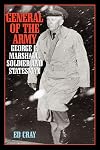
George Marshall is the organization man's poster boy and typically for organization men not very well known. As planner and organizer of the American victory, he oversaw the build-up of the US army and the creation of the US military industrial complex. US politics had, just as before the US Civil War and WWI, starved the US army of both men and resources, so that at the start of WWII, the US had a weaker army than Bulgaria. Marshall trained, staffed and equipped the US army for both WWII show more and the Cold War (against the opposition of a stingy, isolationist, irresponsible even unpatriotic Republican party).
Ed Cray's excellent biography shows the slow rise of Marshall within the army, a grinding struggle against a ossified command structure that preferred seniority over talent. Marshall was lucky in finding mentors who shielded him and exposed him to more and more demanding tasks. In WWI France, Marshall planned one of Pershing's logistically complex operations. As an officer instructor in the interwar years, he revolutionized US military education. As Chief of Staff prior and during WWII, Marshall built the US forces from scratch but is also partly responsible for the Pearl Harbour fiasco. The failed US-China policy stains Marshall's record. The US army poured enormous resources into the corrupt hands of fascist dictator Chiang "Peanut" Kai-Shek and alienated the US-friendly Communists. As US China emissary in post-WWII, Marshall was forced into the role of an unhonest broker that resulted in the creation of Communist China. As Truman's secretary of State, Marshall was more successful. He made the Marshall Plan (and thus European recovery and prosperity) a reality. Secretary of Defense during the Korean War, he did provide too few checks to the ego of General MacArthur but backed his removal.
Marshall's strength's were his devotion to work and duty, his excellence in planning and officer selection. His weaknesses were a reluctance to interfere when his subordinates ran into troubles and a political naivety towards the master manipulators Roosevelt, Stalin and Chiang Kai-Shek. It is a tribute to mankind that this hard-working, unassuming and quiet man prevailed over the pompous generalissimi. show less
Ed Cray's excellent biography shows the slow rise of Marshall within the army, a grinding struggle against a ossified command structure that preferred seniority over talent. Marshall was lucky in finding mentors who shielded him and exposed him to more and more demanding tasks. In WWI France, Marshall planned one of Pershing's logistically complex operations. As an officer instructor in the interwar years, he revolutionized US military education. As Chief of Staff prior and during WWII, Marshall built the US forces from scratch but is also partly responsible for the Pearl Harbour fiasco. The failed US-China policy stains Marshall's record. The US army poured enormous resources into the corrupt hands of fascist dictator Chiang "Peanut" Kai-Shek and alienated the US-friendly Communists. As US China emissary in post-WWII, Marshall was forced into the role of an unhonest broker that resulted in the creation of Communist China. As Truman's secretary of State, Marshall was more successful. He made the Marshall Plan (and thus European recovery and prosperity) a reality. Secretary of Defense during the Korean War, he did provide too few checks to the ego of General MacArthur but backed his removal.
Marshall's strength's were his devotion to work and duty, his excellence in planning and officer selection. His weaknesses were a reluctance to interfere when his subordinates ran into troubles and a political naivety towards the master manipulators Roosevelt, Stalin and Chiang Kai-Shek. It is a tribute to mankind that this hard-working, unassuming and quiet man prevailed over the pompous generalissimi. show less
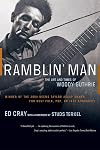
I didn't know much about Woody Guthrie except the myth and a few bits and pieces that came out in Arlo's movie Alice's Restaurant. The story behind the myth is much more intriguing and downright tragic. Guthrie was the outrageous spirit who shocked the world into thinking about things they would rather ignore and who lived out his beliefs each day of his life. He ignored the niceties and lived close to the bone, hurting in some way almost everyone with whom he came into contact, including show more his three wives. At least twice in the book, Guthrie friends comment that people with great talent aren't necessarily great people.
One particularly intriguing point is made close to the end of the book. While Guthrie's family suffered hard times in the depression, his siblings went on to lead fairly prosperous middle class lives. Guthrie chose poverty, his restless nature making a settled life impossible.
Even after finishing the book, I'm not sure I know the real Guthrie. He was depicted as a slovenly, ill mannered man, unable to be monogamous, seemingly determined to annoy even those who loved him almost unconditionally. Something of a let down for me, I suppose, raised as I was on the myth, and yet there is another side to the story, a sense of something almost mystical about Woody who lived by his own lights and his own thoughts even while trying to find his way in the world. He was living what others were talking about, using his gifts to bring attention to injustice.
And, what a life he led! Part of the generation of writers and thinkers whose Communist sympathies were popular during the New Deal but came up against the McCarthy era red hunts. He seemed to be all over the country and then back again, riding the trains, making detours, writing and writing and writing. The words seemed to flow from him, the constant no matter where he was, from the woods of Topanga Canyon to the swamps of Beluthahatchee, he wrote...songs, poems, articles, memories, fiction, borrowing typewriter time from friends until he could afford his own. It was the words that kept him going, the words that told the story of not just Guthrie but of America. show less
One particularly intriguing point is made close to the end of the book. While Guthrie's family suffered hard times in the depression, his siblings went on to lead fairly prosperous middle class lives. Guthrie chose poverty, his restless nature making a settled life impossible.
Even after finishing the book, I'm not sure I know the real Guthrie. He was depicted as a slovenly, ill mannered man, unable to be monogamous, seemingly determined to annoy even those who loved him almost unconditionally. Something of a let down for me, I suppose, raised as I was on the myth, and yet there is another side to the story, a sense of something almost mystical about Woody who lived by his own lights and his own thoughts even while trying to find his way in the world. He was living what others were talking about, using his gifts to bring attention to injustice.
And, what a life he led! Part of the generation of writers and thinkers whose Communist sympathies were popular during the New Deal but came up against the McCarthy era red hunts. He seemed to be all over the country and then back again, riding the trains, making detours, writing and writing and writing. The words seemed to flow from him, the constant no matter where he was, from the woods of Topanga Canyon to the swamps of Beluthahatchee, he wrote...songs, poems, articles, memories, fiction, borrowing typewriter time from friends until he could afford his own. It was the words that kept him going, the words that told the story of not just Guthrie but of America. show less

This book was an excellent read. But you have to appreciate its intent and what other books offer.
First I think George Marshall was a brilliant soldier. Probably one of the smartest, if not the smartest, officer to hold General officer rank in the United States. The US is a better nation because of his contributions. I can’t visualize how exactly our involvement in World War II might have been different without him. But I can say that without Marshall, things would have been quite show more different and probably much longer.
Clearly there is a only limited amount of material to be found on any one person so each biography of the same person looks at the person with a different perspective.
I have read several biographies on Marshall or related topics (each with different focuses):
Marshall and His Generals: U.S. Army Commanders in World War II by Stephen R. Taaffe (A study of Marshall’s relationship with the 38 Corps Commanders and above during the war.)
Partners in Command: George Marshall and Dwight Eisenhower in War and Peace by Mark Perry (self-explanatory title)
There's a War to Be Won: The United States Army in World War II by Geoffrey Perret (While focused on how the US transitioned into and ran its various operations during the war, it provides a fascinating overview of Marshall as the central force and inspiration behind many of the Army’s activities leading to its impressive status at the end of the war.)
15 Stars: Eisenhower, MacArthur, Marshall: Three Generals Who Saved the American Century by Stanley Weintraub (self-explanatory title)
George C. Marshall: A General for Peace by Alan Saunders (A relatively short book, but it covers many of Marshall’s career highlights.)
Marshall, Hero For Our Times by Leonard Mosley (One of the better biographies on a WWII US general that I have read. Lots of detail.)
I found Cray’s book was very readable and one the better general officer biographies I have read. I do have some comments that temper this statement with reality:
I noted a couple of entries that seemed to repeat material and wording from other books. Not critical as there are probably a limited number of ways of saying the same thing. But I had the impression some entries were almost copy and paste from other books.
Each chapter discussed major phases or events in Marshall’s life and career. The first part of each chapter provides historical context and background for the subsequent presentation of Marshall’s actions. Some events are quickly covered or just not addressed. I found there to be a very fast leap from Winter of 43/44 to the June 1944 Normandy invasion. I am sure that Marshall was just as busy as Ike during this period, but nothing was mentioned about Marshall.
I prefer biographies that don’t dwell into the author’s personal opinions about their subjects. I noted a couple of statements that took opinion stances that probably were not needed in the book.
Overall still a very good book. Fills in some blanks and background that other books do not get into. Worth the purchase to read and add to my library. show less
First I think George Marshall was a brilliant soldier. Probably one of the smartest, if not the smartest, officer to hold General officer rank in the United States. The US is a better nation because of his contributions. I can’t visualize how exactly our involvement in World War II might have been different without him. But I can say that without Marshall, things would have been quite show more different and probably much longer.
Clearly there is a only limited amount of material to be found on any one person so each biography of the same person looks at the person with a different perspective.
I have read several biographies on Marshall or related topics (each with different focuses):
Marshall and His Generals: U.S. Army Commanders in World War II by Stephen R. Taaffe (A study of Marshall’s relationship with the 38 Corps Commanders and above during the war.)
Partners in Command: George Marshall and Dwight Eisenhower in War and Peace by Mark Perry (self-explanatory title)
There's a War to Be Won: The United States Army in World War II by Geoffrey Perret (While focused on how the US transitioned into and ran its various operations during the war, it provides a fascinating overview of Marshall as the central force and inspiration behind many of the Army’s activities leading to its impressive status at the end of the war.)
15 Stars: Eisenhower, MacArthur, Marshall: Three Generals Who Saved the American Century by Stanley Weintraub (self-explanatory title)
George C. Marshall: A General for Peace by Alan Saunders (A relatively short book, but it covers many of Marshall’s career highlights.)
Marshall, Hero For Our Times by Leonard Mosley (One of the better biographies on a WWII US general that I have read. Lots of detail.)
I found Cray’s book was very readable and one the better general officer biographies I have read. I do have some comments that temper this statement with reality:
I noted a couple of entries that seemed to repeat material and wording from other books. Not critical as there are probably a limited number of ways of saying the same thing. But I had the impression some entries were almost copy and paste from other books.
Each chapter discussed major phases or events in Marshall’s life and career. The first part of each chapter provides historical context and background for the subsequent presentation of Marshall’s actions. Some events are quickly covered or just not addressed. I found there to be a very fast leap from Winter of 43/44 to the June 1944 Normandy invasion. I am sure that Marshall was just as busy as Ike during this period, but nothing was mentioned about Marshall.
I prefer biographies that don’t dwell into the author’s personal opinions about their subjects. I noted a couple of statements that took opinion stances that probably were not needed in the book.
Overall still a very good book. Fills in some blanks and background that other books do not get into. Worth the purchase to read and add to my library. show less
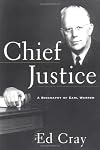
Cray clearly admires Warren, and this plus his liberal political bias mars the narrative and the selection and emphasis of event. Nevertheless, as a native Californian, I was amazed at how little I knew about the history of California in the first half of the 20th century.
Lists
Awards


You May Also Like


Associated Authors
Statistics
- Works
- 18
- Members
- 693
- Popularity
- #36,520
- Rating
- 4.1
- Reviews
- 9
- ISBNs
- 33
- Favorited
- 1