On This Page
Description
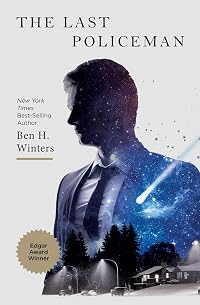
" The] weird, beautiful, unapologetically apocalyptic Last Policeman trilogy is one of my favorite mystery series."--John Green, author of The Fault in Our Stars and Paper Towns Winner of the 2013 Edgar(R) Award Winner for Best Paperback Original What's the point in solving murders if we're all going to die soon, anyway? Detective Hank Palace has faced this question ever since asteroid 2011GV1 hovered into view. There's no chance left. No hope. Just six precious months until impact." ""The show more Last Policeman "presents a fascinating portrait of a pre-apocalyptic United States. The economy spirals downward while crops rot in the fields. Churches and synagogues are packed. People all over the world are walking off the job--but not Hank Palace. He's investigating a death by hanging in a city that sees a dozen suicides every week--except this one feels suspicious, and Palace is the only cop who cares. " " The first in a trilogy, "The Last Policeman "offers a mystery set on the brink of an apocalypse. As Palace's investigation plays out under the shadow of 2011GV1, we're confronted by hard questions way beyond "whodunit." "What basis does civilization rest upon? What is life worth? What would any of us""do, what would we "really "do, if our days were numbered?" show lessTags
Recommendations

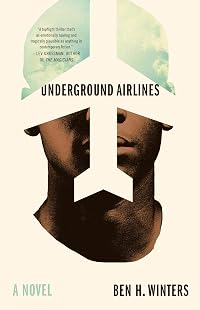
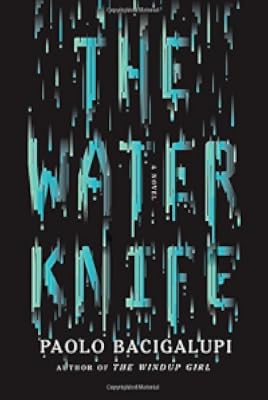
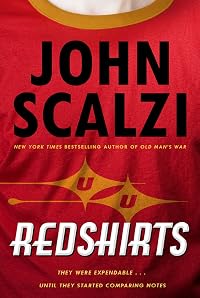

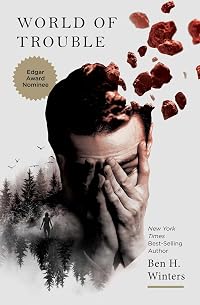



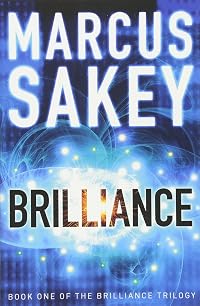
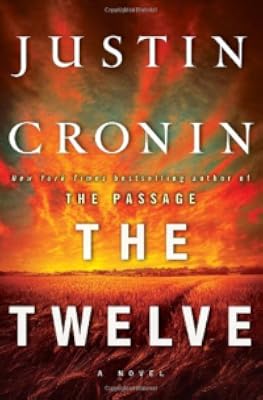
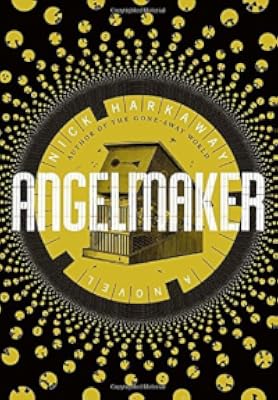
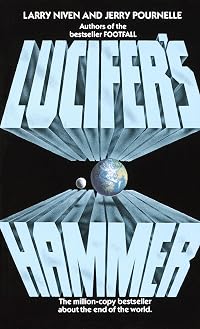



Member Recommendations

EerierIdyllMeme Noir mysteries exploring interesting hypothetical settings with ticking timers.
JanesList I can't explain quite why, but these two detectives remind me of each other.
01
Member Reviews
The world is ending. Everyone will be dead soon. Everyone knows that. Everyone reacts to it differently.
Hank Palace, recently promoted to his dream job of homicide detective, decides to carry on investigating murders. Or perhaps it's more accurate to say that it never occurs to him to stop.
His focus, his need to follow the rules, his quiet persistence in his task, affects the people around him, making them uncomfortable, or bemused, or sometimes even hopeful.
This is not a Summer Blockbuster Movie "end of the world" novel. There are no aliens, or zombies. Our hero is not trying to save the world in the next 48 Hours. He's not even trying to save himself. He just wants to do his job as well as he can.
Actually, Palace doesn't have much of show more a life to save. He's a loner and a misfit. Not the charismatic kind that you find in buddy-cop movies, but the slightly embarrassing to notice kind of loner that people avoid either because that kind of isolation might be contagious, or because of an Uncanny Valley Effect that says that, although Hank looks normal, there's something a little off about him that's hard to take.
On the surface, nothing much happens in this book. There is a murder and a mystery, actually more than one mystery, and love and betrayal and lots and lots of deaths but the book feels almost horrifyingly tranquil.
Ben Winters' writing is first-rate: economical, precise and quietly clever. Peter Berkrot's narration in the audiobook amplifies this by being undramatic without being flat or dull.
When I first finished the book a couple of months ago, I gave it a three star rating on goodreads.com but I couldn't bring myself to write a review. I felt as if I'd finished the book but it hadn't finished with me.
I found my mind returning to it over the following weeks and slowly articulated to myself why the book wouldn't leave me alone. It's because, without the intervention of an asteroid, everyone's world is ending. We will all be dead relatively soon (I'm fifty-seven, neither of my parents made it past sixty-nine, death's wingéd chariot is starting to tailgate me). We all know it. We all react to it differently. All that Winters' changed in his novel is that everyone is going to die at more or less the same time.
The strongest message I got from his book is that most of us get through the day because we believe there will be an infinite number of tomorrows, or at least too many to have to worry yet, and if we do get that "any day now" warning, we know that the world, and the people we care about, will go on. Which makes what happens to us today, bearable. Which takes away the need to think about why I spent today on a train for four hours to spend tomorrow in meeting with people I don't know so I can make the same journey back tomorrow night.
I'm an Atheist by conviction. I believe that done is done. I know I'm going to die. I don't believe there will be an accounting. No reward. No punishment. No anything. I thought I understood what that meant but I think I was still holding out on myself until I read Winters' book.
The people around Palace are making choices. Some of them are pursuing bucket-lists like the activities still matter to them, like goals have any meaning any more. Some are losing themselves in drink or drugs or sex or all three. Some of them are just lost, shocked, adrift, almost dead already. A few, a very few, carry on doing the things they love: making the perfect cup of coffee, or doing what it takes to solve a murder. I realize that I and the people around me, all of us, are acting out these reactions to our impending ending everyday, we just make ourselves forget about it.
Ben Winters' has taken all this "normal" getting-through-the-day behaviour and put it in a setting that makes it problematic, thereby making our seen-but-too-familiar to be noticed reactions visible.
This is what was unsettling me about the book: it was giving me a lens to see that, in many ways, the end of the world really is nigh and I'm plodding on like I don't have a choice.
Anyway, I've upgraded my goodreads rating to four stars, bought "Countdown City", book two of the trilogy and I've written this review to exorcise my discomfort.
If you're in the mood for some uncanny reality, give "The Last Policeman" a try. show less
Hank Palace, recently promoted to his dream job of homicide detective, decides to carry on investigating murders. Or perhaps it's more accurate to say that it never occurs to him to stop.
His focus, his need to follow the rules, his quiet persistence in his task, affects the people around him, making them uncomfortable, or bemused, or sometimes even hopeful.
This is not a Summer Blockbuster Movie "end of the world" novel. There are no aliens, or zombies. Our hero is not trying to save the world in the next 48 Hours. He's not even trying to save himself. He just wants to do his job as well as he can.
Actually, Palace doesn't have much of show more a life to save. He's a loner and a misfit. Not the charismatic kind that you find in buddy-cop movies, but the slightly embarrassing to notice kind of loner that people avoid either because that kind of isolation might be contagious, or because of an Uncanny Valley Effect that says that, although Hank looks normal, there's something a little off about him that's hard to take.
On the surface, nothing much happens in this book. There is a murder and a mystery, actually more than one mystery, and love and betrayal and lots and lots of deaths but the book feels almost horrifyingly tranquil.
Ben Winters' writing is first-rate: economical, precise and quietly clever. Peter Berkrot's narration in the audiobook amplifies this by being undramatic without being flat or dull.
When I first finished the book a couple of months ago, I gave it a three star rating on goodreads.com but I couldn't bring myself to write a review. I felt as if I'd finished the book but it hadn't finished with me.
I found my mind returning to it over the following weeks and slowly articulated to myself why the book wouldn't leave me alone. It's because, without the intervention of an asteroid, everyone's world is ending. We will all be dead relatively soon (I'm fifty-seven, neither of my parents made it past sixty-nine, death's wingéd chariot is starting to tailgate me). We all know it. We all react to it differently. All that Winters' changed in his novel is that everyone is going to die at more or less the same time.
The strongest message I got from his book is that most of us get through the day because we believe there will be an infinite number of tomorrows, or at least too many to have to worry yet, and if we do get that "any day now" warning, we know that the world, and the people we care about, will go on. Which makes what happens to us today, bearable. Which takes away the need to think about why I spent today on a train for four hours to spend tomorrow in meeting with people I don't know so I can make the same journey back tomorrow night.
I'm an Atheist by conviction. I believe that done is done. I know I'm going to die. I don't believe there will be an accounting. No reward. No punishment. No anything. I thought I understood what that meant but I think I was still holding out on myself until I read Winters' book.
The people around Palace are making choices. Some of them are pursuing bucket-lists like the activities still matter to them, like goals have any meaning any more. Some are losing themselves in drink or drugs or sex or all three. Some of them are just lost, shocked, adrift, almost dead already. A few, a very few, carry on doing the things they love: making the perfect cup of coffee, or doing what it takes to solve a murder. I realize that I and the people around me, all of us, are acting out these reactions to our impending ending everyday, we just make ourselves forget about it.
Ben Winters' has taken all this "normal" getting-through-the-day behaviour and put it in a setting that makes it problematic, thereby making our seen-but-too-familiar to be noticed reactions visible.
This is what was unsettling me about the book: it was giving me a lens to see that, in many ways, the end of the world really is nigh and I'm plodding on like I don't have a choice.
Anyway, I've upgraded my goodreads rating to four stars, bought "Countdown City", book two of the trilogy and I've written this review to exorcise my discomfort.
If you're in the mood for some uncanny reality, give "The Last Policeman" a try. show less
Roughly fifty percent of the world’s population will be dead in a few months. You are a police detective. People are still murdering each other for the same old reasons. Do you really want to spend all your remaining time and energy catching the bad guys? Is there any point? Well, freshly minted Police Detective Hank Palace believes there is, and although everyone else is eager to call Peter Zell’s death a suicide, he does not buy it.
Maia, the massive asteroid officially known as 2011GV, is on a collision course with the earth and there is nothing anyone can do to change that. Even the date of the devastating crash (expected to have the blast force of 1,000 Hiroshima explosions) has been publicly announced. All that remains to be show more made public is Maia’s strike-point. Surprisingly, although public services are disappearing, food supplies are shrinking, and the economy is crashing, a reasonable semblance of everyday life continues. An increasing number of people, however, have decided to check out early by taking their own lives. More often, they just stop coming to work, preferring, instead, to spend the remaining time with their families or doing the things on their bucket lists.
Hank Palace is not the only law enforcement officer still on the job in Concord, New Hampshire, but he is one of the few who still cares about locking criminals up now that every sentence longer than six months is effectively a sentence of life without parole. He is certain that, as the streets become more dangerous with each passing month, the certainty of dying in jail if caught in even a minor criminal act is the only thing that keeps people even as safe as they still are.
The Last Policeman is the first book of a planned trilogy within which Ben Winters will explore what might happen when everyone knows in advance the exact date of a catastrophe that will lead eventually to the end life on the planet. In this pre-apocalyptic introduction to the series, the United States (and presumably, the rest of the world) is already a bleak place. Most of the characters in this dark novel reflect the bleakness of their environment, one in which nothing can be taken for granted and no individual taken at face value.
The Last Policeman has been characterized as a pre-apocalyptic police procedural, and that is exactly what it is. Detective Palace’s quest to prove his hunch that Peter Zell did not kill himself - to which the bulk of the novel is dedicated - is complicated by society’s irreversible breakdown. The crime lab is backed up for weeks, and has been falling farther and farther behind schedule as apathy becomes the norm and workers desert their jobs. Investigators are willing to accept the easiest, most obvious answer for any suspicious death encountered. Insurance companies, determined to deny as many claims as possible (in order to use the cash to pay employee salaries), make it obvious to the police that they prefer a finding of suicide over murder.
Through it all, Hank Palace’s determination to do right by the dead man, helps to maintain a bit of order in a world that will move closer to the brink of destruction in the second book of the series.
Rated at: 4.0 show less
Maia, the massive asteroid officially known as 2011GV, is on a collision course with the earth and there is nothing anyone can do to change that. Even the date of the devastating crash (expected to have the blast force of 1,000 Hiroshima explosions) has been publicly announced. All that remains to be show more made public is Maia’s strike-point. Surprisingly, although public services are disappearing, food supplies are shrinking, and the economy is crashing, a reasonable semblance of everyday life continues. An increasing number of people, however, have decided to check out early by taking their own lives. More often, they just stop coming to work, preferring, instead, to spend the remaining time with their families or doing the things on their bucket lists.
Hank Palace is not the only law enforcement officer still on the job in Concord, New Hampshire, but he is one of the few who still cares about locking criminals up now that every sentence longer than six months is effectively a sentence of life without parole. He is certain that, as the streets become more dangerous with each passing month, the certainty of dying in jail if caught in even a minor criminal act is the only thing that keeps people even as safe as they still are.
The Last Policeman is the first book of a planned trilogy within which Ben Winters will explore what might happen when everyone knows in advance the exact date of a catastrophe that will lead eventually to the end life on the planet. In this pre-apocalyptic introduction to the series, the United States (and presumably, the rest of the world) is already a bleak place. Most of the characters in this dark novel reflect the bleakness of their environment, one in which nothing can be taken for granted and no individual taken at face value.
The Last Policeman has been characterized as a pre-apocalyptic police procedural, and that is exactly what it is. Detective Palace’s quest to prove his hunch that Peter Zell did not kill himself - to which the bulk of the novel is dedicated - is complicated by society’s irreversible breakdown. The crime lab is backed up for weeks, and has been falling farther and farther behind schedule as apathy becomes the norm and workers desert their jobs. Investigators are willing to accept the easiest, most obvious answer for any suspicious death encountered. Insurance companies, determined to deny as many claims as possible (in order to use the cash to pay employee salaries), make it obvious to the police that they prefer a finding of suicide over murder.
Through it all, Hank Palace’s determination to do right by the dead man, helps to maintain a bit of order in a world that will move closer to the brink of destruction in the second book of the series.
Rated at: 4.0 show less
 This review was written for LibraryThing Early Reviewers.
An asteroid is going to hit the planet and cause an extinction-level event in a few months. Our protagonist, Henry Palace, is a newly minted detective, and he believes (when no one else does) that one of the suicides he’s called in on is actually a murder. The novel is about the question, What does it mean to seek justice when we’re all about to die in the very near future? I thought it did a great job—Det. Palace is rigidly sympathetic, and the other characters are equally understandable.
A routine detective story enlivened by an interesting concept, Ben Winters' The Last Policeman is entertaining despite failing to harness its great potential. Hank Palace, its detective protagonist, is investigating a suicide by hanging that he believes is a murder. The world is due to end, you see, in six months – an asteroid has been spotted on a collision course with Earth – and suicides are becoming understandably common.
I'm not a great lover of crime writing, but even so I found Winters' own contribution to this saturated genre rather underwhelming. The suicide/murder is rather banal and lacks mystery, the procedural is uninspiring and hard to follow, and the writing itself lacks twists or pace. The characters are decent show more enough, but nothing special. Winters' also fails to utilise his small-town-America setting, despite this being the perfect scenario for a mystery story with some strange goings-on.
Nevertheless, while Winters is not the greatest suspense writer, he alighted upon an interesting idea. This is enough to sustain the book through its lesser moments, and it remains an easy and agreeable read throughout. The approaching asteroid is unfortunately under-utilised in a practical sense: as society unravels, no one has much gas, and cellphone service has become unreliable, but such things do not prove a hindrance on the protagonist's investigation. "The very idea of motive must be reexamined in the context of the looming tragedy," our detective muses (pg. 116), but this cosmic game-changer rarely imposes itself.
In a way, it's good that this is the case; The Last Policeman is, thankfully, not a novelty thriller in which our hero is in a superficial race against time to solve the case and save the world. Winters is smart enough to avoid this clichéd trap. Instead, the prospect of the approaching asteroid is always there to provide a useful juxtaposition; an existential undercurrent (unfortunately, again, largely unexploited by Winters) where we wonder why our protagonist is still making such effort to solve a banal crime when, in a few months, it'll all be moot anyway. It's a great theme, and not only makes our protagonist more interesting but provides a different lens through which to view the world.
"People in the main are simply muddling along," our detective observes on page 61. "Go to work, sit at your desk, hope the company is still around come Monday." Is this ennui so different from our own world, only thrown into sharper relief by impending cataclysm? Is its economic ennui so very different from our own, particularly in light of our own real-life cataclysm – the Covid pandemic – which showed just how banal great upheavals can be? The government's actions in Winters' book, suspending habeas corpus, and emergency actions by the IMF also reminded me of lockdown, though of course Winters would not have known this when writing in 2012. "A lot of CEOs have cashed in their chips," Winters writes on page 36, and this also has echoes of our own story, in which giving back to society, or even routine tax-paying, seems to be optional among a certain class. "People [are] hiding behind the asteroid, like it's an excuse for poor conduct, for miserable and desperate and selfish behaviour" (pg. 255), and by writing about such hiding, Winters brings it into the light for the reader.
This, then, is the great appeal of a book that, while perfectly serviceable and easy to read, is otherwise unremarkable. The Last Policeman might not be engrossing in its central crime mystery, nor even in its approaching asteroid apocalypse, but the concept does give us a perspective that is quite unique and singularly interesting – and Winters does not fumble it. His detective protagonist fascinates despite his and the book's banality because as readers we instinctively admire someone who goes about their business quietly and decently. The charm of this book, which elevates it far beyond its objective quality, is "the perseverance in this world, despite it all, of things done right" (pg. 86). It's someone just trying to do the right thing, thankless as it is, in a world of economic ennui, societal self-centredness and any excuse for drug-taking or not doing one's bit. Gods, are we sure this should even be marked as 'fiction'? show less
I'm not a great lover of crime writing, but even so I found Winters' own contribution to this saturated genre rather underwhelming. The suicide/murder is rather banal and lacks mystery, the procedural is uninspiring and hard to follow, and the writing itself lacks twists or pace. The characters are decent show more enough, but nothing special. Winters' also fails to utilise his small-town-America setting, despite this being the perfect scenario for a mystery story with some strange goings-on.
Nevertheless, while Winters is not the greatest suspense writer, he alighted upon an interesting idea. This is enough to sustain the book through its lesser moments, and it remains an easy and agreeable read throughout. The approaching asteroid is unfortunately under-utilised in a practical sense: as society unravels, no one has much gas, and cellphone service has become unreliable, but such things do not prove a hindrance on the protagonist's investigation. "The very idea of motive must be reexamined in the context of the looming tragedy," our detective muses (pg. 116), but this cosmic game-changer rarely imposes itself.
In a way, it's good that this is the case; The Last Policeman is, thankfully, not a novelty thriller in which our hero is in a superficial race against time to solve the case and save the world. Winters is smart enough to avoid this clichéd trap. Instead, the prospect of the approaching asteroid is always there to provide a useful juxtaposition; an existential undercurrent (unfortunately, again, largely unexploited by Winters) where we wonder why our protagonist is still making such effort to solve a banal crime when, in a few months, it'll all be moot anyway. It's a great theme, and not only makes our protagonist more interesting but provides a different lens through which to view the world.
"People in the main are simply muddling along," our detective observes on page 61. "Go to work, sit at your desk, hope the company is still around come Monday." Is this ennui so different from our own world, only thrown into sharper relief by impending cataclysm? Is its economic ennui so very different from our own, particularly in light of our own real-life cataclysm – the Covid pandemic – which showed just how banal great upheavals can be? The government's actions in Winters' book, suspending habeas corpus, and emergency actions by the IMF also reminded me of lockdown, though of course Winters would not have known this when writing in 2012. "A lot of CEOs have cashed in their chips," Winters writes on page 36, and this also has echoes of our own story, in which giving back to society, or even routine tax-paying, seems to be optional among a certain class. "People [are] hiding behind the asteroid, like it's an excuse for poor conduct, for miserable and desperate and selfish behaviour" (pg. 255), and by writing about such hiding, Winters brings it into the light for the reader.
This, then, is the great appeal of a book that, while perfectly serviceable and easy to read, is otherwise unremarkable. The Last Policeman might not be engrossing in its central crime mystery, nor even in its approaching asteroid apocalypse, but the concept does give us a perspective that is quite unique and singularly interesting – and Winters does not fumble it. His detective protagonist fascinates despite his and the book's banality because as readers we instinctively admire someone who goes about their business quietly and decently. The charm of this book, which elevates it far beyond its objective quality, is "the perseverance in this world, despite it all, of things done right" (pg. 86). It's someone just trying to do the right thing, thankless as it is, in a world of economic ennui, societal self-centredness and any excuse for drug-taking or not doing one's bit. Gods, are we sure this should even be marked as 'fiction'? show less
Rating: 4* of five
The Publisher Says: What’s the point in solving murders if we’re all going to die soon, anyway?
Detective Hank Palace has faced this question ever since asteroid 2011GV1 hovered into view. There’s no chance left. No hope. Just six precious months until impact.
The Last Policeman presents a fascinating portrait of a pre-apocalyptic United States. The economy spirals downward while crops rot in the fields. Churches and synagogues are packed. People all over the world are walking off the job—but not Hank Palace. He’s investigating a death by hanging in a city that sees a dozen suicides every week—except this one feels suspicious, and Palace is the only cop who cares.
The first in a trilogy, The Last Policeman show more offers a mystery set on the brink of an apocalypse. As Palace’s investigation plays out under the shadow of 2011GV1, we’re confronted by hard questions way beyond “whodunit.” What basis does civilization rest upon? What is life worth? What would any of us do, what would we really do, if our days were numbered?
My Review: I just loooooooooove it when the author, while playing fair with me, still surprises me with the solution to the crime(s). Mr. Winters has done this, and to a very satisfying T.
As apocalyptic tales go, this is one of the few that doesn't make me wrinkle my nose and schplurgle my lips in distaste. I completely buy that, facing extinction, the privileged population of the US would go all Bucket List and do all the stuff they didn't or couldn't before The End was writ large across the skies. It seems solipsistic, selfish, and inconsiderate...pure-D Murrikin behavior. But even with The End coming, gun-hoarders are seen as nutballs, just like they are now. I can believe this.
I also completely understand Henry Palace, our detective, staying on the job. He loves the job. He needs a challenge so he doesn't go nuts. He believes in a large, abstract greater good called "Justice" and he doesn't think that a little detail like the impending end of the world diminishes the need for and the right to Justice.
Gag...I'm making him sound like some kind of Eagle Scout...if it helps dispel some of that distasteful miasma, he also sleeps with a key witness. What ensues from that has to be read to be absorbed, especially in light of the killer's identity.
Off to pick up book two for some bedtime reading! show less
The Publisher Says: What’s the point in solving murders if we’re all going to die soon, anyway?
Detective Hank Palace has faced this question ever since asteroid 2011GV1 hovered into view. There’s no chance left. No hope. Just six precious months until impact.
The Last Policeman presents a fascinating portrait of a pre-apocalyptic United States. The economy spirals downward while crops rot in the fields. Churches and synagogues are packed. People all over the world are walking off the job—but not Hank Palace. He’s investigating a death by hanging in a city that sees a dozen suicides every week—except this one feels suspicious, and Palace is the only cop who cares.
The first in a trilogy, The Last Policeman show more offers a mystery set on the brink of an apocalypse. As Palace’s investigation plays out under the shadow of 2011GV1, we’re confronted by hard questions way beyond “whodunit.” What basis does civilization rest upon? What is life worth? What would any of us do, what would we really do, if our days were numbered?
My Review: I just loooooooooove it when the author, while playing fair with me, still surprises me with the solution to the crime(s). Mr. Winters has done this, and to a very satisfying T.
As apocalyptic tales go, this is one of the few that doesn't make me wrinkle my nose and schplurgle my lips in distaste. I completely buy that, facing extinction, the privileged population of the US would go all Bucket List and do all the stuff they didn't or couldn't before The End was writ large across the skies. It seems solipsistic, selfish, and inconsiderate...pure-D Murrikin behavior. But even with The End coming, gun-hoarders are seen as nutballs, just like they are now. I can believe this.
I also completely understand Henry Palace, our detective, staying on the job. He loves the job. He needs a challenge so he doesn't go nuts. He believes in a large, abstract greater good called "Justice" and he doesn't think that a little detail like the impending end of the world diminishes the need for and the right to Justice.
Gag...I'm making him sound like some kind of Eagle Scout...if it helps dispel some of that distasteful miasma, he also sleeps with a key witness. What ensues from that has to be read to be absorbed, especially in light of the killer's identity.
Off to pick up book two for some bedtime reading! show less
"The end of the world changes everything, from a law enforcement perspective."
Hank Palace has wanted to be a police detective since he was twelve. Now, he's achieved that goal, but the world is ending in six months. An asteroid is on a collision course with Earth, but as far as Palace is concerned, that's no reason not to do his job. People are committing suicide right and left, but Palace has a funny feeling about the corpse he finds in the McDonalds restroom. Could it be murder? Despite ridicule from his colleagues and superiors, Palace is going to investigate this case -- even if it takes him the rest of his life.
This sounds pretty grim, and it does have those elements, but there's also a lot of great gallows humor that really tips show more the balance. I found it a fun, fast read, and immediately picked up the sequel. show less
Hank Palace has wanted to be a police detective since he was twelve. Now, he's achieved that goal, but the world is ending in six months. An asteroid is on a collision course with Earth, but as far as Palace is concerned, that's no reason not to do his job. People are committing suicide right and left, but Palace has a funny feeling about the corpse he finds in the McDonalds restroom. Could it be murder? Despite ridicule from his colleagues and superiors, Palace is going to investigate this case -- even if it takes him the rest of his life.
This sounds pretty grim, and it does have those elements, but there's also a lot of great gallows humor that really tips show more the balance. I found it a fun, fast read, and immediately picked up the sequel. show less
What an opening. I stumbled on this book on a table at Bookshop Santa Cruz, scanned the jacket copy and thought it might be up my alley.
Was it ever.
The premise, of course, is fantastic: the world's fate is decided, stuff is about to get really, really bad, most of us won't make it. What do you do? Do you go bucket list and check off those last few things you always wanted to do? Or do you preempt the asteroid that's about to hit the planet and end it early?
New Detective Hank Palace is our guide through these end times. While the world crumbles around him he keeps digging at a scab of a death that he can't let himself think is a simple suicide, like the many plaguing the city of Concord, New Hampshire, and the rest of the world.
The show more writing is pretty sharp, the characters really well drawn, and the premise, of course, well, I've already mentioned that. The actual detective work is, well... perhaps it's intentional, making Detective Hank Palace seemingly oblivious to certain clues, but it was pretty easy for even me to guess what might be at the core of Peter Zell's suspicious death in the bathroom of a McDonalds, and I'm not usually one to hazard a guess in murder mysteries. So if you're looking for a mystery you can sink your teeth into and be surprised, in the great reckoning, well, maybe this book isn't it.
I spent a vacation ranting and raving about this book to friends and family (of which I have none left, because they all either got sick of me raving about the book at them or they went off to pick up a copy) -- and I hadn't even gotten to Countdown City, the next in the trilogy... I just really enjoyed this book and loved the idea of the arc of the remaining two books, as the asteroid slouched inevitably round to Bethlehem (and the rest of the world). show less
Was it ever.
The premise, of course, is fantastic: the world's fate is decided, stuff is about to get really, really bad, most of us won't make it. What do you do? Do you go bucket list and check off those last few things you always wanted to do? Or do you preempt the asteroid that's about to hit the planet and end it early?
New Detective Hank Palace is our guide through these end times. While the world crumbles around him he keeps digging at a scab of a death that he can't let himself think is a simple suicide, like the many plaguing the city of Concord, New Hampshire, and the rest of the world.
The show more writing is pretty sharp, the characters really well drawn, and the premise, of course, well, I've already mentioned that. The actual detective work is, well... perhaps it's intentional, making Detective Hank Palace seemingly oblivious to certain clues, but it was pretty easy for even me to guess what might be at the core of Peter Zell's suspicious death in the bathroom of a McDonalds, and I'm not usually one to hazard a guess in murder mysteries. So if you're looking for a mystery you can sink your teeth into and be surprised, in the great reckoning, well, maybe this book isn't it.
I spent a vacation ranting and raving about this book to friends and family (of which I have none left, because they all either got sick of me raving about the book at them or they went off to pick up a copy) -- and I hadn't even gotten to Countdown City, the next in the trilogy... I just really enjoyed this book and loved the idea of the arc of the remaining two books, as the asteroid slouched inevitably round to Bethlehem (and the rest of the world). show less
Members
- Recently Added By
Lists

Best Science Fiction Novels
816 works; 430 members

Best Dystopias
280 works; 277 members

Best Crime Fiction
262 works; 39 members

Recommended Apocalyptic Novels
53 works; 24 members

Recommend the 20 best books you've read in the last five years
2,168 works; 606 members

Top Five Books of 2013
1,562 works; 721 members

Dystopian and Apocalyptic Literature
350 works; 74 members

Slipstream or Interstitial Fiction
160 works; 19 members

Murder Mysteries
57 works; 11 members

Best 21st Century Books (So Far)
670 works; 85 members

It's the end of the world as we know it!
90 works; 23 members

Top Five Books of 2014
1,064 works; 398 members

Majkia's Mystery/ Thriller TBR
86 works; 3 members
Unbound Worlds 100 Best SF Books
100 works; 8 members

Edgar Award
418 works; 15 members

Fiction With Familiar Settings
280 works; 93 members

Books Read in 2024
4,623 works; 126 members

Books Read in 2021
5,361 works; 114 members

Phoebe Bridgers
29 works; 1 member

To Read
617 works; 7 members

It Came From the Skies!
7 works; 3 members

infjsarah's wishlist
408 works; 2 members

Favourite Books
1,819 works; 316 members

BingoDOG - Books With Natural Disasters: Fiction
39 works; 11 members

SantaThing 2014 Gifts
299 works; 17 members

Favorite Books Published in 2012
57 works; 17 members

Books Set in New Hampshire
10 works; 2 members

Top Cops (Detectives in Fiction)
86 works; 24 members

Books Read in 2013
1,630 works; 51 members
Post Apocalyptic Novels
41 works; 1 member
Talk Discussions
Past Discussions
The Last Policeman by Ben Winters in Post-apocalyptic Literature (September 2015)
Author Information

40+ Works 11,065 Members
Writer Ben H. Winters graduated from Washington University in St. Louis, Missouri in 1998. He is a journalist and playwright as well as an author, and he co-wrote the New York Times bestseller Sense and Sensibility and Sea Monsters. (Bowker Author Biography)
Some Editions
Awards and Honors
Awards
Distinctions
Series

Common Knowledge
- Canonical title
- The Last Policeman
- Original title
- The Last Policeman
- Original publication date
- 2012-06-01
- People/Characters
- Henry "Hank" Palace; Nico Palace; Ritchie Michelson; Peter Zell; Culverson; Denny Dotseth (show all 14); Alison Koechner; Naoim Eddes; Erik Littlejohn; Theodore Gompers; McGully; Alice Fenton; Trish McConnell; Andreas
- Important places
- Concord, New Hampshire, USA
- Epigraph
- "Even for Voltaire, the supreme rationalist, a purely rational suicide was something prodigious and slightly grotesque, like a comet or a two-headed sheep." -- A. Alvarez, The Savage God: A Study of Suicide
"And there's a slow, slow train comin', up around the bend." -- Bob Dylan, "Slow Train" - Dedication
- To Andrew Winters, of the Concord Winters
- First words
- I'm staring at the insurance man and he's staring at me, two cold gray eyes behind old-fashioned tortoiseshell frames, and I'm having this awful and inspiring feeling, like holy moly this is real, and I don't know if I'm read... (show all)y, I really don't.
- Quotations
- The end of the world changes everything, from a law enforcement perspective.
- Last words
- (Click to show. Warning: May contain spoilers.)I close the door.
- Blurbers
- Curtis, Audrey; Frauenfelder, Mark; Dobbs, Michael Ann
- Canonical DDC/MDS
- 813.6
- Canonical LCC
- PS3623.I6735
Classifications
Statistics
- Members
- 2,362
- Popularity
- 8,312
- Reviews
- 203
- Rating
- (3.81)
- Languages
- 8 — Czech, English, French, German, Polish, Portuguese, Romanian, Turkish
- Media
- Paper, Audiobook, Ebook
- ISBNs
- 22
- UPCs
- 1
- ASINs
- 8
