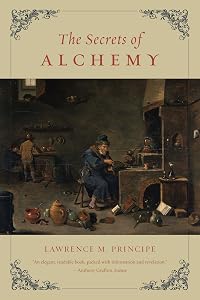
On This Page
Description
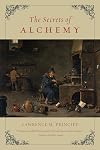
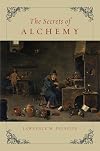
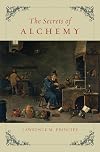
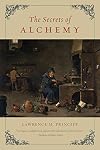
In The Secrets of Alchemy, science historian and practicing chemist Lawrence M. Principe dispels commonly held misconceptions about alchemy and sheds light on what it was, how it began, and how it influenced a range of other ideas and pursuits. Principe demonstrates the importance of alchemy during its heyday in early modern Europe, and explores its enduring place in literature, fine art, theater, and religion as well as its recent acceptance as a serious subject of study for historians of show more science. Principe also introduces readers to some of the most fascinating alchemists, such as Zosimos and Basil Valentine, whose lives dot alchemy's long reign from the third century and to the present day. Through his discussion of alchemists and their times, Principe pieces together clues from obscure texts to reveal alchemy's secrets, and uses them to recreate many of the most famous recipes in his lab, including those for the "glass of antimony" and "philosophers' tree.". show lessTags
Recommendations





Member Reviews
A very good, up-to-date history of alchemical thought and practice. Principe has threaded the needle nicely here, with a book basic enough for someone with a casual interest in the subject but with enough depth (plus thorough footnotes and a very extensive bibliography) for those with a grounding in the history of science in general or alchemy in particular. One of the major strengths of the book is that Principe has actually attempted to replicate results described in alchemical texts, with some very interesting results.
I was particularly struck by the following passage, the substance of which comes up fairly often in Principe's discussions:
"People today and people of the past often do not share the same vision or expectations of the show more world, nor do they necessarily approach the world in the same way. Their questions were not our questions, nor were their ways of answering them necessarily our ways. What seems arbitrary to one expresses a profound law of nature to the other; what seems an insight into the design of the cosmos to one appears as mere trivia to the other. Recognizing these differences helps us avoid the error of projecting our own knowledge and expectations onto the past as measures of its value" (p. 42).
In the first three chapters, Principe explores the origins of alchemical thought in the Greco-Egyptian period, in the Arabic world, and in the medieval Latin period. Then he bounces forward briefly to examine how alchemy was seen and interpreted from the eighteenth century to the present before moving back slightly in time to cover the "heyday" period of alchemical in the early modern era. The final two chapters cover his efforts to interpret certain alchemical recipes, and offer a brief survey of alchemy as portrayed in art, literature, theater, and other cultural environments.
As Principe makes clear often, there's still much work to be done before we can fully understand the role of alchemical thought and practice, but this book does much to make that possible, and I hope perhaps it will spur other efforts as well. show less
I was particularly struck by the following passage, the substance of which comes up fairly often in Principe's discussions:
"People today and people of the past often do not share the same vision or expectations of the show more world, nor do they necessarily approach the world in the same way. Their questions were not our questions, nor were their ways of answering them necessarily our ways. What seems arbitrary to one expresses a profound law of nature to the other; what seems an insight into the design of the cosmos to one appears as mere trivia to the other. Recognizing these differences helps us avoid the error of projecting our own knowledge and expectations onto the past as measures of its value" (p. 42).
In the first three chapters, Principe explores the origins of alchemical thought in the Greco-Egyptian period, in the Arabic world, and in the medieval Latin period. Then he bounces forward briefly to examine how alchemy was seen and interpreted from the eighteenth century to the present before moving back slightly in time to cover the "heyday" period of alchemical in the early modern era. The final two chapters cover his efforts to interpret certain alchemical recipes, and offer a brief survey of alchemy as portrayed in art, literature, theater, and other cultural environments.
As Principe makes clear often, there's still much work to be done before we can fully understand the role of alchemical thought and practice, but this book does much to make that possible, and I hope perhaps it will spur other efforts as well. show less
This is one of those rare books that explains alchemy as part of history, as a set of beliefs that could be either metaphorical, spiritual, or physical, and that lead toward what became chemistry.
The Secrets of Alchemy
Lawrence M. Principe
Monday, March 11, 2013
According to Lawrence Principe, alchemy has been misunderstood as a fruitless quest by old men in stinking laboratories. His goal is to locate the “noble art” in practical chemistry as well as legend. He notes that much of the obscurity of alchemical texts originates in the desire to prevent the discoveries from being understood by persons who were not adept, and to avoid the wrath of emperors. He ranges through the history from Greco-Egyptian period to the 19th century, interrupting the time-line to discuss the distorting effect that the 19th century craze for occult arts had on the history of alchemy. Alchemists pursued both chrysopoieia, the secret of transforming show more base metal into gold, and chemiatria, the pursuit of the elixir of life, observing practical chemical transformations in their laboratories. Principe was able to demonstrate some of the transformations in the modern laboratory, like gold coloring of copper coins, and the growth of a crystal tree from amorphous starting material. Interesting but pedantic, not likely to engage those without a long interest in alchemy, but a very good reference to the modern literature.
Quotes:
“Latin alchemists often quoted the motto “Liber librum aperit”, that is “one book opens another”
“…Paracelsus gave this process of separation and reintegration the name spagyria. The term has been explained as meaning “to separate and recombine”, from the Greek “span” and “ageirein” meaning “to draw out” and “to bring together”
On the ouroboros, the serpent eating its tail” “But the inscription within it - ONE THE ALL (ben to pan) - directs us again toward ancient Greek philosophical notions about a single material that serves as an underlying substrate for all substances”
“The reading of classical mythology as chymical allegory developed into a standard part of the chymical literature [15 century - Aurelio Augurello]. It appears, for example, in Atalanta fugiens but even more so in Maier’s Secrets Most Secret (Arcana arcanissima)
John Donne using the transmutation of gold as an allegory:
“Oh! ’tis imposture all:
And as no chymique yet th’Elixar got,
But glorifies his pregnant pot
If by the way to him befall
Some odiferous thing, or medicinall,
So, lovers dream a rich and long delight,
But get a winter-seeming summer’s night” show less
Lawrence M. Principe
Monday, March 11, 2013
According to Lawrence Principe, alchemy has been misunderstood as a fruitless quest by old men in stinking laboratories. His goal is to locate the “noble art” in practical chemistry as well as legend. He notes that much of the obscurity of alchemical texts originates in the desire to prevent the discoveries from being understood by persons who were not adept, and to avoid the wrath of emperors. He ranges through the history from Greco-Egyptian period to the 19th century, interrupting the time-line to discuss the distorting effect that the 19th century craze for occult arts had on the history of alchemy. Alchemists pursued both chrysopoieia, the secret of transforming show more base metal into gold, and chemiatria, the pursuit of the elixir of life, observing practical chemical transformations in their laboratories. Principe was able to demonstrate some of the transformations in the modern laboratory, like gold coloring of copper coins, and the growth of a crystal tree from amorphous starting material. Interesting but pedantic, not likely to engage those without a long interest in alchemy, but a very good reference to the modern literature.
Quotes:
“Latin alchemists often quoted the motto “Liber librum aperit”, that is “one book opens another”
“…Paracelsus gave this process of separation and reintegration the name spagyria. The term has been explained as meaning “to separate and recombine”, from the Greek “span” and “ageirein” meaning “to draw out” and “to bring together”
On the ouroboros, the serpent eating its tail” “But the inscription within it - ONE THE ALL (ben to pan) - directs us again toward ancient Greek philosophical notions about a single material that serves as an underlying substrate for all substances”
“The reading of classical mythology as chymical allegory developed into a standard part of the chymical literature [15 century - Aurelio Augurello]. It appears, for example, in Atalanta fugiens but even more so in Maier’s Secrets Most Secret (Arcana arcanissima)
John Donne using the transmutation of gold as an allegory:
“Oh! ’tis imposture all:
And as no chymique yet th’Elixar got,
But glorifies his pregnant pot
If by the way to him befall
Some odiferous thing, or medicinall,
So, lovers dream a rich and long delight,
But get a winter-seeming summer’s night” show less
Ratings
Members
- Recently Added By
Published Reviews
ThingScore 100
Lawrence M. Principe’s The Secrets of Alchemy is a deeply gratifying book that brilliantly unveils the hidden wonders of that most shadowy and misunderstood art.
Principe’s attention to alchemists’ practice unveils formidable secrets and suggests future areas for demystification. Only the most obtuse reader could deny the intellectual vitality of alchemy or limit it to the realm of the show more occult; only the most truculent would deny that investigating its material practice – especially beyond the confines of Europe – will continue to benefit the history of science. Despite the many mysteries of alchemy, its most surprising secret, Lawrence Principe has revealed, is its material basis. show less
Principe’s attention to alchemists’ practice unveils formidable secrets and suggests future areas for demystification. Only the most obtuse reader could deny the intellectual vitality of alchemy or limit it to the realm of the show more occult; only the most truculent would deny that investigating its material practice – especially beyond the confines of Europe – will continue to benefit the history of science. Despite the many mysteries of alchemy, its most surprising secret, Lawrence Principe has revealed, is its material basis. show less
added by waitingtoderail
Lists

Books Recommended by ESOTERICA Youtube Channel (Dr Justin Sledge)
29 works; 1 member


The ESOTERICA Library by Dr. Justin Sledge (Alchemy)
9 works; 1 member

In Our Time books
4,934 works; 2 members
Author Information

22+ Works 704 Members
Lawrence M. Principe is the Drew Professor of the Humanities in the Department of the History of Science and Technology and the Department of Chemistry at Johns Hopkins University. His books include The Scientific Revolution: A Very Short Introduction and Alchemy Tried in the Fire: Starkey, Boyle, and the Fate of Helmontian Chymistry, the latter show more coauthored with William Newman and published by the University of Chicago Press. show less
Series

Common Knowledge
- Canonical title*
- 煉金術的祕密
- Original title
- The Secrets of Alchemy
- First words
- Although alchemy's glory days came to an end roughly three centuries ago, the Noble Art endures in many ways. (Introduction)
To locate the origins of alchemy, we must travel back to Egypt in the first centuries of the ... (show all)Christian Era. - Blurbers
- Crowley, John; Ball, Philip; Moran, Bruce; Nummedal, Tara
*Some information comes from Common Knowledge in other languages. Click "Edit" for more information.
Classifications
Statistics
- Members
- 230
- Popularity
- 141,667
- Reviews
- 3
- Rating
- (4.09)
- Languages
- Chinese, traditional, English
- Media
- Paper, Audiobook, Ebook
- ISBNs
- 5
- ASINs
- 3