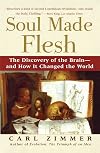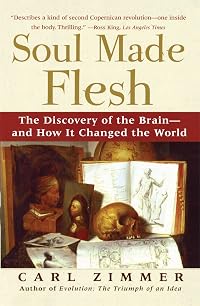
Soul Made Flesh: The Discovery of the Brain—and How It Changed the World
by Carl Zimmer 
On This Page
Description
Soul Made Flesh is the remarkable untold story of a dramatic turning point in history, the exciting discovery of how the human brain works. In an unprecedented examination of how the secrets of the brain were revealed in seventeenth-century England, award-winning author Carl Zimmer tells an extraordinary tale that unfurls against a deadly backdrop of civil war, plague, and the Great Fire of London. At the beginning of that turbulent century, no one knew how the brain worked or even what it show more looked like intact. By the century's close, the science of the brain had taken root, helping to overturn many of the most common misconceptions and dominant philosophies about man, God, and the universe. Presiding over the rise of this new scientific paradigm was the founder of modern neurology, Thomas Willis, a fascinating, sympathetic, even heroic figure who stands at the center of an extraordinary group of scientists and philosophers known as the Oxford circle. Chronicled here in vivid detail are their groundbreaking revelations and often gory experiments that first enshrined the brain as the chemical engine of reason, emotion, and madness, indeed as the very seat of the human soul. Called 'as fine a science essayist as we have' by The New York Times, Zimmer tells the story of this scientific revolution through the lives of a colorful array of alchemists, mystics, utopians, spies, revolutionaries, and kings. He recreates the religious, ethical, and scientific struggles involved in the pioneering autopsies of the brain carried out by Thomas Willis; the discovery of the circulation of blood by William Harvey and his flight from London with his besieged king, Charles I; René Descartes's persecution by Catholics and Protestants alike for his views of the brain and soul; and the experiments and personal dramas of gifted men who forever changed the way science is practiced as they simultaneously upended our view of our human selves and our place in the world. In this distant mirror to our own time of continuing scientific revolution and worldwide social upheaval, Zimmer brings to life the painstaking, innovative discoveries of Willis and his contemporaries, the taproots of the amazing work of today's neuroscientists, who continue to explore the brain, revealing the hidden workings of emotions, memories, and consciousness. Graced with beautiful illustrations by Christopher Wren, Soul Made Flesh conveys a contagious appreciation for the wonder of the brain, its structure, its many marvelous functions, and the implications for human identity, mind, and morality. It is the definitive history of the dawn of a world-changing science and attitude, the age of the brain and modern consciousness. show lessTags
Recommendations














Member Recommendations

PuddinTame The Soul Made Flesh is a non-fiction account of the history of the study of the brain, in which Thomas Willis figures prominently. He was one of the physicians who was preparing to dissect Anne Greene after her hanging, but instead revived her when it was discovered that she wasn't actually dead.
Member Reviews
Ostensibly about Thomas Willis, a 17th century physician and anatomist, and his discovery of the the brain as the seat of intelligence and the 'command center' of the rest of the body, the book actually documents what is essentially the transition from 'natural philosophy' to 'science'. It centers on Oxford in the mid 17th century and the extraordinary men who working there, men who were willing to discard centuries of accepted wisdom about the natural world, including medicine, in favor of doing actual experiments to discover how things, including the human body, actually worked. Unlike Willis, many of these men did not limit themselves to medicine, and the list of them reads like a who's who of 17th C science, philosophy, and of all show more things, architecture! The cast, besides Willis, includes: Descartes, Hobbes, Boyle, Vesalius, Paracelsus, Harvey, Hooke, Locke, Wallis, Ward, Wilkins, Wren, Sydenham, and many others.
The ferment of ideas in this period is extraordinary and Zimmer does an excellent job in summarizing them and tying them together, showing how discoveries in one 'area', like chemistry, affected other in other 'areas', like medicine (though these men certainly had not conceived of our modern 'areas' of science like chemistry and physics), and how these discoveries both were influenced by, and influenced in turn, the way we view the world around us.
Zimmer's centerpiece is Willis' investigations into the brain and nerves, and he argues that his discoveries essentially presaged much of modern neurology, limited mostly by Willis' lack of knowledge of electricity. He further argues that these discoveries had a profound effect on how we viewed sickness and health, and how we understand 'the soul'.
I want to spend a second taking issue with some comments by another reviewer: First, because Willis is not generally as well known as some of the other scientists described here does not mean his importance has been overstated. Zimmer's arguments that his discoveries changed how we look at the body and world are compelling, even if most of the world has forgotten where the discoveries originated. Second, I don't think that people feel relief just because they find out that mental illness is treatable; whether treatable or not, patients are often relieved to find out that their illness has a rational basis, that we can put a label on it, and describe why it is happening. It relieves them to know that they are not just 'crazy'. Third, to paraphrase Mozart in 'Amadeus', the book is precisely as long as it needs to be to get Zimmer's points across. It does not ramble, it is not repetitious, and is just plain interesting from beginning to end.
For all students of science and history, this is a wonderful book and is well worth your time. show less
The ferment of ideas in this period is extraordinary and Zimmer does an excellent job in summarizing them and tying them together, showing how discoveries in one 'area', like chemistry, affected other in other 'areas', like medicine (though these men certainly had not conceived of our modern 'areas' of science like chemistry and physics), and how these discoveries both were influenced by, and influenced in turn, the way we view the world around us.
Zimmer's centerpiece is Willis' investigations into the brain and nerves, and he argues that his discoveries essentially presaged much of modern neurology, limited mostly by Willis' lack of knowledge of electricity. He further argues that these discoveries had a profound effect on how we viewed sickness and health, and how we understand 'the soul'.
I want to spend a second taking issue with some comments by another reviewer: First, because Willis is not generally as well known as some of the other scientists described here does not mean his importance has been overstated. Zimmer's arguments that his discoveries changed how we look at the body and world are compelling, even if most of the world has forgotten where the discoveries originated. Second, I don't think that people feel relief just because they find out that mental illness is treatable; whether treatable or not, patients are often relieved to find out that their illness has a rational basis, that we can put a label on it, and describe why it is happening. It relieves them to know that they are not just 'crazy'. Third, to paraphrase Mozart in 'Amadeus', the book is precisely as long as it needs to be to get Zimmer's points across. It does not ramble, it is not repetitious, and is just plain interesting from beginning to end.
For all students of science and history, this is a wonderful book and is well worth your time. show less
I hadn't even thought this was a topic worth reading about, but a friend recommended this book and I had a peek. I was drawn in immediately and amazed at the history I didn't know and was never taught! What's interesting is that it takes about 120 pages to finally get to the gist of the actual subject of the book, but those 120 pages are filled with wonderful detail of English history, war, medicine, religion, superstition and science. The story of the protagonist is then told over another 120 or so pages, before giving way to a beautiful educational history-filled coda. What an enlightening book. What an experience!
It's difficult to think, but for centuries the heart was considered as the ruler of the body - not the brain. When medicine was based all around a set of four humours those unbalance were supposedly the source of all diseases, the brain was seen as just a nest for 'pumps', various ventricules just there to distribute 'vital fluids'. Thomas Willis, a 17th century English doctor and scientist, will radically change all that.
Willis was the first to describe some sort of 'animal spirit' travelling through the brain and being responsible for our emotions and various skills (eg. perception...), what we would describe now as the electrical signals travelling through neurons to neurons. Willis was the first to understand that different parts of show more the brain had different functions. Willis was the first to note that the human brain bears striking similarities with the brains of other animals - which will later make sense in the light of evolutionary biology. Willis had dissected the human body with such careful precision that, his anatomy of the brain and nerves not only led him to coin the word 'neurology' (a new whole science) but, also, discover a crucial set of arteries supplying the brain with blood (a set of arteries named after him -'the circle of Willis'). Willis completely blew away the previous paradigm whereas the heart was the ruler of the body (illnesses the product of an unbalance in four humours) to demonstrate instead that most diseases could be linked to abnormalities in the brain. The shift was massive. As Carl Zimmer asserts:
'Thomas Willis ushered in the Neurocentric Age... His mixture of anatomy, experiment, and medical observation has set the agenda of neuroscience into the twenty-first century.'
Delving into the life of such a bold and curious scientist, whose insights would be radical for our understanding of ourselves, is fascinating enough. Carl Zimmer, on that score, does an amazing job in retracing the biography of this original doctor. Even more remarkable, though, is the context into which Thomas Willis worked and evolved.
England, back then, was indeed at the throat of a Civil War that saw Royalists fighting Parliamentarians, and Christians battling each other (the Church of England against the Puritans against the Quakers). Willis' time was the time of a king being put to death, the two Cromwell, and of the Restoration. Chaotic? Surely. And for a Royalist like him, well, not that great! And yet... Willis was working in Oxford, the University from where he had graduated, and Oxford was then a strange peaceful haven in the surrounding chaos:
'A poor, orphan soldier on the losing side of a civil war, he [Thomas Willis] would struggle for a decade to survive in the turmoil between Puritans and conspiring royalists, in a country still facing years of war and the execution of a king. For Willis and many like him these years would feel like a national insanity.
Yet the political chaos also turned Oxford intellectually into a fizzing vial of spirits, a place where alchemists jostled with Aristotelians, where telescopes were trained at the sky and microscopes at the legs of fleas.'
And Carl Zimmer describes the place superbly: John Wilkins was there, Robert Boyle was there, William Petty was there, Christopher Wren was there, Robert Hooke was there... You get it! That bizarre melting-pot to such brilliant minds of all sorts would be the ferment of the Royal Society, created in 1662 and of which Willis was a founding member.
No matter how radical their ideas, though, these brilliant minds were still pretty much clinging to ancient beliefs and paradigms, Willis included. This is where the author manages to show us a man in all its contradictions: a scientist firmly grounded in experiments, who, yet, also dabbled into mysticism, alchemy, and, as a doctor, used to prescribe weird remedies reminiscent of snake oils! The 17th century might have been exciting and ground-breaking time for science (eg. besides his work on the brain, Willis will also pick up on William Harvey's discovery to experiment with blood transfusion...). It was also the age of Alchemy and superstitions, and, the mix of both makes for a bizarre era to plunge into.
A deep and engaging book, 'Soul Made Flesh' goes way beyond Willis, the Civil War and its impact, and, the burgeoning Royal Society. It depicts how a fascinating bunch of intellectuals of all sort, gathered in Oxford, would radically change the face of science besides greatly impact on modern medicine. Willis was more than a virtuosi, he was the first neuroscientist. Carl Zimmer, surely, does a great job in retelling it all; but be warned: it's so wide-encompassing and detailed, it's at times quite difficult to follow! So many names, so many intricacies, so many bubbling and contradictory ideas! Nevertheless, here's a biography to discover. show less
Willis was the first to describe some sort of 'animal spirit' travelling through the brain and being responsible for our emotions and various skills (eg. perception...), what we would describe now as the electrical signals travelling through neurons to neurons. Willis was the first to understand that different parts of show more the brain had different functions. Willis was the first to note that the human brain bears striking similarities with the brains of other animals - which will later make sense in the light of evolutionary biology. Willis had dissected the human body with such careful precision that, his anatomy of the brain and nerves not only led him to coin the word 'neurology' (a new whole science) but, also, discover a crucial set of arteries supplying the brain with blood (a set of arteries named after him -'the circle of Willis'). Willis completely blew away the previous paradigm whereas the heart was the ruler of the body (illnesses the product of an unbalance in four humours) to demonstrate instead that most diseases could be linked to abnormalities in the brain. The shift was massive. As Carl Zimmer asserts:
'Thomas Willis ushered in the Neurocentric Age... His mixture of anatomy, experiment, and medical observation has set the agenda of neuroscience into the twenty-first century.'
Delving into the life of such a bold and curious scientist, whose insights would be radical for our understanding of ourselves, is fascinating enough. Carl Zimmer, on that score, does an amazing job in retracing the biography of this original doctor. Even more remarkable, though, is the context into which Thomas Willis worked and evolved.
England, back then, was indeed at the throat of a Civil War that saw Royalists fighting Parliamentarians, and Christians battling each other (the Church of England against the Puritans against the Quakers). Willis' time was the time of a king being put to death, the two Cromwell, and of the Restoration. Chaotic? Surely. And for a Royalist like him, well, not that great! And yet... Willis was working in Oxford, the University from where he had graduated, and Oxford was then a strange peaceful haven in the surrounding chaos:
'A poor, orphan soldier on the losing side of a civil war, he [Thomas Willis] would struggle for a decade to survive in the turmoil between Puritans and conspiring royalists, in a country still facing years of war and the execution of a king. For Willis and many like him these years would feel like a national insanity.
Yet the political chaos also turned Oxford intellectually into a fizzing vial of spirits, a place where alchemists jostled with Aristotelians, where telescopes were trained at the sky and microscopes at the legs of fleas.'
And Carl Zimmer describes the place superbly: John Wilkins was there, Robert Boyle was there, William Petty was there, Christopher Wren was there, Robert Hooke was there... You get it! That bizarre melting-pot to such brilliant minds of all sorts would be the ferment of the Royal Society, created in 1662 and of which Willis was a founding member.
No matter how radical their ideas, though, these brilliant minds were still pretty much clinging to ancient beliefs and paradigms, Willis included. This is where the author manages to show us a man in all its contradictions: a scientist firmly grounded in experiments, who, yet, also dabbled into mysticism, alchemy, and, as a doctor, used to prescribe weird remedies reminiscent of snake oils! The 17th century might have been exciting and ground-breaking time for science (eg. besides his work on the brain, Willis will also pick up on William Harvey's discovery to experiment with blood transfusion...). It was also the age of Alchemy and superstitions, and, the mix of both makes for a bizarre era to plunge into.
A deep and engaging book, 'Soul Made Flesh' goes way beyond Willis, the Civil War and its impact, and, the burgeoning Royal Society. It depicts how a fascinating bunch of intellectuals of all sort, gathered in Oxford, would radically change the face of science besides greatly impact on modern medicine. Willis was more than a virtuosi, he was the first neuroscientist. Carl Zimmer, surely, does a great job in retelling it all; but be warned: it's so wide-encompassing and detailed, it's at times quite difficult to follow! So many names, so many intricacies, so many bubbling and contradictory ideas! Nevertheless, here's a biography to discover. show less
Subtitle: The Discovery of the Brain and How It Changed the World
The first two chapters are a quick but readable history of the whereabouts of the embodied mind as imagined by the ancient Greeks, Aristotle, Aquinas, and other philosophers. Until the 1600's, most doctors thought the ventricles were air filled and the source of spirits animating the muscles, while the rest of the brain matter was "a useless bowl of curds". This opinion was partly due to the the lack of study of human brains, and later, to the autopsy technique that sliced off the skull and brain in sections, without any perservatives. The body of the book is the history of Thomas Willis, and the Oxford Circle, set in the history of King Charles I and the Puritan show more revolution that followed. William Harvey was a bit older when Willis earned his medical degree, and began to do experimental studies on the brain, but he was revered in the Oxford Circle for his discovery of the circulation of the blood. He also, incidentally, discovered that soaking an organ in alcohol would preserve it for later study. Willis took advantage of this to remove the brain whole, and produce his detailed anatomy, including the circle of blood vessels at the base of the brain. He demonstrated that dye would flow from one carotid to fill the whole brain. His anatomical and experimental prowess, however, did not make him any better at diagnosis and treatment. He was a "pisse-prophet", looking at urine samples for diagnosis, and prescribed bloodletting, and other Galenic remedies, without much success. Nonetheless, he became famous and rich, and served for a time as the court physician to Charles II. This book was rich in detail, and well written, serving as a biography of Willis, an intellectual history of the Oxford circle, and a survey of the late 1600's in Britain. show less
The first two chapters are a quick but readable history of the whereabouts of the embodied mind as imagined by the ancient Greeks, Aristotle, Aquinas, and other philosophers. Until the 1600's, most doctors thought the ventricles were air filled and the source of spirits animating the muscles, while the rest of the brain matter was "a useless bowl of curds". This opinion was partly due to the the lack of study of human brains, and later, to the autopsy technique that sliced off the skull and brain in sections, without any perservatives. The body of the book is the history of Thomas Willis, and the Oxford Circle, set in the history of King Charles I and the Puritan show more revolution that followed. William Harvey was a bit older when Willis earned his medical degree, and began to do experimental studies on the brain, but he was revered in the Oxford Circle for his discovery of the circulation of the blood. He also, incidentally, discovered that soaking an organ in alcohol would preserve it for later study. Willis took advantage of this to remove the brain whole, and produce his detailed anatomy, including the circle of blood vessels at the base of the brain. He demonstrated that dye would flow from one carotid to fill the whole brain. His anatomical and experimental prowess, however, did not make him any better at diagnosis and treatment. He was a "pisse-prophet", looking at urine samples for diagnosis, and prescribed bloodletting, and other Galenic remedies, without much success. Nonetheless, he became famous and rich, and served for a time as the court physician to Charles II. This book was rich in detail, and well written, serving as a biography of Willis, an intellectual history of the Oxford circle, and a survey of the late 1600's in Britain. show less
This book is a fascinating history of what the scientific world looked like in the late 1600's. I don't think I ever realized so completely how many of our breakthroughs in medicine and physiology came from “scientists” who were so deeply steeped and interested in alchemy. A great many of these men (few women are mentioned) were the snake-oil salesmen of their day. And, in truth, many of these ideas of spirits and fires and ferments happening in the blood and other organs of the body and not far from the truth, and no more fanciful or magical then some of our own ideas in developmental biology today. (See The Making of the Fittest by Sean B. Carroll, for example.)
Most interesting to me were the descriptions of experiments these show more practitioners of the medical arts came up with to understand the human body. How does one, for example, prove that the blood circulates in the body? Or that something in the blood (invisible to everyone then as now) was required for life? Fascinating reading by an excellent science writer. show less
Most interesting to me were the descriptions of experiments these show more practitioners of the medical arts came up with to understand the human body. How does one, for example, prove that the blood circulates in the body? Or that something in the blood (invisible to everyone then as now) was required for life? Fascinating reading by an excellent science writer. show less
Another excellent book about England’s “miracle century”, this one focusing on the work of Thomas Willis, a vital part of the Oxford circle who pioneered much of our knowledge of the brain. Turning away from the traditional acceptance of Aristotle’s and Galen’s views of how the human body was assembled and functioned, Willis and the others in the Oxford circle (which later became the core of the Royal Society) dissected humans, dogs, and other animals to find out how things really worked.
Willis is best known today as the source for the “Circle of Willis”, the circle of blood vessels allowing continuous arterial blood flow to the brain. But he, along with Thomas Lower, Christopher Wren, and Robert Hooke made the first real show more studies of the brain under conditions that allowed them to see the brain’s structure without the damage done by earlier surgical methods (and, of course, the rapid decomposition of the brain under comparatively primitive conditions). In the process, the concept of the soul (or several souls) gradually became localized from the body as a whole, or from assorted organs in the body, to the brain itself.
The seventeenth century was, indeed, a miracle century. The turmoil of the Glorious Revolution, the Restoration, and James’s flight and replacement by William and Mary of Orange allowed a loosening of church oversight that provided the opportunity to question everything. Science came to be in this age, and the discoveries that were made by these men with the tools they had available and devised for themselves are still relevant today. show less
Willis is best known today as the source for the “Circle of Willis”, the circle of blood vessels allowing continuous arterial blood flow to the brain. But he, along with Thomas Lower, Christopher Wren, and Robert Hooke made the first real show more studies of the brain under conditions that allowed them to see the brain’s structure without the damage done by earlier surgical methods (and, of course, the rapid decomposition of the brain under comparatively primitive conditions). In the process, the concept of the soul (or several souls) gradually became localized from the body as a whole, or from assorted organs in the body, to the brain itself.
The seventeenth century was, indeed, a miracle century. The turmoil of the Glorious Revolution, the Restoration, and James’s flight and replacement by William and Mary of Orange allowed a loosening of church oversight that provided the opportunity to question everything. Science came to be in this age, and the discoveries that were made by these men with the tools they had available and devised for themselves are still relevant today. show less
This is the story of Thomas Willis, who in the seventeenth century was the first to understand (or, at least, to conjecture) the importance of the brain as the body's control center. At the same time, the book follows the tumultuous history of England and other experiments by Willis's circle---for example, the study of respiration and blood circulation.
Willis is an interesting character, for while he based his studies on careful dissections of patients (from all classes) and animals, his medical treatments were mostly the same traditional ones---just justified with new logic. He also had to juggle to stay on the right side of the church, which did not like purely mechanistic explanations for reason. Willis proposed that every person show more has a sensitive soul and a rational soul, both located in the brain but the latter not being material and surviving the body's death.
Zimmer can be a good writer, and there are several interesting stories here. He overstates Willis's importance, but that is to be expected. He claims that people are pleased to learn of depression's physical causes because that means it is separate from the self. He is trying to argue that Willis's separation of the sensitive and rational souls is deeply embedded in modern culture (because we are relieved that depression is a disease of the sensitive soul), and that this false dichotomy---mental versus physical, the self versus the brain---causes grief and confusion. In fact, the real reason for this relief is that it makes depression something treatable. It is still interesting that Willis, being unwilling to accept purely mystical explanations for rationality, was among the first to confront these separations.
More importantly, the book cries out for editing; it should be half as long. show less
Willis is an interesting character, for while he based his studies on careful dissections of patients (from all classes) and animals, his medical treatments were mostly the same traditional ones---just justified with new logic. He also had to juggle to stay on the right side of the church, which did not like purely mechanistic explanations for reason. Willis proposed that every person show more has a sensitive soul and a rational soul, both located in the brain but the latter not being material and surviving the body's death.
Zimmer can be a good writer, and there are several interesting stories here. He overstates Willis's importance, but that is to be expected. He claims that people are pleased to learn of depression's physical causes because that means it is separate from the self. He is trying to argue that Willis's separation of the sensitive and rational souls is deeply embedded in modern culture (because we are relieved that depression is a disease of the sensitive soul), and that this false dichotomy---mental versus physical, the self versus the brain---causes grief and confusion. In fact, the real reason for this relief is that it makes depression something treatable. It is still interesting that Willis, being unwilling to accept purely mystical explanations for rationality, was among the first to confront these separations.
More importantly, the book cries out for editing; it should be half as long. show less
Members
- Recently Added By
Author Information

118+ Works 6,156 Members
Carl Zimmer is a columnist for the New York Times. His most recent books are Life's Edge and She Has Her Mother's Laugh, the latter named the best science book of 2018 by the Guardian. He is professor adjunct of bio-physics and biochemistry and a lecturer in English at Yale University.
Carl Zimmer is a LibraryThing Author, an author who lists their personal library on LibraryThing.
Awards and Honors
Common Knowledge
- Canonical title
- Soul Made Flesh: The Discovery of the Brain—and How It Changed the World
- Original publication date
- 2005
- People/Characters
- Thomas Willis; William Harvey; Robert Hooke; Robert Boyle; Christopher Wren
- Epigraph
- To explicate the uses of the Brain seems as difficult a task as to paint the Soul, of which it is commonly said, that it understands all things but itself.
--Thomas Willis, The Anatomy of the Brain and Nerves (1664) - Dedication
- To Charlotte, whose soul grew along with this book
- Last words
- (Click to show. Warning: May contain spoilers.)But long after death, they are due for a reunion, to work together to make sense of the soul.
Classifications
Statistics
- Members
- 455
- Popularity
- 67,472
- Reviews
- 11
- Rating
- (4.09)
- Languages
- English, French, Swedish
- Media
- Paper, Ebook
- ISBNs
- 9
- ASINs
- 3