
Njal's Saga
by Anonymous
On This Page
Description
Based on events that took place between 960 and 1020 AD, Njál's Saga is a mesmerising drama about a multigenerational cycle of violence and retribution, and the feuds and passions that perpetuate it. The eponymous sage Njál, known for his keen legal mind, is one of Iceland's pre-eminent men, along with Gunnar of Hlidarendi, a fierce and formidable warrior married to the diabolical Hallgerd, whose conniving instigates the interminable pattern of romance, action and brutality - until one show more unforgivable act ends it all. Njál's Saga is considered the greatest of the Icelandic sagas and is notable for its historical value, as it provides glimpses of a society transitioning away from the Iron Age to the Middle Ages, and establishing the social and legal mores of its present. show lessTags
Recommendations

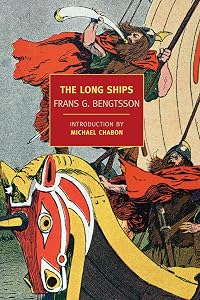
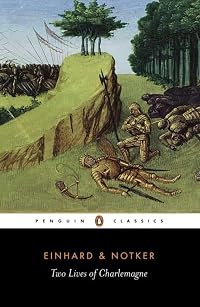
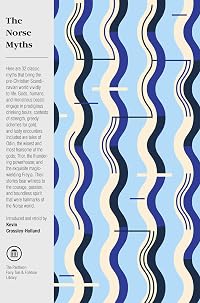
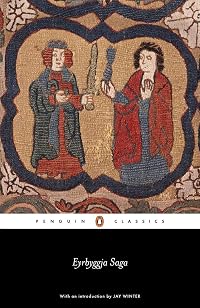




Member Recommendations
andejons Both are stories dealing with legal procedure and violence.
11
Member Reviews
This was great! Sometimes the old Icelandic sagas can be a bit dry with all the pedigrees and various relationships.
I don't know how much the translator helped, but there were some seriously badass action scenes in this saga - heroes sliding on ice, catching spears and throwing them back, limbs flying everywhere. I wonder if it also counts as one of the earliest courtroom dramas, because legal intrigue is what we get in between the episodes of violence.
Characters' personalities and motives are typically understated as usual in such sagas. However you get intriguing glimpses of their natures, such as with Skarp-Hedin's enigmatic smiles.
Definitely one of my favourites of the genre, with action, intrigue, and drama in spades.
I don't know how much the translator helped, but there were some seriously badass action scenes in this saga - heroes sliding on ice, catching spears and throwing them back, limbs flying everywhere. I wonder if it also counts as one of the earliest courtroom dramas, because legal intrigue is what we get in between the episodes of violence.
Characters' personalities and motives are typically understated as usual in such sagas. However you get intriguing glimpses of their natures, such as with Skarp-Hedin's enigmatic smiles.
Definitely one of my favourites of the genre, with action, intrigue, and drama in spades.
"...Kol was counting out the silver...Kari rushed at him with his sword drawn and slashed at Kol's neck. Kol kept on counting, and his head said 'Ten' as it flew from his shoulders."
"[Flosi] walked all the way to Rome, where he was accorded the great honour of receiving absolution at the hands of the Pope himself; he paid a large sum of money for it."
The writing is so spare and to-the-point that it verges on comedy sometimes. I find the directness novel. No flowery language or wasted words. I guess that's the oral-tradition factor.
A lot of HONOR and stoic dudes that are surprisingly fragile (in terms of masculinity, but also limbs and heads seem to get hacked off with ease).
A multigenerational blood-feud that ends with two survivors of show more opposite factions becoming buds...as it should be, really.
And there I end my review of the saga of the Burning of Njal. show less
"[Flosi] walked all the way to Rome, where he was accorded the great honour of receiving absolution at the hands of the Pope himself; he paid a large sum of money for it."
The writing is so spare and to-the-point that it verges on comedy sometimes. I find the directness novel. No flowery language or wasted words. I guess that's the oral-tradition factor.
A lot of HONOR and stoic dudes that are surprisingly fragile (in terms of masculinity, but also limbs and heads seem to get hacked off with ease).
A multigenerational blood-feud that ends with two survivors of show more opposite factions becoming buds...as it should be, really.
And there I end my review of the saga of the Burning of Njal. show less
Here’s a family saga that makes the Hatfields and the McCoys seem like amateurs, genealogical narratives that make those in the Bible seem brief, and grisly descriptions of hand to hand combat that are the equal of the Iliad. In the introduction to this edition of the English translation by Bayerschmidt and Hollander, Þorsteinn Gylfason notes, “An Icelandic scholar of the eighteenth century said that all the sagas of the Icelanders could be summed up in four words, 'Farmers came to blows.'"
But between these dismemberments are the stories of resentment and craftiness that precede the gore, and more fascinating to me, the legal suits and maneuverings in the Althing, the medieval Icelandic assembly, to award compensation to the show more families of the slain in exchange for a pledge of peace. Then after all parties were satisfied, the plotting of the next round of the vendetta starts just as soon as all have returned home. Equally fascinating to me is that in the middle of all this feuding and strife—in the year 1000 by our current calendar—everyone converts to Christianity, and then continues on exactly as they did as worshipers of the old Norse gods. show less
But between these dismemberments are the stories of resentment and craftiness that precede the gore, and more fascinating to me, the legal suits and maneuverings in the Althing, the medieval Icelandic assembly, to award compensation to the show more families of the slain in exchange for a pledge of peace. Then after all parties were satisfied, the plotting of the next round of the vendetta starts just as soon as all have returned home. Equally fascinating to me is that in the middle of all this feuding and strife—in the year 1000 by our current calendar—everyone converts to Christianity, and then continues on exactly as they did as worshipers of the old Norse gods. show less
Njal's Saga is by far the longest of the sagas of the Icelanders, and it appears to be the general agreement that it is also the best among them, an assessment that I am not going to deviate from. In principle, Njal's Saga is just like the other sagas - it has their freshness and immediacy that are striking for texts that are hundreds of years old, it has their sparse, laconic style, their reliance on action and dialogue, their absence of psychology and their emphasis on geographical and genealogical placement of their characters. In short, it has everything the other sagas have - only more so.
This is not just a matter of length - what I found most striking about Njal's Saga is how very vivid it is. It's language is not any more florid show more than of the other sagas, but just as reduced and simple, and yet it somehow manages to paint a much more colourful picture of the events it relates - it rather feels like the widescreen Technicolor version of a saga. It probably does have something to do with its length, and that it dwells just that tiny but decisive bit longer on what a character is dressed in or what exactly he does in a fight, but I don't think that quite suffices to explains why people and events in this sage possess such an immense plasticity that makes their down-to-earth-ness almost tangible for the reader as if the book's pages were just a thin, icy mist behind which we catch glimpses of the untamed, violent Norsemen feasting, sailing and fighting each other.
Njal's Saga is also somewhat clearer structured than most other sagas - it consists of two quite distinct parts, the first being about Gunnar, the various strifes he got involved in and his final downfall, and the second the story of his friend Njal, his death and the vengeance for it. The first part takes place before the arrival of Christianity in Iceland, the second after its Christianization, in the first part most conflicts are solved peacefully, in the second most end in violence - one can't help but wonder whether there might not be be some implied reflection on Christianity on part of the anonymous author implied in that. Another thing that places Njal's Saga apart is the uncommon emphasis it puts on the law - not only is it stated several times that it is the law that keeps a society together and that it will come apart if the law fails (as is demonstrated by events in the saga), not only are there an uncommon lot of trials in this saga, but they are also described in unusual (and, it has to be said, occasionally tiresome) detail, to the point where Njal's Saga reads almost like the Medieval Icelandic version of courtroom drama.
There are some issues with this saga for the modern reader, chiefly its repetitiveness - basically, events here consist of a seemingly endless succession of slayings, trials, and vengeance which causes more slayings, more trials and more vengeance. There is not much difference in the way those events unfold either, so things can get somewhat tedious if one tries to read too much of the saga in one go, and therefore judicious rationing is strongly recommended. And with the length of the saga, it becomes even more difficult to keep track of all the persons and there relations to each - thankfully, the Penguin Classics edition I was reading is not only excellently translated (as far as I can judge that, of course) but also very well-edited, with a helpful introduction and footnotes.
This is definitely the saga one should read if one wants to read only one of them, although it is hard to imagine anyone wanting to stop after this one, they're as addictive as crisps (at least unless they tried to read the whole thing at once - just like crisps one can easily overstuff oneself), but significantly more nutritious. And while I don't usually don't do quote, I just have to put in this one, showing how just names mentioned in passing already are stories in a nutshell:
"A man name Hoskuld lived there, the son of Dala-Koll. His mother was Thogerd, te daughter of Thorstein the Red, who was the son of Olaf the White, the son of Ingiald, the son of Helgi. Ingiald's mother was Thorn, the daughter of Sigurd Snake-in-the-eye who was the son of Ragnar Shaggy-breeches. Thorstein the Red's mother was Unn the Deep-minded; she was the daughter of Ketil Flat-nose, the son of Bjorn Buna."
I doubt that ever before or after genealogy has been more fun. And maybe that is the reason why Njal's Saga impresses itself so vividly on the reader's mind: with all the fighting, the deaths and the maimings (there is an astonishing amount of limbs getting cut off in the course of the saga), with all the underlying fatalism, there also is an air of joyousness blowing through these tales, a boundless glorying in life and its pleasures; and no matter how rough those might appear to the modern reader some of that exuberance jumps over like an electric spark across the centuries and makes this saga so much fun to read. show less
This is not just a matter of length - what I found most striking about Njal's Saga is how very vivid it is. It's language is not any more florid show more than of the other sagas, but just as reduced and simple, and yet it somehow manages to paint a much more colourful picture of the events it relates - it rather feels like the widescreen Technicolor version of a saga. It probably does have something to do with its length, and that it dwells just that tiny but decisive bit longer on what a character is dressed in or what exactly he does in a fight, but I don't think that quite suffices to explains why people and events in this sage possess such an immense plasticity that makes their down-to-earth-ness almost tangible for the reader as if the book's pages were just a thin, icy mist behind which we catch glimpses of the untamed, violent Norsemen feasting, sailing and fighting each other.
Njal's Saga is also somewhat clearer structured than most other sagas - it consists of two quite distinct parts, the first being about Gunnar, the various strifes he got involved in and his final downfall, and the second the story of his friend Njal, his death and the vengeance for it. The first part takes place before the arrival of Christianity in Iceland, the second after its Christianization, in the first part most conflicts are solved peacefully, in the second most end in violence - one can't help but wonder whether there might not be be some implied reflection on Christianity on part of the anonymous author implied in that. Another thing that places Njal's Saga apart is the uncommon emphasis it puts on the law - not only is it stated several times that it is the law that keeps a society together and that it will come apart if the law fails (as is demonstrated by events in the saga), not only are there an uncommon lot of trials in this saga, but they are also described in unusual (and, it has to be said, occasionally tiresome) detail, to the point where Njal's Saga reads almost like the Medieval Icelandic version of courtroom drama.
There are some issues with this saga for the modern reader, chiefly its repetitiveness - basically, events here consist of a seemingly endless succession of slayings, trials, and vengeance which causes more slayings, more trials and more vengeance. There is not much difference in the way those events unfold either, so things can get somewhat tedious if one tries to read too much of the saga in one go, and therefore judicious rationing is strongly recommended. And with the length of the saga, it becomes even more difficult to keep track of all the persons and there relations to each - thankfully, the Penguin Classics edition I was reading is not only excellently translated (as far as I can judge that, of course) but also very well-edited, with a helpful introduction and footnotes.
This is definitely the saga one should read if one wants to read only one of them, although it is hard to imagine anyone wanting to stop after this one, they're as addictive as crisps (at least unless they tried to read the whole thing at once - just like crisps one can easily overstuff oneself), but significantly more nutritious. And while I don't usually don't do quote, I just have to put in this one, showing how just names mentioned in passing already are stories in a nutshell:
"A man name Hoskuld lived there, the son of Dala-Koll. His mother was Thogerd, te daughter of Thorstein the Red, who was the son of Olaf the White, the son of Ingiald, the son of Helgi. Ingiald's mother was Thorn, the daughter of Sigurd Snake-in-the-eye who was the son of Ragnar Shaggy-breeches. Thorstein the Red's mother was Unn the Deep-minded; she was the daughter of Ketil Flat-nose, the son of Bjorn Buna."
I doubt that ever before or after genealogy has been more fun. And maybe that is the reason why Njal's Saga impresses itself so vividly on the reader's mind: with all the fighting, the deaths and the maimings (there is an astonishing amount of limbs getting cut off in the course of the saga), with all the underlying fatalism, there also is an air of joyousness blowing through these tales, a boundless glorying in life and its pleasures; and no matter how rough those might appear to the modern reader some of that exuberance jumps over like an electric spark across the centuries and makes this saga so much fun to read. show less
This is the best Saga! Got colour, (but perhaps that's due to the footnotes). Characterization, and gives an insight into the curious world of Icelandic law, both civil and criminal during the period. No civilized library should not have a translation of this work. In English, I believe that Magnusson and Palsson justly deserve the fame of their translation. Buy it, read it and lend it. (I've only lost three copies by this method. I read it Four times (so far)
This is one of those books that I think need to re-read. There are too many characters, and their relationships change, from enemies into family by marriage. I also struggled with the culture. This is a story that is told for an audience who know the characters. They don't need an explanation for common knowledge. However, to show how a rich a homesteader is, a list of luxury items, and number of servants are listed.
Its not an easy book, and the Penguin Edition was nicely annotated, however I found the family trees at the end to be mostly useless.
Its not an easy book, and the Penguin Edition was nicely annotated, however I found the family trees at the end to be mostly useless.
Arguably the most famous of the Icelandic sagas, this history tells of Njal, his sons, friends and surrounding people. It is from the 13th centuary and covers many topics including feuds, impotence, marriage, law etc. Two of the main characters are Gunnar and Njal. Njal is a well known wise man who is an expert in the laws who many turn to for advice. Gunnar is his close friend, but unfortunately their wives do not get on. Gunnar's wife begins a blood feud with Njal's wife where they keep killing people to try to get their husbands to fall out. It's a bit eye for an eyeand very petty.
There are villians and heros and eventually both Gunnar and Njal are killed. Gunnar is killed in battle and Njal is burnt to death in his house with his show more wife. His sons take their revenge and go after the burners and the feuding continues. Parts of it are an excellent view inside Icelandic life at the time mentioning local food etc. It was also interesting to read about the laws at the Althing.
It's not all blood, guts limbs and heads being chopped off. It has a sense of humor and a charm to the story, although it did loose me a little after Njal was killed. I loved reading the tale after not long having visited Iceland, it made me want to go back even more. I hope to read more of the sagas in the future. show less
There are villians and heros and eventually both Gunnar and Njal are killed. Gunnar is killed in battle and Njal is burnt to death in his house with his show more wife. His sons take their revenge and go after the burners and the feuding continues. Parts of it are an excellent view inside Icelandic life at the time mentioning local food etc. It was also interesting to read about the laws at the Althing.
It's not all blood, guts limbs and heads being chopped off. It has a sense of humor and a charm to the story, although it did loose me a little after Njal was killed. I loved reading the tale after not long having visited Iceland, it made me want to go back even more. I hope to read more of the sagas in the future. show less
Members
- Recently Added By
Lists

Favourite Medieval Books
49 works; 17 members

The 100 Best Books of All Time by Norwegian Book Club (World Library)
104 works; 23 members

100 Books to Read in a Lifetime (That Are Older Than 200 Years)
415 works; 175 members

Trinity College Booklist (1951): Class Nine, Foreign Literatures
161 works; 3 members

SomethingAwful TBB BOTM
66 works; 2 members

Allie's List of Books I Want To Read
93 works; 1 member

Fiction with Men's Given Names in the Title
302 works; 11 members
r/History Recommended Reading List
603 works; 12 members

How to Read a Book's Recommended Reading List
309 works; 10 members

Greatest Books, allegedly
484 works; 9 members

Philip Ward's Lifetime Reading Plan
592 works; 22 members

Favorite Books in Translation
320 works; 133 members

In Our Time books
4,934 works; 2 members
Author Information
51 Works 14,489 Members
Some Editions
Awards and Honors
Series
Belongs to Publisher Series
Everyman's Library (558)
Penguin Classics (L103)
Work Relationships
Is contained in
Has the adaptation
Common Knowledge
- Canonical title
- Njal's Saga
- Original title
- Brennu-Njáls saga
- Alternate titles
- The Story of Burnt Njal; Njála; Njáls saga
- Original publication date
- 1350 (circa original manuscript) (circa original manuscript)
- People/Characters
- Njal Thorgeirsson; Njáll Þorgeirsson; Gunnar of Hlidarendi; Gunnar Hámundarson
- Important places
- Iceland; Ireland; Norway
- Important events
- Battle of Clontarf (1014-04-23); Christian conversion of Iceland (999)
- Dedication
- To Einar Ólafur Sveinsson
- First words
- There was a man named Mord whose nickname was Gigja.
translated by Robert Cook (1997) - Last words
- (Click to show. Warning: May contain spoilers.)And here I end the saga of Njal of the burning.
trans. Robert Cook (1997) - Original language
- Old Norse
Classifications
- Genre
- Fiction and Literature
- DDC/MDS
- 813 — Literature & rhetoric American literature in English American fiction in English
- LCC
- PT7269 .N4 .E52 — Language and Literature German, Dutch and Scandinavian literatures Old Norse literature: Old Icelandic and Old Norwegian Individual sagas and historical works
- BISAC
Statistics
- Members
- 2,668
- Popularity
- 6,949
- Reviews
- 25
- Rating
- (3.93)
- Languages
- 13 — Danish, Dutch, English, Finnish, French, German, Icelandic, Norwegian (Nynorsk), Norwegian (Bokmål), Old Norse, Norwegian, Russian, Swedish
- Media
- Paper, Audiobook, Ebook
- ISBNs
- 65
- UPCs
- 2
- ASINs
- 45
