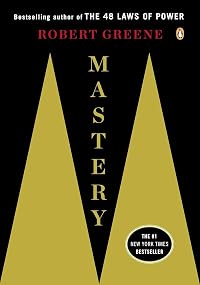
Mastery
by Robert Greene
On This Page
Description
Robert Greene, the "modern Machiavelli" debunks the prevailing mythology of success and presents a radical new way to greatness.Tags
Recommendations
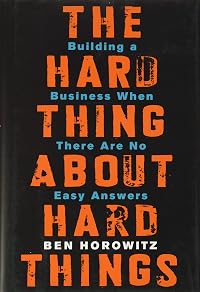
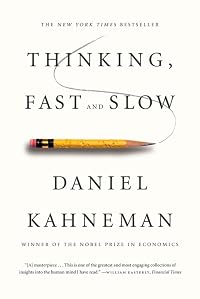
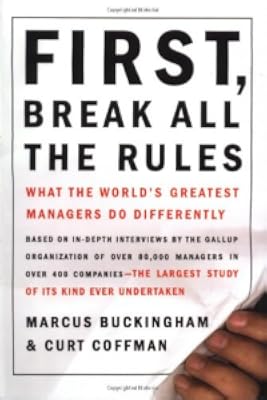

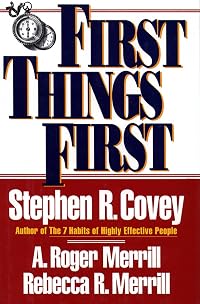

Member Recommendations
Member Reviews
What does it take to rise to the top of one’s profession or any other domain in life? Through artful storytelling of historical and contemporary figures, Greene offers us a plethora of examples to follow. He tries to tie each case to principles of how the individual mastered her/his own environment. In so doing, he offers us a self-driven manual for how to command a sector in life.
Greene’s contemporary exemplars include figures from many domains, including piloting, research, and linguistics. Ancient figures include geniuses that you learned about in school. All in all, a variety of personality and professional types are represented, including both men and women, people with disabilities, and the formally educated as well as the show more self-educated.
The author is clearly adept at spinning a good story. His storylines stick to readers’ ears and hearts. I listened to this book as an audiobook while I performed other tasks with my hands; each chapter drew my attention in, and time passed quickly. I have not read Greene’s other works for comparison, but his skill in the narrative arts is evident.
What most lacked was intellectual rigor. Yes, he brought forth diverse inspirational examples that illustrated key concepts related to mastery, but I could not deduce if Greene’s theorizing was ever tested via a scientific method. I hoped to see studies cited or some sort of quantitative analysis to back up his far-reaching claims of long-standing principles. What shows me that his contentions are true besides anecdotal evidence?
That said, this book does offer much fodder to activate readers’ creative juices. Inspiration needs to be followed by perspiration, no? That means that I have a lot of work to do because Greene began a process of trying to learn about the finer details along life’s paths. He showed how these figures, through their own perspiration, managed to overcome situations to help others and to lead. If one function of books is to push us on to increasing excellence, then this book succeeds in spades. show less
Greene’s contemporary exemplars include figures from many domains, including piloting, research, and linguistics. Ancient figures include geniuses that you learned about in school. All in all, a variety of personality and professional types are represented, including both men and women, people with disabilities, and the formally educated as well as the show more self-educated.
The author is clearly adept at spinning a good story. His storylines stick to readers’ ears and hearts. I listened to this book as an audiobook while I performed other tasks with my hands; each chapter drew my attention in, and time passed quickly. I have not read Greene’s other works for comparison, but his skill in the narrative arts is evident.
What most lacked was intellectual rigor. Yes, he brought forth diverse inspirational examples that illustrated key concepts related to mastery, but I could not deduce if Greene’s theorizing was ever tested via a scientific method. I hoped to see studies cited or some sort of quantitative analysis to back up his far-reaching claims of long-standing principles. What shows me that his contentions are true besides anecdotal evidence?
That said, this book does offer much fodder to activate readers’ creative juices. Inspiration needs to be followed by perspiration, no? That means that I have a lot of work to do because Greene began a process of trying to learn about the finer details along life’s paths. He showed how these figures, through their own perspiration, managed to overcome situations to help others and to lead. If one function of books is to push us on to increasing excellence, then this book succeeds in spades. show less
Robert Greene's Mastery explores the lives of many historical Masters (Mozart, Da Vinci, Proust, etc.) and explains how their Mastery is attainable for everyone. By ignoring societal constraints and complications, following our own interests, serving time in an apprenticeship phase, and staying committed to our craft, Greene believes that everyone can become a Master and make lasting contributions to society.
While I like Greene's message and find his writing to be absorbing, I have some serious concerns about this book. First is the fact that Greene's conclusions stem from extremely shaky "evidence". There are practically no scientific studies cited in this book, and very rarely do Greene's interpretations involve any proof at all. show more Every piece of evidence that Greene presents to support his theory is anecdotal. Greene is not a scientist himself, and really gives no reason why we should believe his arguments. Throughout this book, I could not help but think that anybody could have come to Greene's conclusions and presented them as facts. So, why should we believe in what Greene has to say? Unfortunately, this book never provides an adequate answer. We are left to assume that what Greene tells us is true, because Robert Greene says so.
Another issue in this book is it's extremely repetitive nature. Every single section tells an anecdote about someone considered a Master in his or her field, and then Greene goes on to explain that this person is a Master only through hard work, something that everyone can achieve. This cycle occurs over and over and over and over and over and over, for 300 crammed pages and is truly exhausting. Even more disconcerting is how Greene will, within his repetitive structure, duplicate anecdotal sections. There are three sections throughout the book that discuss famed boxing trainer Freddie Roach, and each section tells the same exact anecdote. A fact may be added or the story might be expanded at the end, but the reality is that I ended up reading the same story three times (never has Roach been given such exposure in a book that has absolutely nothing to do with boxing). The effect is nearly maddening and forced me to skim over various sections, searching for new information.
While I found a number of flaws with this book, I don't want to take anything away from Greene's prose. The book is well written, provides interesting mini-biographies about famous figures, and can be quite captivating in the areas that till new ground. But, for me, it is hard to take a book seriously when it relies so much on anecdotes and ignores the need for any scientific evidence. In a book about Mastery, it's clear that Greene is no Master of science, no Master of proof, and no Master of Mastery, but is, instead, simply a Master of selling books.
Thanks to Viking Books and First Reads for sending me the ARC of this book. show less
While I like Greene's message and find his writing to be absorbing, I have some serious concerns about this book. First is the fact that Greene's conclusions stem from extremely shaky "evidence". There are practically no scientific studies cited in this book, and very rarely do Greene's interpretations involve any proof at all. show more Every piece of evidence that Greene presents to support his theory is anecdotal. Greene is not a scientist himself, and really gives no reason why we should believe his arguments. Throughout this book, I could not help but think that anybody could have come to Greene's conclusions and presented them as facts. So, why should we believe in what Greene has to say? Unfortunately, this book never provides an adequate answer. We are left to assume that what Greene tells us is true, because Robert Greene says so.
Another issue in this book is it's extremely repetitive nature. Every single section tells an anecdote about someone considered a Master in his or her field, and then Greene goes on to explain that this person is a Master only through hard work, something that everyone can achieve. This cycle occurs over and over and over and over and over and over, for 300 crammed pages and is truly exhausting. Even more disconcerting is how Greene will, within his repetitive structure, duplicate anecdotal sections. There are three sections throughout the book that discuss famed boxing trainer Freddie Roach, and each section tells the same exact anecdote. A fact may be added or the story might be expanded at the end, but the reality is that I ended up reading the same story three times (never has Roach been given such exposure in a book that has absolutely nothing to do with boxing). The effect is nearly maddening and forced me to skim over various sections, searching for new information.
While I found a number of flaws with this book, I don't want to take anything away from Greene's prose. The book is well written, provides interesting mini-biographies about famous figures, and can be quite captivating in the areas that till new ground. But, for me, it is hard to take a book seriously when it relies so much on anecdotes and ignores the need for any scientific evidence. In a book about Mastery, it's clear that Greene is no Master of science, no Master of proof, and no Master of Mastery, but is, instead, simply a Master of selling books.
Thanks to Viking Books and First Reads for sending me the ARC of this book. show less
Each of us has a passion. For a variety of reasons within and outside our control, very few of us pursue our respective passions to the point of achieving mastery over them. Author Robert Greene's great new book, "Mastery," can't help us defeat objective limitations truly beyond our control that prevent us from mastering those passions. Barring such limitations, however, "Mastery" is brilliant. It's nothing short of a concise, elegantly written, well-researched and deeply inspirational guide to assess, confront and overpower any other obstacles (whether internal or external) standing between us and approaching, if not achieving, mastery of a pursuit core to our particular natures and desires.
Other reviewers here and elsewhere note that show more from time to time "Mastery" is repetitive. That's true. Then again, so too is the path to mastery one of repeating meaningful thoughts and actions over and again until the objective is within reach. In that sense, the book practices what it preaches, and encourages its readers to do so as they absorb Greene's instruction and commentary.
I'm one of Robert Greene's big fans -- I consider his book "The 48 Laws of Power" (2000) one of the most important and enjoyable I've ever read. "Mastery" is a worthy, and in many ways essential, companion to "The 48 Laws of Power." show less
Other reviewers here and elsewhere note that show more from time to time "Mastery" is repetitive. That's true. Then again, so too is the path to mastery one of repeating meaningful thoughts and actions over and again until the objective is within reach. In that sense, the book practices what it preaches, and encourages its readers to do so as they absorb Greene's instruction and commentary.
I'm one of Robert Greene's big fans -- I consider his book "The 48 Laws of Power" (2000) one of the most important and enjoyable I've ever read. "Mastery" is a worthy, and in many ways essential, companion to "The 48 Laws of Power." show less
The overall thesis "Anyone can be a Master" is a fallacy of epic proportions. The common threads he tries to weave are a tangled, garbled mess that is pointless to try and follow. The bit on social interactions is highly narcissistic in nature and too simple of a view on how one should look at and act around others.
However, Mastery still is an interesting read. The stories of the masters are at times well told, and their stories do have important lessons to impart. The major theme, mastery does not come naturally, but with dedication, hard work, and intense focus, is a lesson we should all at least aspire to do.
However, Mastery still is an interesting read. The stories of the masters are at times well told, and their stories do have important lessons to impart. The major theme, mastery does not come naturally, but with dedication, hard work, and intense focus, is a lesson we should all at least aspire to do.
Although delving at times into what must be unhappy memories of his parents, Robert Greene touches on ideas also found in Austin Kleon's Steal Like an Artist series, especially about time and practice, and Dr. Caroline Leaf's research on the neuroplasticity of the brain, enabling us to grow and change. Lots of good encouragement here! I'd like to get a paperback and highlight/circle sections to read aloud to my kids. There is a lot of redundancy and detail that I would edit out, to keep their attention yet share the gems.
This was an audiobook listen from audible.com for me. I did find parts of this book interesting. Greene has lots of stories of would-be-masters and how they got to put on their A game. Unfortunately it was also very repetitive. Everytime Greene cycles back to a piece of someone's story, he retells their earlier story. The result is that you are wondering if you read that section already because in a sense you have.
One comment that rates wholly to the audio presentation is that there is no way for audiobook readers to look at the table of contents for this book. All you get is unnamed chapters to navigate by. I appreciate being able to x-ray a book but this and many other audio books deny me (and everyone else) the pleasure
One comment that rates wholly to the audio presentation is that there is no way for audiobook readers to look at the table of contents for this book. All you get is unnamed chapters to navigate by. I appreciate being able to x-ray a book but this and many other audio books deny me (and everyone else) the pleasure
This is a great book, and I truly appreciate all the advice it offers—especially during this time when I feel drained of creativity. However, I found myself skimming through most of the biographies, as I struggled to connect with them. That said, I particularly enjoyed the section on Proust; it was fascinating to learn more about him, especially since I hadn’t known much about his life despite having read his work before.
Members
- Recently Added By
Lists

Ryan Holiday's Books To Base Your Life On
97 works; 2 members

Men's healing resources
747 works; 1 member
Author Information

24+ Works 15,715 Members
Robert Greene was born on May 14, 1959 in Los Angeles, California. He attended the University of California, Berkeley before transferring to the University of Wisconsin-Madison, where he received a B.A. in classical studies. Before becoming an author, he worked a variety of jobs including construction worker, translator, magazine editor, and show more Hollywood movie writer. In 1995, he worked as a writer at Fabrica, an art and media school in Italy, and met a book packager named Joost Elffers. Greene pitched a book about power to Elffers and wrote a draft, which eventually became his first book, The 48 Laws of Power. His other works include The Art of Seduction, The 33 Strategies of War, The 50th Law, and Mastery. (Bowker Author Biography) show less
Work Relationships
Is contained in
Is abridged in
Has as a reference guide/companion
Common Knowledge
- Original publication date
- 2012
- Epigraph
- Everyone holds his fortune in his own hands, like a sculptor the raw material he will fashion into a figure. But it's the same with that type of artistic activity as with all others: We are merely born with the capability to ... (show all)do it. The skill to mold the material into what we want must be learned and attentively cultivated -------- Johann Wolfgang von Goethe
- First words
- There exists a form of power and intelligence that represents the high point of human potential.
Classifications
Statistics
- Members
- 1,894
- Popularity
- 11,324
- Reviews
- 19
- Rating
- (3.94)
- Languages
- 8 — English, French, German, Korean, Polish, Portuguese, Spanish, Turkish
- Media
- Paper, Audiobook, Ebook
- ISBNs
- 25
- ASINs
- 8