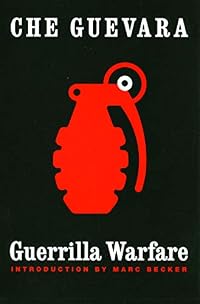
The guerrilla war
by Che Guevara
On This Page
Description
The definitive, authorized version of Che's manifesto on revolution - including his final revisions - completed just before his death. It is both an incisive handbook and an invaluable historical source. "Home will be the open guerrilla fighter is ready to die not just to defend an idea, but to make that idea a reality." Ernesto "Che" Guevara remains one of the world's most iconic political and revolutionary figures. Fascinating to admirers and adversaries alike, he captured the minds of show more millions with his leadership and his belief in guerrilla warfare as the only effective agent to achieve political change. Here, in his own classic text on revolution, Che draws on his first-hand experience of the Cuban campaign to document all aspects of guerrilla warfare, from its aims to its organization and training. He analyses how in Cuba, against all odds, a small band of dedicated fighters grew in strength with the support of the people to defeat a dictator's army. show lessTags
Recommendations
















Member Reviews
As out of date as this book is, it is still of use for a historical and psychological look at the tactics of the guerrilla warrior.
Che's basic principles are simple - any guerrilla force, if properly trained and motivated and with popular support, can overthrow an unpopular repressive government and replace it with one which represents the popular will. Che's record was 1 for 3. Cuba being an unequivocal success, with the Congo less so, and Bolivia ending in his own death.
Some of his principles on tactics are long since out of date. The US Army no longer uses M1 Garands. Any practitioner of night warfare must note its difficulty ever since the invention of night-vision goggles, IR vision, and satellite imagery. However, some were out of show more date even on publication. I doubt that napalm and air strikes are an 'inconvenience'.
Nevertheless, many broad principles remain true. Become popular with the people through propaganda and good behavior. Move constantly. Out-endure the enemy, fire up the grievances against them. Attack supply lines and convoys with explosives.
What, then, is a counter-insurgent to do against such an army? I, a mere student of humanity, offer these few scattered suggestions.
-Maintain positive relations with the population at ALL COSTS
-Establish areas where the population feels secure, and systematically expand them
-Substantively address any economic/social grievances through investment in infrastructure, education, etc.
-Have a means for the population to voice grievances peacefully (democracy)
-Have competent governance
-Have a solid and reliable means of gathering intelligence, whether HUMINT, SIGINT, or alternates
-Have total control of the air
-Establish basic economic services, make the people feel more secure with the counterinsurgency present
All easier said than done. And what should the counterinsurgency avoid?
-Do NOT have an external occupier as the main force for counterinsurgency (See the average Libyan's view of the United States versus the average Afghan's)
-Do NOT coerce or intimidate the people
-Do NOT cause excess collateral damage
-Do NOT loot/steal/pillage supplies from the local population (Ex: See the 'Three-Alls' policy of the Imperial Japanese Army for what not to do)
-Do NOT forcibly move/resettle the civilian population. This will stir up resentment
-Failure in adapting to changes in tactics, communication, propaganda
-Above all, do NOT make your force appear to be the greater threat than the insurgents are.
For all of the book's flaws, it is still an interesting read - the psychology and the mind of the resistance fighter is similar, although the tactics are long since changed. show less
Che's basic principles are simple - any guerrilla force, if properly trained and motivated and with popular support, can overthrow an unpopular repressive government and replace it with one which represents the popular will. Che's record was 1 for 3. Cuba being an unequivocal success, with the Congo less so, and Bolivia ending in his own death.
Some of his principles on tactics are long since out of date. The US Army no longer uses M1 Garands. Any practitioner of night warfare must note its difficulty ever since the invention of night-vision goggles, IR vision, and satellite imagery. However, some were out of show more date even on publication. I doubt that napalm and air strikes are an 'inconvenience'.
Nevertheless, many broad principles remain true. Become popular with the people through propaganda and good behavior. Move constantly. Out-endure the enemy, fire up the grievances against them. Attack supply lines and convoys with explosives.
What, then, is a counter-insurgent to do against such an army? I, a mere student of humanity, offer these few scattered suggestions.
-Maintain positive relations with the population at ALL COSTS
-Establish areas where the population feels secure, and systematically expand them
-Substantively address any economic/social grievances through investment in infrastructure, education, etc.
-Have a means for the population to voice grievances peacefully (democracy)
-Have competent governance
-Have a solid and reliable means of gathering intelligence, whether HUMINT, SIGINT, or alternates
-Have total control of the air
-Establish basic economic services, make the people feel more secure with the counterinsurgency present
All easier said than done. And what should the counterinsurgency avoid?
-Do NOT have an external occupier as the main force for counterinsurgency (See the average Libyan's view of the United States versus the average Afghan's)
-Do NOT coerce or intimidate the people
-Do NOT cause excess collateral damage
-Do NOT loot/steal/pillage supplies from the local population (Ex: See the 'Three-Alls' policy of the Imperial Japanese Army for what not to do)
-Do NOT forcibly move/resettle the civilian population. This will stir up resentment
-Failure in adapting to changes in tactics, communication, propaganda
-Above all, do NOT make your force appear to be the greater threat than the insurgents are.
For all of the book's flaws, it is still an interesting read - the psychology and the mind of the resistance fighter is similar, although the tactics are long since changed. show less
Neither useful as a historical document of the Cuban Revolution, nor as a blue print for rural revolution (Che was unable to replicate his Cuban success in South America or Africa), Guerrilla Warfare is a book that would have long ago been relegated to the dustbin of history, if the face of the most marketable communist in history didn't adorn the dust-jacket. Skip it.
He is ready to give his life, but the positive quality of this guerrilla warfare is precisely that each one of the guerrilla fighters is ready to die, not to defend an ideal, but rather the convert it to reality.
Guerrilla Warfare by Che Guevara is the book of standards and tactics for guerrilla warfare for the 1960s. Guevara needs no introduction. He is either loved or hated with very few people not taking sides.
Although dated in terms of weapons and the lay of the land after fifty years, the book still holds value. Technology has certainly changed. The Chiapas rebels made history by using the internet to promote their cause. Live Twitter feeds now give worldwide coverage to rebellions and protests. Much has changed since Guevara's days show more of messengers and carrier pigeons. What makes this book interesting is what makes the guerrilla. When I joined the Marines in the early 1980s, I remember reading through the pre-boot camp material while on the delayed entry program. It explained what it is to be a Marine. How I would be trained to be a cut above the military servicemen around the world. We trained and acted on a higher standard. There was a build up to being a Marine. The idea was to psych you up for the challenge.
Guevara seems to follow the same path. Guerrilla fighters were morally superior to the oppressors. They were to treat the local population with respect and prove to the population that they were the good guys. When engaging the enemy, prisoners were not to be taken. There were to be lectured on the error of their ways and released. Injured enemies were to be given medical treatment. Again, the move was made to appear to be the bigger person, but it was also a very practical move. Guerrillas were in no position to create and run prisoner camps. Guerrilla warfare's intent was to wear down the opponents to a tipping point to where the population would feel motivated to join en mass. A captured and released soldier might be less willing to put his life on the line for a second time.
This book still contains practical information. Engage the enemy only when you know you will win. Always make sure that when you engage the enemy, that you will capture enough ammunition to replace what was expended. Keep civilian casualties at a minimum; these are your allies and when acts of sabotage are needed, carry them out where they hurt the enemy and not the local population. Do not blow up a soft drink factory; it serves no military purpose concentrate on what feeds you enemy: Power plants, ammunition factories, and places that produce war material.
Guerrilla Warfare is an idealist type of book. It instructs on what makes a guerrilla a hero and leaves out what happens when things go wrong. It is written to make fighting an oppressor morally right and a noble cause. Guevara insists that outside government forces and influence should be kept out of the struggle. Why change from one master for another? In keeping with that theme, he does not mention communism or socialism. Interesting too, Yankee and Soviets are only mentioned twice. America, when used, refers to the hemisphere and not the US. A dated read in technology, but the marketing it still rings true. Selling an idea is not much different from selling a product. Perhaps Che was a bit more of a capitalist than he thought. show less
Guerrilla Warfare by Che Guevara is the book of standards and tactics for guerrilla warfare for the 1960s. Guevara needs no introduction. He is either loved or hated with very few people not taking sides.
Although dated in terms of weapons and the lay of the land after fifty years, the book still holds value. Technology has certainly changed. The Chiapas rebels made history by using the internet to promote their cause. Live Twitter feeds now give worldwide coverage to rebellions and protests. Much has changed since Guevara's days show more of messengers and carrier pigeons. What makes this book interesting is what makes the guerrilla. When I joined the Marines in the early 1980s, I remember reading through the pre-boot camp material while on the delayed entry program. It explained what it is to be a Marine. How I would be trained to be a cut above the military servicemen around the world. We trained and acted on a higher standard. There was a build up to being a Marine. The idea was to psych you up for the challenge.
Guevara seems to follow the same path. Guerrilla fighters were morally superior to the oppressors. They were to treat the local population with respect and prove to the population that they were the good guys. When engaging the enemy, prisoners were not to be taken. There were to be lectured on the error of their ways and released. Injured enemies were to be given medical treatment. Again, the move was made to appear to be the bigger person, but it was also a very practical move. Guerrillas were in no position to create and run prisoner camps. Guerrilla warfare's intent was to wear down the opponents to a tipping point to where the population would feel motivated to join en mass. A captured and released soldier might be less willing to put his life on the line for a second time.
This book still contains practical information. Engage the enemy only when you know you will win. Always make sure that when you engage the enemy, that you will capture enough ammunition to replace what was expended. Keep civilian casualties at a minimum; these are your allies and when acts of sabotage are needed, carry them out where they hurt the enemy and not the local population. Do not blow up a soft drink factory; it serves no military purpose concentrate on what feeds you enemy: Power plants, ammunition factories, and places that produce war material.
Guerrilla Warfare is an idealist type of book. It instructs on what makes a guerrilla a hero and leaves out what happens when things go wrong. It is written to make fighting an oppressor morally right and a noble cause. Guevara insists that outside government forces and influence should be kept out of the struggle. Why change from one master for another? In keeping with that theme, he does not mention communism or socialism. Interesting too, Yankee and Soviets are only mentioned twice. America, when used, refers to the hemisphere and not the US. A dated read in technology, but the marketing it still rings true. Selling an idea is not much different from selling a product. Perhaps Che was a bit more of a capitalist than he thought. show less
A basic text for conducting a low tech war against a technically superior enemy, Guevara had a good mind, and had been deeply committed to the struggle against American Imperialism. The book is less rhetorical that the Mao Tse Dung effort with the same title in English. It has been reprinted many times, and is still read by both the Guerrillas and there opponents. You will see the cited edition is not the one I read by reference to the reading date.
Mostly practical advice, on organization, equipment, discipline, sabotage, and other things. Measured in tone and clear on things like decency towards the civilian population, etc. Also focus on learning and the need for indoctrination. No exaggerated portaits of the other side. It would be good if the tone of ideological discourse was more often like this.
This edition of Che's classic work Guerrilla Warfare contains the text of his book, as well as two later essays titled _Guerrilla Warfare: A Method_ and _Message to the Tricontinental._ A detailed introduction by Brian Loveman and Thomas M. Davies, Jr., examines Guevara's text, his life and political impact, the situation in Latin America, and the United States' response to Che and to events in Latin America. Loveman and Davies also provide in-depth case studies that apply Che's theories on revolution to political situations in seven Latin American countries from the 1960s to the present. Also included are political chronologies of each country discussed in the case studies and a postscript tying the analyses together. This book will show more help students gain a better understanding of Che's theoretical contribution to revolutionary literature and the inspiration that his life and Guerrilla Warfare have provided to revolutionaries since the 1960s. show less
An interesting if somewhat dated viewpoint of the ideas and theories behind gorilla warfare and revolution. Historically it was a good read.
Members
- Recently Added By
Lists

Política - Clásicos
164 works; 2 members

r/History Recommended Reading List
603 works; 12 members

Reading LIst
648 works; 1 member
Author Information

286+ Works 8,463 Members
Ernesto "Che" Guevara was born in Rosario, Argentina on June 14, 1928, to an aristocratic family of Spanish-Irish descent. He was known from an early age for his dynamic personality and radical points of view. Guevara graduated from the University of Buenos Aires with a degree of doctor of medicine and surgery in 1953. He witnessed the 1954 show more CIA-backed coup in Guatemala that ended the regime of socialist Jacobo Arbenz. As a direct result, Guevara became convinced that the United States would never support leftist governments and that violent revolution was the only way to end poverty in Latin America. He joined Fidel Castro's 26th of July Movement in 1956, and following the Cuban Revolution held several influential posts in the new socialist government, including Minister of Industries. In 1965, Che left Cuba for the ex-Belgian Congo to support the Marxist Simba movement, which was ultimately unsuccessful. Following his time in Africa, Guevara traveled to Bolivia to teach guerrilla warfare to native Communists preparing for revolution. He was captured during a military operation by army forces supported by the United States and executed on October 9, 1967. Guevara's remains were discovered in 1997 and relocated to a mausoleum in Cuba. Guevara had a daughter with Hilda Gadea, whom he married in 1955 and divorced in 1959, and four children with his second wife, Aleida March, a Cuban-born member of the 26th of July movement. He also had a son with Lilia Rosa López. After his death Guevara became a global icon of martyrdom and a symbol of rebellion, particularly during the worldwide student protests of the late 1960s. Among his most noted written works, which include texts on guerilla warfare, socialism, and political economy, are "The Motorcycle Diaries," "Bolivian Diary," and "Reminiscences of the Cuban Revolutionary War." (Bowker Author Biography) show less
Some Editions
Work Relationships
Common Knowledge
- Canonical title
- The guerrilla war
- Original title
- La querra de guerrillas
- People/Characters
- Che Guevara
- Original language
- Cuban Spanish
Classifications
- Genres
- Nonfiction, General Nonfiction, History, Politics and Government, Philosophy
- DDC/MDS
- 355.425 — Society, Government, and Culture Public administration & military science The Military - Land, Air & Sea / Warfare Military operations Tactics Guerrilla Warfare
- LCC
- U240 .G8313 — Military Science Military science (General)
- BISAC
Statistics
- Members
- 1,151
- Popularity
- 21,696
- Reviews
- 13
- Rating
- (3.49)
- Languages
- 12 — Danish, English, French, Greek, Hungarian, Italian, Lithuanian, Portuguese, Slovenian, Spanish, Swedish, Turkish
- Media
- Paper, Audiobook, Ebook
- ISBNs
- 61
- ASINs
- 34