On This Page
Description
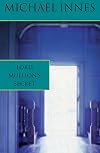
At Mullion Castle, sumptuous stately home, we meet the Earl and his family, who include his delightful daughters, Patty and Boosie, and dotty Great-aunt Camilla. Old school chum, Charles Honeybath, who has been commissioned to paint a portrait of the Earl's wife, finds himself at the helm of a complex investigation involving ancestral works of art and a young under gardener, Swithin, who seems to possess the family features somewhat strikingly . . .Tags
Recommendations
















Member Reviews
The DHM and the eldest two Progeny have read all of the Innes books in the Common Room household, and whenever we retire from the noise and bustle of the world into the inner sanctum of a used bookstore where we commune with the printed page and try to ignore the balance of our checking accounts, we always look first at the mysteries under "I" to see if we may discover an unread Innes.
It has always been our experience that such books long to come home with us, and they look upon us with an utterly irresistible mute appeal. We are sure resistance would be futile, but this is just an educated guess since we've never actually tried it.
And so, when the DHM browsed the offerings in the Paperback swap club, she was thrown into raptures of show more delight when she discovered a Charles Honeybath mystery.
Innes' usual detective is Inspector Appleby, and a perfect detective's detective he is. Honeybath is not so commonly found (at least, not by The Common Room Folk). He is a painter and a reluctant detective who usually finds something awry to detect in connection with his portrait painting commissions.
In Lord Mullion's Secret he has been invited to paint the portrait of an old school chum's wife. This old school chum is a slightly impoverished gentleman, forced to show his stately home to the general public for pay on a weekly basis. Naturally, the atmostphere of this Stately Home is steeped in secrets, puzzles, and mysteries. Miniatures disappear, elderly ladies walk in their sleep, paintings appear and reappear from the walls, has or has not Great Aunt Camilla ever been to Italy? Is there a missing heir or isn't there? What wicked thing did the black sheep of the family, long buried, do?
It's all good fun and froth in this little confection of a mystery- no bloodshed or murders, just the right sort of amusing characters with amusing and witty dialogue, along with an unfortunately light hearted attitude toward marital infidelity, although not, one hastens to add, between the main characters. There is a sweet and amusing romance between the gardener's boy and the daughter of the house, resulting in this sort of dialogue:
Her Father: ....I gather you believe yourself to have come to an
understanding with my elder daughter.
Gardener's boy: Yes, sir... And Patty believes it too.
Her Father: So I gather from her. .... Did she tell me this at your
... instigation?
Gardener's Boy: No, sir. Of course I was going to tell you
myself. Patty is a very headstrong girl. One of the troubles is
going to be if she feels she must run me.
The Gardener's Boy does apologize, saying he feels sure the father thinks it is a monstrous idea and that he probably believes his daughter has taken leave of her senses. The father responds with indignation. There isn't anything at all monstrous about somebody wanting to marry his daughter. It's perfectly natural. And so far from having taken leave of her senses- and he looks over our handsome young gardener's boy- he considers that her senses were fully operable.
Innes often constructs his plots, the Times Literary Supplement once said, like electric eels- they twist and turn, giving you shocks, and you simply cannot let go. This book is much the same. You think you know where it's going, but you're probably wrong. And if you think Innes is being sloppy and disappointingly obvious, you're almost certainly wrong.
There is something of Buchan in many of his books and plots, with something of the same improbabilities, but they are no less delightful for all that. show less
It has always been our experience that such books long to come home with us, and they look upon us with an utterly irresistible mute appeal. We are sure resistance would be futile, but this is just an educated guess since we've never actually tried it.
And so, when the DHM browsed the offerings in the Paperback swap club, she was thrown into raptures of show more delight when she discovered a Charles Honeybath mystery.
Innes' usual detective is Inspector Appleby, and a perfect detective's detective he is. Honeybath is not so commonly found (at least, not by The Common Room Folk). He is a painter and a reluctant detective who usually finds something awry to detect in connection with his portrait painting commissions.
In Lord Mullion's Secret he has been invited to paint the portrait of an old school chum's wife. This old school chum is a slightly impoverished gentleman, forced to show his stately home to the general public for pay on a weekly basis. Naturally, the atmostphere of this Stately Home is steeped in secrets, puzzles, and mysteries. Miniatures disappear, elderly ladies walk in their sleep, paintings appear and reappear from the walls, has or has not Great Aunt Camilla ever been to Italy? Is there a missing heir or isn't there? What wicked thing did the black sheep of the family, long buried, do?
It's all good fun and froth in this little confection of a mystery- no bloodshed or murders, just the right sort of amusing characters with amusing and witty dialogue, along with an unfortunately light hearted attitude toward marital infidelity, although not, one hastens to add, between the main characters. There is a sweet and amusing romance between the gardener's boy and the daughter of the house, resulting in this sort of dialogue:
Her Father: ....I gather you believe yourself to have come to an
understanding with my elder daughter.
Gardener's boy: Yes, sir... And Patty believes it too.
Her Father: So I gather from her. .... Did she tell me this at your
... instigation?
Gardener's Boy: No, sir. Of course I was going to tell you
myself. Patty is a very headstrong girl. One of the troubles is
going to be if she feels she must run me.
The Gardener's Boy does apologize, saying he feels sure the father thinks it is a monstrous idea and that he probably believes his daughter has taken leave of her senses. The father responds with indignation. There isn't anything at all monstrous about somebody wanting to marry his daughter. It's perfectly natural. And so far from having taken leave of her senses- and he looks over our handsome young gardener's boy- he considers that her senses were fully operable.
Innes often constructs his plots, the Times Literary Supplement once said, like electric eels- they twist and turn, giving you shocks, and you simply cannot let go. This book is much the same. You think you know where it's going, but you're probably wrong. And if you think Innes is being sloppy and disappointingly obvious, you're almost certainly wrong.
There is something of Buchan in many of his books and plots, with something of the same improbabilities, but they are no less delightful for all that. show less
Charles Honeybath is asked by Lord Mullion, an old schoolfriend, to come to the family's castle and paint Lady Mullion's portrait. When Honeybath arrives some family secrets come to light.
Not one of Michael Innes's best, but plenty of loopy characters and goings-on in an inconsequential mystery and lots of chances to play spot the reference.
What is the vicar's connection with the missing Hilliard miniature? Did Great Aunt Camilla go to Italy or didn't she? Why have the paintings in the kitchen corridor been changed? Are fish a suitable subject for taxidermy?
Not one of Michael Innes's best, but plenty of loopy characters and goings-on in an inconsequential mystery and lots of chances to play spot the reference.
What is the vicar's connection with the missing Hilliard miniature? Did Great Aunt Camilla go to Italy or didn't she? Why have the paintings in the kitchen corridor been changed? Are fish a suitable subject for taxidermy?
"Charles Honeybath visits a Stately Home Mansion and discovers some decidedly odd activities."
I enjoyed this one quite a bit. The characters are very well done. Honeybath's books are not as well known as the Appleby ones, but they are just as good in my opinion.
I enjoyed this one quite a bit. The characters are very well done. Honeybath's books are not as well known as the Appleby ones, but they are just as good in my opinion.
Amusing, well-written, have a dictionary by my side while I'm reading but I don't mind. Never knew kine is another word for cows.
I couldn't finish this book because it was too dry for me. I managed to make it through 35 pages before finally giving up and moving on.
Ratings
Members
- Recently Added By
Lists

#ReadingBingo2021
25 works; 1 member
#JustTheFacts2021Silver
60 works; 1 member
Author Information

103+ Works 10,660 Members
John Innes Mackintosh Stewart was born in Edinburgh. He attended Oxford where he studied English. He taught English in universities at the University of Adelaide, in South Australia. Stewart published novels, short stories, studies in literature, biographies, and plays. Under his name, he wrote scholarly works such as Character and Motive in show more Shakespeare, Rudyard Kipling, and Thomas Hardy. As Michael Innes, he wrote over fifty detective novels with Inspector John Appleby of Scotland Yard in London as the main character. These titles include Death at the President's Lodging, The Journeying Boy, Lament for a Maker, Operation Pax, the Crabtree Affair and Silence Observed. Stewart died on November 12, 1994. (Bowker Author Biography) show less
Series

Common Knowledge
- Original publication date
- 1981
- People/Characters
- Charles Honeybath
- Important places
- Mullion Castle
- First words
- The Mullions were still quite comfortably off, although they no longer managed to pay their way in the entirely unobtrusive fashion they would have wished.
- Last words
- (Click to show. Warning: May contain spoilers.)'Mary,' he said, 'that young man is very much to be congratulated. And now you and I must get down to thinking about our portrait.'
Classifications
Statistics
- Members
- 152
- Popularity
- 213,206
- Reviews
- 5
- Rating
- (3.62)
- Languages
- English, German
- Media
- Paper, Audiobook, Ebook
- ISBNs
- 13
- UPCs
- 1
- ASINs
- 5