On This Page
Description
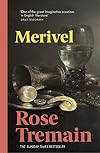
Court physician Robert Merivel has a middle age crisis and sets off for Versailles where he meets Madame de Flamanville, a Swiss botanist, and rescues a captive bear to take back to Bidnold Manor.Tags
Recommendations











































Member Reviews
I note that when I first set down my Story, I speculated that there may have been more than one Beginning to it. I suggested indeed Five Beginnings. For I understood then that no life begins only when it begins, but has many additional inceptions, and each of these determine the course of what is to come.
And now I see with equal clarity that a man's life may have more than one Ending.
So ponders Sir Robert Merivel, protagonist of Rose Tremain's Restoration and this sequel, while reading the worm-eaten, mouse dropping stained journal found underneath his bed, now fondly referred to as The Wedge. Those who have read [Restoration] will recall some of those Beginnings: the exceptional medical skills that first called Merivel to court; the show more opportunities there, won and lost and won again; the revival of his devotion to medicine, first in a humble Quaker home for the insane, then in treating victims of the plague; the unexpected love for his newborn daughter. As the sequel begins, Merivel, now aged 57, has been happily settled at Bidnold for a good many years, living comfortably, if not extravagantly, on the King's annual loyer. His daughter, Margaret, has blossomed into a lovely, intelligent young woman of seventeen and is eager to see the world. When she is invited by a neighboring nobleman and his family to join them in a visit to Cornwall to see the puffins, Merivel's loneliness spurs him to seek adventure abroad. Granted a letter of introduction from the king to his cousin, Louis XIV, Merivel heads to France in hopes of finding a position in the court of Versailles.
Tremain does a fine job of depicting a court that is even more insular, snobbish, and au courant than Whitehall. While Merivel never finds a position, he finds love (well, maybe) and more than a few adventures--as does Margaret, who is herself called to court--much, initially, to Merivel's dismay.
Much of the pleasure of reading Merivel: A Man of His Time is in the smaller details and connections to the first novel, and I don't want to give away too many of them here. Suffice it to say that Will Gates is back, cantankerous and devoted as ever, but slowing down a bit. Rosie Pierpoint and Violet Bathurst are still in the neighborhood, and Merivel is again on good terms with the King. And there is a bear, named Clarendon by the king . . .
The only reason this book received 4.5 stars instead of 5 is because I adored Restoration, and while the sequel kept me engrossed, well, it wasn't (and really couldn't be) Restoration. It would have been impossible to recreate those moments of surprise and delight, once I had been introduced to the characters and the court, as Tremain depicts them. I highly recommend reading both of Tremain's Merivel novels, in sequence, to get the most out of both. show less
And now I see with equal clarity that a man's life may have more than one Ending.
So ponders Sir Robert Merivel, protagonist of Rose Tremain's Restoration and this sequel, while reading the worm-eaten, mouse dropping stained journal found underneath his bed, now fondly referred to as The Wedge. Those who have read [Restoration] will recall some of those Beginnings: the exceptional medical skills that first called Merivel to court; the show more opportunities there, won and lost and won again; the revival of his devotion to medicine, first in a humble Quaker home for the insane, then in treating victims of the plague; the unexpected love for his newborn daughter. As the sequel begins, Merivel, now aged 57, has been happily settled at Bidnold for a good many years, living comfortably, if not extravagantly, on the King's annual loyer. His daughter, Margaret, has blossomed into a lovely, intelligent young woman of seventeen and is eager to see the world. When she is invited by a neighboring nobleman and his family to join them in a visit to Cornwall to see the puffins, Merivel's loneliness spurs him to seek adventure abroad. Granted a letter of introduction from the king to his cousin, Louis XIV, Merivel heads to France in hopes of finding a position in the court of Versailles.
Tremain does a fine job of depicting a court that is even more insular, snobbish, and au courant than Whitehall. While Merivel never finds a position, he finds love (well, maybe) and more than a few adventures--as does Margaret, who is herself called to court--much, initially, to Merivel's dismay.
Much of the pleasure of reading Merivel: A Man of His Time is in the smaller details and connections to the first novel, and I don't want to give away too many of them here. Suffice it to say that Will Gates is back, cantankerous and devoted as ever, but slowing down a bit. Rosie Pierpoint and Violet Bathurst are still in the neighborhood, and Merivel is again on good terms with the King. And there is a bear, named Clarendon by the king . . .
The only reason this book received 4.5 stars instead of 5 is because I adored Restoration, and while the sequel kept me engrossed, well, it wasn't (and really couldn't be) Restoration. It would have been impossible to recreate those moments of surprise and delight, once I had been introduced to the characters and the court, as Tremain depicts them. I highly recommend reading both of Tremain's Merivel novels, in sequence, to get the most out of both. show less
I didn't know this was a sequel when I picked it up, and haven't read the first installment about the life of Sir Robert Merivel, but Tremain's writing was accessible enough that that wasn't an obstacle. This is an amiably picaresque novel set in the twilight of Charles II's reign, vividly written and with characters that are well-drawn. Tremain does a good job at conjuring up a main character who is intelligent and flawed, someone whose reflections have the power to move the reader but not to render them insensible to his role in creating his own problems. There were a couple of scenes which seemed a bit clunky and included more for shock value than anything else—the gangbang in the French coach comes to mind—but overall Merivel's show more melancholy gaiety is engaging. show less
Merivel has reached into high echelons in English society, partly through his own skills and talents (mainly for making the King, Charles II, laugh) and partly through his acquiescence in underhand schemes (he marries the King's mistress to hide the affair from the rests of society). He is reasonably rich, well-known, well-liked and 57 years old. He spends much time wondering where his life went and whether he has made a difference, or, at least, made a mark. He wants to believe his life has been worthwhile and that his efforts have left the world a better place for him having been in it. As a man of his time - 57 is old in the 1680s - his mortality looms large in his thinking. As a man of his time - Restoration England - he sees his show more own worth measured to much by what others think, whether that is the King or his faithful servant, Will.
Tremain gives us a masterful work, combining a vivid, colourful and immediate vision of life at this time with great insights into the mind of an intelligent and inquisitive not-quite-there-social-climber looking back over his life. This is as truthful a vision of a man come to see the beginnings of his own mortality and shuddering under the weight of things he should have done or should have turned away from as can be; as a 59 year old man I see more of a reflection in Merivel than is comfortable.
This is ultimately a sad, but not sombre, book and on balance Merivel is more hero than villain. How close is Clarenden the bear a metaphor for Merivel himself? show less
Tremain gives us a masterful work, combining a vivid, colourful and immediate vision of life at this time with great insights into the mind of an intelligent and inquisitive not-quite-there-social-climber looking back over his life. This is as truthful a vision of a man come to see the beginnings of his own mortality and shuddering under the weight of things he should have done or should have turned away from as can be; as a 59 year old man I see more of a reflection in Merivel than is comfortable.
This is ultimately a sad, but not sombre, book and on balance Merivel is more hero than villain. How close is Clarenden the bear a metaphor for Merivel himself? show less
It was wonderful to reconnect with this colourful character. Tremain's depiction of 17th century England is depicted with all it's imperfections in sumptuous detail. I found myself googling characters, clothing and palaces. Once again it is written with pathos and humour, in lyrical prose. I know no other writer who can immerse the reader in another time and place so vividly.
This book picks up 15 years after King Charles II has restored Robert Merivel to his former grand house, Bidnold, in Norfolk. Both the King and Merivel, as well as his faithful servant Will Gates, are aging; Merivel is now 56 and his daughter Margaret has grown into a graceful beauty whom he is very attached to. When their neighbours propose to take her away with them to Cornwall for a time, the notion of this separation depresses Merivel so much that the King suggests Merivel set out to Versailles for a change of air, and to seek the patronage of his cousin Louis XIV as one of his court doctors. But when Merivel arrives at the French palace, he is discouraged to find his letter from King Charles does not help to discern him from the show more masses of supplicants equally looking from favour from the the Sun King, and he is obliged to share a garret with a Dutch clockmaker and subside on a diet of peas and jam, with drinking water supplied from the public water fountains, and to add insult to injury, he also has to put up with ridicule from the courtiers who find his clothes and accessories aren't up to the latest standards of Versailles fads.
Things start looking up when he meets with a Swiss beauty called Louise de Flamanville who proposes to bring him to a couturier to outfit him with the necessary bows and ribbons. She happens to dabble in chemical experiments and quickly takes on Merivel as her lover, until her wrathful husband, a homosexual guardsman, eventually provokes him into a duel. Later on, Merivel is forced to make a choice which reminds him too much of the past in the form of a marriage of convenience which is to bring him great wealth and splendour, but that choice has led him down the wrong path once before, making him indebted forever, and he had promised himself not to repeat that mistake again.
Instead, he rescues a captive bear from certain death, which is later christened Clarendon by the King, and brings him back to Bidnold. Now Merivel hopes to make something of his life by starting work on a treatise inspired to him by Clarendon, and which seeks to prove that animals have souls, which of course, he eventually abandons. Clarendon himself comes to a bad end, first escaping his pen, then pursued by the angry countrymen who's animals the bear has eaten during his escape, he is eventually caught and put to death, then cut into pieces to be eaten in equal shares among the country folk.
Merivel's daughter Margaret almost dies from Typhoid fever, but is brought back home in time, and through his attentive care, he manages to rescue her, only to be discouraged by the the fact that King Charles has taken an interest in her during her recovery. Would the King actually betray him, his most valiant and loyal supporter, by ruining his daughter's reputation? When the King asks Margaret to join his household as lady in waiting to his favourite mistress, Merivel is in no position to refuse. Life is certainly never dull in Merivel's world, though it is fraught with many risks.
When we initially met Robert Merivel in Restoration, the first novel, it was clear he was a misguided man with a melancholy disposition, but also an essentially a good person with a good heart who seeks to enjoy life to the utmost, at the risk of making terrible blunders which were comical to the reader. By this second novel, he's become that much more reflective, and he has his notebooks from the past which his faithful Will has preserved for him to look back on and to measure his progress up against. He knows that both he and his King don't have much longer to live and that he is at the end of an era, so his overall tone can't help but be that much more melancholy as he reflects on mortality, yet he seems that much more human for it too.
Very highly recommended, but must be read in sequence following Restoration. show less
Things start looking up when he meets with a Swiss beauty called Louise de Flamanville who proposes to bring him to a couturier to outfit him with the necessary bows and ribbons. She happens to dabble in chemical experiments and quickly takes on Merivel as her lover, until her wrathful husband, a homosexual guardsman, eventually provokes him into a duel. Later on, Merivel is forced to make a choice which reminds him too much of the past in the form of a marriage of convenience which is to bring him great wealth and splendour, but that choice has led him down the wrong path once before, making him indebted forever, and he had promised himself not to repeat that mistake again.
Instead, he rescues a captive bear from certain death, which is later christened Clarendon by the King, and brings him back to Bidnold. Now Merivel hopes to make something of his life by starting work on a treatise inspired to him by Clarendon, and which seeks to prove that animals have souls, which of course, he eventually abandons. Clarendon himself comes to a bad end, first escaping his pen, then pursued by the angry countrymen who's animals the bear has eaten during his escape, he is eventually caught and put to death, then cut into pieces to be eaten in equal shares among the country folk.
Merivel's daughter Margaret almost dies from Typhoid fever, but is brought back home in time, and through his attentive care, he manages to rescue her, only to be discouraged by the the fact that King Charles has taken an interest in her during her recovery. Would the King actually betray him, his most valiant and loyal supporter, by ruining his daughter's reputation? When the King asks Margaret to join his household as lady in waiting to his favourite mistress, Merivel is in no position to refuse. Life is certainly never dull in Merivel's world, though it is fraught with many risks.
When we initially met Robert Merivel in Restoration, the first novel, it was clear he was a misguided man with a melancholy disposition, but also an essentially a good person with a good heart who seeks to enjoy life to the utmost, at the risk of making terrible blunders which were comical to the reader. By this second novel, he's become that much more reflective, and he has his notebooks from the past which his faithful Will has preserved for him to look back on and to measure his progress up against. He knows that both he and his King don't have much longer to live and that he is at the end of an era, so his overall tone can't help but be that much more melancholy as he reflects on mortality, yet he seems that much more human for it too.
Very highly recommended, but must be read in sequence following Restoration. show less
Sequels after a long gap of time are often a very bad idea, but in this case Merivel's voice rings out clearly as a bell. Hopping from Norfolk to London to Versailles, glimpsing monarchs and dancing with bears, Merivel passes through the latter years of his life through a mix of warmth and absurdity. He is such an engaging character, that walking, dancing and weeping with him through the novel is an absolute joy
It is a long time since the publication of Restoration, so long that I can barely remember the details of the book. That's probably a good thing as I approached Merivel without blinkers.
Set in the last few years of the reign of Charles II. Merivel continues the story of Sir Robert Merivel, a low-born physician who caught the eye of the King and whose journey from favour to poverty and back again was the story of Restoration. Now Merivel is living at his country house in norfolk and wants an adventure. He travels to Paris and meets Madame de Flamanville, an attractive woman in an unhappy marriage. Returning to England he finds his beloved daughter seriously ill and after restoring her health she goes to live at Court. Merivel is unable show more to settle, unable to commit to any woman and driven by base passions.
This book is wonderfully hypnotic, the prose is elegant. Merivel is an unreliable narrator but his story is fascinating. show less
Set in the last few years of the reign of Charles II. Merivel continues the story of Sir Robert Merivel, a low-born physician who caught the eye of the King and whose journey from favour to poverty and back again was the story of Restoration. Now Merivel is living at his country house in norfolk and wants an adventure. He travels to Paris and meets Madame de Flamanville, an attractive woman in an unhappy marriage. Returning to England he finds his beloved daughter seriously ill and after restoring her health she goes to live at Court. Merivel is unable show more to settle, unable to commit to any woman and driven by base passions.
This book is wonderfully hypnotic, the prose is elegant. Merivel is an unreliable narrator but his story is fascinating. show less
Members
- Recently Added By
Lists

Top Five Books of 2014
1,064 works; 397 members

Walter Scott Prize Winners and Shortlist
66 works; 6 members
Author Information

38+ Works 10,016 Members
Rose Tremain was born in London, England on August 2, 1943. She has written several novels including The Way I Found Her, Merivel: A Man of His Time, and The American Lover. Restoration was adapted into a movie in 1995 and a stage production in 2009. She has won numerous awards including the James Tait Memorial Prize and the Prix Femina Etranger show more for Sacred Country, the Whitbread Novel of the Year Award for Music and Silence, and the Orange Prize for Fiction in 2008 for The Road Home. She was made a CBE in 2007. (Bowker Author Biography) show less
Awards and Honors
Series

Common Knowledge
- Canonical title*
- L'Ami du Roi
- Original title
- A man of his time
- Original publication date
- 2012
- People/Characters
- Robert Merivel; Margaret Merivel; Charles II, King of England, Scotland, and Ireland; Louise de Flamanville; William Gates; Rosie Pierpoint
- Important places
- France; Versailles, Île-de-France, France; Switzerland
- Dedication
- For Penny, of course,
with love - First words
- On this day, which is the Ninth day of November in the year 1683, a most singular thing has occurred.
- Last words
- (Click to show. Warning: May contain spoilers.)The World is as it chooses to be and he was one who knew it well.
- Blurbers
- Weldon, Fay
*Some information comes from Common Knowledge in other languages. Click "Edit" for more information.
Classifications
Statistics
- Members
- 369
- Popularity
- 84,692
- Reviews
- 18
- Rating
- (3.98)
- Languages
- Dutch, English, French, German
- Media
- Paper, Audiobook, Ebook
- ISBNs
- 26
- UPCs
- 1
- ASINs
- 8