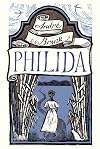
Philida
by André Brink
On This Page
Description
This is what it is to be a slave: that everything is decided for you from out there. You just got to listen and do as they tell you. You don't say no. You don't ask questions. You just do what they tell you. But far at the back of your head you think: Soon there must come a day when I can say for myself: This and that I shall do, this and that I shall not.Andre Brink-"one of South Africa's greatest novelists" (the Telegraph)-gives us his most powerful novel yet; the truly unforgettable story show more of a female slave, and her fierce determination to survive and to be free. It is 1832 in South Africa, the year before slavery is abolished and the slaves are emancipated. Philida is the mother of four children by Francois Brink, the son of her master. When Francois's father orders him to marry a woman from a prominent Cape Town family, Francois reneges on his promise to give Philida her freedom, threatening instead to sell her to new owners in the harsh country up north. Here is the remarkable story-based on individuals connected to the author's family-of a fiercely independent woman who will settle for nothing and for no one. Unwilling to accept the future that lies ahead of her, Philida continues to test the limits and lodges a complaint against the Brink family. Then she sets off on a journey-from the southernmost reaches of the Cape, across a great wilderness, to the far north of the country-in order to reclaim her soul. show lessTags
Recommendations












Member Recommendations
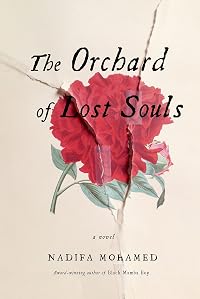
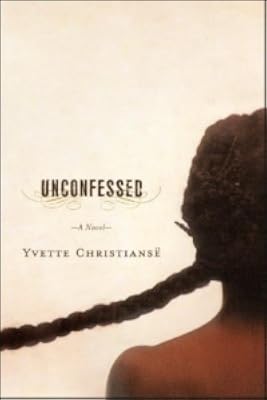
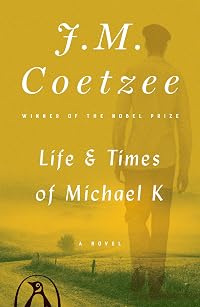
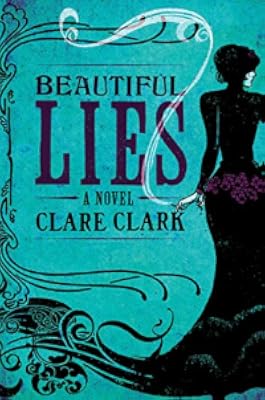
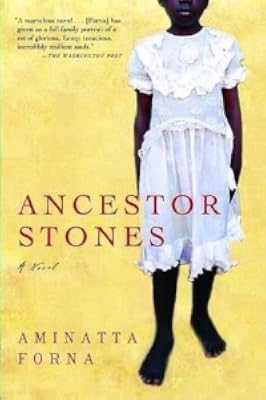
PghDragonMan The true meaning of freedom, the price of freedom, cruel things people do in the name of love and cruel acts performed without love are the focus of these books.
charl08 Similar themes of identity in connection with slavery (but in very different setting).
Member Reviews
Philida by Andre P. Brink is a novel steeped in historical events that follows the journey of Philida, a slave in Cape Town from the time she decides to make a stand for herself until the year of emancipation of the slaves.
This is not a book for the faint of heart. Philida has no "filter," she documents everything done to her in a detached way that still manages to infuse the account with deep, painful emotions. She gave birth to four children, two who still live, and struggles to deal with the idea that her master and lover will not hold true to his promise to her.
Brink lays it all out there with this book. From stories of escaped slaves, to those who were caught during an uprising, tales of the auction block to comparisons to kittens show more being drowned, there is nothing that is left untouched in this book. The brutal, horrible, degrading way in which the slaves were treated is presented to the reader in its raw form and it's only the beauty of Brink's writing and the infusion of the culture into the book that keeps it from being too hard to read.
One of the things I love about reading is being taken to places I never knew about. This is one of those cases. This is a part of history I knew nothing about, a place I knew nothing about, and a story that should be remembered as a warning to humankind. The story of Philida is one of strength and determination, a young woman standing up against immense odds to take what is her right - to find strength through her own religious beliefs and to learn to live as a human being and not a possession. show less
This is not a book for the faint of heart. Philida has no "filter," she documents everything done to her in a detached way that still manages to infuse the account with deep, painful emotions. She gave birth to four children, two who still live, and struggles to deal with the idea that her master and lover will not hold true to his promise to her.
Brink lays it all out there with this book. From stories of escaped slaves, to those who were caught during an uprising, tales of the auction block to comparisons to kittens show more being drowned, there is nothing that is left untouched in this book. The brutal, horrible, degrading way in which the slaves were treated is presented to the reader in its raw form and it's only the beauty of Brink's writing and the infusion of the culture into the book that keeps it from being too hard to read.
One of the things I love about reading is being taken to places I never knew about. This is one of those cases. This is a part of history I knew nothing about, a place I knew nothing about, and a story that should be remembered as a warning to humankind. The story of Philida is one of strength and determination, a young woman standing up against immense odds to take what is her right - to find strength through her own religious beliefs and to learn to live as a human being and not a possession. show less
Set in South Africa in 1832, this is the fictionalized account of one of the author’s ancestors, a quick-witted girl named Philida who is a slave to the Brinks on their farm, Zandvliet. Philida has children by her master’s son, Francois, who has promised her freedom if she would lie with him. When he reneges on his promise to her, Philida takes matters into her own hands and takes steps to gain control over her own life.
As the story begins, there are changes looming in the foreground: South Africa will be emancipating its slaves within the next couple of years, and the Brinks’ precarious financial situation has placed Zandvliet at risk of being lost. It is against this backdrop that Philida struggles to find a better life for show more herself and her children.
This is a unique novel in many ways; first, it is fascinating to read about the system of slavery in South Africa and to compare it with that in the States. The novel is also told in alternating perspectives: Philida’s, Francois’s, and Francois’s father, the owner of Zandvliet, Cornelius Brink. While it was certainly difficult to strum up any sympathy for Francois or his father, the addition of their perspective brought home how slavery affected the entirety of South Africa society. Novels about slavery frequently show us, of course, the impact on the slaves; what we do not often see is an up-close exploration of how slavery twists the morals and humanity of those who enslave, and the inner turmoil that can ensue. With Francois particularly, the reader can see his inner struggle; on some level he seems to love Philida and to recognize her as a fellow human being, but in others he is a product of his society and views her as property. It is interesting to wonder whether he will finally man up and do the right thing, or succumb to the expectations of his culture.
Philida’s voice is captivating: angry, frightened, confused, courageous, intelligent and determined. She shows us not only the degradation and powerlessness of slavery,but the ability of the independent human spirit to survive even in such an institution, to be free in one’s mind even when one’s body is enslaved. A very well-written, powerful, and thought-provoking read; this would be a good selection for a reading group as it would generate a great deal of deep discussion. show less
As the story begins, there are changes looming in the foreground: South Africa will be emancipating its slaves within the next couple of years, and the Brinks’ precarious financial situation has placed Zandvliet at risk of being lost. It is against this backdrop that Philida struggles to find a better life for show more herself and her children.
This is a unique novel in many ways; first, it is fascinating to read about the system of slavery in South Africa and to compare it with that in the States. The novel is also told in alternating perspectives: Philida’s, Francois’s, and Francois’s father, the owner of Zandvliet, Cornelius Brink. While it was certainly difficult to strum up any sympathy for Francois or his father, the addition of their perspective brought home how slavery affected the entirety of South Africa society. Novels about slavery frequently show us, of course, the impact on the slaves; what we do not often see is an up-close exploration of how slavery twists the morals and humanity of those who enslave, and the inner turmoil that can ensue. With Francois particularly, the reader can see his inner struggle; on some level he seems to love Philida and to recognize her as a fellow human being, but in others he is a product of his society and views her as property. It is interesting to wonder whether he will finally man up and do the right thing, or succumb to the expectations of his culture.
Philida’s voice is captivating: angry, frightened, confused, courageous, intelligent and determined. She shows us not only the degradation and powerlessness of slavery,but the ability of the independent human spirit to survive even in such an institution, to be free in one’s mind even when one’s body is enslaved. A very well-written, powerful, and thought-provoking read; this would be a good selection for a reading group as it would generate a great deal of deep discussion. show less
Philida falls into the same category as Beloved: an unkind story that must, nonetheless, be told. Historically predating Beloved and separated by a vast ocean, they both deal with the transition from slavery to freedom, cruel acts and cruel acts of love.
This is the story of Philida, a black slave woman in the house of a white Afrikaans family in the area of Cape Town, South Africa during the 1830’s. While not overly graphic, there are scenes of physical abuse and sexual abuse meted out to the slaves by their owners. In the midst of this, the son of the house owner, an Afrikaaner named Frans, forms a relationship with Philida. Any more recounting of what happens would require a retelling of the entire story, but suffice to say the show more story revolves around empty or broken promises and Philida realizing that she is the only one who can decide if she is truly free.
Brink’s prose just flows. The story is told from several different viewpoints and the grammatical style changes, ever so slightly, with each viewpoint, fitting the personality relating their part of story. Some may find this disconcerting, but I found it adding to the storytelling style and reinforcing Brink’s brilliant writing.
A sad story, but a wonderful piece of historical fiction, this book will resonate with readers of historical fiction and those researching peoples’ struggles for freedom. With the combination of style and passion used in telling Philida’s story, I have no problem calling this my first five star read of 2014. show less
This is the story of Philida, a black slave woman in the house of a white Afrikaans family in the area of Cape Town, South Africa during the 1830’s. While not overly graphic, there are scenes of physical abuse and sexual abuse meted out to the slaves by their owners. In the midst of this, the son of the house owner, an Afrikaaner named Frans, forms a relationship with Philida. Any more recounting of what happens would require a retelling of the entire story, but suffice to say the show more story revolves around empty or broken promises and Philida realizing that she is the only one who can decide if she is truly free.
Brink’s prose just flows. The story is told from several different viewpoints and the grammatical style changes, ever so slightly, with each viewpoint, fitting the personality relating their part of story. Some may find this disconcerting, but I found it adding to the storytelling style and reinforcing Brink’s brilliant writing.
A sad story, but a wonderful piece of historical fiction, this book will resonate with readers of historical fiction and those researching peoples’ struggles for freedom. With the combination of style and passion used in telling Philida’s story, I have no problem calling this my first five star read of 2014. show less
“I belong nowhere. What happen to me will always be what others want to happen. I am a piece of knitting that is knitted by somebody else.” (65)
Philida is an intelligent, young South African slave who belongs to Cornelius Brink and works on his farm, Zandvliet, near Cape Town. Industrious and quick-witted, often too much so for her own good, she is employed at Zandvliet as the “knitting girl.” Philida has had four children with Baas Cornelius’s son, Francois, who promised her he would buy her freedom if she would lie with him. It is a promise which Francois, of course, does not keep.
The year is 1832, and Philida is well aware of the rumours that South Africa is soon to emancipate its slaves. Unable to accept that Francois has show more reneged on his promise, she has decided, as the novel opens, to risk everything and lodge a complaint against him with the Office of the Slave Protector. Ultimately, her actions will see her sold at auction. But she refuses to let go of the hope that emancipation is eminent, that she and her children will live to be free. She befriends a Muslim slave, Labyn, and the two undertake a journey to the far north of Cape Town. Here, Philida will come to the realization that we learn where we belong by discovering where we do not belong.
“I can tell you something about knitting: In the past I hate correcting a dropped stitch, or two knitted together, or a purl too soon, but now I know that one of the best things that can happen to you is to find a mistake in the knitting. When you find it you feel so happy because you can make it right. You unravel and you unravel until you get to the right place, then you pick up the wrong stitches and you knit them right. Now you got a beautiful piece of knitting that is perfect. There is nothing, nothing wrong with it. Every stitch is just where it must be.” (302)
I thoroughly enjoyed Philida. Andre Brink, writing here about his ancestors, does a superb job of giving voice to his main character. He writes bluntly about the humiliation and brutality that was the experience of slavery, but he does so without sensationalism. I particularly loved Brink’s brilliant use of knitting as extended metaphor for life’s experiences. Highly recommended.
“I can say: I knit my story to the end. Or I can say: I walk all the way to the last stitches of my story. It’s all the same.” (57) show less
Philida is an intelligent, young South African slave who belongs to Cornelius Brink and works on his farm, Zandvliet, near Cape Town. Industrious and quick-witted, often too much so for her own good, she is employed at Zandvliet as the “knitting girl.” Philida has had four children with Baas Cornelius’s son, Francois, who promised her he would buy her freedom if she would lie with him. It is a promise which Francois, of course, does not keep.
The year is 1832, and Philida is well aware of the rumours that South Africa is soon to emancipate its slaves. Unable to accept that Francois has show more reneged on his promise, she has decided, as the novel opens, to risk everything and lodge a complaint against him with the Office of the Slave Protector. Ultimately, her actions will see her sold at auction. But she refuses to let go of the hope that emancipation is eminent, that she and her children will live to be free. She befriends a Muslim slave, Labyn, and the two undertake a journey to the far north of Cape Town. Here, Philida will come to the realization that we learn where we belong by discovering where we do not belong.
“I can tell you something about knitting: In the past I hate correcting a dropped stitch, or two knitted together, or a purl too soon, but now I know that one of the best things that can happen to you is to find a mistake in the knitting. When you find it you feel so happy because you can make it right. You unravel and you unravel until you get to the right place, then you pick up the wrong stitches and you knit them right. Now you got a beautiful piece of knitting that is perfect. There is nothing, nothing wrong with it. Every stitch is just where it must be.” (302)
I thoroughly enjoyed Philida. Andre Brink, writing here about his ancestors, does a superb job of giving voice to his main character. He writes bluntly about the humiliation and brutality that was the experience of slavery, but he does so without sensationalism. I particularly loved Brink’s brilliant use of knitting as extended metaphor for life’s experiences. Highly recommended.
“I can say: I knit my story to the end. Or I can say: I walk all the way to the last stitches of my story. It’s all the same.” (57) show less
This book gained André Brink his last Booker longlisting in 2012, 34 years after his last shortlisting for [b:Rumours Of Rain|745402|Rumours Of Rain|André Brink|https://i.gr-assets.com/images/S/compressed.photo.goodreads.com/books/1359619613l/745402._SY75_.jpg|731551]. He is a fine writer who deserves better. Like [b:An Instant in the Wind|734812|An Instant in the Wind|André Brink|https://i.gr-assets.com/images/S/compressed.photo.goodreads.com/books/1349102176l/734812._SY75_.jpg|2041274], this is a historical novel which takes contemporary sources as its starting point, and imagines the lives described by these bare bones documents.
This one is set in the early 19th century, against the backdrop of the introduction of a law banning show more slavery. Philida is a slave girl born in the Cape (Caab in the Afrikaner spelling used here). She works on a farm that grows vines and makes wine. At the start of the story, she walks to the "drostdy" in Stellenbosch to lodge a complaint, claiming that the master (baas)'s son Francois Brink has promised her liberty in return for sleeping with him. She has borne him four children, two of whom are now dead. Philida is a skilled knitter, trained by Petronella, a former first generation Javanese slave who now lives on the farm as a free woman and brought Philida up. Her charge against young Brink is rejected when he refuses to confirm the story, and this leads the master Cornelis to sell her.
This part of the story is true, and Cornelis Brink was a brother of one of the author's ancestors. The farm's bankruptcy is also true, but the story of what happens after the auction is not documented and is probably a little romantic and fanciful, as is the behaviour of her cat (Kleinkat).
Philida is a wonderful character, and the accounts of the harsh treatment of slaves are realistic, as are the details of the religious justifications underpinning their behaviour. The book is narrated by an omniscient third person throughout, but it follows different characters in different chapters.
Brink's afterword talks about two other books that this one has links to, and one of these ([b:A Chain of Voices|2021324|A Chain of Voices|André Brink|https://i.gr-assets.com/images/S/compressed.photo.goodreads.com/books/1356128164l/2021324._SY75_.jpg|651739]) concerns a slave rebellion of which Philida witnesses the aftermath - I must try and get hold of a copy of that one. show less
This one is set in the early 19th century, against the backdrop of the introduction of a law banning show more slavery. Philida is a slave girl born in the Cape (Caab in the Afrikaner spelling used here). She works on a farm that grows vines and makes wine. At the start of the story, she walks to the "drostdy" in Stellenbosch to lodge a complaint, claiming that the master (baas)'s son Francois Brink has promised her liberty in return for sleeping with him. She has borne him four children, two of whom are now dead. Philida is a skilled knitter, trained by Petronella, a former first generation Javanese slave who now lives on the farm as a free woman and brought Philida up. Her charge against young Brink is rejected when he refuses to confirm the story, and this leads the master Cornelis to sell her.
This part of the story is true, and Cornelis Brink was a brother of one of the author's ancestors. The farm's bankruptcy is also true, but the story of what happens after the auction is not documented and is probably a little romantic and fanciful, as is the behaviour of her cat (Kleinkat).
Philida is a wonderful character, and the accounts of the harsh treatment of slaves are realistic, as are the details of the religious justifications underpinning their behaviour. The book is narrated by an omniscient third person throughout, but it follows different characters in different chapters.
Brink's afterword talks about two other books that this one has links to, and one of these ([b:A Chain of Voices|2021324|A Chain of Voices|André Brink|https://i.gr-assets.com/images/S/compressed.photo.goodreads.com/books/1356128164l/2021324._SY75_.jpg|651739]) concerns a slave rebellion of which Philida witnesses the aftermath - I must try and get hold of a copy of that one. show less
this is quite an interesting 'novel'. parts of the book, as noted by brink in the afterword, are true and actual historical events and feature real people. philida was a slave woman owned by the brother of one of andré brink's direct relatives. he kept the name in the novel. also real was zandvliet, the wine farm owned by the brink family. there were a few things that felt a bit odd to me in the novel. some of my quibbles (but not all, hence the 4-star rating over 5-star) were addressed in the afterword - which also served to make me want to read two of brink's other books as characters from earlier books appear in philida, apparently. i can understand why this book was in contention for the booker. moments in the story were very show more difficult to read as they shed light on such a horrible time in our history. brink did an amazing job with this book.
sort-of tangent time: it was hard reading at moments, this novel - understanding at the time of this book, 1832ish in south africa, that slavery and the horrendous treatment of black people was seen to be okay. acceptable. expected. i try to project back. how could a decent human being allow others to be abused, degraded, violated and killed in front of them, doing nothing to intervene, help or change what was acceptable? i just do not get it. i mean, i do...but i don't. you know? i am not naive or lacking in information on slavery and the slave trade from africa. but having this information or feeling knowledgable on the subject still doesn't make reading stories about these times any easier. christianity and islam feature into this novel a bit too and that just pissed me off even more -- justification via religion?! this is just a shameful, shameful part of our history.
so you can see that reading philida was not just reading another book for me. show less
sort-of tangent time: it was hard reading at moments, this novel - understanding at the time of this book, 1832ish in south africa, that slavery and the horrendous treatment of black people was seen to be okay. acceptable. expected. i try to project back. how could a decent human being allow others to be abused, degraded, violated and killed in front of them, doing nothing to intervene, help or change what was acceptable? i just do not get it. i mean, i do...but i don't. you know? i am not naive or lacking in information on slavery and the slave trade from africa. but having this information or feeling knowledgable on the subject still doesn't make reading stories about these times any easier. christianity and islam feature into this novel a bit too and that just pissed me off even more -- justification via religion?! this is just a shameful, shameful part of our history.
so you can see that reading philida was not just reading another book for me. show less
This is the story of a black slave, a knitting girl, in the early 1830s in South Africa. Her master’s son, Francois Brink, promises her freedom if she agrees to have sexual intercourse with him. After bearing four children by him, Philida suspects that he has no intention of fulfilling his promise, so she goes to the Office of the Slave Protector to lodge a complaint of breach of promise. She is accused of lying and is sent back to Zandvliet, the Brink family farm. As retribution, she and her two surviving children are sold to another master.
Philida is uneducated but she is intelligent and eloquent. Early on, she offers a clear definition of what it means to be a slave: “Being a slave . . . mean always going back to the place they show more tell me to go back to. . . . I am never the one to decide where to go and when to go. It’s always they, it’s always somebody else. Never I.” She continues, “I belong nowhere. What happen to me will always be what others want to happen. I am a piece of knitting that is knitted by somebody else.” Ouma Nella, the woman who raised Philida, describes her constant questioning of and dissatisfaction with the status quo: “Philida who since her earliest days used to ask questions about everything in order to find out: Why is this like this? Why is that like this? Why is everything the way it is? Until she ended up by saying, It cannot always be like this, Ouma Nella. There must be something more. Something that is not like this.” Philida describes slave mentality: “You learn to think: This is what it is to be a slave. Just this, and nothing more. This: that everything is decided for you from out there. You just got to listen and do as they tell you. . . . You don’t say no. You don’t ask questions. You just do what they tell you.” And rejects it for herself: “there must come a day when I can say for myself: This and that I shall do, this and that I shall not.” When the slaves are emancipated in 1834, although they will remain indentured for four more years, she is given her first pair of shoes and those give her further confidence. She is warned by a fellow slave, “Remember, a man can only step as far as his legs are long. And they keeping our legs short.” But her response is “You forget one thing . . . We can jump. And I’m not going to step carefully if I know I can jump. Remember, I wearing shoes now.” The book ends with her triumphant cry: “I am here. I, Philida of the Caab. This I that is free. The I who was a slave and who now is free, who is a woman, and who is everything.”
Philida is certainly admirable for her courage in asking for the protection of the law even when the odds are stacked against her. She stands up to both of her masters and Francois and even stomps on the fingers of a white man who tries to examine her during an auction. Her determination is also noteworthy; she says, “I know that from giving up too soon one’s wool start unravelling and then the stitches no longer stay in neat rows and the knitting get loose and tatty.” She walks for days in order to make an official complaint and for weeks to see the Gariep River, which she sees as a Promised Land. Her faith that a better day is coming may be commendable, but I couldn’t help but think of apartheid in South Africa which would endure for a century and a half longer! Philida argues that, after emancipation, “it will be harder for the white people than for us. We will manage, one way or another. But what will become of them? We are like the foundation of their house. Their lives and everything is built on us.” History belies this optimism.
Parts of the novel make for a harrowing read. There are horrific scenes of floggings, rape, peelings and hangings. The brutality to which the slaves are subjected is made worse by the use of religion as justification. Cornelis Brink says, “We came to this land white, and white we shall be on the Day of Judgment, so help me God. . . . God put us here with a purpose, and we keep very strictly to his Word. . . . We Brinks are a boat . . . It’s the whiteness of our boat that proves we are children of the Lord. We won’t have any truck with Satan’s offspring.”
For me, there are some weaknesses in the book. The extensive use of Afrikaans proved frustrating; with my smattering of Dutch, I could make sense of some of the vocabulary, but a glossary would have been useful. The portrayal of the blacks and whites was somewhat stereotypical; the blacks were good and the whites were evil. There is some attempt to humanize Francois by showing his conflicted emotions regarding Philida, but the whites, especially Nooi Janna, tended to be narrow-minded, hypocritical, and cruel. And all white males are lustful. The blacks, on the other hand, especially Ouma Nella and Labyn, are exceedingly patient and wise. I also had difficulty with Philida’s relationship with Kleinkat; I understand the connection with KleinFrans, but Philida seems closer to the cat than to her two children.
Despite my fault-finding, I would recommend this book to someone wanting to read about slavery in South Africa. As a Canadian, I am somewhat familiar with the history of slavery in the United States, but know next to nothing about its beginnings in South Africa, so the book helped fill in a bit of my knowledge gaps. The book will also appeal to readers who like strong female characters. show less
Philida is uneducated but she is intelligent and eloquent. Early on, she offers a clear definition of what it means to be a slave: “Being a slave . . . mean always going back to the place they show more tell me to go back to. . . . I am never the one to decide where to go and when to go. It’s always they, it’s always somebody else. Never I.” She continues, “I belong nowhere. What happen to me will always be what others want to happen. I am a piece of knitting that is knitted by somebody else.” Ouma Nella, the woman who raised Philida, describes her constant questioning of and dissatisfaction with the status quo: “Philida who since her earliest days used to ask questions about everything in order to find out: Why is this like this? Why is that like this? Why is everything the way it is? Until she ended up by saying, It cannot always be like this, Ouma Nella. There must be something more. Something that is not like this.” Philida describes slave mentality: “You learn to think: This is what it is to be a slave. Just this, and nothing more. This: that everything is decided for you from out there. You just got to listen and do as they tell you. . . . You don’t say no. You don’t ask questions. You just do what they tell you.” And rejects it for herself: “there must come a day when I can say for myself: This and that I shall do, this and that I shall not.” When the slaves are emancipated in 1834, although they will remain indentured for four more years, she is given her first pair of shoes and those give her further confidence. She is warned by a fellow slave, “Remember, a man can only step as far as his legs are long. And they keeping our legs short.” But her response is “You forget one thing . . . We can jump. And I’m not going to step carefully if I know I can jump. Remember, I wearing shoes now.” The book ends with her triumphant cry: “I am here. I, Philida of the Caab. This I that is free. The I who was a slave and who now is free, who is a woman, and who is everything.”
Philida is certainly admirable for her courage in asking for the protection of the law even when the odds are stacked against her. She stands up to both of her masters and Francois and even stomps on the fingers of a white man who tries to examine her during an auction. Her determination is also noteworthy; she says, “I know that from giving up too soon one’s wool start unravelling and then the stitches no longer stay in neat rows and the knitting get loose and tatty.” She walks for days in order to make an official complaint and for weeks to see the Gariep River, which she sees as a Promised Land. Her faith that a better day is coming may be commendable, but I couldn’t help but think of apartheid in South Africa which would endure for a century and a half longer! Philida argues that, after emancipation, “it will be harder for the white people than for us. We will manage, one way or another. But what will become of them? We are like the foundation of their house. Their lives and everything is built on us.” History belies this optimism.
Parts of the novel make for a harrowing read. There are horrific scenes of floggings, rape, peelings and hangings. The brutality to which the slaves are subjected is made worse by the use of religion as justification. Cornelis Brink says, “We came to this land white, and white we shall be on the Day of Judgment, so help me God. . . . God put us here with a purpose, and we keep very strictly to his Word. . . . We Brinks are a boat . . . It’s the whiteness of our boat that proves we are children of the Lord. We won’t have any truck with Satan’s offspring.”
For me, there are some weaknesses in the book. The extensive use of Afrikaans proved frustrating; with my smattering of Dutch, I could make sense of some of the vocabulary, but a glossary would have been useful. The portrayal of the blacks and whites was somewhat stereotypical; the blacks were good and the whites were evil. There is some attempt to humanize Francois by showing his conflicted emotions regarding Philida, but the whites, especially Nooi Janna, tended to be narrow-minded, hypocritical, and cruel. And all white males are lustful. The blacks, on the other hand, especially Ouma Nella and Labyn, are exceedingly patient and wise. I also had difficulty with Philida’s relationship with Kleinkat; I understand the connection with KleinFrans, but Philida seems closer to the cat than to her two children.
Despite my fault-finding, I would recommend this book to someone wanting to read about slavery in South Africa. As a Canadian, I am somewhat familiar with the history of slavery in the United States, but know next to nothing about its beginnings in South Africa, so the book helped fill in a bit of my knowledge gaps. The book will also appeal to readers who like strong female characters. show less
Members
- Recently Added By
Published Reviews
ThingScore 100
...there is much, particularly relating to the separation of women slaves from their children, and to the punishments meted out to runaway slaves, that is extremely harrowing. But the light and shade that Brink has skilfully introduced into his augmented family history make for a compelling and memorable novel.
added by charl08
Lists

Booker Prize
491 works; 62 members

Man Booker Prize Longlist 2012
12 works; 2 members
Talk Discussions
Past Discussions
Philida by André Brink in Booker Prize (August 2012)
Author Information

94+ Works 4,916 Members
André Brink was born on May 29, 1935 in Vrede, South Africa. He studied English and Afrikaans at the University in Potchefstroom and comparative literature in Paris. He was a South African writer and educator. He became a part of a group of writers known as Die Sestigers upon returning to South Africa in the 1960s. The group aimed to broaden show more Afrikaner fiction by writing about sexual and moral matters and the failings of the traditional political system. His books included Rumors of Rain, Looking on Darkness, A Dry White Season, and States of Emergency. Some of his books were banned in South Africa. He became a professor of Afrikaans and Dutch literature at Rhodes University and professor of English at the University of Cape Town. He has received the 1980 Martin Luther King Prize, the 1980 French Prix Medicis Etranger, and the 1982 Chevalier of the Legion d'Honneur. He was shortlisted for the Booker Prize twice and nominated for the Nobel Prize for literature on several occasions. He died on February 6, 2015 at the age of 79. (Bowker Author Biography) show less
Awards and Honors
Awards
Notable Lists
Common Knowledge
- Canonical title
- Philida
- Original title
- Philida
- Original publication date
- 2013-02-05
- People/Characters
- Philida; Francois Brink; Cornelius Brink; Labyn
- Important places
- Cape Town, Western Cape, South Africa; South Africa
- Epigraph
- I am
God knows
A free fucking woman
Antjie Krog - First words
- Here come shit.
- Last words*
- (Click to show. Warning: May contain spoilers.)The I who was a slave and who now is free, who is a woman, and who is everything.
- Blurbers
- Egan, Jennifer
*Some information comes from Common Knowledge in other languages. Click "Edit" for more information.
Classifications
- Genres
- General Fiction, Fiction and Literature, Historical Fiction
- DDC/MDS
- 823.914 — Literature & rhetoric English & Old English literatures English fiction 1900- 1901-1999 1945-1999
- LCC
- PR9369.3 .B7 .P55 — Language and Literature English English Literature English literature: Provincial, local, etc.
- BISAC
Statistics
- Members
- 308
- Popularity
- 103,799
- Reviews
- 19
- Rating
- (3.48)
- Languages
- Afrikaans, Danish, English, French
- Media
- Paper, Audiobook, Ebook
- ISBNs
- 20
- ASINs
- 6