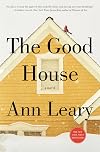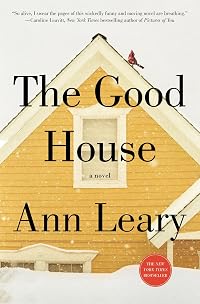
The Good House
by Ann Leary
On This Page
Description
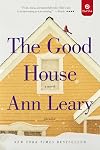
"The Good House tells the story of Hildy Good, who lives in a small town on Boston's North Shore. Hildy is a successful real-estate broker, good neighbor, mother, and grandmother. She's also a raging alcoholic. Hildy's family held an intervention for her about a year before this story takes place--"if they invite you over for dinner, and it's not a major holiday," she advises "run for your life"--and now she feels lonely and unjustly persecuted. She has also fooled herself into thinking that show more moderation is the key to her drinking problem. As if battling her demons wasn't enough to keep her busy, Hildy soon finds herself embroiled in the underbelly of her New England town, a craggy little place that harbors secrets. There's a scandal, some mysticism, babies, old houses, drinking, and desire--and a love story between two craggy sixty-somethings that's as real and sexy as you get. An exceptional novel that is at turns hilarious and sobering, The Good House asks the question: What will it take to keep Hildy Good from drinking? For good"-- show lessTags
Recommendations




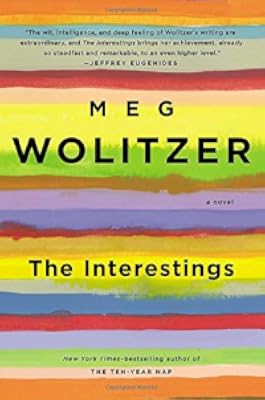
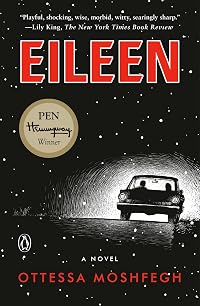
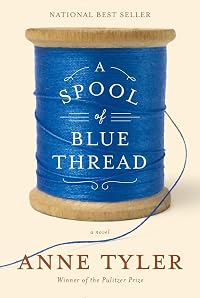

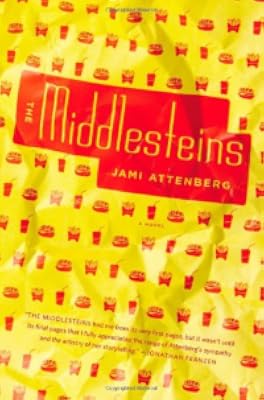

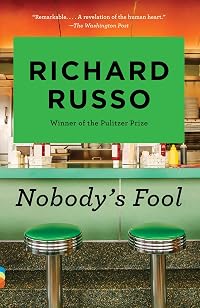
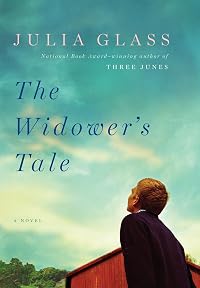
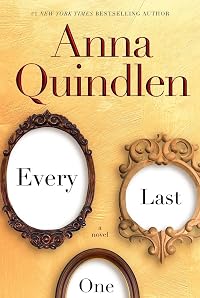
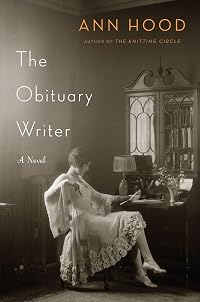






Member Recommendations
Cecilturtle small town adventures where there is more that meets the eye than white picket fences
Member Reviews
Ann Leary, the author of "The Good House", is spot-on in her description of alcoholism and its effects on the drinker and those around them. If you have ever loved an alcoholic, or ever known one as a friend or coworker, then you will recognize much truth in the author's storytelling. Even more striking for me, I actually have "known" the characters in this book, except that my people live in a small town in the mountains of VA, not a small seaside community on the coast of MA. The narrator of "The Good House" is Hildy Good, a top-notch realtor entering her sixties with a drinking problem intertwined with the requisite personal issues accumulated through decades of denial. After a stint in rehab, Hildy feels she has a grip on her show more problem--she just needs to control her alcohol consumption, not give it up. When a beautiful young woman, Rebecca, and her family move to Hildy's community, Hildy finds an unexpected friend. Hildy can trace her ancestry back to the Massachusetts of the 1600s, where one of her ancestors was tried and hanged as a witch. Hildy can "read" people due to her astute powers of observation and her many years of dealing with the public and their idiosyncrasies. She lets people think that she can read minds because it amuses her and suits her purposes. She just can't get her own mind to accept the fact that she must give up alcohol, and in true alcoholic tradition, she blurs reality in her thoughts to excuse and erase her own actions. Her marriage ended because her husband was gay, and her relationships with her grown children are anything but smooth. Then there's Frank--her old flame and lifelong friend--who wants more than friendship from Hildy. When local scandals leave no one untouched, Hildy finds out just how connected she is the people in her community, and it's time for her to choose her future path. Will she force herself to face her alcohol addiction? Is there a second chance for happiness for Hildy and Frank? Author Ann Leary will have you rooting for her perfectly imperfect heroine to find her way out of the bottle and sail toward a clear horizon.
Book Copy Gratis Amazon Vine show less
Book Copy Gratis Amazon Vine show less
I have conflicting feelings about this book. On the one had I think it is a brilliantly written book that perfectly portrays the life (and thoughts) of a 'functioning' alcoholic. On the other had I hated Hidly. So much. I think that may stem from personal feelings about an alcoholic in my own family and the parallels that I see, but what a selfish b***h. Frank was by far my favourite character, and even thought we don't really see a lot of him, Scott comes in a close second.
Without giving away too much one of the (many) reasons that I dislike Hildy so strongly would be the harsh and brutal way she 'promptly fired' her secretary who helped the girls with the intervention.
Are you kidding me. Someone showed they cared about you and you show more fire them.
I am tempted to give [a:Ann Leary|207508|Ann Leary|https://d.gr-assets.com/authors/1352560467p2/207508.jpg] three stars for this book, mainly due to my hatred of her main character, but I know that the only reason I truly hate her is because of how realistic and alive the character is written. show less
Without giving away too much one of the (many) reasons that I dislike Hildy so strongly would be the harsh and brutal way she 'promptly fired' her secretary who helped the girls with the intervention.
Are you kidding me. Someone showed they cared about you and you show more fire them.
I am tempted to give [a:Ann Leary|207508|Ann Leary|https://d.gr-assets.com/authors/1352560467p2/207508.jpg] three stars for this book, mainly due to my hatred of her main character, but I know that the only reason I truly hate her is because of how realistic and alive the character is written. show less
I haven't read anything else by Leary, but I will now. A little interview with the author stated that the book began as a story about the romance between two characters with Hildy as kind of a colorful aside, but Hildy took over. She's a 60 something realtor, the number one businesswoman in her small town, mother of 2 grown daughters, divorced, living alone and denying her alcoholism. She's both reclusive and prickly, like Olive Kitteridge and very social. Her analysis of her life and the lives of other people and properties in the town are priceless. I don't have a problem with alcohol but I come from a family full of people who do, and she seems to have it down pat. She's also descended from one of the Salem witches and is witchilly show more able to read micro-expressions to the extent that people think she can read minds. The only bad thing about the book is that it's over and I can't loll around in Hildy's life anymore show less
Hildy is a tough character. On the one hand, she is witty and talented. She is caring, knowledgeable and not afraid of hard work. When she is sober, she is an admirable lady that one would be proud to have as a mother or friend. Unfortunately, it is her neediness that is painful to witness because she is the type of woman who thrives in the company of others. Watching her slide downward into old patterns, the very same patterns that forced her daughters to send her rehab in the first place, is bittersweet, especially when it is so easily avoidable. At the same time, one wants to condemn her because she is ultimately responsible for her own actions, and her continuous justifications for her behavior become disturbing.
All of Hildy’s show more problems stem from her loneliness. Her embarrassment over past actions, her loneliness, her struggling business, her friendship with Rebecca and strained relationships with the rest of her hometown are all caused by her drinking. The Good House excels at showing how detrimental alcoholism is to every facet of a person’s life. It also shows just how easy it is for one to slip into a cycle of self-pity caused by drinking caused by self-pity and so forth. Hildy does not intend for her behavior to cause so many problems, but they do because she is stuck in a pattern from which she cannot break free. That she is an ultimately good person with plenty to offer society and no ill will towards others strikes a chord with readers because she makes it easy to imagine something similar happening to other loved ones.
The Good House is simultaneously intense and funny and horrifying. Hildy means well, but her denial about the true extent of her alcoholism is terrifying. Her downward spiral into the world of blackouts and lost time is made even scarier by her inability to recognize her harmful behavior and her willingness to get behind the wheel. At the same time, the fact that Hildy seeks solace from her loneliness and her work-related problems via a bottle is something to which a large number of readers can relate. One cannot condone her behavior but can understand how such extreme behavior starts. Meanwhile, her burgeoning relationship with Frank is hilariously sweet. The Good House proves that one is never too old to find love or to start again as many times as necessary. show less
All of Hildy’s show more problems stem from her loneliness. Her embarrassment over past actions, her loneliness, her struggling business, her friendship with Rebecca and strained relationships with the rest of her hometown are all caused by her drinking. The Good House excels at showing how detrimental alcoholism is to every facet of a person’s life. It also shows just how easy it is for one to slip into a cycle of self-pity caused by drinking caused by self-pity and so forth. Hildy does not intend for her behavior to cause so many problems, but they do because she is stuck in a pattern from which she cannot break free. That she is an ultimately good person with plenty to offer society and no ill will towards others strikes a chord with readers because she makes it easy to imagine something similar happening to other loved ones.
The Good House is simultaneously intense and funny and horrifying. Hildy means well, but her denial about the true extent of her alcoholism is terrifying. Her downward spiral into the world of blackouts and lost time is made even scarier by her inability to recognize her harmful behavior and her willingness to get behind the wheel. At the same time, the fact that Hildy seeks solace from her loneliness and her work-related problems via a bottle is something to which a large number of readers can relate. One cannot condone her behavior but can understand how such extreme behavior starts. Meanwhile, her burgeoning relationship with Frank is hilariously sweet. The Good House proves that one is never too old to find love or to start again as many times as necessary. show less
The Good House tells the story of Hildy Good, a real-estate agent in a small town in Massachusetts, who has taken "just a little" too much of a liking to the no-longer-occasional glass of alcohol. Hildy thinks she has things under control -- but as she gets involved with the life of a new neighbour, she gets ample opportunity to examine her own.
I loved this book. It manages to be both thoughtful and uplifting at the same time -- you despair of Hildy as she passes out in her basement but you still never cease to root for her. After all, many of the little lies she tells herself (and, by extension, the reader) are not so unlike the ones you may have told yourself at some point or another.
My audiobook included an interview with the author show more in which she explained that Hildy was never meant to be the main character of the book but just ended up stealing the show, and I have no trouble believing that. Speaking of which, I strongly recommend the audiobook version of this novel -- the narrator, Mary Beth Hurt, really makes Hildy come to life. show less
I loved this book. It manages to be both thoughtful and uplifting at the same time -- you despair of Hildy as she passes out in her basement but you still never cease to root for her. After all, many of the little lies she tells herself (and, by extension, the reader) are not so unlike the ones you may have told yourself at some point or another.
My audiobook included an interview with the author show more in which she explained that Hildy was never meant to be the main character of the book but just ended up stealing the show, and I have no trouble believing that. Speaking of which, I strongly recommend the audiobook version of this novel -- the narrator, Mary Beth Hurt, really makes Hildy come to life. show less
The basics: Hildy Good is a real estate agent near Salem, Massachusetts. She went to rehab at the behest of her two grown daughters, but she's not an alcoholic.
My thoughts: The Good House is one of those books many were quietly raving about most of 2013, but yet it never seemed to really get much attention. I'm pretty sure I checked it out of the library in January when it came out and finally read it in the final days of 2013 (I know, I am a library book hoarder.) I was instantly entranced with this novel. Hildy is a dynamic narrator. I'm tempted to call her an unreliable narrator, but I'm not convinced that's completely accurate. Hildy's unreliability comes in two forms: first, she is not always forthcoming with the reader. She show more doesn't necessarily lie, but she carefully chooses how to share and when. In reality, this behavior is what we all do. We don't lead with the faults others find with us that we don't quite believe, yet when Hildy first acknowledge such a trait, my first thought was suspicion.
The second trait of unreliability has as much to do with Hildy's honesty with herself as it does with her honesty with the reader. While linked with the first, it becomes indicative of so much more. In a pinch, I would probably call Hildy unreliable, but it's this very trait, and Leary's unconventional use of it, that makes Hildy so fascinating to read about. As much as I enjoyed seeing other characters, Hildy stole this book for me.
The verdict: The Good House captivated me as I read. Hildy was a fascinating character, and I loved seeing her world through her eyes, or at least as much as she would show. As much as this novel is Hildy's story, Leary smartly builds up the town and its motley crew of characters to be just as dynamic.
Rating: 4 out of 5 show less
My thoughts: The Good House is one of those books many were quietly raving about most of 2013, but yet it never seemed to really get much attention. I'm pretty sure I checked it out of the library in January when it came out and finally read it in the final days of 2013 (I know, I am a library book hoarder.) I was instantly entranced with this novel. Hildy is a dynamic narrator. I'm tempted to call her an unreliable narrator, but I'm not convinced that's completely accurate. Hildy's unreliability comes in two forms: first, she is not always forthcoming with the reader. She show more doesn't necessarily lie, but she carefully chooses how to share and when. In reality, this behavior is what we all do. We don't lead with the faults others find with us that we don't quite believe, yet when Hildy first acknowledge such a trait, my first thought was suspicion.
The second trait of unreliability has as much to do with Hildy's honesty with herself as it does with her honesty with the reader. While linked with the first, it becomes indicative of so much more. In a pinch, I would probably call Hildy unreliable, but it's this very trait, and Leary's unconventional use of it, that makes Hildy so fascinating to read about. As much as I enjoyed seeing other characters, Hildy stole this book for me.
The verdict: The Good House captivated me as I read. Hildy was a fascinating character, and I loved seeing her world through her eyes, or at least as much as she would show. As much as this novel is Hildy's story, Leary smartly builds up the town and its motley crew of characters to be just as dynamic.
Rating: 4 out of 5 show less
I had "Harold Fry" as my best book of 2013 but oops, The Good House overtakes it. Maybe because I listened to it and the reader was *gasp* Mary Beth Hurt, completely stunning performance. But more likely due to most excellent plot, remarkable characters, pacing, insights, and the way Ann Leary kept me guessing: Marblehead? Swampscott? Magnolia? Essex? Ipswich? Manchester-by-the-Sea? Of course it doesn't matter but Hildy Good matters. SHE REALLY MATTERS. And it really matters to me that you read or listen to this book.
Members
- Recently Added By
Lists

Top Five Books of 2013
1,562 works; 721 members

Top Five Books of 2014
1,064 works; 398 members

Books Read in 2022
5,168 works; 114 members

aborted books in 2020
36 works; 1 member

Which house?
423 works; 16 members
Author Information

9+ Works 1,930 Members
Ann Leary is a cohost of the NPR weekly radio show Hash Hags. She has written fiction and nonfiction for numerous magazines and literary publications. Her books include the memoir An Innocent, A Broad and two novels: Outtakes from a Marriage and The Good House. (Bowker Author Biography)
Some Editions
Awards and Honors
Awards
Common Knowledge
- Canonical title
- The Good House
- Original publication date
- 2013-01-15
- People/Characters
- Hildy Good; Rebecca McCallister; Peter Newbold; Frank Getchell
- Important places
- Massachusetts, USA
- Dedication
- For Denis
- First words
- I can walk through a house once and know more about its occupants than a psychiatrist could after a year of sessions.
- Last words
- (Click to show. Warning: May contain spoilers.)A fresh westerly breeze was all we needed, and it did come, all at once, filling our sails with a sudden exhilarating gust and pushing us back over the shadowy currents, over the black kelpy shallows, over the rows of frothy white surf until we rested our bow, finally, on the rocky familiar shore of Getchell's Cove.
- Original language*
- Anglais (Etats-Unis) (Etats-Unis)
*Some information comes from Common Knowledge in other languages. Click "Edit" for more information.
Classifications
Statistics
- Members
- 882
- Popularity
- 30,680
- Reviews
- 71
- Rating
- (3.71)
- Languages
- 5 — Dutch, English, German, Portuguese, Romanian
- Media
- Paper, Audiobook, Ebook
- ISBNs
- 22
- ASINs
- 7