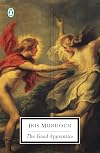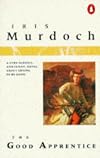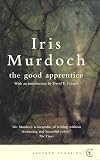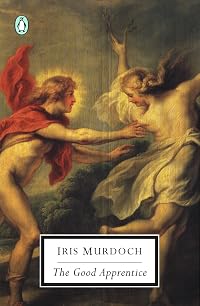
The Good Apprentice
by Iris Murdoch 
On This Page
Description
Edward gives his ingenuous friend, Mark, a drugged sandwich, a prank which ends tragically. Edward's subsequent guilt, self-hatred, and crisis of conscience are the focal point of the story.Tags
Recommendations

















Member Reviews
Many many thoughts jumbling around in my head as I finish Iris Murdoch's The Good Apprentice. Not the least of which is that I am beginning to 'get' Iris Murdoch and I can see how this could well turn into awe a few more books down the road. You could make a case that she is writing more or less the same book over and over again, but that isn't it. More like she is examining a few of the most important questions - the nature of good and evil and our variety (and also similarity) of human responses to emergency situations that arise. How we make things up to suit ourselves, create stories and make things fit, how we rationalize our lying, shrug off our cowardice..... Human behavior as IM sees it, is such a complex interweaving of events show more and character, that it can be examined endlessly. No coincidence that the two most important animal images in this novel are spiders and a mouse. Something so tiny can alter everything. One careless action can change a life irrevocably is the idea from which the story of The Good Apprentice flows. Edward gives a friend a hallucinogenic, and then, thinking the friend is safely asleep, leaves the room (locked) to visit someone. When he returns the friend has jumped out the window and is dead. Family members and friends gather around, but Edward is lost in his grief. He loved his friend deeply and is in a state of shock and paralysis. How is he to go on and have a life? And it is a good question.
As often is the case in a Murdoch book, the relationships between people are labyrinthine, Edward has a stepfather he loves as a father, and a step-brother ditto. His stepfather is having an affair with his aunt who is married to a brilliant psychotherapist..... Edward's accident pushes any number of static situations (the affair being one of them) into motion. Edward receives an invitation to visit Seegard, his real father's home on the coast, up in the fens, hoping that getting to know his real father might lead to his salvation he goes and finds himself in an almost unreal and definitely uncanny environment. As always with Murdoch, there is a tug of war between rationality and the mystical, a tension I happen to believe is a critical part of the human .... geography?..... both our story-making and our ability to act logically matter, make us who and what we are. Self awareness is everything. Edward's brother Stuart is one of the most fascinating characters Murdoch has put forward yet - a man who has decided to detach himself in every possible way from both story-making and logic in an effort to be truly good. Having done this he becomes a kind of palimpsest for everyone to write their own fictions upon, a blank, a threat, frightening and fascinating. It's breathtaking. As always with Murdoch, there are maddening interactions where people talk at complete cross-purposes, not listening, caught up in their own fictions, but of course, that is just how we all are. Murdoch reminds us of this both fiercely and compassionately. ****1/2 show less
As often is the case in a Murdoch book, the relationships between people are labyrinthine, Edward has a stepfather he loves as a father, and a step-brother ditto. His stepfather is having an affair with his aunt who is married to a brilliant psychotherapist..... Edward's accident pushes any number of static situations (the affair being one of them) into motion. Edward receives an invitation to visit Seegard, his real father's home on the coast, up in the fens, hoping that getting to know his real father might lead to his salvation he goes and finds himself in an almost unreal and definitely uncanny environment. As always with Murdoch, there is a tug of war between rationality and the mystical, a tension I happen to believe is a critical part of the human .... geography?..... both our story-making and our ability to act logically matter, make us who and what we are. Self awareness is everything. Edward's brother Stuart is one of the most fascinating characters Murdoch has put forward yet - a man who has decided to detach himself in every possible way from both story-making and logic in an effort to be truly good. Having done this he becomes a kind of palimpsest for everyone to write their own fictions upon, a blank, a threat, frightening and fascinating. It's breathtaking. As always with Murdoch, there are maddening interactions where people talk at complete cross-purposes, not listening, caught up in their own fictions, but of course, that is just how we all are. Murdoch reminds us of this both fiercely and compassionately. ****1/2 show less
This book earned Iris Murdoch the fifth of her six Booker shortlistings, and in my view this was well merited. Most of the editions of her novels that I have are fairly recent reprints (mostly published by Vintage), which have introductions that talk about the plots, and give away events that happen late in the story. By contrast, this one is an early Penguin paperback edition, and it was good to read a book with no more idea of what would happen next beyond the few hints offered by the blurb. As so often with Murdoch, this is an ensemble piece largely populated with middle class Londoners, and it has many of her characteristic traits - the dark humour, shifting allegiances and relationships and characters who make sudden impetuous show more decisions.
Unlike most of her novels, this one starts with a short chapter which establishes the situation its main protagonist, the 20 year old Edward Baltram, finds himself in. In a student prank, he has laced his friend Mark's sandwich with a drug. Mark then falls asleep, so when Edward receives a phone call from a near neighbour Sarah, he locks Mark into his room and goes to see her and ends up in her bed. On returning around half an hour later, he finds his room deserted and the window open, then sees Mark's dead body lying below. All this happens in less than ten pages, but the rest of the book explores the consequences for Edward and his complicated extended family at much greater length.
Edward has been brought up by his stepfather Henry and Henry's elder son from an earlier marriage Stuart. Edward's biological father is Jesse, a famous painter who lives in a fenland coastal setting with his wife and two daughters. His mother Chloe married Henry while pregnant with Edward, and is now long dead. Chloe's sister Midge is married to Thomas, a psychiatrist who acts as a sort of mentor to Edward and Stuart, another subplot is Henry's affair with Midge.
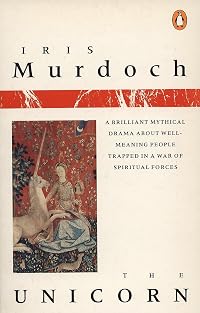
Edward is obsessed with feelings of guilt, but agrees to go to see Jesse and his family, and this part of the story is a little reminiscent of [b:The Unicorn|11235|The Unicorn|Iris Murdoch|https://i.gr-assets.com/images/S/compressed.photo.goodreads.com/books/1389645574l/11235._SY75_.jpg|1294]. The three women claim that Jesse is away, and introduce Edward to their rather monastic but slightly sinister self-sufficient lifestyle. To say much more would spoil the book for anyone who has not read it.
For all of the deaths and mishaps involved, I found this an entertaining and stimulating read, showing that in the mid 80s, Murdoch's imaginative powers were still intact. show less
Unlike most of her novels, this one starts with a short chapter which establishes the situation its main protagonist, the 20 year old Edward Baltram, finds himself in. In a student prank, he has laced his friend Mark's sandwich with a drug. Mark then falls asleep, so when Edward receives a phone call from a near neighbour Sarah, he locks Mark into his room and goes to see her and ends up in her bed. On returning around half an hour later, he finds his room deserted and the window open, then sees Mark's dead body lying below. All this happens in less than ten pages, but the rest of the book explores the consequences for Edward and his complicated extended family at much greater length.
Edward has been brought up by his stepfather Henry and Henry's elder son from an earlier marriage Stuart. Edward's biological father is Jesse, a famous painter who lives in a fenland coastal setting with his wife and two daughters. His mother Chloe married Henry while pregnant with Edward, and is now long dead. Chloe's sister Midge is married to Thomas, a psychiatrist who acts as a sort of mentor to Edward and Stuart, another subplot is Henry's affair with Midge.
Edward is obsessed with feelings of guilt, but agrees to go to see Jesse and his family, and this part of the story is a little reminiscent of [b:The Unicorn|11235|The Unicorn|Iris Murdoch|https://i.gr-assets.com/images/S/compressed.photo.goodreads.com/books/1389645574l/11235._SY75_.jpg|1294]. The three women claim that Jesse is away, and introduce Edward to their rather monastic but slightly sinister self-sufficient lifestyle. To say much more would spoil the book for anyone who has not read it.
For all of the deaths and mishaps involved, I found this an entertaining and stimulating read, showing that in the mid 80s, Murdoch's imaginative powers were still intact. show less
Bought 1990s?
Can't believe I forgot to review this one - it was still on my bedside table, not in my Reviewing Pile!
In this marvellous fable about families, fatherhood and How To Be Good, Murdoch is working at the height of her powers. This is where the Murdoch A Month project really comes into its own, as a re-reading is deepened by our knowledge of the themes and structures she has been playing with in her career up to now. Crucially, in this novel the common themes and interests are woven completely into the plot and characterisation of the book, working to deepen and intensify the myth of place and person rather than being separate elements to pick out. We have a pair of "brothers", Stuart, who is trying to be good on a rather show more uninvolved and theoretical level, and Edward, who has done something so bad that he fears he will never escape unless he dies. Both need to do something practical in order to redeem themselves, and both do so rather accidentally. Some marvellous set pieces and Murdochian convoluted relationships, but it doesn't seem contrived and is deeply satisfying. One lovely touch, which I might not have noticed without one of the sessions I attended at the IM conference, was the way in which Edward starts to really "see" the landscape around him, picking out birds and plants, whereas at the beginning all he can see is Trees and Water.
One of my favourites. I do love the Later Novels (and I'm looking forward to a book coming out about them at some point in the next couple of years!) show less
Can't believe I forgot to review this one - it was still on my bedside table, not in my Reviewing Pile!
In this marvellous fable about families, fatherhood and How To Be Good, Murdoch is working at the height of her powers. This is where the Murdoch A Month project really comes into its own, as a re-reading is deepened by our knowledge of the themes and structures she has been playing with in her career up to now. Crucially, in this novel the common themes and interests are woven completely into the plot and characterisation of the book, working to deepen and intensify the myth of place and person rather than being separate elements to pick out. We have a pair of "brothers", Stuart, who is trying to be good on a rather show more uninvolved and theoretical level, and Edward, who has done something so bad that he fears he will never escape unless he dies. Both need to do something practical in order to redeem themselves, and both do so rather accidentally. Some marvellous set pieces and Murdochian convoluted relationships, but it doesn't seem contrived and is deeply satisfying. One lovely touch, which I might not have noticed without one of the sessions I attended at the IM conference, was the way in which Edward starts to really "see" the landscape around him, picking out birds and plants, whereas at the beginning all he can see is Trees and Water.
One of my favourites. I do love the Later Novels (and I'm looking forward to a book coming out about them at some point in the next couple of years!) show less
A reader's reaction to this marvelous novel will probably depend on their willingness to acquiesce to the series of extravagantly plotted coincidences that serve as linchpins for its intricate structure. If you can accept these, a let yourself be carried away by the sumptuous prose and the acuity of the character analysis, this will be a great experience. The plot, much to complicated to summarize, revolves around a group of closely related characters who seem to be destroying their own lives, and those of the people they love, by a series of disastrously wrong-headed, often impulsive, life decisions. After much suffering and several deaths, all is worked out in the end, for the survivors, at least. The highly elevated tone may be a joy show more to some readers, or off-putting to others. Readers of other Murdoch novels will notice scenes and motives recurring from other works - the eccentric community living away from London in rural England, concealment, revelation and death by water, the landscape as a participant in the psychology of the plot. show less
Iris, you let me down on this one. Having read nine of your novels, I've come to expect three elements in perfect balance: strong characterizations, especially of hapless or arrogant male protagonists, moral dilemmas, and a certain "talkiness" in the prose. The Good Apprentice had all these elements, but they were out of balance and failed to deliver an enjoyable reading experience.
Murdoch's protagonist is Edward Baltram, a young man who played a prank that went horribly wrong and resulted in a friend's death (this is not a spoiler; it happens in the first few pages). Edward is fortunate not to be charged with a crime, but he is devastated and knows his life is permanently changed. His family throws a dinner party to help him "get over show more it," which is mostly a way for Murdoch to introduce a broad cast of characters. We meet his stepfather Harry, Harry's son Stuart, Edward's aunt Midge and uncle Tom, and Ursula, the family physician. Unfortunately, but not surprisingly, the dinner party fails to lift Edward's spirits. He decides he'll escape to the country and reunite with his biological father Jesse, and Jesse's wife and adult daughters.
Flip ahead about 100 pages, and you'll find Edward settled in Jesse's house, surrounded by quirky relatives and still wandering around morose and confused. And you'll also find Stuart, a religious fanatic, in endless philosophical dialogue with Tom, and Midge thinking way too much about how to shorten a dress and insert a new panel of fabric.
Amazon calls this book, "Funny and compelling, ... at once a supremely sophisticated entertainment and an inquiry into the spiritual crises that afflict the modern world." Sorry, but I found it repetitive and boring. I'm sure Murdoch's symbolism and ideas become clearer by the end of the book, but I just didn't have the patience to struggle through more than 550 pages. show less
Murdoch's protagonist is Edward Baltram, a young man who played a prank that went horribly wrong and resulted in a friend's death (this is not a spoiler; it happens in the first few pages). Edward is fortunate not to be charged with a crime, but he is devastated and knows his life is permanently changed. His family throws a dinner party to help him "get over show more it," which is mostly a way for Murdoch to introduce a broad cast of characters. We meet his stepfather Harry, Harry's son Stuart, Edward's aunt Midge and uncle Tom, and Ursula, the family physician. Unfortunately, but not surprisingly, the dinner party fails to lift Edward's spirits. He decides he'll escape to the country and reunite with his biological father Jesse, and Jesse's wife and adult daughters.
Flip ahead about 100 pages, and you'll find Edward settled in Jesse's house, surrounded by quirky relatives and still wandering around morose and confused. And you'll also find Stuart, a religious fanatic, in endless philosophical dialogue with Tom, and Midge thinking way too much about how to shorten a dress and insert a new panel of fabric.
Amazon calls this book, "Funny and compelling, ... at once a supremely sophisticated entertainment and an inquiry into the spiritual crises that afflict the modern world." Sorry, but I found it repetitive and boring. I'm sure Murdoch's symbolism and ideas become clearer by the end of the book, but I just didn't have the patience to struggle through more than 550 pages. show less
This one is a reread this year, but the last time I read it was over a decade ago, and all I really remembered clearly was the chore of carrying stuff, an idea I liked a lot, and the sinister creepiness of Mother May and her daughters. I read a print book the first time, and this time it was an audiobook. I definitely liked this book better this time. Midge is awful, Harry is worse, and Edward is an idiot, but this book is well enough written that I still was engaged in the story all the way to the end despite the horribleness of those characters.
It's a familiar enough device: two brothers choose (or are fated to) opposite but complementary paths, and literature ensues. In this case, one searches for redemption from his own crushing guilt, and one wants to live a life beyond moral reproach -- both try to do so without the nudge of a belief in a higher power. Iris Murdoch is a trained philosopher, and this is a very British novel, rife with symbolism & achetypal allusions. I liked it, but it was long in spots and the dialogues/inner monologues bordered on tedious at times.
Members
- Recently Added By
Lists

Harold Bloom - The Western Canon: D. The Chaotic Age
833 works; 24 members

Booker Prize
491 works; 62 members

Man Booker Prize Longlist 1985
6 works; 1 member

Booker Prize Shortlist: Titles Not Yet Read
161 works; 4 members
Talk Discussions
Past Discussions
The Good Apprentice in Iris Murdoch readers (March 2013)
Author Information

99+ Works 29,286 Members
Iris Murdoch was one of the twentieth century's most prominent novelists, winner of the Booker Prize for The Sea. She died in 1999. (Publisher Provided) Iris Murdoch was born in Dublin, Ireland on July 15, 1919. She was educated at Badminton School in Bristol and Oxford University, where she read classics, ancient history, and philosophy. After show more several government jobs, she returned to academic life, studying philosophy at Newnham College, Cambridge. In 1948, she became a fellow and tutor at St. Anne's College, Oxford. She also taught at the Royal College of Art in London. A professional philosopher, she began writing novels as a hobby, but quickly established herself as a genuine literary talent. She wrote over 25 novels during her lifetime including Under the Net, A Severed Head, The Unicorn, and Of the Nice and the Good. She won several awards including the James Tait Black Memorial Prize for The Black Prince in 1973 and the Booker Prize for The Sea, The Sea in 1978. She died on February 8, 1999 at the age of 79. (Bowker Author Biography) show less
Iris Murdoch has a Legacy Library. Legacy libraries are the personal libraries of famous readers, entered by LibraryThing members from the Legacy Libraries group.
Some Editions
Awards and Honors
Awards
Common Knowledge
- Canonical title*
- In guter Absicht
- Original title
- The Good Apprentice
- Original publication date
- 1985
- People/Characters
- Edward Baltram; Stuart Cuno
- Important places
- Seegard; London, England, UK
- Dedication
- To
Brigid Brophy - First words
- I will arise and go to my father, and will say unto him, Father I have sinned against heaven and before thee, and am no more worthy to be called thy son.
- Last words
- (Click to show. Warning: May contain spoilers.)"Aber was ist gut?" fragte Edward. "Wir verstehen wahrscheinlich jeder etwas anderes darunter.
"Das macht nichts. Trinken wir darauf. Also dann -"
Sie erhoben ihre Gläser.
(Click to show. Warning: May contain spoilers.)'Oh well, there are good things in the world' said Edward.
'Are there? Let's drink to them. Edward, Stuart -'
'But which things are they?' said Edward. 'We might all mean different ones.'
'Never mind, drink to them. Come.'
They raised their glasses.
*Some information comes from Common Knowledge in other languages. Click "Edit" for more information.
Classifications
Statistics
- Members
- 805
- Popularity
- 34,434
- Reviews
- 16
- Rating
- (3.63)
- Languages
- 8 — Dutch, English, Finnish, French, German, Italian, Portuguese, Swedish
- Media
- Paper, Audiobook, Ebook
- ISBNs
- 22
- ASINs
- 11