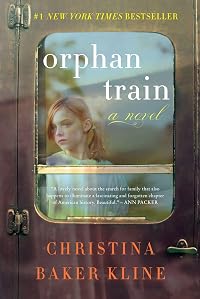
Orphan Train
by Christina Baker Kline
On This Page
Description
Penobscot Indian Molly Ayer is close to 'aging out' out of the foster care system. A community service position helping an elderly woman clean out her home is the only thing keeping Molly out of juvie and worse. As she helps Vivian sort through her possessions and memories, Molly learns that she and Vivian aren't as different as they seem to be. A young Irish immigrant orphaned in New York City, Vivian was put on a train to the Midwest with hundreds of other children whose destinies would be show more determined by luck and chance. Molly discovers that she has the power to help Vivian find answers to mysteries that have haunted her for her entire life -- answers that will ultimately free them both. show lessTags
Recommendations

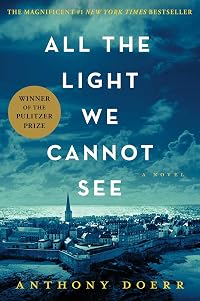
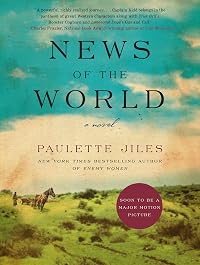
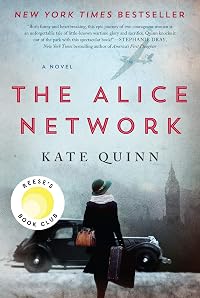

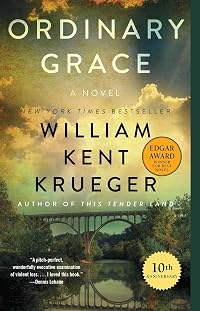
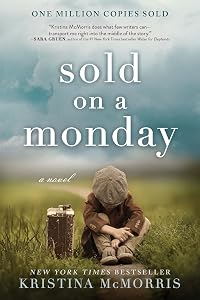
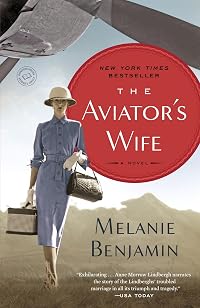
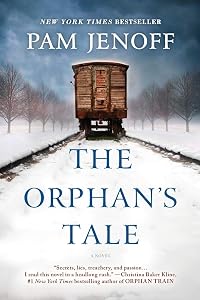
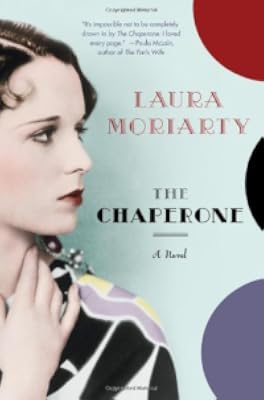

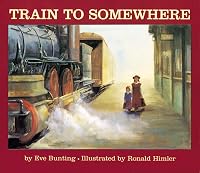
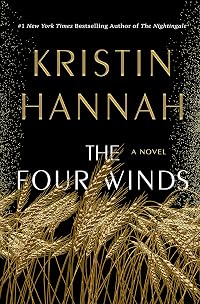
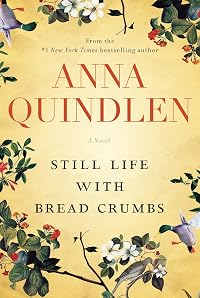


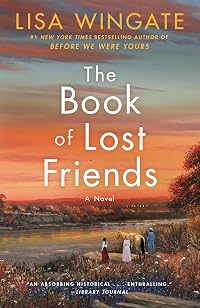
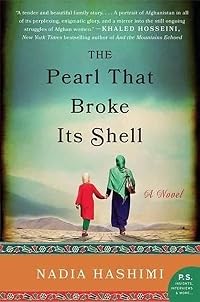

Member Recommendations
anonymous user Another good read showcasing a small bit of American history
41
akblanchard Isolated old ladies benefit by telling their stories to younger women.
30
tangledthread Similar story of a young woman aging out of the foster care system.
10
Member Reviews
ORPHAN TRAIN is an excellent, moving, beautifully written book. I've heard stories about the "orphan trains" for years, and now I've read a damn good novel about them. Christina Baker Kline did plenty of research, but the strength of the book lies in its characters. Molly and Vivian - orphans from separate eras - are a couple that will rattle around in your head for quite a while after you finish this story, all historically accurate, based on the trains that ferried orphans from the east coast to be placed in Midwest towns and on farms for nearly seventy years, from the mid-19th century into the 1920s. With insufficient or lack of official oversight, these children were often mistreated and used as unpaid servants, or as slave labor on show more farms or in industry, a national disgrace. But sometimes they also found loving homes and meaningful lives. It was a human crap shoot, actually. Kline's story is a compelling and complex page-turner, and she enriches it even more, with her allusions to a few classic literary works about orphans: JANE EYRE, ANNE OF GREEN GABLES, THE WIZARD OF OZ, and OLIVER TWIST.
This is a very good book - well-informed storytelling at its best. I devoured it in just a few sittings. Very highly recommended.
- Tim Bazzett, author of the memoir, BOOKLOVER show less
This is a very good book - well-informed storytelling at its best. I devoured it in just a few sittings. Very highly recommended.
- Tim Bazzett, author of the memoir, BOOKLOVER show less
"Molly learned long ago that a lot of the heartbreak and betrayal that other people fear their entire lives, she has already faced. Father dead. Mother off the deep end. Shuttled around and rejected time and time again. And still she breathes and sleeps and grows taller. She wakes up every morning and puts on clothes. So when she says it's okay, what she means is that she knows she can survive just about anything."
Molly, half Penobscot Indian, is a frustrated and mistreated foster child shuttled from home to home. When she gets caught stealing from the library an old, neglected copy of her beloved Jane Eyre, she ends up having to do community service with 91 year old Vivian, helping her clear out the attic of her Maine mansion. Except show more Vivian isn't some wealthy ditz, but a tough woman whose early experiences were much like Molly's. Born Niamh ("Neeve") in Ireland, Vivian came across with her family as a young girl with hopes of a better life in New York. Instead she was given up to the Orphan Train, ending up being fostered in small town Minnesota. The Orphan Train really existed in the U.S. for more than 70 years, starting in the 1850s, with the children on it simply claimed by adult couples in Midwestern stops. The result for the children often was the equivalent of feudal servitude.
Vivian, claimed around the time of the Great Depression, was free child labor for dressmaking in her first home, and things didn't get better in her next one, until a kind teacher intervened and her prospects improved. Molly suffered similar modern day neglect and abuse, but finds her outlook changing the more she gets to know Vivian. Vivian was a good girl. "And so it is that you learn how to pass, if you're lucky, to look like everyone else, even though you're broken inside.” Molly is rebellious, and uses her aggressive goth persona to shut people out. But the more she learns about Vivian's past, the more she is drawn to her. “You can’t find peace until you find all the pieces. She wants to help Vivian find some kind of peace, elusive and fleeting as it may be.” It turns out that Vivian has a tragic secret, as to which she never expected to receive help.
This is a beautifully written book that switches back and forth between the experiences of Vivian in Depression times and Molly today. Kline captures both characters vividly, as both have to grow up too fast and overcome impoverished and exploitive environments. Early in the book Vivian talks about how hard it is to find anyone who truly understands what she has been through, and who she is. That she finds such a person late in life in Molly, and Molly finds unexpected hope in knowing her, is rewarding for the reader as well. Many thanks to my wife for recommending this one. Four and one-half stars. show less
Molly, half Penobscot Indian, is a frustrated and mistreated foster child shuttled from home to home. When she gets caught stealing from the library an old, neglected copy of her beloved Jane Eyre, she ends up having to do community service with 91 year old Vivian, helping her clear out the attic of her Maine mansion. Except show more Vivian isn't some wealthy ditz, but a tough woman whose early experiences were much like Molly's. Born Niamh ("Neeve") in Ireland, Vivian came across with her family as a young girl with hopes of a better life in New York. Instead she was given up to the Orphan Train, ending up being fostered in small town Minnesota. The Orphan Train really existed in the U.S. for more than 70 years, starting in the 1850s, with the children on it simply claimed by adult couples in Midwestern stops. The result for the children often was the equivalent of feudal servitude.
Vivian, claimed around the time of the Great Depression, was free child labor for dressmaking in her first home, and things didn't get better in her next one, until a kind teacher intervened and her prospects improved. Molly suffered similar modern day neglect and abuse, but finds her outlook changing the more she gets to know Vivian. Vivian was a good girl. "And so it is that you learn how to pass, if you're lucky, to look like everyone else, even though you're broken inside.” Molly is rebellious, and uses her aggressive goth persona to shut people out. But the more she learns about Vivian's past, the more she is drawn to her. “You can’t find peace until you find all the pieces. She wants to help Vivian find some kind of peace, elusive and fleeting as it may be.” It turns out that Vivian has a tragic secret, as to which she never expected to receive help.
This is a beautifully written book that switches back and forth between the experiences of Vivian in Depression times and Molly today. Kline captures both characters vividly, as both have to grow up too fast and overcome impoverished and exploitive environments. Early in the book Vivian talks about how hard it is to find anyone who truly understands what she has been through, and who she is. That she finds such a person late in life in Molly, and Molly finds unexpected hope in knowing her, is rewarding for the reader as well. Many thanks to my wife for recommending this one. Four and one-half stars. show less
I started this book years and years ago, but stopped reading it for a reason I have no clue of. So weird…
I picked it up kind of on a whim the other day, letting my random pick of ‘next book to read’ play out as I always do.
It was amazing! It was a perfect mix of the historical piece, a an underlying darkness true to the topic, but not a depth that left you without hope or without attachment to the characters. I love reading about orphans, adoption, foster kids, etc. Molly and Vivian were perfect characters to take the reader on this journey.
Definitely recommend!! 4 1/2 ⭐️’s for me!
I picked it up kind of on a whim the other day, letting my random pick of ‘next book to read’ play out as I always do.
It was amazing! It was a perfect mix of the historical piece, a an underlying darkness true to the topic, but not a depth that left you without hope or without attachment to the characters. I love reading about orphans, adoption, foster kids, etc. Molly and Vivian were perfect characters to take the reader on this journey.
Definitely recommend!! 4 1/2 ⭐️’s for me!
It seems that every book I read lately uses the "back and forth in time" format, one chapter in the present and one chapter in the past, and the strands are supposed to somehow tie together. Usually one story is so much more interesting and you are left to wonder, "why couldn't the book just be about THIS?" It's a testament to how much I enjoyed this book that this tired gimmick didn't annoy me.
I didn't know much if anything about the orphan trains before reading this book, and it was heartbreaking to learn that this was the fate of so many children around the turn of the century - to be given away like property to anyone who was willing to take them, with no followup to make sure they were being treated well or even humanely.
The show more back-and-forth stories follow one of the orphans from a long-ago train; and one orphan in the present. I found both of their stories equally engaging. I would say the writing was very "Young Adult" and some of the plot points were weak or unbelievable, but those are minor quibbles when the story sucked me in from the first page and never let go. show less
I didn't know much if anything about the orphan trains before reading this book, and it was heartbreaking to learn that this was the fate of so many children around the turn of the century - to be given away like property to anyone who was willing to take them, with no followup to make sure they were being treated well or even humanely.
The show more back-and-forth stories follow one of the orphans from a long-ago train; and one orphan in the present. I found both of their stories equally engaging. I would say the writing was very "Young Adult" and some of the plot points were weak or unbelievable, but those are minor quibbles when the story sucked me in from the first page and never let go. show less
Warning, spoilers.
Niamh is an Irish immigrant whose family all perishes in NYC, so she's sent west on an Orphan Train. She has various miserable placements but comes out all right. The story of her youth is juxtaposed with a modern-day story where the 91-year-old Niamh, now Vivian, connects with a troubled teenager.
This is a lightweight story where the characters are either Good or Evil, and you see everything coming from a mile away. Except one thing - although you knew that Niamh would reunite eventually with Dutchy, a boy she met on the train going west, I did NOT expect her to literally go to bed with him within hours of their reunion. I mean, I thought they'd go for a drink or something.
The story of Niamh's loss after loss show more culminates with the biggest loss of all: she has a baby and gives it up for adoption. This lets the book end with a mother-child-grandchild reunion where everyone is wonderful and looks like each other. Swelling violins, please.
I read this because it was a gift from my step-mother-in-law. I kept reading it because I did want to follow the Niamh story. As always tends to happen with books that interweave two very different stories, however, there's always one I like better; and hence the other one keeps cropping up as a mere annoyance. Old Lady Vivian of course is attached to all her old keepsakes and of course she and troubled Molly eventually achieve a deep bond. I didn't care, I wanted to see how the orphan turned out. show less
Niamh is an Irish immigrant whose family all perishes in NYC, so she's sent west on an Orphan Train. She has various miserable placements but comes out all right. The story of her youth is juxtaposed with a modern-day story where the 91-year-old Niamh, now Vivian, connects with a troubled teenager.
This is a lightweight story where the characters are either Good or Evil, and you see everything coming from a mile away. Except one thing - although you knew that Niamh would reunite eventually with Dutchy, a boy she met on the train going west, I did NOT expect her to literally go to bed with him within hours of their reunion. I mean, I thought they'd go for a drink or something.
The story of Niamh's loss after loss show more culminates with the biggest loss of all: she has a baby and gives it up for adoption. This lets the book end with a mother-child-grandchild reunion where everyone is wonderful and looks like each other. Swelling violins, please.
I read this because it was a gift from my step-mother-in-law. I kept reading it because I did want to follow the Niamh story. As always tends to happen with books that interweave two very different stories, however, there's always one I like better; and hence the other one keeps cropping up as a mere annoyance. Old Lady Vivian of course is attached to all her old keepsakes and of course she and troubled Molly eventually achieve a deep bond. I didn't care, I wanted to see how the orphan turned out. show less
During the late 1800s and into the 1900s, orphans from the major East coast cities were packed up and shipped off to the Midwest in hopes of finding them new families and opportunities that did not and would not exist for them had they remained on the streets. By most accounts, several hundred thousand children found themselves newly arrived in the Midwest through these orphan trains. Vivian Daly is one such orphan, having lost her family first through immigration from Ireland and then again in a tragic fire. Now, at the age of 91, with an attic filled with memories, she sets out to help another orphan who arrives at her doorstep in search of answers she doesn’t know she needs. Christina Baker Kline’s Orphan Train explores their show more extraordinary friendship and their stories that helped make them the women they are today.
The historical elements of Orphan Train are absolutely fascinating, and one wonders why more is not known or written about the real-life orphan trains. Vivian’s experiences bring to life the fears and challenges these orphans faced as they were shipped across the country in search of a better life. What she finds is not necessarily a surprise but still heartbreaking as it shows how unwanted these children were even in faraway states. The fact that so many of them were not only able to survive the bleak conditions they found but also thrive is a testament to their fortitude and survival skills, and more attention should be paid to this generation of children who lost everything but found themselves.
The writing within Orphan Train is simple but beautiful. There are no flashy descriptions, and Ms. Kline uses dialogue sparingly but effectively. While the story itself is predictable, there is an element of methodical tension that keeps a reader’s interest. The plot unfolds slowly and carefully, and this pacing only barely covers the emotional turmoil underlying Vivian’s and Molly’s stories. There is no doubt this is deliberate on the part of Ms. Kline but in no way feels manipulative but rather a careful choice to allow a reader to get to seen beneath the words and understand the truth. That is not to say that the words themselves are completely without emotion. On the contrary, there is a lot that is said, but it is what is not said that drives home both the girls’ plights.
Both Molly and Vivian make delightful heroines and complement each other perfectly, even though their friendship is a foregone conclusion before they even meet. Yet, even the predictability of their friendship and Molly’s transformation under Vivian’s subtle influence does nothing to detract from the enjoyment of their interactions. Vivian’s stories give Molly the strength to try to improve the situation in her current foster home but also the willingness to step out on her own when it doesn’t work. In reliving her past, Vivian highlights how important it is to rely on one’s own strengths and intelligence and not on others. It is an important message, not only for Molly but for the reader as well.
Orphan Train is not without its bit of controversy however. First, there is the idea of shipping hundreds of thousands of orphans westward itself. The goal was to prevent these children from slipping into lives of crime and intense impoverishment, but the reality was that the program’s directors were seeking to find anyone willing to take these children, and it didn’t matter the reasons why the adults wanted the kids. Without any sort of vetting process or protection services for the children, some found themselves in even worse straits than they were in the East, and the mere idea of this is absolutely horrifying in today’s age. In addition, some of Vivian’s actions are quite surprising and, depending on one’s viewpoint, could be highly upsetting to readers. Her biggest secret is a well-kept one, and most readers won’t pick up on it until the big reveal. The surprise and shock of her decision will stun readers and generate an intense debate as to the rightness or wrongness of her actions. It is truly a special book that can do this and still remain appealing.
Ms. Kline’s Orphan Train is a beautiful piece of historical fiction interwoven within a modern-day story. With elements of social commentary towards the modern foster system as well as an inside look at the orphan train system around the turn of the century, it is provides food for thought and educational points. In addition, both Vivian and Molly are equally strong, independent, and yet endearingly fragile, more than earning a reader’s sympathy and empathy. Between their two stories, one understands how far the country has come in its treatment of orphans and how far we still need to go in order to protect this vulnerable demographic. Because of the grace with which it educates and yet forces a reader to debate some its more surprising elements, Orphan Train is a worthy addition to the wealth of fabulous spring releases this year. show less
The historical elements of Orphan Train are absolutely fascinating, and one wonders why more is not known or written about the real-life orphan trains. Vivian’s experiences bring to life the fears and challenges these orphans faced as they were shipped across the country in search of a better life. What she finds is not necessarily a surprise but still heartbreaking as it shows how unwanted these children were even in faraway states. The fact that so many of them were not only able to survive the bleak conditions they found but also thrive is a testament to their fortitude and survival skills, and more attention should be paid to this generation of children who lost everything but found themselves.
The writing within Orphan Train is simple but beautiful. There are no flashy descriptions, and Ms. Kline uses dialogue sparingly but effectively. While the story itself is predictable, there is an element of methodical tension that keeps a reader’s interest. The plot unfolds slowly and carefully, and this pacing only barely covers the emotional turmoil underlying Vivian’s and Molly’s stories. There is no doubt this is deliberate on the part of Ms. Kline but in no way feels manipulative but rather a careful choice to allow a reader to get to seen beneath the words and understand the truth. That is not to say that the words themselves are completely without emotion. On the contrary, there is a lot that is said, but it is what is not said that drives home both the girls’ plights.
Both Molly and Vivian make delightful heroines and complement each other perfectly, even though their friendship is a foregone conclusion before they even meet. Yet, even the predictability of their friendship and Molly’s transformation under Vivian’s subtle influence does nothing to detract from the enjoyment of their interactions. Vivian’s stories give Molly the strength to try to improve the situation in her current foster home but also the willingness to step out on her own when it doesn’t work. In reliving her past, Vivian highlights how important it is to rely on one’s own strengths and intelligence and not on others. It is an important message, not only for Molly but for the reader as well.
Orphan Train is not without its bit of controversy however. First, there is the idea of shipping hundreds of thousands of orphans westward itself. The goal was to prevent these children from slipping into lives of crime and intense impoverishment, but the reality was that the program’s directors were seeking to find anyone willing to take these children, and it didn’t matter the reasons why the adults wanted the kids. Without any sort of vetting process or protection services for the children, some found themselves in even worse straits than they were in the East, and the mere idea of this is absolutely horrifying in today’s age. In addition, some of Vivian’s actions are quite surprising and, depending on one’s viewpoint, could be highly upsetting to readers. Her biggest secret is a well-kept one, and most readers won’t pick up on it until the big reveal. The surprise and shock of her decision will stun readers and generate an intense debate as to the rightness or wrongness of her actions. It is truly a special book that can do this and still remain appealing.
Ms. Kline’s Orphan Train is a beautiful piece of historical fiction interwoven within a modern-day story. With elements of social commentary towards the modern foster system as well as an inside look at the orphan train system around the turn of the century, it is provides food for thought and educational points. In addition, both Vivian and Molly are equally strong, independent, and yet endearingly fragile, more than earning a reader’s sympathy and empathy. Between their two stories, one understands how far the country has come in its treatment of orphans and how far we still need to go in order to protect this vulnerable demographic. Because of the grace with which it educates and yet forces a reader to debate some its more surprising elements, Orphan Train is a worthy addition to the wealth of fabulous spring releases this year. show less
WHAT IS IT ABOUT?
Christina Baker Kline's novel "Orphan Train" juxtaposes two touching life stories of unlikely friends, a 17-year-old Penobscot Indian Molly and a rich 91-year-old widow Vivian. Although at first these two women seem to have little in common, their unenviable fates are not that different: Molly grew up as a foster child, while Vivian was an orphan train rider. In addition to a fascinating story of courage, resilience and second chances, Baker Kline's book offers an insider's look at a significant but often overlooked figure in American history, so-called orphan trains, which between 1854 and 1929 "transported more than two thousand orphaned, abandoned, and homeless children from the costal cities of the Eastern United show more States to the Midwest for 'adoption,' which often turned out to be indentured servitude."
MY THOUGHTS:
1) On storyline:
Vivian’s recollections and the present day storyline were woven together masterfully, but I still felt like reading two separate books because the styles of each story were dramatically different. Vivian's story was very realistic, gripping and deeply moving, and I was impatient to return to it after the stories switched. Even though the present day storyline was still entertaining, I didn't connect with it that much as it seemed more artificial and better suited for a light read on a beach.
2) On writing:
The whole book is thoroughly researched, well written and flows effortlessly. Therefore, I was very surprised to come across such an obvious grammatical boo-boo as the following sentence: "Black makeup is smeared under her eyes like a football player." Hmm... can a football player be smeared under the eyes?
VERDICT: 4 out of 5
Although I really enjoyed this novel, I strongly preferred Vivian’s recollections of the orphan train days and would have been totally fine if the present day storyline was skipped altogether. show less
Christina Baker Kline's novel "Orphan Train" juxtaposes two touching life stories of unlikely friends, a 17-year-old Penobscot Indian Molly and a rich 91-year-old widow Vivian. Although at first these two women seem to have little in common, their unenviable fates are not that different: Molly grew up as a foster child, while Vivian was an orphan train rider. In addition to a fascinating story of courage, resilience and second chances, Baker Kline's book offers an insider's look at a significant but often overlooked figure in American history, so-called orphan trains, which between 1854 and 1929 "transported more than two thousand orphaned, abandoned, and homeless children from the costal cities of the Eastern United show more States to the Midwest for 'adoption,' which often turned out to be indentured servitude."
MY THOUGHTS:
1) On storyline:
Vivian’s recollections and the present day storyline were woven together masterfully, but I still felt like reading two separate books because the styles of each story were dramatically different. Vivian's story was very realistic, gripping and deeply moving, and I was impatient to return to it after the stories switched. Even though the present day storyline was still entertaining, I didn't connect with it that much as it seemed more artificial and better suited for a light read on a beach.
2) On writing:
The whole book is thoroughly researched, well written and flows effortlessly. Therefore, I was very surprised to come across such an obvious grammatical boo-boo as the following sentence: "Black makeup is smeared under her eyes like a football player." Hmm... can a football player be smeared under the eyes?
VERDICT: 4 out of 5
Although I really enjoyed this novel, I strongly preferred Vivian’s recollections of the orphan train days and would have been totally fine if the present day storyline was skipped altogether. show less
Members
- Recently Added By
Lists

Best Historical Fiction
620 works; 261 members

Top Five Books of 2013
1,562 works; 715 members

Top Five Books of 2014
1,064 works; 398 members

Historical Fiction
889 works; 89 members

Books Read in 2014
2,343 works; 89 members

Female Protagonist
1,056 works; 57 members

Top Five Books of 2018
802 works; 265 members
Top Five Books of 2017
757 works; 230 members

Best Book Club Selections
26 works; 8 members

Summer Reads 2014
207 works; 69 members
Literature About Women and Girls
394 works; 39 members

GAL Book Club
75 works; 3 members

Carole's List
445 works; 13 members

2016 Book Club Choices
52 works; 7 members

Main Character is aged 10-19
361 works; 6 members

Books Featured on Readers' Review of the Diane Rehm Show
161 works; 8 members

Books Set in Minnesota
14 works; 3 members

Books Read in 2020
4,379 works; 124 members

Novels Set on Trains
11 works; 3 members
Bibliotherapy: Family and Personal Social Issues
174 works; 5 members

Most Frequently Tagged "Read in 2015"
70 works; 1 member

Historical Fiction Books
99 works; 5 members

Fate vs. Free Will
63 works; 8 members
To Read
617 works; 7 members

The Immigrant's Stories
74 works; 19 members

Best public-transport fiction
72 works; 17 members
Novels featuring Orphans
76 works; 10 members

Books Read in 2021
5,361 works; 114 members
Talk Discussions
Past Discussions
Orphan Train in 2016 Summer Adol Lit (June 2016)
Author Information

19+ Works 11,627 Members
Christina Baker Kline was born in 1964 in Cambridge, England. She received a BA in English from Yale University, a MA in literature from Cambridge University, and a MFA from the University of Virginia. Her essays and articles have appeared in several periodicals including The San Francisco Chronicle, the Literarian, Coastal Living, More, and show more Psychology Today. Kline served as Writer-in-Residence at Fordham University from 2007 to 2011, where she taught graduate and undergraduate creative writing and literature. She also teaches in the Fordham-in-London program at the University of London, Heythrop College. She has taught literature and creative writing at Yale Univeristy, NYU, the University of Virginia, and Drew University, and has served as Writer-in-Residence at the Virginia Center for the Creative Arts. She is the author of several novels including Sweet Water, Desire Lines, The Way Life Should Be, Bird in Hand, Orphan Train, and A Piece of the World. She is also the co-editor, with Anne Burt, of About Face: Women Write about What They See When They Look in the Mirror and the co-author, with Christina L. Baker, of The Conversation Begins: Mothers and Daughters Talk about Living Feminism. She has edited three other anthologies: Child of Mine, Room to Grow, and Always Too Soon. (Bowker Author Biography) show less
Some Editions
Awards and Honors
Awards
Distinctions
Work Relationships
Has the adaptation
Common Knowledge
- Canonical title
- Orphan Train
- Original title
- Orphan Train
- Original publication date
- 2013
- People/Characters
- Molly Ayer; Dina Thibodeau; Ralph Thibodeau; Jack Gallant; Terry Gallant; Vivian Daly (Niamh/Dorothy) (show all 18); Dutchy (Hans/Luke Maynard); Mr. Byrne; Lois Byrne; Fanny; Miss Larsen; Gerald Grote; Mrs. Grote; Mr. Hank Nielsen; Mrs. Viola Nielsen; Carmine; Chester Sorenson; Margaret Reynolds
- Important places
- Elizabeth Street, New York, New York, USA; Hemmingford, Minnesota, USA; Spruce Harbor, Maine, USA; Albans, Minnesota, USA; Kinvara, County Galway, Ireland; Ireland
- Important events
- Orphan Train
- Epigraph
- In portaging from one river to another, Wabanakis had to carry their canoes and all other possessions. Everyone knew the value of traveling light and understood that it required leaving some things behind. Nothing encumbere... (show all)d movement more than fear, which was often the most difficult burden to surrender.
-Bunny McBride, Women of the Dawn - Dedication
- To
Christina Looper Baker,
who handed me the thread,
and Carole Robertson Kline,
who gave me the cloth. - First words
- Prologue
I believe in ghosts.
Through her bedroom wall Molly can hear her foster parents talking about her in the living room, just beyond her door. - Quotations
- "...you can't find peace until you find all the pieces."
– I learned long ago that loss is not only probable but inevitable. I know what it means to lose everything, to let go of one life and find another. And now I feel, with a strange, deep certainty, that it must be my lot i... (show all)n life to be taught that lesson over and over again.
Her hand flutters to her clavicle, to the silver chain around her neck, the Claddagh charm – those tiny hands clasping a crowned heart: love, loyalty, friendship – a never-ending path that leads away from home and circles... (show all) back. - Last words
- (Click to show. Warning: May contain spoilers.)Now then. Where shall we begin?
(Click to show. Warning: May contain spoilers.)The ghosts whispered to me, telling me to go on. (Prologue) - Blurbers
- Helen Schulman; Marisa de los Santos; Ann Hood; Cathy Marie Buchanan; Kathleen Kent
- Original language*
- Engels
*Some information comes from Common Knowledge in other languages. Click "Edit" for more information.
Classifications
Statistics
- Members
- 7,106
- Popularity
- 1,654
- Reviews
- 474
- Rating
- (3.97)
- Languages
- 13 — Chinese, Danish, Dutch, English, French, German, Italian, Norwegian (Bokmål), Polish, Portuguese, Croatian, Spanish, Swedish
- Media
- Paper, Audiobook, Ebook
- ISBNs
- 61
- UPCs
- 1
- ASINs
- 12