On This Page
Description
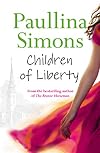
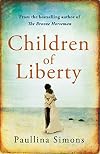
Children of Liberty, the much-anticipated prequel to Paullina Simons's The Bronze Horseman, is a story of love and possibility in turn-of-the-century America. Gina Attaviano travels from Sicily to Boston to start a new life with only the clothes on her back. Harry Barrington is the son of one of New England's most successful businessmen. Despite their differences and the strong opposition of their families, their attraction is strong. Set against a time of transformation for a growing show more nation, Gina and Harry must find the courage to do what is right, no matter what the price. Deeply emotional and satisfying, Children of Liberty features a cast of characters you'll root for as they fight against their feelings, but discover that true love can never be denied. show lessTags
Recommendations















Member Reviews
Blech. The story was okay until it turned into an odd mix of romance and anarchy mixed with worship of Emma Goldman, of all people. Call me old-fashioned, but I prefer for my heroines not to idolize someone who supported eugenics. Politics and philosophies aside, the characters were just very watered down and their listless lives boring to read.
 This review was written for LibraryThing Early Reviewers.
Gina Attaviano is a fourteen-year-old Italian immigrant girl living her father's dream when she and her mother and brother arrive in Boston. Their father Alessandro has passed away, but the rest of the family arrive to stay with a cousin and aunt in Lawrence, Massachusetts. They arrive in Boston Harbor and meet two surprisingly helpful locals, Ben Shaw and Harry Barrington, who lend them an apartment for the night. Both are from prominent families, but that doesn't stop them getting involved with the Attaviano family; Ben immediately becomes infatuated with fourteen-year-old Gina, while Gina herself develops a massive crush on Harry, who remains aloof. Over the course of the novel, determined Gina decides to find a way to fit herself in show more Boston society, having discovered what she truly longs to have.
I've never read any of Paullina Simons's books before and I have a feeling that I chose the wrong place to start. I was deeply underwhelmed by this book, having heard many good things about the author's Bronze Horseman trilogy, and I'm now not sure I'm curious enough about what happens next to actually delve into that trilogy. I read this first as I got it for review and a prequel is generally not a bad place to start reading a series, but I think I should have started with Simons's other books.
Let me explain why. First of all, the characters were simply not people I wanted to spend time with. Gina decides to go off and do her own thing, lying to everyone who loves her, from the minute she steps foot on American soil. She refuses to listen to any sort of logic and, in short, behaves like a reckless teenager. That's fine - that's what she is for most of the book anyway. But she also turns out to be a character who is impossibly perfect; she excels at school when she decides she should, she earns all sorts of mysterious extra money with her cleverness and makes herself beautiful clothes, she begs a loan to start her family's restaurants, and every man who sees her falls at her feet, except of course Harry (until he finally does). She even somehow speaks perfect English, even though she admits in the beginning of the book that she hadn't paid as much attention to her father's lessons as she should have.
Harry, on the other hand, is an adult, but seems like he could have happily remained a child or student forever. He ignores all sense of responsibility and lets his life happen to him, rather than doing anything at all to influence it himself. He's content enough, it seems, to be in a relationship with a well-bred girl he doesn't love, to flounder about wondering what he's supposed to be doing while continuing to study (and getting nowhere doing it), and living off his father's money well into his twenties. Ben, his best friend, was far more interesting because he actually had a spine and went off and did things himself. When Harry finally makes a decision about his life, he hides it from everyone and creates a disaster. Twice.
Second, the book has little plot. Gina decides she's in love with Harry and the rest of the book is spent on various conversations, political talks and meetings, and her often fruitless efforts to entice him. I felt zero spark between them, even when Harry finally wakes up and realizes that a gorgeous Italian woman has him firmly on a leash. The romance part of the book felt dreamlike and I had no real sense of why these two people had chosen to be together. It's one of those attraction-and-nothing-else storylines which get on my nerves.
Lastly, much of the book is spent on little happening but talking. I'm normally fine with this and tend to even enjoy "quiet" books, generally because they have some sort of meaning. But here? Gina's entire existence is focused around Harry; everything she's done, everything she's learned, has simply been to attract a man. So her ideals seem faked, while Harry hides from his life and ignores responsibility, spouting nonsense about what he believes in and failing to act on any of it. I just got fed up with them and with the book - after writing this review I'm actually surprised that I finished it.
The Bronze Horseman might be worth reading, but I'm not sure Children of Liberty is. If you're interested, I'd recommend visiting your library first. That's where I'll be getting the rest of the trilogy from, if I decide to continue. show less
I've never read any of Paullina Simons's books before and I have a feeling that I chose the wrong place to start. I was deeply underwhelmed by this book, having heard many good things about the author's Bronze Horseman trilogy, and I'm now not sure I'm curious enough about what happens next to actually delve into that trilogy. I read this first as I got it for review and a prequel is generally not a bad place to start reading a series, but I think I should have started with Simons's other books.
Let me explain why. First of all, the characters were simply not people I wanted to spend time with. Gina decides to go off and do her own thing, lying to everyone who loves her, from the minute she steps foot on American soil. She refuses to listen to any sort of logic and, in short, behaves like a reckless teenager. That's fine - that's what she is for most of the book anyway. But she also turns out to be a character who is impossibly perfect; she excels at school when she decides she should, she earns all sorts of mysterious extra money with her cleverness and makes herself beautiful clothes, she begs a loan to start her family's restaurants, and every man who sees her falls at her feet, except of course Harry (until he finally does). She even somehow speaks perfect English, even though she admits in the beginning of the book that she hadn't paid as much attention to her father's lessons as she should have.
Harry, on the other hand, is an adult, but seems like he could have happily remained a child or student forever. He ignores all sense of responsibility and lets his life happen to him, rather than doing anything at all to influence it himself. He's content enough, it seems, to be in a relationship with a well-bred girl he doesn't love, to flounder about wondering what he's supposed to be doing while continuing to study (and getting nowhere doing it), and living off his father's money well into his twenties. Ben, his best friend, was far more interesting because he actually had a spine and went off and did things himself. When Harry finally makes a decision about his life, he hides it from everyone and creates a disaster. Twice.
Second, the book has little plot. Gina decides she's in love with Harry and the rest of the book is spent on various conversations, political talks and meetings, and her often fruitless efforts to entice him. I felt zero spark between them, even when Harry finally wakes up and realizes that a gorgeous Italian woman has him firmly on a leash. The romance part of the book felt dreamlike and I had no real sense of why these two people had chosen to be together. It's one of those attraction-and-nothing-else storylines which get on my nerves.
Lastly, much of the book is spent on little happening but talking. I'm normally fine with this and tend to even enjoy "quiet" books, generally because they have some sort of meaning. But here? Gina's entire existence is focused around Harry; everything she's done, everything she's learned, has simply been to attract a man. So her ideals seem faked, while Harry hides from his life and ignores responsibility, spouting nonsense about what he believes in and failing to act on any of it. I just got fed up with them and with the book - after writing this review I'm actually surprised that I finished it.
The Bronze Horseman might be worth reading, but I'm not sure Children of Liberty is. If you're interested, I'd recommend visiting your library first. That's where I'll be getting the rest of the trilogy from, if I decide to continue. show less
This review was written for LibraryThing Early Reviewers.I guess Children of Liberty is going to primarily interest fans of Paullina Simons's "Bronze Horseman" series. When I put my name into the Early Reviewer pool, I didn't realize the book is a prequel. I was interested in it as a story about immigrants at the turn of the century.
I haven't touched the book in several weeks, because I just can't convince myself that there's any worth in reading it over my other on-going or TBR books, outside of this Early Reviewer review. The first fifty pages or so completely failed to maintain my interest, and in fact had me complaining rather loudly at the apparent anachronisms and poor writing. I don't think I'm going to pick it up again.
The opening scene was interesting, but as soon as the Italian show more family gets to Boston, flags were thrown up all over the place that this isn't the historical novel I wanted to read. I can accept that the children of the family were preparing to move to America for a long time and so have learned some English, and also that the young men they meet off the boat have picked up some Italian. But they converse entirely too fluently without any real indication of language, which seemed too hand-wavy by the author. Besides which, the conversations themselves are heavy-handed in exposition, and I don't care how rebellious and forward-thinking the main girl character is, the sheer number of things that mark her as such at 14 years old seemed a bit much, such as when she's apparently in her underwear while in a room with the two American men and her brother. Especially when these opening scenes only describe her as the ordinary teenage kind of rebellious, wanting to live in the exciting city and earn money with work rather than move to a small town and go to school, and chafing under the restrictions of her mother.
It's been a few weeks so I don't remember all the little things that added up to me tossing the book aside for anachronisms and awkward storytelling, but I can't see myself finishing the book anytime soon.
If you're into historical fiction and knowledgeable about this period in history, you'll probably also be bothered by the book. But if you're a big fan of Simons's "Bronze Horseman" series, you may like it. show less
I haven't touched the book in several weeks, because I just can't convince myself that there's any worth in reading it over my other on-going or TBR books, outside of this Early Reviewer review. The first fifty pages or so completely failed to maintain my interest, and in fact had me complaining rather loudly at the apparent anachronisms and poor writing. I don't think I'm going to pick it up again.
The opening scene was interesting, but as soon as the Italian show more family gets to Boston, flags were thrown up all over the place that this isn't the historical novel I wanted to read. I can accept that the children of the family were preparing to move to America for a long time and so have learned some English, and also that the young men they meet off the boat have picked up some Italian. But they converse entirely too fluently without any real indication of language, which seemed too hand-wavy by the author. Besides which, the conversations themselves are heavy-handed in exposition, and I don't care how rebellious and forward-thinking the main girl character is, the sheer number of things that mark her as such at 14 years old seemed a bit much, such as when she's apparently in her underwear while in a room with the two American men and her brother. Especially when these opening scenes only describe her as the ordinary teenage kind of rebellious, wanting to live in the exciting city and earn money with work rather than move to a small town and go to school, and chafing under the restrictions of her mother.
It's been a few weeks so I don't remember all the little things that added up to me tossing the book aside for anachronisms and awkward storytelling, but I can't see myself finishing the book anytime soon.
If you're into historical fiction and knowledgeable about this period in history, you'll probably also be bothered by the book. But if you're a big fan of Simons's "Bronze Horseman" series, you may like it. show less
This review was written for LibraryThing Early Reviewers.From the first line, I knew this wasn't my book. Tell-not-show is my reader-ly pet peeve, especially in historical fiction, and the opening chapters felt heavy with telling. I ended up DNFing this book at 104 pages as I just couldn't stand Simons' writing style.
Set in 1899, Sicilian Gina -- on the cusp of turning 15 -- emigrates to the US with her mother and older brother. Upon landing in Boston, they meet Harry Barrington and Ben Shaw, Boston brahmins who manage apartments for newly arrived immigrants (they're the nicest slumlords in history). Ben is hot for Gina, but we the reader know Harry secretly wants her, five year age difference, economic status, and cultural backgrounds be damned. (Also, this is a prequel to Simons' wildly show more popular Tatiana and Alexander books, featuring Alexander's parents. Even without having read those three books, I had a hunch where this was going.)
Actually, I can't say for certain that's what happened, having stopped just one hundred pages in, but Simons isn't subtle with her set up nor the way she unfolds the story. Gina is childish but winsome, exaggeratedly naive and yet unconsciously sexual; she skips up church stairs but also rebelliously unpins her hair during a candlelit dinner with the two strange men she just met. She's a sweet, naive 14 year old who relishes rendering men speechless.
Ben Shaw is related to Robert Gould Shaw, and for any reader who doesn't know who he is, Simons stops just short of describing him as Matthew Broderick in Glory. Harry Barrington (who, I admit, I kept calling Harry Barry in my head) is cold and bemused and aloof, unimpressed with Ben's hot interest in Gina, telegraphing to all their eventual getting together-ness.
Simons infodumps by having Ben and Harry do this frenetic bantering thing -- which was exhausting -- but Gina finds it delightful, of course. It gave great historical context to early 20th century Boston, but it felt so unnatural and forced, I couldn't shake the feeling of getting a lecture.
In addition to the characters, I found Simons' writing style to be off-putting: she has this weird joke-y commentary thing going on with Harry's scenes, while we're omniscient third person with Gina. From a dinner with Harry and company:
And from the aforementioned candlelit dinner with Gina, her brother, and Ben and Harry:
I will say, she makes her characters big and bold and strong, and if you like those flavors in your fiction, you might enjoy this one. For me, everyone grated, so much so, that by page 64 I was counting down those last forty as I worked my way to one hundred. show less
Set in 1899, Sicilian Gina -- on the cusp of turning 15 -- emigrates to the US with her mother and older brother. Upon landing in Boston, they meet Harry Barrington and Ben Shaw, Boston brahmins who manage apartments for newly arrived immigrants (they're the nicest slumlords in history). Ben is hot for Gina, but we the reader know Harry secretly wants her, five year age difference, economic status, and cultural backgrounds be damned. (Also, this is a prequel to Simons' wildly show more popular Tatiana and Alexander books, featuring Alexander's parents. Even without having read those three books, I had a hunch where this was going.)
Actually, I can't say for certain that's what happened, having stopped just one hundred pages in, but Simons isn't subtle with her set up nor the way she unfolds the story. Gina is childish but winsome, exaggeratedly naive and yet unconsciously sexual; she skips up church stairs but also rebelliously unpins her hair during a candlelit dinner with the two strange men she just met. She's a sweet, naive 14 year old who relishes rendering men speechless.
Ben Shaw is related to Robert Gould Shaw, and for any reader who doesn't know who he is, Simons stops just short of describing him as Matthew Broderick in Glory. Harry Barrington (who, I admit, I kept calling Harry Barry in my head) is cold and bemused and aloof, unimpressed with Ben's hot interest in Gina, telegraphing to all their eventual getting together-ness.
Simons infodumps by having Ben and Harry do this frenetic bantering thing -- which was exhausting -- but Gina finds it delightful, of course. It gave great historical context to early 20th century Boston, but it felt so unnatural and forced, I couldn't shake the feeling of getting a lecture.
In addition to the characters, I found Simons' writing style to be off-putting: she has this weird joke-y commentary thing going on with Harry's scenes, while we're omniscient third person with Gina. From a dinner with Harry and company:
"...The bananas need to be collected, appraised, counted, packaged and crated. Someone has to do all this."
"And someone has to make the crates," Herman said, seeing the nails because all he carried was a hammer.
"First they have to procure the lumber to make the crates," Orville cut in, seeing the nails because all he carried was a hammer.
"Absolutely," Ben agreed, who carried a number of tools with him. (p71)
And from the aforementioned candlelit dinner with Gina, her brother, and Ben and Harry:
He kicked the chair again, harder. She looked over at him. What, she mouthed with irritation. He gestured to her hair with his eyes.
You want me to tie up my hair, she rhetorically mutely asked him. Fine, here you go. Raising her hands to her head, she pulled out all the pins and laid them on the table, in front of her plate. ... (p37)
I will say, she makes her characters big and bold and strong, and if you like those flavors in your fiction, you might enjoy this one. For me, everyone grated, so much so, that by page 64 I was counting down those last forty as I worked my way to one hundred. show less
Nothing in this story makes sense -- an "impoverished" immigrant heroine in silk dresses, a wealthy Harvard student who frequently "flips the bird" to others, and characters so shallow the author is forced to have them invent pizza to add interest. Add in some philosophical preaching and a dull, predictable plot line and you've got 400 pages you can't wait to stop reading. Not recommended.
This review was written for LibraryThing Early Reviewers.*I received this book through LibraryThing Early Reviewers.*
This prequel to The Bronze Horseman tells the tale of Harry Barrington and Gina Attaviano, the parents of Alexander Barrington. Harry is the scion of an old New England family and Gina hails from a newly arrived immigrant family determined to carve out a living in America. However, the budding relationship between Harry and Gina is also at odds with their families' desires. An enjoyable read, but without the magic of The Bronze Horseman. Harry and Gina have a different relationship and in particular I found Harry to be frustrating character and to some extent, I found his family's reaction to his decisions understandable. Also, I did not care for the conclusion, which left much show more unknown. Perhaps the author is leaving room for another prequel? show less
This prequel to The Bronze Horseman tells the tale of Harry Barrington and Gina Attaviano, the parents of Alexander Barrington. Harry is the scion of an old New England family and Gina hails from a newly arrived immigrant family determined to carve out a living in America. However, the budding relationship between Harry and Gina is also at odds with their families' desires. An enjoyable read, but without the magic of The Bronze Horseman. Harry and Gina have a different relationship and in particular I found Harry to be frustrating character and to some extent, I found his family's reaction to his decisions understandable. Also, I did not care for the conclusion, which left much show more unknown. Perhaps the author is leaving room for another prequel? show less
This review was written for LibraryThing Early Reviewers.I received an advance copy of Children of Liberty thanks to the Early
Reviewers program. While I was very excited to read the book thanks to my appreciation of The Bronze Horseman, I did not feel the same way about this novel. This is a prequel to her other series and featured life in Boston in the early 1900's for the wealthy and immigrants, particularly Gina and her family fresh off the book from Sicily. All the stereotypes are featured but did not play the roles I thought they would - the well off upper crust Bostonians with their good intentions but always keeping careful distance between themselves and the less fortunate, the immigrant families struggling between the old ways and the confusing new world they have been thrown into show more and those headstrong radicals who jump between the two groups. Why Harry and Ben were friends and complete opposites. Harry wants only to study and has no desire (for almost anything for much of the book) for business or money while Ben wants to be on the forefront of new business and adventure. Gina is the young radical who wants everything this new world can offer while her brother and mother fight the new ways. I felt these characters were rather shallow and I had a hard time believing that Gina would be allowed to go to all these political meetings virtually alone as well as all the opportunities she met up with Harry and Ben without anything truly bad happening to her. Harry was truly shallow as a character for me and I don't know what Gina saw in him. I had no sympathy for Alice, Harry's fiance for 8 years and would have rather kept up with Ben who was the most interesting of the bunch. At the end it seems more like a historical primer on the teachings of socialism than historical fiction. show less
Reviewers program. While I was very excited to read the book thanks to my appreciation of The Bronze Horseman, I did not feel the same way about this novel. This is a prequel to her other series and featured life in Boston in the early 1900's for the wealthy and immigrants, particularly Gina and her family fresh off the book from Sicily. All the stereotypes are featured but did not play the roles I thought they would - the well off upper crust Bostonians with their good intentions but always keeping careful distance between themselves and the less fortunate, the immigrant families struggling between the old ways and the confusing new world they have been thrown into show more and those headstrong radicals who jump between the two groups. Why Harry and Ben were friends and complete opposites. Harry wants only to study and has no desire (for almost anything for much of the book) for business or money while Ben wants to be on the forefront of new business and adventure. Gina is the young radical who wants everything this new world can offer while her brother and mother fight the new ways. I felt these characters were rather shallow and I had a hard time believing that Gina would be allowed to go to all these political meetings virtually alone as well as all the opportunities she met up with Harry and Ben without anything truly bad happening to her. Harry was truly shallow as a character for me and I don't know what Gina saw in him. I had no sympathy for Alice, Harry's fiance for 8 years and would have rather kept up with Ben who was the most interesting of the bunch. At the end it seems more like a historical primer on the teachings of socialism than historical fiction. show less
This review was written for LibraryThing Early Reviewers.Members
- Recently Added By
Author Information

40 Works 8,018 Members
Paullina Simons was born in Leningrad, USSR in 1963. At the age of ten her family immigrated to the United States. Paullina attended college in New York, Kansas and England. After graduating from the University of Kansas with a degree in Political Science Paullina went on to various jobs including working as a financial journalist and as a show more translator. After several years Paullina got around to her first love and wrote her novel Tully (HarperCollins, Oct. 1995). She has since written Red Leaves, Eleven Hours, The Bronze Horseman, The Bridge to Holy Cross, (also known as Tatiana and Alexander.) The Summer Garden, The Girl in Times Square, Road to Paradise and Children of Liberty. Many of Paullina's novels have reached international bestseller lists in countries including Australia and New Zealand. Paullina has also written a cookbook, Tatiana's Table, which is a collection of recipes, short stories and recollections from her bestselling books The Bronze Horseman, The Bridge to Holy Cross, and The Summer Garden. (Bowker Author Biography) show less
Some Editions
Series

Common Knowledge
- Canonical title
- Children of Liberty
Classifications
Statistics
- Members
- 173
- Popularity
- 188,663
- Reviews
- 20
- Rating
- (2.53)
- Languages
- English, German, Hebrew, Polish
- Media
- Paper, Audiobook, Ebook
- ISBNs
- 11
- ASINs
- 3