On This Page
Description
The second book, following last year's My Brilliant Friend, featuring the two friends Lila and Elena. The two protagonists are now in their twenties. Marriage appears to have imprisoned Lila. Meanwhile, Elena continues her journey of self-discovery. The two young women share a complex and evolving bond that brings them close at times, and drives them apart at others. Each vacillates between hurtful disregard and profound love for the other. With this complicated and meticulously portrayed show more friendship at the center of their emotional lives, the two girls mature into women, paying the cruel price that this passage exacts. show lessTags
Recommendations







Member Reviews
Well, I'm delighted to report that I found the "second book" to be as good as the first, if not better. The reason for the speech marks is that I don't believe this to be a second book at all. In the normal sense, a second book would mean maybe picking up a decade or so on, or perhaps would play with time and propel the reader back to an earlier point in time. Ferrante, however, picks up without drawing breath from the exact same scene that book 1 left on.
I therefore suspect we are being had, and that this is not a quartet of four novel but rather one big, ginormous, gargantuan mega novel that makes Vikram Seth's A Suitable Boy look like a short story (this second book alone was 470 pages long).
That being said, hurrah for big, show more ginormous, gargantuan mega novels when they're as good as this! I was once again immersed in the characters and the tense setting of the backstreets of Naples, and the pages flew by.
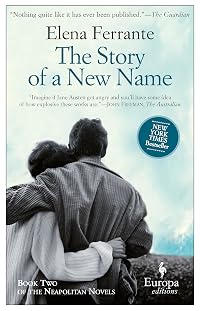
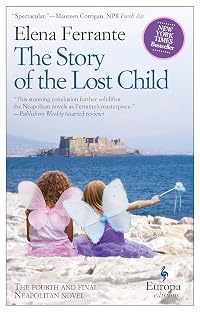
Yet again the cover irked me, and my husband commented one morning without irony that it was a book that my Aunty Betty would probably enjoy. Aunty Betty is a spirited, much loved aunt of mine who reads, in my opinion, very poor quality romance novels that should never see the light of day. I told him he was mistaken and that this was 'literature' and not the type of book that Aunty Betty would ever read despite the cover, so he asked me to describe it to him. After I'd finished, he concluded "so it's a romance novel then".
I have to say it got me thinking. I said sneeringly in my review of Book 1 that the cover made it look like I was reading Barbara Taylor Bradford novel, but is that really so far from the truth? Fantastic as this Neapolitan quartet is, is the truth perhaps that this is just chick lit at its best but we're too snobbish to think of it as that so we're convincing ourselves it's literary fiction?
The jury is out in my head. However, I care less - whatever Ferrante is writing, I love it, and I can't wait to pick up the thread in Book 3.
4.5 stars - now where did I put that Danielle Steele book.... show less
I therefore suspect we are being had, and that this is not a quartet of four novel but rather one big, ginormous, gargantuan mega novel that makes Vikram Seth's A Suitable Boy look like a short story (this second book alone was 470 pages long).
That being said, hurrah for big, show more ginormous, gargantuan mega novels when they're as good as this! I was once again immersed in the characters and the tense setting of the backstreets of Naples, and the pages flew by.
Yet again the cover irked me, and my husband commented one morning without irony that it was a book that my Aunty Betty would probably enjoy. Aunty Betty is a spirited, much loved aunt of mine who reads, in my opinion, very poor quality romance novels that should never see the light of day. I told him he was mistaken and that this was 'literature' and not the type of book that Aunty Betty would ever read despite the cover, so he asked me to describe it to him. After I'd finished, he concluded "so it's a romance novel then".
I have to say it got me thinking. I said sneeringly in my review of Book 1 that the cover made it look like I was reading Barbara Taylor Bradford novel, but is that really so far from the truth? Fantastic as this Neapolitan quartet is, is the truth perhaps that this is just chick lit at its best but we're too snobbish to think of it as that so we're convincing ourselves it's literary fiction?
The jury is out in my head. However, I care less - whatever Ferrante is writing, I love it, and I can't wait to pick up the thread in Book 3.
4.5 stars - now where did I put that Danielle Steele book.... show less
I don't understand the mediocre reviews. This novel, and the preceding one, are brilliant. In this second volume the emotions and situations become more complex. The oceans of feelings and thoughts are rendered in language so precisely that the reader understands subtleties and contradictions in the characters' interactions. We can understand how the narrator can love, fear, and resent Lila all at once. We can understand why Lila carelessly disregards Lenu's feelings about Nino, and why Lenu would want to gloat even knowing how low Lila has been brought in life. Unlike the opinion of another reviewer, I don't think Ferrante is trying to normalize the domestic violence that is rampant in Naples at this time - I think she's portraying AND show more critiquing those norms. She ruthlessly exposes hypocrisy, pretension, and violence disguised as benevolence, even in the characters we most identify with, which is probably why some readers find them unlikeable. I think they are lovably, complexly human and I want to spend a lot more time in Ferrante's mind than her few books afford. show less
I tore through this in a kind of furious curiosity, annoyed with myself for being so involved and annoyed with Ferrante for taking so long to do what she does. The plot, heavy on frustrated emotion, is drawn out with intense internal monologues and telenovela miscommunications – and yet the actual characters are so real, built with such psychological verisimilitude, that you are fascinated despite yourself. The effect is as though Doris Lessing spent a season guest-writing for Days of our Lives.
I personally find Ferrante's writing unexciting; there is something a little laborious about the way she assembles her story, something flat about the way narrative events are introduced. ‘The day went smoothly, apart from two episodes that show more apparently had no repercussions,’ she'll write. ‘Here's the first.’ Clunk, clunk. Sometimes the translation does not help, either:
I got mad, I said, “You are both mistaken: it's I who do what Lina wants, not the opposite.”
This just sounds so strange, so formal, especially for someone who's supposed to be angry. That ‘it's I who do’ is one of those weird artefacts of translationese where rigid grammatical correctness is placed above any sense of naturalism. When I hit a line like this, I drop out of the story until I've rewritten it in my head (You're both wrong: I'm the one doing what Lina wants, not the other way round). But despite all this, the characterisation is excellent: you just believe everything she says about these people. It's a talent some musicians have, too. Tom Waits can sing ‘Sha la la la la la la la’ and make it sound like an insight. Lenù and Lina are insightful, three-dimensional people, however bland I sometimes find the prose.
The characters' lifelikeness is perhaps the more surprising for how tightly constrained all their behaviour is by codes of convention. This is particularly true of the men, whose social obligations to be aggressive gave me faint but nevertheless exhausting flashbacks to the stupid expectations that groups of boys have about getting angry, about hitting people. And my upbringing was, by comparison, a ludicrously comfortable and middle-class one. Whereas in the Naples suburbi, the most innocuous comment about your sister or girlfriend can necessitate the extreme and immediate application of violence, thanks to what Ferrante describes as ‘the incredibly detailed male regulations’ dictating their lives.
It almost feels against the grain to talk about how men are treated in Ferrante, but I found it fascinating. She's not in the least censorious about their propensity for violence; she depicts it very organically as something imposed on them by an external – social – force. When Stefano is beating his wife, Ferrante describes him as
trying to assimilate fully an order that was coming to him from very far away, perhaps even from before he was born. The order was: be a man, Ste'…
And she is punctilious about showing how these imperatives are fostered by the women just as much as by the other men. ‘That was what we said, we girls, when someone didn't care much about us: that he wasn't a man.’ When Lila explains away her bruises by saying that she fell, Ferrante's understanding of the scene is exquisite:
She had used, in telling that lie, a sarcastic tone and they had all sarcastically believed her, especially the women, who knew what had to be said when the men who loved them and whom they loved beat them severely. Besides, there was no one in the neighborhood, especially of the female sex, who did not think that she had needed a good thrashing for a long time. So the beatings did not cause outrage, and in fact sympathy and respect for [her husband] increased—there was someone who knew how to be a man.
The curious thing about that passage is that she ascribes to Lila a command of irony that she, Ferrante, does not display herself. It's interesting in light of a line from a review in The Australian which has been splashed all over the covers of these novels: ‘Imagine if Jane Austen got angry’. This has the air of someone reaching for the only famous female novelist they can think of; but anyway, my point is that Austen would not have needed to explain that Lila's tone or her friends' belief was ironic, because for Austen the irony was embedded in the narrative voice itself – and was the more deadly for it.
In spite of all that stuff, let the record show that I have immediately started reading book three and that I hate myself. show less
I personally find Ferrante's writing unexciting; there is something a little laborious about the way she assembles her story, something flat about the way narrative events are introduced. ‘The day went smoothly, apart from two episodes that show more apparently had no repercussions,’ she'll write. ‘Here's the first.’ Clunk, clunk. Sometimes the translation does not help, either:
I got mad, I said, “You are both mistaken: it's I who do what Lina wants, not the opposite.”
This just sounds so strange, so formal, especially for someone who's supposed to be angry. That ‘it's I who do’ is one of those weird artefacts of translationese where rigid grammatical correctness is placed above any sense of naturalism. When I hit a line like this, I drop out of the story until I've rewritten it in my head (You're both wrong: I'm the one doing what Lina wants, not the other way round). But despite all this, the characterisation is excellent: you just believe everything she says about these people. It's a talent some musicians have, too. Tom Waits can sing ‘Sha la la la la la la la’ and make it sound like an insight. Lenù and Lina are insightful, three-dimensional people, however bland I sometimes find the prose.
The characters' lifelikeness is perhaps the more surprising for how tightly constrained all their behaviour is by codes of convention. This is particularly true of the men, whose social obligations to be aggressive gave me faint but nevertheless exhausting flashbacks to the stupid expectations that groups of boys have about getting angry, about hitting people. And my upbringing was, by comparison, a ludicrously comfortable and middle-class one. Whereas in the Naples suburbi, the most innocuous comment about your sister or girlfriend can necessitate the extreme and immediate application of violence, thanks to what Ferrante describes as ‘the incredibly detailed male regulations’ dictating their lives.
It almost feels against the grain to talk about how men are treated in Ferrante, but I found it fascinating. She's not in the least censorious about their propensity for violence; she depicts it very organically as something imposed on them by an external – social – force. When Stefano is beating his wife, Ferrante describes him as
trying to assimilate fully an order that was coming to him from very far away, perhaps even from before he was born. The order was: be a man, Ste'…
And she is punctilious about showing how these imperatives are fostered by the women just as much as by the other men. ‘That was what we said, we girls, when someone didn't care much about us: that he wasn't a man.’ When Lila explains away her bruises by saying that she fell, Ferrante's understanding of the scene is exquisite:
She had used, in telling that lie, a sarcastic tone and they had all sarcastically believed her, especially the women, who knew what had to be said when the men who loved them and whom they loved beat them severely. Besides, there was no one in the neighborhood, especially of the female sex, who did not think that she had needed a good thrashing for a long time. So the beatings did not cause outrage, and in fact sympathy and respect for [her husband] increased—there was someone who knew how to be a man.
The curious thing about that passage is that she ascribes to Lila a command of irony that she, Ferrante, does not display herself. It's interesting in light of a line from a review in The Australian which has been splashed all over the covers of these novels: ‘Imagine if Jane Austen got angry’. This has the air of someone reaching for the only famous female novelist they can think of; but anyway, my point is that Austen would not have needed to explain that Lila's tone or her friends' belief was ironic, because for Austen the irony was embedded in the narrative voice itself – and was the more deadly for it.
In spite of all that stuff, let the record show that I have immediately started reading book three and that I hate myself. show less
It was only a few weeks ago that I read My Brilliant Friend, happily immersing myself in the sometimes brutal Neapolitan world of Elena and Lila. Before I had finished that much talked about novel I had already ordered books two and three in the series. Last weekend – a long bank holiday weekend here in the UK – seemed a great time to start The Story of a New Name, these books aren’t small.
“Everything in the world was in precarious balance, pure risk, and those who didn’t agree to take the risk wasted away in a corner, without getting to know life.”
As The Story of a New Name opens Elena recalls how in the mid 1960’s Lila gave her a box of diaries which recount the story of her life with Stefano. From there Elena takes up show more the story of herself and Lila – exactly where My Brilliant Friend left us – at the wedding of her sixteen year old friend. The opening couple of chapters recount some quite horrible domestic abuse, which transports the reader immediately back into this tough Italian neighbourhood, where women often grimly accept the most terrible treatment at the hands of the men in their lives. Lila has married local business man Stefano Carracci, the son of Don Achille, who had inspired such fairy-tale fears in the two girls when they were children, and who had been murdered several years earlier. On her wedding day, Lila is made aware that her husband has done a deal with the Solara family – whom Lila passionately detests. Elena watches from the side-lines, immediately aware that Lila’s marriage is in trouble before it has even begun.
The treatment that Lila is subjected to by her husband is horrific, and I didn’t much like reading about it, but Lila is tough, her will seemingly tougher than the blows and brutality she receives. Strangely enough I don’t always like Lila – she is a fascinating character, selfish, wilful and unwise – she’s not always sympathetic. She is a truly complex product of the environment that she grew up in, and the things that happen to her, and so she remains fascinating to read about and ultimately you can’t help but cheer her on. Had Lila been written as some kind of tortured saint, she would have been far less interesting.
“We had grown up thinking that a stranger must not even touch us, but that our father, our boyfriend, and our husband could hit us when they liked, out of love, to educate us, to reeducate us. As a result, since Stefano was not the hateful Marcello but the young man to whom she had declared her love, whom she had married, and with whom she had had decided to live forever, she assumed complete responsibility for her choice. And yet it didn’t add up. In my eyes Lila was Lila, not an ordinary girl of the neighbourhood. Our mothers, after they were slapped by their husbands, did not have that expression of calm disdain. They despaired, they wept, they confronted their man sullenly, they criticized him behind his back, and yet, more or less, they continued to respect him (my mother, for example, plainly admired my father’s devious deals). Lila instead displayed an acquiescence without respect.”
While Lila is adjusting to married life; living in an apartment with hot running water and four or five rooms – sheer luxury to Elena and Lila – Elena is finishing high school. Lila was always the more brilliant, natural student, but her studies stopped with elementary school, Elena has carried on, an intelligent girl, success doesn’t come without a lot of hard work for Elena. There has always been a fierce competitiveness between the girls that drives Elena ever on. This one of the key elements of their relationship is a recurring theme.
Following Lila’s marriage there is a time when Elena doesn’t study as hard as she usually does. Spending more and more time with Antonia her boyfriend, trying to ignore her infatuation for Nino Sarratore, the railway porter poet’s brilliant son, Elena’s concentration suffers. Lila is expected to have an heir – and it seems everyone is waiting for the happy news, but as Lila continues to attempt to resist her husband – fruitlessly – she believes her body refuses to carry his child. The doctor prescribes sun, sea and rest.
naples2Some wonderful summer weeks holidaying on Ischia are among the happiest that Lila and Elena spend together, but they are weeks which demonstrate to Lila how wrong for her the life she is leading is. Lila takes incredible risks in her behaviour; Elena and Lila’s mother are both terrified that Stefano – who arrives on Ischia each weekend – will hear of how she spends her time when he isn’t around. Lila and Elena’s relationship has always been one of rivalry as well as friendship, and it is on Ischia that Lila takes from under Elena’s nose the one thing she wants. Ischia heralds a huge change in the girls relationship – when they return to Naples, Elena throws herself into her studies again, and she doesn’t see Lila much for a while. Lila’s life is complicated by secrets, domestic disharmony and the business interests of her husband and the Solaras.
“she was explaining to me that I had won nothing, that in the world there is nothing to win, that her life was full of varied and foolish adventures as much as mine, and that time simply slipped away without any meaning, and it was good just to see each other every so often to hear the mad sound of the brain of one echo in the mad sound of the brain of the other.”
Elena works hard, and following the suggestion of a visiting teacher; applies to a university in Pisa where she can study for free. Here she will have a room of her own in which to put books, and work in peace, for Elena the world is opening up a little. However Elena finds herself in a world she is not quite fitted for, here her Neapolitan accent is ridiculed, and she shields herself by associating with those who are an accepted part of the new society in which she moves.
Along with the intense and ever changing relationship between these two young women, society is very much at the heart of these novels. Questions of education and the aspirations of leaving behind the place you come from, are juxtaposed with the fates of those who never stray far beyond the street they were born. This is a superb sequel to My Brilliant Friend, a big vibrant (470+ pages) noisy novel peopled with unforgettable characters. show less
“Everything in the world was in precarious balance, pure risk, and those who didn’t agree to take the risk wasted away in a corner, without getting to know life.”
As The Story of a New Name opens Elena recalls how in the mid 1960’s Lila gave her a box of diaries which recount the story of her life with Stefano. From there Elena takes up show more the story of herself and Lila – exactly where My Brilliant Friend left us – at the wedding of her sixteen year old friend. The opening couple of chapters recount some quite horrible domestic abuse, which transports the reader immediately back into this tough Italian neighbourhood, where women often grimly accept the most terrible treatment at the hands of the men in their lives. Lila has married local business man Stefano Carracci, the son of Don Achille, who had inspired such fairy-tale fears in the two girls when they were children, and who had been murdered several years earlier. On her wedding day, Lila is made aware that her husband has done a deal with the Solara family – whom Lila passionately detests. Elena watches from the side-lines, immediately aware that Lila’s marriage is in trouble before it has even begun.
The treatment that Lila is subjected to by her husband is horrific, and I didn’t much like reading about it, but Lila is tough, her will seemingly tougher than the blows and brutality she receives. Strangely enough I don’t always like Lila – she is a fascinating character, selfish, wilful and unwise – she’s not always sympathetic. She is a truly complex product of the environment that she grew up in, and the things that happen to her, and so she remains fascinating to read about and ultimately you can’t help but cheer her on. Had Lila been written as some kind of tortured saint, she would have been far less interesting.
“We had grown up thinking that a stranger must not even touch us, but that our father, our boyfriend, and our husband could hit us when they liked, out of love, to educate us, to reeducate us. As a result, since Stefano was not the hateful Marcello but the young man to whom she had declared her love, whom she had married, and with whom she had had decided to live forever, she assumed complete responsibility for her choice. And yet it didn’t add up. In my eyes Lila was Lila, not an ordinary girl of the neighbourhood. Our mothers, after they were slapped by their husbands, did not have that expression of calm disdain. They despaired, they wept, they confronted their man sullenly, they criticized him behind his back, and yet, more or less, they continued to respect him (my mother, for example, plainly admired my father’s devious deals). Lila instead displayed an acquiescence without respect.”
While Lila is adjusting to married life; living in an apartment with hot running water and four or five rooms – sheer luxury to Elena and Lila – Elena is finishing high school. Lila was always the more brilliant, natural student, but her studies stopped with elementary school, Elena has carried on, an intelligent girl, success doesn’t come without a lot of hard work for Elena. There has always been a fierce competitiveness between the girls that drives Elena ever on. This one of the key elements of their relationship is a recurring theme.
Following Lila’s marriage there is a time when Elena doesn’t study as hard as she usually does. Spending more and more time with Antonia her boyfriend, trying to ignore her infatuation for Nino Sarratore, the railway porter poet’s brilliant son, Elena’s concentration suffers. Lila is expected to have an heir – and it seems everyone is waiting for the happy news, but as Lila continues to attempt to resist her husband – fruitlessly – she believes her body refuses to carry his child. The doctor prescribes sun, sea and rest.
naples2Some wonderful summer weeks holidaying on Ischia are among the happiest that Lila and Elena spend together, but they are weeks which demonstrate to Lila how wrong for her the life she is leading is. Lila takes incredible risks in her behaviour; Elena and Lila’s mother are both terrified that Stefano – who arrives on Ischia each weekend – will hear of how she spends her time when he isn’t around. Lila and Elena’s relationship has always been one of rivalry as well as friendship, and it is on Ischia that Lila takes from under Elena’s nose the one thing she wants. Ischia heralds a huge change in the girls relationship – when they return to Naples, Elena throws herself into her studies again, and she doesn’t see Lila much for a while. Lila’s life is complicated by secrets, domestic disharmony and the business interests of her husband and the Solaras.
“she was explaining to me that I had won nothing, that in the world there is nothing to win, that her life was full of varied and foolish adventures as much as mine, and that time simply slipped away without any meaning, and it was good just to see each other every so often to hear the mad sound of the brain of one echo in the mad sound of the brain of the other.”
Elena works hard, and following the suggestion of a visiting teacher; applies to a university in Pisa where she can study for free. Here she will have a room of her own in which to put books, and work in peace, for Elena the world is opening up a little. However Elena finds herself in a world she is not quite fitted for, here her Neapolitan accent is ridiculed, and she shields herself by associating with those who are an accepted part of the new society in which she moves.
Along with the intense and ever changing relationship between these two young women, society is very much at the heart of these novels. Questions of education and the aspirations of leaving behind the place you come from, are juxtaposed with the fates of those who never stray far beyond the street they were born. This is a superb sequel to My Brilliant Friend, a big vibrant (470+ pages) noisy novel peopled with unforgettable characters. show less
Jesus Fucking Christ. Depois de ler os dois primeiros livros da série napolitana cheguei à conclusão que Ferrante é o autor vivo que maior satisfação me causa e não estou falando somente de seu estilo, a forma peculiar que ela constrói não apenas cada frase, mas como ela vai galgando cada uma delas para trazer uma linha de pensamento brilhantemente construída. Não é só essa parte dela ser uma literata tão espetacular que nos faz desenvolver uma relação obsessiva com o trabalho da autora, mas no meu caso uma identificação pessoal tão incisiva com os fatos e sentimentos da narradora que se mesclam com a minha própria história. Ou seja, tanto intelectualmente quanto emocionamente a literatura de Ferrante me completa de show more forma copiosa. show less
Picking up almost immediately from where the first novel of Ferrante’s Neapolitan trilogy concluded, The Story of a New Name traces the lives of Elena and her friend Lila from ages 16 to 23. Superficially they are on utterly disparate trajectories. Lila, married at 16, undergoes humiliation after humiliation, beatings and abuse from her husband, scurrilous gossip and innuendo from relatives and neighbours, and financial ruin. A brief summer of adulterous love spirals out of control and leaves Lila with an infant son, no husband, no lover, and, ultimately a need to re-establish her name as Cerullo, scrubbing away the years she has had to endure as Signora Carracci. By contrast, Elena goes from one academic triumph to the next, show more obtaining both her high school diploma, and, after gaining a scholarship to the university in Pisa, eventually her university diploma as well. To top it off she writes a much-praised short novel that is published not long after she finishes at the university. But we would be wrong to think that Elena and Lila’s lives are any less entangled than they were in their first youth. The ‘Elena Greco’ on the cover of her novel is as much a constructed name and identity for Elena as the, now, ‘Signora Cerullo’ is for Lila.
I couldn’t help thinking of the relationship between Elena and Lila as comparable to an elaborate dance. Ferrante has structured their lives in such an intricate formal pattern (even their sexual relations are matched), yet the wonder is that the novel never once becomes forced or contrived. Each step in the dance seems both compelled and entirely free. It is so well done that it can take your breath away.
Ferrante’s writing matches her two protagonists. At times it becomes almost formal and argumentative, as when the increasingly educated Elena tries to think through her emotional confusion. At other times it soars with near poetic and existential angst. And yet again it can be as basic as the most basic functions of life in the poorer neighbourhoods of Naples. Riveting. The only disappointment is that I will now have to wait impatiently for the final volume to appear. Highly recommended. show less
I couldn’t help thinking of the relationship between Elena and Lila as comparable to an elaborate dance. Ferrante has structured their lives in such an intricate formal pattern (even their sexual relations are matched), yet the wonder is that the novel never once becomes forced or contrived. Each step in the dance seems both compelled and entirely free. It is so well done that it can take your breath away.
Ferrante’s writing matches her two protagonists. At times it becomes almost formal and argumentative, as when the increasingly educated Elena tries to think through her emotional confusion. At other times it soars with near poetic and existential angst. And yet again it can be as basic as the most basic functions of life in the poorer neighbourhoods of Naples. Riveting. The only disappointment is that I will now have to wait impatiently for the final volume to appear. Highly recommended. show less
In which Lila gets married and falls in love (not in that order), and Elena tries even harder to pretend she's just the objective chronicler.
The only woman's body I had studied, with ever-increasing apprehension, was the lame body of my mother, and I had felt pressed, threatened by that image, and still feared that it would suddenly impose itself on mine. That day, instead, I saw clearly the mothers of the old neighborhood. They were nervous, they were acquiescent. They were silent, with tight lips and stooping shoulders, or they yelled terrible insults at the children who harassed them. Extremely thin, with hollow eyes and cheeks, they lugged shopping bags and small children who clung to their skirts and wanted to be picked up. And, show more good God, they were ten, at most twenty years older than me. Yet they appeared to have lost those feminine qualities that were so important to us girls and that we accentuated with clothes, with makeup. They had been consumed by the bodies of husbands, fathers, brothers, whom they ultimately came to resemble, because of their labors or the arrival of old age, of illness. When did that transformation begin? With housework? With pregnancies? With beatings?
I was just talking to a friend about the original title of part 1; L'amica geniale, a title that the English title ("My brilliant friend") comes close to and the Swedish ("My fantastic friend") nowhere near. Of course, Lila is very much portrayed as a genius - or a "Mary Sue", if you will, that phrase that gets trotted out any time a fictional female character manages to walk in a straight line without falling over. Lila, from childhood through early adulthood, seems able to do anything better than anyone else, or at least better than her biographer - but only once, before getting bored of it. At the same time, of course, genial she's not, and who can blame her? Part 2 is one long lesson in how the world would work for a poor, uneducated, working-class, beautiful girl in a man's world; anything she does or has done to her just limits her opportunities, and she's smart enough to see it, but powerless to do anything about it except act out in ways that dig her in deeper. She stops reading because it's always the same story: inside something small there's something even smaller that wants to leap out, and outside something large there's always someting larger that wants to keep it a prisoner. When she starts back up - pulled by the promise of a way out - Ferrante seems to deliberately echo this picture:
As much as the book claims to be about Lila, though, it says as much about Elena, always comparing herself to her friend even as Lila's life goes horribly but, thanks to Elena, Shakespeare-tragically off the rails, and coming up short, hating and loving the other woman for making her a part of it or not. Elena, and the readers, are pulled in by Lila's (mis)fortunes, unable to not keep projecting; perhaps that's the reason for all those tiresome Knausgård comparisons, whereas KOK deliberately writes as vaguely about his feelings as possible so that anyone can recognize themselves in it, Elena seems at first like the passive observer we can all see through vicariously, and only gradually you see the angles she herself brings to the story - not so much an unreliable narrator as a narrating unreliable human being.
I zip through this in days. The writing is stunning, the portrait of women turning against each other as their choices become fewer and fewer, the hunger for something else whether it be found in love, sex, violence or learning, the way it effortlessly captures a time that seems historical by now but still is only a thin layer of dust away from today... Bring on part III. show less
The only woman's body I had studied, with ever-increasing apprehension, was the lame body of my mother, and I had felt pressed, threatened by that image, and still feared that it would suddenly impose itself on mine. That day, instead, I saw clearly the mothers of the old neighborhood. They were nervous, they were acquiescent. They were silent, with tight lips and stooping shoulders, or they yelled terrible insults at the children who harassed them. Extremely thin, with hollow eyes and cheeks, they lugged shopping bags and small children who clung to their skirts and wanted to be picked up. And, show more good God, they were ten, at most twenty years older than me. Yet they appeared to have lost those feminine qualities that were so important to us girls and that we accentuated with clothes, with makeup. They had been consumed by the bodies of husbands, fathers, brothers, whom they ultimately came to resemble, because of their labors or the arrival of old age, of illness. When did that transformation begin? With housework? With pregnancies? With beatings?
I was just talking to a friend about the original title of part 1; L'amica geniale, a title that the English title ("My brilliant friend") comes close to and the Swedish ("My fantastic friend") nowhere near. Of course, Lila is very much portrayed as a genius - or a "Mary Sue", if you will, that phrase that gets trotted out any time a fictional female character manages to walk in a straight line without falling over. Lila, from childhood through early adulthood, seems able to do anything better than anyone else, or at least better than her biographer - but only once, before getting bored of it. At the same time, of course, genial she's not, and who can blame her? Part 2 is one long lesson in how the world would work for a poor, uneducated, working-class, beautiful girl in a man's world; anything she does or has done to her just limits her opportunities, and she's smart enough to see it, but powerless to do anything about it except act out in ways that dig her in deeper. She stops reading because it's always the same story: inside something small there's something even smaller that wants to leap out, and outside something large there's always someting larger that wants to keep it a prisoner. When she starts back up - pulled by the promise of a way out - Ferrante seems to deliberately echo this picture:
As much as the book claims to be about Lila, though, it says as much about Elena, always comparing herself to her friend even as Lila's life goes horribly but, thanks to Elena, Shakespeare-tragically off the rails, and coming up short, hating and loving the other woman for making her a part of it or not. Elena, and the readers, are pulled in by Lila's (mis)fortunes, unable to not keep projecting; perhaps that's the reason for all those tiresome Knausgård comparisons, whereas KOK deliberately writes as vaguely about his feelings as possible so that anyone can recognize themselves in it, Elena seems at first like the passive observer we can all see through vicariously, and only gradually you see the angles she herself brings to the story - not so much an unreliable narrator as a narrating unreliable human being.
I zip through this in days. The writing is stunning, the portrait of women turning against each other as their choices become fewer and fewer, the hunger for something else whether it be found in love, sex, violence or learning, the way it effortlessly captures a time that seems historical by now but still is only a thin layer of dust away from today... Bring on part III. show less
Members
- Recently Added By
Published Reviews
Every so often you encounter an author so unusual it takes a while to make sense of her voice. The challenge is greater still when this writer’s freshness has nothing to do with fashion, when it’s imbued with the most haunting music of all, the echoes of literary history. Elena Ferrante is this rare bird: so deliberate in building up her story that you almost give up on it, so gifted that show more by the end she has you in tears. show less
added by Laura400
Lists

1001 Books You Must Read Before You Die
1,448 works; 1,134 members

Books Set in Italy
167 works; 19 members

Italian Literature
558 works; 42 members

Recommend the 20 best books you've read in the last five years
2,168 works; 606 members

Female Author
1,234 works; 67 members

Top Five Books of 2014
1,064 works; 398 members

Top Five Books of 2018
802 works; 265 members

Top Five Books of 2015
811 works; 240 members

Books Read in 2017
4,249 works; 129 members

Dysfunctional Families
133 works; 7 members

Books Read in 2016
4,666 works; 197 members

Fiction about the Working Class
74 works; 9 members

Five star books
1,767 works; 110 members

Finished in 2020
12 works; 2 members

2022
17 works; 1 member

Books Read in 2020
4,379 works; 124 members

Books Read in 2019
4,052 works; 110 members

Mustich's 1000 Books to Read Before You Die: A Life Changing List
1,001 works; 19 members

Favorite Books in Translation
320 works; 133 members
Author Information
45+ Works 28,029 Members
Elena Ferrante was born in Naples, Italy. Her work includes Those Who Leave and Those Who Stay, The Story of the Lost Child, The Story of a New Name, The Lost Daughter, Fragments, and My Brilliant Friend. She is the author of My Brilliant Friend which made The New York Times Bestsellers List and The New Zealand Best Seller List 2015. She was show more included on Time magazine's annual list of the 100 most influential people in the world. (Bowker Author Biography) show less
Some Editions
Awards and Honors
Awards
Distinctions
Notable Lists
Series

Belongs to Publisher Series
Work Relationships
Is contained in
Common Knowledge
- Canonical title
- The Story of a New Name
- Original title
- Storia del nuovo cognome
- Alternate titles*
- L'amie prodigieuse. Tome 2 : Le nouveau nom
- Original publication date
- 2012 (1e édition originale italienne) (1e édition originale italienne); 2016-01-07 (1e traduction et édition française, Du monde entier, Gallimard) (1e traduction et édition française, Du monde entier, Gallimard); 2017-01-03 (Réédition française, Folio, Gallimard) (Réédition française, Folio, Gallimard)
- People/Characters*
- Raffaella Cerullo (Lila); Elena Greco (Lenuccia); Rino Cerullo; Stefano Carracci; Alfonso Carracci; Pinuccia Carracci (show all 16); Pasquale Peluso; Carmela (Carmen | Carmen); Ada Cappuccio; Antonio Cappuccio; Nino Sarratore; Enzo Scanno; Marcello Solara; Michele Solara; Gigliola Spagnuolo; Pietro Airota
- Important places
- Naples, Campania, Italy; Ischia, Campania, Italy; Pisa, Tuscany, Italy
- Related movies
- The Story of a New Name (IMDb); My Brilliant Friend (2018 | IMDb)
- First words
- Nella primavera del 1966 Lila, in uno stato di grande agitazione, mi affidò una scatola di metallo che conteneva otto quaderni.
In the spring of 1966, Lila, in a state of great agitation, entrusted to me a metal box that contained eight notebooks. - Last words
- (Click to show. Warning: May contain spoilers.)Lo riconobbi innanzitutto dalla voce, era Nino Sarratore.
(Click to show. Warning: May contain spoilers.)I recognized him most of all by his voice, it was Nino Sarratore. - Original language
- Italian
*Some information comes from Common Knowledge in other languages. Click "Edit" for more information.
Classifications
- Genres
- General Fiction, Fiction and Literature, Historical Fiction
- DDC/MDS
- 853.92 — Literature & rhetoric Italian, Romanian & related literatures Italian fiction 1900- 21st Century
- LCC
- PQ4866 .E6345 .S7713 — Language and Literature French, Italian, Spanish and Portuguese literatures Italian literature Individual authors, 1961-2000
- BISAC
Statistics
- Members
- 4,484
- Popularity
- 3,285
- Reviews
- 173
- Rating
- (4.27)
- Languages
- 24 — Arabic, Catalan, Chinese, Czech, Danish, Dutch, English, Estonian, Finnish, French, German, Greek, Hungarian, Italian, Norwegian (Nynorsk), Polish, Portuguese, Romanian, Russian, Croatian, Slovenian, Spanish, Swedish, Turkish
- Media
- Paper, Audiobook, Ebook
- ISBNs
- 109
- ASINs
- 30
