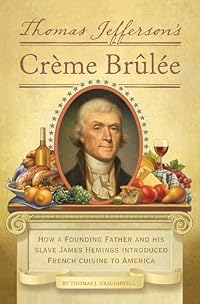
Thomas Jefferson's Creme Brulee: How a Founding Father and His Slave James Hemings Introduced French Cuisine to America
by Thomas J. Craughwell
On This Page
Description
This culinary biography recounts the 1784 deal that Thomas Jefferson struck with his slaves, James Hemings. The founding father was traveling to Paris and wanted to bring James along "for a particular purpose"-- to master the art of French cooking. In exchange for James's cooperation, Jefferson would grant his freedom.
Thus began one of the strangest partnerships in United States history. As Hemings apprenticed under master French chefs, Jefferson studied the cultivation of French crops show more (especially grapes for winemaking) so the might be replicated in American agriculture. The two men returned home with such marvels as pasta, French fries, Champagne, macaroni and cheese, crème brûlée, and a host of other treats. This narrative history tells the story of their remarkable adventure--and even includes a few of their favorite recipes!
. show less
Tags
Recommendations














Member Recommendations

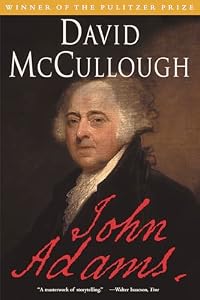
sgump Here you'll find more details about Thomas Jefferson's reactions to the food and wine he partook in Europe in the late 1780s.
Member Reviews
I wanted to like this book, I really did. The story of how, in America, race and slavery are intertwined with cuisine, is fascinating and deserves in-depth exploration. Unfortunately, the author seemed mostly interested in Jefferson and French cuisine, and the story of James Hemings was stuck on as a necessary side note. Admittedly, the information about Hemings is slight, so the author may have felt limited in his ability to say more. But he pads the story with extended information about the sights, sounds and flavors of France of the day, about Jefferson’s family, about Jefferson’s interest in plants. If he had given equal context to African-American contributions to the cuisine of the U.S., or extended the discussion forward with show more information about how freed slave cooks built enterprises around their food, the book would have been much more interesting and enlightening. As it was, the author seemed rather uncomfortable with the aspects of slave owning that cast his beloved Jefferson in a bad light. At one point he notes that sexual relations between slave owners and slaves may be shocking to us today, “but” they were common at the time. I would think an “and” would be more appropriate to that explanation. He also refers to the relationship between Sally Hemings and Jefferson as an “affair,” not the word most would use to describe a relationship in which the power laid all on one side. The author’s seeming discomfort or lack of interest in the complexities of this story left the book feeling lightweight, like a heavily padded magazine article. show less
 This review was written for LibraryThing Early Reviewers.
I bought this book because it looked like it might be a light, fun foodie read embedded in a little history. It turned out to not be quite the foodie extravaganza I thought it would, though it was a short, fast read with more non-food related history than I thought it would. Now mind you, I love the history, but it's not how the cover of the book sells itself which may be deceptive to others who pick it up. In general the book just meanders off on sidetracks from food on a regular basis and I wasn't feeling like it was always relevant to the subject of the book.
The book opens with some background on Jefferson, his fellow revolutionaries, and the culture and times surrounding the development of French Cuisine. There is also a short bit show more about how the French dealt with slavery, especially slaves brought from other countries. France did not allow slavery and did have laws that would allow any slave brought to the country to demand their freedom. This may be what caused Jefferson to make the bargain with James Hemmings for his freedom if he taught what he learned of French cooking to another slave when they returned home.
The book proceeds to describe some of Jefferson's wanderings through the French country side and the North of Italy, again, some of it food related, some of it not. The most interesting part was regarding the eventual smuggling of bags of Lombardy rice back to the US by Mr Jefferson himself, a crime that would have meant the death penalty if caught. From there it jumps in some of the coming revolution in France and the politics behind it, much of which had nothing to do with food.
All in all, I was a bit disappointed that there was not more description of the French Cuisine at the time and specifically some of the dishes James Hemmings may have learned; there were a few mentions of what he may have served at the dining table of Mr. Jefferson, but not as much as you'd think for the title of this book. Probably worth a read in any case as it will not take much time to get through it, and there are a few tidbits worth learning about. show less
The book opens with some background on Jefferson, his fellow revolutionaries, and the culture and times surrounding the development of French Cuisine. There is also a short bit show more about how the French dealt with slavery, especially slaves brought from other countries. France did not allow slavery and did have laws that would allow any slave brought to the country to demand their freedom. This may be what caused Jefferson to make the bargain with James Hemmings for his freedom if he taught what he learned of French cooking to another slave when they returned home.
The book proceeds to describe some of Jefferson's wanderings through the French country side and the North of Italy, again, some of it food related, some of it not. The most interesting part was regarding the eventual smuggling of bags of Lombardy rice back to the US by Mr Jefferson himself, a crime that would have meant the death penalty if caught. From there it jumps in some of the coming revolution in France and the politics behind it, much of which had nothing to do with food.
All in all, I was a bit disappointed that there was not more description of the French Cuisine at the time and specifically some of the dishes James Hemmings may have learned; there were a few mentions of what he may have served at the dining table of Mr. Jefferson, but not as much as you'd think for the title of this book. Probably worth a read in any case as it will not take much time to get through it, and there are a few tidbits worth learning about. show less
That Thomas Jefferson spent time in France is nothing new. There have been many books, movies, and mini-series to attest to that, but what is less well-known, at least to me before reading Thomas J. Craughwell’s delightful little book, Thomas Jefferson’s Crème Brulee, is the special attention he paid to food while he was there.
I like to eat, mostly what my husband refers to as Oklahoma food, which is shorthand for white or yellow, bland, and most often made of wheat or corn. Some of my particular favorites are macaroni with just a little bit of tomato juice, corn bread, hominy, biscuits and gravy, and fried mush. In Jefferson’s day the American cuisine of the day was similar, simple foods prepared simply.
But France? France was a show more wholly different place with wholly different ideas on how food should be prepared. There was nothing simple about it; food was designed to impress, and Thomas Jefferson wanted to bring that impressive food back to America when his 5-year stay was over. To do that he enlisted the help of his slave, James Hemings, who agreed to accompany Jefferson to Paris and learn to cook from the French in exchange for his freedom.
More here: http://www.readingwithscissors.com/2012/10/book-review-thomas-jefferson-creme.ht... show less
I like to eat, mostly what my husband refers to as Oklahoma food, which is shorthand for white or yellow, bland, and most often made of wheat or corn. Some of my particular favorites are macaroni with just a little bit of tomato juice, corn bread, hominy, biscuits and gravy, and fried mush. In Jefferson’s day the American cuisine of the day was similar, simple foods prepared simply.
But France? France was a show more wholly different place with wholly different ideas on how food should be prepared. There was nothing simple about it; food was designed to impress, and Thomas Jefferson wanted to bring that impressive food back to America when his 5-year stay was over. To do that he enlisted the help of his slave, James Hemings, who agreed to accompany Jefferson to Paris and learn to cook from the French in exchange for his freedom.
More here: http://www.readingwithscissors.com/2012/10/book-review-thomas-jefferson-creme.ht... show less
This review was written for LibraryThing Early Reviewers.Somehow I seem to have fallen into reading and watching documentaries about Thomas Jefferson. He's always been someone I've had a love/hate relationship with: his love for books and good food is up my alley, but his hypocritical views on liberty, though quick of his time, is hard to swallow. Speaking of swallowing, I did get hungry reading the descriptions of both American and French cuisines.
I'm not sure I'm convinced that Jefferson's efforts changed the American diet: for the most part the changes remained in Monticello, and perhaps the White House (or whetever it was called then.) Still, his time in Paris was an interesting one, and the fate of the Hemmings family was a particularly poignant barometer of the time.
I'm not sure I'm convinced that Jefferson's efforts changed the American diet: for the most part the changes remained in Monticello, and perhaps the White House (or whetever it was called then.) Still, his time in Paris was an interesting one, and the fate of the Hemmings family was a particularly poignant barometer of the time.
This review was written for LibraryThing Early Reviewers.This book has a great title and an intriguing premise. Unfortunately, it feels like the author couldn't unearth enough information to back up his argument. The sections on James Hemings, the slave that Jefferson wanted trained in French cuisine, are particularly sketchy. (In his defense, it's not likely that anyone would've taken great care to document Hemings' French and cooking classes in Paris.) Also, if the point is to show that Jefferson was the one who brought haute cuisine to America, then more of the book should concentrate on his culinary efforts once he returned from Paris ... except that, as the author admits in his epilogue, most Americans continued to prefer simpler fare, and French cooking didn't get a real foothold in the show more U.S. until the nineteenth century.
I did give the book 2 1/2 stars because it was a quick read, and I liked what the author had to say about Americans in Paris, French food, and the French Revolution. I don't know whether readers who aren't Francophiles or history-lovers would feel the same, though. show less
I did give the book 2 1/2 stars because it was a quick read, and I liked what the author had to say about Americans in Paris, French food, and the French Revolution. I don't know whether readers who aren't Francophiles or history-lovers would feel the same, though. show less
This review was written for LibraryThing Early Reviewers.This book is a delightful look at Thomas Jefferson and his love of food. The author’s writing style makes it a quick and easy read. Readers looking for a more “serious” historical record should look elsewhere -he gives a thumbnail sketch of the man, his life in politics, and acknowledges the controversy surrounding his personal life but concentrates on food. The pictures of actual recipes in Jefferson’s and Hemings’ handwriting were wonderful, I just wish there had been more transcribed so that I could read them.
I found the information about the eating habits of Colonial Americans and French peasants and aristocrats to be extremely interesting. Often when reading history books, I find it hard to picture the actual people who show more lived at that time. In my opinion, many historians get so bogged down in facts they forget these were living, breathing, feeling people… what did they wear, how did they entertain themselves, what did they eat? show less
I found the information about the eating habits of Colonial Americans and French peasants and aristocrats to be extremely interesting. Often when reading history books, I find it hard to picture the actual people who show more lived at that time. In my opinion, many historians get so bogged down in facts they forget these were living, breathing, feeling people… what did they wear, how did they entertain themselves, what did they eat? show less
"Boil 2 quarts of milk with a large piece of orange peel"
I've read quite a few biographies and histories about Thomas Jefferson, but the aspect of his life that interested me most was his interest in food and gardening. Much of Thomas Craughwell's book covers the time Jefferson served as ambassador to France and the food fashions of Paris. From the sumptuous, lengthy, and extravagant meals of the aristocracy came a new sensibility and awareness of food that the aristocratically-minded Jefferson lapped up.
This is not an in-depth history of Jefferson's meals. Likewise, the slave James Hemmings plays a very minor role, probably because little was documented of his short life. Instead Craughwell fills in information about the foods that show more were popular in America and France at the time. He explains how the French excesses (including food-related) influenced the French Revolution. And this sort of background history that is often glossed over in many history books is what makes this one interesting. Likewise, I enjoyed the short appendixes discussing the kinds of foods grown in Jefferson's gardens and his fascination with wine.
But foodies looking for an in-depth examination of Jefferson's dinner table or James Hemmings' recipes may come away with more historical background than detail. I suspect that kind of 'mundane' information simply wasn't part of the historical record. Still, it was a fun and short read. (For a more detailed look at his gardening I recommend Andrea Wulf's Founding Gardeners: The Revolutionary Generation, Nature, and the Shaping of the American Nation.) show less
I've read quite a few biographies and histories about Thomas Jefferson, but the aspect of his life that interested me most was his interest in food and gardening. Much of Thomas Craughwell's book covers the time Jefferson served as ambassador to France and the food fashions of Paris. From the sumptuous, lengthy, and extravagant meals of the aristocracy came a new sensibility and awareness of food that the aristocratically-minded Jefferson lapped up.
This is not an in-depth history of Jefferson's meals. Likewise, the slave James Hemmings plays a very minor role, probably because little was documented of his short life. Instead Craughwell fills in information about the foods that show more were popular in America and France at the time. He explains how the French excesses (including food-related) influenced the French Revolution. And this sort of background history that is often glossed over in many history books is what makes this one interesting. Likewise, I enjoyed the short appendixes discussing the kinds of foods grown in Jefferson's gardens and his fascination with wine.
But foodies looking for an in-depth examination of Jefferson's dinner table or James Hemmings' recipes may come away with more historical background than detail. I suspect that kind of 'mundane' information simply wasn't part of the historical record. Still, it was a fun and short read. (For a more detailed look at his gardening I recommend Andrea Wulf's Founding Gardeners: The Revolutionary Generation, Nature, and the Shaping of the American Nation.) show less
Members
- Recently Added By
Author Information

59 Works 3,269 Members
Thomas J. Craughwell is the author of Saints Behaving Badly, This Saint Will Change Your Life, and Pope Francis: The Pope from the End of the Earth: Every month he writes a column on patron saints for Catholic diocesan newspapers. He has also written about saints for the Wall Street Journal, St. Anthony Messenger, and Catholic Digest and has show more discussed saints on CNN and EWTN. His book Stealing Lincoln's Body was made into a two-hour documentary on the History Channel. show less
Common Knowledge
- Original publication date
- 2012-09-18
- People/Characters
- Thomas Jefferson; James Hemings; John Adams; Benjamin Franklin
- Important places
- Paris, France; Monticello, Virginia, USA
Classifications
- Genres
- Nonfiction, History, General Nonfiction, Food & Cooking, Biography & Memoir
- DDC/MDS
- 973.4 — History & geography History of North America United States Constitutional period (1789-1809)
- LCC
- E332.2 .C73 — History of the United States United States Revolution to the Civil War, 1775/1783-1861 By period 1789-1809. Constitutional period Jefferson's administrations, 1801-1809
- BISAC
Statistics
- Members
- 226
- Popularity
- 143,615
- Reviews
- 36
- Rating
- (3.12)
- Languages
- English
- Media
- Paper, Audiobook, Ebook
- ISBNs
- 6
- UPCs
- 1
- ASINs
- 1