
On This Page
Description
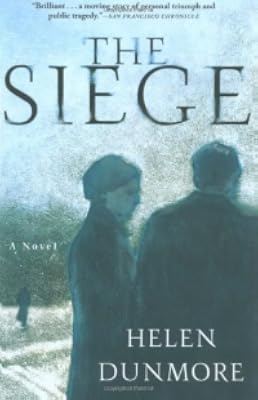
Leningrad, September 1941. German tanks surround the city, imprisoning those who live there. The besieged people of Leningrad face shells, starvation and the Russian winter. Interweaving two love affairs in two generations, this novel draws us into the Levin's family struggle to stay alive.Tags
Recommendations

















Member Recommendations

Member Reviews
I just finished Helen Dunmore's historical novel and I am spent. I have read novels of the siege of Leningrad before and have been touched by them but never more so than Dunmore's version.
The book begins with a Top Secret telegraph from Berlin to German armed forces:
"Re:The future of Leningrad
.....The Fuehrer has decided to have Leningrad wiped from the face of the earth. The further existence of this large town is of no interest once Soviet Russia is overthrown. Finland has also similarly declared no interest in the continued existence of the city directly on her new frontier."
By using a blockade to keep food and medicine out of Leningrad it's citizens slowly starve or freeze to death. Those who are able agree to things they never show more would have done in order to survive The elderly,young children and babies are the first to die. Those who survive the first winter of the blockade find innovative ways to bring food and supplies into Leningrad, still half the population has been wiped out and the siege will continue for another 600 some days. But for now, as this novel comes to an end there is hope amongst the sadness.
The characters Dunmore created are so very human, imperfect yet strong and willful, trying to believe there will be a tomorrow but knowing too, there may not be. Highly recommend! show less
The book begins with a Top Secret telegraph from Berlin to German armed forces:
"Re:The future of Leningrad
.....The Fuehrer has decided to have Leningrad wiped from the face of the earth. The further existence of this large town is of no interest once Soviet Russia is overthrown. Finland has also similarly declared no interest in the continued existence of the city directly on her new frontier."
By using a blockade to keep food and medicine out of Leningrad it's citizens slowly starve or freeze to death. Those who are able agree to things they never show more would have done in order to survive The elderly,young children and babies are the first to die. Those who survive the first winter of the blockade find innovative ways to bring food and supplies into Leningrad, still half the population has been wiped out and the siege will continue for another 600 some days. But for now, as this novel comes to an end there is hope amongst the sadness.
The characters Dunmore created are so very human, imperfect yet strong and willful, trying to believe there will be a tomorrow but knowing too, there may not be. Highly recommend! show less
"Now it's June, and night is brief as the brush of a wing, only an hour of yellow stars in a sky that never darkens beyond deep, tender blue.
No one sleeps. Crowds surge out of cafes and wander the streets, not caring where they go as long as they can lift their faces and drink in the light. It's been dark for so many months."
Is it possible to write a beautiful book about hunger, deprivation, the depths of human savagery and the extreme limits of our will to survive? Helen Dunmore has done it with The Siege. It's 1941 and in this giddy with light Leningrad (St. Petersburg) "there's the crumple of artillery, far off, then suddenly not so far off", as the Germans advance. Eventually the city will be sealed off from the outside world, and show more the siege will begin.
Twenty-two year old Anna's mother has died after giving birth to her 5 year old brother Kolya, and after her writer-father Mikhail is injured, it is up to Anna to do all she can to ensure their survival as General Winter and General Hunger advance. New words are flying about: "Strategic defences. Signing up. Immediate danger of invasion. Crisis." Tanks are coming with "the wicked little snouts of their guns swivelling to get you in their sights." The slights and frustrations of thought-oppressing socialism become irrelevant as every day dwindles to one overarching principle: survival.
How to find food, how to stay warm, what is essential, and what is not. "Without a ration card, you die for certain. With one, you may die too, but the land of not-dying remains open to you." In this city of desperation, an unlikely romance blossoms between Anna and Andrei, who is studying to become a doctor. He works endless hours at the "hospital" (or what they have retained amidst the bombing), but comes to spend any time he can with Anna, and Kolya, and their father, and an old actress acquaintance of her father's who has found her way into their lives.
Helen Dunmore obviously did an exceptional amount of research to bring this story to life. The details are compelling - the mixed feelings as people die and there are fewer mouths to feed, how best to take advantage of a deceased's ration card, the joy of finding a jar of jam, the savagery in claiming pieces of wood from a bombed-out building to burn for warmth. The importance of small kindnesses, and friendship, the sordidness of black marketers extracting every possible item of value from the pockets of the impoverished. The desperate choices that must be made in the interest of life over death.
This is an extraordinary book. It relates an episode in history that surely is worthy of our understanding and remembrance. But it is the author's poetic depiction of how such unimaginable exigencies are met by a populace with no choice that lays siege to the heart and requires us to respond fully, without reservation. show less
No one sleeps. Crowds surge out of cafes and wander the streets, not caring where they go as long as they can lift their faces and drink in the light. It's been dark for so many months."
Is it possible to write a beautiful book about hunger, deprivation, the depths of human savagery and the extreme limits of our will to survive? Helen Dunmore has done it with The Siege. It's 1941 and in this giddy with light Leningrad (St. Petersburg) "there's the crumple of artillery, far off, then suddenly not so far off", as the Germans advance. Eventually the city will be sealed off from the outside world, and show more the siege will begin.
Twenty-two year old Anna's mother has died after giving birth to her 5 year old brother Kolya, and after her writer-father Mikhail is injured, it is up to Anna to do all she can to ensure their survival as General Winter and General Hunger advance. New words are flying about: "Strategic defences. Signing up. Immediate danger of invasion. Crisis." Tanks are coming with "the wicked little snouts of their guns swivelling to get you in their sights." The slights and frustrations of thought-oppressing socialism become irrelevant as every day dwindles to one overarching principle: survival.
How to find food, how to stay warm, what is essential, and what is not. "Without a ration card, you die for certain. With one, you may die too, but the land of not-dying remains open to you." In this city of desperation, an unlikely romance blossoms between Anna and Andrei, who is studying to become a doctor. He works endless hours at the "hospital" (or what they have retained amidst the bombing), but comes to spend any time he can with Anna, and Kolya, and their father, and an old actress acquaintance of her father's who has found her way into their lives.
Helen Dunmore obviously did an exceptional amount of research to bring this story to life. The details are compelling - the mixed feelings as people die and there are fewer mouths to feed, how best to take advantage of a deceased's ration card, the joy of finding a jar of jam, the savagery in claiming pieces of wood from a bombed-out building to burn for warmth. The importance of small kindnesses, and friendship, the sordidness of black marketers extracting every possible item of value from the pockets of the impoverished. The desperate choices that must be made in the interest of life over death.
This is an extraordinary book. It relates an episode in history that surely is worthy of our understanding and remembrance. But it is the author's poetic depiction of how such unimaginable exigencies are met by a populace with no choice that lays siege to the heart and requires us to respond fully, without reservation. show less
Anna is the daughter of an out of favour writer in the Leningrad of the Second World War. Her father, once highly regarded, is now somewhat suspect, and none of his writing has been published for years: he scrapes a living with occasional translation work, though even that has become more and more intermittent. Anna herself has had to abandon her study of art to become a nursery assistant, a job that she can combine with the care of her much younger brother Kolya, their mother having died shortly after his birth. Despite their fall from favour the family has managed to retain their small country dacha, where Anna can grow the stores that will keep the family going through the winter. For even as a city at peace, there are constant food show more shortages in Leningrad, and keeping a family fed requires constant queuing: vegetables stored for the winter can make all the difference.
But with the breakdown of the Nazi-Soviet, Leningrad rapidly finds itself surrounded. After the bombing of the city's food reserves, the citizens of Leningrad are left with virtually nothing to fall back on. As the winter deepens its grip on the city, rations are cut to two slices of adulterated bread each day ...
This is a beautifully written book, as befits an author who is also a poet. The depiction of food is almost sensuous, right from the beginning when Anna is contemplating her growing vegetables:
I loved Helen Dunmore's ability to create memorable scenes which brought home the horror of the situation in which Leningraders find themselves.
Highly recommended! show less
But with the breakdown of the Nazi-Soviet, Leningrad rapidly finds itself surrounded. After the bombing of the city's food reserves, the citizens of Leningrad are left with virtually nothing to fall back on. As the winter deepens its grip on the city, rations are cut to two slices of adulterated bread each day ...
This is a beautifully written book, as befits an author who is also a poet. The depiction of food is almost sensuous, right from the beginning when Anna is contemplating her growing vegetables:
'Anna pictured the seeds beginning to stir. Plump nubs of green feeling their way up through the earth, unfolding, fattening, changing hydrogen and oxygen and all the rest of it into solid, succulent food.'
I loved Helen Dunmore's ability to create memorable scenes which brought home the horror of the situation in which Leningraders find themselves.
'The streets are almost empty. She passes the hump of a body frozen into a doorway, covered with drifted snow. It looks like a bag of rubbish, but Anna knows it's a body because she saw it before the snow hid it. It's an old woman. Maybe she stopped to rest on the way back from fetching her ration. Anna doesn't like going past the park anymore. There are people sitting on benches, swathed in snow, planted like bulbs to wait for spring. They stay there day after day. No one comes to take them away.'
Highly recommended! show less
Can you say you enjoyed a book when the subject is horrific? Can you love a book about the Holocaust? Enjoy a book about the exploitation of children? That’s where I find myself when trying to describe my reaction to The Siege. Like a rubbernecker driving past a car accident on the highway, I found myself unable to look away from the descriptions of incredible loss of life during the siege of Leningrad. Made personal by the story’s characters, the siege becomes imaginable in a way that hearing the statistics (872 days of siege with the loss of over one million civilian lives from starvation, mostly in the first winter) alone can’t convey.
Anna Levin is a young woman whose dreams have been thwarted by family obligations. When her show more mother dies in childbirth when Anna is seventeen, she becomes mother to baby Kolya and main breadwinner for her family when her father’s writings are no longer acceptable by the Communist publishers. An artist with no opportunity for higher education, a pragmatic by circumstances, hindered by her class status as part of the intelligentsia, Anna has few choices. One the other hand, this life has given her the fortitude to struggle on against incredible odds to try and save herself and her family during the siege.
Entwined throughout the depiction of the daily grind of survival, the author writes of the beauty of the seasons and the sense of place so essential to being a Leningrader. In addition, the story contains two loves stories, both Anna’s own belated one and that of another woman who joins their family unit. The larger backdrop of history and the story of this little family are woven together in a way that enriches each. show less
Anna Levin is a young woman whose dreams have been thwarted by family obligations. When her show more mother dies in childbirth when Anna is seventeen, she becomes mother to baby Kolya and main breadwinner for her family when her father’s writings are no longer acceptable by the Communist publishers. An artist with no opportunity for higher education, a pragmatic by circumstances, hindered by her class status as part of the intelligentsia, Anna has few choices. One the other hand, this life has given her the fortitude to struggle on against incredible odds to try and save herself and her family during the siege.
Entwined throughout the depiction of the daily grind of survival, the author writes of the beauty of the seasons and the sense of place so essential to being a Leningrader. In addition, the story contains two loves stories, both Anna’s own belated one and that of another woman who joins their family unit. The larger backdrop of history and the story of this little family are woven together in a way that enriches each. show less
I didn't understand until now. My eyes fill with tears, and I don't know why. But I know that it's by these things, and nothing else, that we survive. Poetry doesn't exist to make life beautiful. Poetry is life itself.
The Siege is the story of a Russian family trapped in Leningrad in the long siege by Nazi troops that took place between September 8, 1941 and January 27, 1944. The book covers the first year of the siege, including the first relentless winter. I knew, of course, that the Germans had attacked Russia and that German soldiers paid a huge price for that error, but I had no idea that it lasted for over two years and had truly given no thought to what it was like for those being blockaded behind the line.
The story revolves show more around Anna, a young woman in her early twenties, who is already raising her younger brother because her mother has died giving him life. Her father is a writer, who is out of favor in Stalin’s Russia. An actress, also out-of-favor, a tough red-head who becomes Anna’s friend, and a young doctor named Andrei round out the cast of characters. The details we are given regarding the effects of the winter and the absence of food make the suffering palpable.
It is hard, indeed, to imagine how anyone endures the hardships and keeps their sanity.
Anna doesn't like going past the park anymore. There are people sitting on benches, swathed in snow, planted like bulbs to wait for spring. They stay there day after day. No one comes to take them away.
One of the things history does is inform us. The past can be a warning to the future, for it has that uncanny way of repeating itself if you dare to forget the lesson it has offered you. The moment you say, “this cannot happen to us”, it might.
Pre-Covid, this might have just read like a World War II history, but post-Covid, when I got to the section where Dunmore began to talk about the city, the danger, the complacency of the people, who had always been supplied and believed they could not be completely without, I shivered with a sense that history was talking to me, directly.
Suddenly and sharply, it's obvious that cities only exist because everyone agrees to let them exist. It's crazy, when you think of it, for millions of mouths to pack themselves into a couple of hundred square kilometers, without a pig or a potato patch between them.
I fear cities are even less self-sufficient these days.
For city people it is hard to grasp that the supply chain is broken. It’s kept them going all their lives, even though the system sometimes dissolves into chaos, and prices go up and down like an undertaker's hat.
I think about how crazy people went when they thought there was going to be a shortage of toilet paper. Imagine being rationed to two pieces of bread a day—total.
This book is as tactile as a book can get. I smelled the stale breath, felt the cold, tasted the jars of jam and wedges of honey they so carefully hoarded, heard the cries of the hungry babies, and saw the hanging flesh and gaunt faces. It is a story of hardship, but it is also a story of sacrifice and survival and transcendent love.
What a remarkable way to begin a new year of reading. show less
The Siege is the story of a Russian family trapped in Leningrad in the long siege by Nazi troops that took place between September 8, 1941 and January 27, 1944. The book covers the first year of the siege, including the first relentless winter. I knew, of course, that the Germans had attacked Russia and that German soldiers paid a huge price for that error, but I had no idea that it lasted for over two years and had truly given no thought to what it was like for those being blockaded behind the line.
The story revolves show more around Anna, a young woman in her early twenties, who is already raising her younger brother because her mother has died giving him life. Her father is a writer, who is out of favor in Stalin’s Russia. An actress, also out-of-favor, a tough red-head who becomes Anna’s friend, and a young doctor named Andrei round out the cast of characters. The details we are given regarding the effects of the winter and the absence of food make the suffering palpable.
It is hard, indeed, to imagine how anyone endures the hardships and keeps their sanity.
Anna doesn't like going past the park anymore. There are people sitting on benches, swathed in snow, planted like bulbs to wait for spring. They stay there day after day. No one comes to take them away.
One of the things history does is inform us. The past can be a warning to the future, for it has that uncanny way of repeating itself if you dare to forget the lesson it has offered you. The moment you say, “this cannot happen to us”, it might.
Pre-Covid, this might have just read like a World War II history, but post-Covid, when I got to the section where Dunmore began to talk about the city, the danger, the complacency of the people, who had always been supplied and believed they could not be completely without, I shivered with a sense that history was talking to me, directly.
Suddenly and sharply, it's obvious that cities only exist because everyone agrees to let them exist. It's crazy, when you think of it, for millions of mouths to pack themselves into a couple of hundred square kilometers, without a pig or a potato patch between them.
I fear cities are even less self-sufficient these days.
For city people it is hard to grasp that the supply chain is broken. It’s kept them going all their lives, even though the system sometimes dissolves into chaos, and prices go up and down like an undertaker's hat.
I think about how crazy people went when they thought there was going to be a shortage of toilet paper. Imagine being rationed to two pieces of bread a day—total.
This book is as tactile as a book can get. I smelled the stale breath, felt the cold, tasted the jars of jam and wedges of honey they so carefully hoarded, heard the cries of the hungry babies, and saw the hanging flesh and gaunt faces. It is a story of hardship, but it is also a story of sacrifice and survival and transcendent love.
What a remarkable way to begin a new year of reading. show less
“ A ring of siege grips the city. Nothing comes in, nothing goes out. And in the suburbs, within sight, the Germans have dug themselves in…There they squat in the outskirts of Leningrad, like wolves at the mouth of a cave.”
Against this forbidding backdrop, is a tale of love and survival. The strength of family and of boundless determination. We follow Anna, a young nursery teacher, her father, a black-listed writer and her much younger brother, struggling to live in a cramped apartment, with dwindling food and an oncoming winter, which in this region is relentlessly brutal.
This sounds incredibly bleak, and at times it is, but in the hands of this talented author, she drives the story along, with a strong dose of hope and courage, show more along with simple but elegant prose. It is also meticulously researched, placing the reader firmly into this beleaguered landscape. I have now been introduced to another amazing writer. Highly recommended. show less
Against this forbidding backdrop, is a tale of love and survival. The strength of family and of boundless determination. We follow Anna, a young nursery teacher, her father, a black-listed writer and her much younger brother, struggling to live in a cramped apartment, with dwindling food and an oncoming winter, which in this region is relentlessly brutal.
This sounds incredibly bleak, and at times it is, but in the hands of this talented author, she drives the story along, with a strong dose of hope and courage, show more along with simple but elegant prose. It is also meticulously researched, placing the reader firmly into this beleaguered landscape. I have now been introduced to another amazing writer. Highly recommended. show less
Sometimes, our reading choices benefit from external guidance, which is one of the reasons I'm a member of a book group. Recently, one of my group recommended that I read Helen Dumore's 'The Siege'. I wasn't convinced - my reading pleasures do not usually stretch to books described by the Sunday Telegraph as 'a Tolstoyan epic of love and war' - so I began reading the book out of a vague sense of obligation; I ended it with a sense of gratitude - to the author, who made what could have been Yet Another War Story beautiful and genuinely moving, and to the acquaintance who insisted I would enjoy it.
What's it about?
In September 1941, Hitler ordered the German forces to surround Leningrad and have it 'wiped from the face of the earth'. This show more chilling directive opens a powerful story that focuses primarily on the survival of a few individuals living in Leningrad at the time of the bombardment. Forced to burn books to avoid frostbite and boil shoe-leather to stave off starvation, Dunmore's characters struggle not just to exist, but to want to continue existing.
What's it like?
Utterly convincing. Brave Anna forms the novel's emotional core as she fights to keep herself, her young brother, Kolya, and increasingly vulnerable father, Mikhail, from dying. She is soon joined in this endeavour by a handsome young doctor, Andrei, and her father's old flame, Marina.
I was initially concerned that the ensuing romance arcs would obscure what I considered to be the 'true' focus of the novel - the brutal nature of life in Leningrad at this time - but in fact Dunmore deftly balances these threads, revealing how hunger and fierce cold can conspire to crush even the most loving souls.
Using Anna as a central focus for the novel works well. She is a naturally sympathetic character, a hard worker whose life has already been touched by sadness. Since her mother's death in childbirth, she has sacrificed her education and been bringing up her brother as her own child. Her ambivalence towards her father - whose arty nature seems to preclude him taking an active interest in the upbringing of his son - and his former lover is understandable, as is her admirable determination to shield Kolya from the worst of the war.
Although Anna's family remain the core focus, other stories are woven in as their lives cross Anna's: the tough worker who becomes a prostitute while her elderly mother sleeps in the next room; the pretty young thing who is killed by a chance fall of bricks; the young mother struggling to feed a newborn baby while her husband is away trying to save the Motherland. In this way, Dunmore creates a rich tapestry of experiences within the dying city. It is a largely female tapestry; most of the men are away fighting, and Anna primarily interacts with other women. I didn't find this limiting - I think there are already plenty of male perspectives on warfare - but some readers may feel Dunmore could have made more use of male experiences.
Though most of the novel is written in the third person, with a close focus on a particular character's experiences, Dunmore often uses direct address to powerful effect:
'What are days? You wake hours before it's light, from hunger. Hunger has burrowed deep into your stomach and is eating away at you. You turn, moaning, trying to dislodge it. You taste the foulness of your breath.'
Once again, this evocation of wider, shared experience helps the story feel convincing and genuinely moving. I am very rarely moved to tears by anything in a book or film, but one episode in 'The Siege' did make me cry. Despite the necessarily sad nature of much of the plot and narration, the blurb claims that this novel is also 'a profoundly moving celebration of love, life and survival'. So it is - for those who survive.
Unlike many historical novelists, Dunmore is able to incorporate much of the relevant historical background seamlessly into the narrative. Where more detail is required, the reader is treated to an account of Pavlov's number crunching. A government minister tasked with managing Leningraders' rations, Pavlov is aware that while he is writing history, history is also writing him. People will die or live according to his decisions, which once again helps the reader to appreciate the broader picture Anna's family are starving within.
Final thoughts
'The Siege' is a well-written, genuinely moving and thoroughly convincing account of life in Leningrad during the bombardment. I liked that the book focuses on civilians and their war effort, rather than following the men in the trenches. I also liked the fact that love doesn't conquer all - though it does help. I plan to read Dunmore's follow-up, 'The Betrayal', to find out what happens to the surviving characters, but this is because I enjoyed Dunmore's written style and easy embedding of history into the story, rather than feeling a 'need to know'; this novel has a perfectly satisfactory ending and feels quite self-contained. There is no prologue but there is a kind of epilogue at the end of the final chapter; regardless, at a relatively short 291 pages the book felt just the right length.
I am not enough of an expert on the period Dunmore is writing about to comment in her historical accuracy, but the selected bibliography suggests that the book has been well-researched, and she notes on her website that the book grew out of her interest in the time and place, rather than the other way around, so I expect it is a fairly accurate account of what life was like for Leningraders at this time.
I wasn't surprised to learn that Dunmore is also a poet (and an essayist and a writer of children's fiction). Her writing has an almost lyrical edge at times, in spite of the harshness of the world she depicts. This helps to make the story a pleasure to read.
I borrowed this from my local library but it is well-worth the £8.99 RRP and would certainly withstand re-reading once a suitable period of time has passed: the quality of the writing and the emotional response the novel draws from the reader means that a vague, lingering memory of the plot need not prevent readers from savouring the novel afresh.
Recommended.
Read this if:
- you find it interesting to read about periods in history, especially Russian or World War 2 history, in a fictionalised format;
- you enjoy reading accounts of humanity under pressure and how people rise to the challenges inherent in starvation, freezing weather and the psychological pressure of the constant threat of death;
- you enjoy well-written novels which tell convincing stories about sympathetic characters.
Avoid this if:
- you prefer to read fiction that focuses on different aspects of warfare - e.g. the the fighting - or on a different period of history;
- you enjoy romances where love is all-powerful and all-conquering, regardless of circumstances. show less
What's it about?
In September 1941, Hitler ordered the German forces to surround Leningrad and have it 'wiped from the face of the earth'. This show more chilling directive opens a powerful story that focuses primarily on the survival of a few individuals living in Leningrad at the time of the bombardment. Forced to burn books to avoid frostbite and boil shoe-leather to stave off starvation, Dunmore's characters struggle not just to exist, but to want to continue existing.
What's it like?
Utterly convincing. Brave Anna forms the novel's emotional core as she fights to keep herself, her young brother, Kolya, and increasingly vulnerable father, Mikhail, from dying. She is soon joined in this endeavour by a handsome young doctor, Andrei, and her father's old flame, Marina.
I was initially concerned that the ensuing romance arcs would obscure what I considered to be the 'true' focus of the novel - the brutal nature of life in Leningrad at this time - but in fact Dunmore deftly balances these threads, revealing how hunger and fierce cold can conspire to crush even the most loving souls.
Using Anna as a central focus for the novel works well. She is a naturally sympathetic character, a hard worker whose life has already been touched by sadness. Since her mother's death in childbirth, she has sacrificed her education and been bringing up her brother as her own child. Her ambivalence towards her father - whose arty nature seems to preclude him taking an active interest in the upbringing of his son - and his former lover is understandable, as is her admirable determination to shield Kolya from the worst of the war.
Although Anna's family remain the core focus, other stories are woven in as their lives cross Anna's: the tough worker who becomes a prostitute while her elderly mother sleeps in the next room; the pretty young thing who is killed by a chance fall of bricks; the young mother struggling to feed a newborn baby while her husband is away trying to save the Motherland. In this way, Dunmore creates a rich tapestry of experiences within the dying city. It is a largely female tapestry; most of the men are away fighting, and Anna primarily interacts with other women. I didn't find this limiting - I think there are already plenty of male perspectives on warfare - but some readers may feel Dunmore could have made more use of male experiences.
Though most of the novel is written in the third person, with a close focus on a particular character's experiences, Dunmore often uses direct address to powerful effect:
'What are days? You wake hours before it's light, from hunger. Hunger has burrowed deep into your stomach and is eating away at you. You turn, moaning, trying to dislodge it. You taste the foulness of your breath.'
Once again, this evocation of wider, shared experience helps the story feel convincing and genuinely moving. I am very rarely moved to tears by anything in a book or film, but one episode in 'The Siege' did make me cry. Despite the necessarily sad nature of much of the plot and narration, the blurb claims that this novel is also 'a profoundly moving celebration of love, life and survival'. So it is - for those who survive.
Unlike many historical novelists, Dunmore is able to incorporate much of the relevant historical background seamlessly into the narrative. Where more detail is required, the reader is treated to an account of Pavlov's number crunching. A government minister tasked with managing Leningraders' rations, Pavlov is aware that while he is writing history, history is also writing him. People will die or live according to his decisions, which once again helps the reader to appreciate the broader picture Anna's family are starving within.
Final thoughts
'The Siege' is a well-written, genuinely moving and thoroughly convincing account of life in Leningrad during the bombardment. I liked that the book focuses on civilians and their war effort, rather than following the men in the trenches. I also liked the fact that love doesn't conquer all - though it does help. I plan to read Dunmore's follow-up, 'The Betrayal', to find out what happens to the surviving characters, but this is because I enjoyed Dunmore's written style and easy embedding of history into the story, rather than feeling a 'need to know'; this novel has a perfectly satisfactory ending and feels quite self-contained. There is no prologue but there is a kind of epilogue at the end of the final chapter; regardless, at a relatively short 291 pages the book felt just the right length.
I am not enough of an expert on the period Dunmore is writing about to comment in her historical accuracy, but the selected bibliography suggests that the book has been well-researched, and she notes on her website that the book grew out of her interest in the time and place, rather than the other way around, so I expect it is a fairly accurate account of what life was like for Leningraders at this time.
I wasn't surprised to learn that Dunmore is also a poet (and an essayist and a writer of children's fiction). Her writing has an almost lyrical edge at times, in spite of the harshness of the world she depicts. This helps to make the story a pleasure to read.
I borrowed this from my local library but it is well-worth the £8.99 RRP and would certainly withstand re-reading once a suitable period of time has passed: the quality of the writing and the emotional response the novel draws from the reader means that a vague, lingering memory of the plot need not prevent readers from savouring the novel afresh.
Recommended.
Read this if:
- you find it interesting to read about periods in history, especially Russian or World War 2 history, in a fictionalised format;
- you enjoy reading accounts of humanity under pressure and how people rise to the challenges inherent in starvation, freezing weather and the psychological pressure of the constant threat of death;
- you enjoy well-written novels which tell convincing stories about sympathetic characters.
Avoid this if:
- you prefer to read fiction that focuses on different aspects of warfare - e.g. the the fighting - or on a different period of history;
- you enjoy romances where love is all-powerful and all-conquering, regardless of circumstances. show less
Members
- Recently Added By
Published Reviews
ThingScore 100
The Siege is an agonising read, but also a numbing one. The novel, which narrates the first and worst winter of a siege that lasted from 1941 until 1944, animates the senses in order to feel them shutting down.
added by kake
[L]anguage that is elegantly, starkly beautiful. . . quieter and more powerful than her earlier work.
added by christiguc
In limpid and careful prose, with an intermittently choric narrator, Dunmore presents a community in travail.
added by kake
Lists

Best Historical Fiction
620 works; 261 members

Favourite Women's Prize for Fiction, Orange & Bailey's Prize contenders
132 works; 52 members

Women in War
148 works; 30 members

The Guardian's 100 best books of the 21st century
100 works; 21 members

Sense of place
156 works; 13 members

Top Five Books of 2017
757 works; 230 members

Books about Russia and the former USSR
67 works; 12 members

Favorite Books from the 2000s
35 works; 3 members

Fiction: Historical
288 works; 3 members

Books Read in 2013
1,630 works; 51 members

THE WAR ROOM
813 works; 24 members

Old Baggages Book Club
18 works; 1 member
Talk Discussions
Past Discussions
The Siege by Helen Dunmore in Orange January/July (January 2012)
Author Information

70+ Works 8,504 Members
Helen Dunmore was born in Beverley, England on December 12, 1952. She received a degree in English from the University of York in 1973. She taught English in Finland before moving to Bristol, England, where she taught literature and creative writing. She was a poet, novelist, and children's author. Her collections of poetry include The Apple Fall, show more The Raw Garden, and Inside the Wave. Her books include Talking to the Dead, Your Blue-Eyed Boy, House of Orphans, The Greatcoat, The Siege, The Betrayal, The Lie, and Birdcage Walk. She won the McKitterick Prize for debut novelists in 1994 for Zennor in Darkness, the inaugural Orange Prize for Fiction in 1996 for A Spell of Winter, and the Costa Award for Poetry in 2017 for Inside the Wave. She died of cancer on June 5, 2017 at the age of 64. (Bowker Author Biography) show less
Awards and Honors
Series

Belongs to Publisher Series
Common Knowledge
- Original publication date
- 2001
- People/Characters
- Anna Levin; Kolya Levin; Marina Petrovna; Mikhail Levin; Andrei Alekseyev
- Important places
- Leningrad, USSR; USSR
- Important events
- World War II (1939 | 1945); World War II, Eastern Front (1941-06-22 | 1945-05-05); Siege of Leningrad (1941-09-08 | 1944-01-27)
- Dedication
- To Ros Cuthbert
- First words
- Re: The future of Leningrad
...The Fuehrer has decided to have Leningrad wiped from the face of the earth. - Last words
- (Click to show. Warning: May contain spoilers.)They are mother, father and child out for a walk on this beautiful May afternoon, as Leningrad settles like a swan on the calmest of waters.
But, of course, they are not. - Canonical DDC/MDS
- 823.914
- Canonical LCC
- PR6054.U528
Classifications
Statistics
- Members
- 1,064
- Popularity
- 24,084
- Reviews
- 52
- Rating
- (3.92)
- Languages
- 6 — Dutch, English, French, German, Italian, Norwegian (Bokmål)
- Media
- Paper, Audiobook, Ebook
- ISBNs
- 29
- ASINs
- 7