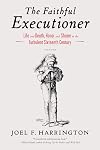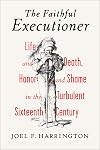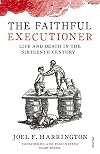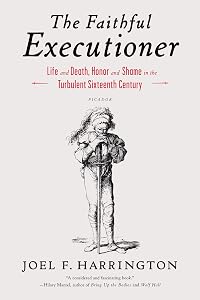
The Faithful Executioner: Life and Death, Honor and Shame in the Turbulent Sixteenth Century
by Joel F. Harrington
On This Page
Description
Based on the rare and until now overlooked journal of a Renaissance-era executioner, the noted historian Joel F. Harrington's The Faithful Executioner takes us deep inside the alien world and thinking of Meister Frantz Schmidt of Nuremberg, who, during forty-five years as a professional executioner, personally put to death 394 individuals and tortured, flogged, or disfigured many hundreds more. But the picture that emerges of Schmidt from his personal papers is not that of a monster. Could a show more man who routinely practiced such cruelty also be insightful, compassionate-even progressive? In The Faithful Executioner, Harrington vividly re-creates a life filled with stark contrasts, from the young apprentice's rigorous training under his executioner father to the adult Meister Frantz's juggling of familial duties with his work in the torture chamber and at the scaffold. With him we encounter brutal highwaymen, charming swindlers, and tragic unwed mothers accused of infanticide, as well as patrician senators, godly chaplains, and corrupt prison guards. Harrington teases out the hidden meanings and drama of Schmidt's journal, uncovering a touching tale of inherited shame and attempted redemption for the social pariah and his children. The Faithful Executioner offers not just the compelling firsthand perspective of a professional torturer and killer, but testimony of one man's lifelong struggle to reconcile his bloody craft with his deep religious faith. The biography of an ordinary man struggling for his soul, this groundbreaking book also offers an unparalleled panoramic view of Europe on the cusp of modernity, a society riven by violent conflict at all levels and encumbered by paranoia, superstition, and abuses of power. Thanks to an extraordinary historical source and its gifted interpreter, we recognize far more of ourselves than we might have expected in this intimate portrait of a professional killer from a faraway world. show lessTags
Recommendations




















Member Reviews
Quite a good biographical microhistory based around the remarkable journal of a Nuremberg executioner. Harrington uses Frantz Schmidt's lengthy account of his life and of the executions he carried out over many years to explore the crimes and punishments of sixteenth-century Nuremberg (and surrounding areas). More than that, though, he also examines the official social stigma that attached to executioners and their families, and Schmidt's long effort to restore his family's honor.
Gets a mite slow at times, but overall this is very much worth a read.
Gets a mite slow at times, but overall this is very much worth a read.
This originally appeared at The Irresponsible Reader.
---
WHAT DOES THE PUBLISHER SAY ABOUT THE FAITHFUL EXECUTIONER?
Based on the rare and until now overlooked journal of a Renaissance-era executioner, the noted historian Joel F. Harrington's The Faithful Executioner takes us deep inside the alien world and thinking of Meister Frantz Schmidt of Nuremberg, who, during forty-five years as a professional executioner, personally put to death 394 individuals and tortured, flogged, or disfigured many hundreds more. But the picture that emerges of Schmidt from his personal papers is not that of a monster. Could a man who routinely practiced such cruelty also be insightful, compassionate—even progressive?
In The Faithful Executioner, show more Harrington vividly re-creates a life filled with stark contrasts, from the young apprentice's rigorous training under his executioner father to the adult Meister Frantz's juggling of familial duties with his work in the torture chamber and at the scaffold. With him we encounter brutal highwaymen, charming swindlers, and tragic unwed mothers accused of infanticide, as well as patrician senators, godly chaplains, and corrupt prison guards. Harrington teases out the hidden meanings and drama of Schmidt's journal, uncovering a touching tale of inherited shame and attempted redemption for the social pariah and his children.
The Faithful Executioner offers not just the compelling firsthand perspective of a professional torturer and killer, but testimony of one man's lifelong struggle to reconcile his bloody craft with his deep religious faith. The biography of an ordinary man struggling for his soul, this groundbreaking book also offers an unparalleled panoramic view of Europe on the cusp of modernity, a society riven by violent conflict at all levels and encumbered by paranoia, superstition, and abuses of power. Thanks to an extraordinary historical source and its gifted interpreter, we recognize far more of ourselves than we might have expected in this intimate portrait of a professional killer from a faraway world.
HOW'S THE NARRATION?
Gillies was fine. I did wonder a bit about why a British narrator was used, especially when Harrington brings up his own U.S. citizenship at least once. It's not a big deal.
He also didn't pronounce the Lutheran theologian Philip Melanchthon's name in a way I've never heard before—and that threw me out of things for a moment.
Other than that, I had no substantive complaints. I don't know that he wowed me, but he didn't detract from the material.
SO, WHAT DID I THINK ABOUT THE FAITHFUL EXECUTIONER?
One thing that should be remembered that the description doesn't mention is that Executioners in that day were also healers—as a result of their training and experience in their primary profession, they understood human anatomy to a degree that most people didn't, so they augmented their income by helping heal others.
It's interesting little tid-bits like that that'll keep you reading. But not for trivia, for the history.
Okay, this didn’t resonate with me the way it did with my friends who read this. I didn’t get as invested in Frantz's story as Lawrence did.
That said, I was fascinated by this. The history of the era. The cultural/political shifts going on—and how that impacted his life/profession were my focus. I could’ve read a lot more about the “criminal justice system” (as much as there was one) described. Well, I like to think I could’ve—but I really needed it tied to Frantz's story for me to actually stick with it.
And honestly, that’s basically it—I was only mildly interested in Frantz. It was the changing context around him that got me. I do find that strange—I really would’ve thought I cared about the guy and his poor family (don’t get me wrong, it’s not like I didn’t care—but not much—also, I found what the author said about the life of two of his children at the end strangely heartening). But the history—culture, penology, politics, health care, criminology? That material was just great.
The story of one man is gripping (and really, the stuff of novels), as is the look at humans at the time—if you’re looking for either (possibly both), you’re going to relish this book and are going to be so glad that Harrington stumbled onto these journals to bring them to us. show less
---
WHAT DOES THE PUBLISHER SAY ABOUT THE FAITHFUL EXECUTIONER?
Based on the rare and until now overlooked journal of a Renaissance-era executioner, the noted historian Joel F. Harrington's The Faithful Executioner takes us deep inside the alien world and thinking of Meister Frantz Schmidt of Nuremberg, who, during forty-five years as a professional executioner, personally put to death 394 individuals and tortured, flogged, or disfigured many hundreds more. But the picture that emerges of Schmidt from his personal papers is not that of a monster. Could a man who routinely practiced such cruelty also be insightful, compassionate—even progressive?
In The Faithful Executioner, show more Harrington vividly re-creates a life filled with stark contrasts, from the young apprentice's rigorous training under his executioner father to the adult Meister Frantz's juggling of familial duties with his work in the torture chamber and at the scaffold. With him we encounter brutal highwaymen, charming swindlers, and tragic unwed mothers accused of infanticide, as well as patrician senators, godly chaplains, and corrupt prison guards. Harrington teases out the hidden meanings and drama of Schmidt's journal, uncovering a touching tale of inherited shame and attempted redemption for the social pariah and his children.
The Faithful Executioner offers not just the compelling firsthand perspective of a professional torturer and killer, but testimony of one man's lifelong struggle to reconcile his bloody craft with his deep religious faith. The biography of an ordinary man struggling for his soul, this groundbreaking book also offers an unparalleled panoramic view of Europe on the cusp of modernity, a society riven by violent conflict at all levels and encumbered by paranoia, superstition, and abuses of power. Thanks to an extraordinary historical source and its gifted interpreter, we recognize far more of ourselves than we might have expected in this intimate portrait of a professional killer from a faraway world.
HOW'S THE NARRATION?
Gillies was fine. I did wonder a bit about why a British narrator was used, especially when Harrington brings up his own U.S. citizenship at least once. It's not a big deal.
He also didn't pronounce the Lutheran theologian Philip Melanchthon's name in a way I've never heard before—and that threw me out of things for a moment.
Other than that, I had no substantive complaints. I don't know that he wowed me, but he didn't detract from the material.
SO, WHAT DID I THINK ABOUT THE FAITHFUL EXECUTIONER?
One thing that should be remembered that the description doesn't mention is that Executioners in that day were also healers—as a result of their training and experience in their primary profession, they understood human anatomy to a degree that most people didn't, so they augmented their income by helping heal others.
It's interesting little tid-bits like that that'll keep you reading. But not for trivia, for the history.
Okay, this didn’t resonate with me the way it did with my friends who read this. I didn’t get as invested in Frantz's story as Lawrence did.
That said, I was fascinated by this. The history of the era. The cultural/political shifts going on—and how that impacted his life/profession were my focus. I could’ve read a lot more about the “criminal justice system” (as much as there was one) described. Well, I like to think I could’ve—but I really needed it tied to Frantz's story for me to actually stick with it.
And honestly, that’s basically it—I was only mildly interested in Frantz. It was the changing context around him that got me. I do find that strange—I really would’ve thought I cared about the guy and his poor family (don’t get me wrong, it’s not like I didn’t care—but not much—also, I found what the author said about the life of two of his children at the end strangely heartening). But the history—culture, penology, politics, health care, criminology? That material was just great.
The story of one man is gripping (and really, the stuff of novels), as is the look at humans at the time—if you’re looking for either (possibly both), you’re going to relish this book and are going to be so glad that Harrington stumbled onto these journals to bring them to us. show less
A fascinating, remarkably insightful, and completely engrossing portrait of a 16th century professional executioner largely based upon his own journal kept during his 40-year career in southern Germany. Equally enlightening and absorbing are the times and place this man lived which are painstakingly recreated by Harrington in vivid detail. An exceptional work of biography and history that refrains from imposing contemporary moral sensibilities.
I will read this book again, sooner rather than later. An intriguing story about family redemption through being virtuous, sober and an expert at his work, . The fact that Meister Frantz is an executioner made me think about the time he lived and the society. There is more to it than 'I was just doing my job' or 'I was just following orders'. I would like to have seen facsimiles of the diary Joel Harrington worked from. His selected quotations giver an idea of content but I would like to see how sequential entries were laid out.
През 1573 г. главният екзекутор в Нюрнберг започва да си води дневник на присъдите, които е изпълнил, и продължава да го прави през цялата си кариера - в продължение на 40 години той екзекутира около 400 осъдени престъпници, а бичуванията, жигосванията и др. по-леки наказания които изпълнява са тройно повече.
Периодът на ранния Ренесанс в Европа е изключително интересен, защото тогава се полагат много от show more идейните и политически основи на сегашната ни цивилизация, а Нюрнберг, като един от главните градове в Свещената римска империя (както тогава се нарича, грубо казано, сегашна Германия) е в неговия център. Така е и в правната и наказателната система - Свещената римска империя въвежда своя първи криминален кодекс, т.н. Carolina и съдиите и/или общинските съветници в различните полу-независими градски общини в империята започват да прилагат своята интерпретация на текстовете в него.
Наказанията, предвидени в Каролина-та, които въпросният екзекутор Франц Шмит изпълнява, включват различни видове мъчения и начини на умъртвяване, вкл. и указания за разпити чрез мъчения, но в нея, в бележките на самия Франц и в становищата на общинския съвет на Нюрнберг (който издава присъдите) ясно могат да се видят вече оформени основите на континенталното право, лежащо не на субективизъм, обичаи, отмъщение и линчуване, както през голяма част от Средновековието, а вече на законови процедури, старание за обективност, провеждане на законово разследване и дори хуманност и състрадание към осъдения.
Авторът се справя прекрасно с интерпретирането на бележките на екзекутора Шмит, но далеч не спира до там - той използва множество източници от периода, вкл. бележките на други екзекутори, съдебните и общински архиви на Нюрнберг от тогава и много други, за да нарисува реалистична картина както на живота на Франц Шмит, така и на самото общество, на правната и морална системав ранна ренесансова Европа и ни позволява наистина да си представим какво е да живееш тогава. show less
Периодът на ранния Ренесанс в Европа е изключително интересен, защото тогава се полагат много от show more идейните и политически основи на сегашната ни цивилизация, а Нюрнберг, като един от главните градове в Свещената римска империя (както тогава се нарича, грубо казано, сегашна Германия) е в неговия център. Така е и в правната и наказателната система - Свещената римска империя въвежда своя първи криминален кодекс, т.н. Carolina и съдиите и/или общинските съветници в различните полу-независими градски общини в империята започват да прилагат своята интерпретация на текстовете в него.
Наказанията, предвидени в Каролина-та, които въпросният екзекутор Франц Шмит изпълнява, включват различни видове мъчения и начини на умъртвяване, вкл. и указания за разпити чрез мъчения, но в нея, в бележките на самия Франц и в становищата на общинския съвет на Нюрнберг (който издава присъдите) ясно могат да се видят вече оформени основите на континенталното право, лежащо не на субективизъм, обичаи, отмъщение и линчуване, както през голяма част от Средновековието, а вече на законови процедури, старание за обективност, провеждане на законово разследване и дори хуманност и състрадание към осъдения.
Авторът се справя прекрасно с интерпретирането на бележките на екзекутора Шмит, но далеч не спира до там - той използва множество източници от периода, вкл. бележките на други екзекутори, съдебните и общински архиви на Нюрнберг от тогава и много други, за да нарисува реалистична картина както на живота на Франц Шмит, така и на самото общество, на правната и морална системав ранна ренесансова Европа и ни позволява наистина да си представим какво е да живееш тогава. show less
This book is based chiefly on the diary of Nuremberg executioner Frantz Schmidt, who worked in this capacity for the city from 1588 to 1617. It also uses other contemporary sources to depict not only a life of the protagonist, but the picture of late medieval Europe.
While there are some gruesome details of the trade, they aren’t the point. The executioner himself says almost nothing about the executions and nothing at all about tortures, which he had to perform.
There are several works of fiction that attempt to look in the executioner’s mind, to show either his cruelty, or more often his dignity in performing the necessary albeit unpleasant job. Not in this case: Frantz disliked the job, or more precisely the low status associated show more with it: hangmen had to live outside the city, they weren’t allowed to enter a church, could be stoned to death by a mob, etc. He became the executioner because his father was pressed into the job and all other trades were closed for him. Therefore, his lifetime goal was to save his children from the similar fate.
One of the more surprising discoveries (for me) was that he also worked as a healer, which makes sense if you this about it – the knowledge of anatomy and healing external wounds are essential for a torturer. The number of his patients was around 15000, which it much more than 394 persons he executed.
A great window into the late medieval Europe. show less
While there are some gruesome details of the trade, they aren’t the point. The executioner himself says almost nothing about the executions and nothing at all about tortures, which he had to perform.
There are several works of fiction that attempt to look in the executioner’s mind, to show either his cruelty, or more often his dignity in performing the necessary albeit unpleasant job. Not in this case: Frantz disliked the job, or more precisely the low status associated show more with it: hangmen had to live outside the city, they weren’t allowed to enter a church, could be stoned to death by a mob, etc. He became the executioner because his father was pressed into the job and all other trades were closed for him. Therefore, his lifetime goal was to save his children from the similar fate.
One of the more surprising discoveries (for me) was that he also worked as a healer, which makes sense if you this about it – the knowledge of anatomy and healing external wounds are essential for a torturer. The number of his patients was around 15000, which it much more than 394 persons he executed.
A great window into the late medieval Europe. show less
Fascinating biography of a public executioner and his drive to restore his family's honor. Very illuminating about crime and social attitudes in this era.
Members
- Recently Added By
Lists

Books Read in 2025
4,091 works; 97 members
Author Information

8 Works 584 Members
Joel F. Harrington is Centennial Professor of History at Vanderbilt University and the author of The Faithful Executioner: Life and Death, Honor and Shame in the Turbulent Sixteenth Century and The Unwanted Child: The Fate of Foundlings, Orphans, and Juvenile Criminals in Early Modern Germany.
Some Editions
Series
Belongs to Publisher Series
Common Knowledge
- Canonical title*
- Die Ehre des Scharfrichters: Meister Frantz oder ein Henkersleben im 16. Jahrhundert
- Original title
- The Faithful Executioner: Life and Death, Honor and Shame in the Turbulent Sixteenth Century
- Original publication date
- 2013
- People/Characters*
- Frantz Schmidt
- Important places
- Nuremberg, Bavaria, Germany
- Dedication*
- Meinem Vater John E. Harrington jr.
- First words*
- Es ist Donnerstag, der 13. November 1617, ein kühler Morgen.
- Last words
- (Click to show. Warning: May contain spoilers.)And that, we can agree with him, is an act of faith worthy of remembrance.
- Original language*
- Englisch
*Some information comes from Common Knowledge in other languages. Click "Edit" for more information.
Classifications
- Genres
- History, Nonfiction, General Nonfiction, Biography & Memoir
- DDC/MDS
- 364.66092 — Society, government, & culture Social problems and social services Crime Punishment Death penalty
- LCC
- HV8551 .H374 — Social sciences Social pathology. Social and public welfare. Criminology Social pathology. Social and public welfare. Criminal justice administration Penology. Prisons. Corrections
- BISAC
Statistics
- Members
- 416
- Popularity
- 74,440
- Reviews
- 11
- Rating
- (4.05)
- Languages
- Dutch, English, Estonian, German
- Media
- Paper, Audiobook, Ebook
- ISBNs
- 12
- ASINs
- 11