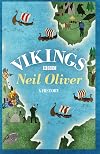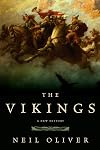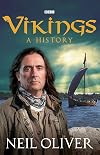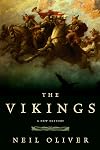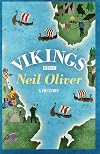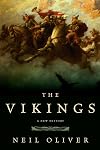
The Vikings: A New History
by Neil Oliver
On This Page
Description
The Vikings famously took no prisoners, relished cruel retribution, and prided themselves on their bloodthirsty skills as warriors. But their prowess in battle is only a small part of their story, which stretches from their Scandinavian origins to America in the West and as far as Baghdad in the East. As the Vikings did not write their own history, we have to discover it for ourselves; and that discovery, as Neil Oliver reveals, tells an extraordinary story of a people who, from the brink of show more destruction, reached a quarter of the way around the globe and built an empire that lasted nearly two hundred years. Drawing on the latest discoveries that have only recently come to light, Scottish archaeologist Neil Oliver goes on the trail of the real Vikings. Where did they emerge from? How did they really live? And just what drove them to embark on such extraordinary voyages of discovery over 1,000 years ago? The Vikings: A New History explores many of those questions for the first time in an epic story of one of the world's great empires of conquest. show lessTags
Recommendations



















Member Reviews
A serviceable popular history of the Vikings in all their glory; Oliver provides good background on the range and scope of Viking exploration and a decent overview of their cultural practices. Oliver's enthusiasm for the topic is obvious and infectious, and he's able to weave in tales from his own travels and experiences in a way that works well with the narrative. It's made me want to go off and read some books from his bibliography, and that's always a good sign.
One of the most engaging and well-written history books I've ever read, this is a perfect example of how to blend academic knowledge with popular appeal. It ties in with Neil Oliver's BBC series of the same name, which I haven't seen, but which I imagine must be pretty good as well. Oliver covers the whole sweep of Viking history, beginning with the prehistoric ancestors of the Scandinavian peoples, and builds up a picture of a society through archaeological evidence, grave goods and wall paintings. In the Viking heyday, he considers not only the stereotypical image of the raiders in dragon ships, but also looks at the less familiar side of the Vikings as merchants, traders and settlers. Drawing on monastic chronicles and sagas show more alongside more archaeology, he creates a very vivid picture of the Vikings both in their Scandinavian homeland and in their diaspora - Iceland, Greenland, the Scottish isles and Ireland, but also more unexpected places such as Russia and Constantinople. It's a marvellous introduction to the subject and I've been left itching to know more.
I haven't read anything by Oliver before, but he has certainly impressed me with his fluid writing and his deep personal engagement with the subject, which clearly fascinates him. For a longer review of this book, along with other history and fiction titles, please visit my blog:
http://theidlewoman.blogspot.co.uk/2012/12/vikings-history-neil-oliver.html show less
I haven't read anything by Oliver before, but he has certainly impressed me with his fluid writing and his deep personal engagement with the subject, which clearly fascinates him. For a longer review of this book, along with other history and fiction titles, please visit my blog:
http://theidlewoman.blogspot.co.uk/2012/12/vikings-history-neil-oliver.html show less
It’s odd to have a history book begin with a quote from Blade Runner:
I’ve seen things you people wouldn’t believe. Attack ships on fire off the shoulder of Orion. I watched c-beams glitter in the dark near the Tannhäuser Gate. All those moments will be lost in time, like tears in the rain.
But that’s part of author Neil Oliver’s theme; the Vikings explored the world from Novgorod to Newfoundland, but left precious little writing about what they saw and experienced. Some Icelandic sagas, some accounts from their enemies, and now and then runic graffiti: “Thorni bedded Helga”, for example, much like what was scrawled on the walls of my high school boy’s room (except neither the Vikings or my high school contemporaries used show more the word “bedded”). Possibly that’s more meaningful than you might think; a lot of Viking history is better understood if you think of them as vulgar and violent gangs of teenage boys, rather than grizzled old berserks.
Oliver gives plenty of background, beginning his story all the way back in the Neolithic; we’re almost halfway through the book before getting to the sack of Lindisfarne. After that, it’s mostly Viking history as it affected the British Isles – the Great Heathen Army, Clontarf, etc.; fair enough, since that’s where a lot of the accounts are set. An easy read. See Viking Hersir and Vikings in Britain. show less
I’ve seen things you people wouldn’t believe. Attack ships on fire off the shoulder of Orion. I watched c-beams glitter in the dark near the Tannhäuser Gate. All those moments will be lost in time, like tears in the rain.
But that’s part of author Neil Oliver’s theme; the Vikings explored the world from Novgorod to Newfoundland, but left precious little writing about what they saw and experienced. Some Icelandic sagas, some accounts from their enemies, and now and then runic graffiti: “Thorni bedded Helga”, for example, much like what was scrawled on the walls of my high school boy’s room (except neither the Vikings or my high school contemporaries used show more the word “bedded”). Possibly that’s more meaningful than you might think; a lot of Viking history is better understood if you think of them as vulgar and violent gangs of teenage boys, rather than grizzled old berserks.
Oliver gives plenty of background, beginning his story all the way back in the Neolithic; we’re almost halfway through the book before getting to the sack of Lindisfarne. After that, it’s mostly Viking history as it affected the British Isles – the Great Heathen Army, Clontarf, etc.; fair enough, since that’s where a lot of the accounts are set. An easy read. See Viking Hersir and Vikings in Britain. show less
I read this in preparation for a museum exhibit I may attend soon. I like to know something about the subject of an exhibit before I get there; I find it greatly increases my enjoyment of the experience. (Should I admit to studying for going to a museum? I feel like this activity clearly labels me as something, but I'm cool with that.)
What I enjoyed most in this book were the author's personal expressions of following in Viking footsteps. Whether it was sleeping in a reconstructed Bronze Age house by himself, watching the progress of a modern day Viking ship along a waterway, or standing meditatively before the remains of various Viking burials, the author was obviously touched with a sense of awe, which is compelling to read show more about.
However, much of the book feels like very vague history. I suppose this is only natural when much of the Viking era took place without contemporary recorders of the history. I think I wanted more names and hard fast facts, and there were SOME, but more towards the end of the book.
At least I know now how Bluetooth got its name.
And, it was pretty cool reading about the Viking settlements on Iceland, Greenland, and North America. show less
What I enjoyed most in this book were the author's personal expressions of following in Viking footsteps. Whether it was sleeping in a reconstructed Bronze Age house by himself, watching the progress of a modern day Viking ship along a waterway, or standing meditatively before the remains of various Viking burials, the author was obviously touched with a sense of awe, which is compelling to read show more about.
However, much of the book feels like very vague history. I suppose this is only natural when much of the Viking era took place without contemporary recorders of the history. I think I wanted more names and hard fast facts, and there were SOME, but more towards the end of the book.
At least I know now how Bluetooth got its name.
And, it was pretty cool reading about the Viking settlements on Iceland, Greenland, and North America. show less
This is an ideal overview of Viking history and their impact on European history. It begins with the prehistoric roots of the Vikings rather than starting with their raids on the rest of Europe. This promotes understanding of how they became what they were. The author also clearly separates the histories of the Norwegian, Swedish, and Danish Vikings explaining the differences in their influence on history.
The book is well written and entertaining but is more difficult to follow than other books from Neil Oliver. This is a result of the author's tendency to bounce around geographically as well as through the centuries. Another challenge is the broad cast of characters. The book includes some great illustrations which are, unfortunately, show more not very clear in the Kindle edition. show less
The book is well written and entertaining but is more difficult to follow than other books from Neil Oliver. This is a result of the author's tendency to bounce around geographically as well as through the centuries. Another challenge is the broad cast of characters. The book includes some great illustrations which are, unfortunately, show more not very clear in the Kindle edition. show less
This history of the Vikings is, I think, a good introduction to the subject. The author's passion for his subject comes through and he's obviously done a lot of research. Yet, for all that, I found the book a little light and only rarely got a feel for what life in Viking times would have been like.
A comprehensive account of the Vikings travel around the northern hemisphere from the UK, and to Ireland, Iceland, Greenland and into Russia and the med. A well written tie in to the TV series.
Their skill was in the navigation techniques that enabled them to cross the Atlantic ocean and all around the European coast, The Swedish Vikings want along the river systems of the Russian mainland, and formed the Russian state.
Whilst they could be horrifically violent, their primary reason for travel was barter and trade. Where that didn't work, they would reach for the axe to enforce their point of view.
Well worth a read
Their skill was in the navigation techniques that enabled them to cross the Atlantic ocean and all around the European coast, The Swedish Vikings want along the river systems of the Russian mainland, and formed the Russian state.
Whilst they could be horrifically violent, their primary reason for travel was barter and trade. Where that didn't work, they would reach for the axe to enforce their point of view.
Well worth a read
Members
- Recently Added By
Author Information

16+ Works 1,705 Members
Awards and Honors
Notable Lists
Work Relationships
Is an adaptation of
Common Knowledge
- Canonical title
- The Vikings: A New History
- Alternate titles
- The Vikings: A New History
- Original publication date
- 2012
- Dedication
- To Mindy Alexa-Rose Hutton and Sonny John Wallace at the start of the journey
- First words
- Some years ago I spent a day on the island of Canna, off the west coast of Scotland, in search of sea eagles.
- Last words
- (Click to show. Warning: May contain spoilers.)I cannot forget Birka Girl and the world will never forget the Vikings.
Classifications
- Genres
- History, Nonfiction, Anthropology, General Nonfiction
- DDC/MDS
- 948.022 — History & geography History of Europe Northern Europe: Norway, Sweden, Denmark, Finland, Iceland Consolidation; Migration 801-1397 Viking Period
- LCC
- DL65 .O45 — History of Europe, Asia, Africa and Oceania Northern Europe. Scandinavia History of Northern Europe. Scandinavia History By period Earliest to 1387. Scandinavian Empire. Northmen.
- BISAC
Statistics
- Members
- 343
- Popularity
- 92,463
- Reviews
- 8
- Rating
- (3.43)
- Languages
- English
- Media
- Paper, Audiobook, Ebook
- ISBNs
- 14
- UPCs
- 1
- ASINs
- 6