On This Page
Description
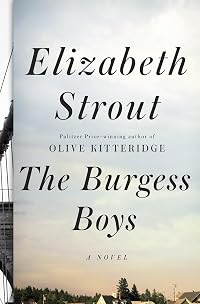
Catalyzed by a nephew's thoughtless prank, a pair of brothers confront painful psychological issues surrounding the freak accident that killed their father when they were boys, a loss linked to a heartbreaking deception that shaped their personal and professional lives.Tags
Recommendations


















Member Recommendations

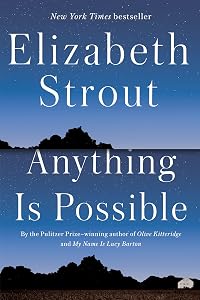
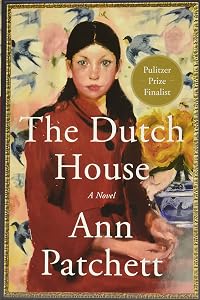
Run by Ann Patchett
BookshelfMonstrosity A dramatic incident provokes adult siblings to explore their lives and relationships in these moving and lyrical novels. While more about family than race, both books include thought-provoking meditations on the complexity of racial relations in 21st century America.
Member Reviews
The Burgess kids lost their father in a freakish accident when Jim was eight and the twins, Bob and Susan, were four. They were too young to be blamed for what happened, but each of them, in their own way, would be traumatized by the collective guilt associated with that tragic day. Now, decades later, they are still paying the price.
The boys both practice law in New York City and have left little Shirley Falls, Maine far behind. Their sister, on the other hand, has never even been to New York City and still lives in Shirley Falls with her troubled teenage son. The Burgess family, while not quite estranged, is most certainly not a close one. Zach can barely remember his uncles. And when Jim and Bob are together, Jim still takes great show more joy in belittling his brother, something he has done since at least the day their father died – behavior that the good-natured Bob seems hardly to notice.
But suddenly, all the way from Shirley Falls, Susan frantically reaches out to her brothers for support and legal help. Zach is in trouble, big trouble, and neither the boy nor his mother is emotionally prepared for what they are about to face. For the first time since their mother died, the Burgess kids are together in their old hometown, and they can barely stand the town – or each other.
With remarkable insight, Elizabeth Strout, beginning with the trauma they suffered as small children, moves up and down the Burgess family timeline to explain how they became the people they are today. Bob and Susan, neither of whom can handle stress or confrontation, are the most obviously emotionally stunted of the three, but the outwardly successful Jim is only better at hiding his problems than they are. Layer by layer, Stroud develops their distinct personalities, and when they are finally forced to confront their past, it is only a question of which of them will crack first.
The Burgess kids did not grow up to become likable adults, and Strout does not pretend that they did, but it is hard not to be sympathetic as one observes their efforts to cope with their lives. Their father, after all, was only the most obvious victim of the accident that claimed his life – there were three other victims that day.
Rated at: 4.0 show less
The boys both practice law in New York City and have left little Shirley Falls, Maine far behind. Their sister, on the other hand, has never even been to New York City and still lives in Shirley Falls with her troubled teenage son. The Burgess family, while not quite estranged, is most certainly not a close one. Zach can barely remember his uncles. And when Jim and Bob are together, Jim still takes great show more joy in belittling his brother, something he has done since at least the day their father died – behavior that the good-natured Bob seems hardly to notice.
But suddenly, all the way from Shirley Falls, Susan frantically reaches out to her brothers for support and legal help. Zach is in trouble, big trouble, and neither the boy nor his mother is emotionally prepared for what they are about to face. For the first time since their mother died, the Burgess kids are together in their old hometown, and they can barely stand the town – or each other.
With remarkable insight, Elizabeth Strout, beginning with the trauma they suffered as small children, moves up and down the Burgess family timeline to explain how they became the people they are today. Bob and Susan, neither of whom can handle stress or confrontation, are the most obviously emotionally stunted of the three, but the outwardly successful Jim is only better at hiding his problems than they are. Layer by layer, Stroud develops their distinct personalities, and when they are finally forced to confront their past, it is only a question of which of them will crack first.
The Burgess kids did not grow up to become likable adults, and Strout does not pretend that they did, but it is hard not to be sympathetic as one observes their efforts to cope with their lives. Their father, after all, was only the most obvious victim of the accident that claimed his life – there were three other victims that day.
Rated at: 4.0 show less
Events in childhood shape us for good or ill. His whole life, Bob Burgess has thought of himself as the boy who, at the age of 4, inadvertently killed his father. That thought comes with a fair degree of self-loathing and a substantial amount of just plain loathing from his siblings, his twin sister, Susan, and his older brother, Jim. Jim is now a famous and wealthy New York lawyer. Bob is also a lawyer in New York but he isn’t famous or wealthy. And Susan. Susan is sad and embittered by her life and the fact that her husband, Steve, abandoned her and their son, Zach, seven years previous. If this doesn’t sound like a recipe for a happy-families story, then try also mixing in the fact that Zach has just committed what appears to be show more a hate crime against recently arrived Somali refugees, who themselves undoubtedly find life utterly strange in Shirley Falls, Maine.
Perhaps only Elizabeth Strout could start with the above and turn it into a poignant story of love and reconciliation, of re-evaluation and realization, and varieties of forgiveness. It’s a hard story to read because you can’t help but be anxious for every one of these characters (even the self-regarding and often cruel Jim). But especially for Bob, who is so sweet and downtrodden that it is hard to even imagine him ever surfacing into his own life again.
If you’ve read other Elizabeth Strout novels, it’s likely you already know about the Burgess family. I came to this novel out of its order of publication, so it was especially nice to get a chance to fill in all the gaps in my understanding of some of Shirley Falls’ famous sons.
And like each of Elizabeth Strout’s other novels, this one is easy to recommend. show less
Perhaps only Elizabeth Strout could start with the above and turn it into a poignant story of love and reconciliation, of re-evaluation and realization, and varieties of forgiveness. It’s a hard story to read because you can’t help but be anxious for every one of these characters (even the self-regarding and often cruel Jim). But especially for Bob, who is so sweet and downtrodden that it is hard to even imagine him ever surfacing into his own life again.
If you’ve read other Elizabeth Strout novels, it’s likely you already know about the Burgess family. I came to this novel out of its order of publication, so it was especially nice to get a chance to fill in all the gaps in my understanding of some of Shirley Falls’ famous sons.
And like each of Elizabeth Strout’s other novels, this one is easy to recommend. show less
Jim Burgess was eight years old, and his siblings Susan and Bob were four, when the car they were sitting in was put in gear, hitting and killing their father. No one in the family talks about the accident which occurred forty years before the events of the novel take place, but the way each of them thinks about it colors their relationships with each other and with their spouses and children.
This is a novel about so many things: community, racial and religious hatred, small town vs. big city life, but above all, what it means to be a family. Most of the relationships depicted here are dysfunctional, most of the characters are driven by fear, yet they ring amazingly true. The narrative itself skips from one character to the next, show more probing more or less deeply into the thoughts of each one. Bob and Jim take center stage, as the title suggests, but we're not always sure that we're getting the full picture.
Elizabeth Strout has an incredible gift with language, whether she's describing the Maine countryside or a political rally or a conversation between siblings. While not all of her characters are wholly sympathetic, it is clear that she loves them and wants her readers to know and understand them.
A very good read, expecially strong on human motivations and interactions. show less
This is a novel about so many things: community, racial and religious hatred, small town vs. big city life, but above all, what it means to be a family. Most of the relationships depicted here are dysfunctional, most of the characters are driven by fear, yet they ring amazingly true. The narrative itself skips from one character to the next, show more probing more or less deeply into the thoughts of each one. Bob and Jim take center stage, as the title suggests, but we're not always sure that we're getting the full picture.
Elizabeth Strout has an incredible gift with language, whether she's describing the Maine countryside or a political rally or a conversation between siblings. While not all of her characters are wholly sympathetic, it is clear that she loves them and wants her readers to know and understand them.
A very good read, expecially strong on human motivations and interactions. show less
 This review was written for LibraryThing Early Reviewers.
The main question of the book is, "Is Jim an asshole?" For most of the book it's pretty easy for the reader to answer in the affirmative. Charismatic, intelligent Jim is Egotistical (with a capital E and maybe 4 !!!!), confrontational and self absorbed. Of course he's an asshole, as is Susan who is acerbic, confrotational and completely rejecting. Zach is certainly an asshole, or at least, acts like one. Helen is an asshole, the perfect wife and mother who cares only about appearances. Pam, the social climbing, opportunistic ex wife fits the bill. And while we're at it, lets add the Somalis. They're paranoid, judgemental, chauvanistic and ungrateful. In fact, almost everyone is an asshole - or a wimp. Like poor, downtrodden Bob. Go show more ahead, call him names, he deserves it. He has no drive, no self confidence, and as little a life as he can manage.
Elizabeth Strout's characters always seem to be one or the other, but she's gone way out of the comfort zone with this one, enough maybe to make the reader wonder about their prejudices. Are all people assholes (or wimps)? Susan loves her son and is a hard worker and a good land lady. Zach loves his mom and cries in his room at night. Helen has raised competent, independent children. Pam strikes a spark in Bob and has scientific aspirations. The Somalis come from one hellish situation after another. They are colorful, hard working, close knit, supportive of each other and love their damaged homeland. And Jim, well, Jim is Jim. You still have to answer that question.
This is a great book that keeps you wondering about people and why they do what they do. I'm thinking maybe Jodi Picoult should read a little Elizabeth Strout before she creates another one dimensional character. And Strout needs to keep on nudging our brains with her prickly, nearly untouchable characters. show less
Elizabeth Strout's characters always seem to be one or the other, but she's gone way out of the comfort zone with this one, enough maybe to make the reader wonder about their prejudices. Are all people assholes (or wimps)? Susan loves her son and is a hard worker and a good land lady. Zach loves his mom and cries in his room at night. Helen has raised competent, independent children. Pam strikes a spark in Bob and has scientific aspirations. The Somalis come from one hellish situation after another. They are colorful, hard working, close knit, supportive of each other and love their damaged homeland. And Jim, well, Jim is Jim. You still have to answer that question.
This is a great book that keeps you wondering about people and why they do what they do. I'm thinking maybe Jodi Picoult should read a little Elizabeth Strout before she creates another one dimensional character. And Strout needs to keep on nudging our brains with her prickly, nearly untouchable characters. show less
It was the delicate flow of the writing that carried me through this book, not the subject matter. I'm just sick of hearing about New York City and Baby Boomers whining about how things didn't work out the way they'd planned and how surprised they are to be growing old. I have trouble caring about people who willfully avoid self-reflection, in spite of all of the hours they spend on therapists' couches. I have trouble feeling sorry for people who've leveraged their privilege to engineer their lives just as they want them, and when (or if) they finally realize that they're vacuous people living meaningless lives, they sabotage themselves, giving themselves yet another reason to repeat the "woe is me" mantra.
That's not to say that I'm not show more just as ridiculous and self-indulgent and whiny and unpleasant. But at least I'm self-reflective enough to recognize this and to know from the start that life isn't going to have any more meaning than we assign to it, and even then we die and disappear from the Earth. Life owes me nothing, which is something the main characters of The Burgess Boys seem not to grasp.
At the center of the novel are issues of race and immigration and the ambivalence and uncertainty felt by both the Somali immigrants and the residents of the Maine town where they've settled, but to the main characters, they themselves are the center of the story. It's completely realistic because we're all the stars of our own lives and no matter how much we try to connect with the struggles of others, we're always going to feel our own personal struggles more acutely, but this reflection of reality just depresses me right now.
Of course this isn't Elizabeth Strout's fault. She just wrote a beautiful book that puts the spotlight on unpleasant people while the good people---Margaret Estaver and Abdikarim, mostly---are stuck in the shadows. But of course, because they're good people, they don't mind not being in the spotlight.
Sure, by the end the main characters seem to be on the verge of learning something important and becoming decent people, but I dislike them so much, I find it difficult even to cheer for their maybe-success. Maybe I was in a bad mood when I read this book, or maybe it's just the Gen-Xer in me who can't quite appreciate this one. This novel hardens my heart, and I don't want to have a hard heart. show less
That's not to say that I'm not show more just as ridiculous and self-indulgent and whiny and unpleasant. But at least I'm self-reflective enough to recognize this and to know from the start that life isn't going to have any more meaning than we assign to it, and even then we die and disappear from the Earth. Life owes me nothing, which is something the main characters of The Burgess Boys seem not to grasp.
At the center of the novel are issues of race and immigration and the ambivalence and uncertainty felt by both the Somali immigrants and the residents of the Maine town where they've settled, but to the main characters, they themselves are the center of the story. It's completely realistic because we're all the stars of our own lives and no matter how much we try to connect with the struggles of others, we're always going to feel our own personal struggles more acutely, but this reflection of reality just depresses me right now.
Of course this isn't Elizabeth Strout's fault. She just wrote a beautiful book that puts the spotlight on unpleasant people while the good people---Margaret Estaver and Abdikarim, mostly---are stuck in the shadows. But of course, because they're good people, they don't mind not being in the spotlight.
Sure, by the end the main characters seem to be on the verge of learning something important and becoming decent people, but I dislike them so much, I find it difficult even to cheer for their maybe-success. Maybe I was in a bad mood when I read this book, or maybe it's just the Gen-Xer in me who can't quite appreciate this one. This novel hardens my heart, and I don't want to have a hard heart. show less
Strout tries to make the Burgess family sympathetic by giving them a difficult upbringing, but it doesn’t work. They’re all assholes apart from Bob. Susan and Jim start out jerks and they stay that way. Accept it or don’t read the book.
Basically it’s a family drama that I didn’t quite understand. Jim and Bob have moved away from the flyspeck town in Maine where sister Susan has remained. They’re not close, but when Susan’s dopey kid does a stupid thing (throws a pig’s head into a makeshift mosque), both brothers come running. They’re always on the phone to each other as well. It’s weird, but it’s a device that keeps the story moving so you have to accept that, too.
Helen baffled me a bit - what does she do? She’s show more a non-working mother with grown kids and all she seems to do is garden and shop. Luckily she has a pile of money of her own, but she’s pretty blank.
Bob was harder for me to understand. Both siblings heap abuse on him that is so over-the-top that I don’t know why Bob bothers with them knowing they’ll both just insult him over and over again. He’s got a touch of the martyr about him because he got blamed for dislodging the gears of the car that ran over his father. Guilt complexes make you do penance where none is warranted I guess and boy does Bob take their shit. I’d have told them to fuck off long ago.
Jim is, to quote Al Pacino, this large-type asshole. And his self-pity when he finally gets a clue about how the universe really works is trying in the extreme. What is it about white men that makes them so dense? I guess it’s because, to some extent, the world really does revolve around them and unless they’ve had some major tragedy early in their lives, they really don’t get that the world is unfair and they can’t control anything except their own behavior. Women usually figure this out before puberty. They don’t flail into middle-age wringing their hands about how something went to shit and they couldn’t fix it. Oy vey. When Jim is the author of his own destruction I didn’t have one ounce of sympathy for him. Although the way Adriana plays him is bloodless, he can't even imagine for a second that he is being played. She knows he'll willingly be her victim and so it's hard to blame her for going for it. Too many women have too little power to make you condemn her. Hart puts a little hope in there at the end, but Helen is basically a jerk, too, and I hope they both are alone for the rest of their sad little lives.
The insight into Somali culture and their reaction to washing up on American shores was interesting and, while not absolutely germane to the plot, fleshed out the situation in Maine a lot more. I thought Susan’s reaction to visiting New York City was very much the same and thought it might make her more sympathetic, but she’s too much of a jerk to draw that parallel.
Overall though, it was an engrossing and well-written book if not full of people you’d want to have over for dinner. show less
Basically it’s a family drama that I didn’t quite understand. Jim and Bob have moved away from the flyspeck town in Maine where sister Susan has remained. They’re not close, but when Susan’s dopey kid does a stupid thing (throws a pig’s head into a makeshift mosque), both brothers come running. They’re always on the phone to each other as well. It’s weird, but it’s a device that keeps the story moving so you have to accept that, too.
Helen baffled me a bit - what does she do? She’s show more a non-working mother with grown kids and all she seems to do is garden and shop. Luckily she has a pile of money of her own, but she’s pretty blank.
Bob was harder for me to understand. Both siblings heap abuse on him that is so over-the-top that I don’t know why Bob bothers with them knowing they’ll both just insult him over and over again. He’s got a touch of the martyr about him because he got blamed for dislodging the gears of the car that ran over his father. Guilt complexes make you do penance where none is warranted I guess and boy does Bob take their shit. I’d have told them to fuck off long ago.
Jim is, to quote Al Pacino, this large-type asshole. And his self-pity when he finally gets a clue about how the universe really works is trying in the extreme. What is it about white men that makes them so dense? I guess it’s because, to some extent, the world really does revolve around them and unless they’ve had some major tragedy early in their lives, they really don’t get that the world is unfair and they can’t control anything except their own behavior. Women usually figure this out before puberty. They don’t flail into middle-age wringing their hands about how something went to shit and they couldn’t fix it. Oy vey. When Jim is the author of his own destruction I didn’t have one ounce of sympathy for him. Although the way Adriana plays him is bloodless, he can't even imagine for a second that he is being played. She knows he'll willingly be her victim and so it's hard to blame her for going for it. Too many women have too little power to make you condemn her. Hart puts a little hope in there at the end, but Helen is basically a jerk, too, and I hope they both are alone for the rest of their sad little lives.
The insight into Somali culture and their reaction to washing up on American shores was interesting and, while not absolutely germane to the plot, fleshed out the situation in Maine a lot more. I thought Susan’s reaction to visiting New York City was very much the same and thought it might make her more sympathetic, but she’s too much of a jerk to draw that parallel.
Overall though, it was an engrossing and well-written book if not full of people you’d want to have over for dinner. show less
Elizabeth Strout’s latest novel, which is due to be published on March 26, 2013, takes her usual penetrating look at ordinary people struggling with life’s big and little problems. The title “boys” are two adult brothers who grew up in small town Maine, and high-tailed it out of there as soon as they could. They’ve made their lives in the big city, both practicing law, while sister Susan has remained back home. Memory being unreliable, the three siblings don’t necessarily remember the past in the same way (although they’re each carrying a load of guilt from way back) and they certainly don’t share a unified vision of life unfolding. But this is Strout, so it isn’t so much about the conflict as the commonality. When show more they get a call that Susan and her son Zach need help, they are drawn back into that world they left behind, coping in contrasting styles with both the current situation and with their common past. Zach’s difficulty is that he pulled a prank…an offensive, intolerant, reprehensible prank with no real malice behind it that just may get him charged with a hate crime. We all can see clearly that there’s no such thing as hate in Zach; he’s a lost soul, with hurts and hang-ups that his divorced parents haven’t dealt with well, but he isn’t hateful. The question Strout may want us to ask is “Is there still such a thing as innocence in the world today?” Is it possible that Zach really did not understand the implications of throwing a pig’s head into a Muslim sanctuary? (Is it possible that Greek soccer player recently in the news did not know he was executing a Nazi salute?) Lack of understanding makes for novelistic tension on many levels in [The Burgess Boys]. It’s some of Strout’s best writing so far, and I hope she just keeps at it. show less
This review was written for LibraryThing Early Reviewers.Members
- Recently Added By
Lists

Your favorite books from the 2014 Baileys Women's Prize for Fiction
20 works; 23 members

Top Five Books of 2013
1,562 works; 721 members

Books Read in 2020
4,379 works; 124 members

Books Read in 2016
4,666 works; 197 members

To Read
617 works; 7 members

AP Lit
363 works; 6 members

Top Five Books of 2024
795 works; 264 members

Books Read in 2024
4,623 works; 126 members

Library List - Pulitzer Adjacent
40 works; 1 member
Author Information

23+ Works 33,392 Members
Elizabeth Strout (born January 6, 1956) is an American author of fiction. She was born in Portland, Maine. After graduating from Bates College, she spent a year in Oxford, England. In 1982 she graduated with honors, and received both a law degree from the Syracuse University College of Law and a Certificate of Gerontology from the Syracuse School show more of Social Work. Strout wrote Amy and Isabelle over the course of six or seven years, which when published was shortlisted for the 2000 Orange Prize and nominated for the 2000 PEN/Faulkner Award for fiction. Amy and Isabelle was made into a television movie starring Elisabeth Shue and was produced by Oprah Winfrey's studio, Harpo Films. Strout was a NEH (National Endowment for the Humanities) professor at Colgate University during the Fall Semester of 2007, where she taught creative writing. She was also on the faculty of the MFA program at Queens University of Charlotte in Charlotte, North Carolina. In 2009 Strout was honored with a Pulitzer Prize for Fiction for Olive Kitteridge, a collection of connected short stories she wrote about a woman and her immediate family who lived on the coast of Maine. Strout also wrote The Burgess Boys in 2013 which made The New York Times Best Seller List. Ms. Strout's title, My name is Lucy Barton, made the New York Times Best Seller List in 2016. Her newest title, Anything is Possible (2017), won the 2018 Story Prize. (Bowker Author Biography) show less
Some Editions
Awards and Honors
Awards
Series

Belongs to Publisher Series
Mirmanda (113)
Common Knowledge
- Canonical title
- The Burgess Boys
- Original title
- The Burgess Boys
- Original publication date
- 2013-03-26
- People/Characters
- Jim Burgess; Helen Farber Burgess; Bob Burgess; Susan Olson (nee Burgess); Zachary Olson; Mrs Drinkwater (show all 10); Dorothy Anglin; Abdikarim Ahmed; Margaret Estavers; Adriana Martic
- Important places
- Shirley Falls, Maine, USA; New York, New York, USA
- Dedication
- To my husband
Jim Tierney - First words
- My mother and I talked a lot about the Burgess Family. "The Burgess kids," she called them.
- Quotations
- Back in New York, calling from my twenty-sixth-floor apartment one evening, watching through the window as dusk touched the city and lights emerged like fireflies in the fields of buildings spread out before me, I said, "Do y... (show all)ou remember when Bob's mom sent him to a shrink? Kids talked about it on the playground. 'Bobby Burgess has to see a doctor for mentals.'"
"Kids are awful," my mother said. "Honest to God."
We did this kind of thing, repeated the stuff we knew.
And so it began. Like a cat's cradle connecting my mother to me, and me to Shirley Falls, bits of gossip and news and memories about the Burgess kids supported us.
A short pause, and then Bob said, "Yeah," his voice dropping into an understanding so quick and entire–it was his strong point, Helen thought, his odd ability to fall feetfirst into the little pocket of someone else's world... (show all) for those few seconds.
She was thin as kindling.
Traffic moved quickly and with a sense of community, as though all drivers were tenants in this fast forward-moving form.
For years Bob had lived with the shadow of his not-children appearing before him.
"Stay in the present," Elaine would say
Bob's ancient inner Bobness had returned.
"You know what Jimmy would say, don't you? He'd say there's no crying in baseball."
By the time the bail commissioner showed up, Bob's weariness seemed like a large wet coat he was wearing.
Zach came through the door, his face as white as paper.
"I thought, Jesus, if you can't speak the truth in a shrink's office, where can you?"
How could he describe what he felt? The unfurling of an ache so poignant it was almost erotic, this longing, the inner silent gasp as though in the face of something unutterably beautiful, the desire to put his head down on t... (show all)he big loose lap of this town, Shirley Falls.
He came to understand this had a danger altogether different from the dangers in the camp. Living in a world where constantly one turned and touched incomprehension–they did not comprehend, he did not comprehend–gave the ... (show all)air the lift of uncertainty and this seemed to wear away something in him, always he felt unsure of what he wanted, what he thought, even what he felt.
They were not from Maine, Susan remembered that, and they had seemed–filing into a pew each Christmas Sunday service–as exquisite as a flock of foreign birds.
The thick sugary pull of life had gone.
The Burgess boys rode up the turnpike as twilight arrived. It arrived gently, the sky remaining a soft blue as the trees along either side of the unfolding pavement darkened.
What was this thing that Jimmy had? The intangible, compelling part of Jimmy?
It's that he showed no fear, Bob realized. He never had. And people hated fear. People hated fear more than anything.
You couldn't fake it. It showed in the glance of an eye, in the way you entered a room, walked up the steps to a bandstand.
Always on the exit ramp, Susan had once said of Jim.
"Work toward something. That's how it's done. You belong to society, you give to society."
A silence sat in the room that felt so momentarily present and pulsating Bob didn't dare disturb it by raising his glass.
The key to contentment was to never ask why; she had learned that long ago.
she learned–freshly, scorchingly–of the privacy of sorrow. It was as though she had been escorted through a door into some large and private club that she had not known existed. Women who miscarried. Society did not care ... (show all)much for them. It really didn't. And the women in the club mostly passed each other silently. People outside the club said, "You'll have another one."
The snow sparkled, and the river sparkled, as though diamonds had been openhandedly flung throughout the air.
A crazy parent, America was. Good and openhearted one way, dismissive and cruel in others.
Margaret Estaver's office looked like Margaret. Unorganized, and gentle, and welcoming.
But by October there were many days when the swell of rightness, loose-limbedness, and gentle gravity came to him.
So she lay awake at night and at times there was a curious peacefulness to this, the darkness warm as though the deep violet duvet held its color unseen, wrapping around Pam some soothing aspect of her youth, as her mind wand... (show all)ered over a life that felt puzzlingly long; she experienced a quiet surprise that so many lifetimes could be fit into one.
No exchange rate for the confidence of youth.
Memory. Open-palmed it passed before her scenes, and then would close, taking away the beginning, the end, the framework these scenes existed within.
And it was too late. No wants to believe something is too late, but it is always becoming too late, and then it is.
This tiny piece of knowledge was nothing more than a dust particle hanging in the air.
Shame, bone-deep, tightened his arms.
Helen, feeling this was contained in the face of her sister-in-law, thought the word Rube, and then felt very tired deep down inside herself. She did not want to think that, or be that way, and she thought it was awful... (show all) such a word came to her, and no sooner did she think that than to her horror she thought the word Nigger, which had sometimes happened to her before, Nigger, nigger, as though her mind had Tourette's syndrome and these terrible things went uncontrollably through it.
His first instinct was to get up and close the door, and the very nature of the complaint made this woman dangerous. She could have been sitting there quietly holding an automatic machine gun in her lap; to be alone with her ... (show all)would be like handing her another magazine of bullets.
She said kindly, "I think there is no perfect way to live,"
Everyone on the train seemed innocent and dear to him, their eyes unfocused with morning reveries that were theirs alone, perhaps words spoken to them earlier, or words they dreamed of speaking; some read newspapers, many lis... (show all)tened through earbuds to their own soundtrack, but most stared absently as Bob did–and he was moved by the singularity and mystery of each person he saw.
Her face had the naked look of someone whose glasses were removed
"What am I going to do, Bob? I have no family."
"You have family," Bob said. "You have a wife who hates you. Kids who are furious with you. A brother and sister who make you insane." - Last words
- (Click to show. Warning: May contain spoilers.)When Bob fell asleep on Susan's couch he held in his hands - held on to it all night - his phone, set on vibrate, in case Jim needed him, but the phone remained unmoving and unblinking and it stayed that way as the first pale light crept unapologetically beneath the blinds.
Classifications
Statistics
- Members
- 2,687
- Popularity
- 6,900
- Reviews
- 219
- Rating
- (3.69)
- Languages
- 9 — Catalan, Dutch, English, Finnish, German, Italian, Polish, Portuguese, Spanish
- Media
- Paper, Audiobook, Ebook
- ISBNs
- 30
- ASINs
- 17
