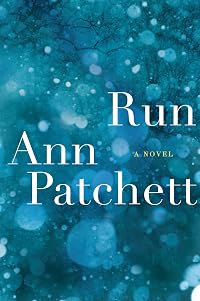
Run
by Ann Patchett
On This Page
Description
"Engaging, surprising, provocative and moving...a thoroughly intelligent book, an intimate domestic drama that nonetheless deals with big issues touching us all: religion, race, class, politics and, above all else, family." — Washington PostFrom New York Times bestselling author Ann Patchett comes an engrossing story of one family on one fateful night in Boston where secrets are unlocked and new bonds are formed.
Since their mother's death, Tip and Teddy Doyle have been raised by their show more loving possessive and ambitions father. As the former mayor of Boston, Bernard Doyle wants to see is sons in politics, a dream the boys have never shared. But when an argument in a blinding New England snowstorm inadvertently causes an accident that involves a stranger and her child, all Bernard Doyle cares about is his ability to keep his children—all his children—safe.
Set over a period of twenty-four hours, Run takes us from the Museum of Comparative Zoology at Harvard to a home for retired Catholic Priests in downtown Boston. It shows us how worlds of privilege and poverty can coexist only blocks apart from each other, and how family can include people you've never even met. As an in her bestselling novel, Bel Canto, Ann Patchett illustrates the humanity that connects disparate lives, weaving several stories into one surprising and endlessly moving narrative. Suspenseful and stunningly executed, Run is ultimately a novel about secrets, duty, responsibility, and the lengths we will go to protect our children.
. show less
Tags
Recommendations
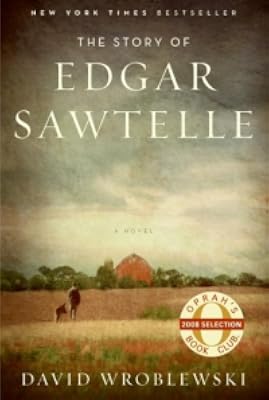
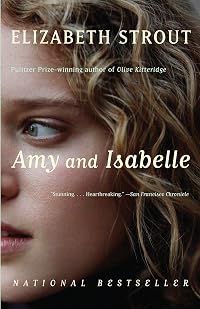
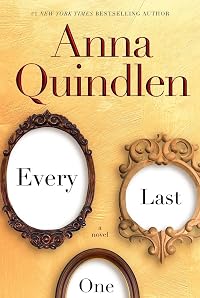


Member Recommendations
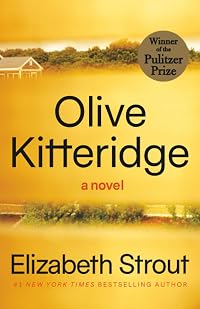
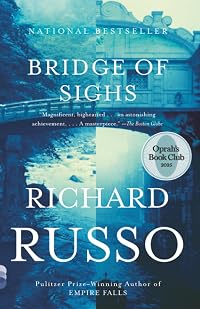
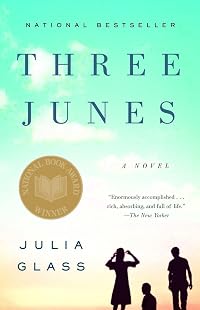
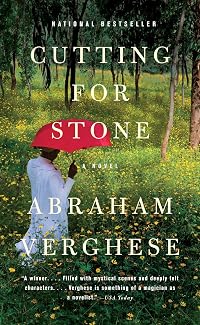
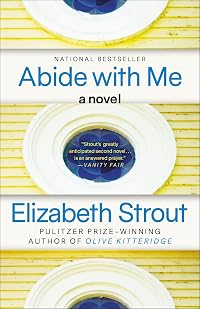
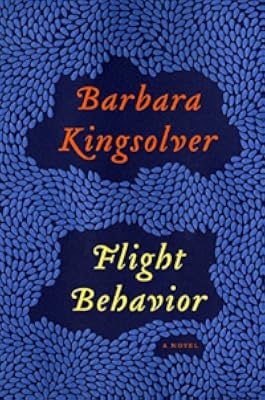
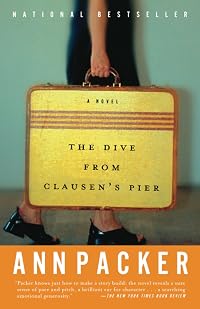
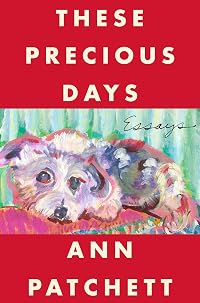
BookshelfMonstrosity A dramatic incident provokes adult siblings to explore their lives and relationships in these moving and lyrical novels. While more about family than race, both books include thought-provoking meditations on the complexity of racial relations in 21st century America.
Member Reviews
While slow in places, this is a very beautiful book, reminiscent in ways of Agee's A Death in the Family--not in terms of the story, but in the way it reveals so many characters. I love that Patchett doesn't resort to chapters headed by the characters' names but just shifts seamlessly through the hearts and minds of the different family members.
Kenya will be on my list of all-time favorite characters. What a beautifully written young girl with an amazing spirit.
Also, so many layers of maternal onion! At the end, it all comes full circle. Without spoilers, it is managed in a way that normally I'd find trite, but instead I was in tears. Patchett often makes me cry. Her exploration of family dynamics is exceptional (see The Dutch House). I show more love that Run is about Kenya, but also about them all: running for office, Uncle Sullivan in the hospital telling Teddy to run, etc. There's also an undercurrent of the idea of penance, which in Patchett's hands transcends religion and seems to be part and parcel of our ability to participate in humanity. show less
Kenya will be on my list of all-time favorite characters. What a beautifully written young girl with an amazing spirit.
Also, so many layers of maternal onion! At the end, it all comes full circle. Without spoilers, it is managed in a way that normally I'd find trite, but instead I was in tears. Patchett often makes me cry. Her exploration of family dynamics is exceptional (see The Dutch House). I show more love that Run is about Kenya, but also about them all: running for office, Uncle Sullivan in the hospital telling Teddy to run, etc. There's also an undercurrent of the idea of penance, which in Patchett's hands transcends religion and seems to be part and parcel of our ability to participate in humanity. show less
Doyle, the former mayor of Boston, and his wife Bernadette wanted a big family like the Irish Catholic one Bernadette was born into, but when they suffered infertility problems after having one son, they ended up adopting two small black boys. Then Bernadette died and Doyle was left alone with his sons, for whom he had ambitions they weren't necessarily inclined to go along with. Until, one snowy day many years later, an event happened that would change everything for them all: Tip, one of the sons, was nearly run over by a car, only to be saved when a strange woman pushed him out of the way.
I don't want to reveal too much more of what happens, but, honestly, no plot summary is remotely going to do this one justice. It's a wonderfully show more written, well-characterized, quietly thoughtful novel about family and the chance events that shape our lives and... well, about a lot of other things as well. But mostly about family.
This is the first thing of Patchett's that I've read, but it's definitely not going to be the last. I can see why she's so highly regarded. show less
I don't want to reveal too much more of what happens, but, honestly, no plot summary is remotely going to do this one justice. It's a wonderfully show more written, well-characterized, quietly thoughtful novel about family and the chance events that shape our lives and... well, about a lot of other things as well. But mostly about family.
This is the first thing of Patchett's that I've read, but it's definitely not going to be the last. I can see why she's so highly regarded. show less
I'm starting to believe Ann Patchett will never live up to what she achieved with Bel Canto. The quality of her writing in Run remains very good, but the plot suffers in some serious (to me) ways.
Run is a good story about a family. When the story begins, we have Bernard Doyle, former mayor, fathering his three children. Sullivan, his mostly estranged biological son and two black brothers adopted as babies. Mrs. Doyle has died long ago, and the two younger boys are at University. There is a tragic car accident that reconfigures family relationships and dynamics. I was enjoying the story but ran into difficulties when a major plot element is revealed by an imagined conversation with a dead person. Also, the ending was disappointing in show more some aspects. Without spoiling anything, the way two of the brothers changed their lives was not realistic. show less
Run is a good story about a family. When the story begins, we have Bernard Doyle, former mayor, fathering his three children. Sullivan, his mostly estranged biological son and two black brothers adopted as babies. Mrs. Doyle has died long ago, and the two younger boys are at University. There is a tragic car accident that reconfigures family relationships and dynamics. I was enjoying the story but ran into difficulties when a major plot element is revealed by an imagined conversation with a dead person. Also, the ending was disappointing in show more some aspects. Without spoiling anything, the way two of the brothers changed their lives was not realistic. show less
The almost melodious writing style of Ann Patchett is, of course, this book's best feature. And, as I am coming to understand is typical Patchett, the story before the story truly brought me in: a stolen Virgin Mary statue, a question of what it means to be family, rife with sibling rivalry, single parenting and trans-racial adoption. That was a story that was full of potential.
And I really liked huge chunks of Run, but most of it felt just like that -- palpable potential resting underneath: the woman who claimed to be the birth mother, and was she or was she just a groupie and the creepy, loving way she stalked her biologic sons. The saintly, dying Catholic priest uncle, and the did he or didn't he actually have the power to heal the show more sick. The forgotten mayor of Boston, fading into obscurity, trying to live by proxy through his sons. The prodigal son, returned home, a murderer and a thief, but possibly a modern Robin Hood, with a heart of gold and a knack for saving children. The problem is that by shifting around between all of these stories, none of them were really ever given an opportunity to come into their own.
The ending came too quickly and, as I'm also beginning to realize is typical Patchett, with a completely unnecessary time jump that left way too much unexplored. I would read the heck out of a story about an ichthyologist turned doctor turned ichthyologist (goodness knows I'm one quarter-life crisis away from writing an autobiography about the topic) and Patchett played with a lot of interesting concepts about why people go into medicine in specific, and careers as a chance of penance in general, but it A) had nothing to do with the first 300 pages and B) she didn't exactly do the topic justice in the 10 pages she had to deal with it. It added little to the book.
I'm giving Ann Patchett's fiction one more chance before I resign myself to the idea that it was truly Lucy Grealy who made Truth & Beauty come alive. show less
And I really liked huge chunks of Run, but most of it felt just like that -- palpable potential resting underneath: the woman who claimed to be the birth mother, and was she or was she just a groupie and the creepy, loving way she stalked her biologic sons. The saintly, dying Catholic priest uncle, and the did he or didn't he actually have the power to heal the show more sick. The forgotten mayor of Boston, fading into obscurity, trying to live by proxy through his sons. The prodigal son, returned home, a murderer and a thief, but possibly a modern Robin Hood, with a heart of gold and a knack for saving children. The problem is that by shifting around between all of these stories, none of them were really ever given an opportunity to come into their own.
The ending came too quickly and, as I'm also beginning to realize is typical Patchett, with a completely unnecessary time jump that left way too much unexplored. I would read the heck out of a story about an ichthyologist turned doctor turned ichthyologist (goodness knows I'm one quarter-life crisis away from writing an autobiography about the topic) and Patchett played with a lot of interesting concepts about why people go into medicine in specific, and careers as a chance of penance in general, but it A) had nothing to do with the first 300 pages and B) she didn't exactly do the topic justice in the 10 pages she had to deal with it. It added little to the book.
I'm giving Ann Patchett's fiction one more chance before I resign myself to the idea that it was truly Lucy Grealy who made Truth & Beauty come alive. show less
After trying for years to create a large family Bernadette and Bernard Doyle have only had one child. They decide to adopt two black boys, Tip and Teddy, to add to their small family of three. Then Bernadette dies and the newly widowed Bernard is left to raise his three young sons on his own. The book really kicks into gear when the two adopted sons are in college. One night a stranger shoves Tip out of the way of an oncoming car and he narrowly escapes disaster. This act forces the Doyle family’s world to intersect with the strangers in some unexpected ways.
The majority of the action takes place in a single 24 hour period, though it feels like a much longer stretch of time. Patchett really manages to develop each of her characters, show more allowing the reader to become invested in their lives. Out of everyone, Tip’s story really resonated with me the most. He’s intelligent and intense while his brother Teddy is endearing and easy to get along with.
This book was all about family to me. It questions what makes someone family and what you’re willing to do for family. It made me think about what creates the bonds between people and how experience or even coincidence sometimes makes strangers become family. It was interesting to read an interview with the author saying that to her the book was about politics. It’s fascinating that books manage to take on lives of their own after they’re written and can mean different things to each reader.
Side Note: If you’re looking for a Patchett book to start with, Bel Canto is my absolute favorite of hers. show less
The majority of the action takes place in a single 24 hour period, though it feels like a much longer stretch of time. Patchett really manages to develop each of her characters, show more allowing the reader to become invested in their lives. Out of everyone, Tip’s story really resonated with me the most. He’s intelligent and intense while his brother Teddy is endearing and easy to get along with.
This book was all about family to me. It questions what makes someone family and what you’re willing to do for family. It made me think about what creates the bonds between people and how experience or even coincidence sometimes makes strangers become family. It was interesting to read an interview with the author saying that to her the book was about politics. It’s fascinating that books manage to take on lives of their own after they’re written and can mean different things to each reader.
Side Note: If you’re looking for a Patchett book to start with, Bel Canto is my absolute favorite of hers. show less
This novel was written over a decade ago (I checked), and yet it feels oddly present in its exploration of themes like family, politics, race, and poverty. It makes for hard reading at times - the novel opens with the death of a mother and a father grappling with his grief and raising their three sons - and yet is also innately hopeful. Ann Patchett has a way of creating characters which both represent larger ideas and yet are also believable as individuals. This book made for great reading and contains a story I won't soon forget.
I had never read anything by Ann Patchett before, but I’d heard a lot about her. When I saw the offer on Book Club Girl for a copy and to participate in a discussion this Wednesday with Ann, I was extremely excited, and I eagerly signed up. I am certainly happy about that!
The book opens with a chapter about the family’s origins. We quickly learn that Doyle and Bernadette only have one natural son and, since she wants more children, they have adopted two little black boys, quite at odds in appearance from them. Bernadette passes away in the first few pages of the book and Doyle and the boys, Tip and Teddy, are arguing after a Jesse Jackson speech when a car comes out of nowhere, causing an accident that does more to their family than show more just sprain Tip’s ankle.
There is so much to this book, it’s hard to know where to start. It has so many reflections, not just on the Doyle family, but on politics, on poverty, on loss, on living in the spotlight. The characters are wonderful; they have their flaws and they feel human. Kenya was my favorite, though. She’s confused, determined, and so very lost at the beginning of the book. It’s fascinating to see her worm her way into everyone’s hearts without even being aware that she’s doing it, like she just belongs there.
At the end of the book, there’s an interview with Ann Patchett where she says that the book is really, in her mind, about politics. I hadn’t thought that until I saw her response, but it clicked in my head. Not only is it about governmental politics, as in Doyle’s status as former mayor that affects the whole family in both small and large ways, but family politics, how they all fit together and who decides where the family is heading. We can clearly see the gap between rich and poor and how interchangeable those states of being are, which is an incredibly important message that Patchett gets across beautifully. Not to mention the dual meaning of the title; running as in Kenya’s skill, or running away, or as in running for an elected office. Very, very clever.
What a piece of literature this is; as I’ve said before with other books, I can see the paper topics scrolling through in my mind now. I can also say that I thoroughly enjoyed this book as I was reading and even if I didn’t have former English major auto-analyze built in, I would have loved it anyway. I’m very excited to read Bel Canto by this author now; I’ve got it sitting in my TBR pile waiting. In the meantime, I’ll be recommending Run.
http://chikune.com/blog/?p=247 show less
The book opens with a chapter about the family’s origins. We quickly learn that Doyle and Bernadette only have one natural son and, since she wants more children, they have adopted two little black boys, quite at odds in appearance from them. Bernadette passes away in the first few pages of the book and Doyle and the boys, Tip and Teddy, are arguing after a Jesse Jackson speech when a car comes out of nowhere, causing an accident that does more to their family than show more just sprain Tip’s ankle.
There is so much to this book, it’s hard to know where to start. It has so many reflections, not just on the Doyle family, but on politics, on poverty, on loss, on living in the spotlight. The characters are wonderful; they have their flaws and they feel human. Kenya was my favorite, though. She’s confused, determined, and so very lost at the beginning of the book. It’s fascinating to see her worm her way into everyone’s hearts without even being aware that she’s doing it, like she just belongs there.
At the end of the book, there’s an interview with Ann Patchett where she says that the book is really, in her mind, about politics. I hadn’t thought that until I saw her response, but it clicked in my head. Not only is it about governmental politics, as in Doyle’s status as former mayor that affects the whole family in both small and large ways, but family politics, how they all fit together and who decides where the family is heading. We can clearly see the gap between rich and poor and how interchangeable those states of being are, which is an incredibly important message that Patchett gets across beautifully. Not to mention the dual meaning of the title; running as in Kenya’s skill, or running away, or as in running for an elected office. Very, very clever.
What a piece of literature this is; as I’ve said before with other books, I can see the paper topics scrolling through in my mind now. I can also say that I thoroughly enjoyed this book as I was reading and even if I didn’t have former English major auto-analyze built in, I would have loved it anyway. I’m very excited to read Bel Canto by this author now; I’ve got it sitting in my TBR pile waiting. In the meantime, I’ll be recommending Run.
http://chikune.com/blog/?p=247 show less
Members
- Recently Added By
Lists

Best 21st Century Books (So Far)
670 works; 86 members

Books With a Twist
69 works; 46 members

A Novel Cure
742 works; 23 members

Worst books read in 2011
36 works; 20 members

Books I Own But Haven't Read
144 works; 2 members

Books Bought & Received as Gifts in 2014
81 works; 1 member

Books Read in 2024
4,623 works; 126 members
Author Information

31+ Works 55,516 Members
Ann Patchett was born on December 2, 1963. She received the Orange Prize for Fiction and the PEN/Faulkner Award in 2002 for her novel Bel Canto. Her other novels include The Patron Saint of Liars, Taft, The Magician's Assistant, and State of Wonder. She has also written several nonfiction works including Truth and Beauty: A Friendship, The Getaway show more Car, The Bookshop Strikes Back, and This Is the Story of a Happy Marriage. Ann's title's Commonweatlth and The Patron Saint of Liars made the New York Time bestseller list. (Bowker Author Biography) show less
Some Editions
Awards and Honors
Awards
Common Knowledge
- Canonical title*
- Dans la course
- Original title
- Run
- Original publication date
- 2007 (1e édition originale américaine, HarperCollins Publishers) (1e édition originale américaine, HarperCollins Publishers); 2010- (1e traduction et édition française, Jacquline Chambon) (1e traduction et édition française, Jacquline Chambon)
- People/Characters
- Tip Doyle; Teddy Doyle; Sullivan Doyle; Tennessee Moser; Kenya Moser; Bernard Doyle (show all 10); Father Edward Sullivan; Bernadette Doyle; Doreen Clark Lovell; Billy Lovell
- Important places
- Boston, Massachusetts, USA; Harvard University, Cambridge, Massachusetts, USA; Cambridge, Massachusetts, USA; Massachusetts, USA
- Dedication
- To my sister, Heather Patchettand my stepmother, Jerri Patchett
- First words
- Bernadette had been dead two weeks when her sisters showed up in Doyle's living room asking for the statue back.
- Quotations
- Beg all you want, Doyle never read more than a chapter a night.
Bernadette's luck had been her life, her love for her husband and her son's, the joy in her home. Her existence did not add up to a handful of tests meant to win her place in heaven.
That was not to say they were all thinking noble thought of medical science. Most of them, he knew them well enough to say, were probably thinking of dinner about now, about cleaning out their apartments and getting the hell ... (show all)out of Baltimore.
Jackson did't lecture so much as hypnotize. Once you gave over to the swinging cadence of his oratory you found yourself agreeing with ideas you could never completely remember. Bit by bit Jackson took over Doyle, washed him ... (show all)down in the waves of mellifluous repetition until the speaker and the listener were one. (p. 32)
Over the course of his lifetime, God and Father Sullivan had changed together. When he was a young priest teaching American and European history to Catholic boys and coaching basketball in the winter and baseball in the sprin... (show all)g, God was made of sterner stuff. (p. 126)
It seemed from this moment of repose that God may well have been life itself. God may have been the baseball games, the beautiful cigarette he smoked alone after checking to see that all the bats had been put back behind the ... (show all)closet door. God could have been the masses in which he told people how best to prepare for the glorious life everlasting, the one they couldn't see as opposed to the one they were living at that exact moment in the pews of the church hall, washed over in the stained glass light. How wrongheaded it seemd now to think that the thrill of heartbeat and breath were just a stepping stone to something greater. What could be greater than the armchair, the window, the snow? Life itself had been holy. We had been brought forth from nothing to see the face of God and in his life Father Sullivan had seen it miraculously for eighty-eight years. Why wouldn't it stand to reason that this had been the whole of existence and now he would retreat back to the nothingness he had come from in order to let someone else have their turn at the view? This was not the workings of disbelief. It was instead the final, joyful realization of all he had been given. It would be possible to overlook just about anything if you were trained to constantly strain forward to see the power and the glory that was waiting up ahead. What a shame it would have been to miss God while waiting for Him. (pp. 131-132)
Maybe that was the definition of life everlasting: the belief that the next generation would carry your work forward. (p. 133) - Last words
- (Click to show. Warning: May contain spoilers.)Maybe he never fully realized how fast she was until he had seen her at a distance, and so the one who was awake went to get the others up so that they could all stand at the window together and watch her run.
- Blurbers
- Yardley, Jonathan (Washington Post) (Washington Post); Maslon, Janet (New York Times) (New York Times)
- Original language*
- Anglais (Etats-Unis) (Etats-Unis)
*Some information comes from Common Knowledge in other languages. Click "Edit" for more information.
Classifications
Statistics
- Members
- 4,103
- Popularity
- 3,767
- Reviews
- 193
- Rating
- (3.61)
- Languages
- 6 — Dutch, English, French, German, Italian, Swedish
- Media
- Paper, Audiobook, Ebook
- ISBNs
- 37
- ASINs
- 21