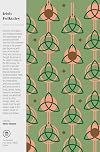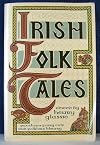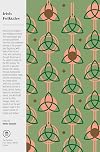
Irish Folktales
by Henry Glassie
On This Page
Description
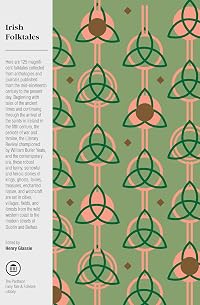
Fantasy. Fiction. Literature. Mythology. HTML:Here are 125 magnificent folktales collected from anthologies and journals published from the mid-nineteenth century to the present day. Beginning with tales of the ancient times and continuing through the arrival of the saints in Ireland in the fifth century, the periods of war and family, the Literary Revival championed by William Butler Yeats, and the contemporary era, these robust and funny, sorrowful and heroic stories of kings, ghosts, show more fairies, treasures, enchanted nature, and witchcraft are set in cities, villages, fields, and forests from the wild western coast to the modern streets of Dublin and Belfast.Edited by Henry Glassie
With black-and-white illustrations throughout
Part of the Pantheon Fairy Tale and Folklore Library. show less
Tags
Recommendations













Member Reviews
This is an amazing collection of folk and fairy tales, featuring everything from historical figures and bog men to ghosts and the fae folk. There are sections for "Faith" ("Saints" and "The Priest and His People"), "Wit" ("The Wise and the Foolish," "Wits and Poets") and "Mystery" ("Death and Tokens," "Ghosts," "Away").
Each tale has been well-documented both as the teller, what County, and who collected it. Many of the collectors are well-known Irish folklorists, including Lady Gregory and Henry Glassie, and the tales range from the 1830's to the 1970's. I found it especially poignant to read the earliest ones or the ones recorded just in the early years of the Famine.
Another thing that kept me drawn into these tales is the dialect that show more is recorded, or at least the way of speaking. An example is from "Daniel Crowley and the Ghosts" from 1892 in Kerry:
"There lived a man in Cork whose name was Daniel Crowley. He was a coffinmaker by trade and had a deal of coffins laid by, so that his apprentice might sell them when himself was not at home."
There was also a Cinderella-like tale towards the end called "Fair, Brown, and Trembling" that features two older sisters who consign the youngest (and most beautiful) to be a scullery maid. They are the daughters of the King Aedh Curucha. When Trembling is aided by the henwife, she goes to the door of the church three different Sundays wearing three different gowns and riding three different horses. But the similarities are quite striking between the two tales. show less
Each tale has been well-documented both as the teller, what County, and who collected it. Many of the collectors are well-known Irish folklorists, including Lady Gregory and Henry Glassie, and the tales range from the 1830's to the 1970's. I found it especially poignant to read the earliest ones or the ones recorded just in the early years of the Famine.
Another thing that kept me drawn into these tales is the dialect that show more is recorded, or at least the way of speaking. An example is from "Daniel Crowley and the Ghosts" from 1892 in Kerry:
"There lived a man in Cork whose name was Daniel Crowley. He was a coffinmaker by trade and had a deal of coffins laid by, so that his apprentice might sell them when himself was not at home."
There was also a Cinderella-like tale towards the end called "Fair, Brown, and Trembling" that features two older sisters who consign the youngest (and most beautiful) to be a scullery maid. They are the daughters of the King Aedh Curucha. When Trembling is aided by the henwife, she goes to the door of the church three different Sundays wearing three different gowns and riding three different horses. But the similarities are quite striking between the two tales. show less
As a basic guide to Irish folklore, you could do a lot worse than this. The introduction gives a nice overview of the history of folklore collection and its development from the early days of good old T Crofton Croker to the current folklore collection in UCD. Then a marvelous selection of stories big and small, from all over the country, from the many collectors and of many varieties. If you're reading this kind of thing, you have to make allowances for the repetitions that arise from oral telling which translates poorly to the written form, but enough of the stories come perfectly formed, whether through the work of the collector or the skill of the teller, to arouse nothing but respect and admiration. There's a long version of the show more the old King Of The Cats story that is perfect despite the familiarity. There is a flabbergasting epic about a wicked blacksmith who makes a deal with the devil that must have kept entire communities snowed in for months crowded eagerly round the storyteller to hear what happened next. A useful and enjoyable handbook. show less
I loved the stories, but I wanted more in the way of an explanation for most of them. Some were so strange that I wanted to know the significance. Why was this story included?
Overall, it is a great collection, though.
Overall, it is a great collection, though.
These stories are certainly not polished. Most are obviously written down directly from the oral telling, which may be part of its charm. However, it may also cause a reader to roll their eyes. I found some of the stories down right boring and others obsure. I give it 3 stars.
A fine collection of tales from the Emerald Islands. Not the best out there, but worth reading if you love Ireland or Fairy Tales.
1. Robust and funny, sorrowful and heroic, this collection of 125 lively tales tells the story of Ireland. Spanning the centuries from the first wars of the ancient Irish kings through the Celtic Renaissance of Yeats to our own time, they are set in cities, villages, fields and forests from the wild Gaelic western coast to the modern streets of Dublin and Belfast. Source: GoodReads
2. Here are 125 magnificent folktales collected from anthologies and journals published from the mid-nineteenth century to the present day. Beginning with tales of the ancient times and continuing through the arrival of the saints in Ireland in the fifth century, the periods of war and family, the Literary Revival championed by William Butler Yeats, and the show more contemporary era, these robust and funny, sorrowful and heroic stories of kings, ghosts, fairies, treasures, enchanted nature, and witchcraft are set in cities, villages, fields, and forests from the wild western coast to the modern streets of Dublin and Belfast. Source: Knopf Doubleday Publishing Group eBook show less
2. Here are 125 magnificent folktales collected from anthologies and journals published from the mid-nineteenth century to the present day. Beginning with tales of the ancient times and continuing through the arrival of the saints in Ireland in the fifth century, the periods of war and family, the Literary Revival championed by William Butler Yeats, and the show more contemporary era, these robust and funny, sorrowful and heroic stories of kings, ghosts, fairies, treasures, enchanted nature, and witchcraft are set in cities, villages, fields, and forests from the wild western coast to the modern streets of Dublin and Belfast. Source: Knopf Doubleday Publishing Group eBook show less
Members
- Recently Added By
Lists

Shaking a Leg
111 works; 3 members
Author Information

24+ Works 1,682 Members
Henry Glassie is College Professor of Folklore at Indiana University.
Some Editions
Series
Belongs to Publisher Series
Work Relationships
Has as a commentary on the text
Common Knowledge
- Canonical title
- Irish Folktales
- Original publication date
- 1985
- People/Characters
- Carroll O'Daly; Finn MacCumhaill; Daniel Crowley; Bridget Purcell; Paudyeen O'Kelly; Oliver Cromwell (show all 7); Patrick Sarsfield
- Important places
- Knockfierna, County Limerick, Ireland (mountain); Inishkeen, County Monaghan, Ireland (a.k.a., Inniskeen); County Wicklow, Ireland; Ireland
- Important events
- 1798 Rebellion; Beheading game
- Dedication
- For Polly, Harry, Lydia, and Ellen Adair
- First words
- It is a very good thing not to be any way in dread of the fairies, for without doubt they have then less power over a person.
- Last words
- (Click to show. Warning: May contain spoilers.)He got up and went home and he never cut a rod from that day to this.
- Original language
- English
Classifications
- Genre
- Fiction and Literature
- DDC/MDS
- 398.209415 — Society, government, & culture Customs, etiquette & folklore Folklore & Folktales Folk literature History, geographic treatment, biography European folktales Folklore of the British Isles (other than England) Folklore of Ireland
- LCC
- GR153.5 .I75 — Geography, Anthropology and Recreation Folklore Folklore
- BISAC
Statistics
- Members
- 843
- Popularity
- 32,593
- Reviews
- 7
- Rating
- (3.52)
- Languages
- English, Italian
- Media
- Paper, Ebook
- ISBNs
- 11
- ASINs
- 5