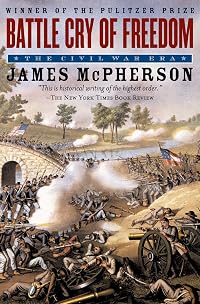
Battle Cry of Freedom: The Civil War Era
by James M. McPherson
Oxford History of the United States (6)
On This Page
Description
"Now featuring a new Afterword by the author, this handy paperback edition of the Pulitzer Prize-winning Battle Cry of Freedom is without question the definitive one-volume history of the Civil War.James McPherson's fast-paced narrative fully integrates the political, social, and military events that crowded the two decades from the outbreak of one war in Mexico to the ending of another at Appomattox. Packed with drama and analytical insight, the book vividly recounts the momentous episodes show more that preceded the Civil War including the Dred Scott decision, the Lincoln-Douglas debates, John Brown's raid on Harper's Ferry. From there it moves into a masterful chronicle of the war itself--the battles, the strategic maneuvering by each side, the politics, and the personalities. Particularly notable are McPherson's new views on such matters as the slavery expansion issue in the 1850s, the origins of the Republican Party, the causes of secession, internal dissent and anti-war opposition in the North and the South, and the reasons for the Union's victory.
The book's title refers to the sentiments that informed both the Northern and Southern views of the conflict. The South seceded in the name of that freedom of self-determination and self-government for which their fathers had fought in 1776, while the North stood fast in defense of the Union founded by those fathers as the bulwark of American liberty. Eventually, the North had to grapple with the underlying cause of the war, slavery, and adopt a policy of emancipation as a second war aim. This ""new birth of freedom,"" as Lincoln called it, constitutes the proudest legacy of America's bloodiest conflict.
This authoritative volume makes sense of that vast and confusing ""second American Revolution"" we call the Civil War, a war that transformed a nation and expanded our heritage of liberty."
. show less
Tags
Recommendations







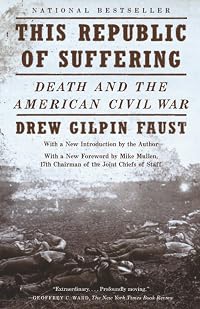


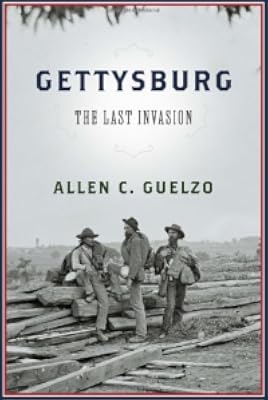
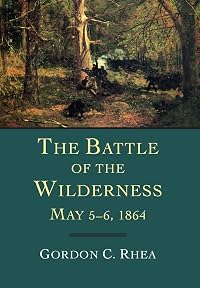
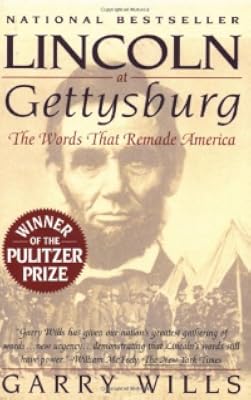






Member Recommendations
Ulysses S. Grant : Memoirs and Selected Letters : Personal Memoirs of U.S. Grant / Selected Letters, 1839-1865 by Ulysses S. Grant
wildbill This is the Library of America edition of Grant's memoirs which I think is preferable. Any edition of Grant's memoirs will be informative and enjoyable.
50

wcfreels Just finished it for the first time last week. Best read on the Civil War I've ever read. So well written that, unlike the soldiers, I hated to see it end.
20


charlie68 History of the Underground Railroad during the same era.
11
Member Reviews
This is a really magisterial overview of the US Civil War, especially when one considers the sheer amount of material that McPherson compresses down into less than a thousand pages. I was left longing for coverage of other aspects of the war—what women were doing; the social impact; more things from an African-American perspective—but McPherson clearly set out to write the political and military history of the war, and in that he succeeds triumphantly. It's clearly a work of synthesis—my impression was that the majority even of his quotes from primary sources came from other secondary sources—but McPherson seems to have weighed them all well, and he gives arguments, ideologies and actions from both North and South their due. As show more a non-American, I started this book with only a sketchy knowledge of the war's events, but finished it both with a much better understanding of how it has shaped modern America (and indeed modern Americans' conceptions of their country) and firmly convinced that the cause of the war was slavery, not states' rights. Highly recommended. show less
This was the first book for our Less Stupid Civil War Reading Group. The reading list suggested by Ta-Nehisi Coates. To be honest, I was a little (a lot) intimidated. I probably never would have gotten around to reading this had we not been inspired by the Coates article to start this group. But once I started, I actually loved it.
McPherson is a great author who clearly is deeply invested in and knowledgable about his subject matter, and isn't afraid to use his expansive vocabulary to full effect here. (A regular feature of our group chats was what new words we'd learned from reading this book.) We also really appreciated his transparency -- in many issues he would acknowledge that there were several varying opinions, give the reasons show more for each, and then give the reasons he favored his own interpretation.
This is a massive story about a long, chaotic, and heated period of our nation's history. McPherson does his best to bring in as much context as possible -- setting up the stage before the war, including other societal changes happening at the time, and of course explaining the battles, the politics, the economy, and the reactions of major world forces.
It seems like if you read these nine billion pages, you'd feel like you got the full scope of the period. But of course I came out of this book with a list of things I need to know more about. I guess it's a good thing that this is only the first book for our group. show less
McPherson is a great author who clearly is deeply invested in and knowledgable about his subject matter, and isn't afraid to use his expansive vocabulary to full effect here. (A regular feature of our group chats was what new words we'd learned from reading this book.) We also really appreciated his transparency -- in many issues he would acknowledge that there were several varying opinions, give the reasons show more for each, and then give the reasons he favored his own interpretation.
This is a massive story about a long, chaotic, and heated period of our nation's history. McPherson does his best to bring in as much context as possible -- setting up the stage before the war, including other societal changes happening at the time, and of course explaining the battles, the politics, the economy, and the reactions of major world forces.
It seems like if you read these nine billion pages, you'd feel like you got the full scope of the period. But of course I came out of this book with a list of things I need to know more about. I guess it's a good thing that this is only the first book for our group. show less
This has been called the single best volume on the American Civil War, and I can only agree. McPherson covers 1850 to Appomattox in depth and with style, offering as complete account of the war as anyone could manage. The book takes its time to set the stage, using 200 pages before Fort Sumter to develop an economic and political history of Antebellum America. The balance of powers between North and South was coming under strain from exponential Northern industrialization and westward expansion. Its hard to muster much sympathy for the Southerners: They were hypocritical in their demands towards government power: remonstrating Free States for abolition while demanding universal application of the Fugitive Slave Act, opposing internal show more infrastructure development while lobbying for Federal support to conquer Cuba, and above all, their policies were grounded in the justification of owning human beings as property. The question of whether a diminishing slave society would set national policy destroyed the Whig party, and ultimately catapulted Abraham Lincoln to the White House with essentially no Southern votes. Rather than lose their privileges, the South seceded and started the war.
We all know it ended, but McPherson drives the narrative with battles, generals, strategy, politics, the home front, and more. As can be expected, the quality of the research is top-notch, drawing from the best academic literature leavened with primary sources (Northern Generals got Biblical at times. I must quote General Sheridan on orders to destroy the Shenandoah Valley, "The people must be left nothing but their eyes to weep with over war.") As a good historian, McPherson tries to make an argument for contingency, that there were many ways that war could have ended, but aside from an early collapse of 1st Bull Run, it seemed that the North had too great of an industrial advantage, and the South too bent on independence, for this pivotal and cataclysmic period to have ended different. Still, a fantastic history and book, and the best starting point for serious exploration of the period. show less
We all know it ended, but McPherson drives the narrative with battles, generals, strategy, politics, the home front, and more. As can be expected, the quality of the research is top-notch, drawing from the best academic literature leavened with primary sources (Northern Generals got Biblical at times. I must quote General Sheridan on orders to destroy the Shenandoah Valley, "The people must be left nothing but their eyes to weep with over war.") As a good historian, McPherson tries to make an argument for contingency, that there were many ways that war could have ended, but aside from an early collapse of 1st Bull Run, it seemed that the North had too great of an industrial advantage, and the South too bent on independence, for this pivotal and cataclysmic period to have ended different. Still, a fantastic history and book, and the best starting point for serious exploration of the period. show less
Battle Cry of Freedom by James McPherson
Battle Cry of Freedom was lauded as the best single volume history of the American Civil War available. Having now completed it, I think this an accurate summary. While I lack the depth of knowledge vis-a-vis my father (A Civil War aficionado), the amount I picked up about the war via osmosis is decent. Battle Cry of Freedom does an excellent job of synthesizing the political and military aspects of the war. As a result, it leads to a much better understanding of how some battles, like the first Bull Run, were not terribly important militarily but hugely important politically to the war. This timing piece, as it related to the political mood is important. I had not fully grasped how Lincoln had show more expected to be denied reelection in 1864 and how much military success made a difference to his reelection chances. Similarly, while the battle of Gettysburg is easy to understand as a military success, the combination of that battle with the simultaneous fall of Vicksburg, both on July 4, marked a major turning point in the war especially in terms of morale. Battle Cry of Freedom presents the war as one long narrative of a struggle over slavery and puts all of the aspects of the conflict into context with one another.
I have a few complaints but they are minor particularly in terms of the scope and purpose of the book. 1) It is a long book - 850 pages of fairly dense prose and 2) the heroics of the First Minnesota get little more than a paragraph. See? Contradictory complaints that parts of the book weren't detailed enough while complaining about length. It is a comprehensive history of a critical time and thus some things are necessarily truncated to cover other issues. No author can meet both prongs as one necessarily excludes the other.
Bottom line, this is a very good history that, surprisingly, is very current to many of our political discussions. But, even if it wasn't timely, Battle Cry of Freedom deserves to be read as a masterful history of a transformative period in American history. Highly recommended. show less
Battle Cry of Freedom was lauded as the best single volume history of the American Civil War available. Having now completed it, I think this an accurate summary. While I lack the depth of knowledge vis-a-vis my father (A Civil War aficionado), the amount I picked up about the war via osmosis is decent. Battle Cry of Freedom does an excellent job of synthesizing the political and military aspects of the war. As a result, it leads to a much better understanding of how some battles, like the first Bull Run, were not terribly important militarily but hugely important politically to the war. This timing piece, as it related to the political mood is important. I had not fully grasped how Lincoln had show more expected to be denied reelection in 1864 and how much military success made a difference to his reelection chances. Similarly, while the battle of Gettysburg is easy to understand as a military success, the combination of that battle with the simultaneous fall of Vicksburg, both on July 4, marked a major turning point in the war especially in terms of morale. Battle Cry of Freedom presents the war as one long narrative of a struggle over slavery and puts all of the aspects of the conflict into context with one another.
I have a few complaints but they are minor particularly in terms of the scope and purpose of the book. 1) It is a long book - 850 pages of fairly dense prose and 2) the heroics of the First Minnesota get little more than a paragraph. See? Contradictory complaints that parts of the book weren't detailed enough while complaining about length. It is a comprehensive history of a critical time and thus some things are necessarily truncated to cover other issues. No author can meet both prongs as one necessarily excludes the other.
Bottom line, this is a very good history that, surprisingly, is very current to many of our political discussions. But, even if it wasn't timely, Battle Cry of Freedom deserves to be read as a masterful history of a transformative period in American history. Highly recommended. show less
Widely acclaimed as the best single-volume history of the Civil War around, this is another entry in the Oxford History of the United States, which I am enjoying immensely. The preface had an interesting observation: though this book covers the shortest span of all the books in the series (albeit with some significant overlap), it's one of the longest books in the series. The Civil War is the most-written about period in American history simply because there's so much history in it, as it did more to turn a bunch of squabbling states into the United States than anything since 1789. McPherson doesn't even get to recounting the actual war until over a third of the way into the book as the country splits and splinters and tries and fails show more to resolve a vast number of contradictory pressures and choices about its future, and the Federalists' nightmares about factions turned into reality: Northerners vs. Southerns, those who wanted to settle the West vs. those who wanted to preserve the existing balance of the states, wets vs. dries, immigrants vs. nativists, Catholics vs. Protestants, tariff supporters vs. free traders, developers favoring Hamiltonian projects vs. laissez faire adherents, plantation owners vs. industrialists, rural folk vs. urban dwellers, Democrats vs. Whigs, Democrats vs. Know-Nothings, Democrats vs. Republicans, war hawks vs. doves, but most of all, slavery supporters vs. abolitionists.
It's a truism that in elementary school you learn that the Civil War was about slavery, in high school you learn that it was about states' rights, and that in college you learn that actually it was still really about slavery. McPherson completely demolishes the idea that it could have possibly been about anything other than the South's "peculiar institution" - slavery was the bedrock of the South's economy, the keystone of its social structure, and the altar on which they convinced themselves that they were the highest, most advanced civilization on Earth. McPherson somehow works that discussion smoothly into the book among a million other things, from advanced demographic analysis (like his eye-opening mythbusting of the "rich man's war, poor man's fight" canard), to the background political scheming that Lincoln had to overcome, to the shockingly large tolls that disease and poor sanitation took on each army, to the massive economic chasm opening between the modernizing North and the magnolia-tinged South, and most especially, to the battles. You can't really be interested in this greatest of all American wars if you're not fascinated by the senseless, bloody, magnificent meetings between two of the mightiest armies of the 19th century, and McPherson seemingly covers every cavalry raid and clash of picket lines. It's an impressive feat, well-worthy of its 1988 Pulitzer Prize, and though it's rare to describe a book as being the last word on a subject, surely even rarer is the reader who finishes this masterwork unsatisfied. show less
It's a truism that in elementary school you learn that the Civil War was about slavery, in high school you learn that it was about states' rights, and that in college you learn that actually it was still really about slavery. McPherson completely demolishes the idea that it could have possibly been about anything other than the South's "peculiar institution" - slavery was the bedrock of the South's economy, the keystone of its social structure, and the altar on which they convinced themselves that they were the highest, most advanced civilization on Earth. McPherson somehow works that discussion smoothly into the book among a million other things, from advanced demographic analysis (like his eye-opening mythbusting of the "rich man's war, poor man's fight" canard), to the background political scheming that Lincoln had to overcome, to the shockingly large tolls that disease and poor sanitation took on each army, to the massive economic chasm opening between the modernizing North and the magnolia-tinged South, and most especially, to the battles. You can't really be interested in this greatest of all American wars if you're not fascinated by the senseless, bloody, magnificent meetings between two of the mightiest armies of the 19th century, and McPherson seemingly covers every cavalry raid and clash of picket lines. It's an impressive feat, well-worthy of its 1988 Pulitzer Prize, and though it's rare to describe a book as being the last word on a subject, surely even rarer is the reader who finishes this masterwork unsatisfied. show less
As best I can tell, Battle Cry of Freedom is the most well-regarded one volume, generalist account of the Civil War era. Beginning at the end of the Mexican-American war, the first third of the book navigates the escalating political crisis around the expansion of slavery during the 1850s. Roughly the final two-thirds of the book deal with the war itself: military campaigns, political developments, social transformation, diplomacy. It is silly to think that one book could cover such a complex era in anywhere near sufficient detail (most histories of the period are in the 3 to 7 volume range) but Battle Cry of Freedom tries, and mostly succeeds. It synthesizes the famously enormous and contested secondary literature on the Civil War into show more a compelling narrative. As someone who knew little about the Civil War before starting this book, this is a gift.
Surprisingly (to me anyway) my favorite portion of the book was the build-up to the war, not the war itself. The 1850s saw the American political system grind to a halt over disagreement about slavery’s expansion into the western territories. There had been talk of secession in the south for decades, but only after Lincoln’s election to the presidency by a severely geographically polarized electorate, with a mandate to limit the expansion of slavery with an eye toward its inevitable demise, did the south finally make good on its promises. But war, however inevitable it may seem in retrospect, was not fated. It is to McPherson’s credit that the events preceding secession, the Mexican-American war, the compromise of 1850 and the Fugitive Slave Act, the death of the Whigs and the birth of the Republicans, Bleeding Kansas, and John Brown’s raid, are not presented as mere prelude to the bloodletting to come, but historical turning points that could have swung things in a different direction.
When the fighting does arrive, the narrative slows down, sometimes tracking daily developments, so great were the speed and magnitude of the changes underway. There is an overwhelming focus on military affairs. Reams of pages are dedicated to advances in weaponry, tactics, battlefield play-by-play narration, the character of individual officers. Unless you are specifically interested in the above, there is little to be learned from this approach. The series editor (the book is a part of the multivolume Oxford History of the United States) claims that the attention to military history is justified because the outcomes of individual battles directly affected the political questions the war was fought to settle. In a limited sense, this is true. In historical writing there is always a balance between the contingent behavior of individual actors and the more diffuse influence of larger social forces. At least in terms of the fighting of the war itself, Battle Cry of Freedom leans way too heavily into the contingent. While it was interesting, in a vacuum, to learn, say, about the way rifled muskets created a revolution in military tactics still predicated on Napoleonic-era technology, or the double-envelopment strategy employed by the Union at Gettysburg (and amusing foibles such as the use of wooden cannons to give the appearance of strength, or of Stonewall Jackson falling asleep during battle), such things have no place in a 10,000-foot history of the period. McPherson repeatedly uses phrases such as “Lee’s choice not to attack that day has echoed down through the ages.” This kind of formulation, while attractive, distorts our ability to properly weight different kinds of historical developments. Since Battle Cry was written, Civil War historiography (and the historical inquiry in general) has moved away from military history in favor of other approaches, in recognition of its limited usefulness in resolving larger historical questions. Were Battle Cry written today, it would look very different.
Still, knowing the stakes of the war—the freedom of tens of millions of Black Americans and the continued existence of the United States—makes it easier to sit through granular analysis of some cavalry campaign or siege blow-by-blow. It also renders comprehensible the horrendous scale of the bloodshed. Clear ideological commitments on both sides (preservation of the union and the continuance of slave society, respectively), modern technology that outpaced pre-modern tactics, and rampant disease among the ranks ensured that the casualty count would be high. In every battlefield strewn with thousands of maimed fighters and disfigured corpses lies evidence of a nation that could not purge its violence without more violence.
Given our own current political polarization, people are given to speculate about the outbreak of a second Civil War. This is partially what drove me to this book, so now I’m going to talk about it. After reading Battle Cry, I find this outcome unlikely, mostly because there is no single issue like slavery that galvanizes such intense, sectional disagreement. Plus, politicians on both sides of the aisle, totally owned by various sectors of capital, have absolutely no incentive to disrupt the flow of money in the most important consumer economy on earth, in contrast to Southern politicians willing to secede to protect the source of their wealth. In addition, though Americans as a whole are armed to the hilt, there is less of a civilian connection to the military than ever. And, despite the heightening political tensions, ask yourself: will Americans trained to be passive consumers get off the couch, en masse, and enlist to fight and die for some cause more abstract than the continuance or abolition of slavery? The answer is no; how many of us have even the willpower to stop Netflix before it automatically plays the next episode? All of this is not to say that political violence won’t break out on a large scale, it just won’t look like it did in 1860. In fact, such violence is already here, but we are inured to it (remember the Las Vegas shooting?). I think fantasies of a second Civil War have more to do with the desire for some kind of catharsis, a single moment when one’s political opponents will be punished and politics will be made functional as a result. The first Civil War was something like a reckoning, the idea goes, and we’re ready for another. We feel this way because we cannot imagine the kind of sustained political struggle from below that might effect actual improvement over time. Movies do not tell this story. It is telling that this fantasy has begun to take the form of a second Civil War, rather than, say, a Sorkin-esque debate or trial, or a moment when the scales fall from the eyes of the opposition and they admit their wrongdoing. To be sure, these other fantasies, no more realistic than another Civil War, still exist, typified these days on the left by the figure of the principled Republican who would stand up to Trump (still waiting) and on the right by the deep state operative Q fighting secret leftist pedophiles. The proliferation of such bedtime stories is an index of how little democratic control the average politics-following American feels they have over their nation’s affairs. The more rational response to this situation would be to tune out of politics altogether, as many have done. It is those still paying attention that have these ridiculous fantasies of retributive violence. The sad truth is that the most likely outcome is not a second Gettysburg in which dueling visions of the nation’s future battle it out on some guy’s farm in Pennsylvania, but a slow and steady decline in which inequality and living standards get worse over the course of decades, an increasing number of people cease to believe that a better future is possible, and violence sporadically breaks out among those still invested, with increasing state repression in response. The even sadder truth is that the first Civil War was not even the reckoning we imagine it to be. The abuses of slavery did not end at Appomattox, but continue to this day under other names, in other guises. show less
Surprisingly (to me anyway) my favorite portion of the book was the build-up to the war, not the war itself. The 1850s saw the American political system grind to a halt over disagreement about slavery’s expansion into the western territories. There had been talk of secession in the south for decades, but only after Lincoln’s election to the presidency by a severely geographically polarized electorate, with a mandate to limit the expansion of slavery with an eye toward its inevitable demise, did the south finally make good on its promises. But war, however inevitable it may seem in retrospect, was not fated. It is to McPherson’s credit that the events preceding secession, the Mexican-American war, the compromise of 1850 and the Fugitive Slave Act, the death of the Whigs and the birth of the Republicans, Bleeding Kansas, and John Brown’s raid, are not presented as mere prelude to the bloodletting to come, but historical turning points that could have swung things in a different direction.
When the fighting does arrive, the narrative slows down, sometimes tracking daily developments, so great were the speed and magnitude of the changes underway. There is an overwhelming focus on military affairs. Reams of pages are dedicated to advances in weaponry, tactics, battlefield play-by-play narration, the character of individual officers. Unless you are specifically interested in the above, there is little to be learned from this approach. The series editor (the book is a part of the multivolume Oxford History of the United States) claims that the attention to military history is justified because the outcomes of individual battles directly affected the political questions the war was fought to settle. In a limited sense, this is true. In historical writing there is always a balance between the contingent behavior of individual actors and the more diffuse influence of larger social forces. At least in terms of the fighting of the war itself, Battle Cry of Freedom leans way too heavily into the contingent. While it was interesting, in a vacuum, to learn, say, about the way rifled muskets created a revolution in military tactics still predicated on Napoleonic-era technology, or the double-envelopment strategy employed by the Union at Gettysburg (and amusing foibles such as the use of wooden cannons to give the appearance of strength, or of Stonewall Jackson falling asleep during battle), such things have no place in a 10,000-foot history of the period. McPherson repeatedly uses phrases such as “Lee’s choice not to attack that day has echoed down through the ages.” This kind of formulation, while attractive, distorts our ability to properly weight different kinds of historical developments. Since Battle Cry was written, Civil War historiography (and the historical inquiry in general) has moved away from military history in favor of other approaches, in recognition of its limited usefulness in resolving larger historical questions. Were Battle Cry written today, it would look very different.
Still, knowing the stakes of the war—the freedom of tens of millions of Black Americans and the continued existence of the United States—makes it easier to sit through granular analysis of some cavalry campaign or siege blow-by-blow. It also renders comprehensible the horrendous scale of the bloodshed. Clear ideological commitments on both sides (preservation of the union and the continuance of slave society, respectively), modern technology that outpaced pre-modern tactics, and rampant disease among the ranks ensured that the casualty count would be high. In every battlefield strewn with thousands of maimed fighters and disfigured corpses lies evidence of a nation that could not purge its violence without more violence.
Given our own current political polarization, people are given to speculate about the outbreak of a second Civil War. This is partially what drove me to this book, so now I’m going to talk about it. After reading Battle Cry, I find this outcome unlikely, mostly because there is no single issue like slavery that galvanizes such intense, sectional disagreement. Plus, politicians on both sides of the aisle, totally owned by various sectors of capital, have absolutely no incentive to disrupt the flow of money in the most important consumer economy on earth, in contrast to Southern politicians willing to secede to protect the source of their wealth. In addition, though Americans as a whole are armed to the hilt, there is less of a civilian connection to the military than ever. And, despite the heightening political tensions, ask yourself: will Americans trained to be passive consumers get off the couch, en masse, and enlist to fight and die for some cause more abstract than the continuance or abolition of slavery? The answer is no; how many of us have even the willpower to stop Netflix before it automatically plays the next episode? All of this is not to say that political violence won’t break out on a large scale, it just won’t look like it did in 1860. In fact, such violence is already here, but we are inured to it (remember the Las Vegas shooting?). I think fantasies of a second Civil War have more to do with the desire for some kind of catharsis, a single moment when one’s political opponents will be punished and politics will be made functional as a result. The first Civil War was something like a reckoning, the idea goes, and we’re ready for another. We feel this way because we cannot imagine the kind of sustained political struggle from below that might effect actual improvement over time. Movies do not tell this story. It is telling that this fantasy has begun to take the form of a second Civil War, rather than, say, a Sorkin-esque debate or trial, or a moment when the scales fall from the eyes of the opposition and they admit their wrongdoing. To be sure, these other fantasies, no more realistic than another Civil War, still exist, typified these days on the left by the figure of the principled Republican who would stand up to Trump (still waiting) and on the right by the deep state operative Q fighting secret leftist pedophiles. The proliferation of such bedtime stories is an index of how little democratic control the average politics-following American feels they have over their nation’s affairs. The more rational response to this situation would be to tune out of politics altogether, as many have done. It is those still paying attention that have these ridiculous fantasies of retributive violence. The sad truth is that the most likely outcome is not a second Gettysburg in which dueling visions of the nation’s future battle it out on some guy’s farm in Pennsylvania, but a slow and steady decline in which inequality and living standards get worse over the course of decades, an increasing number of people cease to believe that a better future is possible, and violence sporadically breaks out among those still invested, with increasing state repression in response. The even sadder truth is that the first Civil War was not even the reckoning we imagine it to be. The abuses of slavery did not end at Appomattox, but continue to this day under other names, in other guises. show less
5 stars. Highest possible recommendation. This is a weighty, substantial 39 hours /1 x one volume history of the US Civil War, including, crucially, the lead-up to it. It is written by a professional historian and, because it is professionally written by someone who knows what facts and sources are, what is attributed is properly sourced and verifiable. In other words, the receipts are here and they are, as I expected because I’ve seen many of them previously, profoundly troubling. One is struck and saddened by how many arguments made by the south (and white supremacists of the north as well) persist, only slightly modified, to this day. I’ll not say more except to say that even if you have read widely in this era - as have I - this show more is a classic, timeless, must read book for all of us who call ourselves Americans, patriots, and students of history. show less
Members
- Recently Added By
Published Reviews
ThingScore 100
With this major work, McPherson (History/Princeton; Ordeal by Fire) cements his reputation as one of the finest Civil War historians. The volume begins with a deft description of the ragged American army trudging into Mexico City in 1847. From there, the narrative speeds through 28 chapters that draw a precise and lively picture of what America and Americans were like in mid-19th century. show more McPherson delineates the issues that galvanized and divided the American public from the end of the Mexican War in 1848 to the opening of the Civil War in 1861, providing thorough explanations of the pre-war period's gravest crises—the passage of the Kansas-Nebraska Act and the prairie guerrilla war it started; the national clamor over the Dred Scott case; anti-Catholic and anti-immigrant violence and the brief life of the nativist Know-Nothing Party; and the panic over John Brown's raid on Harpers Ferry in 1859. show less
added by Richardrobert
Lists

Best Military History Books
125 works; 21 members

Non-Fiction Worth Reading
1,025 works; 264 members

Recommend the 20 best books you've read in the last five years
2,168 works; 604 members

Top-Rated Books on LibraryThing
272 works; 118 members

Modern Library 100 Best Nonfiction Books
100 works; 8 members

Fake Top 100 Nonfiction
79 works; 3 members

Ulysses S. Grant & the American Civil War
24 works; 1 member

Well-Educated Mind
150 works; 3 members
Favourite Books
1,820 works; 316 members

Blue Pyramid 1,276 Best Books of All Time
1,248 works; 32 members

r/History Recommended Reading List
603 works; 12 members

r/AskHistorians' Recommended Books
1,068 works; 19 members

THE WAR ROOM
813 works; 24 members

My List
302 works; 1 member

The Well-Educated Mind, Susan Wise Bauer, 2016
179 works; 3 members

Books We Want To Read Again For The First Time
384 works; 160 members
Author Information

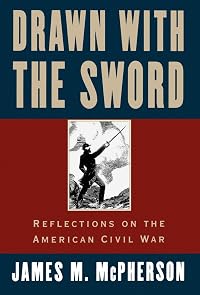
James M. McPherson is the author of Battle Cry of Freedom: The Civil War Era, which won a Pulitzer Prize in history, and For Cause and Comrades: Why Men Fought in the Civil War, a Lincoln Prize winner. He is the George Henry Davis Professor of American History at Princeton University in New Jersey, where he also lives. His newest book, entitled show more Abraham Lincoln, celebrates the 200th anniversary of Lincoln's birth with a short, but detailed look at this president's life. (Bowker Author Biography) James M. McPherson, McPherson was born in 1936 and received a Ph.D. from Johns Hopkins University in 1963. He began teaching at Princeton University in the mid 1960's and is the author of several articles, reviews and essays on the Civil War, specifically focusing on the role of slaves in their own liberation and the activities of the abolitionists. His earliest work, "The Struggle for Equality," studied the activities of the Abolitionist movement following the Emancipation Proclamation. "Battle Cry of Freedom" won the Pulitzer Prize for History in 1989. "Drawn With the Sword" (1996) is a collection of essays, with one entitled "The War that Never Goes Away," that is introduced by a passage from Abraham Lincoln's second inaugural address on March 4, 1865 from which its title came: "Fondly do we hope - and fervently do we pray - that this mighty scourge of war may speedily pass away. Yet, if God wills that it continue, until all the wealth piled by the bond-man's two hundred and fifty years of unrequited toil shall be sunk, and until every drop of blood drawn with the lash, shall be paid by another drawn with the sword, as was said three thousand years ago, so still it must be said, 'the judgments of the Lord, are true and righteous altogether.'" "From Limited to Total War: 1861-1865" shows the depth of the political and social transformation brought about during the Civil War. It told how the human cost of the Civil War exceeded that of any country during World War I and explains the background to Lincoln's announcement of the Emancipation Proclamation, in 1862. The book also recounts the exploits of the Fifty-fourth Massachusetts Volunteer Infantry, one of the first black regiments organized in the Civil War, and their attack on Fort Wagner in July 1863. It pays tribute to Robert Gould Shaw, the white commanding officer of the regiment, who died in the attack and was buried in a mass grave with many of his men. Professor McPherson's writings are not just about the middle decades of the nineteenth century but are also about the last decades of the twentieth century. The political turmoil prior to the Civil War, the violence of the war, Lincoln's legacy and the impeachment of Andrew Johnson shed some light on contemporary events. (Bowker Author Biography) show less
All Editions
Awards and Honors
Awards
Distinctions
Series

Belongs to Publisher Series
Work Relationships
Common Knowledge
- Canonical title
- Battle Cry of Freedom: The Civil War Era
- Original title
- Battle Cry of Freedom: The Civil War Era
- Original publication date
- 1988
- People/Characters
- Abraham Lincoln; Robert E. Lee; Jefferson Davis; Stonewall Jackson; Ulysses S. Grant; Albert Sidney Johnston (show all 16); Joseph E. Johnston; Braxton Bragg; John Bell Hood; William Tecumseh Sherman; George B. McClellan; Joseph Hooker; Ambrose E. Burnside; George H. Thomas; P. G. T. Beauregard; William Walker
- Important places
- USA; Adams County, Pennsylvania, USA; Gettysburg, Pennsylvania, USA; Pennsylvania, USA; Richmond, Virginia, USA; Virginia, USA (show all 9); Washington, D.C., USA; Georgia, USA; Tennessee, USA
- Important events
- American Civil War (1861 | 1865)
- Dedication
- To Van and Willie
and to the memory of
Glenn and Bill
Who introduced me to the world of history and academia in the good old days at Hopkins - First words
- Both sides in the American Civil War professed to be fighting for freedom. (Preface)
On the morning of September 14, 1847, brilliant sunshine burned off the haze in Mexico City. - Last words
- (Click to show. Warning: May contain spoilers.)That is a question for subsequent volumes in this series to ponder.
- Publisher's editor
- Woodward, C. Vann
- Original language
- English
Classifications
Statistics
- Members
- 6,145
- Popularity
- 2,057
- Reviews
- 84
- Rating
- (4.45)
- Languages
- 5 — English, French, German, Polish, Portuguese
- Media
- Paper, Audiobook, Ebook
- ISBNs
- 27
- ASINs
- 43