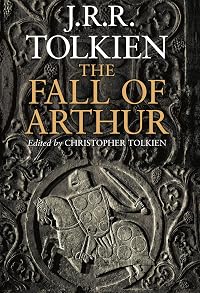
The Fall of Arthur
by J. R. R. Tolkien, Christopher Tolkien (Editor)
On This Page
Description
New York Times bestseller"An incomplete but highly compelling retelling . . . An action-packed, doom-haunted saga, full of vivid natural description."—New York Times Book Review
The Fall of Arthur recounts in verse the last campaign of King Arthur, who, even as he stands at the threshold of Mirkwood, is summoned back to Britain by news of the treachery of Mordred. Already weakened in spirit by Guinevere's infidelity with the now-exiled Lancelot, Arthur must rouse his knights to battle one show more last time against Mordred's rebels and foreign mercenaries. Powerful, passionate, and filled with vivid imagery, this unfinished poem reveals Tolkien's gift for storytelling at its brilliant best. Christopher Tolkien, editor, contributes three illuminating essays that explore the literary world of King Arthur, reveal the deeper meaning of the verses and the painstaking work his father applied to bring the poem to a finished form, and investigate the intriguing links between The Fall of Arthur and Tolkien's Middle-earth.
"Compelling in pace, haunted by loss, it lives up to expectations."—Daily Beast
"Erudite and beautiful." – NPR.org
. show less
Tags
Recommendations
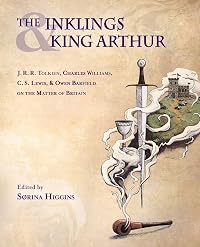
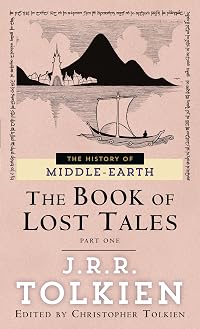
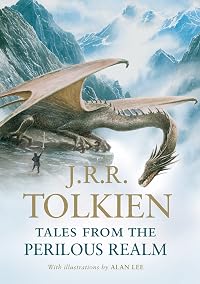
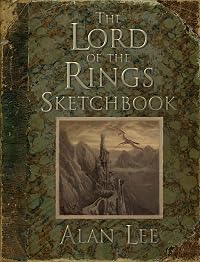



Member Recommendations
Member Reviews
I love Arthurian literature, and and I love Tolkien, so I was excited when this was released. Like other reviews have mentioned, the poem is only a small part of the book, and the rest is commentary by Christopher Tolkien. I found the poem to be interesting, and fun to read out loud. I was confused by his choice of making Guinevere a little manipulating of Lancelot, because I think in most other texts their tryst is a mutual thing. I liked Christopher's section placing his father's poem in the Arthurian tradition, of where he is getting his material from, and how he changed it to make it his own. I also enjoyed the section about the poem's relation to the Silmarillion, but I did not enjoy the section about the Evolution of the Poem, as show more it was confusing and dull. I was confused at why he would have so many drafts of the poem, but then when I read the final section where J.R.R. Tolkien is talking about alliterative verse I realized there are a lot more rules to follow than just "string words that start with the same letter together" Some of his discussion of the metre was a little dense for me, and I didn't understand exactly what he was talking about with "head rhymes" "staves" and the emphasis on different syllables. show less
The Fall of Arthur is a poem which was written by J.R.R. Tolkien in the 1930s. Unfortunately, as so many of his works, he abandoned it and never returned to it. The version published here runs to about forty-five pages and includes Guinevere's affair with Lancelot, Mordred's intrigue and the breaking of the fellowship of the Knights of the Round Table. The poem is written in alliterative verse and although this seems to be rather a simple meter at first glance, it is full of art. Reading this is a moving and fundamental experience because every single word carries meaning. The rhythm creates an archaic atmosphere, which underlines the tradition and old age of these stories.
The poem is followed by four essays and an appendix written by show more Christopher Tolkien in which the work is placed within the Arthurian tradition and compared to medieval texts, most notably Le More d'Arthur. Christopher Tolkien also examines its relation to The Silmarillion, especially the ways the Arthurian myths might have influenced that work. He also shows the evolution of the poem and includes different versions and alternatives to what he decided must have been the last version. The appendix provides an introduction to Anglo-Saxon poetry and alliterative verse and includes an excerpt of a lecture that J.R.R. Tolkien once held on the topic and in which he used parts of The Fall of Arthur as examples.
This was a reread for me after six years and while I still absolutely loved the poem, I found the last two essays a bit wanting. I would have wished for more conclusions drawn from presenting the evolution of the text and its parallels to The Silmarillion. I really enjoyed reading the other essays and the appendix, though. I do recommend this book to anyone interested in alliterative verse, in the Arthurian legends from an academic point of view, or in Tolkien's work apart from his writings on Middle-earth. show less
The poem is followed by four essays and an appendix written by show more Christopher Tolkien in which the work is placed within the Arthurian tradition and compared to medieval texts, most notably Le More d'Arthur. Christopher Tolkien also examines its relation to The Silmarillion, especially the ways the Arthurian myths might have influenced that work. He also shows the evolution of the poem and includes different versions and alternatives to what he decided must have been the last version. The appendix provides an introduction to Anglo-Saxon poetry and alliterative verse and includes an excerpt of a lecture that J.R.R. Tolkien once held on the topic and in which he used parts of The Fall of Arthur as examples.
This was a reread for me after six years and while I still absolutely loved the poem, I found the last two essays a bit wanting. I would have wished for more conclusions drawn from presenting the evolution of the text and its parallels to The Silmarillion. I really enjoyed reading the other essays and the appendix, though. I do recommend this book to anyone interested in alliterative verse, in the Arthurian legends from an academic point of view, or in Tolkien's work apart from his writings on Middle-earth. show less
What a shame that Tolkien didn't finish writing his version of the final battle of King Arthur! Left with only drafts, we are told the story until the point of the siege of Camelot - barely the beginning of the battle - but this taste of the story is enough to show Tolkien's mastery of traditional alliterative verse form and a unique story perspective. I often find when reading the Arthurian myths that the characters are a bit flat due to a focus on events/deeds rather than dialogue or emotion, so I was surprised and pleased that Tolkien provided insight into various characters - especially Mordred, Guenevere, and Lancelot. Guenevere seemed an odd choice for Tolkien to embellish, since he rarely seems to value female characters, but in show more thise case I'm glad that he broke from his norm. show less
In all honesty this is 3.5 stars for me but due to things I learned about the Arthur's myth I gave it additional 0.5 star.
Book was not what I expected. Actual poem (or better said finished parts of it) make maybe 20 percent of the book. Rest is more academic discussion about the actual myth, variations (and evolution) of it and the way it affected Tolkien's stories from the Lord of the Ring world. I enjoyed these sections, especially parts about old epics in old English. Considering I know some German I enjoyed reading these verses (and figuring the meanings phonetically - some words were really ... strange until you read them out loud) and then checking the footnotes for any meanings that I missed - which was almost always related to show more the words no longer in use:)
While these parts of the book were great last part is something that only hard-core student of literature can enjoy. I don't shrink from reading materials I am not well versed in but this was too .... academic I guess for me to fully comprehend it. After reading this part I read a few similar analysis (related to my mother tongue) and I have to say I was happy - literature academics talk in their own codes (like every profession I guess) and can be equally impenetrable no matter the language or culture :)
If you aim only to read the poem book is somewhat of an overkill. If you want to learn some more about roots of Arthurian myth and how it evolved and influenced Tolkien's works (I especially liked the idea of the story very similar to Cloud Atlas) then do read the book - I enjoyed this part very much, it got me interested in re-reading some of the books related to the subject. And if you are literature analysis aficionado then this book is definitely for you. You will enjoy the last part of the book. show less
Book was not what I expected. Actual poem (or better said finished parts of it) make maybe 20 percent of the book. Rest is more academic discussion about the actual myth, variations (and evolution) of it and the way it affected Tolkien's stories from the Lord of the Ring world. I enjoyed these sections, especially parts about old epics in old English. Considering I know some German I enjoyed reading these verses (and figuring the meanings phonetically - some words were really ... strange until you read them out loud) and then checking the footnotes for any meanings that I missed - which was almost always related to show more the words no longer in use:)
While these parts of the book were great last part is something that only hard-core student of literature can enjoy. I don't shrink from reading materials I am not well versed in but this was too .... academic I guess for me to fully comprehend it. After reading this part I read a few similar analysis (related to my mother tongue) and I have to say I was happy - literature academics talk in their own codes (like every profession I guess) and can be equally impenetrable no matter the language or culture :)
If you aim only to read the poem book is somewhat of an overkill. If you want to learn some more about roots of Arthurian myth and how it evolved and influenced Tolkien's works (I especially liked the idea of the story very similar to Cloud Atlas) then do read the book - I enjoyed this part very much, it got me interested in re-reading some of the books related to the subject. And if you are literature analysis aficionado then this book is definitely for you. You will enjoy the last part of the book. show less
Few literary figures have been explored so thoroughly as J.R.R. Tolkien. The vein is perhaps running a little thin by now, but we have Tolkien's original Arthur poem, sadly only a fragment, but bolstered considerably in bulk by the critical apparatus marshalled by his son, Christopher. We have the text, and an essay by the original writer himself about the Anglo Saxon poetic form he employs. In addition the volume contains as many footnotes as the text will support, and an extensive analysis of what was completed, along with Christopher's concept of where JRR was going when he was interrupted by the publisher asking for "Another book about hobbits" at the beginning of WWII. The actual poem is quite good, replete with new titles for show more other plowers in the field of Arthuriana, and the rest of it is perhaps useful for the advanced student. show less
I really enjoyed the J.R.R. Tolkien portions of this book. Not to say that Christopher Tolkien is a bad writer, on the contrary, his analysis is very well thought out and interesting. It's just that when you are reading the pieces written by the master, you certainly know it.
Fair warning to the casual reader out there, this offering is a poem purposely written to emulate the meter an feel of an old piece of English literature. Only about a quarter or less of the book is actually material produced by J.R.R. Tolkien, the rest is an in-depth analysis of the poem and it's fit with other classic Arthurian literature by his son, Christopher Tolkien. Unless you get into the inner workings of literature and poetry and enjoy reading excerpts of show more Olde English, I wouldn't recommend this book to just anybody.
Overall, I found this to be a fairly fascinating book. I think that Christopher does a very admirable job of breaking down and analyzing his father's work and tying it into the other classic literature. I also appreciate the connections that he makes to his fathers penultimate masterpiece, The Lord of the Rings. Even thought this is a seemingly unrelated work, Christopher has managed to find some interesting similarities between it and his father's writings of Middle Earth.
Where this truly shines is in allowing the Tolkien fan to read a previously unpublished piece of Tolkien literature that we may not have otherwise seen. Make no mistake, this is a piece of what would have been a larger work but was for one reason or another abandoned by the author. What we are offered is a fragment and may not have ever looked even remotely like the piece we are presented with in its final form, but we will never actually know. A huge thank you to Christopher Tolkien for bringing us what he could of this work. My only real complaint in the layout that Christopher presented is that I would have put the second study directly after the poem as it deals more with the notes of things that were to come and I think would have provided a more satisfying feel to read while the actual work was still fresh to my mind.
On a side note one thing that I did find interesting is that, even though Christopher is a great analyst and very detailed in his research, he presents a small excerpt of a lecture that his father gave at some point. This small excerpt of lecture illustrates just how talented his father is as it literally jumps off the page. He's not talking about anything of particular interest unto itself, but the nuances and the wording make the excerpt come alive. Not to take anything away from his son, but this piece really made me realize what the difference is between someone who is an expert and very good at what he does and a true master of the written word. show less
Fair warning to the casual reader out there, this offering is a poem purposely written to emulate the meter an feel of an old piece of English literature. Only about a quarter or less of the book is actually material produced by J.R.R. Tolkien, the rest is an in-depth analysis of the poem and it's fit with other classic Arthurian literature by his son, Christopher Tolkien. Unless you get into the inner workings of literature and poetry and enjoy reading excerpts of show more Olde English, I wouldn't recommend this book to just anybody.
Overall, I found this to be a fairly fascinating book. I think that Christopher does a very admirable job of breaking down and analyzing his father's work and tying it into the other classic literature. I also appreciate the connections that he makes to his fathers penultimate masterpiece, The Lord of the Rings. Even thought this is a seemingly unrelated work, Christopher has managed to find some interesting similarities between it and his father's writings of Middle Earth.
Where this truly shines is in allowing the Tolkien fan to read a previously unpublished piece of Tolkien literature that we may not have otherwise seen. Make no mistake, this is a piece of what would have been a larger work but was for one reason or another abandoned by the author. What we are offered is a fragment and may not have ever looked even remotely like the piece we are presented with in its final form, but we will never actually know. A huge thank you to Christopher Tolkien for bringing us what he could of this work. My only real complaint in the layout that Christopher presented is that I would have put the second study directly after the poem as it deals more with the notes of things that were to come and I think would have provided a more satisfying feel to read while the actual work was still fresh to my mind.
On a side note one thing that I did find interesting is that, even though Christopher is a great analyst and very detailed in his research, he presents a small excerpt of a lecture that his father gave at some point. This small excerpt of lecture illustrates just how talented his father is as it literally jumps off the page. He's not talking about anything of particular interest unto itself, but the nuances and the wording make the excerpt come alive. Not to take anything away from his son, but this piece really made me realize what the difference is between someone who is an expert and very good at what he does and a true master of the written word. show less
The Fall of Arthur is the story of how the Knights of the Round Table disintegrated, ending the legend of King Arthur and closing a chapter in British history. In this poem, Tolkien writes of Mordred's usurping and Lancelot and Gwenivere's affair. What this poem lacked was the romantic aspects of Arthurian legend such as the Holy Grail. Interestingly, it is written in Saxton metre-- the very people who ended Arthur's reign.
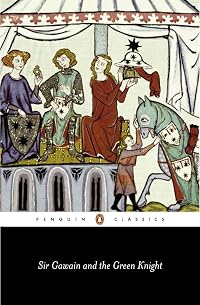
We are-- once again-- reminded of J.R.R. Tolkien's brilliance. It is ironic that the poem was written in Saxton metre (the Saxton's brought about Arthur's downfall as mentioned above), until we remember that Tolkien was a professor of Saxton language. His poetic voice is similar to his retelling of Sir Gawain and show more the Green Knight or The Salmarillion (both of which Tolkien's son, Christopher address in an analysis after the poem). For those of us who fell in love with Tolkien's prose in Lord of the Rings, this is just another reminder of the man we love. For those just getting into Tolkien, congratulations on reading high-class literature. show less
We are-- once again-- reminded of J.R.R. Tolkien's brilliance. It is ironic that the poem was written in Saxton metre (the Saxton's brought about Arthur's downfall as mentioned above), until we remember that Tolkien was a professor of Saxton language. His poetic voice is similar to his retelling of Sir Gawain and show more the Green Knight or The Salmarillion (both of which Tolkien's son, Christopher address in an analysis after the poem). For those of us who fell in love with Tolkien's prose in Lord of the Rings, this is just another reminder of the man we love. For those just getting into Tolkien, congratulations on reading high-class literature. show less
Members
- Recently Added By
Published Reviews
ThingScore 50
Even in its fragmentary and unfinished form — about 40 pages of text, a bit more than four cantos of what was evidently intended to be a much longer narrative poem — “The Fall of Arthur” is recognizably the work of J. R. R. Tolkien.
added by hf22
"The Fall of Arthur" is a fascinating work, though perhaps more for the Tolkien completist than the casual "Lord of the Rings" fan.
added by hf22
Lists

Best Arthurian Fiction
104 works; 33 members
Modern Arthurian Fiction
237 works; 16 members
Author Information

609+ Works 518,293 Members
A writer of fantasies, Tolkien, a professor of language and literature at Oxford University, was always intrigued by early English and the imaginative use of language. In his greatest story, the trilogy The Lord of the Rings (1954--56), Tolkien invented a language with vocabulary, grammar, syntax, even poetry of its own. Though readers have show more created various possible allegorical interpretations, Tolkien has said: "It is not about anything but itself. (Certainly it has no allegorical intentions, general, particular or topical, moral, religious or political.)" In The Adventures of Tom Bombadil (1962), Tolkien tells the story of the "master of wood, water, and hill," a jolly teller of tales and singer of songs, one of the multitude of characters in his romance, saga, epic, or fairy tales about his country of the Hobbits. Tolkien was also a formidable medieval scholar, as evidenced by his work, Beowulf: The Monster and the Critics (1936) and his edition of Anciene Wisse: English Text of the Anciene Riwle. Among his works published posthumously, are The Legend of Sigurd and Gudrún and The Fall of Arthur, which was edited by his son, Christopher. In 2013, his title, TheHobbit (Movie Tie-In) made The New York Times Best Seller List. (Bowker Author Biography) show less

Christopher Reuel Tolkien was born on November 21, 1924 in Leeds, England. He is author J.R.R. Tolkien's youngest son and is known for having edited and published much of his father's work posthumously, including The Children of Húrin. Christopher Tolkien, who grew up in Oxford, U.K., listening to tales of the Bagginses and their adventures, set show more to work as his father's editor far earlier than that. He was an editor from the age of 5, catching inconsistencies in his father's bedtime tales, and was promised tuppence by his father for every mistake he noticed in "The Hobbit". As a young man he was typing up manuscripts and drawing maps of Middle-earth and around the time he was commissioned an officer in the [Royal Air Force] in 1945, his father was already calling him his chief critic and collaborator. He was also responsible for composing the original map of Middle-earth included with the The Lord of the Rings series when it was first published in the mid-1950s. Christopher also brought us The Silmarillion, The Children of Húrin, The History of Middle-earth series and many others. Christopher Tolkien passed away on January 16, 2020 at the age of 95. (Bowker Author Biography) show less
Some Editions
Awards and Honors
Awards
Series
Belongs to Publisher Series
Work Relationships
Common Knowledge
- Canonical title
- The Fall of Arthur
- Original title
- The Fall of Arthur
- Original publication date
- 1937
- People/Characters
- King Arthur; Lancelot du Lac; Gawain; Mordred; Guinevere
- Important places
- Mirkwood; England, UK
- First words
- It is well known that a prominent strain in my father's poetry was his abiding love for the old 'Northern' alliterative verse, which extended from the world of Middle-earth (notably in the long but unfinished Lay of the Ch... (show all)ildren of Húrin) to the dramatic dialogue The Homecoming of Beorhtnoth (arising from the Old English poem The Battle of Maldon) and to his 'Old Norse' poems The New Lay of the Volsungs and The New Lay of Gudrún (to which he referred in a letter of 1967 as 'a thing I did many years ago when trying to learn the art of writing alliterative poetry').
- from the Foreword by Christopher Tolkien
How Arthur and Gawain went to war and rode into the East. - Original language
- English
Classifications
Statistics
- Members
- 1,520
- Popularity
- 15,197
- Reviews
- 22
- Rating
- (3.82)
- Languages
- 11 — Danish, Dutch, English, French, German, Greek, Italian, Polish, Portuguese, Russian, Spanish
- Media
- Paper, Ebook
- ISBNs
- 27
- ASINs
- 9