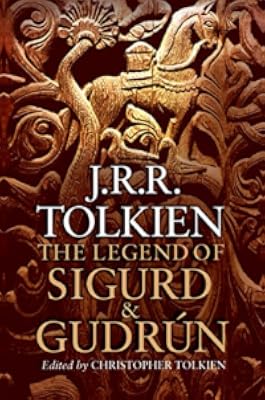
The Legend of Sigurd and Gudrún
by J. R. R. Tolkien
On This Page
Description
Tolkien's version of the great legend of Northern antiquity. In the first part, we follow the adventures of Sigurd, the slayer of Fafnir, and his betrothal to the Valkyrie Brynhild. In the second, the tragedy mounts to its end in the murder of Sigurd at the hands of his blood-brothers, the suicide of Brynhild, and the despair of Gudrún.Tags
Recommendations
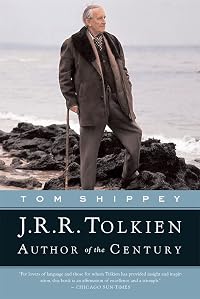
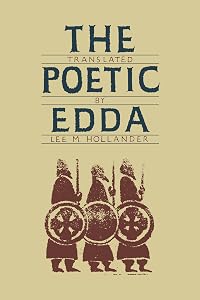
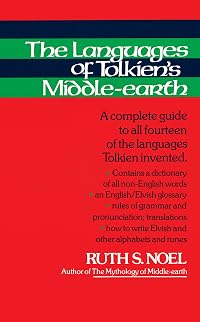
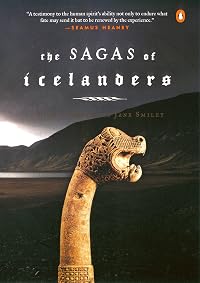






Member Recommendations
guurtjesboekenkast De legende van Sigurd en Gudrún bevat twee epische gedichten die zijn gebaseerd op Oudnoorse mythen die bekendstaan als de Edda.
Tolkien herschreef deze legende in twee modern Engelse gedichten.
Samen vormen deze het verhaal van de drakendoder Sigurd, de wraak van Gudrún en de val van de Nibelungen.
30
ed.pendragon The German High Medieval version of the tale that Tolkien renders into English.
20
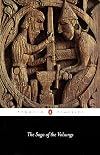
ed.pendragon Worth comparing the original saga (in translation) with Tolkien's modern English version of the tale in verse.
Member Reviews
Another December, another Tolkien finished off my TBR! I had a lot more fun with last year’s Sir Gawain than I had with attempts to read more of the expanded Middle Earth stories, so this year I picked this collection which focuses on Tolkien’s adaptation of two Norse poems: the legends of Sigurd and Gudrun. Both of these poems are at least vaguely familiar to anyone who has dealt with Norse legends previously, but I found it fun reading Tolkien’s versions as his language is accessible, readable, and imbues the stories with a sense of gravity and adventure that is necessary in any retelling of these sorts of epic stories. As explained in the introductory material, the plot of the poems is less important than the feeling that they show more inspire, and it is that which Tolkien does so well. He explores themes of character, politics, and Norse society, all wrapped up in a mythological frame that is impossible not to be drawn into - even if we can’t remember all the small details of each poem. Much of the book was taken up with explanatory material, which was useful in getting a broader sense of the epic poems as a whole and making sense of the publication. Tolkien’s son Christopher, the editor, makes it clear that the poems are not finished (though relatively polished) pieces ready for publication, but they show Tolkien’s deep interest in the Nordic cultures and mythology that went to so much inspire his own writing which gives readers a deeper understanding of where his stories came from. Even if one can’t be bothered with all of Tolkien’s writing (and I admittedly am not a fan of the Hobbit nor of the expanded Middle Earth stories), the book still serves as an interesting version of some of the Norse myths and legends. show less
One of the best-known heroes in Norse mythology, Sigurd is better known as Siegfried from German versions of the legends, and his exploits and interactions – from killing a dragon and re-forging a mighty sword, say, to his relationships with his wife Gudrún, with warrior princess Brynhild and with a host of other personages – characterise him as much as they echo the exploits and interactions of other heroes in other times and cultures. Here Tolkien attempts a harmonisation of the various early tales, particularly those in the Poetic Edda, and versifies them in English as 'The New Lay of the Völsungs' (in ten parts) and 'The New Lay of Gudrún', using forms and alliteration modelled on those early originals.
This posthumous show more publication ought by rights to appeal to a wide range of readers, from hobbit-fanciers to Wagnerites, from poets to psychologists, and from medieval literature specialists to mythologists, but I suspect it will end up satisfying only those whose interests overlap a number of these categories; for any single one of those categories of readers it may well end up a disappointment. Many fantasy fans may well come with false expectations of more Middle Earth action or a tale compatible with the Ring Cycle; or they may vainly hope for more than just a pastiche of medieval poetry, however erudite, or a deeper psychological study of the motivations of the main characters; and knowledgeable scholars may like to be told more than they already know from Christopher Tolkien's otherwise praiseworthy notes and editing. However, for those like me who just have a fascination with that certain mix of medieval legend, fantasy, character motivation and mythic resonance The Legend of Sigurd and Gudrún, complete with introductions and notes, supplies an extra dimension; all that is lacking is a selection of annotated colour plates of the medieval wooden carvings hinted at on the book's cover and inside line illustrations.
Anyway, this reviewer enjoyed it, even if he did have to use two bookmarks to go from text to notes and back again. However, this method rather defeats Tolkien's intention of letting a good story stand on its own feet, and in all fairness I should have read the poems straight though, aloud for preference, to judge its merits. Actually, mostly what it encourages me to do is to go back to the originals or related works such as The Saga of the Volsungs or The Nibelungenlied, albeit in translation. Tolkien worked on The Legend in the 20s and 30s before abandoning it for original creations like The Hobbit and The Lord of the Rings; perhaps the majority of readers will principally judge this as preparation for the literary legacy he is best known for.
http://wp.me/s2oNj1-sigurd show less
This posthumous show more publication ought by rights to appeal to a wide range of readers, from hobbit-fanciers to Wagnerites, from poets to psychologists, and from medieval literature specialists to mythologists, but I suspect it will end up satisfying only those whose interests overlap a number of these categories; for any single one of those categories of readers it may well end up a disappointment. Many fantasy fans may well come with false expectations of more Middle Earth action or a tale compatible with the Ring Cycle; or they may vainly hope for more than just a pastiche of medieval poetry, however erudite, or a deeper psychological study of the motivations of the main characters; and knowledgeable scholars may like to be told more than they already know from Christopher Tolkien's otherwise praiseworthy notes and editing. However, for those like me who just have a fascination with that certain mix of medieval legend, fantasy, character motivation and mythic resonance The Legend of Sigurd and Gudrún, complete with introductions and notes, supplies an extra dimension; all that is lacking is a selection of annotated colour plates of the medieval wooden carvings hinted at on the book's cover and inside line illustrations.
Anyway, this reviewer enjoyed it, even if he did have to use two bookmarks to go from text to notes and back again. However, this method rather defeats Tolkien's intention of letting a good story stand on its own feet, and in all fairness I should have read the poems straight though, aloud for preference, to judge its merits. Actually, mostly what it encourages me to do is to go back to the originals or related works such as The Saga of the Volsungs or The Nibelungenlied, albeit in translation. Tolkien worked on The Legend in the 20s and 30s before abandoning it for original creations like The Hobbit and The Lord of the Rings; perhaps the majority of readers will principally judge this as preparation for the literary legacy he is best known for.
http://wp.me/s2oNj1-sigurd show less
The five stars are for the poetry within this book. It reaches right inside you to a primitive level and makes you shiver. I also enjoyed the commentary around the poems about the mythology, the history, the languages and inner workings of this type of poetry, though I must admit that some of the finer linguistic details were beyond me. The saga itself is simply exciting and fun to read.
J.R.R. Tolkien compôs sua própria versão da grande lenda da antiguidade setentrional, em dois poemas estreitamente relacionados, 'A Nova Balada dos Völsungs' e 'A Nova Balada de Gudrún'. Na 'Balada dos Völsungs' é contada a linhagem do grande herói Sigurd, matador de Fáfnir, o mais celebrado dos dragões, cujo tesouro ele tomou para si. Fala-se de como ele despertou a valquíria Brynhild; de como foram prometidos um para o outro; e de sua chegada à corte dos grandes príncipes Niflungs (ou nibelungos), com os quais obteve uma fraternidade de sangue. Nessa corte nasceu um grande amor, mas também um grande ódio, provocado pelo poder da feiticeira, mãe dos Niflungs. A história apresenta identidades confundidas, uma paixão show more frustrada, ciúme e amarga contenda, a tragédia de Sigurd e Brynhild, do Niflung Gunnar e de sua irmã Gudrún escala, até o desfecho com o assassinato de Sigurd, o suicídio de Brynhild e o desespero de Gudrún. A 'Balada de Gudrún', conta seu destino após a morte de Sigurd, seu casamento a contragosto com o poderoso Atli, soberano dos hunos (o Átila histórico), como este assassinou seus irmãos, senhores dos Niflungs, e como ela se vingou de modo horrendo. Numa versão derivada primariamente dos detalhados estudos da antiga poesia norueguesa e islandesa conhecida por 'Edda Poética', J.R.R. Tolkien empregou uma forma poética de estrofes curtas cujos versos corporificam em inglês os ritmos aliterantes e a energia concentrada dos poemas da Edda. show less
The Legend of Sigurd and Gudrun is a translation of the Nordic legends of Sigurd, the masculine dragon-slaying hero of the Volsungs and Gudrun, the grief-stricken beauty of the Niflung. Both stories are equal parts heroic and tragic, displaying both dauntless courageousness and ruinous anguish that, despite being described so simply, manages to so easily work its way under the reader's skin.
What I want to say most about this work is Christopher Tolkien's analysis, not only of the legends, but of his father's interpretation of them. Not only does Christopher seem knowledgeable on the topic, but his illumination of his father's observations of the poems and why he translated them the way they did. I know there are those out there who show more dread Christopher Tolkien's editing more than Peter Jackson's, but I found his notes to be very helpful and enlightening in this case.
Tolkien haters shouldn't avoid this book simply because they aren't fans of Tolkien, it's not your typical tansy novel, and Tolkien lovers should not avoid this book because it has his sons name on it, as I think he did a good job on this one. I believe this one is worth reading for anyone who is interested in Norse mythology. show less
What I want to say most about this work is Christopher Tolkien's analysis, not only of the legends, but of his father's interpretation of them. Not only does Christopher seem knowledgeable on the topic, but his illumination of his father's observations of the poems and why he translated them the way they did. I know there are those out there who show more dread Christopher Tolkien's editing more than Peter Jackson's, but I found his notes to be very helpful and enlightening in this case.
Tolkien haters shouldn't avoid this book simply because they aren't fans of Tolkien, it's not your typical tansy novel, and Tolkien lovers should not avoid this book because it has his sons name on it, as I think he did a good job on this one. I believe this one is worth reading for anyone who is interested in Norse mythology. show less
To put it prosaically, J R R Tolkien's son, Christopher, has published 2 of his father's poems based on the surviving fragments of a Norse legend. And he has provided notes on the poetry both from his father and his own explanatory footnotes. All up 377 pages. Put like this you'd have to say it sounds interesting for aficionados, but kind of dull for the rest of us.
However, to put it poetically - just read the poems! As the elder Tolkien puts it, encountering the poetry brings "the sudden recognition that [the reader has] unawares met with something of tremendous force, something that in parts ... is still endowed with an almost demonic energy..." (p17). This is his attempt to capture this essential Norwegian energy in English by show more seeking to maintain the form with its rhythms and alliterations while "correcting" the tale somewhat to give it more coherence than its current fragmentary state displays - and it seems to me to have succeeded. If you are reading this review before reading the book, then do what I did and read the lays first. I was especially taken in by the Upphaf - the beginning. You'll quickly know if you want to continue. And read some of it out loud. Then read the notes, then the introduction - which will then make much more sense that I suppose it might have if tackled first. show less
However, to put it poetically - just read the poems! As the elder Tolkien puts it, encountering the poetry brings "the sudden recognition that [the reader has] unawares met with something of tremendous force, something that in parts ... is still endowed with an almost demonic energy..." (p17). This is his attempt to capture this essential Norwegian energy in English by show more seeking to maintain the form with its rhythms and alliterations while "correcting" the tale somewhat to give it more coherence than its current fragmentary state displays - and it seems to me to have succeeded. If you are reading this review before reading the book, then do what I did and read the lays first. I was especially taken in by the Upphaf - the beginning. You'll quickly know if you want to continue. And read some of it out loud. Then read the notes, then the introduction - which will then make much more sense that I suppose it might have if tackled first. show less
An accessible read for those wishing to enjoy the style of the Poetic Edda, as it is written in modern English, and a must have for fans of Old Norse mythology. The poems are heightened by Christopher Tolkein’s able discourse through his notes, but feel free to skip these if they make the experience an onerous one (I enjoyed them).
Members
- Recently Added By
Published Reviews
ThingScore 50
Nearly every parent, at one time or another, has had the experience of seeing a son or daughter eagerly unwrap a new toy, only to find that the child greatly prefers the box to the gift itself. This new poetry collection by John Ronald Reuel Tolkien . . . is a lot like the disappointing toy in the great box. To put it simply: The poetry is pretty bad, but the explanatory material that show more surrounds it--written by Ronald himself and his son Christopher--is good.
Unlike the low-rent fiction published under the names of such long-dead authors as Ian Fleming and V.C. Andrews, there's no doubt about the provenance of the poems in the collection. But by Christopher Tolkien's own account, there's no evidence that the elder Tolkien ever intended to have this work published, either. . . .
I've read substantially all of Tolkien's source material--some of it in the original languages--and still had to reread several times just to follow the plot. At more than one point, Christopher Tolkien's notes have to clarify who is taking a particular action and what is going on. Without them, the poems are almost impossible to decode. And sometimes it's pretty clear that the elder Tolkien simply left certain parts to finish later. . . .
Tolkien scholars and ardent Lord of the Rings fans may gain some insights into his fiction from reading these poems. The notes provide a very good introduction to the tradition that the elder Tolkien wrote in and, in any case, they're long enough to probably justify a look at the book. But the poems, while somewhat promising, are still in rough draft. show less
Unlike the low-rent fiction published under the names of such long-dead authors as Ian Fleming and V.C. Andrews, there's no doubt about the provenance of the poems in the collection. But by Christopher Tolkien's own account, there's no evidence that the elder Tolkien ever intended to have this work published, either. . . .
I've read substantially all of Tolkien's source material--some of it in the original languages--and still had to reread several times just to follow the plot. At more than one point, Christopher Tolkien's notes have to clarify who is taking a particular action and what is going on. Without them, the poems are almost impossible to decode. And sometimes it's pretty clear that the elder Tolkien simply left certain parts to finish later. . . .
Tolkien scholars and ardent Lord of the Rings fans may gain some insights into his fiction from reading these poems. The notes provide a very good introduction to the tradition that the elder Tolkien wrote in and, in any case, they're long enough to probably justify a look at the book. But the poems, while somewhat promising, are still in rough draft. show less
added by TomVeal
although Tolkien's meditations on Eddaic and heroic poetry are interesting, and although reading this book will certainly bring you closer to a number of interesting topics (the Volsung saga and the transmission of Old English and Old Norse poetry in particular)—it isn't in its own right a very effective piece of writing.
added by sdobie
Lists

XB-1: Osobnosti zanru doporucuji
67 works; 1 member

The Nibelungs
32 works; 1 member
Talk Discussions
Past Discussions
The Legend of Sigurd and Gudrun Slipcase Deluxe Edition in The Green Dragon (July 2015)
Author Information

621+ Works 519,761 Members
A writer of fantasies, Tolkien, a professor of language and literature at Oxford University, was always intrigued by early English and the imaginative use of language. In his greatest story, the trilogy The Lord of the Rings (1954--56), Tolkien invented a language with vocabulary, grammar, syntax, even poetry of its own. Though readers have show more created various possible allegorical interpretations, Tolkien has said: "It is not about anything but itself. (Certainly it has no allegorical intentions, general, particular or topical, moral, religious or political.)" In The Adventures of Tom Bombadil (1962), Tolkien tells the story of the "master of wood, water, and hill," a jolly teller of tales and singer of songs, one of the multitude of characters in his romance, saga, epic, or fairy tales about his country of the Hobbits. Tolkien was also a formidable medieval scholar, as evidenced by his work, Beowulf: The Monster and the Critics (1936) and his edition of Anciene Wisse: English Text of the Anciene Riwle. Among his works published posthumously, are The Legend of Sigurd and Gudrún and The Fall of Arthur, which was edited by his son, Christopher. In 2013, his title, TheHobbit (Movie Tie-In) made The New York Times Best Seller List. (Bowker Author Biography) show less
All Editions
Some Editions
Awards and Honors
Distinctions
Series
Belongs to Publisher Series
Columna (822)
Tascabili [Bompiani] (1143)
Work Relationships
Is contained in
Is a retelling of
Common Knowledge
- Canonical title
- The Legend of Sigurd and Gudrún
- Original title
- The Legend of Sigurd and Gudrún
- Alternate titles
- Legend of Sigurd and Gudrun
- Original publication date
- 2009-05-05; 1930
- People/Characters
- Sigurd; Gudrún; Brynhild; Gunnar; Atli; Fáfnir (dragon)
- First words
- VÖLSUNGAKVIÐA EN NÝJA
UPPHAF
(Beginning)
1 Of old was an age
when was emptiness,
there was sand nor sea
nor surging waves;
unwrought w... (show all)as Earth,
unroofed was Heaven -
an abyss yawning,
and no blade of grass.
In his essay On Fairy-Stories (1947) my father wrote of books that he read in his childhood, and in the course of this he said:
I had very little desire to look for buried treasure or fight pirates, and Treasure ... (show all)Island left me cool. - Last words
- (Click to show. Warning: May contain spoilers.)Thus glory endeth,
and gold fadeth
on noise and clamours
the night falleth.
Lift up your hearts,
lords and maidens
for the song of sorrow
that was sung of old.
(Click to show. Warning: May contain spoilers.)His voice came
clear as a war-cry through the grey rock
in rage against his enemies. So shall a king of the people,
a warlike lord, guard his gold against foes. - Original language
- English
Classifications
Statistics
- Members
- 2,895
- Popularity
- 6,262
- Reviews
- 31
- Rating
- (3.95)
- Languages
- 15 — Catalan, Danish, Dutch, English, Finnish, French, German, Italian, Multiple languages, Polish, Portuguese, Russian, Spanish, Turkish, Ukrainian
- Media
- Paper, Audiobook, Ebook
- ISBNs
- 36
- ASINs
- 21