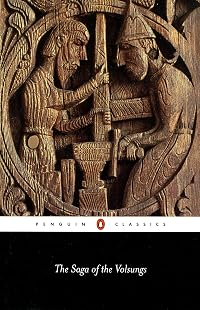
The Saga of the Volsungs
by Anonymous
On This Page
Description
The Saga of the Volsungs is an Icelandic epic of special interest to admirers of Richard Wagner, who drew heavily upon this Norse source in writing his Ring Cycle and a primary source for writers of fantasy such as J. R. R. Tolkien and romantics such as William Morris.A trove of traditional lore, it tells of love, jealousy, vengeance, war, and the mythic deeds of the dragonslayer, Sigurd the Volsung.Byock's comprehensive introduction explores the history, legends, and myths contained in the show more saga and traces the development of a narrative that reaches back to the period of the great folk migrations in Europe when the Roman Empire collapsed. show lessTags
Recommendations



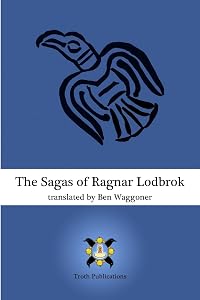
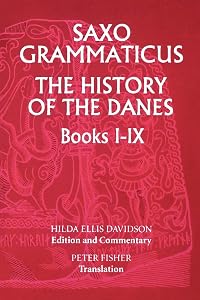
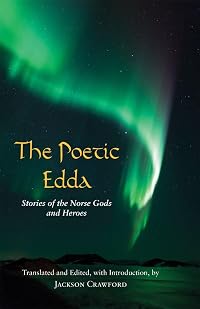
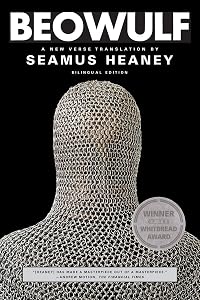
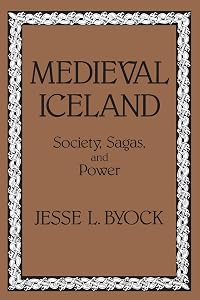



Member Recommendations
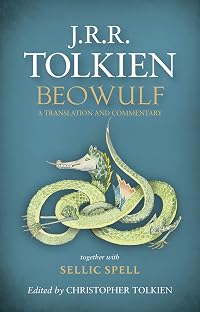
ed.pendragon Worth comparing the original saga (in translation) with Tolkien's modern English version of the tale in verse.
30
isabelx Bloodtide is a really interesting telling of The Saga of the Volsungs.
Member Reviews
If you ever want to rebut the idea that in the past people were nice, read a saga. There's an awful lot of violence in here, all described in a bvery matter of fact manner. The saga is in esence the family lineage of the Volsungs, the deeds of great daring that one of their number commits and how the family line comes to an end. The saga finishes when everyone is dead (pretty much!). This is a modern translation of the surviving manuscript that was recorded in the 13th Century. It is almost certainly based on a much older oral tradition. The introduction spends time discussing the transition in the saga between myth and relative fact, such that there is a folk memory at work here. Once we move from myth there is less incest and child show more killing, but not a lot less violence. The number of times someone is killed by the in-laws makes you wonder why get married at all!
It's fun, it's fast and it is fascinating. The short poetic sections were the best elements of this. show less
It's fun, it's fast and it is fascinating. The short poetic sections were the best elements of this. show less
Do you ever feel like most of the family dramas that you read don't have enough incest and murder? If you've ever felt this way, please check out The Saga of the Volsungs. I don't see what's not to like here- dragon killing, constant betrayal, crossed identities, bloodbaths... these stories are ridiculous but impossible to put down!
Morris took the Völsunga saga, a late 13th century Icelandic prose mixture of heroic deeds, vendetta, court intrigue, the revenge of queens, dragon slaying and a cursed ring, and using this as his source turned it into a powerful and moving English epic poem. I enjoyed this far more than I thought I would. The characters are vivid. The dramatic tension at the center of the poem where the conflicting values of honor, political necessity, love and envy that lead to tragic conclusions is portrayed realistically in rhyming verse with the flavor of a bygone era.
Morris made his Victorian adaptation sound more medieval by liberally sprinkling his modern English with archaic words, for example it’s always held instead of yard or courtyard, show more and dight instead of ordered, thee and thou instead of you, and clingeth instead of clings. However having access to the Oxford English Dictionary—Thank you to the Houston Public Library for making this available online—made it easy for me to decipher these.
This work greatly exceeded my expectations of it. show less
Morris made his Victorian adaptation sound more medieval by liberally sprinkling his modern English with archaic words, for example it’s always held instead of yard or courtyard, show more and dight instead of ordered, thee and thou instead of you, and clingeth instead of clings. However having access to the Oxford English Dictionary—Thank you to the Houston Public Library for making this available online—made it easy for me to decipher these.
This work greatly exceeded my expectations of it. show less
The extant heroic literary core of all things Nordic.
It catalysed Wagner’s Gesamtkunst - which may however have failed the test of modernity - & Tolkien’s ultimately equivalent, but freer, notion of “sub-creation” (=worldbuilding), which today is exploding beyond his wildest dreams.
NB: The Penguin Classics edition features excellent intro, notes, & glossary by the (younger back then) grand old man of Icelandic & Norse studies, Jesse Byock.
It catalysed Wagner’s Gesamtkunst - which may however have failed the test of modernity - & Tolkien’s ultimately equivalent, but freer, notion of “sub-creation” (=worldbuilding), which today is exploding beyond his wildest dreams.
NB: The Penguin Classics edition features excellent intro, notes, & glossary by the (younger back then) grand old man of Icelandic & Norse studies, Jesse Byock.
This is really quite good epic norse poetry, it does go on a bit too long towards the end but overall better than Beowulf and a real treat for any Lord of the Rings fans. You can see the origin of Aragorn and Arwen as well as Eowyn, Gandalf, the ring and Isildur's sword.
Of course the vast differences in where the stories go is also part of the fun. Speaking of fun, you might find it lacking in the latter parts as it turns into a real tragedy, still compelling though. Torn between a 3 or 4 score for this one but a i said a little long winded.
I read the full version (i think) by William Morris 1876.
Of course the vast differences in where the stories go is also part of the fun. Speaking of fun, you might find it lacking in the latter parts as it turns into a real tragedy, still compelling though. Torn between a 3 or 4 score for this one but a i said a little long winded.
I read the full version (i think) by William Morris 1876.
Spoiler! Everybody dies.
This is a fine saga, as sagas go, certainly less focussed on number-of-cattle-owned than Njal's Saga.
Very clearly the product of multiple retellings: events such as the Sigurd/Brynhild meeting are retold a few times, with some hasty back-filling to call one or the other a dream (no doubt in response to some plaintive "Grandpa, you told us they got married last week!" cries), and there is quite a bit of "stay tuned for next week's campfire" prophecy going on.
This is a fine saga, as sagas go, certainly less focussed on number-of-cattle-owned than Njal's Saga.
Very clearly the product of multiple retellings: events such as the Sigurd/Brynhild meeting are retold a few times, with some hasty back-filling to call one or the other a dream (no doubt in response to some plaintive "Grandpa, you told us they got married last week!" cries), and there is quite a bit of "stay tuned for next week's campfire" prophecy going on.
William Morris may be a good writer, but I dislike his translation skills. Working through the language of the translation is a task in and of itself. (My commented to my friend Dave while reading it: "This Volsunga translation is truly f***ing awful.")
That said, the story is quite enjoyable once you get past the awfulness of the translation. I don't why ancient epics always have such a penchant for nefarious things like incest and gratuitously horrific murder, but they do make for a good tale.
Tolkien's [b:The Legend of Sigurd and Gudrun] is a reboot of part of the Volsungasaga, and well worth a read in tandem with this book. Apparently, he quite liked the translation, and he knows more about languages than I do, so take that for what show more it's worth. show less
That said, the story is quite enjoyable once you get past the awfulness of the translation. I don't why ancient epics always have such a penchant for nefarious things like incest and gratuitously horrific murder, but they do make for a good tale.
Tolkien's [b:The Legend of Sigurd and Gudrun] is a reboot of part of the Volsungasaga, and well worth a read in tandem with this book. Apparently, he quite liked the translation, and he knows more about languages than I do, so take that for what show more it's worth. show less
Members
- Recently Added By
Lists

The Nibelungs
32 works; 1 member

CCE 1000 Good Books List
1,033 works; 12 members

Loan Library
38 works; 1 member

r/History Recommended Reading List
603 works; 12 members

How to Read a Book's Recommended Reading List
309 works; 10 members
In Our Time books
4,934 works; 2 members
Author Information
51 Works 14,489 Members
Some Editions
Series
Belongs to Publisher Series
Work Relationships
Is contained in
Is retold in
Is abridged in
Common Knowledge
- Canonical title
- The Saga of the Volsungs
- Original title
- Vǫlsunga saga
- Alternate titles*
- Soga um Volsungarne; Soga um Volsungane
- Original publication date
- 1270 ca. [1270] [1270, 1270] (original manuscript) (original manuscript); 1990 (Byock edition) (Byock edition)
- People/Characters
- Sigurd Sigmundarson; Brynhild Budladottir; Signy Volsungsdottir; Sigmund Volsungsson; Gudrun Gjukadottir; Siggeir (show all 7); Volsung Rerisson
- Important places
- Asgard; Gautland; Hunland
- Dedication
- To my daughter Ashley and the fun we had telling the Sigurd story on a trout fishing trip
(Penguin Classics version, translated by Jesse L. Byock) - First words
- Here we begin by telling of a man who was named Sigi, and it was said that he was the son of Odin.
(translated by Jesse L. Byock) - Last words
- (Click to show. Warning: May contain spoilers.)So ended the lives of Hamdir and Sorli.
(translated by Jesse L. Byock) - Original language
- Old Norse
*Some information comes from Common Knowledge in other languages. Click "Edit" for more information.
Classifications
- Genre
- Fiction and Literature
- DDC/MDS
- 839.63 — Literature & rhetoric German & related literatures Other Germanic literatures Old Norse, Old Icelandic, Icelandic, Faroese literatures Old Norse fiction
- LCC
- PT7287 .V7 .E5 — Language and Literature German, Dutch and Scandinavian literatures Old Norse literature: Old Icelandic and Old Norwegian Individual sagas and historical works
- BISAC
Statistics
- Members
- 1,864
- Popularity
- 11,649
- Reviews
- 21
- Rating
- (3.84)
- Languages
- 8 — Dutch, English, Estonian, French, Italian, Norwegian (Nynorsk), Norwegian, Portuguese (Portugal)
- Media
- Paper, Audiobook, Ebook
- ISBNs
- 75
- ASINs
- 29
