
The Golden Bough
by James George Frazer
On This Page
Description
Sir James George Frazer's The Golden Bough: A Study in Magic and Religion is a broad comparative study of mythology and religion. Treating religion as a cultural phenomenon rather than discussing it from a theological perspective, the effect of The Golden Bough on both European literature and the emerging discipline of anthropology was substantial. The pioneering anthropologist Bronislaw Malinowski said of it: "No sooner had I read this great work than I became immersed in it and enslaved by show more it. I realized then that anthropology, as presented by Sir James Frazer, is a great science, worthy of as much devotion as any of her elder and more exact studies and I became bound to the service of Frazerian anthropology.". show less
Tags
Recommendations












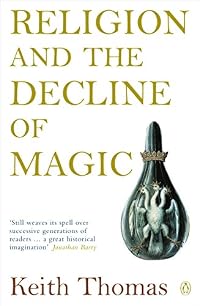


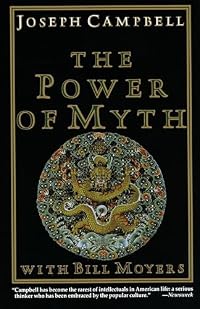


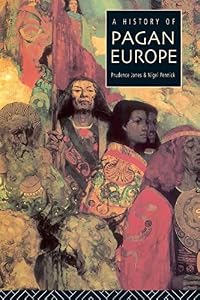
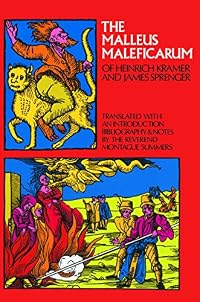











Member Recommendations
Member Reviews
This is a great and fascinating work, steeped in detail and careful scholarship, and very well-written.
The pity is that the underlying assumption of the work, that the customs it details are evidence of a primitive, pan-European, primitive culture was not in fact well founded. There is evidence enough that many of Frazier's pagan survivals were in fact developments of the high middle ages, perhaps immemorial but not antique.
It's still a wonderful and compelling book, as long as one keeps in mind that the patterns it documents are more widely spread in time, and less primitive, than Frazier thought.
The pity is that the underlying assumption of the work, that the customs it details are evidence of a primitive, pan-European, primitive culture was not in fact well founded. There is evidence enough that many of Frazier's pagan survivals were in fact developments of the high middle ages, perhaps immemorial but not antique.
It's still a wonderful and compelling book, as long as one keeps in mind that the patterns it documents are more widely spread in time, and less primitive, than Frazier thought.
So this is the condensed version, only about a thousand pages, but still full of fascinating tidbits of folklore and culture, and some very incisive theorizing about human belief patterns and theories of culture to link it all together. Very much a product of its times, but if you can get past the (generally mild) period imperialism, the meat of the book is still good.
It's very obviously condensed, though, and therefore I find it best dipped into in small portions. I've no idea how the 12-volume version compares - even the one up in Preject Gutenberg is the condensed edition, as far as I can tell - but I'd like to put down the book's tendency to list a bunch of apparently unrelated facts, then a bald theory, then some more random facts, show more to the abridging process. Unfortunately it's a style that was picked up by a lot of less rigorous researchers into the liminal spaces (erikvondaniken *cough*), with unfortunate results.
But if you're at all interested in magic or folklore or myth or culture, this is a classic, the basis of a lot of fiction and all later theoretical work (even the works that have partially overturned it) and, for all my caveats, still suprisingly readable - a great bedtime book. show less
It's very obviously condensed, though, and therefore I find it best dipped into in small portions. I've no idea how the 12-volume version compares - even the one up in Preject Gutenberg is the condensed edition, as far as I can tell - but I'd like to put down the book's tendency to list a bunch of apparently unrelated facts, then a bald theory, then some more random facts, show more to the abridging process. Unfortunately it's a style that was picked up by a lot of less rigorous researchers into the liminal spaces (erikvondaniken *cough*), with unfortunate results.
But if you're at all interested in magic or folklore or myth or culture, this is a classic, the basis of a lot of fiction and all later theoretical work (even the works that have partially overturned it) and, for all my caveats, still suprisingly readable - a great bedtime book. show less
So far, while it does a lot of mythological name-dropping, and the very thin veil of a theme seems accurate, I'm tempted to say that this book is a real mess. Goddesses with mixed up attributes, bald-faced assumptions about ancient societies, and rampant misspellings almost turn me off. And yet, I have stamina. I have fortitude. I shall endure another escaped slave trying to murder me so he can break off the branch of my sacred tree and so take my place.
Some random, albeit unfortunate, quotes:
"And they were forced to lay upon some erections."
"And she was given the gift of a cock."
Seriously enough, I've been very impressed by the work. Ok, so on my ebook reader, it only runs up to a little under 1500 pages, and there are at least a dozen show more accounts as proof of each point. I cannot, in good faith, find fault with much of his conclusions. I was astonished to realize how many assumptions I had held about Osiris were completely balderdash. At least I've been put to rights about the real reason he was worshiped. Hint: it wasn't because they never found his penis.
Overall, the main themes are drilled into our skulls so thoroughly that there's no way we could ever forget them, even if we tried. The best and the worst that I can say for this work is that it is very thorough. I can honestly say I've heard discussions of the many themes, as I'm sure most of us have; fertility deities, all manifestations thereof.
What I was most astonished to feel, after reading this work, was a great sadness. I look back at all of the thousands of cultures that have independently worshiped the same principles over time and see how they were systematically wiped out as "poppycock", and I wonder about the now-lost depth of understanding that is now lost to time and chronos... and I wonder if Uranus ever did find his penis. show less
Some random, albeit unfortunate, quotes:
"And they were forced to lay upon some erections."
"And she was given the gift of a cock."
Seriously enough, I've been very impressed by the work. Ok, so on my ebook reader, it only runs up to a little under 1500 pages, and there are at least a dozen show more accounts as proof of each point. I cannot, in good faith, find fault with much of his conclusions. I was astonished to realize how many assumptions I had held about Osiris were completely balderdash. At least I've been put to rights about the real reason he was worshiped. Hint: it wasn't because they never found his penis.
Overall, the main themes are drilled into our skulls so thoroughly that there's no way we could ever forget them, even if we tried. The best and the worst that I can say for this work is that it is very thorough. I can honestly say I've heard discussions of the many themes, as I'm sure most of us have; fertility deities, all manifestations thereof.
What I was most astonished to feel, after reading this work, was a great sadness. I look back at all of the thousands of cultures that have independently worshiped the same principles over time and see how they were systematically wiped out as "poppycock", and I wonder about the now-lost depth of understanding that is now lost to time and chronos... and I wonder if Uranus ever did find his penis. show less
Thank you for the abridged edition, Sir James. Even the abridgment contains a confounding amount of information and examples. Like any attempt to shoehorn a large portion of human behavior into one theory, the book has its problems. While a classic of its time it is no longer considered authoritative in the field. I wouldn't consider it a "must read" but it certainly illustrates the amazing complexity of magical and religious customs around the world.
The Foreword compares Frazer and Golden Bough in its impact to such revolutionary thinkers of the 19th Century as Darwin, Marx, and Freud. This seminal work of anthropology and comparative religion first published in 1890 was in fact a great influence on Freud and Jung as well as T.S. Eliot and Yeats and the modern Neopagan movement. Frazer's influence on Joseph Campbell is obvious--he's the original. Frazer tries to argue for the monomyth--the idea that religion and myth can be reduced to a few universal principles and symbols such as sacrifice, scapegoats, the soul and totem and taboo. Taking an ancient Roman custom involving the "King of the Wood" at Nemi as his launching pad, Frazer examined myths and folktales from every part of show more the world and drew connections to explain, as the subtitle on the cover of my copy put it, "the roots of religion and folklore." His argument seems to be that the origins of religion can be found in a crude science, an attempt to influence the world through sympathetic magic. Although he never attacked Christianity directly in this original edition, I could see how the idea of Jesus as entirely myth could come out of this book. Frazer's examination of vegetation deities, cycles of sowing and reaping and kingly sacrifice and his examination of the myths of Ishtar and Thammuz, Isis and Osiris, Aphrodite and Adonis and spring fertility rites is certainly suggestive.
I often found this book tedious, primarily because of Frazer's exhaustive examples--and the edition I read is the original two-volume work--before he, as the Foreword put it, "overburdened the book with volumes of illustrative examples which tended to hide the thread of his argument." (Twelve volumes in fact.) In his pile-on it reminded me of my recent read of the original edition of Darwin's Origin of Species. This was a time when science wasn't yet so technical and specialized as to be unduly esoteric to the layman. So as with Darwin, I think Frazer was aiming his book at both his scientific brethren as well as the layman--thus the exhaustive examples in an effort to prove his theories. However, unlike the case with Darwin, I believe Frazer's examples do more to hide--nay, bury--his argument rather than illustrate it, even in this original more compact edition. More and more I found myself skimming. There is an abridged edition from the author, but my understanding from reviews is that it excised a lot of the more controversial and interesting parts found in the expanded versions, such as a chapter on "The Crucifixion of Christ." Also as with Darwin, who didn't at the time have the advantages of our advances in genetics and geology, I suspect much of the anthropology in Golden Bough is outdated. Especially given that unlike Darwin, who famously conducted many observations in the field and experiments of his own, Frazer seemed to entirely rely on second-hand accounts, mostly by travelers and missionaries. Nor do I entirely buy Frazer's contention that modern peasant customs and folklore represented a continuity with a pagan past.
Some may be put off by Frazer's characterization of peoples as "rude" and "savages." To his credit though, Frazer doesn't exempt Europe or Britain in his examples of primitive rituals and superstitions. Given that and the context of the times, I don't as some reviewers do see this book as essentially racist. Frazer notes, "when all is said and done our resemblances to the savage are still far more numerous than our differences from him." This book reminded me, of all things, of Chinua Achebe's Things Fall Apart. That novel is famous as a denunciation of colonialism. But one of the things I took away from Achebe's book was that the Christian missionaries gained adherents because they freed their converts from frightening and oppressive superstitions that propagated slavery, infanticide and human sacrifice. As much as I can see the ugly side of the history of modern monotheistic creeds such as Christianity, I think we forget that much of the legacy of polytheistic pagan beliefs isn't as pretty as many of its New Age adherents would have it. This book--for all I suspected the accuracy of many details--was a salutary reminder of that with its tales of scapegoating, sacrifices and taboos. Ironically, Frazer's successors, such as Joseph Campbell, have formed a new myth of the "noble savage," of a pagan and pre-historic past as egalitarian and in harmony with nature. We seem to have few fans of civilization and reason these days. It's ironic that a book that tried to explain the spiritual scientifically might have contributed to that. Ultimately I'm glad I read it, and I'm keeping it on my shelves, at least for now, as a rather thorough reference book of beliefs and rites across cultures and ages--or at least as far as was known over a century ago. show less
I often found this book tedious, primarily because of Frazer's exhaustive examples--and the edition I read is the original two-volume work--before he, as the Foreword put it, "overburdened the book with volumes of illustrative examples which tended to hide the thread of his argument." (Twelve volumes in fact.) In his pile-on it reminded me of my recent read of the original edition of Darwin's Origin of Species. This was a time when science wasn't yet so technical and specialized as to be unduly esoteric to the layman. So as with Darwin, I think Frazer was aiming his book at both his scientific brethren as well as the layman--thus the exhaustive examples in an effort to prove his theories. However, unlike the case with Darwin, I believe Frazer's examples do more to hide--nay, bury--his argument rather than illustrate it, even in this original more compact edition. More and more I found myself skimming. There is an abridged edition from the author, but my understanding from reviews is that it excised a lot of the more controversial and interesting parts found in the expanded versions, such as a chapter on "The Crucifixion of Christ." Also as with Darwin, who didn't at the time have the advantages of our advances in genetics and geology, I suspect much of the anthropology in Golden Bough is outdated. Especially given that unlike Darwin, who famously conducted many observations in the field and experiments of his own, Frazer seemed to entirely rely on second-hand accounts, mostly by travelers and missionaries. Nor do I entirely buy Frazer's contention that modern peasant customs and folklore represented a continuity with a pagan past.
Some may be put off by Frazer's characterization of peoples as "rude" and "savages." To his credit though, Frazer doesn't exempt Europe or Britain in his examples of primitive rituals and superstitions. Given that and the context of the times, I don't as some reviewers do see this book as essentially racist. Frazer notes, "when all is said and done our resemblances to the savage are still far more numerous than our differences from him." This book reminded me, of all things, of Chinua Achebe's Things Fall Apart. That novel is famous as a denunciation of colonialism. But one of the things I took away from Achebe's book was that the Christian missionaries gained adherents because they freed their converts from frightening and oppressive superstitions that propagated slavery, infanticide and human sacrifice. As much as I can see the ugly side of the history of modern monotheistic creeds such as Christianity, I think we forget that much of the legacy of polytheistic pagan beliefs isn't as pretty as many of its New Age adherents would have it. This book--for all I suspected the accuracy of many details--was a salutary reminder of that with its tales of scapegoating, sacrifices and taboos. Ironically, Frazer's successors, such as Joseph Campbell, have formed a new myth of the "noble savage," of a pagan and pre-historic past as egalitarian and in harmony with nature. We seem to have few fans of civilization and reason these days. It's ironic that a book that tried to explain the spiritual scientifically might have contributed to that. Ultimately I'm glad I read it, and I'm keeping it on my shelves, at least for now, as a rather thorough reference book of beliefs and rites across cultures and ages--or at least as far as was known over a century ago. show less
Remarkable in scope, arrogant and close to fascistic in its adoration of social hierarchy, still, a guide for the ages on the meaning of rites, rituals and folklore.
Nostalgia for bygone primitive days irks me. People in cold climates look the life of Western Samoans and sigh for simple ways. Looking with longing to hunt-gat days, people nowadays may think a man’s life was hunting, fishing, making and maintaining tools, fighting over territory against strangers. For 30 or so years, not a life hard to take…. In fact, hunter-gatherers were hemmed in by magic, taboos and superstitions that filled life with nonsense and fear. James Frazer’s classic "The Golden Bough" (1890) is still worth reading because it shows our endless, though often misguided and bizarre, ingenuity at attempting to explain how the world works.
Frazer includes amazing descriptions of religious rites and ceremonies and offers show more interpretations from the “savageâÂ? point of view. FrazerâÂÂs thesis is that there is a universal progression from magic to religion to science: Primitive people first attempt to understand, predict, and control nature through magic. When they realize they shouldnâÂÂt put all their eggs in the magic basket, they turn to rituals meant to appease supernatural forces. It's good reading though the state of knowledge has gone beyond Frazer. show less
Frazer includes amazing descriptions of religious rites and ceremonies and offers show more interpretations from the “savageâÂ? point of view. FrazerâÂÂs thesis is that there is a universal progression from magic to religion to science: Primitive people first attempt to understand, predict, and control nature through magic. When they realize they shouldnâÂÂt put all their eggs in the magic basket, they turn to rituals meant to appease supernatural forces. It's good reading though the state of knowledge has gone beyond Frazer. show less
Members
- Recently Added By
Lists

Non-Fiction Worth Reading
1,015 works; 260 members

Big History
72 works; 1 member

Classics you know you should have read but probably haven't
421 works; 406 members

Trinity College Booklist (1951): Class Two, Social and Psychological Scienc
60 works; 3 members

Books mentioned in Fire and Hemlock by Diana Wynne Jones
33 works; 1 member

Greatest Books, allegedly
484 works; 9 members

Just Kids by Patti Smith
43 works; 1 member
Works cited in The New Science of the Enchanted Universe by Marshall Sahlin
141 works; 1 member

Mythology
9 works; 2 members

Folk Horror
5 works; 1 member

Unread books
1,063 works; 83 members
Author Information

James George Frazer was a British social anthropologist, folklorist, and classical scholar who taught for most of his life at Trinity College, Cambridge. Greatly influenced by Edward Burnett Tylor's Primitive Culture, published in 1871, he wrote The Golden Bough (1890), a massive reconstruction of the whole of human thought and custom through the show more successive stages of magic, religion, and science.The Golden Bough is regarded by many today as a much-loved but antiquated relic, but, by making anthropological data and knowledge academically respectable, Frazer made modern comparative anthropology possible. (Bowker Author Biography) show less
Some Editions
Awards and Honors
Notable Lists
Series
Belongs to Publisher Series
Macmillan Papermac (P54)
Canongate Classics (114)
Work Relationships
Is an abridged version of
Is abridged in
Has as a study
Has as a supplement
Has as a student's study guide
Common Knowledge
- Canonical title
- The Golden Bough
- Original title
- The Golden Bough: A study in Magic and Religion
- Original publication date
- 1890 (2 volumes) (2 volumes); 1900 (3 volumes) (3 volumes); 1915 (12 volumes) (12 volumes); 1922 (abridged edition) (abridged edition)
- Important places
- Nemi, Italy
- Epigraph
- Longior undecimi nobis decimique libelli
Artatus labor est et breve rasit opus.
Plura legant vacui.
MARTIAL, xii. S. - First words
- Who does not know Turner’s picture of the Golden Bough?
- Quotations
- In the Fricktal, Switzerland, at Whitsuntide boys go out into a wood and swathe one of their number in leafy boughs. He is called the Whitsuntide-lout, and being mounted on horseback with a green branch in his hand he is led ... (show all)back into the village. At the village-well a halt is called and the leaf-clad lout is dismounted and ducked in the trough. Thereby he acquires the right of sprinkling water on everybody, and he exercises the right specially on girls and street urchins. The urchins march before him in bands begging him to give them a Whitsuntide wetting.
- Last words
- (Click to show. Warning: May contain spoilers.)Ave Maria!
- Blurbers
- Montagu, M.F. Ashley; Chase, Harry Woodburn; Becker, May Lamberton
- Original language
- English
- Disambiguation notice
- Frazer's own 1922 abridgment of his 12-volume work, originally published in two volumes but now usually published in one. Please don't combine with the multi-volume (8 to 15 volumes) sets, with any of its separate volumes, no... (show all)r with either of the the "new" abridgments edited by Theodore Gaster (1959) or Robert Fraser (1998), nor with any edition titled Illustrated Golden Bough, of which there are at least two with different editors doing the abridgment, unless you know they are using the 1922 Frazer text. To add to the confusion, some editions claim to be "unabridged" because they are unabridged from Frazer's original 1890 two-volume publication, not the best-known multi-volume third edition (1906-1915).
Wikipedia entry for Golden Bough:
http://en.wikipedia.org/wiki/The_Gold...
Classifications
- Genres
- Anthropology, Religion & Spirituality, Nonfiction, General Nonfiction, History
- DDC/MDS
- 291 — Religion Other religions [Formerly: General Religious Topics]
- LCC
- BL310 .F72 — Philosophy, Psychology and Religion Religions. Mythology. Rationalism Religions. Mythology. Rationalism The myth. Comparative mythology
- BISAC
Statistics
- Members
- 4,511
- Popularity
- 3,241
- Reviews
- 30
- Rating
- (3.89)
- Languages
- 14 — Bulgarian, Chinese, Dutch, English, Estonian, German, Greek, Hungarian, Italian, Polish, Portuguese, Spanish, Swedish, Turkish
- Media
- Paper, Audiobook, Ebook
- ISBNs
- 138
- UPCs
- 3
- ASINs
- 80