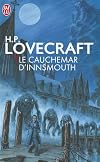
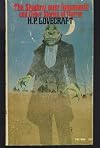
The Shadow Over Innsmouth and Other Stories of Horror
by H. P. Lovecraft
On This Page
Description
Un thriller fantastique sous forme de descente aux enfers au coeur d'une ville portuaire pleine de mystère et de légendes effroyables portant le nom maudit d'Innsmouth.Résumé :Un jeune homme passionné d'antiquités et de généalogie entame une visite de la Nouvelle-Angleterre lorsque son attention se porte sur une mystérieuse ville sinistrée et lugubre répondant au nom d'Innsmouth. Inexorablement attiré par elle, il ignore les nombreuses mises en garde, les glaçantes rumeurs et show more les effroyables légendes à son sujet et décide de s'y rendre. Quelle est cette mystérieuse maladie qui semble affecter les habitants d'Innsmouth ? Que se passe-t-il sur le récif du diable au large du port les nuits de pleine lune ? Autant de questions qui trouveront leurs réponses dans une expérience qui va s'avérer bien plus profonde que le narrateur n'aurait pu l'imaginer.- LE CULTE DE CTHULHU : TOME 1 -Le Cauchemar D'Innsmouth représente le premier tome de la collection "Le Culte de Cthulhu" dirigée par Chambre Noire.TOME 2 : L'Appel de Cthulhu (H.P. Lovecraft)TOME 3 : L'Abomination de Dunwich (H.P. Lovecraft)TOME 4 : Dagon (H.P. Lovecraft)TOME 5 : Les Montagnes Hallucinées (H.P. Lovecraft) - À PROPOS DU TRADUCTEUR -Fervent adorateur des écrits de Howard Phillips Lovecraft depuis qu'il est en âge de lire, Florian P. Dennisson s'évertue depuis plus de 25 ans à perpétuer l'héritage laissé par l'écrivain américain, toujours en quête du mot juste et cherchant à coller au plus près à l'essence même de ce que l'auteur a voulu nous livrer. Quelque peu dérouté voire déçu par les traductions françaises proposées, il a utilisé sa connaissance poussée de la langue anglo-saxonne dans un projet de remise au goût du jour de l'ensemble de l'oeuvre du pionnier de la littérature d'horreur. C'est selon cette approche que Florian Dennisson a proposé ses traductions à Chambre Noire qui publiera Le Cauchemar d'Innsmouth, L'Appel de Cthulhu, L'Abomination de Dunwich, Les Montagnes Hallucinées et Dagon, cinq oeuvres majeures de Lovecraft qui ont nécessairement marqué les aficionados et qui éveilleront sans aucun doute la curiosité de futurs lecteurs. show lessTags
Recommendations














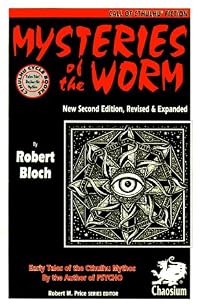
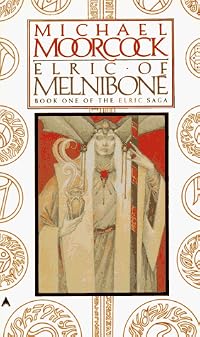

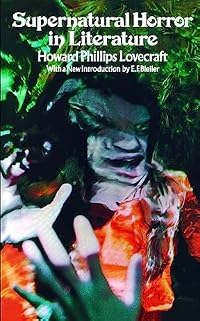
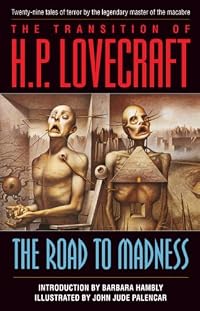
Member Recommendations

Member Reviews
A collection of six short stories and one novella, some of which I'd read before and some I hadn't.
My general opinion of H.P. Lovecraft, based on what I'd previously read, is that at his best he had a keen ability to tap into the overwhelmed and overwhelming feelings that humans can sometimes experience when confronted with the incomprehensibly unfamiliar and the inconceivably immense. And his mythology, full of sleeping ancient gods and mad cultists, is a lot of fun to play around with, as a great many talented folks have done. On the other hand, my impression was that his writing could be somewhat tedious and his style overwrought to the point that it not only is it far too easily parodied, but it almost manages to do the job itself. show more This particular collection did cause me to revise my opinion of his writing abilities upward a bit, though. And I think he only uses the word "cyclopean" twice in the first six stories (before "Innsmouth" comes along and doubles the count).
A breakdown on the stories:
"The Colour Out of Space": This was the first Lovecraft story I ever read, by a couple of decades, and I remembered being pretty disturbed by it back in the day. I'm pleased to be able to report that, unlike a lot of stuff I read when I was a teenager, it holds up extremely well. It's a compelling, seriously creepy story that thoroughly captures the uneasy, uncanny feeling of ordinary, familiar things slowly growing twisted and strange. It also illustrates quite nicely the fact, often forgotten today, that sometimes saying "It was too horrible to describe" really is more effective than actually describing whatever-it-is.
"The Outsider": A strange little piece -- well, strange in slightly different ways than Lovecraft usually is, I guess -- that culminates in a twist that might have been chilling if it weren't obvious a mile away. Mostly it left me wondering what the heck the backstory was, since it's never really explained.
"Imprisoned with the Pharaohs": This one was ghost-written for Harry Houdini, who is also the main character. Which fact is, I think, more interesting than the story itself. There's way too much set-up for too little payoff, and the whole thing relies a bit too much on a sort of "Ooh, isn't Egypt ancient and mysterious and exotic?" vibe that seems a little quaint today.
"The Transition of Juan Romero": Short and very slight story about miners who disturb... something. OK, this one could have done with a little less "I dare not tell you" and a little more description; I actually had to flip back and check to see if I'd missed something.
"In the Walls of Eryx": A science fiction story about a man trapped in an invisible labyrinth in the jungles of Venus. It's better written than most SF of the time, and the scenario struck a particularly nightmarish chord for me, completely lacking in a sense of direction as I am. I'd actually read this one before, too, and the story had stuck with me, but I'd completely forgotten that Lovecraft had written it, so I was pleasantly surprised to encounter it here.
"The Festival": A Christmas story! Sort of. This one didn't make much of an impression, which is too bad, because a Lovecraft Christmas story sounds like it ought to be a particularly demented kind of wonderful. But mostly it's just one of those pieces where he reads like he's swallowed a particularly morbid thesaurus.
"The Shadow over Innsmouth": This tale of a decaying New England town that brings whole new levels of meaning to the word "fishy" is undoubtedly one of Lovecraft's best known works. There's probably good reason for that. It's an interesting story, with a moderately creepy premise and a lot of great attention to detail. Unfortunately, much of the most important exposition is written in a really annoying example of phonetic dialect, and there's a faint whiff of xenophobia to the whole thing that makes me mildly uncomfortable in ways the author never intended.
Rating: 4/5, mostly on the strength of "The Colour Out of Space" and "In the Walls of Eryx." show less
My general opinion of H.P. Lovecraft, based on what I'd previously read, is that at his best he had a keen ability to tap into the overwhelmed and overwhelming feelings that humans can sometimes experience when confronted with the incomprehensibly unfamiliar and the inconceivably immense. And his mythology, full of sleeping ancient gods and mad cultists, is a lot of fun to play around with, as a great many talented folks have done. On the other hand, my impression was that his writing could be somewhat tedious and his style overwrought to the point that it not only is it far too easily parodied, but it almost manages to do the job itself. show more This particular collection did cause me to revise my opinion of his writing abilities upward a bit, though. And I think he only uses the word "cyclopean" twice in the first six stories (before "Innsmouth" comes along and doubles the count).
A breakdown on the stories:
"The Colour Out of Space": This was the first Lovecraft story I ever read, by a couple of decades, and I remembered being pretty disturbed by it back in the day. I'm pleased to be able to report that, unlike a lot of stuff I read when I was a teenager, it holds up extremely well. It's a compelling, seriously creepy story that thoroughly captures the uneasy, uncanny feeling of ordinary, familiar things slowly growing twisted and strange. It also illustrates quite nicely the fact, often forgotten today, that sometimes saying "It was too horrible to describe" really is more effective than actually describing whatever-it-is.
"The Outsider": A strange little piece -- well, strange in slightly different ways than Lovecraft usually is, I guess -- that culminates in a twist that might have been chilling if it weren't obvious a mile away. Mostly it left me wondering what the heck the backstory was, since it's never really explained.
"Imprisoned with the Pharaohs": This one was ghost-written for Harry Houdini, who is also the main character. Which fact is, I think, more interesting than the story itself. There's way too much set-up for too little payoff, and the whole thing relies a bit too much on a sort of "Ooh, isn't Egypt ancient and mysterious and exotic?" vibe that seems a little quaint today.
"The Transition of Juan Romero": Short and very slight story about miners who disturb... something. OK, this one could have done with a little less "I dare not tell you" and a little more description; I actually had to flip back and check to see if I'd missed something.
"In the Walls of Eryx": A science fiction story about a man trapped in an invisible labyrinth in the jungles of Venus. It's better written than most SF of the time, and the scenario struck a particularly nightmarish chord for me, completely lacking in a sense of direction as I am. I'd actually read this one before, too, and the story had stuck with me, but I'd completely forgotten that Lovecraft had written it, so I was pleasantly surprised to encounter it here.
"The Festival": A Christmas story! Sort of. This one didn't make much of an impression, which is too bad, because a Lovecraft Christmas story sounds like it ought to be a particularly demented kind of wonderful. But mostly it's just one of those pieces where he reads like he's swallowed a particularly morbid thesaurus.
"The Shadow over Innsmouth": This tale of a decaying New England town that brings whole new levels of meaning to the word "fishy" is undoubtedly one of Lovecraft's best known works. There's probably good reason for that. It's an interesting story, with a moderately creepy premise and a lot of great attention to detail. Unfortunately, much of the most important exposition is written in a really annoying example of phonetic dialect, and there's a faint whiff of xenophobia to the whole thing that makes me mildly uncomfortable in ways the author never intended.
Rating: 4/5, mostly on the strength of "The Colour Out of Space" and "In the Walls of Eryx." show less
"The Shadow over Innsmouth" is the best thing Lovecraft ever wrote. Once read, its feeling of suspense and decay will never leave you.
This contains the title story that is probably the best short story of the 20th century; certainly it is one of the best Lovecraft stories. A fellow goes travelling to Arkam, and is drawn into Innsmouth through some inner attraction. The place smells badly of fish and he finds a drunk who tells him a weird story. The story comes true as he is forced to stay in town that night.. Fortunately, he is aware of danger enouigh to put a throw lock on his door (where it had just VERY recently been taken off). The description of the events through to the end of the book are most excellent and one can see the horror in his mind. Many think "The Colour Out of Space" is Lovecraft's best story, and it IS excellent, too, but it lacks the immediacy and show more pacing of the "Shadonw" story. show less
Actually, what I have is called "The Weird Shadow Over Innsmouth", and is just an e-book on my phone, which I read while at the laundromat.
While entertaining, I don't actually feel very terrified while reading these stories. Sorry, dude.
While entertaining, I don't actually feel very terrified while reading these stories. Sorry, dude.
Ratings
Members
- Recently Added By
Lists

Short Books to Read
14 works; 2 members
Author Information

Howard Phillips Lovecraft, 1890 - 1937 H. P. Lovecraft was born on August 20, 1890 in Providence, Rhode Island. His mother was Sarah Susan Phillips Lovecraft and his father was Winfield Scott Lovecraft, a traveling salesman for Gorham & Co. Silversmtihs. Lovecraft was reciting poetry at the age of two and when he was three years old, his father show more suffered a mental breakdown and was admitted to Butler Hospital. He spent five years there before dying on July 19, 1898 of paresis, a form of neurosyphillis. During those five years, Lovecraft was told that his father was paralyzed and in a coma, which was not the case. His mother, two aunts and grandfather were now bringing up Lovecraft. He suffered from frequent illnesses as a boy, many of which were psychological. He began writing between the ages of six and seven and, at about the age of eight, he discovered science. He began to produce the hectographed journals, "The Scientific Gazette" (1899-1907) and "The Rhode Island Journal of Astronomy" (1903-07). His first appearance in print happened, in 1906, when he wrote a letter on an astronomical matter to The Providence Sunday Journal. A short time later, he began writing a monthly astronomy column for The Pawtuxet Valley Gleaner - a rural paper. He also wrote columns for The Providence Tribune (1906-08), The Providence Evening News (1914-18), The Asheville (N.C.) Gazette-News (1915). In 1904, his grandfather died and the family suffered severe financial difficulties, which forced him and his mother to move out of their Victorian home. Devastated by this, he apparently contemplated suicide. In 1908, before graduating from high school, he suffered a nervous breakdown. He didn't receive a diploma and failed to get into Brown University, both of which caused him great shame. Lovecraft was not heard from for five years, re-emerging because of a letter he wrote in protest to Fred Jackson's love story in The Argosy. His letter was published in 1913 and caused great controversy, which was noted by Edward F. Daas, President of the United Amateur Press Association (UAPA). Daas invited Lovecraft to join the UAPA, which he did in early 1914. He eventually became President and Official Editor of the UAPA and served briefly as President of the rival National Amateur Press Association (NAPA). He published thirteen issues of his own paper, The Conservative (1915-23) and contributed poetry and essays to other journals. He also wrote some fiction which titles include "The Beast in the Cave" (1905), "The Alchemist" (1908), "The Tomb" and "Dagon" (1917). In 1919, Lovecraft's mother was deteriorating, mentally and physically, and was admitted to Butler Hospital. On May 24, 1921, his mother died from a gall bladder operation. While attending an amateur journalism convention in Boston, Lovecraft met his future wife Sonia Haft Greene, a Russian Jew. They were married on March 3, 1924 and Lovecraft moved to her apartment in Brooklyn. Sonia had a shop on Fifth Avenue that went bankrupt. In 1925, Sonia went to Cleveland for a job and Lovecraft moved to a smaller apartment in the Red Hook district of Brooklyn. In 1926, he decided to move back to Providence. Lovecraft had his aunts bar his wife, Sonia, from going to Providence to start a business because he couldn't have the stigma of a tradeswoman wife. They were divorced in 1929. After his return to Providence, he wrote his greatest fiction, which included the titles "The Call of Cthulhu" (1926), "At the Mountains of Madness" (1931), and "The Shadow Out of Time" (1934-35). In 1932, his aunt, Mrs. Clark, died; and he moved in with his other aunt, Mrs. Gamwell, in 1933. Suffering from cancer of the intestine, Lovecraft was admitted to Jane Brown Memorial Hospital and on March 15, 1937 he died. (Bowker Author Biography) show less
Some Editions
Awards and Honors
Notable Lists
Series
Belongs to Publisher Series
Work Relationships
Contains
Inspired
Common Knowledge
- Canonical title
- The Shadow Over Innsmouth and Other Stories of Horror
- Original publication date
- 1931
- Important places
- Innsmouth, Massachusetts, USA; Arkham, Massachusetts, USA
- Important events
- the Innsmouth raid
- Related movies
- Cthulhu (2007 | IMDb); Call of Cthulhu: Dark Corners of the Earth (2005 | IMDb)
- First words
- If...You enjoy the fun of being frightened by a good, ghastly, ghostly story... (A Word to the Reader...)
- Last words
- (Click to show. Warning: May contain spoilers.)Without this encouragement, many of us would never have gone on hoping and trying to be writers. (A Word to the Reader...)
- Original language
- English
- Canonical DDC/MDS
- 813.087340
- Disambiguation notice
- This is a collection of short stories. Do not combine with the short story "The Shadow over Innsmouth"
Classifications
- Genres
- Horror, Fiction and Literature, Science Fiction
- DDC/MDS
- 813.087340 — Literature & rhetoric American literature in English American fiction in English By type Genre fiction Adventure fiction Horror fiction; Ghost fiction Weird fiction Cosmic horror
- LCC
- PS3523 .O833 — Language and Literature American literature American literature Individual authors 1900-1960
- BISAC
Statistics
- Members
- 277
- Popularity
- 115,847
- Reviews
- 4
- Rating
- (4.03)
- Languages
- English, French
- Media
- Paper, Ebook
- ISBNs
- 3
- ASINs
- 7