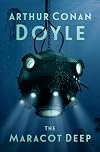
The Maracot Deep
by Sir Arthur Conan Doyle
On This Page
Description
A team of deep-sea explorers discovers an underwater society and more in this thrilling adventure from the creator of Sherlock Holmes. Professor Maracot organizes an expedition to examine the area surrounding the deepest pit in the Atlantic Ocean and catalogue wildlife. But a terrifying attack changes the group's plans, cuts them off from the surface, and sends them plummeting into the abyss. A world of surprises awaits them at the bottom of the ocean, including survivors of the lost show more civilization of Atlantis, fascinating technology and ruins, amazing creatures, and even the face of evil itself . . . show lessTags
Recommendations















Member Recommendations

Member Reviews
It is far from his best work but, in his final novel, Sir Arthur Conan Doyle delivers a short and agreeable piece of routine adventure fiction. The Maracot Deep is, for the most part, a sea-adventure in the tradition of Jules Verne: three men, led by the brilliant professor Maracot, are descending into the depths of an ocean abyss – the titular Maracot Deep, named after its primary explorer – in a diving bell. After their lifeline is severed by a sea monster, they plunge deeper and deeper, beyond hope of rescue.
At the sea bottom, they discover the lost city of Atlantis, beginning the novel's second act. As lost cities go, I found this one a bit underwhelming. The Maracot Deep failed to truly bring out the wonder of this iconic show more legend, which has fascinated us ever since "Plato's report of Egyptian gossip" (pg. 42). Doyle's telling is conventional – Atlantis was an advanced civilisation, a 'missing link' which had "thrown out one arm to Central America and one to Egypt, and so left traces of themselves" (pg. 63) before collapsing into volcanic apocalypse and the tumult of the waves. By the time Maracot and his companions – Headley, who narrates the story, and Scanlan – encounter it, it is a diminished outpost of a few thousand people. To make the bit work, Doyle hand-waves away the scientific problems of water pressure at such crushing depths (in short, our established science is shown to be wrong), the darkness (Doyle's ocean floor is bioluminescent), and of oxygen (the Atlanteans have an advanced technology which is effectively an oxygen bubble worn around the head).
It's fine pulp-adventure fare, but no more than that. Nothing much is done with Doyle's Atlantis and its community never impresses itself upon the reader. Development of both plot and world-building is nil, and the sub-plot of Headley's love-interest, an Atlantean girl named Mona, is so sparse that I don't know why Doyle even bothered. Even by the standards of such gentleman-adventures, where women and romance are inconvenient distractions to all the manly exploration and camaraderie, The Maracot Deep felt shallow here.
Nevertheless, the novel sprung a strange surprise in its third and final act. Indulging Doyle's mysticism and spiritualism, which emerged towards the end of his life, the narrator Headley relates the three explorers' encounter with an ancient demon, once worshipped by some castes of Atlantis. Taking in ideas of reincarnation, a spiritual battle between good and evil, and outright magic, it was an abrupt shift in tone from the (broadly speaking) analytical and science-based fiction of the preceding acts.
The confrontation with this Ba'al-like demon reads like an abridged Tolkien, anticipating Gandalf's battle with the Balrog in The Lord of the Rings ("Go down into the Hell that has been waiting for you so long," Doyle has one of his characters incant on pages 147-8. "You are a prince of darkness. Go where the darkness is.") Even more peculiar was the demon's introductory boast on page 139, which had me wondering if Mikhail Bulgakov, who started writing The Master and Margarita in the year Doyle published The Maracot Deep, had ever come across some edition of it. "I am the master of the mob," Doyle's debonair devil says. "Where evil has been planned there have I ever been. I was with the Huns when they laid half Europe in ruins. I was with the Saracens when under the name of religion they put to the sword all who gainsayed them. I was out on Bartholomew's night. I lay behind the slave trade. It was my whisper which burned ten thousand old crones whom the fools called witches. I was the tall dark man who led the mob in Paris when the streets swam in blood. Rare times those, but they have been even better of late in Russia."
Many will find this end to the story more than a little bit kooky, but I quite liked Doyle's muddying of the waters here. It at least brought a bit of froth to what was threatening to become stale. Arthur Conan Doyle's final novel is for the most part hasty and conventional, but its emergent oddness meant "in some ways I wish that we could have stayed longer in the Maracot Deep for there were many mysteries there…" (pg. 110) show less
At the sea bottom, they discover the lost city of Atlantis, beginning the novel's second act. As lost cities go, I found this one a bit underwhelming. The Maracot Deep failed to truly bring out the wonder of this iconic show more legend, which has fascinated us ever since "Plato's report of Egyptian gossip" (pg. 42). Doyle's telling is conventional – Atlantis was an advanced civilisation, a 'missing link' which had "thrown out one arm to Central America and one to Egypt, and so left traces of themselves" (pg. 63) before collapsing into volcanic apocalypse and the tumult of the waves. By the time Maracot and his companions – Headley, who narrates the story, and Scanlan – encounter it, it is a diminished outpost of a few thousand people. To make the bit work, Doyle hand-waves away the scientific problems of water pressure at such crushing depths (in short, our established science is shown to be wrong), the darkness (Doyle's ocean floor is bioluminescent), and of oxygen (the Atlanteans have an advanced technology which is effectively an oxygen bubble worn around the head).
It's fine pulp-adventure fare, but no more than that. Nothing much is done with Doyle's Atlantis and its community never impresses itself upon the reader. Development of both plot and world-building is nil, and the sub-plot of Headley's love-interest, an Atlantean girl named Mona, is so sparse that I don't know why Doyle even bothered. Even by the standards of such gentleman-adventures, where women and romance are inconvenient distractions to all the manly exploration and camaraderie, The Maracot Deep felt shallow here.
Nevertheless, the novel sprung a strange surprise in its third and final act. Indulging Doyle's mysticism and spiritualism, which emerged towards the end of his life, the narrator Headley relates the three explorers' encounter with an ancient demon, once worshipped by some castes of Atlantis. Taking in ideas of reincarnation, a spiritual battle between good and evil, and outright magic, it was an abrupt shift in tone from the (broadly speaking) analytical and science-based fiction of the preceding acts.
The confrontation with this Ba'al-like demon reads like an abridged Tolkien, anticipating Gandalf's battle with the Balrog in The Lord of the Rings ("Go down into the Hell that has been waiting for you so long," Doyle has one of his characters incant on pages 147-8. "You are a prince of darkness. Go where the darkness is.") Even more peculiar was the demon's introductory boast on page 139, which had me wondering if Mikhail Bulgakov, who started writing The Master and Margarita in the year Doyle published The Maracot Deep, had ever come across some edition of it. "I am the master of the mob," Doyle's debonair devil says. "Where evil has been planned there have I ever been. I was with the Huns when they laid half Europe in ruins. I was with the Saracens when under the name of religion they put to the sword all who gainsayed them. I was out on Bartholomew's night. I lay behind the slave trade. It was my whisper which burned ten thousand old crones whom the fools called witches. I was the tall dark man who led the mob in Paris when the streets swam in blood. Rare times those, but they have been even better of late in Russia."
Many will find this end to the story more than a little bit kooky, but I quite liked Doyle's muddying of the waters here. It at least brought a bit of froth to what was threatening to become stale. Arthur Conan Doyle's final novel is for the most part hasty and conventional, but its emergent oddness meant "in some ways I wish that we could have stayed longer in the Maracot Deep for there were many mysteries there…" (pg. 110) show less
One of Conan Doyle's much less well known works, this short novel was published in 1929, the year before his death. It tells of a mission by Professor Maracot (a Challenger-like figure) to explore the ocean depths where he and his companions come across the survivors of Atlantis. They also encounter various sea creatures and a mysterious sinister devil-like figure, the Lord of the Dark Face, which is apparently a Blavatsky creation, which demonstrates the spiritualism that formed a key part of the author's mental landscape in his final years. A reasonable read, feels very like Jules Verne.
Professor Maracot with a sturdy sailor and a young student (the narrator) are exploring the bottom of the Atlantic in a superior diving bell when they are cut off by a storm which sinks their mothership. They are rescued by the descendents of the inhabitants of Atlantis who survived the sinking of the city. The inhabitants are threatened by the semi-immortal evil ruler whose wickedness provoked the sinking. but he is ultimately defeated and the explorers return safely to the surface, teh young student with an Atlantean bride. Aspects of this story strongly remind me of Tolkien's Numenor, especially the character of the villainous ruler.
В настоящее издание вошли два фантастических романа Артура Конан Дойла: «Маракотова бездна» и «Открытие Рафлза Хоу». «Маракотова бездна» — один из самых известных романов Конан Дойла. Это захватывающая история об экспедиции под руководством профессора Маракота, решившего исследовать дно глубочайшей океанской впадины и обнаружившего там удивительный мир, неведомый ни одному человеку на поверхности show more земли. В романе «Открытие Рафлза Хоу» рассказана история самого богатого человека в мире, сумевшего раскрыть тайну производства золота и решившего осчастливить все человечество, избавив его от нищеты. Однако влияние золота на человеческое сердце непредсказуемо… show less
The Maracot Deep and Other Stories was ACD's last collection of his fictional work. It was published in 1929, the year before he died.
England, ca 1926
Dr. Maracot har en teori om at trykket ikke stiger med havdybden. Han udstyrer en ekspedition og lader sig og Bill Scanlan og Cyrus J. Headley sænke i dybet fra skibet Stratford, dog kun 600 meter ned på en bjergryg, der omkranser et vældigt dyb, som han beskedent kalder Maracot dybet.
Et stort krebsdyr tiltrækkes af lyset fra dykkerklokken og klipper kablerne over, så de ryger ned på bunden. Det er held i uheld, for her genfinder de det sunkne Atlantis og opdager at trykket er til at holde ud og at Atlantis folket har etableret sig komfortabelt i dybet. Maracot bliver venligt modtaget, men får ikke vist alt frem, så de må snige sig lidt rundt for at finde en Molok eller Baal statue, der stadig ser ud til at show more være i brug. I nærheden møder de også Pallas Athene som er gudinde for de græske krigsfanger, Atlantis folket har taget med i dybet. Det er heldigt for Maracot kan snakke klassisk græsk med dem omend det er svært at gøre sig forståelig.
Der er forresten ikke mørkt, for havbunden er dækket af fosforiserende dynd. De får et chok da de opdager vraget af Stratford, som er forlist i en cyklon. Efter at have begravet kaptajn Howie og de to styrmænd i havbunden, bjerger de skibets logbog og funderer over det ironiske i at kaptajnen troede at de var omkommet i dybet.
Headley bliver kærester med lederen Manda's datter Mona og til slut stiger Maracot og de tre andre op vha en kugle af sejt glas og kommer tilbage til civilisationen.
Her beretter de om en kamp med Baal-Sela, som er en inkarnation af Djævelen. Da næsten alt håb er ude, beder Dr. Maracot til de højere magter og de hjælper ham.
Headley er også overbevist om reinkarnation og om at han og Mona har kendt hinanden tidligere.
De stiger op fra dybet og lever sikkert lykkeligt til deres dages ende.
Doyle er virkelig god til at dele historien op, så det virker naturligt at man stille og roligt får det hele at vide. show less
Dr. Maracot har en teori om at trykket ikke stiger med havdybden. Han udstyrer en ekspedition og lader sig og Bill Scanlan og Cyrus J. Headley sænke i dybet fra skibet Stratford, dog kun 600 meter ned på en bjergryg, der omkranser et vældigt dyb, som han beskedent kalder Maracot dybet.
Et stort krebsdyr tiltrækkes af lyset fra dykkerklokken og klipper kablerne over, så de ryger ned på bunden. Det er held i uheld, for her genfinder de det sunkne Atlantis og opdager at trykket er til at holde ud og at Atlantis folket har etableret sig komfortabelt i dybet. Maracot bliver venligt modtaget, men får ikke vist alt frem, så de må snige sig lidt rundt for at finde en Molok eller Baal statue, der stadig ser ud til at show more være i brug. I nærheden møder de også Pallas Athene som er gudinde for de græske krigsfanger, Atlantis folket har taget med i dybet. Det er heldigt for Maracot kan snakke klassisk græsk med dem omend det er svært at gøre sig forståelig.
Der er forresten ikke mørkt, for havbunden er dækket af fosforiserende dynd. De får et chok da de opdager vraget af Stratford, som er forlist i en cyklon. Efter at have begravet kaptajn Howie og de to styrmænd i havbunden, bjerger de skibets logbog og funderer over det ironiske i at kaptajnen troede at de var omkommet i dybet.
Headley bliver kærester med lederen Manda's datter Mona og til slut stiger Maracot og de tre andre op vha en kugle af sejt glas og kommer tilbage til civilisationen.
Her beretter de om en kamp med Baal-Sela, som er en inkarnation af Djævelen. Da næsten alt håb er ude, beder Dr. Maracot til de højere magter og de hjælper ham.
Headley er også overbevist om reinkarnation og om at han og Mona har kendt hinanden tidligere.
De stiger op fra dybet og lever sikkert lykkeligt til deres dages ende.
Doyle er virkelig god til at dele historien op, så det virker naturligt at man stille og roligt får det hele at vide. show less
Nov 1, 2010 (Edited)Danish
Ratings
Members
- Recently Added By
Author Information

4,035+ Works 170,658 Members
The most famous fictional detective in the world is Arthur Conan Doyle's Sherlock Holmes. However, Doyle was, at best, ambivalent about his immensely successful literary creation and, at worst, resentful that his more "serious" fiction was relatively ignored. Born in Edinburgh, Doyle studied medicine from 1876 to 1881 and received his M.D. in show more 1885. He worked as a military physician in South Africa during the Boer War and was knighted in 1902 for his exceptional service. Doyle was drawn to writing at an early age. Although he attempted to enter private practice in Southsea, Portsmouth, in 1882, he soon turned to writing in his spare time; it eventually became his profession. As a Liberal Unionist, Doyle ran, unsuccessfully, for Parliament in 1903. During his later years, Doyle became an avowed spiritualist. Doyle sold his first story, "The Mystery of the Sasassa Valley," to Chambers' Journal in 1879. When Doyle published the novel, A Study in Scarlet in 1887, Sherlock Holmes was introduced to an avid public. Doyle is reputed to have used one of his medical professors, Dr. Joseph Bell, as a model for Holmes's character. Eventually, Doyle wrote three additional Holmes novels and five collections of Holmes short stories. A brilliant, though somewhat eccentric, detective, Holmes employs scientific methods of observation and deduction to solve the mysteries that he investigates. Although an "amateur" private detective, he is frequently called upon by Scotland Yard for assistance. Holmes's assistant, the faithful Dr. Watson, provides a striking contrast to Holmes's brilliant intellect and, in Doyle's day at least, serves as a character with whom the reader can readily identify. Having tired of Holmes's popularity, Doyle even tried to kill the great detective in "The Final Problem" but was forced by an outraged public to resurrect him in 1903. Although Holmes remained Doyle's most popular literary creation, Doyle wrote prolifically in other genres, including historical adventure, science fiction, and supernatural fiction. Despite Doyle's sometimes careless writing, he was a superb storyteller. His great skill as a popular author lay in his technique of involving readers in his highly entertaining adventures. (Bowker Author Biography) show less

Arthur Conan Doyle has a Legacy Library. Legacy libraries are the personal libraries of famous readers, entered by LibraryThing members from the Legacy Libraries group.
Some Editions
Series
Belongs to Publisher Series
Work Relationships
Common Knowledge
- Canonical title*
- Die Maracot-Tiefe
- Original title
- The Maracot Deep: The Lost World Under the Sea
- Alternate titles
- The Lord of the Dark Face (chapters 6 & 7) (chapters 6 & 7)
- Original publication date
- 1929
- People/Characters*
- Cyrus J. Headley; Dr. Maracot; Bill Scanlan; Manda; Mona; Kapitän Howie (show all 10); Key Osborne; Berbrix; Baal Seepa; Warda
- Important places
- Atlantis
- Related movies
- Marakotova Bezdna (1980 | IMDb)
- First words
- Da mir diese Papiere zur Veröffentlichung in die Hand gegeben worden sind, möchte ich damit beginnen, der Öffentlichkeit den traurigen Verlust des Dampfschiffes Stratford ins Gedächtnis zu zurückzurufen.
Since these papers have been put into my hands to edit, I will begin by reminding the public of the sad loss of the steamship Stratford, which started a year ago upon a voyage for the purpose of oceanography and the study of ... (show all)deep-sea life. - Last words
- (Click to show. Warning: May contain spoilers.)Und ich ... nun, die Tiefsee hat mir eine so wertvolle Perle geschenkt, daß ich nicht nach mehr verlange.
(Click to show. Warning: May contain spoilers.)But Scanlan has, I hear, married his wren in Philadelphia, and has been promoted as works manager of Merribanks, so he seeks no further adventure, while I—well, the deep sea has given me a precious pearl, and I ask for no more. - Original language*
- Englisch
- Disambiguation notice
- This is the short novel The Maracot Deep by Arthur Conan Doyle. Do not combine it with collections containing other stories (e.g., The Maracot Deep and Other Stories).
*Some information comes from Common Knowledge in other languages. Click "Edit" for more information.
Classifications
Statistics
- Members
- 260
- Popularity
- 125,176
- Reviews
- 6
- Rating
- (3.55)
- Languages
- 9 — Catalan, Danish, English, French, German, Italian, Latvian, Russian, Spanish
- Media
- Paper, Audiobook, Ebook
- ISBNs
- 26
- ASINs
- 21