On This Page
Description
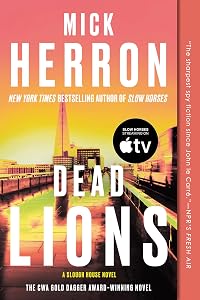
The CWA Gold Dagger Award-winning British espionage novel about disgraced MI5 agents who inadvertently uncover a deadly Cold War-era legacy of sleeper cells and mythic super spies. The disgruntled agents of Slough House, the MI5 branch where washed-up spies are sent to finish their failed careers on desk duty, are called into action to protect a visiting Russian oligarch whom MI5 hopes to recruit to British intelligence. While two agents are dispatched on that babysitting job, though, an old show more Cold War-era spy named Dickie Bow is found dead, ostensibly of a heart attack, on a bus outside of Oxford, far from his usual haunts. But the head of Slough House, the irascible Jackson Lamb, is convinced Dickie Bow was murdered. As the agents dig into their fallen comrade's circumstances, they uncover a shadowy tangle of ancient Cold War secrets that seem to lead back to a man named Alexander Popov, who is either a Soviet bogeyman or the most dangerous man in the world. How many more people will have to die to keep those secrets buried? show lessTags
Recommendations














Member Reviews
However good the first book of a series, you always hope that the second will be an improvement. But where I watched the first season of the Apple TV series and read the book hoping it would be better (and it was), I read the second book in the series and thought that the TV version was probably better. Instead of broadening his authorial toolset, in Dead Lions Herron just doubles down on the technique that worked for him in its predecessor, writing in two-page chunks ending in cliffhangers that are, for the most part, deliberately misleading. (An agent is grabbed from behind, a hand over her mouth — ten pages later, it turns out to have been a coworker.) Even when the cliffhangers don't turn out to be this kind of bait and switch, show more they become wearying. I really don't need a complete change of point of view every few paragraphs to keep my attention. It tries the patience.
There's an shallowness, too, that gets under my skin. I know that cynical detachment is the default mode for mystery thrillers, but the best ones have a little more heart than this. I think the evidence shows that Herron has the needed empathy, but there are so many irons in the fire of his plot that most of the characters are treated glancingly, like bees in an intricate hive.
No doubt many readers appreciate the same traits in this book that I dislike. Certainly Herron's got wit enough for any other five writers of spy thrillers, save John le Carré, and his jaundiced but still idealistic view of modern spycraft is unique and interesting. Maybe, given his obvious gifts, I just want more art and less craft from him. show less
There's an shallowness, too, that gets under my skin. I know that cynical detachment is the default mode for mystery thrillers, but the best ones have a little more heart than this. I think the evidence shows that Herron has the needed empathy, but there are so many irons in the fire of his plot that most of the characters are treated glancingly, like bees in an intricate hive.
No doubt many readers appreciate the same traits in this book that I dislike. Certainly Herron's got wit enough for any other five writers of spy thrillers, save John le Carré, and his jaundiced but still idealistic view of modern spycraft is unique and interesting. Maybe, given his obvious gifts, I just want more art and less craft from him. show less
What is the connection between a dead ex-spy (a minor one but still a spy) and a Russian oligarch talking to the Secret Service? None at the surface but as Herron opens the novel with both of these, you know they will connect (one of those days an author will actually be brave enough to leave some events unconnected... and probably get crucified by the reviewers for it).
The dead man appears to have died from natural causes but Lamb is not convinced (and neither is the reader as we see the old man chasing after a ghost from the past in the form of a Russian thug). Meanwhile Spider (aka James Webb) is so sure that he is the best thing since sliced bread that he throws all regulations out of the window and organizes a meeting with a show more Russian oligarch on its own, fully believing that he is controlling the situation. He even gets Louisa Guy and Min Harper to help - Slough House is a safe place these days with the audit going on in the big house at Regent's Park. Add to that the daily life of Slough House itself and the rest of the spies there (including River who gets to visit the old man again - and get some relevant stories from him) and an old story from the Cold War and the stage is set for the disaster to follow. Because that's British Intelligence - there will be a disaster, often of their own making.
I liked the first book well enough but I found this one to have a better pacing. Part of it is that it did not need as much introduction and backstory - there is some (inevitable) but with the first book there, it did not need to carry as much baggage. Just as with the first book, Herron is not afraid to kill characters who appear to be invulnerable (at this point, anyone but River and Lamb appear to be fair game although I suspect that a few more may actually be safe-ish). Some of the other side may also have a chance to make it through the whole series - Spider for example...
If you expect something like James Bond, look elsewhere. While there is some action in this book, it is a lot more about the craft and the tedious parts of the job than the chase and the explosions. And don't expect a linear story where everything is served on a platter to the reader - all the loose ends are tied by the end but the story is built like a puzzle in some places, with pieces of at least 20 other puzzles thrown in to misdirect and confuse. And then one of those seemingly wrong pieces snaps into place.
The series is going very strong in this early installment and I plan to get to the next one very soon. show less
The dead man appears to have died from natural causes but Lamb is not convinced (and neither is the reader as we see the old man chasing after a ghost from the past in the form of a Russian thug). Meanwhile Spider (aka James Webb) is so sure that he is the best thing since sliced bread that he throws all regulations out of the window and organizes a meeting with a show more Russian oligarch on its own, fully believing that he is controlling the situation. He even gets Louisa Guy and Min Harper to help - Slough House is a safe place these days with the audit going on in the big house at Regent's Park. Add to that the daily life of Slough House itself and the rest of the spies there (including River who gets to visit the old man again - and get some relevant stories from him) and an old story from the Cold War and the stage is set for the disaster to follow. Because that's British Intelligence - there will be a disaster, often of their own making.
I liked the first book well enough but I found this one to have a better pacing. Part of it is that it did not need as much introduction and backstory - there is some (inevitable) but with the first book there, it did not need to carry as much baggage. Just as with the first book, Herron is not afraid to kill characters who appear to be invulnerable (at this point, anyone but River and Lamb appear to be fair game although I suspect that a few more may actually be safe-ish). Some of the other side may also have a chance to make it through the whole series - Spider for example...
If you expect something like James Bond, look elsewhere. While there is some action in this book, it is a lot more about the craft and the tedious parts of the job than the chase and the explosions. And don't expect a linear story where everything is served on a platter to the reader - all the loose ends are tied by the end but the story is built like a puzzle in some places, with pieces of at least 20 other puzzles thrown in to misdirect and confuse. And then one of those seemingly wrong pieces snaps into place.
The series is going very strong in this early installment and I plan to get to the next one very soon. show less
This originally appeared at The Irresponsible Reader.
---
...whatever we’re here for, Lamb's not being punished. Or if he is, he’s enjoying it.”
“So what’s your point?”
He said, “That he knows where some bodies are buried. Probably buried a few himself.”
“Is that a metaphor?”
"I failed English. Metaphor's a closed book to me.”
“So you think he’s handy?”
“Well, he’s overweight and drinks and smokes and I doubt he takes much exercise that doesn’t involve picking up a phone and calling out for a curry. But yeah, now you mention it, I think he’a handy.”
“He might've been once,” Shirley said. “But there’s not much point in being handy if you're too slow to be any good at it.”
But Marcus show more disagreed. Being handy was a state of mind. Lamb could wear you down just standing in front of you, and you wouldn't know he was a threat until he was walking away, and you were wondering who'd turned the lights out. Just Marcus’s opinion, of course. He'd been wrong before.
“I suppose,” he said, “if we stick around long enough, we might find out.”
SQUIRREL!
I read the first book in this series over 2 1/2 years ago. Since then, my friend Paul has been hounding me, nagging me, and generally pushing me to keep reading them. Insisting that I'm missing out. Etc. Etc. Etc. While I suspected he was right—and even if he wasn't, I wanted to based on Slow Horses and everything I'd heard from Paul, Jeff at Barbican Station, and from several other fronts.
But we all know how easily distracted I can be. So...here we are 45 months later. And I know when I post this I'm going to get at least one text from Paul, saying things like: "I told you so!" and "It's about time."
I deserve both of those messages because he did tell me so; and yes, it is.
WHAT'S DEAD LIONS ABOUT?
Jackson Lamb gets suspicious when an old, low-ranking spy from the Cold War era dies on a public bus. He follows Dickie Bow's last movements and finds reason to indulge that hunch a little longer, bringing in one of Slough House's new additions to do some more legwork. What they find doesn't make him any happier—a bogey-man from the old days might be back. And that can't be good.
Meanwhile, Spider—pardon me, James—Webb recruits Louisa Guy and Min Harper to help him with a little project he's got going on. He's trying to recruit a Russian oligarch—one with political aspirations—as an asset, and he needs some security work done by people who won't get the attention of any of the bigwigs in MI5. Neither wants to work with Webb, but if they do, there's a chance...not much of one...but a chance that at least one of them will be the first Slow Horse to move back to Regent's Park. Both of them are ready to be that one—even at the expense of the other, no matter what relationship might be budding between the two of them.
BEST OF BOTH WORLDS
While I have an appreciation for British Cold War Spy novels—they're really not my thing. I've tried, both in print and on film—and they just don't work. But that's the kind of world that River's grandfather, O.B., represents—and that Tavener and Lamb represent the end of. They have one foot in that world still, it defines them—but they're both (especially Tavener) also part of the War on Terror, financial crimes/terrorism, etc. of our current moment. River, Ho, and the rest of the Slow Horses belong to the latter.
What this book does so well is to marry the two schools—we have a very Cold War holdover storyline, and a Putin-era storyline. Now, I can't imagine that Herron is going to be able to pull this off regularly, but getting to do it in the second novel, solidifying the series' identity as being able to work in both eras. I thought that was a great move that welcomes in fans of both eras of British Spy Fiction.
SO, WHAT DID I THINK ABOUT DEAD LIONS?
So, back in 2019 when I read Slow Horses, I liked it and was impressed by it, but I only gave it 3 Stars. When I listened to the audiobook last year, I think I "got" what Herron was doing a little more. But I still wasn't as impressed with this as everyone I knew seemed to be. I'm fine with that, but I wondered a bit if I was missing something.
I think I found whatever it was in the pages of Dead Lions. Because...wow. Herron does it all here—there's some satire, there's commentary on human existence, on the politics (and espionage) of the Cold War, on the politics (and espionage) of the 2000s, a real and slowly-building tension, there's subtle wit, less-than-subtle wit, a plot that is impossible to predict, characters that are the most human you'll find in spy fiction, dialogue and narration that are impossible not to endlessly quote...and fart jokes.
One lesson that readers of the first book should've picked up is that they shouldn't get attached to anyone—look at the number of people assigned to Slough House at the beginning of the book and then at the end. Percentage-wise, it's safer to be a George R.R. Martin character. Herron ensures that no reader of Dead Lions thinks that's a fluke. Right now (and I'm ready to be disproven), I figure the only safe characters are Jackson Lamb and (sadly) James Webb—he seems to have the survival capabilities of a hardy cockroach.
Herron surprised me on multiple occasions—I think at this point, I'm going to just permanently suspend my reflex to predict what's coming when I spend time with him. They weren't just surprises—they were the kind that I absolutely didn't even think of expecting—and then in retrospect, I don't know how I could've imagined anything else happening at all.
From time to time, TV Critic Alan Sepinwall will recap an episode saying things like "if we only got X, that would be enough. If we only got Y, that would be enough," and so on. I felt like that while thinking about this book. If we only got Lamb tracking the final movements of Dickie Bow, that would've been enough. If we only got the Louisa Guy/Min Harper storyline, that would've been enough. If we only got the Diana Tavener/Jason Webb scene, that would've been enough. If we only got River Cartwright going undercover, and everything he goes through...you see where I'm going. Any one of those would've been enough for me to realize I need to take this series seriously and get on with reading them all. You combine these points with all those that I decided not to list for space/spoiler reasons? I'm on the verge of being rabid.
Everything I thought was a bug about Slow Horses was a feature, and I see that now. Everything I thought was a fluke about Slow Horses wasn't. Everything I thought was good about Slow Horses was at least a little bit great. How do I know that? I see all of those elements here and have a much better appreciation for them in Dead Lions so I can better understand its predecessor.
I had other things in my notes that I really wanted to cover. But...I've said the essentials, and am at the point where I'm trying to gild an already gilded lily. So, I'm going to leave all that unsaid. Yes, I may have overhyped this and doomed you to not appreciate it. I get that and apologize in advance. Just chalk this up to a new and rabid fanboy—go into this series expecting something good. And then when you're ready to join the rabid throng, I'll be waiting for you.
And now, I've got to start waiting for messages from Paul. show less
---
...whatever we’re here for, Lamb's not being punished. Or if he is, he’s enjoying it.”
“So what’s your point?”
He said, “That he knows where some bodies are buried. Probably buried a few himself.”
“Is that a metaphor?”
"I failed English. Metaphor's a closed book to me.”
“So you think he’s handy?”
“Well, he’s overweight and drinks and smokes and I doubt he takes much exercise that doesn’t involve picking up a phone and calling out for a curry. But yeah, now you mention it, I think he’a handy.”
“He might've been once,” Shirley said. “But there’s not much point in being handy if you're too slow to be any good at it.”
But Marcus show more disagreed. Being handy was a state of mind. Lamb could wear you down just standing in front of you, and you wouldn't know he was a threat until he was walking away, and you were wondering who'd turned the lights out. Just Marcus’s opinion, of course. He'd been wrong before.
“I suppose,” he said, “if we stick around long enough, we might find out.”
SQUIRREL!
I read the first book in this series over 2 1/2 years ago. Since then, my friend Paul has been hounding me, nagging me, and generally pushing me to keep reading them. Insisting that I'm missing out. Etc. Etc. Etc. While I suspected he was right—and even if he wasn't, I wanted to based on Slow Horses and everything I'd heard from Paul, Jeff at Barbican Station, and from several other fronts.
But we all know how easily distracted I can be. So...here we are 45 months later. And I know when I post this I'm going to get at least one text from Paul, saying things like: "I told you so!" and "It's about time."
I deserve both of those messages because he did tell me so; and yes, it is.
WHAT'S DEAD LIONS ABOUT?
Jackson Lamb gets suspicious when an old, low-ranking spy from the Cold War era dies on a public bus. He follows Dickie Bow's last movements and finds reason to indulge that hunch a little longer, bringing in one of Slough House's new additions to do some more legwork. What they find doesn't make him any happier—a bogey-man from the old days might be back. And that can't be good.
Meanwhile, Spider—pardon me, James—Webb recruits Louisa Guy and Min Harper to help him with a little project he's got going on. He's trying to recruit a Russian oligarch—one with political aspirations—as an asset, and he needs some security work done by people who won't get the attention of any of the bigwigs in MI5. Neither wants to work with Webb, but if they do, there's a chance...not much of one...but a chance that at least one of them will be the first Slow Horse to move back to Regent's Park. Both of them are ready to be that one—even at the expense of the other, no matter what relationship might be budding between the two of them.
BEST OF BOTH WORLDS
While I have an appreciation for British Cold War Spy novels—they're really not my thing. I've tried, both in print and on film—and they just don't work. But that's the kind of world that River's grandfather, O.B., represents—and that Tavener and Lamb represent the end of. They have one foot in that world still, it defines them—but they're both (especially Tavener) also part of the War on Terror, financial crimes/terrorism, etc. of our current moment. River, Ho, and the rest of the Slow Horses belong to the latter.
What this book does so well is to marry the two schools—we have a very Cold War holdover storyline, and a Putin-era storyline. Now, I can't imagine that Herron is going to be able to pull this off regularly, but getting to do it in the second novel, solidifying the series' identity as being able to work in both eras. I thought that was a great move that welcomes in fans of both eras of British Spy Fiction.
SO, WHAT DID I THINK ABOUT DEAD LIONS?
So, back in 2019 when I read Slow Horses, I liked it and was impressed by it, but I only gave it 3 Stars. When I listened to the audiobook last year, I think I "got" what Herron was doing a little more. But I still wasn't as impressed with this as everyone I knew seemed to be. I'm fine with that, but I wondered a bit if I was missing something.
I think I found whatever it was in the pages of Dead Lions. Because...wow. Herron does it all here—there's some satire, there's commentary on human existence, on the politics (and espionage) of the Cold War, on the politics (and espionage) of the 2000s, a real and slowly-building tension, there's subtle wit, less-than-subtle wit, a plot that is impossible to predict, characters that are the most human you'll find in spy fiction, dialogue and narration that are impossible not to endlessly quote...and fart jokes.
One lesson that readers of the first book should've picked up is that they shouldn't get attached to anyone—look at the number of people assigned to Slough House at the beginning of the book and then at the end. Percentage-wise, it's safer to be a George R.R. Martin character. Herron ensures that no reader of Dead Lions thinks that's a fluke. Right now (and I'm ready to be disproven), I figure the only safe characters are Jackson Lamb and (sadly) James Webb—he seems to have the survival capabilities of a hardy cockroach.
Herron surprised me on multiple occasions—I think at this point, I'm going to just permanently suspend my reflex to predict what's coming when I spend time with him. They weren't just surprises—they were the kind that I absolutely didn't even think of expecting—and then in retrospect, I don't know how I could've imagined anything else happening at all.
From time to time, TV Critic Alan Sepinwall will recap an episode saying things like "if we only got X, that would be enough. If we only got Y, that would be enough," and so on. I felt like that while thinking about this book. If we only got Lamb tracking the final movements of Dickie Bow, that would've been enough. If we only got the Louisa Guy/Min Harper storyline, that would've been enough. If we only got the Diana Tavener/Jason Webb scene, that would've been enough. If we only got River Cartwright going undercover, and everything he goes through...you see where I'm going. Any one of those would've been enough for me to realize I need to take this series seriously and get on with reading them all. You combine these points with all those that I decided not to list for space/spoiler reasons? I'm on the verge of being rabid.
Everything I thought was a bug about Slow Horses was a feature, and I see that now. Everything I thought was a fluke about Slow Horses wasn't. Everything I thought was good about Slow Horses was at least a little bit great. How do I know that? I see all of those elements here and have a much better appreciation for them in Dead Lions so I can better understand its predecessor.
I had other things in my notes that I really wanted to cover. But...I've said the essentials, and am at the point where I'm trying to gild an already gilded lily. So, I'm going to leave all that unsaid. Yes, I may have overhyped this and doomed you to not appreciate it. I get that and apologize in advance. Just chalk this up to a new and rabid fanboy—go into this series expecting something good. And then when you're ready to join the rabid throng, I'll be waiting for you.
And now, I've got to start waiting for messages from Paul. show less
"Dead Lions" is the second book in this series about members of MI5 judged to be subpar and cast into the outer darkness of Slough House to rot or resign. I enjoyed the first book in the series, "Slow Horses" but I found "Dead Lions" to be much more accomplished and certain of itself.
The tone of the writing modulates from whimsical through to darkly comic with a default setting of quiet desperation.
The plot is like a Swiss wristwatch: beautifully crafted to a complex but elegant design and assembled in dense layers that work together to drive you forward second by second.
The story starts with the assassination of the memorably named Dickie Bow, an ex-MI5 irregular, a veteran of Berlin during the cold war, by a man he believes to have show more been a Russian spy. His murder goes undetected until Jackson Lamb, mercurial head of Slough House, who served with Dickie Bow in Berlin, takes a closer look. The foul play he discovers turns out to be only one of several layers of the plot, that are nested inside one another like Matryoshka dolls. The discovery of each doll changed what I thought was going on so fast that I gave up trying to find the lady and just enjoyed the skill of the sleight of hand.
"Dead Lions" does a splendid job evoking the Cold War world-of-mirrors mindset and setting it in a thoroughly convincing frame of modern British Counter-Intelligence.
Slough House is populated with characters that are depressingly real yet capable of being believably surprising. The plot amplifies the characters but is not driven by them.
The pace is perfect, cutting between parallel plot lines in a way that cranks up the tension while demonstrating how deviously everything is connected to everything else.
I'm looking forward to the next book in the series. show less
The tone of the writing modulates from whimsical through to darkly comic with a default setting of quiet desperation.
The plot is like a Swiss wristwatch: beautifully crafted to a complex but elegant design and assembled in dense layers that work together to drive you forward second by second.
The story starts with the assassination of the memorably named Dickie Bow, an ex-MI5 irregular, a veteran of Berlin during the cold war, by a man he believes to have show more been a Russian spy. His murder goes undetected until Jackson Lamb, mercurial head of Slough House, who served with Dickie Bow in Berlin, takes a closer look. The foul play he discovers turns out to be only one of several layers of the plot, that are nested inside one another like Matryoshka dolls. The discovery of each doll changed what I thought was going on so fast that I gave up trying to find the lady and just enjoyed the skill of the sleight of hand.
"Dead Lions" does a splendid job evoking the Cold War world-of-mirrors mindset and setting it in a thoroughly convincing frame of modern British Counter-Intelligence.
Slough House is populated with characters that are depressingly real yet capable of being believably surprising. The plot amplifies the characters but is not driven by them.
The pace is perfect, cutting between parallel plot lines in a way that cranks up the tension while demonstrating how deviously everything is connected to everything else.
I'm looking forward to the next book in the series. show less
Another terrific episode of the "slow horses", the MI5 agents who have screwed up an op and as a result have been relegated to Slough House to do trifling work under the coarse, crude Jackson Lamb. They all hope to clear their record and go back to Regent's Park and real ops. Herron can write lyrically, unusual for espionage novels, but also includes some lovely dark humour, all tied to an exciting plot. I look forward to the next in the series but on the other hand I don't want to go through them too quickly and have none left on the horizon.
I should have read these books in order since there are only a handful of slow horses to begin with, and Dead Lions (2013) begins with two I have never heard of.
Surprisingly this was a Jackson Lamb book missing a lot of Jackson Lamb; he played his part, and he was pulling the strings per usual, but it was like he put his Jackson Lambots out into the wild and with minimal outside resources, on their own, they brought home another win for Slough House. That was pretty cool.
I love the Slow Horses, but I wonder why Herron had to make Lamb over-the-top disgusting. Why not an under-rated (seemingly or otherwise), disheveled, frumpy character rather than full-on slovenly. I mean, Jackson Lamb is basically the equivalent of a 600-pound slob who show more has to engage an entire fire brigade just to take a dump. I could have lived with a somewhat more normal albeit eccentric character. Point being, it's a bit of a turn-off, but I still love them all.
The writing is still superb.
I liked Molly Doran in records, and the honest respect between her and Lamb (I don't know if we are supposed to know the backstory or not yet, or if we ever will, but Herron nailed it). Molly was channeling Henry Britton the CIA records keeper in the movie RED (2010). (Ernest Borgnine, in the secret records location, in the secret vault - that doesn't exist! - the "thumb-sucker scene".)
I didn't like the cat and mouse narration from the beginning and end of the book, but most of the rest was outstanding.
I thought Roddy Ho, the Slough House IT phenom, was the star of this book. And he featured in some of my favorite parts:
[Roddy Ho] "Lamb says I'm not to help you any more."
(What Lamb had actually said: "I catch you freelancing again, I'll pimp you out to IT support. Photocopier division")
*****
Roderick Ho… [was] busy updating his online status: adding a paragraph to Facebook describing his weekend at Chamonix; tweeting a link to his latest dancemix... Ho's name for these purposes was Roddy Hunt; his tunes were looted from obscure sites he subsequently torched; his photos were tweaked stills of a young Montgomery Clift. It still amazed Ho you could build a man from links and screenshots, launch him into the world like a paper boat, and he'd just keep sailing. All of the details that built up a person could be real. The only thing fake was the person.
*****
River was still here... so today he was a typist, entering pre-digital death records onto a database. The deceased had all been six months old or younger, and had died while rationing was still enforced: prime targets for identity theft. Back then, you worked this by taking names from gravestones; a less innocent form of brass-rubbing. Birth certificates were then claimed lost and copies sought; after that, you simply traced the life the infant might have led, with all its attendant paperwork: national insurance number, bank account, driving licence... All of the details that built up a person could be faked. The only thing real was the person.
*****
[And.]
Roderick Ho was pissed off.
Roddy Ho felt betrayed.
Roderick Ho was wondering what it all added up to, if you couldn't trust your fellow man, your fellow woman. If your fellow woman lied to you, misrepresented herself, was not who she claimed to be…
A lesser man might weep.
Because you put your whole damn self into a relationship, and what did you find? You found yourself reaching out to this hot blonde chick who was into hip-hop, action movies and snowboarding, who'd reached level five of Armageddon Posse and was taking evening classes in 20th century history, and then - and he'd only discovered this because she mentioned her make of car and that she had SkyPlus, two hard facts which allowed him to trace her corporeal identity as opposed to her online character - and then it turned out that if she was into snowboarding she'd better be doing it carefully, because not many insurance companies were going to cover a fifty-four-year-old woman on a snowboarding holiday, because fifty-four was the kind of age when your bones turned brittle and you had to worry about catching a chill in case it developed into something nasty. Christ. She didn't need evening classes in twentieth century history. She just had to cast her mind back. Roddy Ho wasn't sure his own mother was fifiy-four yet. The bitch.
But anyway. Water under the bridge. The adjustments he'd made to his e-mail set-up ensured that any further communications from Ms. Geriatric Ward would be blocked. If she wondered what she'd done to upset Roderick Ho - or Roddy Hunt, rather; the DJ superstar with the Montgomery Clift profile she'd thought she was hooking up with - she needed to take a long hard look in the mirror, that was all. Truth in advertising was what she needed evening classes in. Ho wasn't easily offended - he was an easygoing guy - so it was with both sorrow and disgust that he wiped out Ms. Coffin Dodger's credit rating. He only hoped she'd learn her lesson, and stick to her own side of the generation gap in future.
[Too funny!] show less
Surprisingly this was a Jackson Lamb book missing a lot of Jackson Lamb; he played his part, and he was pulling the strings per usual, but it was like he put his Jackson Lambots out into the wild and with minimal outside resources, on their own, they brought home another win for Slough House. That was pretty cool.
I love the Slow Horses, but I wonder why Herron had to make Lamb over-the-top disgusting. Why not an under-rated (seemingly or otherwise), disheveled, frumpy character rather than full-on slovenly. I mean, Jackson Lamb is basically the equivalent of a 600-pound slob who show more has to engage an entire fire brigade just to take a dump. I could have lived with a somewhat more normal albeit eccentric character. Point being, it's a bit of a turn-off, but I still love them all.
The writing is still superb.
I liked Molly Doran in records, and the honest respect between her and Lamb (I don't know if we are supposed to know the backstory or not yet, or if we ever will, but Herron nailed it). Molly was channeling Henry Britton the CIA records keeper in the movie RED (2010). (Ernest Borgnine, in the secret records location, in the secret vault - that doesn't exist! - the "thumb-sucker scene".)
I didn't like the cat and mouse narration from the beginning and end of the book, but most of the rest was outstanding.
I thought Roddy Ho, the Slough House IT phenom, was the star of this book. And he featured in some of my favorite parts:
[Roddy Ho] "Lamb says I'm not to help you any more."
(What Lamb had actually said: "I catch you freelancing again, I'll pimp you out to IT support. Photocopier division")
*****
Roderick Ho… [was] busy updating his online status: adding a paragraph to Facebook describing his weekend at Chamonix; tweeting a link to his latest dancemix... Ho's name for these purposes was Roddy Hunt; his tunes were looted from obscure sites he subsequently torched; his photos were tweaked stills of a young Montgomery Clift. It still amazed Ho you could build a man from links and screenshots, launch him into the world like a paper boat, and he'd just keep sailing. All of the details that built up a person could be real. The only thing fake was the person.
*****
River was still here... so today he was a typist, entering pre-digital death records onto a database. The deceased had all been six months old or younger, and had died while rationing was still enforced: prime targets for identity theft. Back then, you worked this by taking names from gravestones; a less innocent form of brass-rubbing. Birth certificates were then claimed lost and copies sought; after that, you simply traced the life the infant might have led, with all its attendant paperwork: national insurance number, bank account, driving licence... All of the details that built up a person could be faked. The only thing real was the person.
*****
[And.]
Roderick Ho was pissed off.
Roddy Ho felt betrayed.
Roderick Ho was wondering what it all added up to, if you couldn't trust your fellow man, your fellow woman. If your fellow woman lied to you, misrepresented herself, was not who she claimed to be…
A lesser man might weep.
Because you put your whole damn self into a relationship, and what did you find? You found yourself reaching out to this hot blonde chick who was into hip-hop, action movies and snowboarding, who'd reached level five of Armageddon Posse and was taking evening classes in 20th century history, and then - and he'd only discovered this because she mentioned her make of car and that she had SkyPlus, two hard facts which allowed him to trace her corporeal identity as opposed to her online character - and then it turned out that if she was into snowboarding she'd better be doing it carefully, because not many insurance companies were going to cover a fifty-four-year-old woman on a snowboarding holiday, because fifty-four was the kind of age when your bones turned brittle and you had to worry about catching a chill in case it developed into something nasty. Christ. She didn't need evening classes in twentieth century history. She just had to cast her mind back. Roddy Ho wasn't sure his own mother was fifiy-four yet. The bitch.
But anyway. Water under the bridge. The adjustments he'd made to his e-mail set-up ensured that any further communications from Ms. Geriatric Ward would be blocked. If she wondered what she'd done to upset Roderick Ho - or Roddy Hunt, rather; the DJ superstar with the Montgomery Clift profile she'd thought she was hooking up with - she needed to take a long hard look in the mirror, that was all. Truth in advertising was what she needed evening classes in. Ho wasn't easily offended - he was an easygoing guy - so it was with both sorrow and disgust that he wiped out Ms. Coffin Dodger's credit rating. He only hoped she'd learn her lesson, and stick to her own side of the generation gap in future.
[Too funny!] show less
It will be interesting to see how the author explains how so much is happening in what is supposed to be the sleepiest corner of MI5 as the series progresses, but this is another highly entertaining story of ruined careers, profoundly flawed agents, and the unlikely ways that the past can hold on to us, or, as the case may be, fade away in ways we never expected it to. Herron may or may not ever want to write real-deal literary fiction, but he can develop these sorts of themes over an entire book is as well — or better — than anyone who's ever published a Vintage Contemporary. Recommended.
Members
- Recently Added By
Published Reviews
ThingScore 75
In the opening chapter of Herron’s funny, clever sequel to 2010’s Slow Horses (2010), low-level British spy, Dickie Bow, dies on a bus to Oxford of apparently natural causes. To Jackson Lamb, the thoroughly unlikable head of Slough House (“the spooks’ equivalent of Devil’s Island,” to which disgraced or out-of-favor British spies are exiled), Bow’s death plus a cryptic, unsent show more text keyed into his cellphone (the single word “cicadas”) suggest Russian intrigue, perhaps tied to a long-dormant, possibly mythical, spy named Alexander Popov. Meanwhile, two Slough House operatives are seconded to the job of protecting a Russian billionaire, Arkady Pashkin, in London for a nebulous meeting. The complex plot drags a bit in the middle, as Herron gets quite a number of balls in the air, but once he does, the narrative picks up real steam and becomes genuinely thrilling. The novel is equally noteworthy for its often lyrical prose. show less
added by VivienneR
Lists

Best Spy Fiction
153 works; 102 members

Books Read in 2017
4,249 works; 129 members

Books Read in 2023
5,547 works; 145 members

Books - Herron, Mick: Slough House
13 works; 1 member
Author Information

49+ Works 14,656 Members
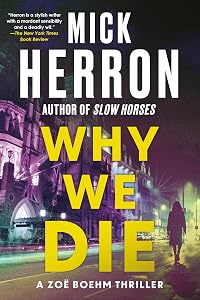
Mick Herron is a British author, born in Newcastle upon Tyne. He writes mystery and thriller novels and short stories. He is the author of Slow Horses, Dead Lions, Real Tigers, and Spook Street, in the Jackson Lamb series. His other works include Down Cemetery Road, Smoke & Whispers, The Last Voice You Hear, Why We Die, The List: A Novella, and show more Spook Street. He won the 2013 CWA Goldsboro Gold Dagger for his novel, Dead Lions. (Bowker Author Biography) show less
Some Editions
Awards and Honors
Awards
Series

Belongs to Publisher Series
Work Relationships
Is contained in
Common Knowledge
- Canonical title
- Dead Lions
- Original title
- Dead Lions
- Original publication date
- 2013-05-07
- People/Characters
- Jackson Lamb; River Cartwright; Shirley Dander; Louisa Guy; Roderick "Roddy" Ho; Min Harper (show all 16); Marcus Longridge; Catherine Standish; Dickie Bow / Richard Bough; Diana Taverner; Ingrid Tearney; Peter Judd; Bad Sam Chapman; Nick Duffy; James "Spider" Webb; Nikolai Katinsky
- Important places
- London, England, UK; Upshott, Gloucestershire, England, UK (fictional); Oxford, Oxfordshire, England, UK; Aldersgate Street, London, England
- Important events
- Cold War
- Dedication
- For MSJ
- First words
- A fuse had blown in Swindon, so the south-west network ground to a halt.
- Quotations
- 'Hope you've had your jabs,' said Lamb. 'You're going to Gloucestershire.' (p. 135)
- Last words
- (Click to show. Warning: May contain spoilers.)"What this place needs is a cat," grumbles Lamb, but there's no one there to hear him.
- Original language
- English UK
Classifications
Statistics
- Members
- 1,528
- Popularity
- 15,060
- Reviews
- 78
- Rating
- (3.93)
- Languages
- 11 — Danish, Dutch, English, Finnish, French, German, Italian, Polish, Portuguese, Spanish, Swedish
- Media
- Paper, Audiobook, Ebook
- ISBNs
- 48
- ASINs
- 15