On This Page
Description
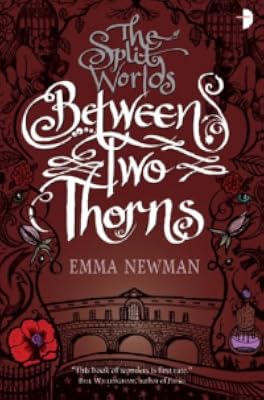
Beautiful and nuanced as it is dangerous, the manners of Regency and Victorian England blend into a scintillating fusion of urban fantasy and court intrigue. Between Mundanus, the world of humans, and Exilium, the world of the Fae, lies the Nether, a mirror-world where the social structure of 19th-century England is preserved by Fae-touched families who remain loyal to their ageless masters. Born into this world is Catherine Rhoeas-Papaver, who escapes it all to live a normal life in show more Mundanus, free from her parents and the strictures of Fae-touched society. But now she's being dragged back to face an arranged marriage, along with all the high society trappings it entails. Crossing paths with Cathy is Max, an Arbiter of the Split Worlds treaty with a dislocated soul who polices the boundaries between the worlds, keeping innocents safe from the Fae. After a spree of kidnappings and the murder of his fellow Arbiters, Max is forced to enlist Cathy's help in unravelling a high-profile disappearance within the Nether. Getting involved in the machinations of the Fae, however, may prove fatal to all involved. show lessTags
Recommendations


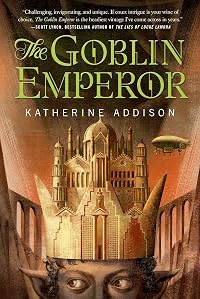
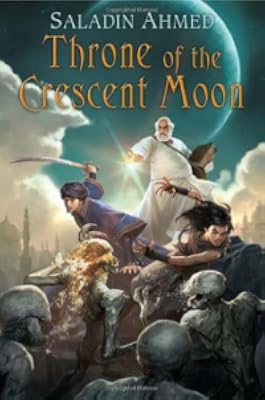
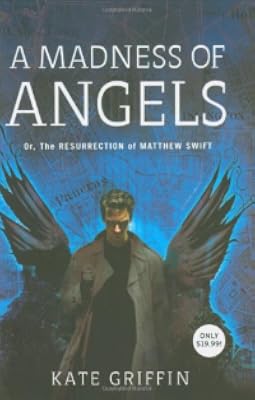

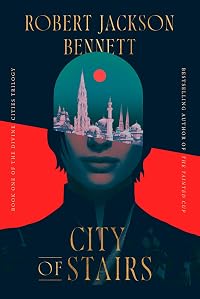
Member Recommendations
Member Reviews
Emma Newman's novel, ‘Planetfall’ was one of my Best Reads for 2020. It was a strikingly original and Science Fiction book with a strong and unusual main character. When I went looking for more of her work, as well as adding the sequels to 'Planetfall' to my TBR pile, I discovered ‘Between Two Thorns'. It's the first book in her five-book fantasy series, ‘The Split Worlds’ which is set in mirror cities that connect our world with the world of the Fae.
I live in Bath so the first line of the publisher’s summary for ‘Between Two Thorns’ was enough to grab my attention:
Something is wrong in Aquae Sulis, Bath’s secret mirror city.
'Between Two Thorns' didn't disappoint me. The Split Worlds concept that the plot rests on is show more an original and deeply thought-through twist on the typical 'portals in the veil between the mortal and Fae worlds' idea. It has an entire civilisation based around it.
The plot of the first book provides a compelling introduction to the Split Worlds and to the conflicts built into it and to the people who manage the mirror cities that stand as vassal cities for the Fae and act as a buffer between the Fae and the mundane world that we all live in.
Telllng the story from multiple points of view kept the story on a human scale and gave me someone to cheer for. Actually, it only really gave me one person to cheer for. The reality of the Split Worlds is not a cosy one and many of the characters, even the mundanes, are hard to like.
The Fae are monstrous, menacing and fundamentally alien. The humans in the mirror cities live in fear of the Fae, still follow the social mores of Regency England and are locked in an endless struggle for social status. The Wizards, who appear to have created this mess and who hold it together, are so distracted that they’re barely human. The Arbiters who police the boundary between the worlds are grim beings who have had their humanity ripped from them.
The only likeable person in the story is Cat who, rather than pursuing status in the Nether, fled to the mundane world so she could go to university.
When Cat fails to respond to a summons home, her choices are taken away from her and she is brought back to Aqua Sulis. One of the things I enjoyed about the book was Cat's reactions to her still-living-in-Regency-England society. She could be in a Regency Romance. She's from a prominent family and is being betrothed to a handsome and personable son of another prominent family. The things she can't swallow is that she has no more rights than any woman in Regency England had. She's her father's property and will become her husband's property and attending fancy balls at Prior Park or Assembly Rooms and wearing stunning gowns won't change that. She'd happily give up immortality as a chattel for a mortal life as an independent woman.
The Split Worlds aren't static. There are some big changes underway, not all of which are fully explored in the first book. There's no cliff-hanger ending but there are enough loose ends to hook my imagination and make me want to come back for more.
Emma Newman does a great job of narrating 'Between Two Thorns'. She's also put the short stories/word sketches that she used to add depth to the Split Worlds on SoundCloud. Click on the link below to sample them.
https://soundcloud.com/ejnewman/sets show less
Do not read this review. Unless you are carol., and unless you are not fond of regency romance and portal worlds. No, this is not a riff on Grover's Monster at the End of This Book (whoops! Spoiler!)
carol. You will hate this. Oh sure, it starts promisingly. Sam, looking for someplace unauthorized to pee, accidentally witnesses two very strange-looking men removing a body. His scene ends with a whopper of a spell put on him by Evil Tinkerbell. We switch to Max, an Arbiter lawman, who is tracking down some shady Fae dealings and ends up being ambushed by another Arbiter. The absolute best part about him is that his soul is given a new home in a gargoyle. Then we switch to Cathy, a Fae woman living in Mundania (!), hiding from her family show more so she can go to school, live a mundane life, and basically not be the compliant, living doll the Fae seem to expect of their women (except when we actually meet the women, they seem pretty much as scheming and power-focused as the men). There's a moment of interest when she's in an emporium and encounters the Lord of Fae, who gives her three wishes.
I know, right? Gargoyles and a woman struggling for independence, right? Three wishes? It sounded good enough to get you through the first third or so. But the woman's character is so 1950s, it's a serious drag. You rolled your eyes at “A zillion reasons,” she sighed. “If I tell you, will you promise not to tell anyone else?” He could see she was trembling. “I promise.” “My father…is violent when people aren’t as accomplished as he wants them to be. I’ve never been very accomplished.” Trembling. Bah!
She commits the cardinal carol. sin of manufacturing a fight and telling someone she loves it was all a sham so that she can force him away before she hurts him (!?). Bah! I say again! She ends up going from doormat to aggressively verbally attacking the one man in Fae who is nice to her, to suddenly growing a spine (sortof) and hoping she can manipulate a favor into an escape. Bah! I hate romance tropes. I hate the phrase "words tumbled from her mouth." What are they, acrobats? Kate Daniels never has tumbling words!
Then there's the wild inconsistencies. I know, I know. You've heard a ton of positive buzz about Newman, especially the Planetfall series. I really hope this isn't representative, because it's just silly. How silly? Well, at one point, Cathy carefully memorizes all her account numbers, locations of storage and so forth because she knows she won't be able to take anything back to Fae from Mundania, and she thinks it could be years before she is back. But then, "She just hoped she could remember how to use them; the Arbiter’s hurried instruction had been given almost a week before." Alright, so she can do a random bank number but not a plan to activate a device.
Or this piece of writing: “Mr Gallica-Rosa,” she said, with a small curtsy that felt ridiculous in jeans and trainers. “Good day to you. Has your car broken down? Do you require assistance?” The words felt so wrong, like someone else was speaking them. Why would those words feel wrong? Because no one in Mundania says, "good day?" Or "did your car break down?" So strange that that feels wrong. Good day! I say. Good day, sir!
Other building doesn't make sense. We have Max thinking "Max had no idea how it worked. It wasn’t his place to understand sorcery" and and then literally, one second later, "The Sorcerers, unlike the Fae, were able to embellish an anchor property’s reflection in the Nether, and from the cloister’s design Max theorised that..." What? I thought this wasn't his place? Can you make up your mind, please?
About 70% into the story, Newman does this HUGE explano-babble by Cathy to explain the world of the Fae to a Mundane. It honestly felt like it should have been earlier or not at all. If we didn't figure it out by 70%, it doesn't belong there.
Then there's a tiny little 'whilst' snuck into to perfectly normal modern speech patterns: "I was thinking about this whilst you were asleep,” the gargoyle said. “We need to find out if that kind of corruption is in other places.” Oi! But not a 'thee' or 'thoust' or 'Faust' to be found.
The world-building is horrible. It's like that Elfland book you hated coupled with Terry Brooks' Landover series. Portals, blah-blah. There's the Nether, Exilium where the true Fae live, and Mundania. And the inconsistencies stack up. At one point Cathy thinks "She was thankful she’d been given a refresher lesson on surviving Exilium by her mother, just in case she was summoned back to their patron. It was the longest interaction she’d had with her since returning home. Okay, first of all, nice ret-con for a section that isn't going to matter, because, secondly, there is no special trick to surviving in Fae except "don't touch anything, eat anything or drink anything." Except a handy silver platter, which is just sitting around a picnic table in Fae, even though they are allergic to it. Which is weird, because I do the same thing, even though I'm allergic to peanuts. They're always sitting on my dinner table in case I want to accidentally eat them.
One review described it as a cross between Regency Romance and UF. Wish I had seen that review, because Regency is Not My Cup of Tea, and I wouldn't have started this. I'd recommend it for people that like Karen M.'s Fever series but thought that there was too much graphic sex. And, btw, this really isn't urban fantasy, because it's about Fae relationships and politics and has very little impact or action in 'Mundania.' Ugh.
There's also some weird shit about blonde-blue eyed people in Fae that you couldn't be bothered to read closely enough to work out.
Just don't.
HK,
C.
P.S. Honestly, might be far more enjoyable for people who enjoy that whole 'regency romance'/court politics set-up. The writing isn't terrible. (But 'trembling.' Bah!) show less
carol. You will hate this. Oh sure, it starts promisingly. Sam, looking for someplace unauthorized to pee, accidentally witnesses two very strange-looking men removing a body. His scene ends with a whopper of a spell put on him by Evil Tinkerbell. We switch to Max, an Arbiter lawman, who is tracking down some shady Fae dealings and ends up being ambushed by another Arbiter. The absolute best part about him is that his soul is given a new home in a gargoyle. Then we switch to Cathy, a Fae woman living in Mundania (!), hiding from her family show more so she can go to school, live a mundane life, and basically not be the compliant, living doll the Fae seem to expect of their women (except when we actually meet the women, they seem pretty much as scheming and power-focused as the men). There's a moment of interest when she's in an emporium and encounters the Lord of Fae, who gives her three wishes.
I know, right? Gargoyles and a woman struggling for independence, right? Three wishes? It sounded good enough to get you through the first third or so. But the woman's character is so 1950s, it's a serious drag. You rolled your eyes at “A zillion reasons,” she sighed. “If I tell you, will you promise not to tell anyone else?” He could see she was trembling. “I promise.” “My father…is violent when people aren’t as accomplished as he wants them to be. I’ve never been very accomplished.” Trembling. Bah!
She commits the cardinal carol. sin of manufacturing a fight and telling someone she loves it was all a sham so that she can force him away before she hurts him (!?). Bah! I say again! She ends up going from doormat to aggressively verbally attacking the one man in Fae who is nice to her, to suddenly growing a spine (sortof) and hoping she can manipulate a favor into an escape. Bah! I hate romance tropes. I hate the phrase "words tumbled from her mouth." What are they, acrobats? Kate Daniels never has tumbling words!
Then there's the wild inconsistencies. I know, I know. You've heard a ton of positive buzz about Newman, especially the Planetfall series. I really hope this isn't representative, because it's just silly. How silly? Well, at one point, Cathy carefully memorizes all her account numbers, locations of storage and so forth because she knows she won't be able to take anything back to Fae from Mundania, and she thinks it could be years before she is back. But then, "She just hoped she could remember how to use them; the Arbiter’s hurried instruction had been given almost a week before." Alright, so she can do a random bank number but not a plan to activate a device.
Or this piece of writing: “Mr Gallica-Rosa,” she said, with a small curtsy that felt ridiculous in jeans and trainers. “Good day to you. Has your car broken down? Do you require assistance?” The words felt so wrong, like someone else was speaking them. Why would those words feel wrong? Because no one in Mundania says, "good day?" Or "did your car break down?" So strange that that feels wrong. Good day! I say. Good day, sir!
Other building doesn't make sense. We have Max thinking "Max had no idea how it worked. It wasn’t his place to understand sorcery" and and then literally, one second later, "The Sorcerers, unlike the Fae, were able to embellish an anchor property’s reflection in the Nether, and from the cloister’s design Max theorised that..." What? I thought this wasn't his place? Can you make up your mind, please?
About 70% into the story, Newman does this HUGE explano-babble by Cathy to explain the world of the Fae to a Mundane. It honestly felt like it should have been earlier or not at all. If we didn't figure it out by 70%, it doesn't belong there.
Then there's a tiny little 'whilst' snuck into to perfectly normal modern speech patterns: "I was thinking about this whilst you were asleep,” the gargoyle said. “We need to find out if that kind of corruption is in other places.” Oi! But not a 'thee' or 'thoust' or 'Faust' to be found.
The world-building is horrible. It's like that Elfland book you hated coupled with Terry Brooks' Landover series. Portals, blah-blah. There's the Nether, Exilium where the true Fae live, and Mundania. And the inconsistencies stack up. At one point Cathy thinks "She was thankful she’d been given a refresher lesson on surviving Exilium by her mother, just in case she was summoned back to their patron. It was the longest interaction she’d had with her since returning home. Okay, first of all, nice ret-con for a section that isn't going to matter, because, secondly, there is no special trick to surviving in Fae except "don't touch anything, eat anything or drink anything." Except a handy silver platter, which is just sitting around a picnic table in Fae, even though they are allergic to it. Which is weird, because I do the same thing, even though I'm allergic to peanuts. They're always sitting on my dinner table in case I want to accidentally eat them.
One review described it as a cross between Regency Romance and UF. Wish I had seen that review, because Regency is Not My Cup of Tea, and I wouldn't have started this. I'd recommend it for people that like Karen M.'s Fever series but thought that there was too much graphic sex. And, btw, this really isn't urban fantasy, because it's about Fae relationships and politics and has very little impact or action in 'Mundania.' Ugh.
There's also some weird shit about blonde-blue eyed people in Fae that you couldn't be bothered to read closely enough to work out.
Just don't.
HK,
C.
P.S. Honestly, might be far more enjoyable for people who enjoy that whole 'regency romance'/court politics set-up. The writing isn't terrible. (But 'trembling.' Bah!) show less
This is the most inventive fantasy I’ve read in a good while, very genre-blending with social commentary that’s bound to get stronger as the trilogy progresses, but in the end, I was left ambivalent. The characters and world didn’t quite grab me, ditto the problems that needed solving or were left unsolved, and this is very definitely not written as a stand-alone, which didn’t help. Newman hints at a lot more going on than the characters notice or tackle, which is probably great if you’re in the mood for a trilogy or enjoy her particular way of foreshadowing, but it didn’t work for me. (It’s also worth noting that the blurb on the back makes this sound like a different sort of novel than it is.)
Newman’s a good writer. show more She knows her way around plot and character and is able to weave a story that’s engaging without feeling super plotty or predictably paced, and she’s able to do that with touches of humour too. It’s not everyone who could balance a Regency pastiche staring a 21st-century feminist, a noirish urban fantasy with steampunk wizardry and a mobile gargoyle, and a Faerieland shading to the darker end of whimsy, or come up with the idea to mix those elements in the first place, and Newman does it well. Not brilliantly, but well. The story felt oddly leisurely, taking its time building up the elements but not so much the tension, and well, it is a first novel.
Which is absolutely not to say I didn’t enjoy this, didn’t relate to the characters, didn’t get sucked into the world a little, because I did. Cathy, the feminist, especially, was delightful in her determination, anger, and unwillingness to play by the rules, but I liked all the POV characters, and disliked a bunch of the secondary characters as I was meant to. I certainly pictured people and places, which doesn’t often happen quite so vividly, and hoped that everything would turn out okay (but without ever quite feeling like it wouldn’t). Beyond that, it’s hard to say what else I liked because of spoilers, but there’s some neat stuff in how Newman drops clues and combines threads.
Like I said, though, I was left ambivalent. I liked a lot about this book but between the structure and the vague predictability and “not even trying to not start a trilogy”, I closed the book knowing I wasn’t going to continue on. I’m glad Cathy and everyone have won their battles. I hope they win their next ones. I’m just not curious enough about anything particular to keep reading—but I will be picking up more of Newman’s work someday, just to see how she’s progressed. I think I’ll like it, even if this book didn’t quite work for me and my expectations and needs going in were slightly off.
Warnings: Parental abuse, including one very physical scene and a lot of “do what we tell you so we don’t look bad”. General sexism of the historical variety, called out for what it is. Allusions to mind-control. Removal of bodily autonomy, witnessed, not experienced. Broken marriage and alcoholism. Gore, at a clinical remove.
6/10 show less
Newman’s a good writer. show more She knows her way around plot and character and is able to weave a story that’s engaging without feeling super plotty or predictably paced, and she’s able to do that with touches of humour too. It’s not everyone who could balance a Regency pastiche staring a 21st-century feminist, a noirish urban fantasy with steampunk wizardry and a mobile gargoyle, and a Faerieland shading to the darker end of whimsy, or come up with the idea to mix those elements in the first place, and Newman does it well. Not brilliantly, but well. The story felt oddly leisurely, taking its time building up the elements but not so much the tension, and well, it is a first novel.
Which is absolutely not to say I didn’t enjoy this, didn’t relate to the characters, didn’t get sucked into the world a little, because I did. Cathy, the feminist, especially, was delightful in her determination, anger, and unwillingness to play by the rules, but I liked all the POV characters, and disliked a bunch of the secondary characters as I was meant to. I certainly pictured people and places, which doesn’t often happen quite so vividly, and hoped that everything would turn out okay (but without ever quite feeling like it wouldn’t). Beyond that, it’s hard to say what else I liked because of spoilers, but there’s some neat stuff in how Newman drops clues and combines threads.
Like I said, though, I was left ambivalent. I liked a lot about this book but between the structure and the vague predictability and “not even trying to not start a trilogy”, I closed the book knowing I wasn’t going to continue on. I’m glad Cathy and everyone have won their battles. I hope they win their next ones. I’m just not curious enough about anything particular to keep reading—but I will be picking up more of Newman’s work someday, just to see how she’s progressed. I think I’ll like it, even if this book didn’t quite work for me and my expectations and needs going in were slightly off.
Warnings: Parental abuse, including one very physical scene and a lot of “do what we tell you so we don’t look bad”. General sexism of the historical variety, called out for what it is. Allusions to mind-control. Removal of bodily autonomy, witnessed, not experienced. Broken marriage and alcoholism. Gore, at a clinical remove.
6/10 show less
Between Two Thorns by Emma Newman is a difficult book to put into a single category. It's been called urban fantasy by the publisher and while that is technically correct — it is fantasy and some of it takes place in a modern urban setting — the image generally conjured up by that label bears little resemblance to Between Two Thorns.
The split worlds if the series title are the normal world (called Mundanus), Exilium, which is where the Fae live and follows usual fairyland rules, and the Nether, which is a semi-magical place between the other two worlds. Certain families of humans live in the Nether and are able to wield limited magic and age very slowly. Their society is old fashioned and vaguely Victorian.
Cathy is a scion of one of show more these families but she ran away to avoid being forced into an arranged marriage and generally treated like chattel. She was living in real world Manchester until events conspired, near the start of the novel, to drag her back into the Nether. I liked Cathy, mostly because she's quite practical (flushing toilets are useful!) in her approach to both worlds and her place in them. Her main goal is always to escape, but it never felt at all selfish as it could have in another book.
I also liked how all the men living in the society had similar views and her (and everyone's) place in life, even the nice ones. A common trap is making the sympathetic make characters implausibly feminist in a society which doesn't really have the appropriate frame work in place. While I didn't exactly enjoy the character's I liked holding old-fashioned views, it made sense, and I enjoyed that and the accompanying conflicting emotions.
There are three of four (depending on how you count) story lines in Between Two Thorns and I found myself enjoying reading about each of the characters. My favourite was Cathy, but I also liked Max, the sort of soulless, sort of policeman who became embroiled in the main dramatic problem that arose. I had no idea how Cathy's plot would intertwine with his until it came to pass.
My only complaint is that Between Two Thorns is very much book one of a series. Once the main action had passed and the mystery solved (with some questions left unanswered and some hints of deeper conspiracies yet to be addressed), I wasn't quite sure exactly where the book would end. Unfortunately, it was on a cliffhanger. Not a particularly dramatic one (no actual cliffs), but bad enough to make me try to turn the page thinking there was more. It was an excellent book, but I wished it had ended in a slightly different spot. I will definitely be reading the next book to find out what happens.
Between Two Thorns is an excellent read and I highly recommend it to fantasy fans looking for something a bit different, particularly in the form of merging modern day settings with fantasy worlds. It's a concept that's been done on paper, but Newman does it differently. I keenly await the next instalment.
4.5 / 5 stars
You can read more of my reviews on my blog. show less
The split worlds if the series title are the normal world (called Mundanus), Exilium, which is where the Fae live and follows usual fairyland rules, and the Nether, which is a semi-magical place between the other two worlds. Certain families of humans live in the Nether and are able to wield limited magic and age very slowly. Their society is old fashioned and vaguely Victorian.
Cathy is a scion of one of show more these families but she ran away to avoid being forced into an arranged marriage and generally treated like chattel. She was living in real world Manchester until events conspired, near the start of the novel, to drag her back into the Nether. I liked Cathy, mostly because she's quite practical (flushing toilets are useful!) in her approach to both worlds and her place in them. Her main goal is always to escape, but it never felt at all selfish as it could have in another book.
I also liked how all the men living in the society had similar views and her (and everyone's) place in life, even the nice ones. A common trap is making the sympathetic make characters implausibly feminist in a society which doesn't really have the appropriate frame work in place. While I didn't exactly enjoy the character's I liked holding old-fashioned views, it made sense, and I enjoyed that and the accompanying conflicting emotions.
There are three of four (depending on how you count) story lines in Between Two Thorns and I found myself enjoying reading about each of the characters. My favourite was Cathy, but I also liked Max, the sort of soulless, sort of policeman who became embroiled in the main dramatic problem that arose. I had no idea how Cathy's plot would intertwine with his until it came to pass.
My only complaint is that Between Two Thorns is very much book one of a series. Once the main action had passed and the mystery solved (with some questions left unanswered and some hints of deeper conspiracies yet to be addressed), I wasn't quite sure exactly where the book would end. Unfortunately, it was on a cliffhanger. Not a particularly dramatic one (no actual cliffs), but bad enough to make me try to turn the page thinking there was more. It was an excellent book, but I wished it had ended in a slightly different spot. I will definitely be reading the next book to find out what happens.
Between Two Thorns is an excellent read and I highly recommend it to fantasy fans looking for something a bit different, particularly in the form of merging modern day settings with fantasy worlds. It's a concept that's been done on paper, but Newman does it differently. I keenly await the next instalment.
4.5 / 5 stars
You can read more of my reviews on my blog. show less
I'm really quite torn on this book. There's so much about the characters and world that I love, but I simply cannot say I am satisfied by this as a novel. As the first and foundation of a series, maybe that's different. But it is, in and of itself, a novel, and it doesn't hit that spot for me. On the other hand, I'm curious as to how much of that dissatisfaction is the fault of the oddly-angled blurb.
Let me start with the good. The world is just magnificent. The layers of fae and human world (and the space between) are full of depth, nuance, commplexity and interwovenness that really speaks to the detailed awareness of the author. (I was not surprised to learn she had twenty short stories in the same world.) But it's delivered with a show more deft restraint that keeps the world at the appropriate level of background-highlights-scenery-envelope such that it never intrudes upon or eclipses the story. And I just loved loved loved the Austentatious / Vanity Fair-esque society shenanigans.
And the characters are excellent. All of them are interesting, complex bundles of good and bad and realistic. They have tricky relationships the direction of which is not clear, and they manifest faults (which they don't immediately get over) without reducing in any way their layered sympathetic qualities. I'm tremendously fond of all of them.
But I am significantly and genuinely irritated with how the book finished up, and specifically how much stuff into which I had invested narrative-consuming time and care was left unresolved upon the conclusion on the book. My chief complaint is: why did the book spend time on that stuff, if it wasn't going to answer the questions?
Part of my (frustrated) expectations might be due to the blurb (which cause me confusion for a goodly portion of the book). The blurb (on my copy) frames this as the story of Max the Arbiter. He is the only character named in it, with Cathy referred to only in passing (and not by name) as an aid to his investigation. Neither William nor Sam are mentioned at all, and both play a significant part in the story of this book, which is - I would argue - Cathy's story. (Max's story is unresolved, and will obviously feed into the Big Story of the Whole Series.) Though it's sort of hard to tell. My usual method of main-character-spotting - who wins at the end? - is confounded by the fact that no one wins. Our array of viewpoint protagonists don't lose. That's nice, but maybe that lack of diamond focus contributes to my dissatisfaction as well.
Whatever it is, I just wish there was more to this book. Oh, don't get me wrong, I'll be happily picking up more in this series, for the characters and the world and all the things I thoroughly enjoyed, but I still wanted more story, more development and just more in this book. show less
Let me start with the good. The world is just magnificent. The layers of fae and human world (and the space between) are full of depth, nuance, commplexity and interwovenness that really speaks to the detailed awareness of the author. (I was not surprised to learn she had twenty short stories in the same world.) But it's delivered with a show more deft restraint that keeps the world at the appropriate level of background-highlights-scenery-envelope such that it never intrudes upon or eclipses the story. And I just loved loved loved the Austentatious / Vanity Fair-esque society shenanigans.
And the characters are excellent. All of them are interesting, complex bundles of good and bad and realistic. They have tricky relationships the direction of which is not clear, and they manifest faults (which they don't immediately get over) without reducing in any way their layered sympathetic qualities. I'm tremendously fond of all of them.
But I am significantly and genuinely irritated with how the book finished up, and specifically how much stuff into which I had invested narrative-consuming time and care was left unresolved upon the conclusion on the book. My chief complaint is: why did the book spend time on that stuff, if it wasn't going to answer the questions?
Part of my (frustrated) expectations might be due to the blurb (which cause me confusion for a goodly portion of the book). The blurb (on my copy) frames this as the story of Max the Arbiter. He is the only character named in it, with Cathy referred to only in passing (and not by name) as an aid to his investigation. Neither William nor Sam are mentioned at all, and both play a significant part in the story of this book, which is - I would argue - Cathy's story. (Max's story is unresolved, and will obviously feed into the Big Story of the Whole Series.) Though it's sort of hard to tell. My usual method of main-character-spotting - who wins at the end? - is confounded by the fact that no one wins. Our array of viewpoint protagonists don't lose. That's nice, but maybe that lack of diamond focus contributes to my dissatisfaction as well.
Whatever it is, I just wish there was more to this book. Oh, don't get me wrong, I'll be happily picking up more in this series, for the characters and the world and all the things I thoroughly enjoyed, but I still wanted more story, more development and just more in this book. show less
The subject of a Big Idea post over on Whatever. Newman doesn't actually describe the book at all, but this paragraph caught my attention:
"At first it disguised itself as a short story about a shopkeeper and a woman returning one of his products; a faerie trapped in a bell jar. The woman thinks it’s a frivolous gadget sent by her husband abroad, with no idea that she’s in possession of a real faerie which could destroy her life. The shopkeeper, feeling merciful, sends her away with a fruit cake recipe after casting a memory loss charm on her."
I wanted to know more about a world where you could accidentally wind up with a faerie in a bell jar, and I definitely wanted to know why it could have destroyed her life. From the very first show more page I couldn't put this book down. The characters are awesome, the setting is really really cool - the world of Faery has been split from the Mundane world, and in between the two lies the Nether where only those mortals sponsored by the Fae may live, and time does not pass (or at least, doesn't affect those living in the Nether). The Victorian society of the Nether juxtaposed with modern society in the Mundane world was a lot of fun. The little glimpses we get of Exillium, the Faery realm, are very intriguing and more than a little scary. The story itself is great - embedded in the setting, and well wrapped-up within a single novel.
I can't wait to read more. I'm already reading the short stories set in the Split Worlds, and I'm anxiously awaiting the next book! show less
"At first it disguised itself as a short story about a shopkeeper and a woman returning one of his products; a faerie trapped in a bell jar. The woman thinks it’s a frivolous gadget sent by her husband abroad, with no idea that she’s in possession of a real faerie which could destroy her life. The shopkeeper, feeling merciful, sends her away with a fruit cake recipe after casting a memory loss charm on her."
I wanted to know more about a world where you could accidentally wind up with a faerie in a bell jar, and I definitely wanted to know why it could have destroyed her life. From the very first show more page I couldn't put this book down. The characters are awesome, the setting is really really cool - the world of Faery has been split from the Mundane world, and in between the two lies the Nether where only those mortals sponsored by the Fae may live, and time does not pass (or at least, doesn't affect those living in the Nether). The Victorian society of the Nether juxtaposed with modern society in the Mundane world was a lot of fun. The little glimpses we get of Exillium, the Faery realm, are very intriguing and more than a little scary. The story itself is great - embedded in the setting, and well wrapped-up within a single novel.
I can't wait to read more. I'm already reading the short stories set in the Split Worlds, and I'm anxiously awaiting the next book! show less
Cathy comes from the Nether, the space between the Fae’s Exilium and the human’s Mundanus. While she had escaped the strict and hidebound society of the Nether, she’s now being dragged back in to face an arranged marriage. Meanwhile, Max, an Arbitrator who prevents Fae from entangling with Mundanus, is investigating a series of kidnappings and murders.
I really love how the use of the split worlds is able to merge different settings and genres. The world of the Nether is like something out of the 1800s, Regency or perhaps Victorian. Arranged marriages, balls, high society, constrained roles for women… yet right across the divide is our own, modern world, in which Cathy was able to escape for a time. The result is urban fantasy show more crossed with a sort of historical fantasy with a dash of fantasy of manners thrown in.
I enjoyed Cathy’s sections the most. She’s determined to find a way to gain her independence in spite of the world she was born into and her abusive family. Cathy also has the virtue of having a somewhat different story line for an urban fantasy novel. The mystery investigations of Max’s plot line were far more familiar than Cathy’s social drama. Max, as an Arbitrator, also has had his soul severed from his body, to prevent him from becoming emotionally involved and to make him incapable of corruption. While the idea is interesting, I think it made Max’s narration suffer by being much less personal.
The story also contains two more POV characters beyond the two I mentioned in the summary. Sam is a ordinary man who has an encounter with the Fae at the very beginning of the story. Will is prominent bachelor of Nether society and Cathy’s intended. I found these two characters much more ambiguous than Cathy or Max. I had sympathies for Sam’s sudden encounters with the magical but was frustrated by him beyond that. Will is often unaware as to the extent of his privilege, and while he may gain some sympathy for Cathy as the story goes on, he never comes close to understanding her. Yet I find Will’s moral ambiguity interesting enough that he’s my second favorite, after Cathy.
Although there are many different POV characters and plot threads, Between Two Thorns maintains a fast pace that pushed me to end up reading it beyond the designated pages for the read along. I was disappointed that so many plot threads were left hanging for book two, but I will certainly be continuing with the series. If you have an interest in the fae or fantasy of manners, I suggest you take a look at the Split Worlds series.
Originally posted on The Illustrated Page.
I received a free ARC copy of this book from Netgalley in exchange for an honest review. show less
I really love how the use of the split worlds is able to merge different settings and genres. The world of the Nether is like something out of the 1800s, Regency or perhaps Victorian. Arranged marriages, balls, high society, constrained roles for women… yet right across the divide is our own, modern world, in which Cathy was able to escape for a time. The result is urban fantasy show more crossed with a sort of historical fantasy with a dash of fantasy of manners thrown in.
I enjoyed Cathy’s sections the most. She’s determined to find a way to gain her independence in spite of the world she was born into and her abusive family. Cathy also has the virtue of having a somewhat different story line for an urban fantasy novel. The mystery investigations of Max’s plot line were far more familiar than Cathy’s social drama. Max, as an Arbitrator, also has had his soul severed from his body, to prevent him from becoming emotionally involved and to make him incapable of corruption. While the idea is interesting, I think it made Max’s narration suffer by being much less personal.
The story also contains two more POV characters beyond the two I mentioned in the summary. Sam is a ordinary man who has an encounter with the Fae at the very beginning of the story. Will is prominent bachelor of Nether society and Cathy’s intended. I found these two characters much more ambiguous than Cathy or Max. I had sympathies for Sam’s sudden encounters with the magical but was frustrated by him beyond that. Will is often unaware as to the extent of his privilege, and while he may gain some sympathy for Cathy as the story goes on, he never comes close to understanding her. Yet I find Will’s moral ambiguity interesting enough that he’s my second favorite, after Cathy.
Although there are many different POV characters and plot threads, Between Two Thorns maintains a fast pace that pushed me to end up reading it beyond the designated pages for the read along. I was disappointed that so many plot threads were left hanging for book two, but I will certainly be continuing with the series. If you have an interest in the fae or fantasy of manners, I suggest you take a look at the Split Worlds series.
Originally posted on The Illustrated Page.
I received a free ARC copy of this book from Netgalley in exchange for an honest review. show less
Members
- Recently Added By
Lists

Books Read in 2016
4,666 works; 199 members

mom
729 works; 1 member
Author Information

21+ Works 3,388 Members
Awards and Honors
Awards
Series

Work Relationships
Is contained in
Common Knowledge
- Canonical title
- Between Two Thorns
- Original publication date
- 2013-03-07
- People/Characters
- Samuel Westonville; Catherine Rhoeas-Papaver; William Reticulata-Iris; Max; Ekstrand; Lord Poppy (show all 9); Horatio Gallica-Rose; Cornelius Alba-Rosa; Amelia Alba-Rosa
- Important places
- Bath, Somerset, England, UK; Aquae Sulis
- Epigraph
- "It must be a Sorcerer," the gargoyle said. "And I bet it's that one in charge of London."
- Dedication
- For the one who listened to a crazy idea on a summer afternoon and said yes
- First words
- That night in Bath was the third time Sam's beer bladder had got him into trouble.
- Last words
- (Click to show. Warning: May contain spoilers.)"It must be a Sorceror," the gargoyle said. "And I bet it's that one in charge of London."
- Blurbers
- Willingham, Bill; Kowal, Mary Robinette; Cornell, Paul; Christopher, Adam
Classifications
Statistics
- Members
- 462
- Popularity
- 66,011
- Reviews
- 33
- Rating
- (3.59)
- Languages
- English
- Media
- Paper, Audiobook, Ebook
- ISBNs
- 10
- ASINs
- 8