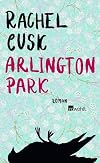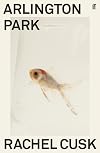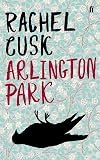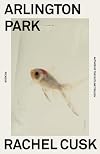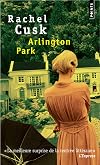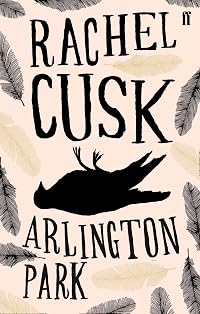
Arlington Park
by Rachel Cusk
On This Page
Description
Arlington Park, a modern-day English suburb, is a place devoted to the profitable ordinariness of life. Amidst its leafy avenues and comfortable houses, its residents live out the dubious accomplishments of civilisation: material prosperity, personal freedom, and moral indifference. For all that, Arlington Park is strikingly conventional. Men work, women look after children, and people generally do what's expected of them. Theirs is a world awash with contentment but empty of belief, and show more riven with strange anxieties. Set over the course of a single rainy day, the novel moves from one household to another, and through the passing hours conducts a deep examination of its characters' lives: of Juliet, enraged at the victory of men over women in family life; of Amanda, warding off thoughts of death with obsessive housework; of Solly, who confronts her own buried femininity in the person of her Italian lodger; of Maisie, despairing at the inevitability with which beauty is destroyed; and of Christine, whose troubled, hilarious spirit presides over Arlington Park and the way of life it represents. show lessTags
Recommendations














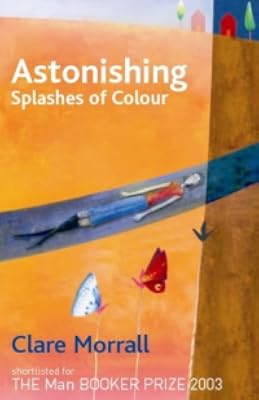
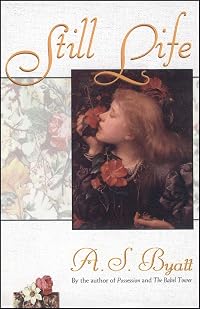
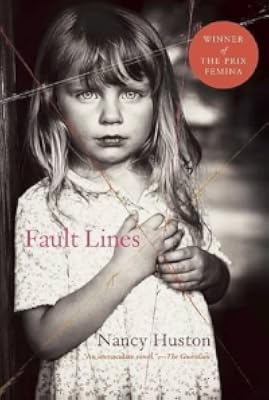
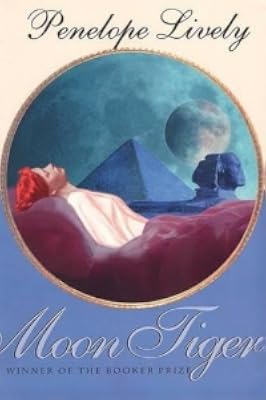
Member Recommendations
Member Reviews
“she saw herself always animated by a nameless dissatisfaction: it had filled her out, like the wind fills out a sail, and propelled her along while she did her best to steer a course. She didn’t know exactly where she was going, just that it was necessary to remain in motion while avoiding outright disaster.”
I read this book for our October bookclub discussion. The author was born in Canada to English parents, then spent some time in the US before the family returned to England. This novel is a contemporary domestic drama that looks at a day in the life of five different women living in upper middle class suburban England. It was shortlisted for The Orange Prize for fiction in 2007.
The story is essentially a scathing examination show more of the daily minutiae of the life of entitled white women in the suburbs. It is cleverly written, perspicacious and cutting but somewhat depressing. Some refer to it as Mommy lit, although I feel it would act as a fairly good deterrent to this lifestyle and could possibly be prescribed as a contraceptive.
The book shifts between different perspectives and scenes. Amanda hosts a morning tea for the school mums and their toddlers at her pristine house with white couches and decor with predictable results. Another group of mothers go shopping at a soulless mall, listening to banal advice on how to cover their unsightly bulges. Juliet tries to escape the monotony of her life and find inspiration and a return to her aspirations of brilliance by sharing Wuthering Heights with a group of uninspired teenage girls. Solly is pregnant with her fourth child and rents her spare room out to overseas students whose lives she finds more intriguing than her own rather beige existence. Maisie finds herself disillusioned and overwhelmed by the untidiness of her kitchen and possibly the smallness of her life. Christine hosts a dinner and struggles to hoist herself up the social ladder from her working class roots.
The novel shines a spotlight on the existential crises of a group of privileged women and their distinctly first world problems. Cusk writes brilliantly in a way that makes some of the characters seem very familiar, with their racism, self-absorption, obnoxious children, materialism and passive brand of feminism. Their husbands vary from the right-wing bigot type, to the ethereal, nice guy model who looks the part but just doesn’t quite get it.
Her writing is wise and vivid. Even the womens’ relationships to their homes and cleaning is analyzed. “She was so accustomed to feel the presence in herself of a power of renewal that she had been slow to sense that it was no longer there; that she now existed on a kind of loop or circuit that took her round the same places and brought her back again and again to the same things. It was not defiance but inability that explained her failure to impose herself on the kitchen: an appetite for cleanliness and order, for things to be cleared away so that they could be begun again, was simply no longer a desire she visited on her circuit.” Or, “She felt entombed, unprotestingly, in the untidiness of the house: it was draped over her like a shroud with no openings for her arms and legs, so that when she walked around it or reached out to touch it she felt a kind of dragging following movement, and a sense of amputated numbness.”
This book is worth reading as a cynical and sagacious study of modern suburban life, but don’t expect positivity or inspiration! show less
I read this book for our October bookclub discussion. The author was born in Canada to English parents, then spent some time in the US before the family returned to England. This novel is a contemporary domestic drama that looks at a day in the life of five different women living in upper middle class suburban England. It was shortlisted for The Orange Prize for fiction in 2007.
The story is essentially a scathing examination show more of the daily minutiae of the life of entitled white women in the suburbs. It is cleverly written, perspicacious and cutting but somewhat depressing. Some refer to it as Mommy lit, although I feel it would act as a fairly good deterrent to this lifestyle and could possibly be prescribed as a contraceptive.
The book shifts between different perspectives and scenes. Amanda hosts a morning tea for the school mums and their toddlers at her pristine house with white couches and decor with predictable results. Another group of mothers go shopping at a soulless mall, listening to banal advice on how to cover their unsightly bulges. Juliet tries to escape the monotony of her life and find inspiration and a return to her aspirations of brilliance by sharing Wuthering Heights with a group of uninspired teenage girls. Solly is pregnant with her fourth child and rents her spare room out to overseas students whose lives she finds more intriguing than her own rather beige existence. Maisie finds herself disillusioned and overwhelmed by the untidiness of her kitchen and possibly the smallness of her life. Christine hosts a dinner and struggles to hoist herself up the social ladder from her working class roots.
The novel shines a spotlight on the existential crises of a group of privileged women and their distinctly first world problems. Cusk writes brilliantly in a way that makes some of the characters seem very familiar, with their racism, self-absorption, obnoxious children, materialism and passive brand of feminism. Their husbands vary from the right-wing bigot type, to the ethereal, nice guy model who looks the part but just doesn’t quite get it.
Her writing is wise and vivid. Even the womens’ relationships to their homes and cleaning is analyzed. “She was so accustomed to feel the presence in herself of a power of renewal that she had been slow to sense that it was no longer there; that she now existed on a kind of loop or circuit that took her round the same places and brought her back again and again to the same things. It was not defiance but inability that explained her failure to impose herself on the kitchen: an appetite for cleanliness and order, for things to be cleared away so that they could be begun again, was simply no longer a desire she visited on her circuit.” Or, “She felt entombed, unprotestingly, in the untidiness of the house: it was draped over her like a shroud with no openings for her arms and legs, so that when she walked around it or reached out to touch it she felt a kind of dragging following movement, and a sense of amputated numbness.”
This book is worth reading as a cynical and sagacious study of modern suburban life, but don’t expect positivity or inspiration! show less
Desperate Housewives meets Under Milk Wood
By sally tarbox on 13 Jun. 2012
Format: Paperback
The start to this novel is brilliantly evocative describing the rain over a night time city: 'In their sleep they heard it, people lying in their beds: the thunderous noise of the water...it made them feel somehow observed, as if a dark audience had assembled outside and were looking in through the windows, clapping their hands.'
And then Cusk takes us through a day in the life of this suburb through the eyes of various middle-class young mums; the snapshots of each show an unremitting dissatisfaction with their husbands and children and their place in a man's world.
I LOVED Cusk's prose but started to get fed up with these moany privileged women!
By sally tarbox on 13 Jun. 2012
Format: Paperback
The start to this novel is brilliantly evocative describing the rain over a night time city: 'In their sleep they heard it, people lying in their beds: the thunderous noise of the water...it made them feel somehow observed, as if a dark audience had assembled outside and were looking in through the windows, clapping their hands.'
And then Cusk takes us through a day in the life of this suburb through the eyes of various middle-class young mums; the snapshots of each show an unremitting dissatisfaction with their husbands and children and their place in a man's world.
I LOVED Cusk's prose but started to get fed up with these moany privileged women!
I met Rachel Cusk at the Parade. Before that I paid a visit to her Second Place. Then she already had her own unique style defined by an unprecedented level of clarity when describing the internal state of being of her characters. This transparency may appear nearly supernatural. Some notions that are typically vague and loosely defined in her description become tangible and precise.
A younger Rachel still living at Arlington Park did not have those special powers yet. She was working to discover them and at times she was close, at other times she was lost, just like most of us are lost nearly all of the time. The message she carried was already there but the delivery was not yet available to her. I am glad I met Rachel later. If I show more started at Arlington Park, most likely I would not be asking for more. show less
A younger Rachel still living at Arlington Park did not have those special powers yet. She was working to discover them and at times she was close, at other times she was lost, just like most of us are lost nearly all of the time. The message she carried was already there but the delivery was not yet available to her. I am glad I met Rachel later. If I show more started at Arlington Park, most likely I would not be asking for more. show less
Cusk’s glory is her style, cold and hard and devastatingly specific, empathetic but not sympathetic. - Los Angeles Times
“…the twenty-first-century version of Austen or Thackeray…” – Baltimore Sun
Her prose is called stunning (Christian Science Monitor); evocative and elegant (London Times). Unerring. Masterful. Pitch-perfect.
I wangled a free review copy of Rachel Cusk’s latest novel about a group of mothers in a tony London suburb. I vaguely recalled not liking her previous outing In the Fold but figured that might just be a fluke, a plot that didn’t grab me or unsympathetic characters.
I sat down with Arlington Park Thursday evening.
The first chapter – all five pages – described a rainstorm. In minute, excruciating, show more painstaking detail. I felt like perhaps I had wandered into a modern-day setting of a horror film like Dracula, or perhaps a supernatural thriller of some sort - surely something dramatic and horrific was going to occur, and soon. But by the end of the chapter, I felt sorry for the poor rain – it had been tortured and twisted and corkscrewed into submission. (I suppose she gets a point or two for anthropomorphizing the rain so successfully…)
When three pages into the next chapter, a character “asseverates” something, I knew I wasn’t going much further. Why merely assert when you can asseverate? When you can use all the big words you know to let your readers know how very SMART you are. (I started making a list of these SAT words that pissed me off, but gave up halfway through chapter four.)
And why skip describing a single detail when you can pad your book with gloriously useless and irrelevant sentences like the following:
…glimpsing the armoured forms of the big, expensive cars crouched among the shadows in driveways all along the park, she had a sort of oceanic sense of malevolence, of a great, diffuse evil silently undulating all around them in the darkness. In the Milfords’ own driveway an enormous glittering Mercedes crouched on the gravel on giant, ogreish tires. Its tinted windows seemed to cast on everything their shuttered, annihilating gaze. Juliet had felt a force of pure aggression emanating from its metal surfaces..
Never mind all the indiscriminate descriptions of pointless details which a better author would know did not pertain to the story in any way, shape, or form, OR add to the atmosphere.
He liked to bathe the giant sixth-formers in the sound of the early English composers.
”I just love coming here,” Christne expostulated, surveying the brutal grandeur of the car park, where the sky still hurled down its unsteady shafts of light and the morning’s rain stood in beads on the coruscating metal of cars and made them look reborn.
(It was about here that I started feeling perhaps Cusk missed her calling as a luxury car salesman or a high-end auto mechanic.)
This particular blurb made me physically nauseated; Cusk describes the stuffed animal lovey of one of the children in the book (and by the way, every single child is completely annoying and unlovable, but you would be too if you had one of these cold automatons for a mother):
Robbie was grey and worn out with Ella’s need for him. He looked shapeless and insensate with the drudgery of love.
Oh PUH-LEASE.
Cusk writes like a talented college sophomore who hasn’t learned yet that less is more, that leaving things out is ok, especially if all those details merely overwhelm your story and your character development.
She needs more than a good editor, however; she needs to be less in love with the sound of her own words, with the detailing of Every. Single. Thought. That flits across her mind.
Why do I get the feeling that she writes her first drafts with a fountain pen, in longhand, perhaps on curling sheets of foolscap stacked untidily on the corner of her writing desk? Just a guess...
Her prose is not cold or hard – although most of her characterization is – but neither is it florid or flowery. You can see and feel every gear turning, every cog sliding into place. It’s steely and mechanical and ugly - rather like a (well-constructed) Rube Goldberg contraption. show less
“…the twenty-first-century version of Austen or Thackeray…” – Baltimore Sun
Her prose is called stunning (Christian Science Monitor); evocative and elegant (London Times). Unerring. Masterful. Pitch-perfect.
I wangled a free review copy of Rachel Cusk’s latest novel about a group of mothers in a tony London suburb. I vaguely recalled not liking her previous outing In the Fold but figured that might just be a fluke, a plot that didn’t grab me or unsympathetic characters.
I sat down with Arlington Park Thursday evening.
The first chapter – all five pages – described a rainstorm. In minute, excruciating, show more painstaking detail. I felt like perhaps I had wandered into a modern-day setting of a horror film like Dracula, or perhaps a supernatural thriller of some sort - surely something dramatic and horrific was going to occur, and soon. But by the end of the chapter, I felt sorry for the poor rain – it had been tortured and twisted and corkscrewed into submission. (I suppose she gets a point or two for anthropomorphizing the rain so successfully…)
When three pages into the next chapter, a character “asseverates” something, I knew I wasn’t going much further. Why merely assert when you can asseverate? When you can use all the big words you know to let your readers know how very SMART you are. (I started making a list of these SAT words that pissed me off, but gave up halfway through chapter four.)
And why skip describing a single detail when you can pad your book with gloriously useless and irrelevant sentences like the following:
…glimpsing the armoured forms of the big, expensive cars crouched among the shadows in driveways all along the park, she had a sort of oceanic sense of malevolence, of a great, diffuse evil silently undulating all around them in the darkness. In the Milfords’ own driveway an enormous glittering Mercedes crouched on the gravel on giant, ogreish tires. Its tinted windows seemed to cast on everything their shuttered, annihilating gaze. Juliet had felt a force of pure aggression emanating from its metal surfaces..
Never mind all the indiscriminate descriptions of pointless details which a better author would know did not pertain to the story in any way, shape, or form, OR add to the atmosphere.
He liked to bathe the giant sixth-formers in the sound of the early English composers.
”I just love coming here,” Christne expostulated, surveying the brutal grandeur of the car park, where the sky still hurled down its unsteady shafts of light and the morning’s rain stood in beads on the coruscating metal of cars and made them look reborn.
(It was about here that I started feeling perhaps Cusk missed her calling as a luxury car salesman or a high-end auto mechanic.)
This particular blurb made me physically nauseated; Cusk describes the stuffed animal lovey of one of the children in the book (and by the way, every single child is completely annoying and unlovable, but you would be too if you had one of these cold automatons for a mother):
Robbie was grey and worn out with Ella’s need for him. He looked shapeless and insensate with the drudgery of love.
Oh PUH-LEASE.
Cusk writes like a talented college sophomore who hasn’t learned yet that less is more, that leaving things out is ok, especially if all those details merely overwhelm your story and your character development.
She needs more than a good editor, however; she needs to be less in love with the sound of her own words, with the detailing of Every. Single. Thought. That flits across her mind.
Why do I get the feeling that she writes her first drafts with a fountain pen, in longhand, perhaps on curling sheets of foolscap stacked untidily on the corner of her writing desk? Just a guess...
Her prose is not cold or hard – although most of her characterization is – but neither is it florid or flowery. You can see and feel every gear turning, every cog sliding into place. It’s steely and mechanical and ugly - rather like a (well-constructed) Rube Goldberg contraption. show less
 This review was written for LibraryThing Early Reviewers.
Five mothers who live in prosperous Arlington Park are the subject of this book. We look at their lives during a single rainy day. Their husbands are shadowy, their children pretty ghastly, and the women themselves seem, for different reasons, to be a pretty grim bunch. They have lives that are pretty dreary, choked with unpleasant routine.
And yet it’s a book to read with satisfaction and pleasure. It can be funny, despite everything, and its real joy is the detailed yet telling descriptions of familiar things: a shopping centre, a bedroom, a kitchen the morning after, and in its evocation of mood.
I wouldn’t want to pass much time with any of these women in real life, but between the pages of a book, they were definitely worth show more getting to know. show less
And yet it’s a book to read with satisfaction and pleasure. It can be funny, despite everything, and its real joy is the detailed yet telling descriptions of familiar things: a shopping centre, a bedroom, a kitchen the morning after, and in its evocation of mood.
I wouldn’t want to pass much time with any of these women in real life, but between the pages of a book, they were definitely worth show more getting to know. show less
The Boston Globe calls this book: "Hideously funny...a novel with a sense of rightness at it's core and a narrative intelligence so swift and piercing it can take your breath away."
If I may borrow from the esteemed author of that quote and just take out the word FUNNY and add in DEPRESSING, then we may agree. The first quarter of the book had me wishing I had doubled up on my dose of anti-depressants. The rest of the book had me wishing I could just take some and cram them down the authors throat and have her lighten up a bit. The first chapter and the use of rain as a metaphor made me want to run and get my umbrella and beat someone with it. Throughout this book rain kept rearing its ugly head...it's England so one would imagine rain show more is to be expected and not used as this author did...like a battering ram to get her point across.
The characters, well that's another story, they are fairly well written yet I had no sympathy for these crabby, cranky, mean annoying, whiny, air headed, depressed women. I saw no character growth, although would one expect any in a 24 hour time frame? *sigh* I would, or at least I would like to be able to empathize with at least one of them.
I'm very glad that this was not a book that I paid for, since I would have to go back to the book store and demand my money back. I have this rule; books need to, at the very least entertain me and take me out of my own life for the duration. This book just made me wish that I was cleaning my toilets and not reading it.
PS - I was very worried that I was going to be the only one that couldn't find something good/entertaining/redeeming in this novel, thank you other reviewers for not leaving my bum hanging out there all alone.
Dianne show less
If I may borrow from the esteemed author of that quote and just take out the word FUNNY and add in DEPRESSING, then we may agree. The first quarter of the book had me wishing I had doubled up on my dose of anti-depressants. The rest of the book had me wishing I could just take some and cram them down the authors throat and have her lighten up a bit. The first chapter and the use of rain as a metaphor made me want to run and get my umbrella and beat someone with it. Throughout this book rain kept rearing its ugly head...it's England so one would imagine rain show more is to be expected and not used as this author did...like a battering ram to get her point across.
The characters, well that's another story, they are fairly well written yet I had no sympathy for these crabby, cranky, mean annoying, whiny, air headed, depressed women. I saw no character growth, although would one expect any in a 24 hour time frame? *sigh* I would, or at least I would like to be able to empathize with at least one of them.
I'm very glad that this was not a book that I paid for, since I would have to go back to the book store and demand my money back. I have this rule; books need to, at the very least entertain me and take me out of my own life for the duration. This book just made me wish that I was cleaning my toilets and not reading it.
PS - I was very worried that I was going to be the only one that couldn't find something good/entertaining/redeeming in this novel, thank you other reviewers for not leaving my bum hanging out there all alone.
Dianne show less
This review was written for LibraryThing Early Reviewers.OK, this Author can write, and write beautifully, but why on earth should she chooses to write about these selfish, angry, and desperately unhappy housewives its beyond me. I had no sympathy or empathy for any of the characters in this novel, except perhaps for poor pregnant Solly - who only appears once and has no interaction with the other characters - maybe that's why I actually liked her - she did not stoop to their mean and vicious level. The way these women treat their husbands - geez! Juliet calls hers a murderer and Christine hisses at her husband " You're useless, you are". Nice - I'd sure like to come home to that everyday. I was hoping that the characters moods would pick up towards the end of their day - they all started out show more having a tough morning with children, work etc. I was hoping it would all come together for them and that they could resolve some of their maternal angst, but sadly this did not happen. What I like about being an early reviewer for LibraryThing is that I get a chance to read books that I would perhaps not normally pick up, so I appreciate the chance to have read it even though I really didn't like it much. show less
This review was written for LibraryThing Early Reviewers.Members
- Recently Added By
Lists

Novels set over the course of a single day (or less)
72 works; 8 members
Author Information

30+ Works 9,109 Members
Rachel Cusk was born on Feb 8, 1967 in Canada. She spent much of her childhood in Los Angeles and finished her education at St Mary's Convent, Cambridge. her education at St Mary's Convent, Cambridge. In 2003, Rachel Cusk was nominated by Granta magazine as one of 20 'Best of Young British Novelists'. That year she published The Lucky Ones (2003), show more her fourth novel, which was shortlisted for the Whitbread Novel Award. Since then she has published four more novels; her latest is Outline (2014). She has also written several non-fiction books. A Life's Work: On Becoming a Mother (2001) is a personal exploration of motherhood. The Last Supper: A Summer in Italy (2009) is a memoir about time in southern Italy. In 2015 she made the Baileys Women's Prize for Fiction shortlist with her title Outline. (Bowker Author Biography) show less
Some Editions
Awards and Honors
Awards
Distinctions
Common Knowledge
- Canonical title
- Arlington Park
- Original publication date
- 2006-09-07
- Important places
- Arlington Park, England, UK; London, England, UK
- Dedication
- For Penny, with affection
- First words
- All night the rain fell on Arlington Park.
- Quotations*
- "Come here," he said.
- Last words
- (Click to show. Warning: May contain spoilers.)"Come here," he said.
*Some information comes from Common Knowledge in other languages. Click "Edit" for more information.
Classifications
Statistics
- Members
- 685
- Popularity
- 41,937
- Reviews
- 48
- Rating
- (2.97)
- Languages
- 11 — Czech, Dutch, English, Estonian, French, German, Italian, Norwegian (Bokmål), Portuguese, Romanian, Spanish
- Media
- Paper, Audiobook, Ebook
- ISBNs
- 34
- ASINs
- 5