When We Were Bad
by Charlotte Mendelson
On This Page
Description
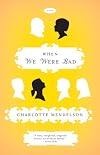
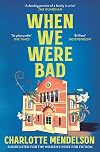
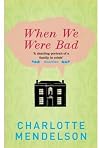
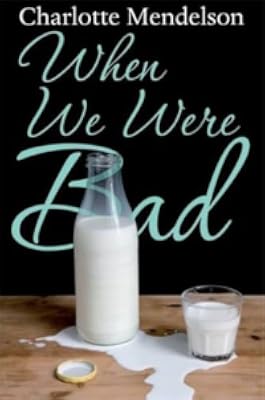
The dazzling Orange Prize shortlisted novel of a family in crisisFrom the Booker longlisted author of Almost English Shortlisted for the Orange Prize 'The Rubin family, everybody agrees, seems doomed to happiness' Claudia Rubin is in her heyday. Wife, mother, rabbi and sometime moral voice of the nation, everyone wants to be with her at her older son's glorious February wedding. Until Leo becomes a bolter and the heyday of the Rubin family begins to unravel . . . 'As intelligent as it is show more funny. A beautifully observed literary comedy as well as a painfully accurate description of one big old family mess' Observer 'Fast-paced and engaging. Brilliant, touching and true' Naomi Alderman, Financial Times 'Absolutely spellbinding, so funny, so moving, so totally believable' Jacqueline Wilson 'Intelligent and witty. The Rubin family may be a singular one but the delights and the difficulties its members have with sex and spirituality, food and domesticity, expectation and achievement, will have a universal appeal' Sunday Telegraph 'Funny and emotionally true, this is a comedy with the warmest of hearts and the most deliciously subversive of agendas' Book of the Month, Marie Claire When We Were Bad is a warm, poignant and true portrayal of a London family in crisis, in love, in denial and - ultimately - in luck.. show lessTags
Recommendations














Member Recommendations
Member Reviews
How's this for an opener: Rabbi Claudia Rubin's carefully maintained facade of a blessed and perfect family slides sideways like an unset cake off the plate of her aspirations when her eldest son, Leo, leaves his wedding with another woman just as his bride arrives at the door of the synagogue. With this start to the book, Mendelson had me hooked. Claudia fights to hold the family together as her latest book is coming out, which just might save them from financial ruin, but even with the force of her formidable will and personality, she can't stave off a long overdue family implosion.
At times I was almost wincing as the dysfunctional Rubins stumbled and blundered from one near catastrophe to the next. But they won my heart (with the show more exception of the youngest son, Simeon, who I could never warm up to), especially the sensitive and intelligent Frances trapped in an awful marriage to the dullard Jonathan. I became fond of the sexually fraught Leo, and Norman, Claudia's husband, who has written his own book which he desperately tries to conceal from his wife. The whole family tiptoes around Claudia's wishes while trying to remain true to their emerging selves, with the exception of the youngest two who seem unable to grow up (at 28 and 30). Toss in some sexual and religious ambivalence and you have quite a stew!
This is a fine piece of writing by Charlotte Mendelson. Bittersweet humour vies with moments of deep poignancy. We ache for these people but occasionally want to kick them in the duff as well. As the self-made woman, Claudia can be perfectly awful at times and yet we can't help but admire her as she fights to maintain the position in London's Jewish society that she has fought her whole life to attain. And we see that she does love her family, however imperfectly she expresses it.
It was a book for the senses as well, particularly smell. I could almost smell the fetid second floor of their home where the two youngest Rubins hang out, with Simeon's constant dope smoking and herbal teas. I could see and smell the seder foods as Claudia cooked them. The scent of Claudia's bedroom, of her perfume, of the back garden, of Max's hair - Mendelson brings us into each room, each office or bar with her use of sight, sound and smell. It creates a living connection for the reader so that these people become very real and we wish along with them for some kind of redemption or resolution.
This book will catch you by surprise with how it will wrap itself around your heart and mind. Highly recommended. show less
At times I was almost wincing as the dysfunctional Rubins stumbled and blundered from one near catastrophe to the next. But they won my heart (with the show more exception of the youngest son, Simeon, who I could never warm up to), especially the sensitive and intelligent Frances trapped in an awful marriage to the dullard Jonathan. I became fond of the sexually fraught Leo, and Norman, Claudia's husband, who has written his own book which he desperately tries to conceal from his wife. The whole family tiptoes around Claudia's wishes while trying to remain true to their emerging selves, with the exception of the youngest two who seem unable to grow up (at 28 and 30). Toss in some sexual and religious ambivalence and you have quite a stew!
This is a fine piece of writing by Charlotte Mendelson. Bittersweet humour vies with moments of deep poignancy. We ache for these people but occasionally want to kick them in the duff as well. As the self-made woman, Claudia can be perfectly awful at times and yet we can't help but admire her as she fights to maintain the position in London's Jewish society that she has fought her whole life to attain. And we see that she does love her family, however imperfectly she expresses it.
It was a book for the senses as well, particularly smell. I could almost smell the fetid second floor of their home where the two youngest Rubins hang out, with Simeon's constant dope smoking and herbal teas. I could see and smell the seder foods as Claudia cooked them. The scent of Claudia's bedroom, of her perfume, of the back garden, of Max's hair - Mendelson brings us into each room, each office or bar with her use of sight, sound and smell. It creates a living connection for the reader so that these people become very real and we wish along with them for some kind of redemption or resolution.
This book will catch you by surprise with how it will wrap itself around your heart and mind. Highly recommended. show less
I love it when I have an unexpectedly delightful reading experience like When we Were Bad. This unobtrusive little novel about a family of English Jews took me completely by surprise. Things start with a bang when the Rubins' eldest son Leo runs away with another woman just one minute before his wedding. Our first impression of Leo's family, then, is seen through their reactions to this scandalous event.
Leo's mother Claudia is a well-known rabbi, one of the first women in her field and highly respected by everyone. She's worked hard all her life, but she's good at what she does, and knows it. Claudia is also intensely committed to maintaining the Rubins' image as the family that has it all. This is all the more important since her book show more is about to be published. When Leo runs off, her greatest concern is not for him or his relationship, but on keeping up appearances as a family.
Claudia's husband Norman has supported her career all these years, keeping his own ambitions largely to himself. Daughter Frances is married with an infant and two older stepchildren. Two younger adult children, Simeon and Emily, are still trying to establish their independence. All are intensely loyal to one another, and especially to Claudia. She's formidable, and such a strong force in their lives that not one of them will make a move without considering the impact on her. But this also causes a lot of sneaking around. Norman, for example, is working on a book of his own but can't find the right time to tell Claudia. Frances feels trapped by marriage and parenthood, but feels completely alone and unable to ask her family for support. And even Claudia, so cool and collected on the outside, has her own secret problems to deal with.
So much family drama makes When we Were Bad sound like an intense read, but it's served with a generous helping of humor. Just as I was getting all teary over developments in one character's life, something else would happen to make me laugh. Each of the characters are tremendously flawed, and yet completely likeable. On the one hand, I felt I should despise Claudia for controlling everything around her and stifling others. But I loved her for what she had achieved, and for her fierce devotion to her family. As each character's story line moved towards its conclusion, I felt both happy and sad about this family that I'd come to know so well. We went through a lot together over 321 pages, and I won't soon forget it. show less
Leo's mother Claudia is a well-known rabbi, one of the first women in her field and highly respected by everyone. She's worked hard all her life, but she's good at what she does, and knows it. Claudia is also intensely committed to maintaining the Rubins' image as the family that has it all. This is all the more important since her book show more is about to be published. When Leo runs off, her greatest concern is not for him or his relationship, but on keeping up appearances as a family.
Claudia's husband Norman has supported her career all these years, keeping his own ambitions largely to himself. Daughter Frances is married with an infant and two older stepchildren. Two younger adult children, Simeon and Emily, are still trying to establish their independence. All are intensely loyal to one another, and especially to Claudia. She's formidable, and such a strong force in their lives that not one of them will make a move without considering the impact on her. But this also causes a lot of sneaking around. Norman, for example, is working on a book of his own but can't find the right time to tell Claudia. Frances feels trapped by marriage and parenthood, but feels completely alone and unable to ask her family for support. And even Claudia, so cool and collected on the outside, has her own secret problems to deal with.
So much family drama makes When we Were Bad sound like an intense read, but it's served with a generous helping of humor. Just as I was getting all teary over developments in one character's life, something else would happen to make me laugh. Each of the characters are tremendously flawed, and yet completely likeable. On the one hand, I felt I should despise Claudia for controlling everything around her and stifling others. But I loved her for what she had achieved, and for her fierce devotion to her family. As each character's story line moved towards its conclusion, I felt both happy and sad about this family that I'd come to know so well. We went through a lot together over 321 pages, and I won't soon forget it. show less
Oh my. Charlotte Mendelson, you sly one, you. Who knew that the erstwhile Booker nominee had written a novel that would totally consume me in the reckless manner that it did? The fact that I could barely stand to set it down for a minute only added to the overall satisfaction of a tightly written narrative, filled with witty observations and characters that you come to care about even though they have few redeeming characteristics.
Claudia Rubin is at the height of her powers: wife, mother, rabbi and moral authority for all, she is holding forth at the wedding of her oldest son, Leo, when the unthinkable happens. He bolts and runs off with none other than the wife of a fellow rabbi. Oi, the embarrassment! But that’s just the start as show more her family begins to unravel and Mendelson is there to report every misstep and unpeel the layers, one by one. Never has a mother’s suffocating hold on her family been more deservedly challenged.
She is so consumed by this incident that she fails to notice that her oldest daughter, Frances, is in the throes of post-natal depression. Youngest son Simeon is in a drug fueled haze and daughter Emily brings an unusual young man home (or is it a woman?). Meanwhile, patriarch Norman has been working, secretly, on a bombshell book that will bring him much more notoriety than anything his much more famous wife has published.
Claudia takes everything in stride and Mendelson describes her philosophy with an astonishing eye for detail:
”Claudia, running her fingertips over the plaster, thinks of skiing. A terrible sport: the ice, the pain, the slicing metal. It has, however, one thing in its favour. It demonstrates perfectly how best to lead one’s life. Simply the image of herself speeding over metaphorical moguls while other people, more earnest and dangly earringed, plough through the snowdrifts, emoting, discussing, sharing, has always cheered her.” (Page 216)
This is a wonderful literary comedy that will remind you of the ramshackle lives of people you know and will make you laugh out loud. Very highly recommended. show less
Claudia Rubin is at the height of her powers: wife, mother, rabbi and moral authority for all, she is holding forth at the wedding of her oldest son, Leo, when the unthinkable happens. He bolts and runs off with none other than the wife of a fellow rabbi. Oi, the embarrassment! But that’s just the start as show more her family begins to unravel and Mendelson is there to report every misstep and unpeel the layers, one by one. Never has a mother’s suffocating hold on her family been more deservedly challenged.
She is so consumed by this incident that she fails to notice that her oldest daughter, Frances, is in the throes of post-natal depression. Youngest son Simeon is in a drug fueled haze and daughter Emily brings an unusual young man home (or is it a woman?). Meanwhile, patriarch Norman has been working, secretly, on a bombshell book that will bring him much more notoriety than anything his much more famous wife has published.
Claudia takes everything in stride and Mendelson describes her philosophy with an astonishing eye for detail:
”Claudia, running her fingertips over the plaster, thinks of skiing. A terrible sport: the ice, the pain, the slicing metal. It has, however, one thing in its favour. It demonstrates perfectly how best to lead one’s life. Simply the image of herself speeding over metaphorical moguls while other people, more earnest and dangly earringed, plough through the snowdrifts, emoting, discussing, sharing, has always cheered her.” (Page 216)
This is a wonderful literary comedy that will remind you of the ramshackle lives of people you know and will make you laugh out loud. Very highly recommended. show less
This book tells the story of the Rubin family, a well respected Jewish family headed up by the matriarch, Claudia Rubin, Rabbi, author and minor celebrity.
Outwardly, life appears to be terrific for the Rubins, but on the wedding day of Leo, the eldest son, Leo bolts, and runs away with another Ranni’s wife. This event is the catalyst for the disintegration of the entire family.
Norman, Claudia’s patient husband has secrets of his own, which he is desperate to ensure she will not discover, even though he knows that one day, she inevitably will. Frances, the eldest daughter has her own anguishes and worries, and ponders how she can find her way to happiness. The youngest two children, Simeon and Emily, are both completely selfish and show more entirely dependent on their mother, although in her eyes, they can do no wrong.
This is a well written story of a family in crisis; the characters are entirely believeable, and the situations which occur are very easy to visualise. Claudia Rubin herself actually struck me as an extremely dislikeable character - selfish, and happy to deny her elder children and husband their happiness for the sake of appearances. Simeon and Emily are very irritating, and I found myself hoping for their come-uppance. It is interesting however that they are the only two members of the family whose point of view we never see.
Based on this book, I would definitely want to read more by this author. show less
Outwardly, life appears to be terrific for the Rubins, but on the wedding day of Leo, the eldest son, Leo bolts, and runs away with another Ranni’s wife. This event is the catalyst for the disintegration of the entire family.
Norman, Claudia’s patient husband has secrets of his own, which he is desperate to ensure she will not discover, even though he knows that one day, she inevitably will. Frances, the eldest daughter has her own anguishes and worries, and ponders how she can find her way to happiness. The youngest two children, Simeon and Emily, are both completely selfish and show more entirely dependent on their mother, although in her eyes, they can do no wrong.
This is a well written story of a family in crisis; the characters are entirely believeable, and the situations which occur are very easy to visualise. Claudia Rubin herself actually struck me as an extremely dislikeable character - selfish, and happy to deny her elder children and husband their happiness for the sake of appearances. Simeon and Emily are very irritating, and I found myself hoping for their come-uppance. It is interesting however that they are the only two members of the family whose point of view we never see.
Based on this book, I would definitely want to read more by this author. show less
The Rubin family is completely dysfunctional, but to outsiders they appear to be quite the opposite. The family turns on the edicts of its matriarch, Claudia , London't most renowned rabbi. The family is expected to act as a single-minded unit. The children are not supposed to leave home and live lives of their own. The younger two are utterly incapable of functioning as adults anyway. And then the family starts to fall apart. It begins with Leo Rubin's running away from his own wedding with another woman. And then they fall like dominoes.
This book is about a seemingly perfect family falling apart in a highly comical way. Mendelson has a knack for writing comedy into small human actions. The family manages to be completely irritating show more and somewhat charming at the same time. By the end of the book I had developed real affection for Norm, the husband, and Frances, the eldest daughter. I was cheering both of them on to rebellion. Claudia and the younger son, Simeon, were a bit harder to stomach. Still the book is well-worth reading for the rich and entertaining world that Mendelson has drawn around the Rubin family. show less
This book is about a seemingly perfect family falling apart in a highly comical way. Mendelson has a knack for writing comedy into small human actions. The family manages to be completely irritating show more and somewhat charming at the same time. By the end of the book I had developed real affection for Norm, the husband, and Frances, the eldest daughter. I was cheering both of them on to rebellion. Claudia and the younger son, Simeon, were a bit harder to stomach. Still the book is well-worth reading for the rich and entertaining world that Mendelson has drawn around the Rubin family. show less
The story of Claudia, a famous English rabbi and powerful matriarch, the husband living in her shadow, and their four children. Think The Corrections meets Philip Roth. Kind of.
Quite frankly, I wasn't expecting to like this book too much -- the only reason I picked it up was that it was sitting on my office bookshelf and I had forgotten to bring the other book I was reading. As I'm terrified of being caught on public transportation with nothing to read, I grabbed this, mostly because it looked more enticing than "New York Civil Practice Law and Rules," which was the one next to it. I figured it would be one of those weepy, self-indulgent pieces of work with lots of stuff about the frustrations and the beauty of family.
Well, in show more fairness, it did go on a lot about the frustrations and beauty of family. But it was also well-written without being over-written, with a strong narrative and characters who can be downright unpleasant -- a difficult type of character to write well, but Mendelson has the right touch most of the time. (She's a little less successful writing characters that she clearly doesn't like -- she succumbs too easily to making them into caricatures.) I thought that the ending came a bit close to being a cop-out in one or two respects, but Mendelson stopped just short of really taking the coward's way out. Still, I found it somewhat less than satisfying, somehow -- it just seemed to peter out.
A side note: I find it pretty interesting to read the other reviews of this book, as the overarching theme seems to be 1) I disliked these characters so I couldn't get through the book; and 2) I disliked this book because it used terms I didn't understand, such as "shul." The second comment speaks for itself, so you can draw what conclusions you will; let's just say I never heard similar complaints about, say, books by Rakesh Satyal, which also tend to use non-English words. The first complaint I think is telling because one of the characters is a woman who doesn't like being a mother -- a type of character that seems to drive people completely insane. You can also draw your own conclusions about that, but let's just say I think it says depressing things about how people view women and mothers (and no, those two classes need not always overlap). show less
Quite frankly, I wasn't expecting to like this book too much -- the only reason I picked it up was that it was sitting on my office bookshelf and I had forgotten to bring the other book I was reading. As I'm terrified of being caught on public transportation with nothing to read, I grabbed this, mostly because it looked more enticing than "New York Civil Practice Law and Rules," which was the one next to it. I figured it would be one of those weepy, self-indulgent pieces of work with lots of stuff about the frustrations and the beauty of family.
Well, in show more fairness, it did go on a lot about the frustrations and beauty of family. But it was also well-written without being over-written, with a strong narrative and characters who can be downright unpleasant -- a difficult type of character to write well, but Mendelson has the right touch most of the time. (She's a little less successful writing characters that she clearly doesn't like -- she succumbs too easily to making them into caricatures.) I thought that the ending came a bit close to being a cop-out in one or two respects, but Mendelson stopped just short of really taking the coward's way out. Still, I found it somewhat less than satisfying, somehow -- it just seemed to peter out.
A side note: I find it pretty interesting to read the other reviews of this book, as the overarching theme seems to be 1) I disliked these characters so I couldn't get through the book; and 2) I disliked this book because it used terms I didn't understand, such as "shul." The second comment speaks for itself, so you can draw what conclusions you will; let's just say I never heard similar complaints about, say, books by Rakesh Satyal, which also tend to use non-English words. The first complaint I think is telling because one of the characters is a woman who doesn't like being a mother -- a type of character that seems to drive people completely insane. You can also draw your own conclusions about that, but let's just say I think it says depressing things about how people view women and mothers (and no, those two classes need not always overlap). show less
I struggled at first to get into this book. So many characters, all equally important as the story unfolds. All so flawed. All so Jewish. That isn’t a criticism. Just an observation that understanding the Rubin family (and all the characters are family members) means getting to grips a bit with what it means to be Jewish too.
I persisted. It was worth it.
The lives of every family member begin to unravel as son Leo’s life very publicly does, the day he leaves his wife-to-be some 4 minutes before they take their vows. It turns out that he isn’t the only one in inner turmoil.
By turns funny, touching and embarrassing, I was engaged with every character, despite their many and obvious flaws, long before the conclusion of the book.
I persisted. It was worth it.
The lives of every family member begin to unravel as son Leo’s life very publicly does, the day he leaves his wife-to-be some 4 minutes before they take their vows. It turns out that he isn’t the only one in inner turmoil.
By turns funny, touching and embarrassing, I was engaged with every character, despite their many and obvious flaws, long before the conclusion of the book.
Members
- Recently Added By
Lists

Best Books Set in London
157 works; 40 members

Best Lesbian Fiction (And Narrative Non-Fiction)
155 works; 36 members

Books by Jewish Authors
68 works; 5 members
Author Information

9+ Works 1,094 Members
Awards and Honors
Awards
Common Knowledge
- Canonical title
- When We Were Bad
- Original publication date
- 2008-02
- People/Characters
- Claudia Rubin; Norman Rubin; Leo Rubin; Simeon Rubin; Emily Rubin; Frances
- Important places
- London, England, UK
- Dedication
- For Joanna, my love
- First words
- The Rubin family, everybody agrees, seems doomed to happiness.
Today is the wedding day of Leo, the first-born. He is thirty-four; he has not hurried, but now he is to marry and the next instalment of family history has b... (show all)een ensured. There is, in the jokes of his many ushers, his parents' smiling efficiency, the kisses and handshakes of his older relatives, a sense of relief. - Last words
- (Click to show. Warning: May contain spoilers.)So, although she knows that the relief she feels may be simply endorphins, although even now she cannot shake the feeling there are other things to do, she reaches cautiously across the bed for the Hotel Davos pad and pen on Norman's table. And there she makes herself do what she, Claudia, whom everyone thinks of as so brave, has never yet dared. She begins to write - who knew that it would be quite so difficult? - Emily, Simeon, Frances, Leo and Norman, most of all Norman, the love letters that they deserve.
Classifications
Statistics
- Members
- 407
- Popularity
- 76,229
- Reviews
- 19
- Rating
- (3.48)
- Languages
- Dutch, English, German
- Media
- Paper, Audiobook, Ebook
- ISBNs
- 19
- UPCs
- 1
- ASINs
- 4