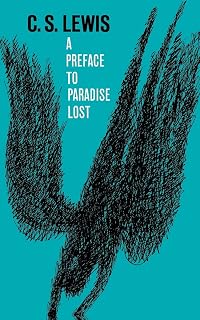
A Preface to Paradise Lost
by C. S. Lewis
On This Page
Description
C. S. Lewis's illuminating reflections on Milton's Paradise Lost, the seminal classic that profoundly influenced Christian thought as well as Lewis's own. In Preface to Paradise Lost, the Christian apologist and revered scholar and professor of literature closely examines the style, content, structure, and themes of Milton's masterpiece, a retelling of the biblical story of the Fall of Humankind, Satan's temptation, and the expulsion of Adam and Eve from the Garden of Eden. Considering the show more story within the context of the Western literary tradition, Lewis offers invaluable insights into Paradise Lost and the nature of literature itself, unveiling the poem's beauty and its wisdom. Lewis explains and defends the literary form known as "Epic," pondering simple yet perceptive questions such as: What is an Epic? Why, in the seventeenth century, did Milton choose to write his story in this style? In what sense is Paradise Lost similar to the Homeric poems or the Anglo Saxon Beowulf? In what sense did Milton develop Virgil's legacy? With the clarity of thought and style that are the hallmarks of his writing, Lewis provides answers with a lucidity and lightness that deepens our understanding of this literary form and both illuminates Milton's immortal epic and its meaning and inspires readers to revisit it. Ultimately, he reminds us why elements including ritual, splendor, and joy deserve to exist and hold a sacred place in human life. One of Lewis's most revered scholarly works, Preface to Paradise Lost is indispensable for literature, philosophy, and religion scholars and for ardent fans of Lewis's writings. show lessTags
Recommendations




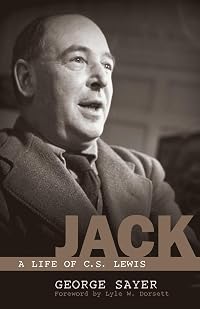
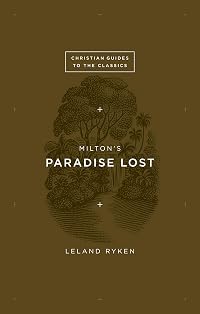

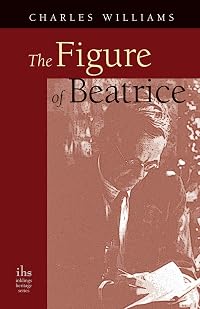

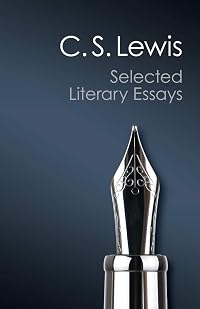










Member Recommendations
Member Reviews
The first half is about the technicality of the writing. But it is the second half that blows you away where he examines Milton's religious statements. It's almost flawless and I love it.
https://nwhyte.livejournal.com/2970090.html
C.S. Lewis had a good year in 1942; he was a regular broadcaster on the BBC, he was working on Perelandra, and he also published The Screwtape Letters (which are certainly on my Best Novel Best Novella ballot). A Preface to Paradise Lost is 150 pages of detailed analysis of the epic poem, the first half looking at the epic style in itself, and the second half looking at Milton’s ideas of Christianity. I’m more familiar with the other epics, and found the first half tremendously rewarding reading, though Lewis’s feud with T.S. Eliot is a little wearying. A very interesting examination of what epic poets are trying to do.
However, I think Lewis himself clearly does not regard the book as show more related to the field of science fiction, fantasy, or fandom. He comments that Dante (who he otherwise doesn’t discuss much) can be seen as in the same tradition as Jules Verne and H.G. Wells, but clearly separates them from Homer, Virgil, the author of Beowulf and Milton as doing very different things. I doubt that the hypothetical voters of the non-existent 1943 Worldcon would have put this on their final ballot, and more important, I doubt that Lewis would have accepted nomination if offered the choice. (Unlike The Screwtape Letters, which clearly has some sfnal roots.) show less
C.S. Lewis had a good year in 1942; he was a regular broadcaster on the BBC, he was working on Perelandra, and he also published The Screwtape Letters (which are certainly on my Best Novel Best Novella ballot). A Preface to Paradise Lost is 150 pages of detailed analysis of the epic poem, the first half looking at the epic style in itself, and the second half looking at Milton’s ideas of Christianity. I’m more familiar with the other epics, and found the first half tremendously rewarding reading, though Lewis’s feud with T.S. Eliot is a little wearying. A very interesting examination of what epic poets are trying to do.
However, I think Lewis himself clearly does not regard the book as show more related to the field of science fiction, fantasy, or fandom. He comments that Dante (who he otherwise doesn’t discuss much) can be seen as in the same tradition as Jules Verne and H.G. Wells, but clearly separates them from Homer, Virgil, the author of Beowulf and Milton as doing very different things. I doubt that the hypothetical voters of the non-existent 1943 Worldcon would have put this on their final ballot, and more important, I doubt that Lewis would have accepted nomination if offered the choice. (Unlike The Screwtape Letters, which clearly has some sfnal roots.) show less
This delightful piece of criticism is a reminder of not just why Paradise Lost is one of the great works of literature, but why C. S. Lewis was one of the great literary critics. Lewis surveys the whole sweep of epic poetry from Homer onwards in the introductory chapters which lay the groundwork for his discussion of Milton's work itself. Having established what Milton was trying to achieve in his poem, Lewis concisely addresses some of the main areas of controversy that have arisen from criticism of the work through the centuries. For the most part these deal with Milton's theology and his supposed heterodoxy - Lewis is clear to distinguish between ideas that Milton held and those he actually propounded in Paradise Lost. There are also show more brief discussions of angels, Adam and Eve, prelapsarian sex and the wisdom of Milton's attempting to portray it, and the fall itself. show less
In this preface, Lewis first outlines what an epic poem is and what Milton was trying to do with Paradise Lost. Then he discusses his views on how Milton's theology played a role in this epic. Lewis debunks the view that Milton had compassion for Satan. It was a good introduction, which I read before the poem because I thought it might help me comprehend the poem while I'm reading it. It was helpful, though it managed to make me more skeptical that I'll comprehend Paradise Lost.
First issue of paperback edition.
This is my own pb copy. I later inherited my parents' older hc copy.
Members
- Recently Added By
Lists

GreatBooks Worldview Academy Lists
133 works; 4 members

CCE 100 Great Books List
145 works; 8 members

Summer Reading 2015
18 works; 1 member
Author Information

534+ Works 523,647 Members
C. S. (Clive Staples) Lewis, "Jack" to his intimates, was born on November 29, 1898 in Belfast, Ireland. His mother died when he was 10 years old and his lawyer father allowed Lewis and his brother Warren extensive freedom. The pair were extremely close and they took full advantage of this freedom, learning on their own and frequently enjoying show more games of make-believe. These early activities led to Lewis's lifelong attraction to fantasy and mythology, often reflected in his writing. He enjoyed writing about, and reading, literature of the past, publishing such works as the award-winning The Allegory of Love (1936), about the period of history known as the Middle Ages. Although at one time Lewis considered himself an atheist, he soon became fascinated with religion. He is probably best known for his books for young adults, such as his Chronicles of Narnia series. This fantasy series, as well as such works as The Screwtape Letters (a collection of letters written by the devil), is typical of the author's interest in mixing religion and mythology, evident in both his fictional works and nonfiction articles. Lewis served with the Somerset Light Infantry in World War I; for nearly 30 years he served as Fellow and tutor of Magdalen College at Oxford University. Later, he became Professor of Medieval and Renaissance English at Cambridge University. C.S. Lewis married late in life, in 1957, and his wife, writer Joy Davidman, died of cancer in 1960. He remained at Cambridge until his death on November 22, 1963. (Bowker Author Biography) show less
Work Relationships
Reference guide/companion to
Common Knowledge
- Canonical title
- A Preface to Paradise Lost
- Original publication date
- 1942
- People/Characters
- John Milton
- Dedication
- To Charles Williams
- First words
- The first qualification for judging any piece of workmanship from a corkscrew to a cathedral is to know what it is - what it was intended to do and how it is meant to be used.
- Last words
- (Click to show. Warning: May contain spoilers.)Galahad must not make common cause with Mordred, for it is always Mordred who gains, and he who loses, by such alliance.
Classifications
Statistics
- Members
- 1,007
- Popularity
- 25,855
- Reviews
- 6
- Rating
- (4.08)
- Languages
- English
- Media
- Paper, Audiobook, Ebook
- ISBNs
- 16
- ASINs
- 25