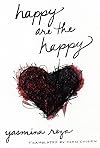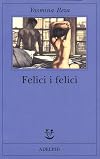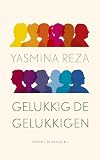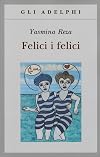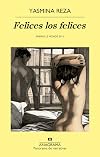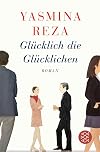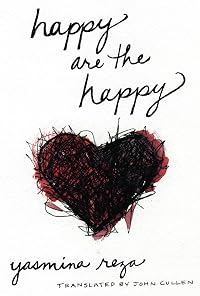
Happy Are the Happy
by Yasmina Reza
On This Page
Description
This citation of Borges resonates with every character in Yasmina Reza's novel, except that they are never so lucky. In fact, what happens to them is the exact opposite of what they crave. The twenty short chapters that make up this unusual book deal with both marital and extramarital vicissitudes, the elusiveness of intimacy, the fear of loneliness, and the desire to be loved or at least understood just once in our lives. The mixing of tones--cruelty and despair competing with humor and show more fantasy--and the quality of the monologues--taut and highly original--adds to the novel's virtuosity. This is without a doubt Reza's most accomplished work. show lessTags
Recommendations


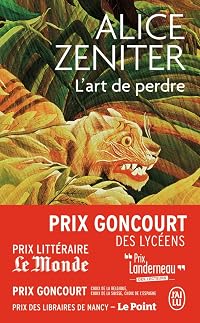
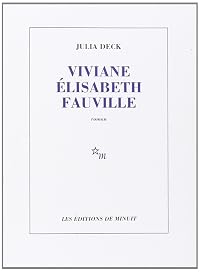
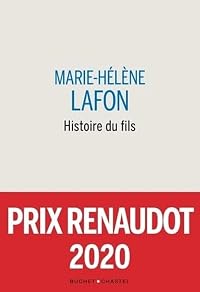
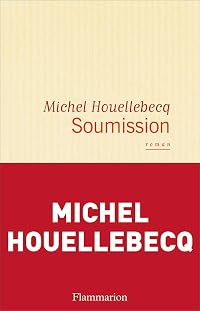













Member Recommendations

Member Reviews
A novel in 21 vignettes - some of them a bit longer than the traditional format but still short enough to use the word. Told in the voices of 18 interconnected people - family members, friends, doctors. It's a story of loss and family - and it does not work.
The format requires the author to be able to make the voices distinctive, to give them something special - in the thinking, in the expressions, in something. And that is missing from the book - you can read any part and not being able to recognize who is speaking - the story itself shows who the character is but the distinctive voices are missing. Add to this a few instances where the author pushes so hard with the only reason to shock and I wonder why the author chose the format at show more all. Considering that she is a play-writer, it is even more bizarre - she should be good at writing different characters.
Most of the women are weak and submissive - even when they seem to have a personality, it gets buried and almost treated as a fault. The men, all of them, are broken in their own ways. Either France is a terrible place these days or Reza decided to show a set of characters that are more flawed than usual. show less
The format requires the author to be able to make the voices distinctive, to give them something special - in the thinking, in the expressions, in something. And that is missing from the book - you can read any part and not being able to recognize who is speaking - the story itself shows who the character is but the distinctive voices are missing. Add to this a few instances where the author pushes so hard with the only reason to shock and I wonder why the author chose the format at show more all. Considering that she is a play-writer, it is even more bizarre - she should be good at writing different characters.
Most of the women are weak and submissive - even when they seem to have a personality, it gets buried and almost treated as a fault. The men, all of them, are broken in their own ways. Either France is a terrible place these days or Reza decided to show a set of characters that are more flawed than usual. show less
This was the next novel on the library shelf. Yasmina Reza is a French playwright, actress, novelist and screen writer and according to wiki many of her brief satiric plays have reflected on middle-class issues. Her novel Heureux les heureux focuses on a similar strata of french society although more to the upper middle class. This is a novel about people who seemingly have no money problems and are at at peace with their place in the social strata, but are they happy? It would appear not.
Reza focuses on nineteen people who each get a short chapter each (a couple of them get two chapters) and they tell their stories about their hopes and fears mainly concerned with relationships. We meet Robert Toscano in the first chapter; he is in show more the supermarket with his wife Odile, she has sent him off to join the queue for the cheese and when he returns, she turns sharply on him, because he has chosen the wrong cheese for the evening, he offers to change it, but the queue is too long. From this small incident an argument develops between the two of them and the bickering hints at more serious problems. Odile has her own chapter later in the book which explores her relationships with her children. The other 17 people have connections with the Toscano's or friends and acquaintances of them. Characters appear in each others stories that shed more light on their situations, sometimes giving a completely different view. There is no central plot or story line, but an oncologist and a psychoanalyst at the nearby hospital provide some nucleus.
The people featured are mostly in the 40-60 year old age ranges, having enough experience to provide partial reflections on their life and hopes for the future. It is Paris and so there are liaisons between couples, mostly heterosexual which seem to be part of the fabric of life in the city. It seems to do nobody much harm, no great dramas, but it does get to the nub of this book, which is that these people are lonely. Many are alone within their relationships. it is Chantal Audouin who is the mistress of a cabinet minister who states it most baldly; she is alone in a world of couples, but she sees many couples alone with each other. In her story the cabinet ministers wife discovers messages between the lovers on her phone and she arranges a meeting with Chantal. The wife says that her husband does this sort of thing all the time, she knows of three other current mistresses and hopes that Chantal has not got too involved.
There are no paragraphs in the text which is only divided by the chapter headings. The conversations are contained within the bloc text, which gives a feeling of a stream of consciousness. It is the sort of a book where it is useful, although not essential to keep a list of the characters as they appear and reappear. It is cleverly done as it searches out the interiority of the lives of this group of people and makes for a fascinating reading experience. I thought it was very good and rate it at 4 stars. show less
Reza focuses on nineteen people who each get a short chapter each (a couple of them get two chapters) and they tell their stories about their hopes and fears mainly concerned with relationships. We meet Robert Toscano in the first chapter; he is in show more the supermarket with his wife Odile, she has sent him off to join the queue for the cheese and when he returns, she turns sharply on him, because he has chosen the wrong cheese for the evening, he offers to change it, but the queue is too long. From this small incident an argument develops between the two of them and the bickering hints at more serious problems. Odile has her own chapter later in the book which explores her relationships with her children. The other 17 people have connections with the Toscano's or friends and acquaintances of them. Characters appear in each others stories that shed more light on their situations, sometimes giving a completely different view. There is no central plot or story line, but an oncologist and a psychoanalyst at the nearby hospital provide some nucleus.
The people featured are mostly in the 40-60 year old age ranges, having enough experience to provide partial reflections on their life and hopes for the future. It is Paris and so there are liaisons between couples, mostly heterosexual which seem to be part of the fabric of life in the city. It seems to do nobody much harm, no great dramas, but it does get to the nub of this book, which is that these people are lonely. Many are alone within their relationships. it is Chantal Audouin who is the mistress of a cabinet minister who states it most baldly; she is alone in a world of couples, but she sees many couples alone with each other. In her story the cabinet ministers wife discovers messages between the lovers on her phone and she arranges a meeting with Chantal. The wife says that her husband does this sort of thing all the time, she knows of three other current mistresses and hopes that Chantal has not got too involved.
There are no paragraphs in the text which is only divided by the chapter headings. The conversations are contained within the bloc text, which gives a feeling of a stream of consciousness. It is the sort of a book where it is useful, although not essential to keep a list of the characters as they appear and reappear. It is cleverly done as it searches out the interiority of the lives of this group of people and makes for a fascinating reading experience. I thought it was very good and rate it at 4 stars. show less
Non è un vero e proprio romanzo, è più una sfilza di racconti su personaggi le cui vite si intrecciano. Personaggi che in tutti i modi cercano di complicarsela, che nella scelta se essere felici o meno, cercano sempre la via per rovinare tutto nel modo più disastroso. Personalmente ho poca tolleranza per l'infelicità degli altri, soprattutto di quelli che mollano subito....la scorsa primavera ad esempio, avevo organizzato con delle amiche un cineforum che parlava di felicità; si intitolava "Felicità. Maneggiare con cura". E' piaciuto molto, l'edizione più frequentata da 8-9 anni a sta parte e mi ricordo che non ero troppo d'accordo con l'introduzione critica che ha composto la mia amica per il volantino, perché puntava troppo show more sulla fatica, sul lavoro che c'è da fare per essere felici, per non essere schiavi del desiderio e badate, non ero in disaccordo sulla fatica, sono perfettamente convinta che la felicità si costruisca giorno dopo giorno con grande impegno, ma tendo per mia indole, una volta passata la fatica, a dimenticarla. Un po' come quando si arriva in cima a una montagna dopo che si hanno sputati i polmoni sul sentiero, come dopo il parto quando stringi tra le braccia tuo figlio -qui lo chiamano mal desmentegon- insomma: non si può pensare di essere felici, se non si accetta di abbracciare l'infelicità. Ma ecco, sostanzialmente mi par troppo facile crogiolarsi nell'infelicità e lasciar marcire tutto. Ci vorrebbe un po' di sana compassione per apprezzare un po' di più queste storie. Ho apprezzato invece il modernismo linguistico, questa scelta di non mettere la punteggiatura nel dialoghi, ma andar via veloce. show less
Non è un vero e proprio romanzo, è più una sfilza di racconti su personaggi le cui vite si intrecciano. Personaggi che in tutti i modi cercano di complicarsela, che nella scelta se essere felici o meno, cercano sempre la via per rovinare tutto nel modo più disastroso. Personalmente ho poca tolleranza per l'infelicità degli altri, soprattutto di quelli che mollano subito....la scorsa primavera ad esempio, avevo organizzato con delle amiche un cineforum che parlava di felicità; si intitolava "Felicità. Maneggiare con cura". E' piaciuto molto, l'edizione più frequentata da 8-9 anni a sta parte e mi ricordo che non ero troppo d'accordo con l'introduzione critica che ha composto la mia amica per il volantino, perché puntava troppo show more sulla fatica, sul lavoro che c'è da fare per essere felici, per non essere schiavi del desiderio e badate, non ero in disaccordo sulla fatica, sono perfettamente convinta che la felicità si costruisca giorno dopo giorno con grande impegno, ma tendo per mia indole, una volta passata la fatica, a dimenticarla. Un po' come quando si arriva in cima a una montagna dopo che si hanno sputati i polmoni sul sentiero, come dopo il parto quando stringi tra le braccia tuo figlio -qui lo chiamano mal desmentegon- insomma: non si può pensare di essere felici, se non si accetta di abbracciare l'infelicità. Ma ecco, sostanzialmente mi par troppo facile crogiolarsi nell'infelicità e lasciar marcire tutto. Ci vorrebbe un po' di sana compassione per apprezzare un po' di più queste storie. Ho apprezzato invece il modernismo linguistico, questa scelta di non mettere la punteggiatura nel dialoghi, ma andar via veloce. show less
Usually I read relatively without context, but in this case I wish I could recall what led me to this book. I feel like if I asked someone to write a parody of a french movie, this is what would result. The cycle of interrelated people and the complicated happiness (?) of their relationships is certainly well-written, and somewhat interesting as far as that goes. It's this mindset and viewpoint that I find stale and irrelevant to my life.
This book of connected short stories about quirky French people was easy, interesting reading, but didn't really connect strongly with me. That's really just because I have a personal preference for more in-depth studies.
Très touchant, à la fois marrant et triste, finement observateur.
Members
- Recently Added By
Author Information

62+ Works 2,588 Members
Some Editions
Awards and Honors
Distinctions
Series
Belongs to Publisher Series
Llibres Anagrama (6)
Gallimard, Folio (5813)
Common Knowledge
- Canonical title
- Happy Are the Happy
- Original title
- Heureux les heureux
- Original publication date
- 2013
- People/Characters
- Robert Toscano; Odile Toscano; Marguerite Blot; Ernest Blot; Vincent Zawada; Pascaline Hutner (show all 18); Paola Suares; Philip Chemla; Loula Moreno; Raoul Barnèche; Virginie Déruelle; Rémi Grobe; Chantal Audouin; Jean Ehrenfried; Damien Barnèche; Luc Condamine; Hélène Barneche; Jeannette Blot
- Epigraph*
- Glücklich die Geliebten und die Liebenden
Und die auf die Liebe verzichten konnen.
Glücklich die Glücklichen. - Dedication*
- Für Moïra
- Quotations*
- Aber der Abstand, was ist das? Das Alter.
- Original language
- French
*Some information comes from Common Knowledge in other languages. Click "Edit" for more information.
Classifications
Statistics
- Members
- 287
- Popularity
- 112,463
- Reviews
- 14
- Rating
- (3.39)
- Languages
- 8 — Catalan, Dutch, English, French, German, Italian, Spanish, Swedish
- Media
- Paper, Audiobook, Ebook
- ISBNs
- 24
- ASINs
- 9