On This Page
Description
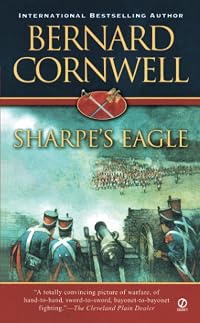
Here is one of those rare novels, the first in an epic series, that completely transports the reader to an unforgettable time and place in history. At Talavera in July of 1809, Captain Richard Sharpe, bold, professional, and ruthless, prepares to lead his men against the armies of Napoleon into what will be the bloodiest battle of the war. Sharpe has earned his captaincy, but there are others, such as the foppish Lieutenant Gibbons and his uncle, Colonel Henry Simmerson, who have bought show more their commissions despite their incompetence. After their cowardly loss of the regiment's colors, their resentment toward the upstart Sharpe turns to treachery, and Sharpe must battle his way through sword fights and bloody warfare to redeem the honor of his regiment. show lessTags
Recommendations







Member Reviews
Anyone familiar with Georgette Heyer's Regency novels knows about the Rifles: it's amazing how many of her heroes served in Wellington's army. I learned about the "thin red line" around the same time as I learned about the weather gauge from Hornblower. However, I could never find someone who did for the Rifles what C.S.Forester did for the Royal Navy. Until I came across this in a London bookstore.
It looked promising and it more than delivered: the hero is rough, tough, ruthless and a proper bastard, the campaign well described, the plot interesting and the characters very memorable, the bad guys are deliciously hissable and I actually yelled "YES" when they got their come-uppance. I have been hooked ever since.
Promoting Sharpe from show more the ranks is a shrewd move: the author doesn't have to waste much time with the hero learning his craft, and it also supplies lots of dramatic material for conflict with his superiors. It also means that Sharpe is a lot closer mentally to his men than some upper-class twat would have been. Harper in particular is a great creation, the relation between these two is always interesting and believable. show less
It looked promising and it more than delivered: the hero is rough, tough, ruthless and a proper bastard, the campaign well described, the plot interesting and the characters very memorable, the bad guys are deliciously hissable and I actually yelled "YES" when they got their come-uppance. I have been hooked ever since.
Promoting Sharpe from show more the ranks is a shrewd move: the author doesn't have to waste much time with the hero learning his craft, and it also supplies lots of dramatic material for conflict with his superiors. It also means that Sharpe is a lot closer mentally to his men than some upper-class twat would have been. Harper in particular is a great creation, the relation between these two is always interesting and believable. show less
I don't often encounter historical/military novels that themselves have a strong sense of prior history the way that Sharpe's Eagle has, for the Roman Empire strongly permeates the book, especially in its opening chapters.
We open with Sharpe and his rifle company* being drafted into yet another weird little scheme. An ancient Roman bridge crossing the river Tagus, a bridge that has stood strong for hundreds of years, has to go for strategic reasons, and Sharpe's friend and sort-of-commander, Captain Hogan, is the engineer who's going to do it. All fine and dandy. But the mission comes with certain... accompaniments.
A right upper class twit of a politically connected jerk has raised a brand new regiment back home and dedicated them to show more the cause in Spain and Portugal, and they're coming along in all their finery and splendor. The upper class twit thinking that it's more important that his soldiers look well than fight well and all, it's a pretty useless regiment but one that, maybe with some seasoning, might do all right if their Colonel, one Sir Henry Simmerson, doesn't get them killed first. Anyway, they're coming along for the bridge blowing party.
But because this is Spain and everything here is a matter of hidalgo honor, so is a fancy Spanish regiment, even shinier and fancier and more useless than the British noobs. "Hell's teeth," one of Sharpe's men observes on the approach of these military fops. "The fairies are on our side."
So, the early mission turns out not to be so straightforward after all. And that's before the French show up. Which shouldn't be a problem, as it's obvious to Sharpe it's a classic calvary vs infantry standoff, wherein no one has sufficient advantage to make it worthwhile to attack. Alas, this is not so obvious to the Colonel or his Spanish counterpart, who, in a scene of prolonged hilarity, pretty much provoke the French into massacre. And lose the regimental colors (the physical embodiment of a regiment's honor and pride the way a Roman legion's eagle was back in the day, and what the French still use for this purpose ca the early 1800s, and now the title of this novel makes all the sense in the world, don't it?) into the bargain.
That's all prologue. It establishes a new enemy for Sharpe in Colonel Simmerson, who needs a scapegoat for his enormous blunder and finds Sir Arthur Wellesley's favorite gotten-up, up-from-the-ranks officer a perfect candidate as much because Sharpe is a protege of Wellesley's as because Sharpe disobeyed an order in the middle of the debacle that was essentially for him and his men to commit suicide and make the French win all the faster (instead, Sharpe rescued one of Simmerson's colors and captured a French cannon, because Sharpe is awesome). When Wellesley promotes Sharpe to Captain and gives him command of a Battalion of Detachments, consisting of odds-and-ends groups like Sharpe's own fragment of a rifle company, and puts the survivors of Simmerson's regiment in that new Battalion, he's just painted the biggest political bullseye ever on Sharpe's back, and Sharpe is, of course, the last guy who'd ever want to be entangled in any politics at all. Especially the kind that can result in his being yanked out of the Peninsular War and deployed to the West Indies, to likely die of a tropical disease within a year of his arrival!
But so there's only one thing Sharpe can do to redeem himself from the results of his badassery: something even more badass, something no one has managed to do in this war: capture a French Eagle.
And of course he'll have to do this in one of the Peninsular War's biggest battles.
With Simmerson and his underlings (including an odious nephew, who is, of course, fighting with Sharpe over, of course, a beautiful woman) in tow.
And even more useless Spaniards mucking things up. Seriously, the Spanish army does not come off well in this novel! When they're not cocking up minor actions being show-offs, they're delaying major actions by oversleeping and letting the French gather up even more forces. And then there's bits like this, describing the aftermath of an ill-planned bout of shooting at some out-of-range Frenchmen:
"For a second Sharpe thought the Spanish were cheering their own victory over the innocent grass but suddenly he realised the shouts were not of triumph, but of alarm. They had been scared witless by their own volley, by the thunder of ten thousand muskets, and now they ran for safety. Thousands streamed into the olive trees, throwing away muskets, trampling the fires in their panic, screaming for help, heads up, arms pumping, running from their own noise."
I bet Spanish readers hate this book.**
But I, I loved it. I'm in serious danger, folks, between this and my re-read of the Aubrey/Maturin books, of making this as much a Summer of Napoleonic War Stories as a Summer of Jest!
Though I do sometimes wish Sharpe would stop taking justice into his own hands. Dude has almost as much cold blood on them as hot. Not cool, Richard. Not cool. As it were. Um. Please don't hurt me.
*Now a seriously rag-tag bunch of military orphans, whose regiment is back in England and who therefore cannot get new uniforms or boots or gear of any kind, even from the plentiful other fighting recipients of the King's Shilling who are still on the Iberian Peninsula, because no one wants to take on the bureaucratic headaches that would ensue if Sharpe's boys were given kit out of some other regiment's or division's stores.
**But, as Cornwell informs us in his traditional historical afterword, that incident really happened. show less
We open with Sharpe and his rifle company* being drafted into yet another weird little scheme. An ancient Roman bridge crossing the river Tagus, a bridge that has stood strong for hundreds of years, has to go for strategic reasons, and Sharpe's friend and sort-of-commander, Captain Hogan, is the engineer who's going to do it. All fine and dandy. But the mission comes with certain... accompaniments.
A right upper class twit of a politically connected jerk has raised a brand new regiment back home and dedicated them to show more the cause in Spain and Portugal, and they're coming along in all their finery and splendor. The upper class twit thinking that it's more important that his soldiers look well than fight well and all, it's a pretty useless regiment but one that, maybe with some seasoning, might do all right if their Colonel, one Sir Henry Simmerson, doesn't get them killed first. Anyway, they're coming along for the bridge blowing party.
But because this is Spain and everything here is a matter of hidalgo honor, so is a fancy Spanish regiment, even shinier and fancier and more useless than the British noobs. "Hell's teeth," one of Sharpe's men observes on the approach of these military fops. "The fairies are on our side."
So, the early mission turns out not to be so straightforward after all. And that's before the French show up. Which shouldn't be a problem, as it's obvious to Sharpe it's a classic calvary vs infantry standoff, wherein no one has sufficient advantage to make it worthwhile to attack. Alas, this is not so obvious to the Colonel or his Spanish counterpart, who, in a scene of prolonged hilarity, pretty much provoke the French into massacre. And lose the regimental colors (the physical embodiment of a regiment's honor and pride the way a Roman legion's eagle was back in the day, and what the French still use for this purpose ca the early 1800s, and now the title of this novel makes all the sense in the world, don't it?) into the bargain.
That's all prologue. It establishes a new enemy for Sharpe in Colonel Simmerson, who needs a scapegoat for his enormous blunder and finds Sir Arthur Wellesley's favorite gotten-up, up-from-the-ranks officer a perfect candidate as much because Sharpe is a protege of Wellesley's as because Sharpe disobeyed an order in the middle of the debacle that was essentially for him and his men to commit suicide and make the French win all the faster (instead, Sharpe rescued one of Simmerson's colors and captured a French cannon, because Sharpe is awesome). When Wellesley promotes Sharpe to Captain and gives him command of a Battalion of Detachments, consisting of odds-and-ends groups like Sharpe's own fragment of a rifle company, and puts the survivors of Simmerson's regiment in that new Battalion, he's just painted the biggest political bullseye ever on Sharpe's back, and Sharpe is, of course, the last guy who'd ever want to be entangled in any politics at all. Especially the kind that can result in his being yanked out of the Peninsular War and deployed to the West Indies, to likely die of a tropical disease within a year of his arrival!
But so there's only one thing Sharpe can do to redeem himself from the results of his badassery: something even more badass, something no one has managed to do in this war: capture a French Eagle.
And of course he'll have to do this in one of the Peninsular War's biggest battles.
With Simmerson and his underlings (including an odious nephew, who is, of course, fighting with Sharpe over, of course, a beautiful woman) in tow.
And even more useless Spaniards mucking things up. Seriously, the Spanish army does not come off well in this novel! When they're not cocking up minor actions being show-offs, they're delaying major actions by oversleeping and letting the French gather up even more forces. And then there's bits like this, describing the aftermath of an ill-planned bout of shooting at some out-of-range Frenchmen:
"For a second Sharpe thought the Spanish were cheering their own victory over the innocent grass but suddenly he realised the shouts were not of triumph, but of alarm. They had been scared witless by their own volley, by the thunder of ten thousand muskets, and now they ran for safety. Thousands streamed into the olive trees, throwing away muskets, trampling the fires in their panic, screaming for help, heads up, arms pumping, running from their own noise."
I bet Spanish readers hate this book.**
But I, I loved it. I'm in serious danger, folks, between this and my re-read of the Aubrey/Maturin books, of making this as much a Summer of Napoleonic War Stories as a Summer of Jest!
Though I do sometimes wish Sharpe would stop taking justice into his own hands. Dude has almost as much cold blood on them as hot. Not cool, Richard. Not cool. As it were. Um. Please don't hurt me.
*Now a seriously rag-tag bunch of military orphans, whose regiment is back in England and who therefore cannot get new uniforms or boots or gear of any kind, even from the plentiful other fighting recipients of the King's Shilling who are still on the Iberian Peninsula, because no one wants to take on the bureaucratic headaches that would ensue if Sharpe's boys were given kit out of some other regiment's or division's stores.
**But, as Cornwell informs us in his traditional historical afterword, that incident really happened. show less
Who can resist a risen-from-the-ranks, British, Regulation Hottie like Richard Sharpe? Sean Bean as the TV series version isn't bad either. This novel is a dose of history with a lot of sugar to help it go down. Witty dialogue, especially from the Irish characters, a fast-moving plot, plenty of adventure. The only bits that don't work are the scenes with the girl.
Apart from the sheer implausibility of Richard Sharpe's rise from the ranks in Wellington's army, this is a fun read. Good background stuff for a Napoleonic RPG scenario, especially one set in the Peninsula.
Swashbuckling stuff. Cornwell certainly gives the impression that he understands military tactics of the time, and he does so in a gripping manner. The story is full of daring feats, intrigue and larger-than-life characters. Very enjoyable, difficult to put down, and makes one want to rush to the secondhand book shop to find another book in the Richard Sharpe series.
This one is my favorite in the series so far.
I love Cornwell brining deeper insight into secondary characters, especially sergeant Harper's. Sharpe becomes both more defined person and more self aware one - this makes his character even more fascinating.
I love Cornwell brining deeper insight into secondary characters, especially sergeant Harper's. Sharpe becomes both more defined person and more self aware one - this makes his character even more fascinating.
Sharpe's rank ambition is a bit of a turn off. Then again, he deserves the official authority and recognition since he's doing his superiors' jobs anyway. I'll never tire of a war story full of incompetence. #backtoSpain1809
Members
- Recently Added By
Lists

The Guardian's 1000 Novels Everyone Must Read
1,005 works; 551 members

Favourite Books
1,820 works; 316 members
Historical Fiction
889 works; 91 members
Animals in the Title
498 works; 11 members
Overdue Podcast
808 works; 9 members

THE WAR ROOM
813 works; 24 members
Author Information

172+ Works 93,976 Members
Bernard Cornwell was born in London, England, on February 23, 1944, and came to the United States in 1980. He received a B.A. from the University of London in 1967. Cornwell served as producer of the British Broadcasting Corporation from 1969-1976. After this he was head of current affairs for BBC-TV in Belfast, Northern Ireland. In 1979 he became show more editor of television news for Thames Television of London. Since 1980 he has been a freelance writer. he lives with his wife on Cape Cod. Cornwell's Sharpe series, adventure stories about a British soldier set in the Peninsula War of 1808-1814, are built on the author's interest in the Duke of Wellington's army. Titles include Sharpe's Rifles, Sharpe's Revenge, Sharpe's Siege, Sharpe's Regiment, and Sharpe's Waterloo. The Last Kingdom series has ten books. Book ten, The Flame Bearer is on the bestsellers list. He has also written other works including Wildtrack, Killer's Wake, Sea Lord, Stormchild, Rebel, Copperhead, and Battle Flag. His title Death of Kings made The New York Times Best Seller List in 2012 and In 2014 his title The Pagan Lord made the list again. (Bowker Author Biography) show less
Some Editions
Awards and Honors
Series

Work Relationships
Is contained in
Sharpe's War Battle Collection (Sharpe's Battle, Sharpe's Havoc, Sharpe's Eagle, Sharpe's Trafalgar, Sharpe's Fortress, Sharpe's Triumph, Sharpe's Siege, Sharpe's Regiment, Sharpe's Waterloo) by Bernard Cornwell
Sharpe's Rifles | Sharpe's Havoc | Sharpe's Eagle | Sharpe's Gold | Sharpe's Escape by Bernard Cornwell
Sharpe's War Battle Collection (Sharpe's Waterloo, Sharpe's Siege, Sharpe's Regiment, Sharpe's Company, Sharpe's Battle, Sharpe's Fury, Sharpe's Escape, Sharpe's Gold, Sharpe's Eagle, Sharpe's Havoc, Sharpe's Rifles, Sharpe's Prey, Sharpe's Trafalgar, Sharpe's Fortress, Sharpe's Triumph, Sharpe's Tiger) by Bernard Cornwell
Sharpe Series (Sharpe's Trafalgar; Sharpe's Tiger; Sharpe's Triumph; Sharpe's Fortress; Sharpe's Prey; Sharpe's Rifles; Sharpe's Havoc; Sharpe's Eagle; Sharpe's Gold; Sharpe's Escape; Sharpe's Battle; Sharpe's Company; Sharpe's Sword; Sharpe's Enemy) by Bernard Cornwell
Sharpe Series (Sharpe's Rifles, Sharpe's Eagle, Sharpe's Company, Sharpe's Sword, Sharpe's Battle, Sharpe's Honour, Sharpe's Regiment, Sharpe's Devil) by Bernard Cornwell
Sharpe's War Collection (Sharpe's Battle, Sharpe's Eagle, Sharpe's Escape, Sharpe's Fortress, Sharpe's Fury, Sharpe's Gold, Sharpe's Havoc, Sharpe's Prey, Sharpe's Rifles, Sharpe's Tiger, Sharpe's Trafalgar, Sharpe's Triumph) by Bernard Cornwell
Has the adaptation
Is abridged in
Reader's Digest Condensed Books: No Job for a Lady • Sharpe's Eagle • Shaman's Daughter • The Gold of Troy by Reader's Digest
Reader's Digest Condensed Books: Sharpe's Eagle • Man, Woman and Child • The Citadel • Hell and High Water by Reader's Digest
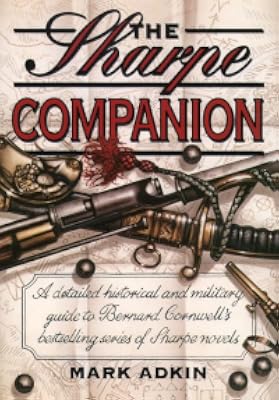
Has as a reference guide/companion
Common Knowledge
- Canonical title
- Sharpe's Eagle
- Original title
- Sharpe's Eagle
- Alternate titles
- Sharpe's Eagle: Richard Sharpe and the Talavera Campaign, July 1809
- Original publication date
- 1981-02-09
- People/Characters
- Richard Sharpe; Arthur Wellesley, 1st Duke of Wellington; Patrick Harper; Michael Hogan; Sir Henry Simmerson; Christian Gibbons (show all 13); Thomas Leroy; William Lawford; Captain Lennox; Josefina Lacosta; Daniel Hagman; Robert Knowles; Harry Price
- Important places
- Talavera de la Reina, Castile-La Mancha, Spain
- Important events
- Battle of Talavera (1809-07)
- Related movies
- Sharpe's Eagle (1993 | IMDb)
- Epigraph
- 'Every man thinks meanly of himself for not having been a soldier.'
Samuel Johnson - Dedication
- For Judy
- First words
- The guns could be heard long before they came into sight.
- Last words
- (Click to show. Warning: May contain spoilers.)'Gentlemen. I give you Sharpe's Eagle.'
- Blurbers
- King, Stephen
Classifications
Statistics
- Members
- 1,941
- Popularity
- 11,040
- Reviews
- 32
- Rating
- (3.99)
- Languages
- 9 — Czech, English, French, German, Hungarian, Italian, Norwegian (Bokmål), Portuguese, Spanish
- Media
- Paper, Audiobook, Ebook
- ISBNs
- 59
- ASINs
- 27