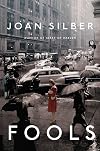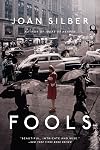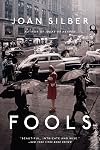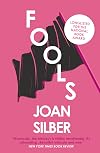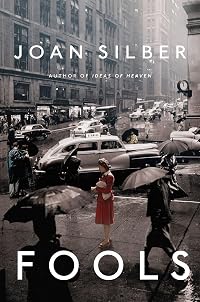
Fools: Stories
by Joan Silber
On This Page
Description
This collection of interconnected stories begins with the anarchist daughter of missionaries in Manhattan who runs away to be an activist and ends with a wealthy young adulterer in Paris who is outsmarted by the object of his desire.Tags
Recommendations











Member Reviews
Just terrific. There was such a winning combination of un-showy writing and real insight into—and compassion for—the human condition at work, I believed in it all the way through. Every time I started a story wondering exactly why I should care about these characters, she gradually and utterly convinced me. Which I'm sure was the point, and well taken. And Dorothy Day was in it! Really nice, subtle work.
⭐⭐⭐⭐+ Thank you Paromjit! I loved this book.
Reader beware, if you are looking for sunshine you won't find it here.
The reason I never have time to finish my reviews is because whenever I start writing one I find myself off somewhere on a tangent reading a million other things that popped into my head while reading the book....This book left me sneezing and covered in dust as I foraged through shelves of books that haven't been touched in over 40 years! Post WWI Anarchists and Post WWII Beat Poets...so much fun and so much nostalgia (I was never an anarchist like the cool kids in my class but I was a closet rebel in HS and Uni). This book of interwoven stories spans both periods and three or four generations. Anarchists with an show more amorphous view on marriage - sometimes do and sometimes don't believe in it, Anarchists who preferred to sit in jail rather than serve in the army (not exactly conscientious objection associated with the Viet Nam war), religious anarchists (is that an oxymoron?) - apparently belief in god and belief in government are polar. One feared and one resented?... ashrams, reactionary later generations converting to Islam....religion seems to be beyond the scope of anarchistic manifesto.
Fools, by Joan Silber, is totally immersive, and follows the thoughts and actions of normal, imperfect people who share a quixotic moral compass. In a perfect world we could all be anarchists but in our imperfect universe, where even legal boundaries cannot prevent potentially harmful trespass on our personal space, anarchy = chaos (plain language and not physics) .... My own views, of course! show less
Reader beware, if you are looking for sunshine you won't find it here.
The reason I never have time to finish my reviews is because whenever I start writing one I find myself off somewhere on a tangent reading a million other things that popped into my head while reading the book....This book left me sneezing and covered in dust as I foraged through shelves of books that haven't been touched in over 40 years! Post WWI Anarchists and Post WWII Beat Poets...so much fun and so much nostalgia (I was never an anarchist like the cool kids in my class but I was a closet rebel in HS and Uni). This book of interwoven stories spans both periods and three or four generations. Anarchists with an show more amorphous view on marriage - sometimes do and sometimes don't believe in it, Anarchists who preferred to sit in jail rather than serve in the army (not exactly conscientious objection associated with the Viet Nam war), religious anarchists (is that an oxymoron?) - apparently belief in god and belief in government are polar. One feared and one resented?... ashrams, reactionary later generations converting to Islam....religion seems to be beyond the scope of anarchistic manifesto.
Fools, by Joan Silber, is totally immersive, and follows the thoughts and actions of normal, imperfect people who share a quixotic moral compass. In a perfect world we could all be anarchists but in our imperfect universe, where even legal boundaries cannot prevent potentially harmful trespass on our personal space, anarchy = chaos (plain language and not physics) .... My own views, of course! show less
What happens when principles are confronted with real life? How much are people willing to sacrifice for an ideology, and how much are they willing to sacrifice ideology for an easier life? Who are the fools, the people standing up for what they believe in no matter what, or the people who compromise their ideals to get along with family, with lovers, with society?
Favourite stories: Fools and Two Opinions. Underwhelmed by Better, it could've been its title. Intrigued by the sympathetic depictions of terrible men, especially since this is a relatively recent book.
Favourite stories: Fools and Two Opinions. Underwhelmed by Better, it could've been its title. Intrigued by the sympathetic depictions of terrible men, especially since this is a relatively recent book.
As in her wonderful collection Ideas of Heaven, Joan Silber again creates a loosely connected 'ring of stories.' Characters from one tale drop into another decades later, sometimes as a mere mention, sometimes as an older but perhaps no wiser self. But what connects them all is a sense of loss, a search for meaning, and a link to the spirit of anarchy. And, of course, the lingering concern that one has been played for a fool.
The title story, first in the collection, sets the tone and establishes the framework. It's the 1920s, and Vera, born and raised in India by missionary parents, and her husband Joe are living in a beach house with a group of fellow anarchists whose main goal is to save Sacco and Vanzetti from the death penalty. show more Despite their earnestness, hypocrisy abounds--and lives begin to change. No one ends up following the expected path. One of the story's main characters is Dorothy Day, who later became a founder of the Catholic Worker movement.
In the course of "Fools," we learn that one of the wild young things, Betsy, left her husband Norman and ran off with an older speakeasy owner to run a hotel in Palm Beach. The second story, "The Hanging Fruit," focuses on their ne'er-do-well son, Rudy, who flees to Paris after several damaging escapades, only to be made a fool of again. One of his Parisian girlfriends reappears fifty years later in the collection's final story, "Buying and Selling," with an American friend, who happens to be one of Vera's daughters. Vera's older daughter, Louise, narrates "Two Opinions." Her father Joe was the only one of the original anarchists who stuck to his ideals; but the question is, was it really the right thing to do? And how has it affect her life? "Better" tells the story of Marcus, a newly-single gay man spending a weekend with friends and reminiscing about his former partner. He picks up an old book--which just happens to be a memoir written by Betsy's ex-husband. In "Going Too Far' we meet Gerard, the son of an employee at the Palm Beach hotel. He's searching for something, he's not quite sure what, but he recognizes a similar spirit in Adinah. It's only after they marry and become parents that he realizes that their spiritual destinies lie in different directions.
I'm not sure this description gives a very good sense of Silber's loosely connected collection, so let me quote a blurb from the back cover by Jim Shepard that does it much better:
"Fools is a wonderfully winning exploration of impetuousness in all of its appealing and appalling forms, and its deftly interconnected stories are devoted to those dreamers who act rashly and out of their better natures, who never quit asking the world, Can't you do better than that?--a question certain to become increasingly urgent as this twenty-first century progresses."
Silber is a wonderfully perceptive writer who creates characters that are simultaneously unique and familiar. Although I still think Ideas of Heaven is her best collection, Fools is also highly recommended. show less
The title story, first in the collection, sets the tone and establishes the framework. It's the 1920s, and Vera, born and raised in India by missionary parents, and her husband Joe are living in a beach house with a group of fellow anarchists whose main goal is to save Sacco and Vanzetti from the death penalty. show more Despite their earnestness, hypocrisy abounds--and lives begin to change. No one ends up following the expected path. One of the story's main characters is Dorothy Day, who later became a founder of the Catholic Worker movement.
In the course of "Fools," we learn that one of the wild young things, Betsy, left her husband Norman and ran off with an older speakeasy owner to run a hotel in Palm Beach. The second story, "The Hanging Fruit," focuses on their ne'er-do-well son, Rudy, who flees to Paris after several damaging escapades, only to be made a fool of again. One of his Parisian girlfriends reappears fifty years later in the collection's final story, "Buying and Selling," with an American friend, who happens to be one of Vera's daughters. Vera's older daughter, Louise, narrates "Two Opinions." Her father Joe was the only one of the original anarchists who stuck to his ideals; but the question is, was it really the right thing to do? And how has it affect her life? "Better" tells the story of Marcus, a newly-single gay man spending a weekend with friends and reminiscing about his former partner. He picks up an old book--which just happens to be a memoir written by Betsy's ex-husband. In "Going Too Far' we meet Gerard, the son of an employee at the Palm Beach hotel. He's searching for something, he's not quite sure what, but he recognizes a similar spirit in Adinah. It's only after they marry and become parents that he realizes that their spiritual destinies lie in different directions.
I'm not sure this description gives a very good sense of Silber's loosely connected collection, so let me quote a blurb from the back cover by Jim Shepard that does it much better:
"Fools is a wonderfully winning exploration of impetuousness in all of its appealing and appalling forms, and its deftly interconnected stories are devoted to those dreamers who act rashly and out of their better natures, who never quit asking the world, Can't you do better than that?--a question certain to become increasingly urgent as this twenty-first century progresses."
Silber is a wonderfully perceptive writer who creates characters that are simultaneously unique and familiar. Although I still think Ideas of Heaven is her best collection, Fools is also highly recommended. show less
I may need to add another star.
I loved these stories - lightly interconnected but each one could stand on its own. When is it wise to be a fool for something - for love, for ideals, for money?
Beautiful and thought provoking.
I loved these stories - lightly interconnected but each one could stand on its own. When is it wise to be a fool for something - for love, for ideals, for money?
Beautiful and thought provoking.
Well crafted and well-written but not especially moving. I liked the linked element, in which the character of one story shows up in another in a sideways kinds of way (as the child of a main character, or the grown-up version of a previous young character, etc).
Recommended by Ann Patchett. When people write collections of linked stories, this is what they aspire to. The stories are connected only tangentially - usually the main character of one story is a relative of a character in a previous story - and each story feels complete. Set in New York, Florida, California, and Paris.
Everyone thought Joe was the bolder of us, but no one knows how a couple fits together. The twists in that knot. ("Fools," 25)
Dorothy had no cagey feminine practicality. She was more like a prophet, helpless to resist telling what she saw. ("Fools," 41)
There are fewer secrets in the world than people think. ("Fools," 51)
Why did I think my freedom was in making things up? ("The Hanging Fruit," 78)
What made me think I show more could fool anyone ever? ("The Hanging Fruit," 79)
I saw then that I was going to keep getting worse. Already I was someone I wouldn't want to sit next to. The number of activities beneath me was getting less and less. ("The Hanging Fruit," 104)
Their whole lives, they'd never thought they were fools and now they were, in front of everyone. ("The Hanging Fruit," 113)
But I fooled them all by being happy. ("Two Opinions," 126)
I was a person who'd guessed right about what was essential. I had what I wanted. How many people have that? ("Two Opinions," 127)
Marcus wondered how many years he would spend acting out Nico's old habits, just to keep him around. ("Better," 169)
How long had those people trained themselves to do such a thing? When had they decided to be better than they ever thought they wanted to be? ("Better," 179)
I didn't have what Adinah had, a capacity for devotion and a thirst to soar, an instinct for flight. ("Going Too Far," 210)
In what life could I have ended up as a pilgrim? When could I have been someone who walked all that far, miles and miles, to visit innocence in the form of a place? ("Going Too Far," 221)
She could tell the story in a way that didn't make her look entirely foolish. Or she could keep it to herself. ("Buying and Selling," 255) show less
Everyone thought Joe was the bolder of us, but no one knows how a couple fits together. The twists in that knot. ("Fools," 25)
Dorothy had no cagey feminine practicality. She was more like a prophet, helpless to resist telling what she saw. ("Fools," 41)
There are fewer secrets in the world than people think. ("Fools," 51)
Why did I think my freedom was in making things up? ("The Hanging Fruit," 78)
What made me think I show more could fool anyone ever? ("The Hanging Fruit," 79)
I saw then that I was going to keep getting worse. Already I was someone I wouldn't want to sit next to. The number of activities beneath me was getting less and less. ("The Hanging Fruit," 104)
Their whole lives, they'd never thought they were fools and now they were, in front of everyone. ("The Hanging Fruit," 113)
But I fooled them all by being happy. ("Two Opinions," 126)
I was a person who'd guessed right about what was essential. I had what I wanted. How many people have that? ("Two Opinions," 127)
Marcus wondered how many years he would spend acting out Nico's old habits, just to keep him around. ("Better," 169)
How long had those people trained themselves to do such a thing? When had they decided to be better than they ever thought they wanted to be? ("Better," 179)
I didn't have what Adinah had, a capacity for devotion and a thirst to soar, an instinct for flight. ("Going Too Far," 210)
In what life could I have ended up as a pilgrim? When could I have been someone who walked all that far, miles and miles, to visit innocence in the form of a place? ("Going Too Far," 221)
She could tell the story in a way that didn't make her look entirely foolish. Or she could keep it to herself. ("Buying and Selling," 255) show less
Members
- Recently Added By
Lists

Pen/Faulkner Winners and Finalists
178 works; 9 members

Books Read in 2022
5,226 works; 115 members

Kirkus Reviews Best Fiction of 2013
99 works; 6 members
Author Information

Awards and Honors
Awards
Common Knowledge
- Important places
- New York, New York, USA; Paris, France
Classifications
Statistics
- Members
- 137
- Popularity
- 239,283
- Reviews
- 8
- Rating
- (3.83)
- Languages
- English
- Media
- Paper, Ebook
- ISBNs
- 7
- ASINs
- 1