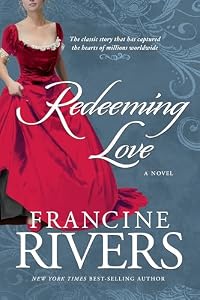
Redeeming Love
by Francine Rivers
On This Page
Description
Francine Rivers is one of America's favorite romance writers and a bestselling inspirational author. Her many heartfelt novels have won awards and the adoration of fans across the country. In Redeeming Love, she retells the Biblical story of Hosea, setting it in the 1850s amidst California's gold country.Tags
Recommendations
































Member Recommendations

Member Reviews
By default nothing I say hasn't been said by the vast majority of people who review this book and get overshadowed by perfect five star ones who gloss over it.
Angel/Mara/Tirzah/Amanda/Mandy/Sarah. This is your first red flag. Our main character has her name constantly changed by her kidnapper who will become her husband.
I don't think that I even need to tell you how in any other story having your identity forcefully changed by your kidnapper is wrong and a form of gaslighting and abuse. Or were this a horror story, we'd immediately know to hate him as he's the villain. Well, I might have to elaborate on the names.
Angel is her name as she works in the strip clubs and whore houses, which she has done since she was a small child. The show more whole time it's in her POV it doesn't matter she's being called Angel/Mara/Tirzah/Amanda/Mandy/Sarah, because she is calling herself Angel the whole book and it's mostly her POV.
Mara means bitter and is an insult. It's her name until iirc Michael(kidnapper)'s brother Paul rapes her as payment for a ride to escape her kidnap. I believe she is Tirzah afterward on and off as a form of punishment. Then Angel ends up in a lot of bad situations and while laying delusional in a ditch Michael asks her to marry him and she says "why not?".
This leads to they're "married" and she is now Amanda. Or Mandy. Depends on what people call her. She's forced into feeling bad she cannot bare kids due to her pimp performing a surgery to sterilize her(don't worry, God "fixes" her, sorry to infertile people because yes, it's offensive as hell). So everyone can have kids but her and she's guilted and lead to believe she's less of a woman because she can't give Michael kids.
Rushing the rest... A young girl FRESHLY sixteen sounds like a better match for the adult Michael so Angel shoves them together and bails. She finds God and he names Angel Sarah and she returns home. Paul the rapist is bemoaning his pedophiliac urges and talking about how wrong it is and how young the child is and then Angel tells the child to force Paul to take what he wants. So you get Sarah and Michael together and a scene of a barely sixteen-year-old girl cornering a man naked as he screams about how sick he is and how wrong this is.
So the rapist gets with a child and we get God curing Angel of her infertility and a very wordy epilogue of how Sarah had a ton of kids just like the Sarah in the bible.
So much kidnap, coercion, rape, sex worker shaming, and pedophilia.
I'm not overtly religious and this all is a massive nope and red flag to not give this to kids or ever support this. But I suppose people somehow rationalize that stuff weirdly.
Tons of content warnings and trigger warnings to be had. Would not recommend it. show less
Angel/Mara/Tirzah/Amanda/Mandy/Sarah. This is your first red flag. Our main character has her name constantly changed by her kidnapper who will become her husband.
I don't think that I even need to tell you how in any other story having your identity forcefully changed by your kidnapper is wrong and a form of gaslighting and abuse. Or were this a horror story, we'd immediately know to hate him as he's the villain. Well, I might have to elaborate on the names.
Angel is her name as she works in the strip clubs and whore houses, which she has done since she was a small child. The show more whole time it's in her POV it doesn't matter she's being called Angel/Mara/Tirzah/Amanda/Mandy/Sarah, because she is calling herself Angel the whole book and it's mostly her POV.
Mara means bitter and is an insult. It's her name until iirc Michael(kidnapper)'s brother Paul rapes her as payment for a ride to escape her kidnap. I believe she is Tirzah afterward on and off as a form of punishment. Then Angel ends up in a lot of bad situations and while laying delusional in a ditch Michael asks her to marry him and she says "why not?".
This leads to they're "married" and she is now Amanda. Or Mandy. Depends on what people call her. She's forced into feeling bad she cannot bare kids due to her pimp performing a surgery to sterilize her(don't worry, God "fixes" her, sorry to infertile people because yes, it's offensive as hell). So everyone can have kids but her and she's guilted and lead to believe she's less of a woman because she can't give Michael kids.
Rushing the rest... A young girl FRESHLY sixteen sounds like a better match for the adult Michael so Angel shoves them together and bails. She finds God and he names Angel Sarah and she returns home. Paul the rapist is bemoaning his pedophiliac urges and talking about how wrong it is and how young the child is and then Angel tells the child to force Paul to take what he wants. So you get Sarah and Michael together and a scene of a barely sixteen-year-old girl cornering a man naked as he screams about how sick he is and how wrong this is.
So the rapist gets with a child and we get God curing Angel of her infertility and a very wordy epilogue of how Sarah had a ton of kids just like the Sarah in the bible.
So much kidnap, coercion, rape, sex worker shaming, and pedophilia.
I'm not overtly religious and this all is a massive nope and red flag to not give this to kids or ever support this. But I suppose people somehow rationalize that stuff weirdly.
Tons of content warnings and trigger warnings to be had. Would not recommend it. show less
I have mixed feelings about this book. As far as historical fiction goes, the author did well in illustrating life in 19th-century America, in both the slums of the city, as well as out in the frontier. As a history buff, I love when an author researches her settings well, so that's why I gave this book an extra star.
This is not the first Francine Rivers book I've read (I read the Voice in the Wind trilogy) and I have to say that despite the research and historical details, I found the religious aspect to be just nauseating. I will admit, I am an atheist, but I CAN enjoy a Christian novel, as long as it's coherent and the religious aspect makes sense to people other than uber-Christians.
Yes, there's a reason I used the word uber. The show more religious aspect of this book came across as really preachy and cloying, which would be appealing to people very, very strong in the Christian faith (which is doubtless Francine River's target audience) but it lacks broader appeal because of the inconsistency of God.
God speaks clearly to Hosea, giving him commands regarding Angel. So Jehovah deems fit to speak directly to some people, but not others, who are even more in need of help (like all the other girls forced into prostitution and die from it) If Jehovah really exists, I find his help to be very inconsistent.
He is also silent at times when Hosea directly beseeches him for aid, and I was also frustrated with Angel's repeated attempts to run. It was one thing to want to get her earnings (I thought Hosea was an idiot to try to stop her from doing so, especially after all the gold he threw away on visiting her in the first place) but the other times were just sheer idiocy.
I would have enjoyed this book more if not for Angel's rank stubbornness, and Jehovah's finickiness in helping people who legit need help. I know this is not what Francine Rivers intended, but this book actually highlights some of the issues that non-Christians have with the Christian religion. show less
This is not the first Francine Rivers book I've read (I read the Voice in the Wind trilogy) and I have to say that despite the research and historical details, I found the religious aspect to be just nauseating. I will admit, I am an atheist, but I CAN enjoy a Christian novel, as long as it's coherent and the religious aspect makes sense to people other than uber-Christians.
Yes, there's a reason I used the word uber. The show more religious aspect of this book came across as really preachy and cloying, which would be appealing to people very, very strong in the Christian faith (which is doubtless Francine River's target audience) but it lacks broader appeal because of the inconsistency of God.
God speaks clearly to Hosea, giving him commands regarding Angel. So Jehovah deems fit to speak directly to some people, but not others, who are even more in need of help (like all the other girls forced into prostitution and die from it) If Jehovah really exists, I find his help to be very inconsistent.
He is also silent at times when Hosea directly beseeches him for aid, and I was also frustrated with Angel's repeated attempts to run. It was one thing to want to get her earnings (I thought Hosea was an idiot to try to stop her from doing so, especially after all the gold he threw away on visiting her in the first place) but the other times were just sheer idiocy.
I would have enjoyed this book more if not for Angel's rank stubbornness, and Jehovah's finickiness in helping people who legit need help. I know this is not what Francine Rivers intended, but this book actually highlights some of the issues that non-Christians have with the Christian religion. show less
I first read Redeeming Love probably close to twenty-five years ago and I recalled loving it. Since then, it’s become something of a romance classic that’s often held up as being among the best the genre has to offer. Because of these things, I was very much looking forward to rereading it. After all this time, I’d only remembered a few small bits and pieces of the story, so it was like rediscovering it all over again, and I’m happy to report that I still loved it. The book was inspired by the biblical story of Hosea and Gomer, and is set against the backdrop of California during the gold rush days. It tells the story of Angel, a young woman who was sold into prostitution as a child and hasn’t known any other life since. As show more the main part of her narrative begins, she’s working in a brothel in a small frontier town that sprang up around the gold rush called Pair-a-Dice. Because of her ethereal beauty, she’s the most sought-after and expensive whore in town and only the men who’ve made the most prosperous strikes can afford her services. Along comes Michael Hosea, a simple farmer, and from the moment he lays eyes on her, he falls in love at first sight and feels like God is telling him that this is the woman who is meant for him. He ends up spending most of the gold he makes selling produce to the general store just to spend half an hour with her, night after night, trying to convince her to leave her life of prostitution behind and marry him. Of course, it’s nothing the cynical Angel hasn’t heard before, so it isn’t until the brothel’s bouncer nearly beats her to death and she’s in a weak and semi-conscious state that she agrees to Michael’s proposal. But their union is one that’s fraught by the demons of Angel’s past haunting her, while Michael struggles to be patient and show her the true meaning of love, something that is a foreign concept to her.
Angel was born out of wedlock to a wealthy man who didn’t want any more children and his mistress. While her parents were together, the young Angel’s life seemed charmed, but when her father left her mother, everything fell apart. Not even family would help the unwed mother and her bastard child, so her mother was reduced to engaging in prostitution to survive. However, she never got over her broken heart and tragically died too soon, leaving an eight-year-old Angel behind. The man who they were living with at the time was an intellectually challenged fellow who thought he was giving Angel a better life when he sold her to a wealthy man named Duke, but in reality, she was thereafter consigned to a life of prostitution. Eventually she escaped Duke and took a ship to California with hopes of making a better life for herself, but the necessity of survival once again drove her back into her old life, which is how she ends up in Pair-a-Dice, where she meets Michael. The man dives her crazy, coming back every night, making promises she doesn’t believe, but when he finally stops coming, a small part of her misses him. However, all she really wants is to make enough gold to get out of the business and build a little cabin in the woods for herself where she can be alone, but when she realizes that’s never going to happen, she goads the bouncer into beating her in a moment of suicidal desperation. As she lay there wishing she were dead, that’s when Michael finally returns, marries her, and whisks her away to his little cabin in the woods. But Angel still has an extremely long road ahead of her to find wholeness again, during which she leaves Michael several times before they finally find their HEA.
This book primarily focuses on Angel and how she overcomes the horrific stuff life has handed her to finally find peace, happiness, and love with a man who adores her. She is such a tortured, tragic, and sympathetic character, and her characterization is among the deepest and best I’ve ever read. Normally when a heroine is as stubborn and difficult as she is, I tend to get frustrated with her, but not so with Angel. Ms. Rivers is masterful at showing exactly what’s driving Angel and how hard it is for her to believe that there’s even such a thing as love, much less that she’s worthy of it. Her transformation is a gradual one of baby steps that slowly grow into bigger ones until she’s finally a whole person again. I appreciate this so much, because many stories of this nature might gloss over a character’s past or not offer enough insight to understand what makes her tick, but with Angel she’s a fully realized character from the opening pages and every event, big and small, plays into making her who she is. Although it might have been nice if she hadn’t left Michael so many times, or done some of the things she did, it still all made sense and made the story and her journey so much more relatable, powerful, and realistic. When Angel finally comes full-circle, it’s a glorious and beautiful thing, where the reader simply knows she can be trusted to never do it again.
While we learn some things about Michael’s past that play into who he is, such as not having an ideal upbringing and losing his sister on the wagon train west, he’s mostly a what-you-see-is-what-you-get kind of guy. He’s a genuinely good, kind, sweet man with the patience of a saint, who tries his best to follow God’s voice. When he feels like God is telling him to marry Angel and goes to see her, she tries her best to seduce him. While Michael is tempted, he knows that if he gives in to his lust, it will only reinforce everything she already believes about men, so he must behave differently or she’ll never trust him. Even after he marries her and takes her back to his homestead, he waits a good long while before making love to her, because he wants her to be able to see it as an act of love and not just an obligation. However, every time he seems to be making headway, Angel gets scared of the feelings he’s stirring in her and runs away. Each time, Michael patiently goes after her and brings her back, until the last time, when he realizes that she’s going to have to figure things out and make a choice for herself. During the first few times she leaves, especially the second when she does some seemingly unforgivable things, he must find compassion in his heart for her, but as he learns more about her past, he comes to understand her deeply while also hurting for her. Michael is probably about as close to a perfect hero as one can get. Sure, he gets angry on occasion, and understandably so, but deep down, he’s a truly wonderful guy who accepts Angel as she is from the very start and never expects her to change to meet some undefined standard. He forgives her (and others) when necessary, he’s kind to everyone, he lives out his faith by showing God’s love in a beautiful and tangible way, and most of all, his love for Angel never dies no matter how bad things get or how bleak their future may seem.
I happen to be lucky enough to own an original copy of this book that was first published in 1991 by mainstream publisher, Bantam. In it’s original form, this was not a squeaky clean story despite having a lovely underlying faith message, and as far as I know, being classified as an inspirational romance from the start. If you happen to have (or acquire) this version, please note that it does contain a moderate amount of language, some sensuality, and it certainly doesn’t gloss over Angel’s life as a prostitute. As a person of faith myself, I was not at all put off by any of this, but I know many would be. If anything, I thought that it made the redemption message that much more powerful, because it actually shows what things were like for Angel before meeting Michael.
IMHO, it also made the story considerably more realistic. After all, immoral people such as Duke or those one might find working in or frequenting a brothel are hardly going to be circumspect about their language. Also, I felt having Michael struggle with lust when going to visit Angel at the brothel or even after bringing her home, only made him seem more human, but having him resist that temptation also differentiated him from all the other men in her life. Additionally I felt that the love scenes between Michael and Angel (which were pretty mild, BTW) were necessary to show how the genuine intimacy was affecting Angel, as well as to show a contrast between the sexual encounters she had as a prostitute and the loving nature of her intimate relationship with Michael. Yet another thing is that Michael’s brother-in-law, Paul, harbors a deep hatred and disdain for Angel from the moment he meets her and often calls her derogatory names both in his speech and in his mind, without which his own redemption moment might not be quite as convincing. I say all these things as a preface to explain that in skimming through the excerpts available on Amazon’s “Look Inside” feature, it appears that when the book was republished by Christian publisher, Multnomah, in the late 1990s that parts of the story were rewritten and most (if not all) of this content was removed. I know that frequent readers and true fans of inspirational romance would probably disagree with me, but I find this a bit sad as the parts I was able to read in their new form seemed a bit watered down as a result. I’m sure that it’s still a lovely story no matter what, but I’ll always harbor a fond preference for this original version.
Redeeming Love is truly a one-of-a-kind story that expresses the genuine power of love in all its many forms to help heal a person and turn their life around. There’s the friendship kind of love that Angel shares with her new friend, Miriam, when the girl’s family moves to the same valley where Michael lives. Angel makes no secret of her past with them and yet they accept her anyway. There’s the romantic love that she shares with Michael that proves to be true, loyal, and unending for both of them. And then there’s the love of God who is portrayed here, not as a wrathful, vengeful deity, but one who loves his children, speaks softly and gently to them, and never gives up on them, reminding me of a couple of favorite praise songs we often sing in church called "Fierce" and “Reckless Love.” I believe wholeheartedly in the redeeming power of love, which is expressed in this book so beautifully. Overall, Redeeming Love is an exceptional story that has managed to cross barriers in the romance genre and has found fans even among non-religious readers, while proving to have withstood the test of time. I think a large part of this is owing to the fact that unlike many inspirational romances I’ve read, it’s never pithy or preachy, but instead is a meaty story full of depth and complexity. I can only hope that the upcoming movie adaptation will be equally as powerful. show less
Angel was born out of wedlock to a wealthy man who didn’t want any more children and his mistress. While her parents were together, the young Angel’s life seemed charmed, but when her father left her mother, everything fell apart. Not even family would help the unwed mother and her bastard child, so her mother was reduced to engaging in prostitution to survive. However, she never got over her broken heart and tragically died too soon, leaving an eight-year-old Angel behind. The man who they were living with at the time was an intellectually challenged fellow who thought he was giving Angel a better life when he sold her to a wealthy man named Duke, but in reality, she was thereafter consigned to a life of prostitution. Eventually she escaped Duke and took a ship to California with hopes of making a better life for herself, but the necessity of survival once again drove her back into her old life, which is how she ends up in Pair-a-Dice, where she meets Michael. The man dives her crazy, coming back every night, making promises she doesn’t believe, but when he finally stops coming, a small part of her misses him. However, all she really wants is to make enough gold to get out of the business and build a little cabin in the woods for herself where she can be alone, but when she realizes that’s never going to happen, she goads the bouncer into beating her in a moment of suicidal desperation. As she lay there wishing she were dead, that’s when Michael finally returns, marries her, and whisks her away to his little cabin in the woods. But Angel still has an extremely long road ahead of her to find wholeness again, during which she leaves Michael several times before they finally find their HEA.
This book primarily focuses on Angel and how she overcomes the horrific stuff life has handed her to finally find peace, happiness, and love with a man who adores her. She is such a tortured, tragic, and sympathetic character, and her characterization is among the deepest and best I’ve ever read. Normally when a heroine is as stubborn and difficult as she is, I tend to get frustrated with her, but not so with Angel. Ms. Rivers is masterful at showing exactly what’s driving Angel and how hard it is for her to believe that there’s even such a thing as love, much less that she’s worthy of it. Her transformation is a gradual one of baby steps that slowly grow into bigger ones until she’s finally a whole person again. I appreciate this so much, because many stories of this nature might gloss over a character’s past or not offer enough insight to understand what makes her tick, but with Angel she’s a fully realized character from the opening pages and every event, big and small, plays into making her who she is. Although it might have been nice if she hadn’t left Michael so many times, or done some of the things she did, it still all made sense and made the story and her journey so much more relatable, powerful, and realistic. When Angel finally comes full-circle, it’s a glorious and beautiful thing, where the reader simply knows she can be trusted to never do it again.
While we learn some things about Michael’s past that play into who he is, such as not having an ideal upbringing and losing his sister on the wagon train west, he’s mostly a what-you-see-is-what-you-get kind of guy. He’s a genuinely good, kind, sweet man with the patience of a saint, who tries his best to follow God’s voice. When he feels like God is telling him to marry Angel and goes to see her, she tries her best to seduce him. While Michael is tempted, he knows that if he gives in to his lust, it will only reinforce everything she already believes about men, so he must behave differently or she’ll never trust him. Even after he marries her and takes her back to his homestead, he waits a good long while before making love to her, because he wants her to be able to see it as an act of love and not just an obligation. However, every time he seems to be making headway, Angel gets scared of the feelings he’s stirring in her and runs away. Each time, Michael patiently goes after her and brings her back, until the last time, when he realizes that she’s going to have to figure things out and make a choice for herself. During the first few times she leaves, especially the second when she does some seemingly unforgivable things, he must find compassion in his heart for her, but as he learns more about her past, he comes to understand her deeply while also hurting for her. Michael is probably about as close to a perfect hero as one can get. Sure, he gets angry on occasion, and understandably so, but deep down, he’s a truly wonderful guy who accepts Angel as she is from the very start and never expects her to change to meet some undefined standard. He forgives her (and others) when necessary, he’s kind to everyone, he lives out his faith by showing God’s love in a beautiful and tangible way, and most of all, his love for Angel never dies no matter how bad things get or how bleak their future may seem.
I happen to be lucky enough to own an original copy of this book that was first published in 1991 by mainstream publisher, Bantam. In it’s original form, this was not a squeaky clean story despite having a lovely underlying faith message, and as far as I know, being classified as an inspirational romance from the start. If you happen to have (or acquire) this version, please note that it does contain a moderate amount of language, some sensuality, and it certainly doesn’t gloss over Angel’s life as a prostitute. As a person of faith myself, I was not at all put off by any of this, but I know many would be. If anything, I thought that it made the redemption message that much more powerful, because it actually shows what things were like for Angel before meeting Michael.
IMHO, it also made the story considerably more realistic. After all, immoral people such as Duke or those one might find working in or frequenting a brothel are hardly going to be circumspect about their language. Also, I felt having Michael struggle with lust when going to visit Angel at the brothel or even after bringing her home, only made him seem more human, but having him resist that temptation also differentiated him from all the other men in her life. Additionally I felt that the love scenes between Michael and Angel (which were pretty mild, BTW) were necessary to show how the genuine intimacy was affecting Angel, as well as to show a contrast between the sexual encounters she had as a prostitute and the loving nature of her intimate relationship with Michael. Yet another thing is that Michael’s brother-in-law, Paul, harbors a deep hatred and disdain for Angel from the moment he meets her and often calls her derogatory names both in his speech and in his mind, without which his own redemption moment might not be quite as convincing. I say all these things as a preface to explain that in skimming through the excerpts available on Amazon’s “Look Inside” feature, it appears that when the book was republished by Christian publisher, Multnomah, in the late 1990s that parts of the story were rewritten and most (if not all) of this content was removed. I know that frequent readers and true fans of inspirational romance would probably disagree with me, but I find this a bit sad as the parts I was able to read in their new form seemed a bit watered down as a result. I’m sure that it’s still a lovely story no matter what, but I’ll always harbor a fond preference for this original version.
Redeeming Love is truly a one-of-a-kind story that expresses the genuine power of love in all its many forms to help heal a person and turn their life around. There’s the friendship kind of love that Angel shares with her new friend, Miriam, when the girl’s family moves to the same valley where Michael lives. Angel makes no secret of her past with them and yet they accept her anyway. There’s the romantic love that she shares with Michael that proves to be true, loyal, and unending for both of them. And then there’s the love of God who is portrayed here, not as a wrathful, vengeful deity, but one who loves his children, speaks softly and gently to them, and never gives up on them, reminding me of a couple of favorite praise songs we often sing in church called "Fierce" and “Reckless Love.” I believe wholeheartedly in the redeeming power of love, which is expressed in this book so beautifully. Overall, Redeeming Love is an exceptional story that has managed to cross barriers in the romance genre and has found fans even among non-religious readers, while proving to have withstood the test of time. I think a large part of this is owing to the fact that unlike many inspirational romances I’ve read, it’s never pithy or preachy, but instead is a meaty story full of depth and complexity. I can only hope that the upcoming movie adaptation will be equally as powerful. show less
I found this Christian romance, based loosely on the book of Hosea, to be a powerful story in places. I also found it to be more steamy and sensual than most Christian romances, but the part that I struggled with the most was the consent issue between the two main characters. Michael Hosea sees Angel/Sarah - who is "working" as a prostitute at the time and sense God speaking to him, telling him this is the woman that he is to take as his wife. He buys time with Angel - using gold dust, as this is set during the time of the California Gold Rush - but merely talks to her during their sessions, trying to persuade her to run off with him and become his wife. This intrigues and upsets Angel, but she is also afraid of her Madam and the show more Madam's henchman and of the man from her past who abused her and forced her into prostitution in the first place. She also doesn't know if she can trust this man she barely knows. After an incident when she is beaten and almost to the point of death, Michael sweeps in to rescue her and takes her back to his farm - but first he has a marriage ceremony performed, a ceremony where Angel is half- conscious and mutters "why not" when asked if she consents. While Michael does not take advantage of her and patiently waits until he thinks she is ready before martial intimacy occurs, the hasty marriage scene still bothers me.
This book did make me think about trying to help victims of abuse and/or who have addictions where the helpers may know the better path that the victim should take - but it also has to be the victim or addicts choice to take that path. So how much do you restrain that person to keep them in a safe place while they recover? Heady questions, and the kind of issue that comes up again and again as Angel leaves Michael several times before finally deciding to stay with him in the end. He does bring her back several times, but at the end he lets her go and decides he will not go back for her but wait to see if she ever comes back for him. Lots of other drama happens with other characters who are introduced, as this book also seemed really long to me. I was interested in how it would turn out, but it felt like a bit of a slog to get there during the 15 hour long audiobook I was listening to.
The book has been polarizing in the Christian reading community, so I would be careful about recommendations. Some readers will love it, some will need trigger warnings about it and want to avoid it if they are sensitive to issues like sexual abuse. show less
This book did make me think about trying to help victims of abuse and/or who have addictions where the helpers may know the better path that the victim should take - but it also has to be the victim or addicts choice to take that path. So how much do you restrain that person to keep them in a safe place while they recover? Heady questions, and the kind of issue that comes up again and again as Angel leaves Michael several times before finally deciding to stay with him in the end. He does bring her back several times, but at the end he lets her go and decides he will not go back for her but wait to see if she ever comes back for him. Lots of other drama happens with other characters who are introduced, as this book also seemed really long to me. I was interested in how it would turn out, but it felt like a bit of a slog to get there during the 15 hour long audiobook I was listening to.
The book has been polarizing in the Christian reading community, so I would be careful about recommendations. Some readers will love it, some will need trigger warnings about it and want to avoid it if they are sensitive to issues like sexual abuse. show less
2.5 stars if rating from my POV.
3.5 stars rated based on author's intent and because women I know IRL who've been through abuse found this healing.
Oh boy. This book gets really glowing reviews and nearly everyone I know who has read it (my book club included) LOVED It.
Right upfront, let me say this: if you come to this book believing you are unworthy or incapable of being loved or you have relationship trauma and abuse in your past:
a) I am sorry; b) you are 100% deserving of love and being loved in a healthy way; and c) if this book helps you work through that even in a small way, that's everything.
I'm coming from a Christian POV, I understand this book is a retelling of Hosea and Gomer, but still - this book irritated me to a high show more level. At times, I wanted to throw it across the room or quit it. BUT, I stuck it out and about the last 15% of the book redeemed itself when she finally understands what she's capable of and her self-worth. (The romance didn't do it for me--I never bought it.)
For anyone who's interested in the negative, here's what triggered me:
1) I felt that the book conflated sexual sin with sexual trauma and abuse. The Bible / Christians does (or at least should) not do that.
2) I felt like the book placed far too much emphasis on the main character's physical beauty. I get that it's supposed to create contrast between her outer appearance and how she sees herself, but her looks are irrelevant and there's potential for this to 'read' in a way the author doesn't intend and lead to the wrong impression.
3) The 'redeemer' is initially attracted to the main character solely of her appearance and beauty. It would have been interesting if she hadn't been physically attractive.
4) The 'redeemer' character places himself in the position of 'savior' and gets upset when the main character doesn't respond to him in the way he thinks she should (or he deserves). No. No, no, no.
Would recommend, but only with extreme caution and discretion. show less
3.5 stars rated based on author's intent and because women I know IRL who've been through abuse found this healing.
Oh boy. This book gets really glowing reviews and nearly everyone I know who has read it (my book club included) LOVED It.
Right upfront, let me say this: if you come to this book believing you are unworthy or incapable of being loved or you have relationship trauma and abuse in your past:
a) I am sorry; b) you are 100% deserving of love and being loved in a healthy way; and c) if this book helps you work through that even in a small way, that's everything.
I'm coming from a Christian POV, I understand this book is a retelling of Hosea and Gomer, but still - this book irritated me to a high show more level. At times, I wanted to throw it across the room or quit it. BUT, I stuck it out and about the last 15% of the book redeemed itself when she finally understands what she's capable of and her self-worth. (The romance didn't do it for me--I never bought it.)
For anyone who's interested in the negative, here's what triggered me:
1) I felt that the book conflated sexual sin with sexual trauma and abuse. The Bible / Christians does (or at least should) not do that.
2) I felt like the book placed far too much emphasis on the main character's physical beauty. I get that it's supposed to create contrast between her outer appearance and how she sees herself, but her looks are irrelevant and there's potential for this to 'read' in a way the author doesn't intend and lead to the wrong impression.
3) The 'redeemer' is initially attracted to the main character solely of her appearance and beauty. It would have been interesting if she hadn't been physically attractive.
4) The 'redeemer' character places himself in the position of 'savior' and gets upset when the main character doesn't respond to him in the way he thinks she should (or he deserves). No. No, no, no.
Would recommend, but only with extreme caution and discretion. show less
nothing at all like i was expecting. Painful to read, but also one of, if not THE most powerful book I've ever read.
I don't understand why more Christian books aren't written like this. It's kind of driving me crazy. It seems that people think that for it to be a Christian romance there has to be an element of self-denial (which supplies the sexual tension that the whole book feeds off of until the very end when they marry). I hardly ever come across one that goes into life after marriage, unless it's part of a series, and even then the focus is off the first couple; they're married now, so their story is over.
This attitude is not only boring, it's damaging. Being a Christian does not mean that you're perfect and chaste. I generally show more appreciate less scandal and vulgarity, but these books take it to the extreme.
And why are all the heroines progressive, feisty women? Is there not more than one persona that was appealing several hundred years ago? It seems they are all (poorly) modeled after Jane Austin's Elizabeth Bennet. But even Jane Austin only did it that one time. Her other characters, and even other lovable characters in Pride and Prejudice, were vastly different. Some were arrogant and self centered, some were meek and shy, some had a servant attitude, some were immature. All of them unique and flawed. Why are all the women in these historical fiction novels so one dimensional?
How wonderful it would be if more love stories were modeled after ones in the Bible. We could really learn a thing or two about how real love works, about patience, kindness, too. About how love and healing can find any person, no matter how deep they're standing in sin, and how God can make anyone clean.
Redeeming Love was the most beautiful love story I've ever read. While I'm so thankful that I got to experience it, I'm also a little sad because I don't think I'll come across anything quite like it again. Read this and savor every moment of it. show less
I don't understand why more Christian books aren't written like this. It's kind of driving me crazy. It seems that people think that for it to be a Christian romance there has to be an element of self-denial (which supplies the sexual tension that the whole book feeds off of until the very end when they marry). I hardly ever come across one that goes into life after marriage, unless it's part of a series, and even then the focus is off the first couple; they're married now, so their story is over.
This attitude is not only boring, it's damaging. Being a Christian does not mean that you're perfect and chaste. I generally show more appreciate less scandal and vulgarity, but these books take it to the extreme.
And why are all the heroines progressive, feisty women? Is there not more than one persona that was appealing several hundred years ago? It seems they are all (poorly) modeled after Jane Austin's Elizabeth Bennet. But even Jane Austin only did it that one time. Her other characters, and even other lovable characters in Pride and Prejudice, were vastly different. Some were arrogant and self centered, some were meek and shy, some had a servant attitude, some were immature. All of them unique and flawed. Why are all the women in these historical fiction novels so one dimensional?
How wonderful it would be if more love stories were modeled after ones in the Bible. We could really learn a thing or two about how real love works, about patience, kindness, too. About how love and healing can find any person, no matter how deep they're standing in sin, and how God can make anyone clean.
Redeeming Love was the most beautiful love story I've ever read. While I'm so thankful that I got to experience it, I'm also a little sad because I don't think I'll come across anything quite like it again. Read this and savor every moment of it. show less
Masterfully written, Francine Rivers transports you to the Wild West and draws you into this redemptive story loosely based on the Biblical story of Hosea. It is a historical Christian romance that makes you want to slap the character until you realize it's actually you. Unconditional love that doesn't seem possible reminds us of the one Great Love that paid it all for us. This was the book that got me hooked on Francine Rivers. It will hook you too!
Members
- Recently Added By
Published Reviews
ThingScore 100
Simply put, "Redeeming Love" is the most powerful work of fiction you will ever read.
added by ArrowStead
Lists

Recommend the 20 best books you've read in the last five years
2,167 works; 601 members

Favorite Literary Love Stories
182 works; 100 members

KayStJ's to-read list
1,616 works; 11 members

The Worst Bestsellers Podcast
293 works; 5 members

BookTok Adult
115 works; 2 members
Author Information

109+ Works 38,375 Members
Francine Rivers received a Bachelor of Arts degree in English and Journalism from the University of Nevada, Reno. From 1976 to 1985, she had a successful writing career in the general market and her books won numerous awards. In 1986, she became a born-again Christian and started writing Christian fiction. Her book, Redeeming Love, is a retelling show more of the biblical story of Gomer and Hosea set during the time of the California Gold Rush. Her Christian novels have won numerous awards including four Rita Awards, the Christy Award, the ECPA Gold Medallion, and the Holt Medallion in Honor of Outstanding Literary Talent. In 1997, she was inducted into the Romance Writers' of America Hall of Fame. She is the author of Lineage of Grace series, Mark of the Lion series, and Sons of Encouragement series. In 2014 her title, Bridge to Haven, made The New York Times Best Seller List. Her latest bestseller is The Masterpiece, published in February 2018. (Bowker Author Biography) show less
Some Editions
Awards and Honors
Notable Lists
Common Knowledge
- Canonical title
- Redeeming Love
- Original title
- Redeeming Love
- Original publication date
- 1997
- People/Characters
- Angel; Michael Hosea
- Important places
- New York, USA; Pair-A-Dice, California, USA; Sacramento, California, USA; San Francisco, California, USA
- Important events
- California Gold Rush (1848–1855)
- Related movies
- Redeeming Love (2022 | IMDb)
- Epigraph
- Let anyone among you who is without sin, be the first to throw a stone at her.
Jesus, John 8:7
The prince of darkness is a gentleman.
Shakespeare - Dedication
- To those who hurt and hunger
- First words
- Prologue
New England, 1835
Alex Stafford was just like Mama said. - Last words
- (Click to show. Warning: May contain spoilers.)Though fallen low
God raised her up
An angel. - Original language
- English
Classifications
- Genres
- Christian Fiction, Fiction and Literature, Romance, Historical Fiction
- DDC/MDS
- 813.54 — Literature & rhetoric American literature in English American fiction in English 1900-1999 1945-1999
- LCC
- PS3568 .I83165 .R58 — Language and Literature American literature American literature Individual authors 1961-
- BISAC
Statistics
- Members
- 6,355
- Popularity
- 1,926
- Reviews
- 172
- Rating
- (4.40)
- Languages
- 11 — Arabic, Chinese, Danish, Dutch, English, German, Norwegian (Bokmål), Portuguese, Romanian, Spanish, Swedish
- Media
- Paper, Audiobook, Ebook
- ISBNs
- 64
- UPCs
- 1
- ASINs
- 18
