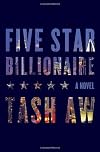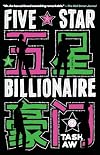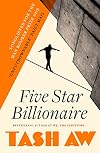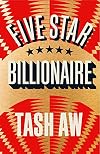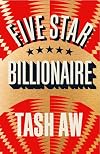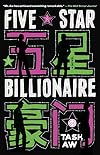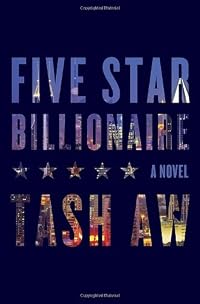
Five Star Billionaire
by Tash Aw
On This Page
Description
LONGLISTED FOR THE MAN BOOKER PRIZE • NAMED ONE OF THE BEST BOOKS OF THE YEAR BY NPR AND BOOKPAGELook for special features inside. Join the Random House Reader’s Circle for author chats and more.
An expansive, eye-opening novel that captures the vibrancy of China today
Phoebe is a factory girl who has come to Shanghai with the promise of a job—but when she arrives she discovers that the job doesn’t exist. Gary is a country boy turned pop star who is spinning out of control. show more Justin is in Shanghai to expand his family’s real estate empire, only to find that he might not be up to the task. He has long harbored a crush on Yinghui, a poetry-loving, left-wing activist who has reinvented herself as a successful Shanghai businesswoman. Yinghui is about to make a deal with the shadowy Walter Chao, the five star billionaire of the novel, who with his secrets and his schemes has a hand in the lives of each of the characters. All bring their dreams and hopes to Shanghai, the shining symbol of the New China, which, like the novel’s characters, is constantly in flux and which plays its own fateful role in the lives of its inhabitants.
Five Star Billionaire is a dazzling, kaleidoscopic novel that offers rare insight into the booming world of Shanghai, a city of elusive identities and ever-changing skylines, of grand ambitions and outsize dreams. Bursting with energy, contradictions, and the promise of possibility, Tash Aw’s remarkable new book is both poignant and comic, exotic and familiar, cutting-edge and classic, suspenseful and yet beautifully unhurried.
Praise for Five Star Billionaire
“Estimable . . . artful . . . Mr. Aw is a patient writer, and an elegant one. His supple yet unshowy prose can resemble Kazuo Ishiguro’s. . . . He’s a writer to watch.”—The New York Times
“In Five Star Billionaire, the Taiwanese-born, Malaysian writer Tash Aw chooses a refreshingly novel perspective. . . . Through five distinct Malaysian-Chinese voices, Mr. Aw wonderfully expresses the grit and cosmopolitan glamour of Shanghai today. . . . Mr. Aw has done more than merely satirize a social milieu; he has created a cast of compelling characters, all of whom have come to Shanghai to remake themselves, yet are haunted by their pasts in ways that they barely understand. . . . In Five Star Billionaire, Mr. Aw has achieved something remarkable.”—The Wall Street Journal
“[Aw’s] ever-spiraling web of connections is as improbable as it is entertaining, but he knits his various threads with an elegance . . . coupled with a photorealistic eye for the minutiae of urban life.”—The Boston Globe
“The ambition of the book perfectly reflects its subject. In one scene, we’re introduced to a ‘folk guitarist whose slangy lyrics spoke of urban migration and loneliness.’ Aw might be describing himself, except that his threnodies are set to sophisticated modern jazz.”—Pico Iyer, Time
“Goes beyond the bounds of the ordinary . . . [Aw] provides a richly drawn landscape of compelling characters, and a deep immersion in their lives. . . . Five Star Billionaire is a fiercely contemporary tale of tradition, modernity and the cost of progress.”—Ellah Allfrey, All Things Considered, NPR
“Aw has woven an impressive and contemporary human tapestry of a country that Western... show less
Tags
Recommendations












Member Reviews
Shanghai is a beautiful place, but it is also a harsh place. Life here is not really life, it is a competition.
Shanghai is the world's largest city, with a total population of over 23 million. It can arguably claim to be the city of the 21st century, similar to 19th century London and 20th century New York, as it is a booming financial, commercial and entertainment center that attracts emigrants and visitors from every continent, and it is the leading symbol of the new China and its growing influence on Asia and the rest of the world.
Tash Aw was born in Taipei to Malaysian parents, grew up in Kuala Lumpur, was educated in the UK, and lived in London before he moved to Shanghai after he was chosen to be the first M Literary Writer in show more Residence in 2010. In this superb novel, he portrays five Malaysian Chinese who have moved to Shanghai to seek the wealth and prestige that the city seems to offer to each of its newcomers.
Phoebe is a naïve and uneducated young woman from the Malaysian countryside, who emigrates illegally to China on the suggestion of a friend, but soon after she arrives she finds that the dream job she was promised has suddenly vanished. Justin is the eldest son of a wealthy real estate tycoon, charged with purchasing a property in Shanghai that will save his family from ruin in the face of the Asian financial crisis. Gary is a pop mega-star who performs in front of thousands of adoring fans, while battling internal demons that threaten to destroy his career. Yinghui is the daughter of a prominent family in Kuala Lumpur who transforms herself from a left wing political activist into a hard nosed and successful businesswoman. Finally, Walter is a secretive and shadowy figure who has risen up from the ashes of his father's ruin to become a prominent developer and the anonymous author of the best selling book "How to Become a Five Star Billionaire". The first four characters are all interlinked with Walter, the only person given a voice in the first person in the book, in an intricately woven web that slowly tightens around each of them.
Through these characters, Tash Aw provides a fascinating internal glimpse into modern Shanghai, a city filled with ambitious but often lonely and desperate people from all over Asia whose singular focus on material goods and wealth outweighs love and personal happiness. Anything and anyone is fair game for exploitation and deceit, and the widespread availability of counterfeit watches, purses and clothing mimics the superficiality of the city's high stakes capitalist culture. Self help books such as the one written by Walter are the bibles of the young up-and-comers, and traditional Chinese culture is viewed as outdated and stifling to young people like Phoebe.
Each one attains some degree of success, but several meet with sudden and spectacular failure, in the matter of a climber that reaches the summit of a mountain only to be blown off of it entirely by a sudden gust of wind.
The city held its promises just out of your reach, waiting to see how far you were willing to go to get what you wanted, how long you were prepared to wait. And until you determined the parameters of your pursuit, you would be on edge, for despite the restaurants and shops and art galleries and sense of unbridled potential, you would always feel that Shanghai was accelerating a couple of steps ahead of you, no matter how hard you worked or played. The crowds, the traffic, the impenetrable dialect, the muddy rains that carried the remnants of the Gobi Desert sandstorms and stained your clothes every March: The city was teasing you, testing your limits, using you. You arrived thinking you were going to use Shanghai to get what you wanted, and it would be some time before you realized that it was using you, that it had already moved on and you were playing catch up.
Five Star Billionaire is a captivating work about Shanghai and the new China, and the lives of five talented and determined people who seek wealth and fulfillment but find loneliness and misery instead. I read nearly all of this novel in a single sitting, and I was quite sorry to see it end. I also loved Tash Aw's previous novel Map of the Invisible World, and I look forward to reading The Harmony Silk Factory later this year. show less
Shanghai is the world's largest city, with a total population of over 23 million. It can arguably claim to be the city of the 21st century, similar to 19th century London and 20th century New York, as it is a booming financial, commercial and entertainment center that attracts emigrants and visitors from every continent, and it is the leading symbol of the new China and its growing influence on Asia and the rest of the world.
Tash Aw was born in Taipei to Malaysian parents, grew up in Kuala Lumpur, was educated in the UK, and lived in London before he moved to Shanghai after he was chosen to be the first M Literary Writer in show more Residence in 2010. In this superb novel, he portrays five Malaysian Chinese who have moved to Shanghai to seek the wealth and prestige that the city seems to offer to each of its newcomers.
Phoebe is a naïve and uneducated young woman from the Malaysian countryside, who emigrates illegally to China on the suggestion of a friend, but soon after she arrives she finds that the dream job she was promised has suddenly vanished. Justin is the eldest son of a wealthy real estate tycoon, charged with purchasing a property in Shanghai that will save his family from ruin in the face of the Asian financial crisis. Gary is a pop mega-star who performs in front of thousands of adoring fans, while battling internal demons that threaten to destroy his career. Yinghui is the daughter of a prominent family in Kuala Lumpur who transforms herself from a left wing political activist into a hard nosed and successful businesswoman. Finally, Walter is a secretive and shadowy figure who has risen up from the ashes of his father's ruin to become a prominent developer and the anonymous author of the best selling book "How to Become a Five Star Billionaire". The first four characters are all interlinked with Walter, the only person given a voice in the first person in the book, in an intricately woven web that slowly tightens around each of them.
Through these characters, Tash Aw provides a fascinating internal glimpse into modern Shanghai, a city filled with ambitious but often lonely and desperate people from all over Asia whose singular focus on material goods and wealth outweighs love and personal happiness. Anything and anyone is fair game for exploitation and deceit, and the widespread availability of counterfeit watches, purses and clothing mimics the superficiality of the city's high stakes capitalist culture. Self help books such as the one written by Walter are the bibles of the young up-and-comers, and traditional Chinese culture is viewed as outdated and stifling to young people like Phoebe.
Each one attains some degree of success, but several meet with sudden and spectacular failure, in the matter of a climber that reaches the summit of a mountain only to be blown off of it entirely by a sudden gust of wind.
The city held its promises just out of your reach, waiting to see how far you were willing to go to get what you wanted, how long you were prepared to wait. And until you determined the parameters of your pursuit, you would be on edge, for despite the restaurants and shops and art galleries and sense of unbridled potential, you would always feel that Shanghai was accelerating a couple of steps ahead of you, no matter how hard you worked or played. The crowds, the traffic, the impenetrable dialect, the muddy rains that carried the remnants of the Gobi Desert sandstorms and stained your clothes every March: The city was teasing you, testing your limits, using you. You arrived thinking you were going to use Shanghai to get what you wanted, and it would be some time before you realized that it was using you, that it had already moved on and you were playing catch up.
Five Star Billionaire is a captivating work about Shanghai and the new China, and the lives of five talented and determined people who seek wealth and fulfillment but find loneliness and misery instead. I read nearly all of this novel in a single sitting, and I was quite sorry to see it end. I also loved Tash Aw's previous novel Map of the Invisible World, and I look forward to reading The Harmony Silk Factory later this year. show less
 This review was written for LibraryThing Early Reviewers.
With a quick wit and sharp irony, the novel lays bare a culture obsessed with money and self-reinvention that so characterizes life in today’s global cities, where the yoga clubs are frequented by overworked wanna-be millionaires seeking to ‘live in the moment’, rich superstars spend their evenings mindlessly scrolling hard-core porn sites, and young people desperately searching for their ‘true identity’ methodically copy the overpriced fashion and lifestyles of others. Content and form come beautifully together in the novel’s format as a self-help book, teaching its readers how to become successful and rich. As we follow the intertwined lives of five Shanghai residents, we discover that if you live your life as fast as the show more city you’re living in, you’re actually standing still.
While the themes of materialism, disappearing cultural heritage, self-reinvention, and a search for human connection in the anonymous urban crowds are universal, I highly recommend the novel for those who want to get a sense of the daily lives in the ever-changing spectaculair urban landscape of Shanghai. Above all, this is a novel on Shanghai and the dreams and fears of the people that try to make this city their home. show less
While the themes of materialism, disappearing cultural heritage, self-reinvention, and a search for human connection in the anonymous urban crowds are universal, I highly recommend the novel for those who want to get a sense of the daily lives in the ever-changing spectaculair urban landscape of Shanghai. Above all, this is a novel on Shanghai and the dreams and fears of the people that try to make this city their home. show less
I loved Tash Aw's previous novel, "Map of the Invisible World", and I was eager to read this one given its backdrop: the big dreams and harsh reality of today's China. New wealth is being created, but it's being distributed more unevenly than ever before, and the author drills down into the experiences of a range of characters from all parts of the spectrum -- migrant workers, real estate developers -- to illustrate this.
But... the narrative bogs down under its own weight. Before I was 100 pages into it, I felt as if I was slogging through waist-deep molasses. It's perhaps too ambitious: the pacing and tone certainly don't make it easy even for someone as curious as I about the topic to become immersed in the novel. I think it has taken show more me a record nine attempts to make it 300 pages into the book, and I'm not deriving much pleasure from the process. I think by now I've reached the point where I can write at least a basic review, but it can't be an enthusiastic one. There's a lot of repetition -- this is, by and large, a novel about disillusionment and ambition, with all the ugly underside that you'd expect -- and what was completely missing for me is the kind of energy that is palpable when you are actually in Shanghai, a kind of energy that somehow is twinned with the darkness behind the boom.
So, reluctantly, this is going to end up as a 3 star read for me. I don't feel any real compulsion to finish it. In fact, if I were forced to choose between this and the dentist, I might choose the dentist, if only because he offers nitrous oxide. show less
But... the narrative bogs down under its own weight. Before I was 100 pages into it, I felt as if I was slogging through waist-deep molasses. It's perhaps too ambitious: the pacing and tone certainly don't make it easy even for someone as curious as I about the topic to become immersed in the novel. I think it has taken show more me a record nine attempts to make it 300 pages into the book, and I'm not deriving much pleasure from the process. I think by now I've reached the point where I can write at least a basic review, but it can't be an enthusiastic one. There's a lot of repetition -- this is, by and large, a novel about disillusionment and ambition, with all the ugly underside that you'd expect -- and what was completely missing for me is the kind of energy that is palpable when you are actually in Shanghai, a kind of energy that somehow is twinned with the darkness behind the boom.
So, reluctantly, this is going to end up as a 3 star read for me. I don't feel any real compulsion to finish it. In fact, if I were forced to choose between this and the dentist, I might choose the dentist, if only because he offers nitrous oxide. show less
This review was written for LibraryThing Early Reviewers.Aw does a good job here dissecting consumer culture, business ethics, and the aura of celebrity. Unfortunately, for me the book never worked as a novel. He presents each character largely through narrative, using very little dialog, so I never got a sense of any character's voice. The one first-person narrative is self-consciously false, so while that deepened Aw's examination of artifice and facade, it didn't humanize the character.
I never cared about any of these people because I never knew them. One character is a pop star and part of his story involves the tension between his image and his real self. For me, though, even his real self came across as image, Aw never let me get any closer. In a way, then, the book might be the victim show more of the very superficiality it sets out to critique. show less
I never cared about any of these people because I never knew them. One character is a pop star and part of his story involves the tension between his image and his real self. For me, though, even his real self came across as image, Aw never let me get any closer. In a way, then, the book might be the victim show more of the very superficiality it sets out to critique. show less
This review was written for LibraryThing Early Reviewers.Wow, this was so good. The "billionaire" of this tale makes this a revenge story. But it's also a story of humans; the way humans make use of each other, the cruelty they're capable of. And those who want to be rich: stepping on each other to claw their way to the top. Dropping their souls through their feet as they go.
I loved the author's depictions of The fast and furious society and Shanghai.
Phoebe is a young woman from Malaysia, a northern rural village. She makes her way to Shanghai, with the promise of a place to stay and a job working with a friend of hers, who has been emailing her. When she gets there, she finds out the friend is just using her to get her to pay the rent, as she has been fired from her job.
Phoebe gets a job show more through serendipity: just being in the right place at the right time. It all works out very well for her, and she studies self-help books in her quest to marry a rich man and succeed in getting the leisurely life she has always envisioned for herself.
From Phoebe's secret journal:
"do not let other people step on you.
Sometimes Shanghai bore down on her with the weight of 10 skyscrapers. The people were so haughty; their dialect was harsh to her ears. If someone talked to her in their language, she would feel attacked just by the sound of it. She had to come here full of hope, but on some nights, even after she had deposited all her loathing and terror into her secret journal, she still felt that she was tumbling down, down, and there was no way up. It had been a mistake to gamble as she did."
Justin and his brother were from the lim family. They had been filthy rich.Justin drops out of his role as fixer in the family. They would be celebrating New Year's.
Maybe one of the many reasons the rich people in this story fall from their towering heights is because of what they consume.
".. in recent years the family had even taken to having the New Year's Eve dinner in a hotel -- a servants were getting old, his mother had said, and they simply couldn't trust getting a young Filipina or Indonesian maid (she'd heard such horror stories: family heirlooms being stolen, phone bills full of calls to manila, people being killed in their own homes). So the family would Book a private room in the Chinese restaurant of a fancy hotel, 12 of them sitting in near-silence around a big table laden with food that would remain half consumed at the end of the evening. How lucky we are to have a family like this, his father would say at the conclusion of the meal. he said that every single year Justin could remember. But those extravagant banquets of bird's nest and shark-fin soups, whole suckling pigs, the finest New Zealand abalone, and strange sea creatures he hadn't even recognized -- perhaps they were all in the past, now that his family was ruined. He wondered if they were having more modest celebrations, or if they were celebrating at all. He imagined bitter recriminations: mother blaming father, brother blaming mother, grandmother blaming Uncle -- for the loss of their fortune, for their loss of their eldest son."
More of Phoebe's ruminations:
"... It was a proper matchmaking website for professional people, expensive to join, so she was naturally more optimistic when men sent her messages on this site. Of course, she had long since learned that the appearance of classiness in Shanghai was no guarantee of truthfulness, and she treated all approaches from men with the same caution as she would when shopping for counterfeit luxury goods. China was full of CopyCat products and people. She was now experienced enough to tell from one simple message whether a man was serious or not, whether he was just looking for sex, whether he was a married man in search of a mistress, or if he was indeed in need of a future wife. She could tell if a man was lying about who he was, about his job and income, where he was from. She could tell if he was from Beijing or if he was a Pakistani pretending to be from beijing. All the scam marriage proposals from indian, nigerian, and Arab men -- she was aware of them all; she did not even know what they wanted from her, but she made sure she stayed clear of them. She had become expert in the courtship rituals of the internet; no one could trick her with flowery words or insincere promises. To phoebe, internet dating had become like a book written in a language that she had mastered, just as she had conquered the rocky path to employment in shanghai.
..Being open and honest with a man is like asking him to drive over you with a bulldozer!"
And...:
"Her books had been right: men wanted only what they couldn't obtain.
She made the decision -- it was an easy one to make: she would use Walter for as long as she could; she had to be ruthless. She would accept the gifts of luxury handbags and Italian shoes and British raincoats and jewels from Hong kong. She would not only enjoy the fine dinners but also use the opportunity to learn about the Western countries he had visited. She would listen carefully to his stories about getting lost in Rome and his descriptions of the view from the Eiffel tower, and she would store them away for use one day, when she was at dinner with someone else, her true soulmate. She would accept all his offers of evenings at the Opera and ballet; she would use him to make herself better. Make use of as they would make use of you." show less
I loved the author's depictions of The fast and furious society and Shanghai.
Phoebe is a young woman from Malaysia, a northern rural village. She makes her way to Shanghai, with the promise of a place to stay and a job working with a friend of hers, who has been emailing her. When she gets there, she finds out the friend is just using her to get her to pay the rent, as she has been fired from her job.
Phoebe gets a job show more through serendipity: just being in the right place at the right time. It all works out very well for her, and she studies self-help books in her quest to marry a rich man and succeed in getting the leisurely life she has always envisioned for herself.
From Phoebe's secret journal:
"do not let other people step on you.
Sometimes Shanghai bore down on her with the weight of 10 skyscrapers. The people were so haughty; their dialect was harsh to her ears. If someone talked to her in their language, she would feel attacked just by the sound of it. She had to come here full of hope, but on some nights, even after she had deposited all her loathing and terror into her secret journal, she still felt that she was tumbling down, down, and there was no way up. It had been a mistake to gamble as she did."
Justin and his brother were from the lim family. They had been filthy rich.Justin drops out of his role as fixer in the family. They would be celebrating New Year's.
Maybe one of the many reasons the rich people in this story fall from their towering heights is because of what they consume.
".. in recent years the family had even taken to having the New Year's Eve dinner in a hotel -- a servants were getting old, his mother had said, and they simply couldn't trust getting a young Filipina or Indonesian maid (she'd heard such horror stories: family heirlooms being stolen, phone bills full of calls to manila, people being killed in their own homes). So the family would Book a private room in the Chinese restaurant of a fancy hotel, 12 of them sitting in near-silence around a big table laden with food that would remain half consumed at the end of the evening. How lucky we are to have a family like this, his father would say at the conclusion of the meal. he said that every single year Justin could remember. But those extravagant banquets of bird's nest and shark-fin soups, whole suckling pigs, the finest New Zealand abalone, and strange sea creatures he hadn't even recognized -- perhaps they were all in the past, now that his family was ruined. He wondered if they were having more modest celebrations, or if they were celebrating at all. He imagined bitter recriminations: mother blaming father, brother blaming mother, grandmother blaming Uncle -- for the loss of their fortune, for their loss of their eldest son."
More of Phoebe's ruminations:
"... It was a proper matchmaking website for professional people, expensive to join, so she was naturally more optimistic when men sent her messages on this site. Of course, she had long since learned that the appearance of classiness in Shanghai was no guarantee of truthfulness, and she treated all approaches from men with the same caution as she would when shopping for counterfeit luxury goods. China was full of CopyCat products and people. She was now experienced enough to tell from one simple message whether a man was serious or not, whether he was just looking for sex, whether he was a married man in search of a mistress, or if he was indeed in need of a future wife. She could tell if a man was lying about who he was, about his job and income, where he was from. She could tell if he was from Beijing or if he was a Pakistani pretending to be from beijing. All the scam marriage proposals from indian, nigerian, and Arab men -- she was aware of them all; she did not even know what they wanted from her, but she made sure she stayed clear of them. She had become expert in the courtship rituals of the internet; no one could trick her with flowery words or insincere promises. To phoebe, internet dating had become like a book written in a language that she had mastered, just as she had conquered the rocky path to employment in shanghai.
..Being open and honest with a man is like asking him to drive over you with a bulldozer!"
And...:
"Her books had been right: men wanted only what they couldn't obtain.
She made the decision -- it was an easy one to make: she would use Walter for as long as she could; she had to be ruthless. She would accept the gifts of luxury handbags and Italian shoes and British raincoats and jewels from Hong kong. She would not only enjoy the fine dinners but also use the opportunity to learn about the Western countries he had visited. She would listen carefully to his stories about getting lost in Rome and his descriptions of the view from the Eiffel tower, and she would store them away for use one day, when she was at dinner with someone else, her true soulmate. She would accept all his offers of evenings at the Opera and ballet; she would use him to make herself better. Make use of as they would make use of you." show less
Tash Aw’s Five Star Billionaire captures in mesmerizing detail, the intertwining stories of five very different people who come from Malaysia to Shanghai in pursuit of fame and fortune. Each individual is vastly different from the others, but all have in common two traits: a desire to take advantage of the anonymity and opportunity that Shanghai provides in order to reinvent themselves, and their association with Walter Chao, the title character, whose enigmatic relationship with each one simultaneously enables their worldly ambitions while unpeeling those materialistic dreams to reveal deeper, more fundamental human needs.
Each character is fully drawn and compelling. We meet Gary, an American Idol type pop singer, whose fame and show more trajectory is disrupted by his own misbehavior, Phoebe, a provincial young girl whose goal is to marry a wealthy cosmopolitan man, Yinghui, a former scholar and activist who is now intent on building a business empire and Justin, whose wealthy family sends him to Shanghai to expand their influence and real estate holdings in Mainland China. Finally, the reader meets Walter, the Five Star Billionaire, businessman/philanthropist, whose aims are clouded in mystery.
The book is divided into chapters that rotate among the stories of each character as each one becomes more fully fleshed out. Interspersed with these chapters are the chapters about Walter. These are the only chapters in the first person and they recount his story chronologically. The Walter chapters are also in a different font to underscore, I believe, that his is the thread that weaves the fabric of the book together. Indeed, all the main characters are connected to each other to some degree and we gradually begin to suspect that Walter is the puppet master of these characters. Why he becomes involved in their lives is unclear and we do not know until the end of the novel if his involvement is coincidental, benign or malignant.
The backdrop of their stories is Shanghai, which practically serves as a sixth character. The author brings this frenetic city to life as it too is reinventing itself. There is a running theme of destroying old buildings to construct modern, functional and soulless ones that mirrors the journeys of the protagonists. These contrasting images of old and new Shanghai are vibrant and Aw’s descriptions of the people, buildings, streets, sights, sounds and smells that define the city animate the story.
Aw’s book is well written, the story itself is compelling. I found the beginning slow-going as the reader is introduced to each character, but as the narratives of these characters begins to take life and Aw brings those narratives together, the story gains a momentum that makes for great reading. show less
Each character is fully drawn and compelling. We meet Gary, an American Idol type pop singer, whose fame and show more trajectory is disrupted by his own misbehavior, Phoebe, a provincial young girl whose goal is to marry a wealthy cosmopolitan man, Yinghui, a former scholar and activist who is now intent on building a business empire and Justin, whose wealthy family sends him to Shanghai to expand their influence and real estate holdings in Mainland China. Finally, the reader meets Walter, the Five Star Billionaire, businessman/philanthropist, whose aims are clouded in mystery.
The book is divided into chapters that rotate among the stories of each character as each one becomes more fully fleshed out. Interspersed with these chapters are the chapters about Walter. These are the only chapters in the first person and they recount his story chronologically. The Walter chapters are also in a different font to underscore, I believe, that his is the thread that weaves the fabric of the book together. Indeed, all the main characters are connected to each other to some degree and we gradually begin to suspect that Walter is the puppet master of these characters. Why he becomes involved in their lives is unclear and we do not know until the end of the novel if his involvement is coincidental, benign or malignant.
The backdrop of their stories is Shanghai, which practically serves as a sixth character. The author brings this frenetic city to life as it too is reinventing itself. There is a running theme of destroying old buildings to construct modern, functional and soulless ones that mirrors the journeys of the protagonists. These contrasting images of old and new Shanghai are vibrant and Aw’s descriptions of the people, buildings, streets, sights, sounds and smells that define the city animate the story.
Aw’s book is well written, the story itself is compelling. I found the beginning slow-going as the reader is introduced to each character, but as the narratives of these characters begins to take life and Aw brings those narratives together, the story gains a momentum that makes for great reading. show less
This review was written for LibraryThing Early Reviewers.I've never thought of migrant workers in quite this way before. This is a modern world in which the new migrant workers in Asia are those young people leaving the small villages in the provinces and turning their hopes toward the lights in the big cities of China. And Shanghai is the biggest and brightest of all. Tash Aw's book centers around four young people and the author of a self-help book who end up in the dazzling lights of Shanghai, each with their own idea of success. What they didn't know was that "the city held its promises just out of your reach, waiting to see how far you were willing to go to get what you wanted, how long your were prepared to wait...The city was teasing you, testing your limits, using you. You arrived show more thinking you were going to use Shanghai to get what you wanted, and it would be some time before you realized that it was using you..." (257)
I really wanted to like this book because my husband has been singing the praises of the new China for several years. Unfortunately, I didn't like what I saw through the eyes of these characters. They were willing to do whatever it took to achieve their particular goal even if it meant following someone else's idea of success through the pages of a self-help book. The chapter headings could have been bullet points in the book with titles such as "Reinvent Yourself" and "Pursue Gains, Forget Righteousness." The author, Walter Chao, took his own words to heart and was able to follow through on his game plan without remorse. Maybe the primary characters got what they deserved. Or maybe not. I didn't have enough sympathy for them to care all that much, but I do think that this is a book that begs to be discussed and would be a good choice for a book group. show less
I really wanted to like this book because my husband has been singing the praises of the new China for several years. Unfortunately, I didn't like what I saw through the eyes of these characters. They were willing to do whatever it took to achieve their particular goal even if it meant following someone else's idea of success through the pages of a self-help book. The chapter headings could have been bullet points in the book with titles such as "Reinvent Yourself" and "Pursue Gains, Forget Righteousness." The author, Walter Chao, took his own words to heart and was able to follow through on his game plan without remorse. Maybe the primary characters got what they deserved. Or maybe not. I didn't have enough sympathy for them to care all that much, but I do think that this is a book that begs to be discussed and would be a good choice for a book group. show less
Members
- Recently Added By
Published Reviews
ThingScore 54
Five Star Billionaire deploys telling detail and idiosyncratic perspective to evoke the logic and feel of contemporary China. The prose is lucid and unhurried, and Aw keeps an impressively tight rein on a sprawling narrative. Besides spanning languages and plots, it is also a primer on popular Chinese culture, covering hallmarks from the zealousness of online communities to self-help books and show more food stalls.
The interlocking lives of the five Malaysian-Chinese living on the mainland are reminiscent of Tom Wolfe's Bonfire of the Vanities in how they reveal social gears and levers. Just as Bonfire endeavoured to do for New York City, Billionaire renders a sweeping cross-section of modern Shanghai. But it does so obliquely, giving the measure of the city the way a disease might be revealed through patient histories.
Aw excels at revealing the city's symptoms by layering detail upon detail - for instance, in this image of a rich Shanghainese girl as seen by Phoebe, a poor girl from a remote village in Malaysia: "Phoebe could not tell if she was pretty, but she sat the way a pretty girl would. Her dress was a big black shirt with loads of words printed all over it like graffiti, meaningless sentences … it was horrible but it was expensive, anyone could see that." show less
The interlocking lives of the five Malaysian-Chinese living on the mainland are reminiscent of Tom Wolfe's Bonfire of the Vanities in how they reveal social gears and levers. Just as Bonfire endeavoured to do for New York City, Billionaire renders a sweeping cross-section of modern Shanghai. But it does so obliquely, giving the measure of the city the way a disease might be revealed through patient histories.
Aw excels at revealing the city's symptoms by layering detail upon detail - for instance, in this image of a rich Shanghainese girl as seen by Phoebe, a poor girl from a remote village in Malaysia: "Phoebe could not tell if she was pretty, but she sat the way a pretty girl would. Her dress was a big black shirt with loads of words printed all over it like graffiti, meaningless sentences … it was horrible but it was expensive, anyone could see that." show less
added by kidzdoc
Five Star Billionaire is a brave, partly successful attempt to capture the size and variousness of Shanghai through the interlocking lives of five Malaysian Chinese immigrants, all searching for money and love: poor, unsophisticated, ambitious young Phoebe; rich, sophisticated, ambitious Yinghui; rich but unsophisticated and unambitious Justin, who is starting to crumble under the pressure of show more running his family’s commercial empire; pop icon Gary, who has left his poor, unsophisticated roots behind, thanks to a television talent contest, but who like Justin is crumbling; and the billionaire of the title, Walter Chao – the only character to get a first-person narrative, a fact that might put the reader on the alert for signs of unreliability.
Long before the end, the book begins to feel dispiritingly under-imagined. We’re told too often what conversations are like – awkward, cheery – rather than given the dialogue that might enable us to judge; emotions are asserted but unfelt; and the business of moneymaking, around which so much of the novel revolves, is always discussed in the sketchiest terms: a big property deal at the heart of the book is annoyingly unconvincing. Five Star Billionaire contains a lot of useful and interesting information about the way the world wags these days; but are useful and interesting what you read a novel for? show less
Long before the end, the book begins to feel dispiritingly under-imagined. We’re told too often what conversations are like – awkward, cheery – rather than given the dialogue that might enable us to judge; emotions are asserted but unfelt; and the business of moneymaking, around which so much of the novel revolves, is always discussed in the sketchiest terms: a big property deal at the heart of the book is annoyingly unconvincing. Five Star Billionaire contains a lot of useful and interesting information about the way the world wags these days; but are useful and interesting what you read a novel for? show less
added by kidzdoc
Tash Aw's Five Star Billionaire opens with a bang, not a whimper. Four Malaysians are trying to make it in Shanghai, the new capital of the eastern world – but when we meet them, each of their lives is in freefall. There's Phoebe, the ambitious young Malaysian village girl who passes herself off as Chinese and has arrived in Shanghai on the broken promise of a job and a new life. There's show more Gary, a "Taiwanese" pop star who finds his fall from grace in a Shanghai bar endlessly replayed on YouTube and is reduced to singing in shopping malls. There's Yinghui, a steely and successful businesswoman whose friends tell her that to really succeed in Shanghai, she needs a man. And, finally, there's Justin, the lonely businessman adopted into a wealthy Malaysian family, who has lost his way while his family have lost their fortune. He and Yinghui knew each other in an earlier life and their reconnection is one of the fine threads that link the characters in this book. Though how many of those threads are held by the fifth character, Walter Chao – the mysterious "I" and author of the bestselling self-help manual Five Star Billionaire – remains to be seen.
Aw is a master storyteller and Five Star Billionaire can be read as The Way We Live Now for our times, for with the global triumph of capitalism, New York and London pale in comparison with the financial behemoth of Shanghai. Like Trollope's Augustus Melmotte, the mysterious Walter Chao has moved his base of operations to the new city: Phoebe, Yinghui, Gary and Justin stand in for the speculators and wealthy families ensnared by his plotting. At 400-plus pages, Five Star Billionaire is only half the length of Trollope's masterpiece. Still, it's a long book; and if there's a criticism to be made it is that the pace is too unvarying. Even where the narrative takes a dramatic turn, it is delivered in Aw's spare, fresh, cool, almost dispassionate prose, which though it succeeds in many ways somehow never quite leaves the page. Instead the characters drift towards their various destinies, caught in the whirlpool of Shanghai. There's more than a hint of fatalism in the air. Even when Yinghui is warned about her new business partner, she fails to conduct the most basic credit check on Walter Chao; she is too desperate, her dream too fragile.
Behind it all, perhaps rather predictably, is a tale of ruin and revenge. But it matters little, because by the time you work out that what you thought was going to happen is indeed going to happen, you realise that Five Star Billionaire is a gentler story than at first appeared: one of lives lost and found, of the transience of material success and the courage required to hope and to trust again, to forgive oneself and to believe in the possibility of love. show less
Aw is a master storyteller and Five Star Billionaire can be read as The Way We Live Now for our times, for with the global triumph of capitalism, New York and London pale in comparison with the financial behemoth of Shanghai. Like Trollope's Augustus Melmotte, the mysterious Walter Chao has moved his base of operations to the new city: Phoebe, Yinghui, Gary and Justin stand in for the speculators and wealthy families ensnared by his plotting. At 400-plus pages, Five Star Billionaire is only half the length of Trollope's masterpiece. Still, it's a long book; and if there's a criticism to be made it is that the pace is too unvarying. Even where the narrative takes a dramatic turn, it is delivered in Aw's spare, fresh, cool, almost dispassionate prose, which though it succeeds in many ways somehow never quite leaves the page. Instead the characters drift towards their various destinies, caught in the whirlpool of Shanghai. There's more than a hint of fatalism in the air. Even when Yinghui is warned about her new business partner, she fails to conduct the most basic credit check on Walter Chao; she is too desperate, her dream too fragile.
Behind it all, perhaps rather predictably, is a tale of ruin and revenge. But it matters little, because by the time you work out that what you thought was going to happen is indeed going to happen, you realise that Five Star Billionaire is a gentler story than at first appeared: one of lives lost and found, of the transience of material success and the courage required to hope and to trust again, to forgive oneself and to believe in the possibility of love. show less
added by kidzdoc
Lists

Top Five Books of 2013
1,562 works; 715 members

Booker Prize
491 works; 62 members

Man Booker Prize Longlist 2013
13 works; 3 members

Dishonourable Mentions of 2014
80 works; 22 members
Author Information

11+ Works 2,105 Members
Some Editions
Awards and Honors
Awards
Distinctions
Common Knowledge
- Canonical title
- Five Star Billionaire
- Original publication date
- 2013-02-28
- People/Characters
- Phoebe Chen Aiping; Gary Gao; Justin C. K. Lim; Leong Yinghui; Walter Chao
- Important places
- Shanghai, China
- Quotations
- The city held its promises just out of your reach, waiting to see how far you were willing to go to get what you wanted, how long you were prepared to wait. And until you determined the parameters of your pursuit, you would b... (show all)e on edge, for despite the restaurants and shops and art galleries and sense of unbridled potential, you would always feel that Shanghai was accelerating a couple of steps ahead of you, no matter how hard you worked or played. The crowds, the traffic, the impenetrable dialect, the muddy rains that carried the remnants of the Gobi Desert sandstorms and stained your clothes every March: The city was teasing you, testing your limits, using you. You arrived thinking you were going to use Shanghai to get what you wanted, and it would be some time before you realized that it was using you, that it had already moved on and you were playing catch up.
Classifications
Statistics
- Members
- 458
- Popularity
- 66,364
- Reviews
- 50
- Rating
- (3.42)
- Languages
- Dutch, English, French, Italian
- Media
- Paper, Audiobook, Ebook
- ISBNs
- 19
- ASINs
- 6