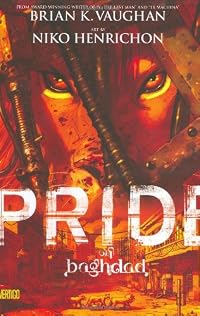
Pride of Baghdad
by Brian K. Vaughan (Author), Niko Henrichon (Illustrator)
On This Page
Description
In the spring of 2003, a pride of lions escapes from the Baghdad Zoo during an American bombing raid. Lost and confused, hungry but finally free, the four lions roamed the decimated streets of Baghdad in a desperate struggle for their lives. In documenting the plight of the lions, PRIDE OF BAGHDAD raises questions about the true meaning of liberation-can it be given, or is it earned only through self-determination and sacrifice? And in the end, is it truly better to die free than to live in show more captivity? show lessTags
Recommendations
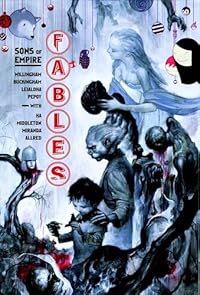
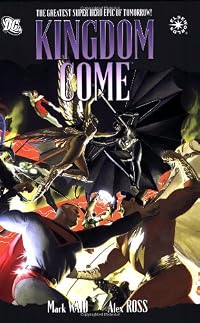
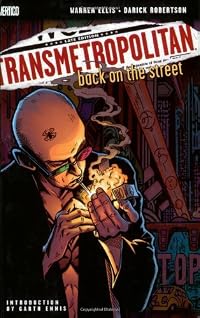
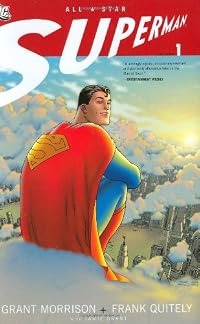
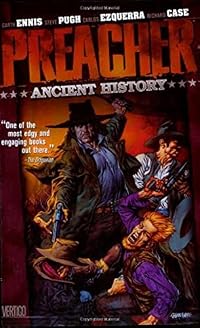
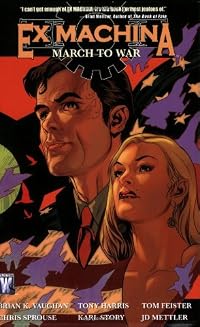
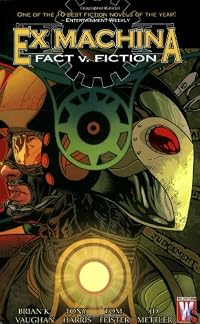
Member Recommendations
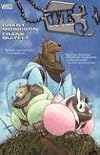
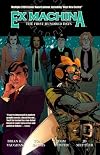
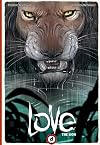
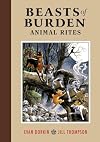
MyriadBooks Similar in themes and beauty.
Member Reviews
Gorgeous art and a moving story
I first read this book almost thirteen years ago. It has been on my mind since I came across it while rearranging my library a couple of weeks ago so I sat down with it this afternoon.
Still an amazing story, based on the escape of four lions from a zoo in Baghdad during a bombing raid in 2003. The lions here are imagined with human-like personalities (think Disney's "The Lion King", only much darker) and the art is fantastic.
I'm pleased this story has never been animated as I'd hate to see it done "on the cheap". I do however wish more people got so read books like this, to see how well a story can be presented in this format.
Very highly recommended.
I first read this book almost thirteen years ago. It has been on my mind since I came across it while rearranging my library a couple of weeks ago so I sat down with it this afternoon.
Still an amazing story, based on the escape of four lions from a zoo in Baghdad during a bombing raid in 2003. The lions here are imagined with human-like personalities (think Disney's "The Lion King", only much darker) and the art is fantastic.
I'm pleased this story has never been animated as I'd hate to see it done "on the cheap". I do however wish more people got so read books like this, to see how well a story can be presented in this format.
Very highly recommended.
Back when the Iraq war was in its “shock and awe” stage, the evening news was flooded with stories of humans in all the widely varied situations war tends to stick people in. One event that was nearly lost in all the commotion didn’t involve people at all, though. An American bomb inadvertently freed four lions from the Baghdad zoo. Writer Brian K. Vaughan uses their story as a jumping-off point for a graphic novel that’s possibly one of the most poignant and reflective of the many books, graphic or otherwise, the current war has inspired. Vaughan himself is an oddity among graphic novelists. Well known for his award-winning work on “Y: The Last Man,” “Runaways,” and “Ex Machina,” Vaughan only rarely illustrates his show more own writing. For this project he’s teamed up with relative newcomer Niko Henrichon, who possesses a particular talent for rendering expression in animals. This book toys with ideas of freedom granted by foreign bombs, and the often uncomfortable and insecure nature of freedom itself. Most of the escaped lions were born in the wild, but years of captivity and relative comfort have left them ill-prepared for the war-torn city into which they’re thrust. While there are mature themes in the book, this may be one of a very few graphic novels that finds an audience in readers who typically stick to more conventional fiction. show less
Very rarely a book will take me by surprise like this did. I was angry. I was sad. And I think everyone should read this book.
I think part of the shock from this book is that I didn't know what was coming. I'd heard about Pride of Baghdad but didn't know anything about the story, so had gone into it blind, so if you want to read this and be just as surprised by the ending as I was, just skip the rest of this and go read the book.
In 2003, American soldiers invaded Baghdad and in that invasion, the zoo in Baghdad was destroyed. Of the 650-700 animals housed in the zoo, only 35 survived the aftermath of the attack. Some of the animals were looted from the zoo and there was a group of lions that escaped and were roaming the streets of show more Baghdad. Four of these lions were shot and killed by American soldiers when they wouldn't return to their cages. Pride of Baghdad is Brian Vaughan's fictionalized account of this story through the eyes of these lions.
The story follows Zill, Zafa, Noor and Ali, a pride of lions who escape from the zoo after it is destroyed by American forces and have a brief taste of freedom. They roam the city of Baghdad, encountering several other animals (a sea turtle, horses, another lion kept in private captivity who is close to death, and a blood-thirsty bear) and how they persevere as a small pride to survive their situation. Just as they come to terms with their freedom and come to understand it for what it is, they are all shot dead by American soldiers.
To be honest, I couldn't believe what I read at first. I had to jump back and forth between pages to make sure I was understanding what was happening to the lions. While Vaughan obviously took liberties with the lions by anthropomorphizing them to make us feel more for them, when I discovered that this was based on a true story, I was even more outraged. Who knows exactly what happened to the lions, but the injustice of it seemed to quake through this book by the last page.
Niko Henrichon's artwork is dazzling throughout the book. The emotion that he is able to render in the animals, their terror at the attacks from the American soldiers, their amazement at their freedom, all spills from each page.
Don't let the fact that this is a graphic novel deter you from reading it. An incredibly powerful tale that will shock you by its strength, Pride of Baghdad is one story that will stay with you far after you've read it. show less
I think part of the shock from this book is that I didn't know what was coming. I'd heard about Pride of Baghdad but didn't know anything about the story, so had gone into it blind, so if you want to read this and be just as surprised by the ending as I was, just skip the rest of this and go read the book.
In 2003, American soldiers invaded Baghdad and in that invasion, the zoo in Baghdad was destroyed. Of the 650-700 animals housed in the zoo, only 35 survived the aftermath of the attack. Some of the animals were looted from the zoo and there was a group of lions that escaped and were roaming the streets of show more Baghdad. Four of these lions were shot and killed by American soldiers when they wouldn't return to their cages. Pride of Baghdad is Brian Vaughan's fictionalized account of this story through the eyes of these lions.
The story follows Zill, Zafa, Noor and Ali, a pride of lions who escape from the zoo after it is destroyed by American forces and have a brief taste of freedom. They roam the city of Baghdad, encountering several other animals (a sea turtle, horses, another lion kept in private captivity who is close to death, and a blood-thirsty bear) and how they persevere as a small pride to survive their situation. Just as they come to terms with their freedom and come to understand it for what it is, they are all shot dead by American soldiers.
To be honest, I couldn't believe what I read at first. I had to jump back and forth between pages to make sure I was understanding what was happening to the lions. While Vaughan obviously took liberties with the lions by anthropomorphizing them to make us feel more for them, when I discovered that this was based on a true story, I was even more outraged. Who knows exactly what happened to the lions, but the injustice of it seemed to quake through this book by the last page.
Niko Henrichon's artwork is dazzling throughout the book. The emotion that he is able to render in the animals, their terror at the attacks from the American soldiers, their amazement at their freedom, all spills from each page.
Don't let the fact that this is a graphic novel deter you from reading it. An incredibly powerful tale that will shock you by its strength, Pride of Baghdad is one story that will stay with you far after you've read it. show less
Wow… this was such a beautiful read. By the end, I was genuinely moved to tears. The artwork is stunning, and as I scrolled, it felt like I was watching a movie rather than reading.
I loved how the story unfolds around four lions who escape after the zoo is destroyed during a bombing: Safa, who knows the harsh realities of the wild; Noor, who dreams of escaping the zoo; Zill, who holds everything together; and little Ali, full of curiosity and wonder. As the story progressed, I rooted for the lions to survive despite knowing the ending. This made the story even more heartbreaking.
The author and illustrator have created a masterpiece that shows the suffering of war, which is not limited to humans but also includes the destruction it show more causes.
This book affected me in a way that’s hard to put into words -- the sadness of knowing it’s based on reality, the breathtaking art, and the depth of emotion in every frame and dialogue.
This is truly a masterpiece.
Thank you, Author, for giving me a chance to read this magnificent book! show less
I loved how the story unfolds around four lions who escape after the zoo is destroyed during a bombing: Safa, who knows the harsh realities of the wild; Noor, who dreams of escaping the zoo; Zill, who holds everything together; and little Ali, full of curiosity and wonder. As the story progressed, I rooted for the lions to survive despite knowing the ending. This made the story even more heartbreaking.
The author and illustrator have created a masterpiece that shows the suffering of war, which is not limited to humans but also includes the destruction it show more causes.
This book affected me in a way that’s hard to put into words -- the sadness of knowing it’s based on reality, the breathtaking art, and the depth of emotion in every frame and dialogue.
This is truly a masterpiece.
Thank you, Author, for giving me a chance to read this magnificent book! show less
Tomando como punto de partida un hecho real (el bombardeo de Bagdad y la huída de varios animales del zoológico) la obra de Vaughan dota de rasgos humanos e inteligencia a los animales para hacernos cómplices de sus emociones, de sus relaciones como manada y su estupor a todo lo que sucede a su alrededor. Porque pese a ser un grupo no demasiado bien avenido, en la adversidad deben cooperar entre ellos.
Que los leones hablen no convierte esta obra en algo infantil, al contrario: comprender sus sentimientos hace que todavía sea más desgarrador para el lector comprobar como en el fondo, el cómic es una crítica a la guerra de Irak desde el punto de vista de estos leones, que ven bombardeado su habitat y se ven libres, pero, ¿a qué show more precio?
'Los leones de Bagdad' nos muestra la guerra desde el punto de vista de los que han tenido simplemente la mala suerte de haber nacido en un territorio que se convierte en hostil a causa de unos dirigentes que no calculan el impacto sobre la población que puede tener un conflicto armado. Muy recomendable. show less
Que los leones hablen no convierte esta obra en algo infantil, al contrario: comprender sus sentimientos hace que todavía sea más desgarrador para el lector comprobar como en el fondo, el cómic es una crítica a la guerra de Irak desde el punto de vista de estos leones, que ven bombardeado su habitat y se ven libres, pero, ¿a qué show more precio?
'Los leones de Bagdad' nos muestra la guerra desde el punto de vista de los que han tenido simplemente la mala suerte de haber nacido en un territorio que se convierte en hostil a causa de unos dirigentes que no calculan el impacto sobre la población que puede tener un conflicto armado. Muy recomendable. show less
After a patron put this book on hold I was beyond intrigued. At first glance I just thought it was a graphic novel about the war but when I looked inside and saw their were lions, I knew I had to read it! Based on true events, this graphic novel follows four lions who escaped from a Baghdad zoo during an American bombing raid. Prowling through a city in ruins they ponder the true meaning of freedom. Can it be given or must it be earned? Without sacrifice is it as meaningful? Ground breaking and poignant, this is a fantastic read. Quick and concise and will leave readers with many questions and a new appreciation for the king of animals.
There's a big billboard on the wall of the art museum at my university showing two voluptuous minarets, gold and sky blue against a blue sky, with the legend "Because there was and there wasn't a city of Baghdad ...." It is massive and, especially on the backdrop of Vancouver's own skies of heavy impending grey, riveting. A cheap ambiguity and a stock photo, and it conjures up the full-blooded presence of a world that was very different from ours, but no less real, and when the artist was working must have appeared to have been gone forever. And I was just looking at Baghdad pictures in the effort to identify the mosque in question, and--although I have to say that a triumphalist retort to the piece (paid for by the Rumsfeld Foundation show more and the Project for a New American Century) could easily enough slap the words "Because there is and always will be a city of Baghdad" on a picture of the city's new $7 billion international airport, with the unexpected swooping light fixtures that evoke medieval vaulted ceilings--it wouldn't convince, because in the eyes of the world the old Baghdad is dead. The New York of the Middle Ages, the prosperous and cultivated yet suffering and scared capital of despots from the enlightened founder, al-Mansur, who tragically named it Madinat as-Salaam, the City of Peace, down to the (we'll say with what may be distressing understatement) unenlightened Saddam, is separated from the post-2003 world, much much more than America is from the pre-2001 world, by a traumatic break. An act--an age--of abject violence that, in our narrative, cuts Baghdadis (and Iraqis) off from who they though they were, leaves them shellshocked and paralyzed.
In our narrative, and I don't know how I feel about that. Either the Iraq war and the attendant crimes were a singular, irreducible obscenity that broke a people, dissociated a nation from itself. This is the West telling Iraqis that they can't maintain any continuity with their past, that all they can do is begin a new climb out of barbarism because we we we did something so evil. The other option, of course, is an optimism that effaces the depth of our, the West's, own collective crime.
That's the dilemma that Western writers who don't really know Iraq are going to face, and it's thorny, and it makes it hard to know exactly how to evaluate this confidently rendered and skilfully heartrending story. I think I am going to reluctantly settle on cutting it a bit of slack because it was 2006, and we were still embroiled in the Mesopotamian drama (as opposed to now, 2011, when nobody gives two fucks anymore--and Egypt too will soon fade, of course). It's not written out of a place of strong familiarity with Baghdad before the war, although Vaughan and Henrichon did talk to a lot of US soldiers, which kind of plays up the Catch-22 here. It's the fictionalized story of the four lions that escaped from the Baghdad Zoo after it was bombed to shit by the USAF in 2003. They wandered the city and, spoilers, I suppose, were eventually put down by American troops.
Like, not to hit you over the head with the metaphor here, right? The Iraqi people escaped from their Ba'athist cages after they were bombed to shit by the USAF in 2003. They wandered around trying to figure out what next, and many of them were put down by American troops. This is a tragic parable of what happens when the price of freedom is too high. The authors tell it effectively, with broad strokes, humour and pathos. The lions are afraid--some want to go back to their cages, others want to press onward and see a horizon again. When they do see it, over the bombed-out city, your heart leaps in a way that's equal parts Born Free and "A Nation Once Again" sung by the Wolfe Tones. But is it worth the price? You remember the "keepers". Stockholm Syndrome is at play. Pain is much and death is swift. But perhaps you would have survived better if you had stayed in the wild and kept those instincts sharp and not been domesticated and we can still read this as the-tree-of-liberty-watered-with-the-blood-etc.? But no, no kind of instinx would have gotten our pride away from those guns (and ouch, what a cutting play of words that is--the pride of Baghdad's people, shredded by assault rounds).
So they do a good job. the anthropomorphized animals are handled very well, the thing where they're not for kids is winked at but not ham-handedly hammered on like in so much funny-animals-for-grownups jazz (one of the funniest moments was the cub, whose name I can't remember but whom I'm gonna just go ahead and call Simba: "Do you think there are any other animals my age out there? I just can't wait to eat a baby goat!") It is a powerful story, and both the freedangerdom/safetyranny theme and the animal metaphor are well handled. I'd rank it higher if I could put to bed those doubts about how it would read to a person who lived through it all. I remember another funny moment, the Tigris turtle: "Giving names is how we know we own crap." The aptness of the phylocharacterizations of him and the lions and the demon bear prince Fajer and the canny antelopes and the breakdown of their negotiations with the lions and the way it recapitulates the tribal mistrust that burbles and erupts and undermines the hope for a better future ... and the trauma that persists and connects. It's compelling and convincing, and I just wish I could shake the feeling that it's not us doing that thing again where the Other is our distorting mirror, and daring then to represent them as seen through our coloured goggles. show less
In our narrative, and I don't know how I feel about that. Either the Iraq war and the attendant crimes were a singular, irreducible obscenity that broke a people, dissociated a nation from itself. This is the West telling Iraqis that they can't maintain any continuity with their past, that all they can do is begin a new climb out of barbarism because we we we did something so evil. The other option, of course, is an optimism that effaces the depth of our, the West's, own collective crime.
That's the dilemma that Western writers who don't really know Iraq are going to face, and it's thorny, and it makes it hard to know exactly how to evaluate this confidently rendered and skilfully heartrending story. I think I am going to reluctantly settle on cutting it a bit of slack because it was 2006, and we were still embroiled in the Mesopotamian drama (as opposed to now, 2011, when nobody gives two fucks anymore--and Egypt too will soon fade, of course). It's not written out of a place of strong familiarity with Baghdad before the war, although Vaughan and Henrichon did talk to a lot of US soldiers, which kind of plays up the Catch-22 here. It's the fictionalized story of the four lions that escaped from the Baghdad Zoo after it was bombed to shit by the USAF in 2003. They wandered the city and, spoilers, I suppose, were eventually put down by American troops.
Like, not to hit you over the head with the metaphor here, right? The Iraqi people escaped from their Ba'athist cages after they were bombed to shit by the USAF in 2003. They wandered around trying to figure out what next, and many of them were put down by American troops. This is a tragic parable of what happens when the price of freedom is too high. The authors tell it effectively, with broad strokes, humour and pathos. The lions are afraid--some want to go back to their cages, others want to press onward and see a horizon again. When they do see it, over the bombed-out city, your heart leaps in a way that's equal parts Born Free and "A Nation Once Again" sung by the Wolfe Tones. But is it worth the price? You remember the "keepers". Stockholm Syndrome is at play. Pain is much and death is swift. But perhaps you would have survived better if you had stayed in the wild and kept those instincts sharp and not been domesticated and we can still read this as the-tree-of-liberty-watered-with-the-blood-etc.? But no, no kind of instinx would have gotten our pride away from those guns (and ouch, what a cutting play of words that is--the pride of Baghdad's people, shredded by assault rounds).
So they do a good job. the anthropomorphized animals are handled very well, the thing where they're not for kids is winked at but not ham-handedly hammered on like in so much funny-animals-for-grownups jazz (one of the funniest moments was the cub, whose name I can't remember but whom I'm gonna just go ahead and call Simba: "Do you think there are any other animals my age out there? I just can't wait to eat a baby goat!") It is a powerful story, and both the freedangerdom/safetyranny theme and the animal metaphor are well handled. I'd rank it higher if I could put to bed those doubts about how it would read to a person who lived through it all. I remember another funny moment, the Tigris turtle: "Giving names is how we know we own crap." The aptness of the phylocharacterizations of him and the lions and the demon bear prince Fajer and the canny antelopes and the breakdown of their negotiations with the lions and the way it recapitulates the tribal mistrust that burbles and erupts and undermines the hope for a better future ... and the trauma that persists and connects. It's compelling and convincing, and I just wish I could shake the feeling that it's not us doing that thing again where the Other is our distorting mirror, and daring then to represent them as seen through our coloured goggles. show less
Members
- Recently Added By
Published Reviews
ThingScore 70
Vaughan has created a fascinating world – even if the characters are a little two dimensional – with a story that might seem all too Disney if it wasn’t for the story-bombs Vaughan keeps detonating, mixing things up and pulling us back from cosy talking animals to remind us of the horrors of war and nature.
added by stephmo
Some of the happenings are a bit too convenient (for example, the two surprise rescues), and the writer occasionally allows the cub too many awww-inducing moments of cuteness. This isn’t a simplistic story, though, with an obvious message.
added by lampbane
Damn those boys for making me cry like a man. It’s always a given that any story involving animals will hit me right where it counts, and Pride of Baghdad is no exception.
added by stephmo
Lists

Best Stand-Alone Graphic Novels
107 works; 19 members

Club Read's Graphic Stories Recommendations
127 works; 2 members

Best Books About Animals
143 works; 46 members

Nonhuman Protagonists
235 works; 34 members

Books Read in 2016
4,666 works; 197 members

Adult Books for YA Readers
194 works; 6 members

Books Read in 2019
4,052 works; 110 members

Books Read in 2020
4,379 works; 124 members

Books Read in 2006
418 works; 8 members

Banned or Challenged Books
400 works; 37 members

Global Reads: Books Set in the Middle East and North Africa
50 works; 8 members
Author Information

Brian K. Vaughan, New York Times bestselling author, was born in 1976. He is a comic book and television writer, best known for the comic book series Y: The Last Man, Ex Machina, Runaways, Pride of Baghdad, and Saga. Vaughan was also a writer, story editor and producer of the television series Lost. He is currently the showrunner and executive show more producer of the TV series Under the Dome. Between 2005 and 2015, he was awarded eleven Eisner Awards, a Rave Award, and a Hugo Award. (Bowker Author Biography) show less

All Editions
Awards and Honors
Awards
Series
Belongs to Publisher Series
Work Relationships
Is contained in
Common Knowledge
- Canonical title*
- Os Leões de Bagdad
- Original title
- Pride of Baghdad
- Original publication date
- 2006
- People/Characters
- Safa; Zill; Ali; Noor; Bukk; Fajer (show all 7); Rashid
- Important places
- Baghdad, Iraq; Iraq
- Important events
- Iraq War; Invasion of Iraq
- Dedication
- For Daniel M. Kanemoto
-Brian K. Vaughan
For Laëtitia Cassan
-Niko Henrichon - First words
- The sky is falling! The sky is falling!
- Last words
- (Click to show. Warning: May contain spoilers.)There were other casualties as well.
- Blurbers
- Meltzer, Brad
- Original language
- English
*Some information comes from Common Knowledge in other languages. Click "Edit" for more information.
Classifications
- Genre
- Graphic Novels & Comics
- DDC/MDS
- 741.5973 — Arts & recreation Drawing & decorative arts Drawing Comic books, graphic novels, fotonovelas, cartoons, caricatures, comic strips History, geographic treatment, biography North American United States (General)
- LCC
- PN6727 .V387 .P75 — Language and Literature Literature (General) Literature (General) Collections of general literature Comic books, strips, etc.
- BISAC
Statistics
- Members
- 1,810
- Popularity
- 11,978
- Reviews
- 98
- Rating
- (3.86)
- Languages
- 10 — Danish, English, French, German, Greek, Korean, Norwegian (Bokmål), Spanish, Portuguese (Portugal), Portuguese (Brazil)
- Media
- Paper, Ebook
- ISBNs
- 23
- ASINs
- 3