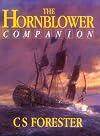
The Hornblower Companion
by C. S. Forester
Horatio Hornblower: Chronological Order (Companions — Companion), Horatio Hornblower (Supplemental Material — Companion)
On This Page
Description
A collection of maps illustrating Hornblower's adventures and a description of how the novels were written.Tags
Recommendations














Member Reviews
I finished off my Hornblower journey with this, an official "companion" to the series written by C. S. Forester himself. I was a little surprised, to be honest, to realize that the term "companion" book, which I primarily associate with big media franchises (e.g., Star Trek: The Next Generation Companion, Star Wars: Tales of the Jedi Companion, Doctor Who: The Television Companion), goes back to the 1960s and to literature.
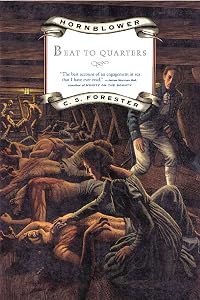
The first half of the book is a series of maps, covering Hornblower's career in chronological order. Some are big picture, such as one of the entire western coast of Central America, chronicling the events of Beat to Quarters. Others zoom in on specific battles, just showing a few nautical miles. These were neat, but show more I ultimately flipped through them pretty quickly. Instead of reading them all at once after finishing the novels, I'd've been better off keeping them by my side while reading the novels, to better help me visualize what was going on. Oh well; if I ever read the series through a third time, I will do that.
The second half is much more meaty, though, a lengthy personal essay by Forester about his history with the Hornblower character, about how he came to write one book, then three, then ten. Very rarely did he set out to do it, so you get a good glimpse into his creative process, how things bubble out of the subconscious and ultimately demand to be written. I tore through it very quickly because I enjoyed it so much. A nice way to tie up my (re)read of these books. show less
The first half of the book is a series of maps, covering Hornblower's career in chronological order. Some are big picture, such as one of the entire western coast of Central America, chronicling the events of Beat to Quarters. Others zoom in on specific battles, just showing a few nautical miles. These were neat, but show more I ultimately flipped through them pretty quickly. Instead of reading them all at once after finishing the novels, I'd've been better off keeping them by my side while reading the novels, to better help me visualize what was going on. Oh well; if I ever read the series through a third time, I will do that.
The second half is much more meaty, though, a lengthy personal essay by Forester about his history with the Hornblower character, about how he came to write one book, then three, then ten. Very rarely did he set out to do it, so you get a good glimpse into his creative process, how things bubble out of the subconscious and ultimately demand to be written. I tore through it very quickly because I enjoyed it so much. A nice way to tie up my (re)read of these books. show less
Aubrey has long since surpassed Hornblower in my affections, and so I put off reading this book for far too long. The commentary accompanying the maps is not terribly useful if you haven't read the books in more than ten years (although I'm sure the maps are a lovely auxiliary to the books as you're reading them), but Forester's memoirs of the process of writing the novels are utterly delightful. I enjoy his description of the way his ideas grow - like barnacles growing upon timbers submerged in a kind of subconscious ooze - and find it very familiar. I recommend this as much as a writing book as anything else.
C.S. Forester, The Hornblower Companion (1964). The first edition I have in front of me has become very collectible and pricey. Fortunately, it has been reprinted in paperback, a used copy of which can be had for a few dollars (or pounds).
This is a wonderful book. No, actually two wonderful books. The subtitle says it all: An Atlas and Personal Commentary on the Writing of the Hornblower Saga, with Illustrations and Maps by Samuel Bryant.
The first part of the book consists of thirty detailed maps covering HH's entire naval career, with a paragraph or two of commentary and analysis. The maps and the margins of their facing pages are adorned with Bryant's exquisite pen-and-ink drawings. He does a masterful job illustrating both ships and show more people. The pleasure of examining these little gems never seems to fail. (I have the privilege to own the original ink drawings of three of the maps -- numbers 17, 22, and 27 -- each with all the drawings that grace the facing page of the book. They also have corrections and annotations in CSF's handwriting.)
Forester modestly entitles the remainder of the book, some 90 pages, Some Personal Notes. Forester opens his mind to us and describes the writing process in real depth, discussing how he gets ideas, how they come together in to books, his writing regimen, and the writing/publishing history of the Hornblower books. Absolutely fascinating. And, I should think, required reading for all contemporary writers of Historic Naval Fiction. This book is a must for both readers and writers of HNF. show less
This is a wonderful book. No, actually two wonderful books. The subtitle says it all: An Atlas and Personal Commentary on the Writing of the Hornblower Saga, with Illustrations and Maps by Samuel Bryant.
The first part of the book consists of thirty detailed maps covering HH's entire naval career, with a paragraph or two of commentary and analysis. The maps and the margins of their facing pages are adorned with Bryant's exquisite pen-and-ink drawings. He does a masterful job illustrating both ships and show more people. The pleasure of examining these little gems never seems to fail. (I have the privilege to own the original ink drawings of three of the maps -- numbers 17, 22, and 27 -- each with all the drawings that grace the facing page of the book. They also have corrections and annotations in CSF's handwriting.)
Forester modestly entitles the remainder of the book, some 90 pages, Some Personal Notes. Forester opens his mind to us and describes the writing process in real depth, discussing how he gets ideas, how they come together in to books, his writing regimen, and the writing/publishing history of the Hornblower books. Absolutely fascinating. And, I should think, required reading for all contemporary writers of Historic Naval Fiction. This book is a must for both readers and writers of HNF. show less
I've been a fan of C. S. Forester's Horatio Hornblower series since pointed to them as a teen by a classmate. They're wonderful yarns about the days of sail focusing on a character akin to Horatio Nelson and the inspiration for Captain Kirk of Star Trek, Bernard Cornwell's Sharpe, Weber's Honor Harrington and more. So I think this should be in every fans collection--particularly those interested in the writing process. In it Forester gives you a peak at such things as the reason Lieutenant Hornblower is told from Lt. Bush's point of view or the origins of tales such as "The Even Chance" in Midshipman Hornblower. And Forester is a warm and engaging presence--not always the case in memoirs were the writer can be inadvertently show more self-revealings in off-putting ways. And I loved the maps. :-) show less
Not quite what I was expecting but entertaining none the less. Gave an insight into how CS Forester went about creating the character of Hornblower but I was craving for more detail. The maps were great to put the stories in context but the text was more about CS Forester than Hornblower. Good to add to your Hornblower collection.
I was lucky enough to find a small paperback at a library book sale! Reading this companion makes me want to go back and read the entire series for the third time! I love looking at the maps to see where each and every battle or encounter took place and I wish I had this book when I first read the books.
I haven't read the personal notes yet, but I'm very much looking forward to it. So far, an excellent companion to a wonderful classic series!
I haven't read the personal notes yet, but I'm very much looking forward to it. So far, an excellent companion to a wonderful classic series!
Due to having the 1974 paperback in my possession, i hope that the original Hardcover had larger maps. They remain clear guides to the areas dealt with, however. A good book within its derivative limits, and is helpful used in conjunction with the novels for the first time reader. worth the $1.95 it cost in those days.
Members
- Recently Added By
Lists

Form line of battle - Best historical naval fiction
15 works; 2 members
Author Information

182+ Works 34,701 Members
Born Cecil Louis Troughton Smith on August 27, 1899, in Cairo, Egypt, where his father was a government official, C. S. Forester grew up mainly in England. He was educated at Dulwich College, studying medicine briefly before decidint to become a writer. Forester moved to the United States before the start of World War II, and lived in Berkeley, show more California, until his death in 1966. Although Forester was a journalist, a novelist and a Hollywood scriptwriter, he is probably best known for his historical fiction, particularly the series of novels that feature Horatio Hornblower. The eleven-book series begins with Mr. Midshipmen Hornblower, in which the seventeen-year old Hornblower joins the British navy in 1793, just as the Napoleonic Wars are about to begin. Hornblower's continuing adventures, as well as his advancement to the highest ranks of the navy, are chronicled in further books, including Beat to Quarters, Flying Colours, Commodore Hornblower, Lord Hornblower, The Happy Return, and A Ship of the Line, for which Forester recived the James Tait Black Memorial Prize in 1939. Several of Forester's novels were made into films, most notably Payment Deferred (his first novel published in 1926), Eagle Squadron, The Commandos (the movie title was The Commandos Strike at Dawn), Captain Horatio Hornblower, Sink the Bismarck!, and The African Queen, starring Katharine Hepburn and Humphrey Bogart. Forester's nonfiction includes The Age of Fighting Sail: The Story of the Naval War of 1812, as well as biographies of Lord Nelson, Napoleon, Josephine, and King Louis XIV. He also wrote an autobiography, Long Before Forty. (Bowker Author Biography) show less
All Editions
Series


Work Relationships
Common Knowledge
- Original publication date
- 1964
- People/Characters
- Horatio Hornblower; C. S. Forester
- Important events
- Age of Sail
- First words
- Perhaps it is significant that there was no need to include the Orient in this map; perhaps it is significant that, except for a single foray into the Pacific, Hornblower's activities were confined, during the thirty years 17... (show all)93 to 1823, to the Atlantic Ocean and its accessory seas, the Baltic, the Mediterranean, and the Caribbean.
- Last words
- (Click to show. Warning: May contain spoilers.)Now I have written it again, with feelings equally strong.
Classifications
Statistics
- Members
- 411
- Popularity
- 75,483
- Reviews
- 12
- Rating
- (3.83)
- Languages
- English, German
- Media
- Paper
- ISBNs
- 7
- ASINs
- 9