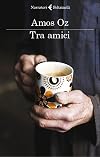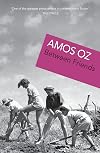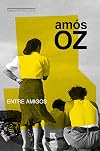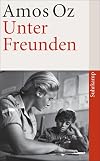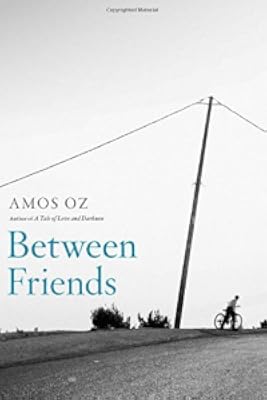
Between Friends
by Amos Oz 
On This Page
Description
""Oz lifts the veil on kibbutz existence without palaver. His pinpoint descriptions are pared to perfection. His people twitch with life." -- Scotsman In Between Friends, Amos Oz returns to the kibbutz of the late 1950s, the time and place where his writing began. These eight interconnected stories, set in the fictitious Kibbutz Yekhat, draw masterly profiles of idealistic men and women enduring personal hardships in the shadow of one of the greatest collective dreams of the twentieth show more century. A devoted father who fails to challenge his daughter's lover, an old friend, a man his own age; an elderly gardener who carries on his shoulders the sorrows of the world; a woman writing poignant letters to her husband's mistress--amid this motley group of people, a man named Martin attempts to teach everyone Esperanto. Each of these stories is a luminous human and literary study; together they offer an eloquent portrait of an idea and of a charged and fascinating epoch. Amos Oz at home. And at his best. Translated from the Hebrew by Sondra Silverston "-- show lessTags
Recommendations








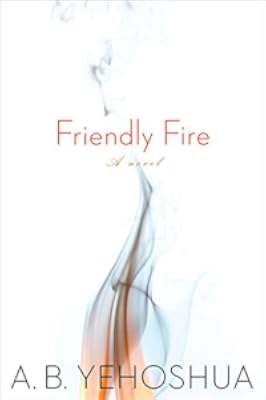


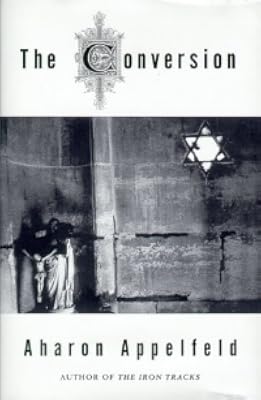

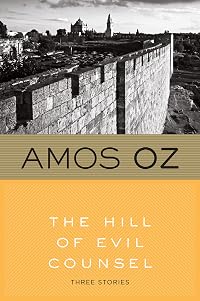
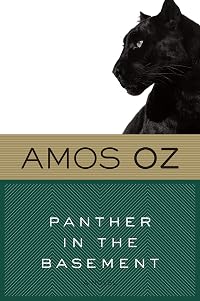




Member Recommendations
Member Reviews
I lived for nearly 18 years on a kibbutz. Amos Oz, who passed a way a few weeks ago, also lived for a number of years on a kibbutz. This collection of stories takes place on a fictional kibbutz, with a cast of characters who pop up in each other's stories and lives. One of the striking things about living on a kibbutz was how one knew people as neighbours, friends, co-workers, lovers. No one was just "the guy who repaired the shoes" or "the woman who worked with the chickens". Everyone was three dimensional, and that is clear in these wonderful stories. It is a sensitive, accurate, and somewhat sad account of what used to be called "the experiment that did not fail". The final chapter, "Esperanto" was especially beautiful, and one has show more to wonder if Oz was deliberatedly comparing the twin dreams of a universal language and that of a more equal and more just society. show less
On our kibbutz, Kibbutz Yekhat, there lived a man, Zvi Provizor, a short fifty-five year old bachelor who had a habit of blinking. He loved to transmit bad news: earthquakes, plane crashes, buildings collapsing on their occupants, fires and floods.
With these opening two sentences I am there. I know exactly who Zvi Provizor is, and I know who we're dealing with in the opening story of Amos Oz's latest collection of short stories. These are a series of eight vignettes set in a fictional collective settlement of late '50s or early '60s Israel. It's a place that the reader will come to know surprisingly well for so slim a volume. The tales are above all about humanity.
I lived on a kibbutz once for several years, and no one of those show more communities is quite like another. That said, there are though certain traits and themes and character types that do tend to crop up in every one I ever encountered or heard about. Oz has captured with an amazing economy of words, and a clarity that is so satisfying, precisely who might live there and what preoccupies them.
In "The King of Norway" our blinking bachelor Zvi and Luna Blank, a widow, fall into a new routine - talking every evening. "Two Women" exchange letters - Osnat the launderess has recently become separated, and Ariella, who works in the chicken coop and heads the culture committee, is the tall, slim divorcée to whom Boaz has run. The title story sees Nahum, a widower of about fifty, approaching the subject of his only remaining child, Edna, having moved in with David Dagan, a teacher and one of the kibbutz founders and leaders - a man his own age.
"Father" is a story which I think is the most autobiographical: Sixteen year old Moshe is a 'boarder' newly arrived at Yekhat after his mother has died, and father and now uncle have both fallen ill. With the greatest poignancy we see Moshe finish work early one day and make the difficult trip to visit his ailing father. To anyone who has read Oz's 'A Tale of Love and Darkness' - this is a glimpse of what might have happened next. I was extremely moved.
"Little Boy" is another heartbreaker: The emotional volatility of the shared children's housing hits dad Roni in a way that doesn't quite affect mum Leah the same way. "At Night" sees Yoav the kibbutz general secretary turn night guard for the week. Nina needs his help with a problem that won't wait until morning. In "Deir Ajloun", Yotam the young adult son of another widow, Henia, receives an invitation from Uncle Arthur to study in Milan. Whatever will the general assembly have to say?
The final story, "Esperanto", is about an older member of the kibbutz - Martin, a holocaust survivor who hid from the Nazis in Holland. Martin is the community shoemaker and is a former Esperanto teacher; he has trouble breathing and is dying. He is an anarchist to the very end:
And once, when two brisk nurses came in to change his pyjamas, he grinned suddenly and told them that death itself was an anarchist. 'Death is not awed by status, possessions, power or titles; we are all equal in its eyes.'
All of the characters we've met are present in this final tale, though they crop up here and there in the other stories - maybe on the path, or making a speech in a meeting - just as they do on any kibbutz. Amos Oz has written a first class and moving collection of interwoven stories. The final mosaic is a piece of art to behold. I had to pace myself to read this book as slowly as I could, I wanted to savour its quality for as long as possible. (Perhaps I should have just torn through it and reread it immediately?) Five stars and highly recommended. show less
With these opening two sentences I am there. I know exactly who Zvi Provizor is, and I know who we're dealing with in the opening story of Amos Oz's latest collection of short stories. These are a series of eight vignettes set in a fictional collective settlement of late '50s or early '60s Israel. It's a place that the reader will come to know surprisingly well for so slim a volume. The tales are above all about humanity.
I lived on a kibbutz once for several years, and no one of those show more communities is quite like another. That said, there are though certain traits and themes and character types that do tend to crop up in every one I ever encountered or heard about. Oz has captured with an amazing economy of words, and a clarity that is so satisfying, precisely who might live there and what preoccupies them.
In "The King of Norway" our blinking bachelor Zvi and Luna Blank, a widow, fall into a new routine - talking every evening. "Two Women" exchange letters - Osnat the launderess has recently become separated, and Ariella, who works in the chicken coop and heads the culture committee, is the tall, slim divorcée to whom Boaz has run. The title story sees Nahum, a widower of about fifty, approaching the subject of his only remaining child, Edna, having moved in with David Dagan, a teacher and one of the kibbutz founders and leaders - a man his own age.
"Father" is a story which I think is the most autobiographical: Sixteen year old Moshe is a 'boarder' newly arrived at Yekhat after his mother has died, and father and now uncle have both fallen ill. With the greatest poignancy we see Moshe finish work early one day and make the difficult trip to visit his ailing father. To anyone who has read Oz's 'A Tale of Love and Darkness' - this is a glimpse of what might have happened next. I was extremely moved.
"Little Boy" is another heartbreaker: The emotional volatility of the shared children's housing hits dad Roni in a way that doesn't quite affect mum Leah the same way. "At Night" sees Yoav the kibbutz general secretary turn night guard for the week. Nina needs his help with a problem that won't wait until morning. In "Deir Ajloun", Yotam the young adult son of another widow, Henia, receives an invitation from Uncle Arthur to study in Milan. Whatever will the general assembly have to say?
The final story, "Esperanto", is about an older member of the kibbutz - Martin, a holocaust survivor who hid from the Nazis in Holland. Martin is the community shoemaker and is a former Esperanto teacher; he has trouble breathing and is dying. He is an anarchist to the very end:
And once, when two brisk nurses came in to change his pyjamas, he grinned suddenly and told them that death itself was an anarchist. 'Death is not awed by status, possessions, power or titles; we are all equal in its eyes.'
All of the characters we've met are present in this final tale, though they crop up here and there in the other stories - maybe on the path, or making a speech in a meeting - just as they do on any kibbutz. Amos Oz has written a first class and moving collection of interwoven stories. The final mosaic is a piece of art to behold. I had to pace myself to read this book as slowly as I could, I wanted to savour its quality for as long as possible. (Perhaps I should have just torn through it and reread it immediately?) Five stars and highly recommended. show less
Bij ieder verhaal wordt het beeld van het leven in de kibboets scherper. Een boeiende manier van samenleven waar individu en groep soms lijnrecht tegenover elkaar staan. Heel mooi geschreven, met stof tot nadenken. Of wat dacht je van deze: een mens is maar een mens, en ook dat maar heel af en toe.
Een aanrader.
Een aanrader.
Oz is an award-winning Israeli author of both fiction and non-fiction. I've been reading about Israel and Palestine this year and knew this would expand my knowledge further. It is also a book of short stories, something I have never read and wanted to try. The very first story, about a cranky old man who constantly complains about the injustices in the world, touched me deeply, but then I began to drift. I kept thinking I needed an intense thriller type book to hold my attention away from the current sadness in life that I don't want to think about such as my failing mom. But I kept coming back to this book and these stories and found the experience to be similar to my annual trip to the desert. When I go to the desert it takes me show more while to settle in. Everything is the same color. But as I walk daily through the desert the subtleties begin to sink in and I see the multitude of colors, plants, blossoms, skittering critters and footprints. Reading Oz was like that. I began to see the subtleties in the people living in this kibbutz. I saw their strengths and their weaknesses and the way they complemented the whole person. Then I began to see how each person complemented the others living in the kibbutz. This then worked its way into my perception of my own life and it too began to look beautiful. show less
Beautiful prose and characterization, but the stories I read (about 1/2 of the book) all seemed unfinished and lacked resolution, and I felt dissatisfied with them in this regard. Paused at page 83, “Little Boy”
È un romanzo piacevole a leggersi, forse mi è piaciuto più per lo stile che per il contenuto. Fornisce un quadro della vita nei kibbutz negli anni 50, piccoli esperimenti di comunismo in senso letterale. La narrazione è delicata, i personaggi sono gentili e umani anche quando fanno cose riprovevoli. Mi è piaciuto, sì, ma non mi ha entusiasmata.
Members
- Recently Added By
Published Reviews
Amos Oz uses beautiful prose to build an evocative portrait – the hopes, dreams, successes and failures – of life on an Israeli kibbutz in the Fifties. Kibbutz life is based on principles of economic and social equality. As Amos Oz demonstrates in this engaging collection of eight stories, translated from Hebrew by Sondra Silverston, communal living can be lonely and those that strive for show more equality often end up compromising on something else. Oz and his family lived on a kibbutz for many years and he has previously used his experiences in his fiction. In Between Friends he returns to the 1950s when the Holocaust is still fresh in people's minds. show less
added by avatiakh
Lists

Top Five Books of 2013
1,562 works; 721 members

Middle East Fiction
179 works; 15 members

Best Israeli Reading
55 works; 12 members
Author Information

119+ Works 12,265 Members
Amos Oz was born Amos Klausner in Jerusalem on May 4, 1939. As a young teenager, he moved to Kibbutz Hulda, where he completed his secondary education and worked on a farm. After he completed mandatory military service in 1961, the kibbutz assembly sent him to study at the Hebrew University of Jerusalem, where he received a B.A. in philosophy and show more literature. After graduation, he moved back to Hulda, where he wrote, did farm work, did guard and dining-room duty, and taught in the kibbutz high school. He fought in the 1967 and 1973 wars and spent a year as a visiting fellow at Oxford University. He wrote novels, collections of short fiction, works of nonfiction, and essays. His novels included My Michael, Black Box, and The Gospel According to Judas. His memoir, A Tale of Love and Darkness, was adapted into a movie in 2016. His last book, Dear Zealot, was made up of three essays on the theme of fanaticism. He was an advocate for peace and believed in a two-state solution, meaning the establishment of a Palestinian state alongside Israel. In the late 1970s, he helped found Peace Now. He received several awards including the Goethe Prize, the French Knight's Cross of the Légion D'Honneur, and the Israel Prize. He died after a short battle with cancer on December 28, 2018 at the age of 79. (Bowker Author Biography) show less
Amos Oz is a LibraryThing Author, an author who lists their personal library on LibraryThing.
Some Editions
Awards and Honors
Series
Belongs to Publisher Series
Gallimard, Folio (5812)
Common Knowledge
- Canonical title
- Between Friends
- Original title
- Bein Haverim; בין חברים
- Original publication date
- 2012
- First words*
- Der König von Norwegen: Bei uns im Kibbuz Jikhat gab es einen Junggesellen von ungefähr fünfundfünfzig Jahren, Zvi Provisor.
Zwei Frauen: Früh am Morgen, noch vor Sonnenuntergang, hört sie die Tauben vor ihrem offenen Fenster.
Unter Freunden: Gegen Morgen fiel der erste Regen des Winters auf die Häuser des Kibbuz, auf die Felder und auf die Obstplantagen.
Vater: Mosche Jaschar, ein sechzehnjähriger Junge, dünn, gross, traurig und bebrillt, wandte sich in der Zehnuhrpause an den Lehrer David Dagan und bat um die Erlaubnis, nach dem Unterricht und der Arbeit wegfahren zu dürf... (show all)en, um seinen Vater zu besuchen.
Ein kleiner Junge: Lea, seine Frau, war für zehn Tage zu einer Fortbildung für Erzieherinnen im Seminar der Kibbuzbewegung gefahren.
In der Nacht: Im Februar war Joav Karni an der Reihe, für eine Woche den nächtlichen Wachdienst zu übernehmen, von Samstagabend bis Freitagabend.
Deir Adschlun: Es war ein heisser, drückender Wüstenwindtag.
Esperanto: Osnat, seine Nachbarin, besuchte Martin van den Bergh gegen Abend. - Last words*
- (Click to show. Warning: May contain spoilers.)Der König von Norwegen: Er hatte Krebs. In der Leber.
(Click to show. Warning: May contain spoilers.)Zwei Frauen: Die Tauben wecken sie.
(Click to show. Warning: May contain spoilers.)Unter Freunden: Mittlerweile war es dunkel geworden.
(Click to show. Warning: May contain spoilers.)Vater: Ihm schien, als hörte er aus der Richtung des Krankenhauses abgerissenes Schluchzen, aber er war sich nicht sicher. Regungslos sass er da und lauschte.
(Click to show. Warning: May contain spoilers.)Ein kleiner Junge: Dann schlief er ein.
(Click to show. Warning: May contain spoilers.)In der Nacht: Vielleicht würde ihm morgen endlich etwas klarwerden.
(Click to show. Warning: May contain spoilers.)Deir Adschlun: Er stand auf, wischte sie weg und wandte sich zum Gehen, obwohl er eigentlich lieber als alles andere sitzen geblieben wäre, ohne sich zu rühren und ohne zu denken, und gewartet hätte, hier auf dem Rand des zugeschütteten Brunnens, inmitten der Ruinen von Deir Adschlun.
(Click to show. Warning: May contain spoilers.)Esperanto: Auf einmal empfand sie den Wunsch, ein paar ruhige Wort auf Esperanto zu sagen, aber sie hatte ja noch nichts lernen können und wusste auch nicht, was sie sagen sollte. - Original language*
- Hebräisch
*Some information comes from Common Knowledge in other languages. Click "Edit" for more information.
Classifications
- Genres
- Fiction and Literature, General Fiction
- DDC/MDS
- 892.436 — Literature & rhetoric Asian Literature Afro-Asiatic literatures Jewish, Israeli, and Hebrew Hebrew fiction 1947–2000
- LCC
- PJ5054 .O9 .B4613 — Language and Literature Oriental languages and literatures Oriental philology and literature Hebrew Literature Individual authors and works
- BISAC
Statistics
- Members
- 289
- Popularity
- 110,979
- Reviews
- 10
- Rating
- (3.87)
- Languages
- 14 — Czech, Danish, Dutch, English, French, German, Hebrew, Hungarian, Italian, Norwegian (Bokmål), Polish, Portuguese, Spanish, Swedish
- Media
- Paper, Audiobook, Ebook
- ISBNs
- 36
- ASINs
- 8