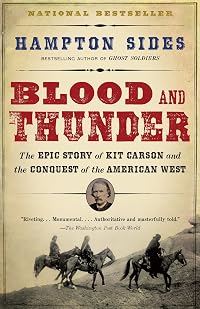
Blood and Thunder: The Epic Story of Kit Carson and the Conquest of the American West
by Hampton Sides
On This Page
Description
Examines America's westward expansion, describing the forcible subjugation of Native American tribes, including the fierce battles against the Navajo which ended with a brutal siege at Canyon de Chelly and the "Long Walk" migration.Tags
Recommendations
















Member Reviews
One of the best narrative histories I’ve read in recent years, Hampton Sides’ impressive work cuts through the legends and myths that have developed around Kit Carson, provides a balanced view of his personality and, in the process, draws a vivid picture of what life was like in the 1820’s – 1860’s in western America. Carson became famous during his time, but shunned celebrity. He was unschooled but spoke many languages. He was seen both as a hero and villain, depending on perspective. This book explores his complex personality, fierce loyalty, quiet demeanor, and decisive actions. Almost like an 1800’s version of Forrest Gump, Carson had a knack for being at the center of significant historical events. Sides focuses on show more Carson’s remarkable life as a focal point and common thread in conveying the often-brutal history of the American West, covering the panoramic drama that shaped the history of the region.
I gained an appreciation for the personalities involved – not only Kit Carson, but also John C. Fremont, James K. Polk, Stephen Watts Kearny, Edward Canby, Thomas Hart Benton, Jessie Benton Fremont, James Henry Carleton, Navajo leaders Narbona, Manuelito, and Barboncito, and a host of others. This book covers Carson’s many roles as a trapper, scout, explorer, soldier, and family man. It never strays too far from his life in relating historic events. It covers a vast swath of history: the expansion of the United States into current-day California, Oregon, Nevada, Arizona, Utah, Colorado, and New Mexico, the Mexican-American War, the American Civil War battles in New Mexico, and the internecine clashes with the Navajo and other tribes. A significant portion is devoted to the encroachment of white civilization on the aboriginal people, as well as related salient issues such as reservations, relocation, and attempts to change their customs and ways of life.
I particularly enjoyed the author’s writing style, which flows artfully and elegantly. His descriptions of the terrain are stunning. He has a gift for telling a compelling story while imparting historic facts. The structure of this book is like a dog herding sheep, shifting among different perspectives, but keeping the multiple storylines moving along. I highly recommend this book to anyone interested in gaining a better understanding of American western expansion and corresponding impact on its people, land, and culture. show less
I gained an appreciation for the personalities involved – not only Kit Carson, but also John C. Fremont, James K. Polk, Stephen Watts Kearny, Edward Canby, Thomas Hart Benton, Jessie Benton Fremont, James Henry Carleton, Navajo leaders Narbona, Manuelito, and Barboncito, and a host of others. This book covers Carson’s many roles as a trapper, scout, explorer, soldier, and family man. It never strays too far from his life in relating historic events. It covers a vast swath of history: the expansion of the United States into current-day California, Oregon, Nevada, Arizona, Utah, Colorado, and New Mexico, the Mexican-American War, the American Civil War battles in New Mexico, and the internecine clashes with the Navajo and other tribes. A significant portion is devoted to the encroachment of white civilization on the aboriginal people, as well as related salient issues such as reservations, relocation, and attempts to change their customs and ways of life.
I particularly enjoyed the author’s writing style, which flows artfully and elegantly. His descriptions of the terrain are stunning. He has a gift for telling a compelling story while imparting historic facts. The structure of this book is like a dog herding sheep, shifting among different perspectives, but keeping the multiple storylines moving along. I highly recommend this book to anyone interested in gaining a better understanding of American western expansion and corresponding impact on its people, land, and culture. show less
One of the best narrative histories I’ve read in recent years, Hampton Sides’ impressive work cuts through the legends and myths that have developed around Kit Carson, provides a balanced view of his personality and, in the process, draws a vivid picture of what life was like in the 1820’s – 1860’s in western America. Carson became famous during his time, but shunned celebrity. He was unschooled but spoke many languages. He was seen both as a hero and villain, depending on perspective. This book explores his complex personality, fierce loyalty, quiet demeanor, and decisive actions. Almost like an 1800’s version of Forrest Gump, Carson had a knack for being at the center of significant historical events. Sides focuses on show more Carson’s remarkable life as a focal point and common thread in conveying the often-brutal history of the American West, covering the panoramic drama that shaped the history of the region.
I gained an appreciation for the personalities involved – not only Kit Carson, but also John C. Fremont, James K. Polk, Stephen Watts Kearny, Edward Canby, Thomas Hart Benton, Jessie Benton Fremont, James Henry Carleton, Navajo leaders Narbona, Manuelito, and Barboncito, and a host of others. This book covers Carson’s many roles as a trapper, scout, explorer, soldier, and family man. It never strays too far from his life in relating historic events. It covers a vast swath of history: the expansion of the United States into current-day California, Oregon, Nevada, Arizona, Utah, Colorado, and New Mexico, the Mexican-American War, the American Civil War battles in New Mexico, and the internecine clashes with the Navajo and other tribes. A significant portion is devoted to the encroachment of white civilization on the aboriginal people, as well as related salient issues such as reservations, relocation, and attempts to change their customs and ways of life.
I particularly enjoyed the author’s writing style, which flows artfully and elegantly. His descriptions of the terrain are stunning. He has a gift for telling a compelling story while imparting historic facts. The structure of this book is like a dog herding sheep, shifting among different perspectives, but keeping the multiple storylines moving along. I highly recommend this book to anyone interested in gaining a better understanding of American western expansion and corresponding impact on its people, land, and culture. show less
I gained an appreciation for the personalities involved – not only Kit Carson, but also John C. Fremont, James K. Polk, Stephen Watts Kearny, Edward Canby, Thomas Hart Benton, Jessie Benton Fremont, James Henry Carleton, Navajo leaders Narbona, Manuelito, and Barboncito, and a host of others. This book covers Carson’s many roles as a trapper, scout, explorer, soldier, and family man. It never strays too far from his life in relating historic events. It covers a vast swath of history: the expansion of the United States into current-day California, Oregon, Nevada, Arizona, Utah, Colorado, and New Mexico, the Mexican-American War, the American Civil War battles in New Mexico, and the internecine clashes with the Navajo and other tribes. A significant portion is devoted to the encroachment of white civilization on the aboriginal people, as well as related salient issues such as reservations, relocation, and attempts to change their customs and ways of life.
I particularly enjoyed the author’s writing style, which flows artfully and elegantly. His descriptions of the terrain are stunning. He has a gift for telling a compelling story while imparting historic facts. The structure of this book is like a dog herding sheep, shifting among different perspectives, but keeping the multiple storylines moving along. I highly recommend this book to anyone interested in gaining a better understanding of American western expansion and corresponding impact on its people, land, and culture. show less
Review by JAB:
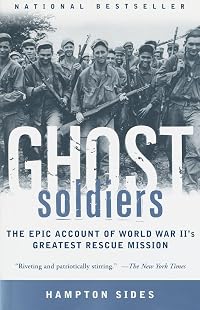
Hampton Sides, the author of Ghost Soldiers, has written another real life page turner. The story follows the United States as it pursues Manifest Destiny through conquest of northern Mexico, today's California, Arizona, and New Mexico.
Most of the action takes place in New Mexico, starting with John C. Fremont's exploratory trip from Santa Fe to California, guided by the soon to become legendary Kit Carson. Fremont's yellow prose account of the trip stimulated much interest in the territory as well as in Carson. Presently President James K. Polk provoked the Mexican War, and the USA added the whole southwest to its territory.
The Catholic New Mexicans and the Indians still had to be assimilated, which occurred in due show more course with the help of the cavalry. The New Mexicans proved to be easier to assimilate. The Indians, especially the Navajo, didn't like submission to the government in Washington.
The Navajo saga is a sad one. They had been in a kind of cold war with the Hispanics of New Mexico, raiding each other's live stock and stealing children for about 2 centuries before the Americans came. To win the loyalty of the Hispanics [and maybe find gold], the U.S. Army waged a war of extermination against the Navajo until they finally submitted and made the "long walk" to a reservation south of their traditional lands.
Kit Carson plays a significant part in most of the major events of the period. Although illiterate, he was uniformly admired by both Indians and Whites for his courage, honesty, fair dealing [except when at war], and resourcefulness. His final two adventures were leading a regiment in the American Civil War and leading the cavalry against the Navajo.
An interesting read for us because of all the quality time we have spent in northern New Mexico and Arizona.
(JAB)
Review by JAF:
This "epic of the American West" (as the book is aptly subtitled) is mostly the biography of Kit Carson, with a bit of the genocide of Native Americans on the side. It is a tale of bravery and pain. The author summarizes the effects of "Manifest Destiny" at the onset of his story:
"The trappers murdered Indians in countless kill-or-be-killed scenarios, and some made a practice of hammering brass tacks into the stocks of their rifles for every native dispatched. But their greater slaughter was unwitting: As the forerunners of Western civilization, creeping up the river valleys and across the mountain passes, the trappers brought smallpox and typhoid, they brought guns and whiskey and venereal disease, they brought the puzzlement of money and the gleam of steel."
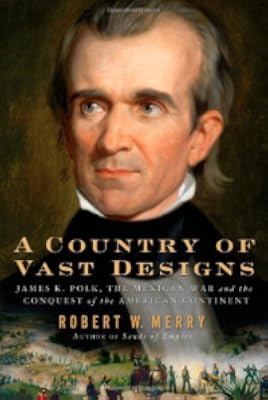
An interesting aside in the book calls attention to the underappreciated presidency of James K. Polk. The author asserts that "Despite his insufferable personality, he [Polk] was possibly the most effective president in American history - and likely the least corrupt. He outmaneuvered his critics. He established an independent treasury. He confronted the British and conquered Mexico. He seized the western third of the North American continent. By the time he left office, the American land mass would increase by 522 million acres. Four years was all he needed."
Sides writes that there was a great deal of pressure for the Native Americans to be herded into reservations. Some acted from racism and greed, but some, like Kit Carson, wanted to preserve and protect them from white settlers. There were some horrible massacres, and some insensitive efforts at relocation. (The effort to turn the Indians into farmers at Bosque Redondo was more than insenstive and resulted in three thousand Navajo deaths.) Carson was enlisted in a slash and burn strategy to starve the Native Americans into submission. He was appalled, however, at the techniques of some of the soldiers.
The Navajos were eventually beaten, and driven to sign treaties they didn't understand so they could survive on land that was not their own. But "progress" was inexorable, and the western lands that once held the promise of fur and gold, are, ironically, now full of fur and gold. And golf and country clubs. And Native Americans, on reservations, suffering from diabetes, poverty, short life spans, unemployment, and despair.
(JAF) show less
Hampton Sides, the author of Ghost Soldiers, has written another real life page turner. The story follows the United States as it pursues Manifest Destiny through conquest of northern Mexico, today's California, Arizona, and New Mexico.
Most of the action takes place in New Mexico, starting with John C. Fremont's exploratory trip from Santa Fe to California, guided by the soon to become legendary Kit Carson. Fremont's yellow prose account of the trip stimulated much interest in the territory as well as in Carson. Presently President James K. Polk provoked the Mexican War, and the USA added the whole southwest to its territory.
The Catholic New Mexicans and the Indians still had to be assimilated, which occurred in due show more course with the help of the cavalry. The New Mexicans proved to be easier to assimilate. The Indians, especially the Navajo, didn't like submission to the government in Washington.
The Navajo saga is a sad one. They had been in a kind of cold war with the Hispanics of New Mexico, raiding each other's live stock and stealing children for about 2 centuries before the Americans came. To win the loyalty of the Hispanics [and maybe find gold], the U.S. Army waged a war of extermination against the Navajo until they finally submitted and made the "long walk" to a reservation south of their traditional lands.
Kit Carson plays a significant part in most of the major events of the period. Although illiterate, he was uniformly admired by both Indians and Whites for his courage, honesty, fair dealing [except when at war], and resourcefulness. His final two adventures were leading a regiment in the American Civil War and leading the cavalry against the Navajo.
An interesting read for us because of all the quality time we have spent in northern New Mexico and Arizona.
(JAB)
Review by JAF:
This "epic of the American West" (as the book is aptly subtitled) is mostly the biography of Kit Carson, with a bit of the genocide of Native Americans on the side. It is a tale of bravery and pain. The author summarizes the effects of "Manifest Destiny" at the onset of his story:
"The trappers murdered Indians in countless kill-or-be-killed scenarios, and some made a practice of hammering brass tacks into the stocks of their rifles for every native dispatched. But their greater slaughter was unwitting: As the forerunners of Western civilization, creeping up the river valleys and across the mountain passes, the trappers brought smallpox and typhoid, they brought guns and whiskey and venereal disease, they brought the puzzlement of money and the gleam of steel."
An interesting aside in the book calls attention to the underappreciated presidency of James K. Polk. The author asserts that "Despite his insufferable personality, he [Polk] was possibly the most effective president in American history - and likely the least corrupt. He outmaneuvered his critics. He established an independent treasury. He confronted the British and conquered Mexico. He seized the western third of the North American continent. By the time he left office, the American land mass would increase by 522 million acres. Four years was all he needed."
Sides writes that there was a great deal of pressure for the Native Americans to be herded into reservations. Some acted from racism and greed, but some, like Kit Carson, wanted to preserve and protect them from white settlers. There were some horrible massacres, and some insensitive efforts at relocation. (The effort to turn the Indians into farmers at Bosque Redondo was more than insenstive and resulted in three thousand Navajo deaths.) Carson was enlisted in a slash and burn strategy to starve the Native Americans into submission. He was appalled, however, at the techniques of some of the soldiers.
The Navajos were eventually beaten, and driven to sign treaties they didn't understand so they could survive on land that was not their own. But "progress" was inexorable, and the western lands that once held the promise of fur and gold, are, ironically, now full of fur and gold. And golf and country clubs. And Native Americans, on reservations, suffering from diabetes, poverty, short life spans, unemployment, and despair.
(JAF) show less
Blood and Thunder by Hampton Sides is actually comprised of two main, concurrent narratives. One is a biography of the near-mythical American West pioneer Christopher "Kit" Carson. The other, in severe contrast, is the U.S. government-instigated decline of the Navajo Indian tribe. There's an additional, less obvious narrative in the form of a place instead of a person, and it's the focal point of the entire book: The territory of New Mexico.
Kit Carson was barely a young man of 16 when he bid goodbye to his apprenticeship life in Franklin, Missouri and "jumped off" along the Santa Fe Trail, westward bound toward adventure. This was in the mid 1820's. Once settled in Taos, New Mexico, at the southern end of the Sangre de Cristo Mountains, show more he learned the fur trapping trade from a local explorer, and consequently became fluent in the languages of Spanish, Navajo, Apache, Cheyenne, Arapaho, Paiute, Shoshone, and Ute. He achieved this feat despite being illiterate. For the next several decades, Carson's work would send him back and forth all across the American continent though he would always think of Taos as his home. From California to Washington, D.C., he had a knack for being in the right place at the right time in some of the country's most noteworthy events of the westward expansion era. As word spread, the legend of Kit Carson grew.
One anecdote from the book, a favorite of mine on Carson's burgeoning fame, tells of a chance encounter with a traveler upon the Oregon Trail. "I say, stranger, are you Kit Carson?" the man asked. Carson responded yes, but the man remained doubtful given the stories he had heard back home. "Look 'ere, you ain't the kind of Kit Carson I'm looking for."
My interest in American history is a recent one. Back in school the subject bored me into a stupor—by far my least favorite. It took a little traveling and a lot of growing up before my attitude changed. The key moment was I believe when I learned that our collective notion of The Ol' West is largely made up. It's a mythology born out of our love for stories positioned at the intersection of the wild frontier and the progress of man. I love a good western, but armed with this new discovery I now desire to understand real history, to separate fable from fact. Blood and Thunder is exactly this kind of book. show less
Kit Carson was barely a young man of 16 when he bid goodbye to his apprenticeship life in Franklin, Missouri and "jumped off" along the Santa Fe Trail, westward bound toward adventure. This was in the mid 1820's. Once settled in Taos, New Mexico, at the southern end of the Sangre de Cristo Mountains, show more he learned the fur trapping trade from a local explorer, and consequently became fluent in the languages of Spanish, Navajo, Apache, Cheyenne, Arapaho, Paiute, Shoshone, and Ute. He achieved this feat despite being illiterate. For the next several decades, Carson's work would send him back and forth all across the American continent though he would always think of Taos as his home. From California to Washington, D.C., he had a knack for being in the right place at the right time in some of the country's most noteworthy events of the westward expansion era. As word spread, the legend of Kit Carson grew.
One anecdote from the book, a favorite of mine on Carson's burgeoning fame, tells of a chance encounter with a traveler upon the Oregon Trail. "I say, stranger, are you Kit Carson?" the man asked. Carson responded yes, but the man remained doubtful given the stories he had heard back home. "Look 'ere, you ain't the kind of Kit Carson I'm looking for."
My interest in American history is a recent one. Back in school the subject bored me into a stupor—by far my least favorite. It took a little traveling and a lot of growing up before my attitude changed. The key moment was I believe when I learned that our collective notion of The Ol' West is largely made up. It's a mythology born out of our love for stories positioned at the intersection of the wild frontier and the progress of man. I love a good western, but armed with this new discovery I now desire to understand real history, to separate fable from fact. Blood and Thunder is exactly this kind of book. show less
This is a very well researched history of the American Southwest in the mid 19th century, focusing primarily on conflict between the Mexicans, Americans, and the native Americans. The central figure is "Kit" Carson. He is portrayed as a simple man of extraordinary skill that was thrust into an amazing life of involvement in many key aspects of the history of the region. Carson is also shown to have been a very complex individual capable of extreme violence even sadism while maintaining respect and admiration for his "opponents". To me, the book does not portray him as a hero - rather as an important cog in the American expansionist "machine" that ultimately almost exterminated the Native Americans. By the end of his life he seemed to show more understand the impact of his life and actions on the tribes - with some regret. Unfortunately, too little - too late. show less
22. Blood and Thunder : An Epic of the American West (Audio)
by Hampton Sides, read by Don Leslie (2006, 624 pages in paper format, Listened Apr 1-19)
An excellent work of history, with a structure that gives it something of an accumulative affect. The first several chapters are not that striking and left me wondering where this was going and what the subtitle, "An Epic of the American West" meant, and why the book was spending so much time with Kit Carson and so little time with all the other stuff going on in the "American west" at that time.
The book is about Kit Carson, and also everything happening around him, especially in New Mexico, including fascinating and rewarding extensive sections on the Navajos. Carson's life covers show more several eras in the rapidly changing 19th-century Spanish-to-Mexican-to-American (as in USA) West. Carson was mountain man, and like them all, he had outlandish traits. But Carson out-lived the mountain man era; yet, unlike all those other characters, Carson's traits translated very well into the what was valuable on the US frontier. The brutal killer and survivor had some strong moral aspects to him, along with extensive survival and tracking skills, intimate knowledge of several native cultures and languages, working knowledge of Spanish and French, an always on edge always productive nature and an almost always shockingly reasonable, even under fire, pain and stress, mind. Carson also could not read or write.
He stumbled into a becoming John C. Freemont's guide in all his successful western exploration trips - and really Freemont was completely dependent on Carson and maybe they should have been known as Carson trips. But Freemont's accounts are what first made Carson famous. After Freemont, Carson stumbled into becoming part of the US military, as guide through the New Mexico/Arizona/California desert during the Mexican America war, leading Spanish-speaking troops on the strange far western front during the Civil War, and finally as the main (but reluctant) man in taking down the Navajo Indians.
And this is where the book gets so interesting. I had no idea the Navajo were so brutal or so unstoppable. The Spanish towns existed barely, cowering in fear and at the mercy of the Navajos for literally centuries. Losing people and stock and horses was the norm, and so was owning Navajo slaves, a policy which outlived the Civil War. But, wow, what wonderful brutes these Navajos were, ruling the desert, keeping everyone out of their territory, maintaining a unique native culture unlike any around them and maintaining a language shared only by native tribes in far northern Canada (and the Navajos have a mythology of moving south). I say brutes, because that is the only way to characterize the Navajo warriors, whose life was one of raiding and killing. But that was only a small part of their culture. Anyway, they are far more interesting than Carson, even as his best, and, of course, they are tragic. Like all tribes, the Navajos, dominating their world c.1800, were dying on reservations by about 1870.
Recommended for anyone with Native American interests, or wanting to better understand the history of New Mexico.
2014
https://www.librarything.com/topic/172769#4665530 show less
An excellent work of history, with a structure that gives it something of an accumulative affect. The first several chapters are not that striking and left me wondering where this was going and what the subtitle, "An Epic of the American West" meant, and why the book was spending so much time with Kit Carson and so little time with all the other stuff going on in the "American west" at that time.
The book is about Kit Carson, and also everything happening around him, especially in New Mexico, including fascinating and rewarding extensive sections on the Navajos. Carson's life covers show more several eras in the rapidly changing 19th-century Spanish-to-Mexican-to-American (as in USA) West. Carson was mountain man, and like them all, he had outlandish traits. But Carson out-lived the mountain man era; yet, unlike all those other characters, Carson's traits translated very well into the what was valuable on the US frontier. The brutal killer and survivor had some strong moral aspects to him, along with extensive survival and tracking skills, intimate knowledge of several native cultures and languages, working knowledge of Spanish and French, an always on edge always productive nature and an almost always shockingly reasonable, even under fire, pain and stress, mind. Carson also could not read or write.
He stumbled into a becoming John C. Freemont's guide in all his successful western exploration trips - and really Freemont was completely dependent on Carson and maybe they should have been known as Carson trips. But Freemont's accounts are what first made Carson famous. After Freemont, Carson stumbled into becoming part of the US military, as guide through the New Mexico/Arizona/California desert during the Mexican America war, leading Spanish-speaking troops on the strange far western front during the Civil War, and finally as the main (but reluctant) man in taking down the Navajo Indians.
And this is where the book gets so interesting. I had no idea the Navajo were so brutal or so unstoppable. The Spanish towns existed barely, cowering in fear and at the mercy of the Navajos for literally centuries. Losing people and stock and horses was the norm, and so was owning Navajo slaves, a policy which outlived the Civil War. But, wow, what wonderful brutes these Navajos were, ruling the desert, keeping everyone out of their territory, maintaining a unique native culture unlike any around them and maintaining a language shared only by native tribes in far northern Canada (and the Navajos have a mythology of moving south). I say brutes, because that is the only way to characterize the Navajo warriors, whose life was one of raiding and killing. But that was only a small part of their culture. Anyway, they are far more interesting than Carson, even as his best, and, of course, they are tragic. Like all tribes, the Navajos, dominating their world c.1800, were dying on reservations by about 1870.
Recommended for anyone with Native American interests, or wanting to better understand the history of New Mexico.
2014
https://www.librarything.com/topic/172769#4665530 show less
Lots of adventure stories from the 1840s-1860s mostly in New Mexico. Kit Carson is the protagonist but there are many many others, if you can keep track. Gives due attention to Indian points of view, as well as Spanish and Mexican. There's a sense of rapid change, one period ending and another beginning. Ultimately a very sad story, and one that didn't have to be. Compare in Asia where the Soviets destroyed the nomadic horse people of Kazakhstan but in Mongolia they still exist without interruption. The book is wide ranging and a Western true-stories greatest hits tamed into a readable narrative with Kit Carson at the center.
Members
- Recently Added By
Lists

Top Five Books of 2015
811 works; 241 members

Books Read in 2013
1,630 works; 51 members

Must-Read Books About the Southwest
98 works; 2 members
Author Information

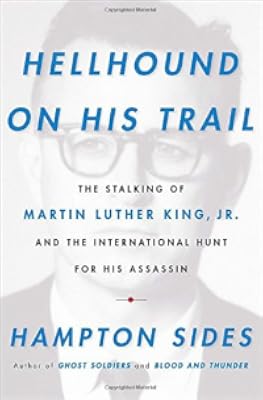
Hampton Sides, contributing editor of "Outside" & editor of "The Wild File," is also the author of "Ghost Soldiers". He lives in Santa Fe, New Mexico. (Publisher Provided) Hampton Sides received a BA in history from Yale University. He is editor-at-large for Outside Magazine and has also written for National Geographic, The New Yorker, Esquire, show more Preservation, and Men's Journal. His magazine work has been nominated twice for National Magazine Awards for feature writing. He is the author of several books including Ghost Soldiers, Blood and Thunder, Hellhound on His Trail, and In the Kingdom of Ice. (Bowker Author Biography) show less
Some Editions
Awards and Honors
Awards
Distinctions
Common Knowledge
- Original publication date
- 2006
- People/Characters
- Kit Carson; Brigadier General James Henry Carleton; Stephen Watts Kearny (General); John C. Fremont; James K. Polk
- Important places
- Arizona, USA; New Mexico, USA; Missouri, USA; Canyon de Chelly, Arizona, USA; California, USA
- Important events
- Mexican-American War (1846 | 1848)
- Epigraph
- I follow the scent of falling rain
And head for the place where it is darkest
I follow the lightning
And draw near to the place where it strikes
-Navajo Chant - Dedication
- Anne
- First words
- One morning in mid-August 1846, in the cool hours before dawn, the New Mexican villagers of Las Vegas slumbered anxiously.
Classifications
- Genres
- History, General Nonfiction, Nonfiction, Biography & Memoir
- DDC/MDS
- 978.02 — History & geography History of North America Western United States 19th Century
- LCC
- F591 .S54 — Local History of the United States, Canada and Latin America United States local history The West. Trans-Mississippi Region. Great Plains
- BISAC
Statistics
- Members
- 2,212
- Popularity
- 9,146
- Reviews
- 47
- Rating
- (4.15)
- Languages
- English, French, Polish
- Media
- Paper, Audiobook, Ebook
- ISBNs
- 15
- UPCs
- 1
- ASINs
- 10