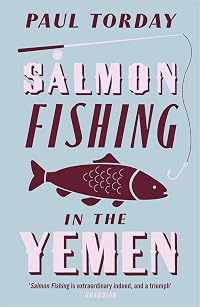
Salmon Fishing in the Yemen
by Paul Torday
On This Page
Description
This is the story of Dr Alfred Jones, a fisheries scientist - for whom diary-notable events include the acquisition of a new electric toothbrush and getting his article on caddis fly larvae published in 'Trout and Salmon' - who finds himself reluctantly involved in a project to bring salmon fishing to the Highlands of the Yemen - a project that will change his life, and the course of British political history forever. With a wickedly wonderful cast of characters - including a visionary show more Sheikh, a weasely spin doctor, Fred's devilish wife and a few thousand transplanted salmon - SALMON FISHING IN THE YEMEN is a novel about hypocrisy and bureaucracy, dreams and deniability, and the transforming power of faith and love. show lessTags
Recommendations


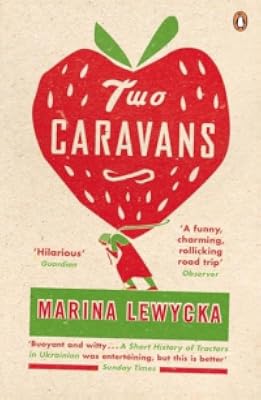
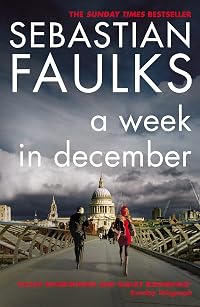
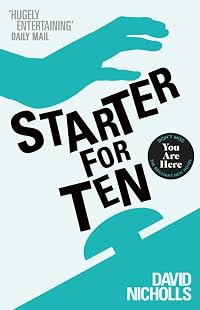
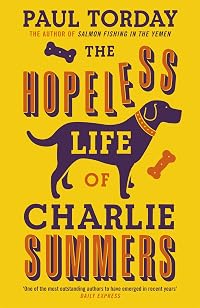




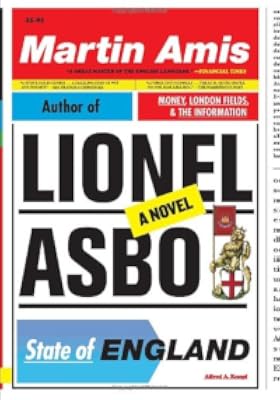


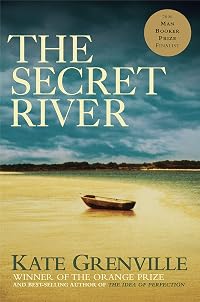

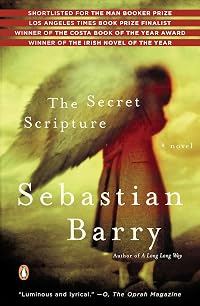
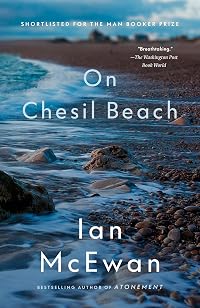



Member Recommendations
Cecilturtle Similar outlook on cultural differences and prejudice

Member Reviews
This is a light fast enjoyable read. A satire that targets: politicians, government departments, career men and women, Al-Queda and rich Sheiks. About the only thing it does not satirise are the salmon and the people who fish for them.
In a satire ; vices, foibles, abuses and short comings are held up to ridicule, ideally with the intent of shaming individuals and society itself into improvement. How effective or sharp this is depends on the nature of the satire. One that uses scorn, outrage and savage ridicule is more likely to grab our attention than one based on exaggeration, folly and irony. Torday's satire is of the latter variety, it is mild and gently humorous. As I was reading It became difficult at times to separate the satire show more from actuality, which certainly gave me pause to think.
Alfred Jones a scientist working in the Department of the Environment, Food and Rural Affairs is asked for a feasibility study on introducing salmon and salmon fishing into the Yemen. He correctly points out that such a project would be laughable; there are no suitable rivers, the climate is too hot for the fish and they would not be able to reach their breeding grounds in the North Atlantic. Poor Alfred is blissfully unaware that a powerful Sheikh will bankroll such a project and the British Government desperate for a good news story in the Middle East see it as a vote winner. Alfred is made to change his mind and his scientific pride leads him to involve himself fully in the impossible project. He is spurred on by the charismatic Sheik and his crush on Harriet who works for the company that represents the Sheik's interest. What happens when a crazy project is fueled by enough money and the political will? It succeeds of course.
The story is told in a series of diary entries, correspondence, e mails, interviews by a parliamentary subcommittee, an unpublished novel and extracts from Hansard. Torday is skillful enough to weave these disparate elements into a very readable narrative format. Torday has a lightness of touch about everything he writes here and never loses sight of his story or his need to make the reader smile.
The novel succeeds for me because there is very little exaggeration in the workings of a government department. I kept thinking I have seen these sorts of things happen or worse. Almost everything else has a ring of credibility about it. Tordays most savage satire is reserved for Peter Maxwell who is a Director of Communications (spin doctor) and works closely with the Prime Minister. This characteris probably based on Alastair Campbell and his work with Tony Blair. One scene stands out particularly for me. Maxwell desperate for a good news story to offset the casualties being reported from Iraq has an idea for a new TV game show. It will be set in one of the villages partially destroyed by rocket and mortar fire and will feature actual villagers as contestants, who will stand to win glamorous prizes. He presents this idea to the usual Friday evening get together of the PM and his cabinet cronies who are sipping wine. After the presentation one of the members remarks "Peter you ought to get out more". Maxwell is close to tears he can't believe that his brilliant idea has been given such short shrift. Torday I think has been cever hear, he finally presents a scenario that is ridiculous and has his characters reject it out of hand. This leads the reader to think that all the other stuff that has gone before could well happen in real life.
This is a funny humorous book, but the sting in the tail for me is that so much of it could and probably does happen and we all blithely have to accept it. This novel should be read by all government workers, lets just hope you don't see yourselves here show less
In a satire ; vices, foibles, abuses and short comings are held up to ridicule, ideally with the intent of shaming individuals and society itself into improvement. How effective or sharp this is depends on the nature of the satire. One that uses scorn, outrage and savage ridicule is more likely to grab our attention than one based on exaggeration, folly and irony. Torday's satire is of the latter variety, it is mild and gently humorous. As I was reading It became difficult at times to separate the satire show more from actuality, which certainly gave me pause to think.
Alfred Jones a scientist working in the Department of the Environment, Food and Rural Affairs is asked for a feasibility study on introducing salmon and salmon fishing into the Yemen. He correctly points out that such a project would be laughable; there are no suitable rivers, the climate is too hot for the fish and they would not be able to reach their breeding grounds in the North Atlantic. Poor Alfred is blissfully unaware that a powerful Sheikh will bankroll such a project and the British Government desperate for a good news story in the Middle East see it as a vote winner. Alfred is made to change his mind and his scientific pride leads him to involve himself fully in the impossible project. He is spurred on by the charismatic Sheik and his crush on Harriet who works for the company that represents the Sheik's interest. What happens when a crazy project is fueled by enough money and the political will? It succeeds of course.
The story is told in a series of diary entries, correspondence, e mails, interviews by a parliamentary subcommittee, an unpublished novel and extracts from Hansard. Torday is skillful enough to weave these disparate elements into a very readable narrative format. Torday has a lightness of touch about everything he writes here and never loses sight of his story or his need to make the reader smile.
The novel succeeds for me because there is very little exaggeration in the workings of a government department. I kept thinking I have seen these sorts of things happen or worse. Almost everything else has a ring of credibility about it. Tordays most savage satire is reserved for Peter Maxwell who is a Director of Communications (spin doctor) and works closely with the Prime Minister. This characteris probably based on Alastair Campbell and his work with Tony Blair. One scene stands out particularly for me. Maxwell desperate for a good news story to offset the casualties being reported from Iraq has an idea for a new TV game show. It will be set in one of the villages partially destroyed by rocket and mortar fire and will feature actual villagers as contestants, who will stand to win glamorous prizes. He presents this idea to the usual Friday evening get together of the PM and his cabinet cronies who are sipping wine. After the presentation one of the members remarks "Peter you ought to get out more". Maxwell is close to tears he can't believe that his brilliant idea has been given such short shrift. Torday I think has been cever hear, he finally presents a scenario that is ridiculous and has his characters reject it out of hand. This leads the reader to think that all the other stuff that has gone before could well happen in real life.
This is a funny humorous book, but the sting in the tail for me is that so much of it could and probably does happen and we all blithely have to accept it. This novel should be read by all government workers, lets just hope you don't see yourselves here show less
Salmon fishing in Yemen? Impossible? One of the closing lines of this book is , "I believe in it because it is impossible." Paul Torday has written a lovely novel about transformation, faith, belief, and love. A Yemeni sheikh who loves salmon fishing proposes to bring the sport to his home country, and the relationship between himself and the fishery scientist whom he employs leads to transformation. The story unfolds as a collection of memos, letters, and e-mails and they reveal the role of politics, money, and personal ego in distorting and hiding the true meaning of the project. Torday is also able to make interesting observations about the nature of the differences between Yemenis and British society. I read this book during the show more course of a long, lovely day and hope that other readers will enjoy and appreciate it as I have. show less
This is a strange and wonderful book with heart and deep wicked humor. Told with a series of memos, diary extracts, parliament records and other "documents" a story of vision and political turbidity, which bizarrely includes an interview, fictitious, by Boris Johnson in which he comes off as educated and alert. I don't think any other real person enters the story.
I approached this book with a little trepidation as I have heard a lot of praise for it and when that happens I am often left disappointed. This book however did not disappoint.
Dr Alfred Jones is a pretty unimaginative man as a fisheries expert working for an anonymous Government and living in a loveless marriage. When he is approached by representatives of a wealthy Arab to introduce salmon to the deserts of Yemen he is initially dismissive but when he is forced by his boss to so he gradually believes that he can make it work. When the British PM's spin doctor gets wind of the project he realises that this is an opportunity for the Government, battered by bad press due to wars in Iraq and Afghanistan, to gain some good press within the show more Middle East and maybe win some extra voters back home he also encourages Fred to complete the development with devastating outcome.
The book is written in the form of a Government overview report using diary entries,letters and emails as sources and for me it would not have worked if written in any other manner.
The basic premise of this book is a little absurd but at the heart of it is the difference between the secular West and faith-based societies of the Middle East. Fred no longer goes to church on a Sunday instead he goes to Tesco whereas the sheikh believes that their plan will work only if God wills it. The book also takes a satirical dig at the materialistic West where wealth is measured in belongings whereas the Middle East inhabitants have less but are more open and generous. However, the author's most savage satire is aimed at the bureaucratic and spin doctor centred British political system. I particularly loved the spin doctor's idea of the a TV station 'The Voice of Britain' where the poor of the developing world can win dishwashers despite not having electricity.
I read most of this book with a smile on my face yet despite this was tempted to give it only 4 stars as the satire is very heavy handed at times. However, I finally plumped for 5 stars as it is one of the most original that I've read in quite a while. show less
Dr Alfred Jones is a pretty unimaginative man as a fisheries expert working for an anonymous Government and living in a loveless marriage. When he is approached by representatives of a wealthy Arab to introduce salmon to the deserts of Yemen he is initially dismissive but when he is forced by his boss to so he gradually believes that he can make it work. When the British PM's spin doctor gets wind of the project he realises that this is an opportunity for the Government, battered by bad press due to wars in Iraq and Afghanistan, to gain some good press within the show more Middle East and maybe win some extra voters back home he also encourages Fred to complete the development with devastating outcome.
The book is written in the form of a Government overview report using diary entries,letters and emails as sources and for me it would not have worked if written in any other manner.
The basic premise of this book is a little absurd but at the heart of it is the difference between the secular West and faith-based societies of the Middle East. Fred no longer goes to church on a Sunday instead he goes to Tesco whereas the sheikh believes that their plan will work only if God wills it. The book also takes a satirical dig at the materialistic West where wealth is measured in belongings whereas the Middle East inhabitants have less but are more open and generous. However, the author's most savage satire is aimed at the bureaucratic and spin doctor centred British political system. I particularly loved the spin doctor's idea of the a TV station 'The Voice of Britain' where the poor of the developing world can win dishwashers despite not having electricity.
I read most of this book with a smile on my face yet despite this was tempted to give it only 4 stars as the satire is very heavy handed at times. However, I finally plumped for 5 stars as it is one of the most original that I've read in quite a while. show less
This was a book club selection and therefore a new author to me and I wasn’t disappointed! The first thing that I was drawn to with this book was the name of the book. The idea of Salmon Fishing in the Yemen was interesting and intriguing at the same time. I wasn’t really sure what to expect so I was excited to find out.
The book started off by introducing us to a Dr Alfred Jones who worked for the National Centre for Fisheries Excellence (NCFE) through the correspondence he had with the director of NCFE David Sugden and others. We also meet Alfred’s (Fred’s) wife Mary who is hard to read at the best of times and at others seems to really lack any ounce of humour. We see that her relationship with Fred deteriorates over the show more course of the story. Personally I was never enamoured with Mary but thought that Fred was an interesting character - an honest man yet sensible.
The story showcased how politics is very good at covering up things so as to save face when things look as though they’re about to go horribly wrong and therefore needs to be standing an appropriate distance from goings on. Conversely, this story showed how politically powers are very happy to be associated with a project when there’s a prospect that such an association would work in its favour. I really thought that it was a great comment on today’s political system even though it was the British government the story was focussed on. There were times when all one could do was laugh about what was going on.
This story was more than just a nice little story about Salmon Fishing in the Yemen. It was about faith, belief, and pushing the envelope within yourself. It was a very rich story which allowed the reader into a world that we would perhaps not understand in a normal situation. Highly recommend this author’s work. show less
The book started off by introducing us to a Dr Alfred Jones who worked for the National Centre for Fisheries Excellence (NCFE) through the correspondence he had with the director of NCFE David Sugden and others. We also meet Alfred’s (Fred’s) wife Mary who is hard to read at the best of times and at others seems to really lack any ounce of humour. We see that her relationship with Fred deteriorates over the show more course of the story. Personally I was never enamoured with Mary but thought that Fred was an interesting character - an honest man yet sensible.
The story showcased how politics is very good at covering up things so as to save face when things look as though they’re about to go horribly wrong and therefore needs to be standing an appropriate distance from goings on. Conversely, this story showed how politically powers are very happy to be associated with a project when there’s a prospect that such an association would work in its favour. I really thought that it was a great comment on today’s political system even though it was the British government the story was focussed on. There were times when all one could do was laugh about what was going on.
This story was more than just a nice little story about Salmon Fishing in the Yemen. It was about faith, belief, and pushing the envelope within yourself. It was a very rich story which allowed the reader into a world that we would perhaps not understand in a normal situation. Highly recommend this author’s work. show less
This is the story of Alfred (Fred) Jones, a middle-aged scientist working for the government fisheries agency, and his experiences in a project to bring – yes – salmon fishing to the Yemen. An idealist Shiekh wants to do the best kind of fishing there is in the mountain wadis of his home country. He has the money to make it happen, the UK government is initially happy to supply expertise to see if the project is feasible. Fred is assigned, thinks the whole idea is absurd, and ends up being sacked, whereupon he gets employed by the Sheikh’s agents and begins to see the light – mainly thanks to his new colleague, the lovely Harriet Chetwode-Talbot. Meanwhile, Fred’s home life is not good. His wife Mary works for an international show more bank, and is going places – without Fred, but he’s seemingly stuck in this sterile marriage…
"The rest of the evening was a bit of a frost, but when we went to bed, I think Mary must have felt a little guilty about the way she had changed her plans. Suffice to say, my new Marks & Spencer pyjamas were not required for the early part of the night! A relatively rare event in our marriage of late.
Afterwards Mary said, ‘There now, darling, that should keep you going for a bit,’ and turned on her side and seemed to go to sleep. For a moment I felt a bit like a dog that has just been given a biscuit, but then drowsiness swept across me and I began to doze."
You can understand why when offered a bit of adventure, that Fred will take it. The whole scheme escalates, as they begin to work out how to make it work – will it ultimately be a triumph or a disaster?
This novel worked for me on several levels. Firstly, there was the satire on bureaucracy – with the civil servants all toadying up, and passing the blame down, the governmental food chain of which Fred is near the bottom. This immediately reminds one of the wonderful TV comedy, Yes Minister with the sublimely manipulative Sir Humphrey Appleby completely controlling his Minister; but also to the antics of real spin doctors in recent times. It’s also about following your dream. The Shiekh has a simple one: he wants his people to be able to fish salmon. He realises that his ‘grand projet’ is idealist, but he has faith, he believes it can happen -even if it puts his life in danger from opposing factions within his region. But dreams can also be shattered. Harriet’s fiance is a soldier, fighting in Iraq, and here the story veres away from comedy into something quite dark.
What I haven’t mentioned yet is the format of the novel. It combines two similar but differing forms into one seamless whole. The main body of the text, certainly during the first half of the novel is written in letters – varying from e-mails to interdepartmental memos, and including the occasional press release or bit of reportage. Then Fred’s diaries are introduced, and these gradually overtake the comedy of the epistles, with their more meditative and serious tone, which makes the farce of the inevitable ending a real shock.
The characters are great. Fred starts off as a typical boffin, but grows in stature throughout the book; Harriet begins as an immensely capable young woman who gets to reveal her vulnerable side; the Sheikh is lovely and mysterious; and Mary – she sacrifices life for work, but she is so unsympathetic, so you can’t feel sorry for her for long. I thoroughly enjoyed this book, loving both the format and characters giving it 9/10, and I’m looking forward to reading more of Torday’s novels. show less
"The rest of the evening was a bit of a frost, but when we went to bed, I think Mary must have felt a little guilty about the way she had changed her plans. Suffice to say, my new Marks & Spencer pyjamas were not required for the early part of the night! A relatively rare event in our marriage of late.
Afterwards Mary said, ‘There now, darling, that should keep you going for a bit,’ and turned on her side and seemed to go to sleep. For a moment I felt a bit like a dog that has just been given a biscuit, but then drowsiness swept across me and I began to doze."
You can understand why when offered a bit of adventure, that Fred will take it. The whole scheme escalates, as they begin to work out how to make it work – will it ultimately be a triumph or a disaster?
This novel worked for me on several levels. Firstly, there was the satire on bureaucracy – with the civil servants all toadying up, and passing the blame down, the governmental food chain of which Fred is near the bottom. This immediately reminds one of the wonderful TV comedy, Yes Minister with the sublimely manipulative Sir Humphrey Appleby completely controlling his Minister; but also to the antics of real spin doctors in recent times. It’s also about following your dream. The Shiekh has a simple one: he wants his people to be able to fish salmon. He realises that his ‘grand projet’ is idealist, but he has faith, he believes it can happen -even if it puts his life in danger from opposing factions within his region. But dreams can also be shattered. Harriet’s fiance is a soldier, fighting in Iraq, and here the story veres away from comedy into something quite dark.
What I haven’t mentioned yet is the format of the novel. It combines two similar but differing forms into one seamless whole. The main body of the text, certainly during the first half of the novel is written in letters – varying from e-mails to interdepartmental memos, and including the occasional press release or bit of reportage. Then Fred’s diaries are introduced, and these gradually overtake the comedy of the epistles, with their more meditative and serious tone, which makes the farce of the inevitable ending a real shock.
The characters are great. Fred starts off as a typical boffin, but grows in stature throughout the book; Harriet begins as an immensely capable young woman who gets to reveal her vulnerable side; the Sheikh is lovely and mysterious; and Mary – she sacrifices life for work, but she is so unsympathetic, so you can’t feel sorry for her for long. I thoroughly enjoyed this book, loving both the format and characters giving it 9/10, and I’m looking forward to reading more of Torday’s novels. show less
The first third of this novel was reaching a 4-star rating ~ incisive character sketches that really nailed the various persona categories (social-climbing, unreliable government employee, irresponsible, publicity-seeking politician, scientist focused exclusively on research while oblivious to the politics swirling around, bitchy-career-oriented, me-first, spouse).
The plot was intriguingly set-up, despite its scientifically implausible basis. Alfred, his boss David Sugden, wife Mary, colleague Harriet and the Sheik were well-characterized players and it was fun to follow their antics. However, the epistolary format descended into confusing Hansard bulletins, boring long-winded drivel by Peter Maxwell, and disconnected interviews from an show more investigative panel to discover how the whole sorry house of cards came tumbling down. Some of the narrative was understandable only after the fact, a disruptive device in keeping the reader engaged.
It was worth the read for me because the author brilliantly captured these persona and the the magic of the desert so very well. The ending, however, was rather naive (anyone familiar with Middle Eastern wadis in the rainy season would never have been caught so disastrously ). As well, the fate of Alfred and his relationships with Mary and Harriet were markedly unsatisfying. This final resolution in an intricate plot deserved better. show less
The plot was intriguingly set-up, despite its scientifically implausible basis. Alfred, his boss David Sugden, wife Mary, colleague Harriet and the Sheik were well-characterized players and it was fun to follow their antics. However, the epistolary format descended into confusing Hansard bulletins, boring long-winded drivel by Peter Maxwell, and disconnected interviews from an show more investigative panel to discover how the whole sorry house of cards came tumbling down. Some of the narrative was understandable only after the fact, a disruptive device in keeping the reader engaged.
It was worth the read for me because the author brilliantly captured these persona and the the magic of the desert so very well. The ending, however, was rather naive (
Members
- Recently Added By
Published Reviews
ThingScore 100
The impossible title of this extraordinary book took me back to a moment nearly 20 years ago. I had walked for three days down Wadi Surdud, one of the great seasonal watercourses that cut their way towards the Red Sea through the western highlands of Yemen. The scenery was extravagant - deep chasms sculpted by floodwater, pinnacles where lightning licked at high-perched castles, the seats of show more South Arabian lairds. At last, the gradient decreased, and as I rounded a bend I saw in one of the occasional pools that lay in the wadi bed something I have never seen in Yemen before or since: a man fishing with rod and line. Not, of course, for salmon: this was the coarsest of coarse fishing, for minnow-sized awshaj - I think a type of barbel - with a stick for a rod and a grain of maize for bait. The incongruous scene remains in my memory, and always will. Yemen is a memorable country: "Not a day will pass in your life," wrote the Master of Belhaven, a laird from the distant north, "but you will remember some facet of that opal-land."
Here, as well as lairds and castles, we have mists and glens, kilts, dirks and the odd feud or two. But unlike in Scotland the rain is considerate, coming at known seasons and times of day. It is also somewhat sparing, and there are no natural lochs or permanent rivers, and certainly no salmon (except smoked, on HBM ambassador's canapés). So Paul Torday's debut novel is about an impossibility. It is also about belief in the impossible, and belief itself. And the remarkable thing is that a book about so deeply serious a matter can make you laugh, all the way to a last twist that's as sudden and shocking as a barbed hook.
As with all good comedy, there's a tragic underside, a story of love and loss and another of love that never was. And there is satire. Torday's aim is deadly; but then, his targets are big. Jay Vent, the British prime minister, has taken his country into wars in Iraq and Afghanistan (and elsewhere in the region: the story is set in the nearish future . . .) and has dug himself into the deepest of holes. So what does he do? Of course: he goes on digging. "We're pretty much committed to going down a particular road in the Middle East," says Vent, a graduate, like his real-life counterpart, of the White Queen's school of logic, "and it would be difficult to change that very much without people beginning to ask why we'd started down it in the first place." . . . show less
Here, as well as lairds and castles, we have mists and glens, kilts, dirks and the odd feud or two. But unlike in Scotland the rain is considerate, coming at known seasons and times of day. It is also somewhat sparing, and there are no natural lochs or permanent rivers, and certainly no salmon (except smoked, on HBM ambassador's canapés). So Paul Torday's debut novel is about an impossibility. It is also about belief in the impossible, and belief itself. And the remarkable thing is that a book about so deeply serious a matter can make you laugh, all the way to a last twist that's as sudden and shocking as a barbed hook.
As with all good comedy, there's a tragic underside, a story of love and loss and another of love that never was. And there is satire. Torday's aim is deadly; but then, his targets are big. Jay Vent, the British prime minister, has taken his country into wars in Iraq and Afghanistan (and elsewhere in the region: the story is set in the nearish future . . .) and has dug himself into the deepest of holes. So what does he do? Of course: he goes on digging. "We're pretty much committed to going down a particular road in the Middle East," says Vent, a graduate, like his real-life counterpart, of the White Queen's school of logic, "and it would be difficult to change that very much without people beginning to ask why we'd started down it in the first place." . . . show less
added by PLReader
This is an odd artefact. It depicts an attempt to introduce salmon to rivers in the Yemeni Highlands via the largesse of a local sheikh and the expertise of a UK government agency.
The book - it can scarcely be described as a novel - is constructed from supposed diary entries, letters, emails, extracts from Hansard, fragments of autobiography, a TV game show script, transcripts of television show more and press interviews, Select Committee Report conclusions and interrogations of the various participants in this madcap scheme. All have differing viewpoints and narrators. As such the whole becomes diffuse and bitty.
While there is an overall narrative thread the disparate voices too often fail to suspend disbelief. Instead of being presented with a convincing rendering of a diary extract or interview transcript we are given novelistic embellishments. The diary extracts contain information that we as readers ought to have but a diarist would not find it necessary to include. In one of the interviews a respondent states a person spoke mildly when surely they would report only the relevant conversation’s content, in another there is an (uncredited) interruption which reads, “The witness became emotional after the consumption of custard creams and was incoherent. The interview was resumed after a break of four hours.” This authorial interpolation is, I suppose, intended humorously but is, instead, bathetic, if not pathetic. The Hansard extracts do not quite reflect accurately the format of Prime Minister’s Questions. While it might be said that this is a comic novel and some licence is allowable, to get details such as this last example wrong detracts from the intended effect. Infelicities such as those above totally fail to create the necessary degree of verisimilitude. The name dropping of real people as interviewers - Andrew Marr, Boris Johnson - while the politicians and aides are fictional (yet recognisable) is also a mistake.
The book is obviously meant to be a satire but its approach is so scattershot that it is difficult to tell exactly what or whom is the intended target. Is it the workings of bureaucracies, office politics, communications directors/spin doctors, career women, politicians, even Islamic terrorists? All are featured, but the focus never stays in one place for long. The only character who has any semblance of solidity is the supposedly mad sheikh; and he has no viewpoint narrative.
After the novel’s end we also have “Reading Group Notes” containing items “for discussion.” Some may find this condescending.
Salmon Fishing In The Yemen has its moments; but they are few. show less
The book - it can scarcely be described as a novel - is constructed from supposed diary entries, letters, emails, extracts from Hansard, fragments of autobiography, a TV game show script, transcripts of television show more and press interviews, Select Committee Report conclusions and interrogations of the various participants in this madcap scheme. All have differing viewpoints and narrators. As such the whole becomes diffuse and bitty.
While there is an overall narrative thread the disparate voices too often fail to suspend disbelief. Instead of being presented with a convincing rendering of a diary extract or interview transcript we are given novelistic embellishments. The diary extracts contain information that we as readers ought to have but a diarist would not find it necessary to include. In one of the interviews a respondent states a person spoke mildly when surely they would report only the relevant conversation’s content, in another there is an (uncredited) interruption which reads, “The witness became emotional after the consumption of custard creams and was incoherent. The interview was resumed after a break of four hours.” This authorial interpolation is, I suppose, intended humorously but is, instead, bathetic, if not pathetic. The Hansard extracts do not quite reflect accurately the format of Prime Minister’s Questions. While it might be said that this is a comic novel and some licence is allowable, to get details such as this last example wrong detracts from the intended effect. Infelicities such as those above totally fail to create the necessary degree of verisimilitude. The name dropping of real people as interviewers - Andrew Marr, Boris Johnson - while the politicians and aides are fictional (yet recognisable) is also a mistake.
The book is obviously meant to be a satire but its approach is so scattershot that it is difficult to tell exactly what or whom is the intended target. Is it the workings of bureaucracies, office politics, communications directors/spin doctors, career women, politicians, even Islamic terrorists? All are featured, but the focus never stays in one place for long. The only character who has any semblance of solidity is the supposedly mad sheikh; and he has no viewpoint narrative.
After the novel’s end we also have “Reading Group Notes” containing items “for discussion.” Some may find this condescending.
Salmon Fishing In The Yemen has its moments; but they are few. show less
added by jackdeighton
Lists

Books Read in 2023
5,638 works; 147 members

Animals in the Title
498 works; 11 members

A Novel Cure
742 works; 23 members

BingoDOG - Scientists in Fiction
111 works; 17 members
Author Information

14+ Works 2,895 Members
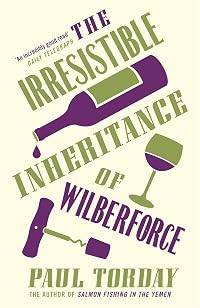
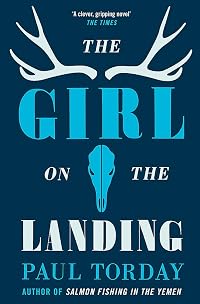
Paul Torday was born in in Croxdale, County Durham, England on August 1, 1946. He received a degree in English literature from Pembroke College, Oxford. He spent years in the engineering business before turning to writing. His debut novel, Salmon Fishing in the Yemen, was published in 2007. The novel was adapted into a 2011 film starring Ewan show more McGregor and Emily Blunt. His other works include The Irresistible Inheritance of Wilberforce, The Girl on the Landing, and Light Shining in the Forest. He died on December 18, 2013 at the age of 67. (Bowker Author Biography) show less
Some Editions
Awards and Honors
Series
Belongs to Publisher Series
BvT (0551)
Work Relationships
Has the adaptation
Common Knowledge
- Canonical title*
- Lachsfischen im Jemen
- Original title
- Salmon Fishing in the Yemen
- Original publication date
- 2007
- People/Characters
- Alfred Jones; Harriet Chetwode-Talbot
- Important places
- Yemen
- Related movies
- Salmon Fishing in the Yemen (2012 | IMDb)
- Dedication
- This book is dedicated to my wife Penelope, who can catch salmon in bright sunlight and at low water, to the friends I fish with on the Tyne and the Tay, and to the men and women of the Environment Agency, without whom there ... (show all)would be far fewer fish in our rivers.
- First words
- Dear Dr Jones, We have been referred to you by Peter Sullivan at the Foreign & Commonwealth Office (Directorate for Middle East and North Africa).
- Last words
- (Click to show. Warning: May contain spoilers.)This will be erected in the centre of Sana'a, if planning permission can be obtained.
- Publisher's editor*
- Zylberstein, Jean-Claude
- Blurbers*
- Hoffmann, Stéphane
- Original language*
- Englisch
- Disambiguation notice
- This is the book, don't combine with the film.
*Some information comes from Common Knowledge in other languages. Click "Edit" for more information.
Classifications
Statistics
- Members
- 1,728
- Popularity
- 12,870
- Reviews
- 84
- Rating
- (3.55)
- Languages
- 14 — Catalan, Danish, Dutch, English, French, German, Hungarian, Icelandic, Italian, Korean, Norwegian (Bokmål), Spanish, Swedish, Portuguese (Portugal)
- Media
- Paper, Audiobook, Ebook
- ISBNs
- 51
- UPCs
- 1
- ASINs
- 16