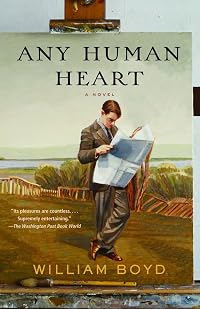
Any Human Heart
by William Boyd
On This Page
Description
Bestselling author William Boyd-the novelist who has been called a "master storyteller" (Chicago Tribune) and "a gutsy writer who is good company to keep" (Time)-here gives us his most entertaining, sly, and compelling novel to date. The novel evokes the tumult, events, and iconic faces of our time as it tells the story of Logan Mountstuart-writer, lover, and man of the world-through his intimate journals. It is the "riotous and disorganized reality" of Mountstuart's eighty-five years in all show more their extraordinary, tragic, and humorous aspects. The journals begin with his boyhood in Montevideo, Uruguay, then move to Oxford in the 1920s and the publication of his first book, then on to Paris where he meets Joyce, Picasso, Hemingway, et al., and to Spain, where he covers the civil war. During World War II, we see him as an agent for naval intelligence, becoming embroiled in a murder scandal that involves the Duke and Duchess of Windsor. The postwar years bring him to New York as an art dealer in the world of 1950s abstract expressionism, then on to West Africa, to London where he has a run-in with the Baader-Meinhof Gang, and, finally, to France where, in his old age, he acquires a measure of hard-won serenity. This is a moving, ambitious, and richly conceived novel that summons up the heroics and follies of twentieth-century life. show lessTags
Recommendations









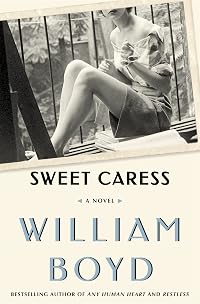
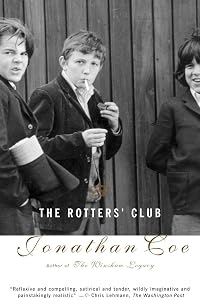


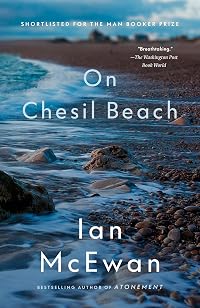



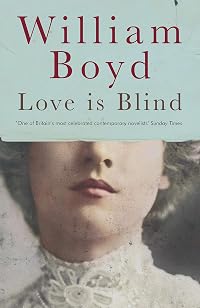
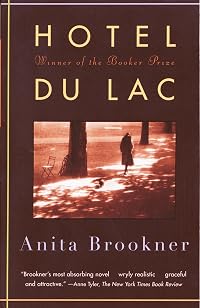

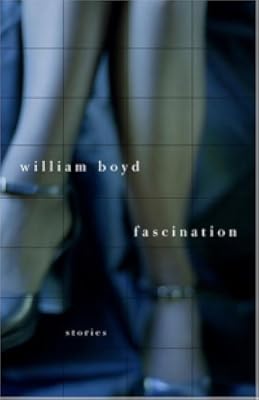

Member Recommendations
lizchris A fictional character who encounters real people from history across their lifetime.

WendyRobyn Both books follow the events and relationships of one man's life span against the backdrop of his times (mostly the 20th century, although McEwan's setting is a few decades later). Both demonstrate the way a life is both coherent yet full of chance, and entirely individual while sharing the themes of its generation.
Member Reviews
This fictional journal of the writer Logan Mountstuart kept me enthralled for the bulk of this bulky novel. I was sorry to see it end. I miss it. When starting with his childhood, I twitched and sighed hoping that we would soon be into Oxford days, but after twenty or thirty pages, I was hooked. Not a fan of roman a clef or historical fiction, here I was enjoying both, in a journal format, particularly the protagonist's encounters with real life figures like Hemingway or Joyce or Picasso or the Duke of Windsor. Settings were seductive, Oxford, Paris , Zurich, Bermuda or New York City. The spy tasks during WWII, the haunting prisoner of war years and aftermath, the art gallery milieu, the publishing business fascinated me. There is a show more Meiner Badhof interaction toward the end, oddly involving our hero, which didn't seem to fit, but I never faltered in my bulldozing through the book, picking it up at even a hint of insomnia. My favorite quote from his Southern France retirement oasis of which he writes:
The pleasures of my life here are simple – simple, inexpensive and democratic. A warm hill of Marmande tomatoes on a roadside vendor’s stall. A cold beer on a pavement table of the Café de France – Marie Therese inside making me a sandwich au Camembert. Munching the knob off a fresh baguette as I wander back from Saint-Sabine. The farinaceous smell of the white dust raised by a breeze from the driveway. A cuckoo sounding in the perfectly silent woods beyond the meadow. The huge grey, cerise, pink, orange and washed-out blue of a sunset seen from my rear terrace. The drilling of the cicadas at noon – the soft dialling tone of the crickets as dusk slowly gathers. A good book, a hammock and a cold, beaded bottle of blanc sec. A rough red wine and steak frites. The cool, dark, shuttered silence of my bedroom – and as I go to sleep the prospect that all this will be available to me again, unchanged, tomorrow. (p.479)
I need only the hammock and cold, beaded bottle of blanc sec to supplement this good book. show less
The pleasures of my life here are simple – simple, inexpensive and democratic. A warm hill of Marmande tomatoes on a roadside vendor’s stall. A cold beer on a pavement table of the Café de France – Marie Therese inside making me a sandwich au Camembert. Munching the knob off a fresh baguette as I wander back from Saint-Sabine. The farinaceous smell of the white dust raised by a breeze from the driveway. A cuckoo sounding in the perfectly silent woods beyond the meadow. The huge grey, cerise, pink, orange and washed-out blue of a sunset seen from my rear terrace. The drilling of the cicadas at noon – the soft dialling tone of the crickets as dusk slowly gathers. A good book, a hammock and a cold, beaded bottle of blanc sec. A rough red wine and steak frites. The cool, dark, shuttered silence of my bedroom – and as I go to sleep the prospect that all this will be available to me again, unchanged, tomorrow. (p.479)
I need only the hammock and cold, beaded bottle of blanc sec to supplement this good book. show less
Any Human Heart is written as a series of journals throughout the life of the fictional character Logan Mountstuart, from his public school days in 1920s England through to his final days as an elderly man in rural France in 1991. Such is the quality of Boyd's writing, I had to double check at one point that this character was in fact definitely fictional, as he weaves in a cast of famous names as bit characters in Mountstuart's life which ebbs and flows between wealth and poverty, love and sorrow, fame and invisibility, all played out across a backdrop of fascinating locations.
At it's heart it's quite a sad book, a chronicle of a life that superficially seems so have been so full yet ultimately echoes with loneliness.
At it's heart it's quite a sad book, a chronicle of a life that superficially seems so have been so full yet ultimately echoes with loneliness.
I enjoyed this tremendously, even though I watched the TV adaptation a few weeks earlier, so I already knew the characters and plot (though there are some differences).
STRUCTURED AS MEMOIRS
This is presented as a compilation of journals kept by Logan Mountstuart from shortly before he left school in the 1920s until just before his death aged 85. Consequently, they describe things as they were at the time, with candour and an absence of hindsight. It also means there are gaps and changes of style. The pretence is carried further by the presence of footnotes (including "corrections" and even a reference to Boyd's own biography of an artist), an index and other later editorial notes, including Logan's introduction, in which he explains, "We show more keep a journal to entrap the collection of selves that forms us". I think it is the different voices of Logan at different times in his life that make the book work so well: often he is not very likeable, but he has a certain charm, and his triumphs are balanced by tragedy.
It is not a continuous narrative, but rather, broken down into journals covering significant periods in his life: school (establishing his key friendships with Peter Scabius and Ben Leeping); Oxford university; London as a writer and journalist (marriage, then a coup de foudre); naval intelligence in WW2; return to a changed London; NY (art dealer); Africa (teaching); London (including links with the Baader Meinhof gang) and finally, retirement in France.
The framework of the book lends teenage anxieties more poignancy, e.g. "as ever, my predominant emotion is one of disappointment... could this be the pattern of my life ahead? Every ambition thwarted, every dream stillborn?". At other times, Logan as an old man does insert a retrospective analysis, e.g. "I often wonder if those early sexual experiences with Tess and Anna warped me irrevocably" - a plausible attempt to justify some of his subsequent behaviour.
FAMOUS FRIENDS
A distinctive conceit of the book is the number of significant real characters Logan gets to know during his life: mostly authors (e.g. James Joyce, Ian Fleming, Virginia Wolf, Ernest Hemingway) and artists (Picasso, Paul Klee), but also the Duke and Duchess of Windsor. I am not an expert on any of them, but it rings true, and feels a natural element of the narrative. The only weak part for me is the Baader Meinhof episode, but I suppose that is meant to balance and contrast with his earlier work in naval intelligence. Later on, Logan remembers being told that "the only point of keeping a journal was to concentrate on the personal... and to forget about the great and significant events in the world at large", but this book does both.
CATHOLICISM
Perhaps the most unusual aspect of Logan's character is that he is a lapsed Catholic who is largely untouched by guilt, even though he has much to be guilty about. He can feel guilt, though only his son arouses it in him. He coldy explains "need and opportunity - the ingredients of all betrayals" and "I absolutely need variety and surprise. I have to have the city in my life... otherwise I dessicate and die". Yet he often feels a victim of circumstance, "A sense of my life being entirely out of my control - which is not the same as being out of control".
HAPPINESS?
The final question, and one Logan doesn't entirely resolve, is around the pain of having known true happiness - and lost it.
ME!
One detail that no one else would notice was that there were TWO, albeit very minor, characters called Cecily: Cecily Brewer, at whose home he lodged, and another Cecily who was his mother's housemaid. show less
STRUCTURED AS MEMOIRS
This is presented as a compilation of journals kept by Logan Mountstuart from shortly before he left school in the 1920s until just before his death aged 85. Consequently, they describe things as they were at the time, with candour and an absence of hindsight. It also means there are gaps and changes of style. The pretence is carried further by the presence of footnotes (including "corrections" and even a reference to Boyd's own biography of an artist), an index and other later editorial notes, including Logan's introduction, in which he explains, "We show more keep a journal to entrap the collection of selves that forms us". I think it is the different voices of Logan at different times in his life that make the book work so well: often he is not very likeable, but he has a certain charm, and his triumphs are balanced by tragedy.
It is not a continuous narrative, but rather, broken down into journals covering significant periods in his life: school (establishing his key friendships with Peter Scabius and Ben Leeping); Oxford university; London as a writer and journalist (marriage, then a coup de foudre); naval intelligence in WW2; return to a changed London; NY (art dealer); Africa (teaching); London (including links with the Baader Meinhof gang) and finally, retirement in France.
The framework of the book lends teenage anxieties more poignancy, e.g. "as ever, my predominant emotion is one of disappointment... could this be the pattern of my life ahead? Every ambition thwarted, every dream stillborn?". At other times, Logan as an old man does insert a retrospective analysis, e.g. "I often wonder if those early sexual experiences with Tess and Anna warped me irrevocably" - a plausible attempt to justify some of his subsequent behaviour.
FAMOUS FRIENDS
A distinctive conceit of the book is the number of significant real characters Logan gets to know during his life: mostly authors (e.g. James Joyce, Ian Fleming, Virginia Wolf, Ernest Hemingway) and artists (Picasso, Paul Klee), but also the Duke and Duchess of Windsor. I am not an expert on any of them, but it rings true, and feels a natural element of the narrative. The only weak part for me is the Baader Meinhof episode, but I suppose that is meant to balance and contrast with his earlier work in naval intelligence. Later on, Logan remembers being told that "the only point of keeping a journal was to concentrate on the personal... and to forget about the great and significant events in the world at large", but this book does both.
CATHOLICISM
Perhaps the most unusual aspect of Logan's character is that he is a lapsed Catholic who is largely untouched by guilt, even though he has much to be guilty about. He can feel guilt, though only his son arouses it in him. He coldy explains "need and opportunity - the ingredients of all betrayals" and "I absolutely need variety and surprise. I have to have the city in my life... otherwise I dessicate and die". Yet he often feels a victim of circumstance, "A sense of my life being entirely out of my control - which is not the same as being out of control".
HAPPINESS?
The final question, and one Logan doesn't entirely resolve, is around the pain of having known true happiness - and lost it.
ME!
One detail that no one else would notice was that there were TWO, albeit very minor, characters called Cecily: Cecily Brewer, at whose home he lodged, and another Cecily who was his mother's housemaid. show less
The journals of Logan Mountstuart tell of his long and colorful life as an art dealer, writer, lover, spy, prisoner, and sometimes cad. Spanning December 10th, 1923 to October 5th, 1991 we watch as the 20th century unfolds. What makes Any Human Heart so enticing is the inclusion of real events (World War II and the death of JFK, to name two) and real people, especially from the worlds of art and literature; people like Picasso and Hemingway.
You know the saying, you can't judge a book by its cover? Well, let it be said, you can't judge a book by its length either. I was convinced I would have to slog through 500 plus pages half paying attention. Wrong. This was delightful. Devious, but delightful.
There was one review that stuck with me show more as I was reading Any Human Heart. The New York Times said you could almost forget Logan Mountstuart is not a real person. His journal entries are convincingly honest. I couldn't agree more. show less
You know the saying, you can't judge a book by its cover? Well, let it be said, you can't judge a book by its length either. I was convinced I would have to slog through 500 plus pages half paying attention. Wrong. This was delightful. Devious, but delightful.
There was one review that stuck with me show more as I was reading Any Human Heart. The New York Times said you could almost forget Logan Mountstuart is not a real person. His journal entries are convincingly honest. I couldn't agree more. show less
William Boyd' s novel is presented in the form of journal entries; thus the subtitle, "The Intimate Journals of Logan Mountstuart". The "journals" which the author has created, complete with footnotes and an index of all the people whom Logan meets (including Virginia Woolf, Ernest Hemingway, Picasso, and countless others), brilliantly evoke a past era - or rather eras; for the journals span Logan Mountstuart's life from 1923, when he was a precocious schoolboy, through his early success as a biographer and novelist, his marriages, a war spent in Military Intelligence under Ian Fleming, life as an art dealer in New York, and poverty in London in his old age, until his death in France on October 5, 1991. The breadth of the story reminded show more me of Boyd's earlier novel, The New Confessions, which took the form of the autobiography of John James Todd, chronicling his uncanny and exhilarating life as one of the most unappreciated geniuses of the twentieth century
Much of the technical brilliance of this book results from the shifts in Logan's style as he, and the times through which he lives, ever so subtly evolve. Because of this it is sometimes difficult to appreciate Boyd's art as one ought, for one finds oneself almost reading the journals as genuine. The most dazzling vignettes, perhaps, are those of the self-regarding diaries of the young writers and aesthetes of the Twenties and Thirties, where Cyril Connolly (who appears as a character) is a likely influence. But if the early sections are the closest to parody, they are never mere caricature.
Boyd manages a rather touching, as well as extremely funny, portrait of a pretentious, arrogant, clever 17-year-old ("wrote a Spenserian ode on loss of faith"), who writes with flourishes of self-conscious pomposity ("we regained the purlieus of school without further incident"), is striving for superiority ("the Xmas tree is surely the saddest and most vulgar object invented by mankind"), yet does not know how to go about kissing his cousin Lucy, or deal with the discovery that his father does not have long to live.
Almost every section of the journals is nearly as good: Logan's moment with his baby son: "Lionel has croup. He seems a sickly baby. I sat him on my knee the other day and he stared at me with a baleful, sullen, and unknowing eye." is reminiscent of Evelyn Waugh. But the novel is not a simple criticism of many diarists of the period. Logan is capable of real and generous feeling, as well as of self-regarding depression; though to reveal the circumstances in which he finds (and loses) his truest love, as he moves from early critical acclaim to poverty and obscurity, would spoil an immensely readable story.
One remembers that this is a novel, indeed, by the way it holds your interest - which is quite a feat, because Boyd has also skillfully mimicked the "artless" and random qualities of the typical diary. As Logan remarks in his opening preamble, one should not expect coherence from journals: they merely "entrap that collection of selves that forms us"; unshaped by retrospection, their reality is "riotous and disorganized." Boyd's novel deliberately appears sprawling and inclusive; but it reads like a distillation of a real journal. He displays an unobtrusive artistry that transforms the potentially confusing "disorganized" diary-form into a novel which demonstrates the confusions and randomness of human life. show less
Much of the technical brilliance of this book results from the shifts in Logan's style as he, and the times through which he lives, ever so subtly evolve. Because of this it is sometimes difficult to appreciate Boyd's art as one ought, for one finds oneself almost reading the journals as genuine. The most dazzling vignettes, perhaps, are those of the self-regarding diaries of the young writers and aesthetes of the Twenties and Thirties, where Cyril Connolly (who appears as a character) is a likely influence. But if the early sections are the closest to parody, they are never mere caricature.
Boyd manages a rather touching, as well as extremely funny, portrait of a pretentious, arrogant, clever 17-year-old ("wrote a Spenserian ode on loss of faith"), who writes with flourishes of self-conscious pomposity ("we regained the purlieus of school without further incident"), is striving for superiority ("the Xmas tree is surely the saddest and most vulgar object invented by mankind"), yet does not know how to go about kissing his cousin Lucy, or deal with the discovery that his father does not have long to live.
Almost every section of the journals is nearly as good: Logan's moment with his baby son: "Lionel has croup. He seems a sickly baby. I sat him on my knee the other day and he stared at me with a baleful, sullen, and unknowing eye." is reminiscent of Evelyn Waugh. But the novel is not a simple criticism of many diarists of the period. Logan is capable of real and generous feeling, as well as of self-regarding depression; though to reveal the circumstances in which he finds (and loses) his truest love, as he moves from early critical acclaim to poverty and obscurity, would spoil an immensely readable story.
One remembers that this is a novel, indeed, by the way it holds your interest - which is quite a feat, because Boyd has also skillfully mimicked the "artless" and random qualities of the typical diary. As Logan remarks in his opening preamble, one should not expect coherence from journals: they merely "entrap that collection of selves that forms us"; unshaped by retrospection, their reality is "riotous and disorganized." Boyd's novel deliberately appears sprawling and inclusive; but it reads like a distillation of a real journal. He displays an unobtrusive artistry that transforms the potentially confusing "disorganized" diary-form into a novel which demonstrates the confusions and randomness of human life. show less
This fictional journal of the writer Logan Mountstuart kept me enthralled for the bulk of this bulky novel. I was sorry to see it end. I miss it. When starting with his childhood, I twitched and sighed hoping that we would soon be into Oxford days, but after twenty or thirty pages, I was hooked. Not a fan of roman a clef or historical fiction, here I was enjoying both, in a journal format, particularly the protagonist's encounters with real life figures like Hemingway or Joyce or Picasso or the Duke of Windsor. Settings were seductive, Oxford, Paris , Zurich, Bermuda or New York City. The spy tasks during WWII, the haunting prisoner of war years and aftermath, the art gallery milieu, the publishing business fascinated me. There is a show more Meiner Badhof interaction toward the end, oddly involving our hero, which didn't seem to fit, but I never faltered in my bulldozing through the book, picking it up at even a hint of insomnia. My favorite quote from his Southern France retirement oasis of which he writes:
The pleasures of my life here are simple – simple, inexpensive and democratic. A warm hill of Marmande tomatoes on a roadside vendor’s stall. A cold beer on a pavement table of the Café de France – Marie Therese inside making me a sandwich au Camembert. Munching the knob off a fresh baguette as I wander back from Saint-Sabine. The farinaceous smell of the white dust raised by a breeze from the driveway. A cuckoo sounding in the perfectly silent woods beyond the meadow. The huge grey, cerise, pink, orange and washed-out blue of a sunset seen from my rear terrace. The drilling of the cicadas at noon – the soft dialling tone of the crickets as dusk slowly gathers. A good book, a hammock and a cold, beaded bottle of blanc sec. A rough red wine and steak frites. The cool, dark, shuttered silence of my bedroom – and as I go to sleep the prospect that all this will be available to me again, unchanged, tomorrow. (p.479)
I need only the hammock and cold, beaded bottle of blanc sec to supplement this good book. show less
The pleasures of my life here are simple – simple, inexpensive and democratic. A warm hill of Marmande tomatoes on a roadside vendor’s stall. A cold beer on a pavement table of the Café de France – Marie Therese inside making me a sandwich au Camembert. Munching the knob off a fresh baguette as I wander back from Saint-Sabine. The farinaceous smell of the white dust raised by a breeze from the driveway. A cuckoo sounding in the perfectly silent woods beyond the meadow. The huge grey, cerise, pink, orange and washed-out blue of a sunset seen from my rear terrace. The drilling of the cicadas at noon – the soft dialling tone of the crickets as dusk slowly gathers. A good book, a hammock and a cold, beaded bottle of blanc sec. A rough red wine and steak frites. The cool, dark, shuttered silence of my bedroom – and as I go to sleep the prospect that all this will be available to me again, unchanged, tomorrow. (p.479)
I need only the hammock and cold, beaded bottle of blanc sec to supplement this good book. show less
Any Human Heart by William Boyd is an excellent read. Logan Mountstuart is born in 1906 in Montevideo, son of an English corporate executive and a Uraguayan mother, and then attends a British public school, where he meets two friends who will have great significance to him his whole life. He hopes to attend Oxford and become a writer.
The book consists of his personal journals, with some editorial commentary, and follows his life for almost the entirety of the 20th century. He has notable successes and embarrassing failures, both professionally and personally. He has unexpected adventures, particularly during WWII, when he works under future James Bond author Ian Fleming in defense of the realm. One 1933 entry gives an example of his show more peripatetic existence: "Movements. Monte Carlo - La Spezia (to see Shelley's last house at Lerici) - Pisa - Sienna - Rome. Rome - Paris (on an aeroplane - this is the only way to travel). Paris - London. London - Thorpe Gellingham." One of the pleasures of the book is his globetrotting and intimate descriptions of the locales where he stays.
He marries mistakenly, and subsequently meets the love of his life. Throughout his life, like a well-known U.S. president, he has trouble keeping his pants zipped. Surprisingly, perhaps because of his basic humility and decency, this often leads to lasting relationships, even when the sex stops.
He believably meets many luminaries of the century, and his connections with an art gallery bring him into contact with artists like Picasso and Klee. "Picasso seems to me one of those stupid geniuses - more Yeats, Strindberg, Rimbaud, Mozart, than Matisse, Brahms, Braque. It's quite tiring being with him.". But Picasso takes to Logan, and gives Logan and a paramour a precious drawing of the two of them. One story thread that reappears through the years is Logan's on-again off-again relationship with the odious Duke and Duchess of Windsor (were they as odious as portrayed, I wonder?)
He lives in the U.S. for a while, and prefers a city like Chicago to LA - "there has to be something brutal and careless about a true city - the denizen must feel vulnerable - and Los Angeles doesn't deliver that . . . I feel too damn comfortable here, too cocooned." Toward the end of his life he spends time at a beautifully described farmhouse near a small French village, where he is a mystery to the increasingly friendly locals. This is not a story of a steady climb to the top or a rocket trajectory followed by a plunge. Logan thinks of his life first as a roller coaster, then corrects himself to view it as a yo-yo, used by a "maladroit child". Looking back, he sees, "sporadic highs and appalling lows, . . . brief triumphs and terrible losses", but in the end it is a life well-lived, and well-told. In many ways he is like each of us, and much of the enjoyment of this book is his honest depiction of a full and eventful life. Many thanks to Mark for recommending this one. show less
The book consists of his personal journals, with some editorial commentary, and follows his life for almost the entirety of the 20th century. He has notable successes and embarrassing failures, both professionally and personally. He has unexpected adventures, particularly during WWII, when he works under future James Bond author Ian Fleming in defense of the realm. One 1933 entry gives an example of his show more peripatetic existence: "Movements. Monte Carlo - La Spezia (to see Shelley's last house at Lerici) - Pisa - Sienna - Rome. Rome - Paris (on an aeroplane - this is the only way to travel). Paris - London. London - Thorpe Gellingham." One of the pleasures of the book is his globetrotting and intimate descriptions of the locales where he stays.
He marries mistakenly, and subsequently meets the love of his life. Throughout his life, like a well-known U.S. president, he has trouble keeping his pants zipped. Surprisingly, perhaps because of his basic humility and decency, this often leads to lasting relationships, even when the sex stops.
He believably meets many luminaries of the century, and his connections with an art gallery bring him into contact with artists like Picasso and Klee. "Picasso seems to me one of those stupid geniuses - more Yeats, Strindberg, Rimbaud, Mozart, than Matisse, Brahms, Braque. It's quite tiring being with him.". But Picasso takes to Logan, and gives Logan and a paramour a precious drawing of the two of them. One story thread that reappears through the years is Logan's on-again off-again relationship with the odious Duke and Duchess of Windsor (were they as odious as portrayed, I wonder?)
He lives in the U.S. for a while, and prefers a city like Chicago to LA - "there has to be something brutal and careless about a true city - the denizen must feel vulnerable - and Los Angeles doesn't deliver that . . . I feel too damn comfortable here, too cocooned." Toward the end of his life he spends time at a beautifully described farmhouse near a small French village, where he is a mystery to the increasingly friendly locals. This is not a story of a steady climb to the top or a rocket trajectory followed by a plunge. Logan thinks of his life first as a roller coaster, then corrects himself to view it as a yo-yo, used by a "maladroit child". Looking back, he sees, "sporadic highs and appalling lows, . . . brief triumphs and terrible losses", but in the end it is a life well-lived, and well-told. In many ways he is like each of us, and much of the enjoyment of this book is his honest depiction of a full and eventful life. Many thanks to Mark for recommending this one. show less
Members
- Recently Added By
Published Reviews
Any Human Heart is actually a highly ordered and controlled encounter with that classic French literary form, the journal intime.
Anthony Powell and Evelyn Waugh are Boyd's true ancestors. Both writers appear in Any Human Heart . Powell is "affable"; Waugh, or a drunken man at a party who Logan thinks is Waugh, "stuck his tongue in my mouth".
Logan's true secret sharer, the real tongue in his show more mouth, is Boyd himself, of course. From his 1981 debut, A Good Man in Africa, onwards, he seems constantly to have been searching for a unifying identity across different fictions, trying to make sense of a life comprising a brutal public-school education, Africa in wartime, Oxford (where he did a PhD on Shelley), literary London and New York glamour: to a large degree, the plot of Any Human Heart . So when all is said and done, the heart the novel tries to dissect is the author's own. It is, as ever, an enjoyable spectacle for his readers. show less
Anthony Powell and Evelyn Waugh are Boyd's true ancestors. Both writers appear in Any Human Heart . Powell is "affable"; Waugh, or a drunken man at a party who Logan thinks is Waugh, "stuck his tongue in my mouth".
Logan's true secret sharer, the real tongue in his show more mouth, is Boyd himself, of course. From his 1981 debut, A Good Man in Africa, onwards, he seems constantly to have been searching for a unifying identity across different fictions, trying to make sense of a life comprising a brutal public-school education, Africa in wartime, Oxford (where he did a PhD on Shelley), literary London and New York glamour: to a large degree, the plot of Any Human Heart . So when all is said and done, the heart the novel tries to dissect is the author's own. It is, as ever, an enjoyable spectacle for his readers. show less
added by KayCliff
Any Human Heart, a novel, purports to be the compendious collected diaries of the fictional Mountstuart, and comes complete with little introductions by the author, footnotes and an index. It is not clear whether it was conceived originally as an extension of the spoof, or already had a life of its own, but the result is a distinctly odd book: a late-arriving lead balloon to the nicely timed show more punchline of Nat Tate.
The narrative is made up of half-a-dozen diaries, which are devoted to different periods of Mountstuart's life of ambition and failure: schooldays, war years, dotage and so on. It ranges across the world - the novelist is born in Uruguay, raised in Birmingham and lives subsequently in London, New York, the Bahamas, Switzerland, Africa and the South of France - and takes in the century. It comes from a similar impulse in Boyd as The New Confessions, a novel in which he also tried to gain the form and pressure of our times through one life, though if Rousseau was the loose inspiration there, here it is Montaigne who skulks in the margins. show less
The narrative is made up of half-a-dozen diaries, which are devoted to different periods of Mountstuart's life of ambition and failure: schooldays, war years, dotage and so on. It ranges across the world - the novelist is born in Uruguay, raised in Birmingham and lives subsequently in London, New York, the Bahamas, Switzerland, Africa and the South of France - and takes in the century. It comes from a similar impulse in Boyd as The New Confessions, a novel in which he also tried to gain the form and pressure of our times through one life, though if Rousseau was the loose inspiration there, here it is Montaigne who skulks in the margins. show less
added by KayCliff
Mountstuart himself, on the other hand, remains strangely insubstantial. He does things and meets people, but it’s hard to get much sense of his temperament; his observations on Fleming apply to himself, too: ‘I can’t put my finger on his essential nature . . . He’s affable, generous, appears interested in you – but there’s nothing in him to like.’ Mountstuart’s flimsiness as a show more novelistic character is supposed to make the book more realistic by acknowledging that personality is nebulous in itself. In practice, though, it has the opposite effect. His inconsistencies are a matter of convenience – an excuse for him to meet Hemingway, Joyce, Woolf and all the rest – and for too much of the time, Mountstuart is revealed for what he is: a device allowing Boyd to write about 20th-century celebrities in the pastiche idiom of a contemporary observer. Boyd hustles you through to the end despite all this, but it’s hard not to wonder if it was really worth making the journey. show less
added by KayCliff
Lists

The Guardian's 1000 Novels Everyone Must Read
1,005 works; 547 members

Booker Prize
491 works; 62 members

Epistolary Books
105 works; 27 members

International IMPAC Dublin Literary Award
179 works; 6 members

Man Booker Prize Longlist 2002
20 works; 2 members

A Novel Cure
742 works; 23 members

Llibres que he llegit el 2023
38 works; 1 member

Top Five Books of 2024
795 works; 264 members

Books mentioned in The Diary of a Bookseller
26 works; 1 member
Author Information

78+ Works 20,468 Members
William Boyd is a writer who was born in Ghana on March 7, 1952. He was educated at Gordonstoun school; and then the University of Nice, France, the University of Glasgow, and finally Jesus College, Oxford. Between 1980 and 1983 he was a lecturer in English at St Hilda's College, Oxford, and it was while he was there that his first novel, A Good show more Man in Africa (1981), was published. He was appointed Commander of the Order of the British Empire in 2005. Boyd was selected in 1983 as one of the 20 "Best of Young British Novelists" in a promotion run by Granta magazine and the Book Marketing Council. His novels include: A Good Man in Africa, for which he won the Whitbread Book award and Somerset Maugham Award in 1981; An Ice-Cream War, which won the John Llewellyn Rhys Prize and was nominated for the Booker Prize for Fiction in 1982; Brazzaville Beach, published in 1991, and Any Human Heart, which was long-listed for the Booker Prize in 2002. Restless, the tale of a young woman who discovers that her mother had been recruited as a spy during World War II, was published in 2006 and won the Novel Award in the 2006 Costa Book Awards. Boyd published Waiting for Sunrise: A Novel in early 2012. In 2015 his title, Sweet Caress: The Many Lives of Clay, Amory made the new Zealand Best Seller List. (Bowker Author Biography) show less
Some Editions
Awards and Honors
Awards
Distinctions
Series
Belongs to Publisher Series
Work Relationships
Common Knowledge
- Original title
- Any Human Heart
- Original publication date
- 2002
- People/Characters
- Logan Mountstuart; Ernest Hemingway; Edward VIII, Duke of Windsor; Wallis Simpson; Ian Fleming; Sir Harry Oakes (show all 9); Peter Scabius ; Lottie Mountstuart; Freya Mountstuart
- Important places
- London, England, UK; New York, New York, USA; Switzerland; Birmingham, England, UK; Lot, Occitanie, France; Bahamas (show all 9); Paris, Île-de-France, France; Nigeria; Montevideo, Uruguay
- Important events
- Spanish Civil War (1936 | 1939); World War II (1939 | 1945); Nigerian-Biafran War; Murder of Sir Harry Oakes
- Related movies
- Any Human Heart (2010 | TV mini-series | IMDb)
- Epigraph
- "Never say you know the last word about any human heart".
-- Henry James - First words
- "Yo, Logan," I wrote.
- Quotations
- I was bored to insensibility: no books, no newspapers, no writing material.... And then suddenly ... I was given smoking privileges. A few ounces of loose tobacco and some cigarette papers.... I began to hoard my spare cigare... (show all)tte papers. In the washroom was an old sooty stove used to heat the water for the showers and the baths. On my way out I would scrape some flakes of soot off the outside with my nails. This soot, when mixed with urine, formed an acceptable if pungent ink. I had a safety pin holding my fly together - my pen. I had pen and ink and paper. And thus began "The Prison Diary of Logan Mountstuart". It took me hours to write a few sentences, scratched in laborious minuscule handwriting on my slips of cigarette paper, but ... I was a writer again.
We keep a journal to entrap that collection of selves that forms us, the individual human being. Think of our progress through time as one of those handy images that illustrate the Ascent of Man.... I am all these different p... (show all)eople - all these different people are me.
Every life is both ordinary and extraordinary. - Last words
- (Click to show. Warning: May contain spoilers.)There were no obituaries.
- Blurbers
- Moore,Caroline; Wagner, Erica; Brookner, Anita; Shoard, Catherine; Grieg,Georgie; Quinn, Anthony
Classifications
Statistics
- Members
- 2,669
- Popularity
- 6,964
- Reviews
- 109
- Rating
- (4.13)
- Languages
- 11 — Czech, Danish, English, Estonian, French, German, Italian, Lithuanian, Portuguese, Russian, Spanish
- Media
- Paper, Audiobook, Ebook
- ISBNs
- 44
- ASINs
- 17